



Cadherin
Cadherins are a family of calcium-dependent cell adhesion molecules and transmembrane glycoproteins that play a crucial role in maintaining tissue architecture and cellular communication. Key members of the cadherin family include E-cadherin (CDH1), N-cadherin (CDH2), and P-cadherin (CDH3), etc. Cadherins mediate cell-cell adhesion through homophilic interactions, forming adherens junctions that connect to the actin cytoskeleton via catenins, thus influencing cellular signaling pathways related to proliferation, differentiation, and migration[1].
cadherins are involved in various signaling pathways, such as the Wnt and Notch pathways, which are critical for development and tissue homeostasis. Cadherins often bind to β-catenin (CTNNB1) through the catenin-binding domain. The catenin-binding domain of cadherin is crucial in cadherin function and it plays an important role in maintaining epithelial integrity. Dysregulation of cadherin expression is associated with several diseases, particularly cancer, such as pancreatic cancer, melanoma, hepatocellular carcinoma, glioblastoma, breast and gastric cancers. The epigenetic silencing of cadherins through mechanisms like DNA methylation further exacerbates this issue in tumor progression. Understanding cadherins' roles in cellular dynamics provides insights into potential therapeutic targets for cancer and other diseases characterized by altered cell adhesion[1].
cadherins are involved in various signaling pathways, such as the Wnt and Notch pathways, which are critical for development and tissue homeostasis. Cadherins often bind to β-catenin (CTNNB1) through the catenin-binding domain. The catenin-binding domain of cadherin is crucial in cadherin function and it plays an important role in maintaining epithelial integrity. Dysregulation of cadherin expression is associated with several diseases, particularly cancer, such as pancreatic cancer, melanoma, hepatocellular carcinoma, glioblastoma, breast and gastric cancers. The epigenetic silencing of cadherins through mechanisms like DNA methylation further exacerbates this issue in tumor progression. Understanding cadherins' roles in cellular dynamics provides insights into potential therapeutic targets for cancer and other diseases characterized by altered cell adhesion[1].
All Product Categories
-
Cadherin Related Products (73)
Related Products (73)

-
Sorafenib
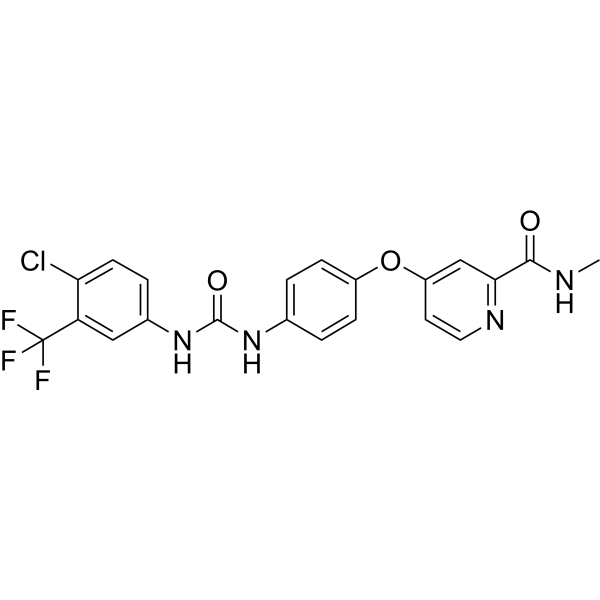 0 ImagesSynonyms: Bay 43-9006Sorafenib (Bay 43-9006) is a potent oral active multikinase inhibitor. Sorafenib blocks autophosphorylation and activity of receptor tyrosine kinases (VEGFR-2, VEGFR-3) and RAF family kinases, thereby suppressing the RAF/MEK/ERK and PI3K/Akt pathways, inhibiting STAT3 phosphorylation, and selectively inhibiting the MAPK pathway in cancer cells. Sorafenib induces cell cycle arrest, autophagy, apoptosis, and PARP cleavage, reduces Bcl-2, Bcl-XL, cyclin D1 levels, and activates Bak and Bax. Sorafenib inhibits tumor growth and metastasis in mouse and rat models. Sorafenib can be used for cancer research, such as colon, breast, non-small-cell lung cancer (NSCLC), ovarian, pancreatic, melanoma, colorectal and hepatocellular carcinoma.
-
Sorafenib tosylate
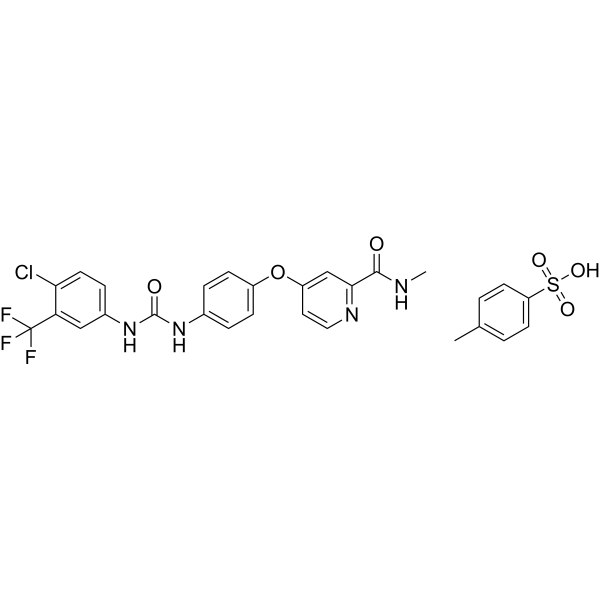 0 ImagesSynonyms: Bay 43-9006 tosylateSorafenib (Bay 43-9006) tosylate is a potent oral active multikinase inhibitor. Sorafenib blocks autophosphorylation and activity of receptor tyrosine kinases (VEGFR-2, VEGFR-3) and RAF family kinases, thereby suppressing the RAF/MEK/ERK and PI3K/Akt pathways, inhibiting STAT3 phosphorylation, and selectively inhibiting the MAPK pathway in cancer cells. Sorafenib tosylate induces cell cycle arrest, autophagy, apoptosis, and PARP cleavage, reduces Bcl-2, Bcl-XL, cyclin D1 levels, and activates Bak and Bax. Sorafenib tosylate inhibits tumor growth and metastasis in mouse and rat models. Sorafenib tosylate can be used for cancer research, such as colon, breast, non-small-cell lung cancer (NSCLC), ovarian, pancreatic, melanoma, colorectal and hepatocellular carcinoma.
-
ADH-1
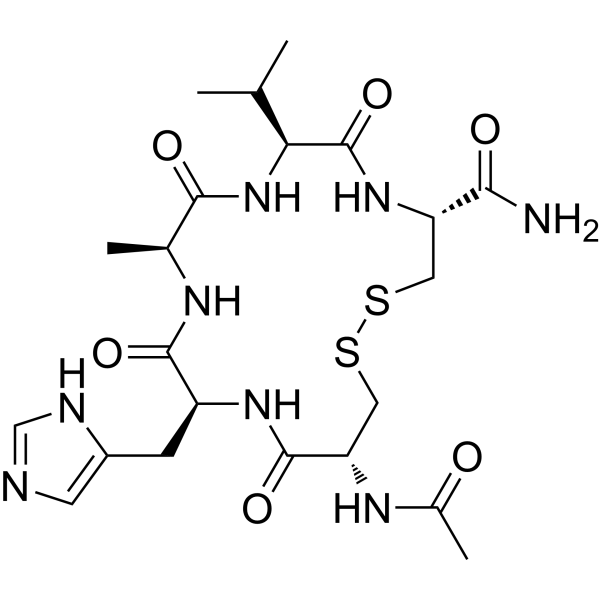 0 ImagesADH-1, an N-cadherin antagonist, inhibits N-cadherin mediated cell adhesion.
-
Rentosertib
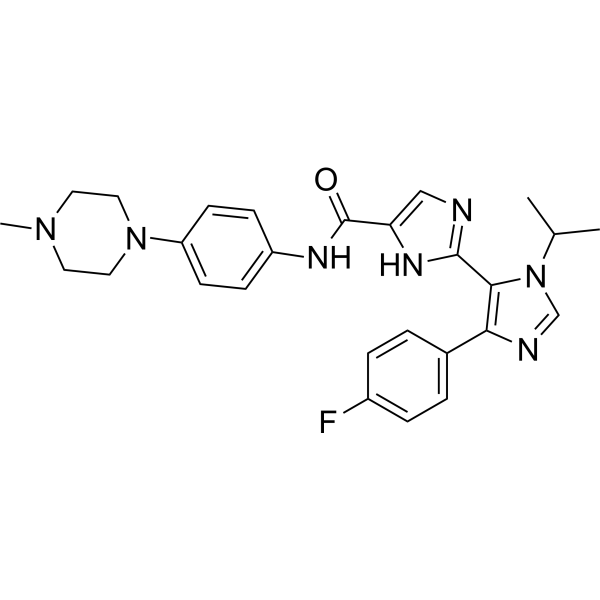 0 ImagesSynonyms: INS018_055; TNIK&MAP4K4-IN-2Rentosertib (INS018 055) (compound 112) is the orally active TNIK and MAP4K4 inhibitor with IC50 values of 12-120, 12-120 nM, respectively.
-
Sorafenib-d3
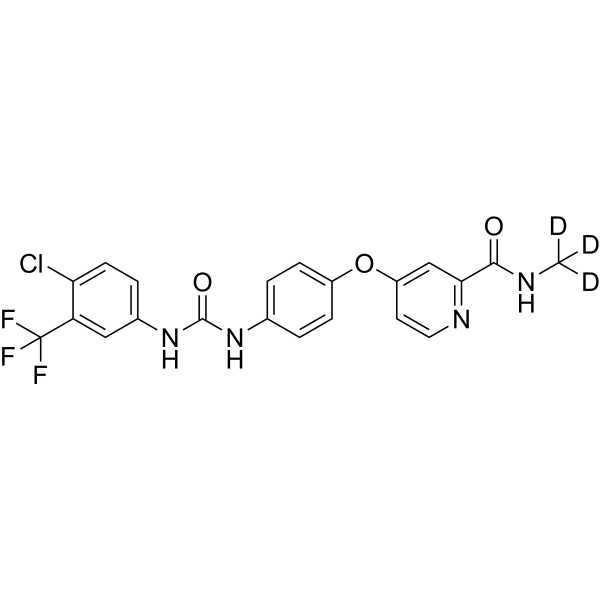 0 ImagesSynonyms: Donafenib; Bay 43-9006-d3Sorafenib-d3 (Donafenib) is the deuterated-labeled Sorafenib (HY-10201). Sorafenib (Bay 43-9006) is a potent oral active multikinase inhibitor. Sorafenib blocks autophosphorylation and activity of receptor tyrosine kinases (VEGFR-2, VEGFR-3) and RAF family kinases, thereby suppressing the RAF/MEK/ERK and PI3K/Akt pathways, inhibiting STAT3 phosphorylation, and selectively inhibiting the MAPK pathway in cancer cells. Sorafenib induces cell cycle arrest, autophagy, apoptosis, and PARP cleavage, reduces Bcl-2, Bcl-XL, cyclin D1 levels, and activates Bak and Bax. Sorafenib inhibits tumor growth and metastasis in mouse and rat models. Sorafenib can be used for cancer research, such as colon, breast, non-small-cell lung cancer (NSCLC), ovarian, pancreatic, melanoma, colorectal and hepatocellular carcinoma.

-
Tralokinumab
 0 ImagesSynonyms: CAT354Tralokinumab (CAT354) is a humanized IgG4 monoclonal antibody that specifically binds to and neutralizes IL-13. Tralokinumab can be used in the research of diseases such as asthma, atopic dermatitis, and pulmonary fibrosis.
-
Anti-CDH17/Cadherin-17 Antibody (PTA001_A4)
 0 ImagesCat. No.: HY-P990363Purity: 99.28%Synonyms: PTA001_A4Anti-CDH17/Cadherin-17 Antibody (PTA001_A4) is a CHO-expressed human-mouse chimeric antibody targeting CDH17/Cadherin-17. Anti-CDH17/Cadherin-17 Antibody (PTA001_A4) contains an IgG1-type heavy chain and a kappa-type light chain, with a predicted molecular weight (MW) of 149.12 kDa.
-
Cabotamig
 0 ImagesSynonyms: ARB202Cabotamig is a humanized bispecific T-cell engager antibody targeting CDH17/CD3. Cabotamig is generated from anti-CDH17 monoclonal ARB102 by linking a CD3-binding scFv in the format of IgG4-scFv. Cabotamig can be used for the research of cancer, such as gastric cancer and colon cancers.

-
Vasculotide
 0 ImagesVasculotide is a blood-brain barrier (BBB)-penetrant Tie2 agonist. Vasculotide binds to a unique domain of Tie2, induces receptor clustering to drive phosphorylation, activates downstream PI3K/Akt and eNOS pathways, enhances inter-endothelial cell junctions (such as VE-cadherin and claudin-5), and inhibits inflammatory adhesion molecules, ultimately stabilizing the vascular endothelial barrier and reducing its permeability. Vasculotide alleviates pulmonary microvascular leakage and microcirculatory dysfunction caused by cardiopulmonary bypass, acts as an adjuvant radioprotective agent to reduce acute radiation dermatitis, and promotes BBB recovery after focused ultrasound (FUS). Combination of Vasculotide with antibiotics reduces lung injury.
-
Anti-CDH17/Cadherin-17 Antibody (10C12)
 0 ImagesCat. No.: HY-P991100Purity: 99.29%
-
Sorafenib (Standard)
 0 ImagesSynonyms: Bay 43-9006 (Standard)Sorafenib (Standard) (Bay 43-9006 (Standard)) is the analytical standard of Sorafenib (HY-10201). This product is intended for research and analytical applications. Sorafenib (Bay 43-9006) is a potent oral active multikinase inhibitor. Sorafenib blocks autophosphorylation and activity of receptor tyrosine kinases (VEGFR-2, VEGFR-3) and RAF family kinases, thereby suppressing the RAF/MEK/ERK and PI3K/Akt pathways, inhibiting STAT3 phosphorylation, and selectively inhibiting the MAPK pathway in cancer cells. Sorafenib induces cell cycle arrest, autophagy, apoptosis, and PARP cleavage, reduces Bcl-2, Bcl-XL, cyclin D1 levels, and activates Bak and Bax. Sorafenib inhibits tumor growth and metastasis in mouse and rat models. Sorafenib can be used for cancer research, such as colon, breast, non-small-cell lung cancer (NSCLC), ovarian, pancreatic, melanoma, colorectal and hepatocellular carcinoma.
-
MC-1-F2
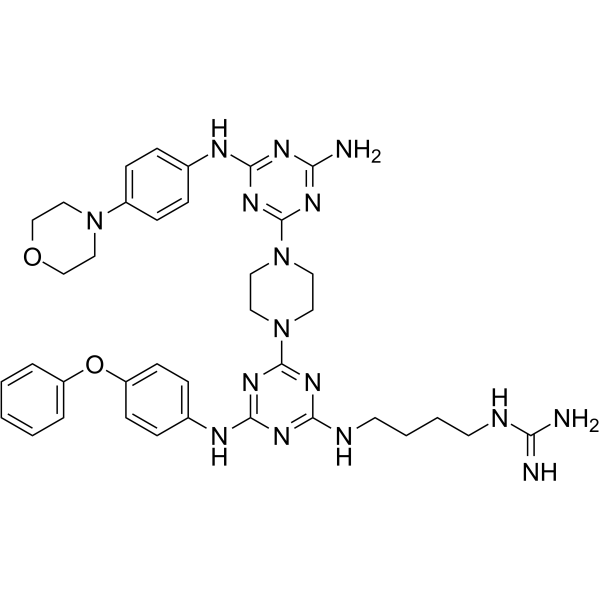 0 ImagesMC-1-F2 is a FOXC2 inhibitor. MC-1-F2 shows a binding affinity (Kd) of 26 μM for full-length FOXC2. MC-1-F2 reduces epithelial-mesenchymal transition (EMT) markers in breast cancer cells, suppresses cancer stem cell (CSC) properties and reduces invasiveness in castration-resistant prostate cancer (CRPC) cells. MC-1-F2 can be used for the study of CRPC and breast cancer.
-
Vasculotide TFA
 0 ImagesCat. No.: HY-P10580APurity: 99.88%Vasculotide TFA is a blood-brain barrier (BBB)-penetrant Tie2 agonist. Vasculotide TFA binds to a unique domain of Tie2, induces receptor clustering to drive phosphorylation, activates downstream PI3K/Akt and eNOS pathways, enhances inter-endothelial cell junctions (such as VE-cadherin and claudin-5), and inhibits inflammatory adhesion molecules, ultimately stabilizing the vascular endothelial barrier and reducing its permeability. Vasculotide TFA alleviates pulmonary microvascular leakage and microcirculatory dysfunction caused by cardiopulmonary bypass, acts as an adjuvant radioprotective agent to reduce acute radiation dermatitis, and promotes BBB recovery after focused ultrasound (FUS). Combination of Vasculotide TFA with antibiotics reduces lung injury.
-
Aristolactam I
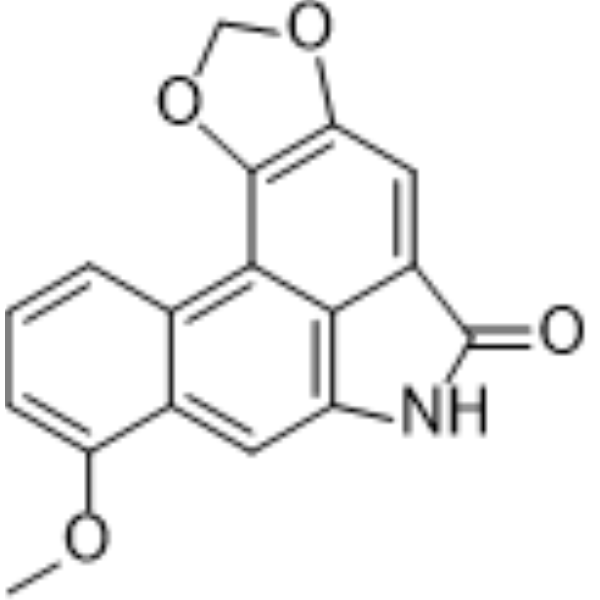 0 ImagesSynonyms: Aristololactam; AristolactamAristolactam I is an AQP1 inhibitor and Aristolochic acid I metabolite. Aristolactam I can be isolated from Aristolochia plants. Aristolactam I downregulates Twist1 expression, increases E-cadherin expression, and activates the TGF-β/Smad signaling pathway. Aristolactam I has anticancer activity against breast cancer. Aristolactam I is nephrotoxic. Aristolactam I is mainly used in the study of breast cancer and kidney diseases such as renal interstitial fibrosis.
-
ADH-1 trifluoroacetate
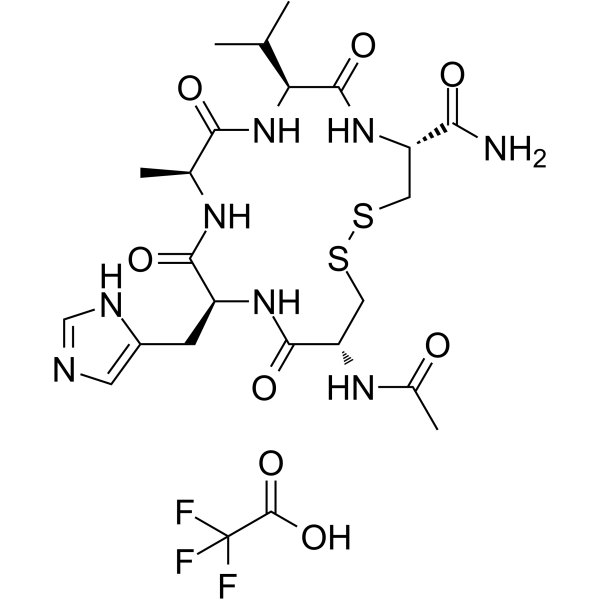 0 ImagesADH-1 trifluoroacetate is an N-cadherin antagonist, which inhibits N-cadherin mediated cell adhesion.
-
E-Cadherin activator-1
 0 ImagesE-cadherin activator-1 (Compound 13m) is an E-Cadherin activator. E-cadherin activator-1 can be used in the study of colorectal carcinoma.

-
BAS00602705
 0 ImagesBAS00602705 is an E-cadherin inhibitor. BAS00602705 exerts its function by blocking the trans-interactions of E-cadherin molecules within junctional complexes, without permanently altering E-cadherin expression levels. BAS00602705 significantly impairs invadopodia formation in pancreatic cancer cells. BAS00602705 can be used for the study of anti-invasive therapeutic strategies in cancers characterized by dysregulated E-cadherin-mediated invadopodia activity, such as pancreatic ductal adenocarcinoma (PDAC).



