



Cadherin Modulator
- 1
-
Sorafenib
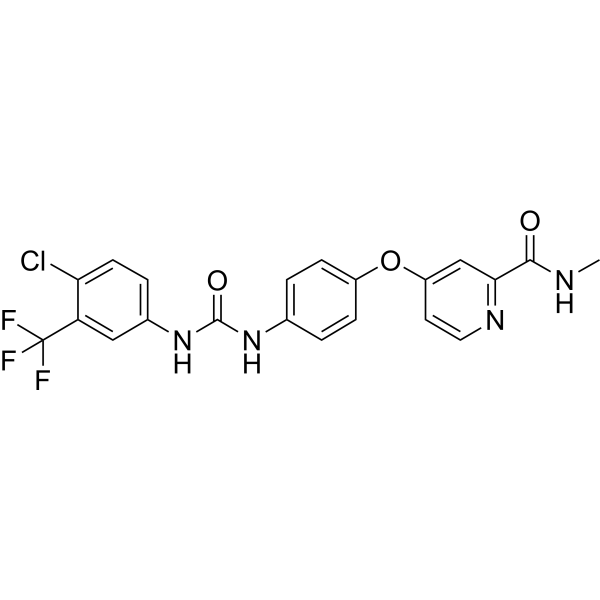 0 ImagesSynonyms: Bay 43-9006
Sorafenib (Bay 43-9006) is a potent oral active multikinase inhibitor. Sorafenib blocks autophosphorylation and activity of receptor tyrosine kinases (VEGFR-2, VEGFR-3) and RAF family kinases, thereby suppressing the RAF/MEK/ERK and PI3K/Akt pathways, inhibiting STAT3 phosphorylation, and selectively inhibiting the MAPK pathway in cancer cells. Sorafenib induces cell cycle arrest, autophagy, apoptosis, and PARP cleavage, reduces Bcl-2, Bcl-XL, cyclin D1 levels, and activates Bak and Bax. Sorafenib inhibits tumor growth and metastasis in mouse and rat models. Sorafenib can be used for cancer research, such as colon, breast, non-small-cell lung cancer (NSCLC), ovarian, pancreatic, melanoma, colorectal and hepatocellular carcinoma.
-
Sorafenib tosylate
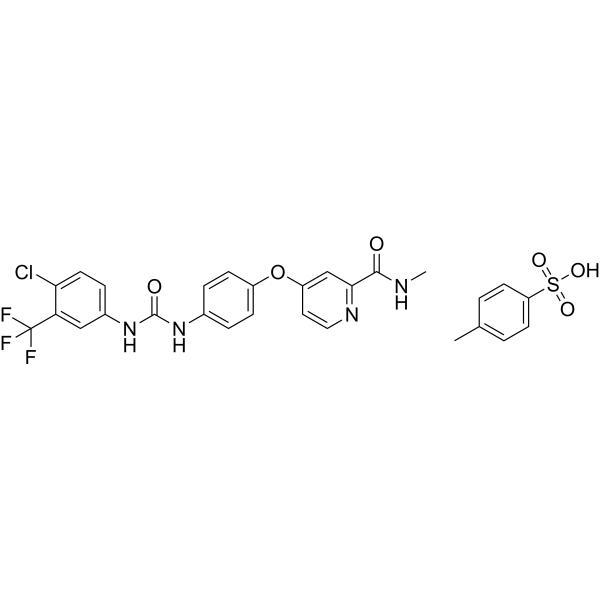 0 ImagesSynonyms: Bay 43-9006 tosylate
Sorafenib (Bay 43-9006) tosylate is a potent oral active multikinase inhibitor. Sorafenib blocks autophosphorylation and activity of receptor tyrosine kinases (VEGFR-2, VEGFR-3) and RAF family kinases, thereby suppressing the RAF/MEK/ERK and PI3K/Akt pathways, inhibiting STAT3 phosphorylation, and selectively inhibiting the MAPK pathway in cancer cells. Sorafenib tosylate induces cell cycle arrest, autophagy, apoptosis, and PARP cleavage, reduces Bcl-2, Bcl-XL, cyclin D1 levels, and activates Bak and Bax. Sorafenib tosylate inhibits tumor growth and metastasis in mouse and rat models. Sorafenib tosylate can be used for cancer research, such as colon, breast, non-small-cell lung cancer (NSCLC), ovarian, pancreatic, melanoma, colorectal and hepatocellular carcinoma.
-
Rentosertib
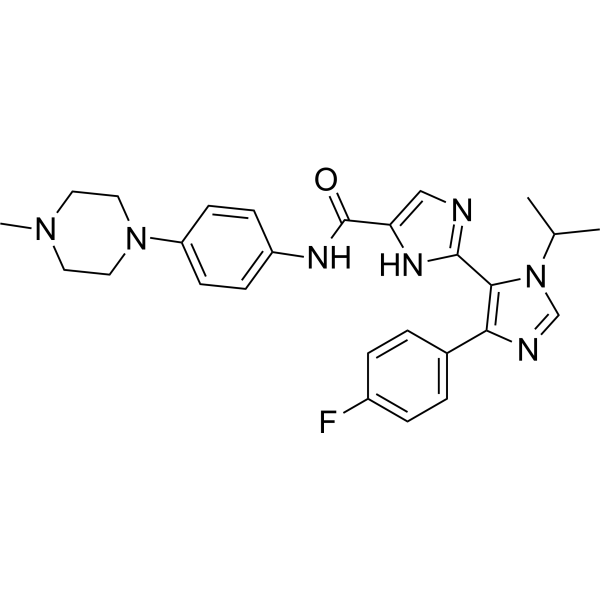 0 ImagesSynonyms: INS018_055; TNIK&MAP4K4-IN-2
Rentosertib (INS018 055) (compound 112) is the orally active TNIK and MAP4K4 inhibitor with IC50 values of 12-120, 12-120 nM, respectively.
-
Sorafenib-d3
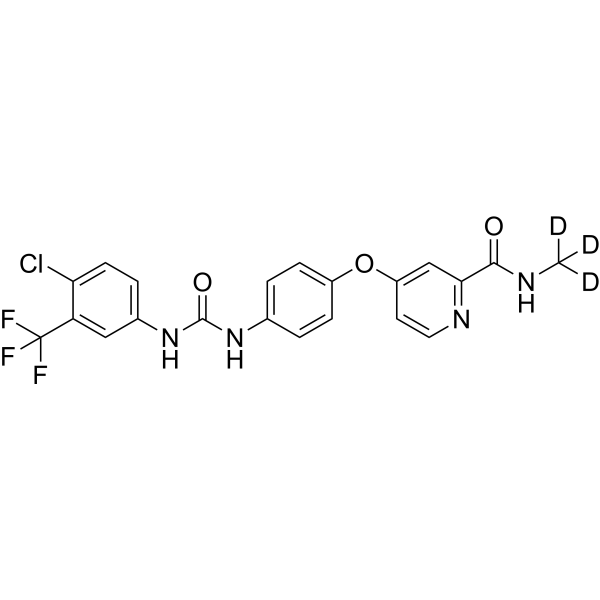 0 ImagesSynonyms: Donafenib; Bay 43-9006-d3
Sorafenib-d3 (Donafenib) is the deuterated-labeled Sorafenib (HY-10201). Sorafenib (Bay 43-9006) is a potent oral active multikinase inhibitor. Sorafenib blocks autophosphorylation and activity of receptor tyrosine kinases (VEGFR-2, VEGFR-3) and RAF family kinases, thereby suppressing the RAF/MEK/ERK and PI3K/Akt pathways, inhibiting STAT3 phosphorylation, and selectively inhibiting the MAPK pathway in cancer cells. Sorafenib induces cell cycle arrest, autophagy, apoptosis, and PARP cleavage, reduces Bcl-2, Bcl-XL, cyclin D1 levels, and activates Bak and Bax. Sorafenib inhibits tumor growth and metastasis in mouse and rat models. Sorafenib can be used for cancer research, such as colon, breast, non-small-cell lung cancer (NSCLC), ovarian, pancreatic, melanoma, colorectal and hepatocellular carcinoma.
-
Sorafenib (Standard)
 0 ImagesSynonyms: Bay 43-9006 (Standard)
Sorafenib (Standard) (Bay 43-9006 (Standard)) is the analytical standard of Sorafenib (HY-10201). This product is intended for research and analytical applications. Sorafenib (Bay 43-9006) is a potent oral active multikinase inhibitor. Sorafenib blocks autophosphorylation and activity of receptor tyrosine kinases (VEGFR-2, VEGFR-3) and RAF family kinases, thereby suppressing the RAF/MEK/ERK and PI3K/Akt pathways, inhibiting STAT3 phosphorylation, and selectively inhibiting the MAPK pathway in cancer cells. Sorafenib induces cell cycle arrest, autophagy, apoptosis, and PARP cleavage, reduces Bcl-2, Bcl-XL, cyclin D1 levels, and activates Bak and Bax. Sorafenib inhibits tumor growth and metastasis in mouse and rat models. Sorafenib can be used for cancer research, such as colon, breast, non-small-cell lung cancer (NSCLC), ovarian, pancreatic, melanoma, colorectal and hepatocellular carcinoma.
-
Sorafenib-13C,d3
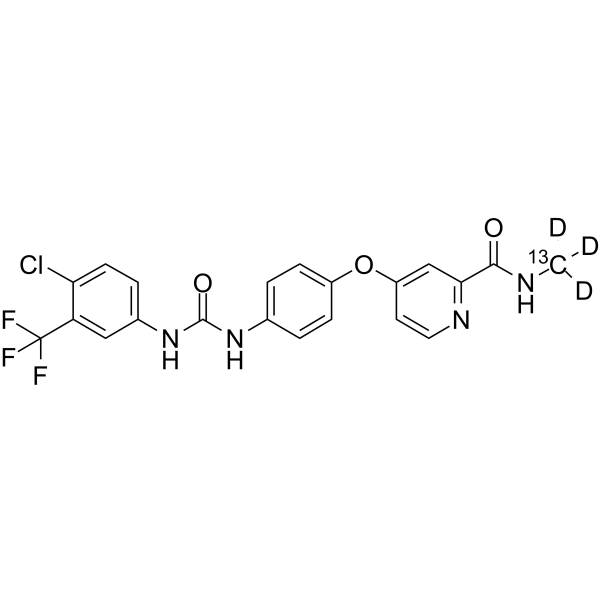 0 ImagesSynonyms: Bay 43-9006-13C,d3
Sorafenib-13C,d3 (Bay 43-9006-13C,d3) is the 13C, deuterated-labeled Sorafenib (HY-10201). Sorafenib (Bay 43-9006) is a potent oral active multikinase inhibitor. Sorafenib blocks autophosphorylation and activity of receptor tyrosine kinases (VEGFR-2, VEGFR-3) and RAF family kinases, thereby suppressing the RAF/MEK/ERK and PI3K/Akt pathways, inhibiting STAT3 phosphorylation, and selectively inhibiting the MAPK pathway in cancer cells. Sorafenib induces cell cycle arrest, autophagy, apoptosis, and PARP cleavage, reduces Bcl-2, Bcl-XL, cyclin D1 levels, and activates Bak and Bax. Sorafenib inhibits tumor growth and metastasis in mouse and rat models. Sorafenib can be used for cancer research, such as colon, breast, non-small-cell lung cancer (NSCLC), ovarian, pancreatic, melanoma, colorectal and hepatocellular carcinoma.
-
LNSMGQD
 0 Images
LNSMGQD is a cyclic peptide fragment derived from desmoglein 1 (amino acids 81-86), which mimics trans-interactions and acts as part of the tandem peptide binding interface of desmoglein 2. LNSMGQD not only binds to desmoglein 1 and 3, but also effectively inhibits their homophilic trans-interactions, while reducing the probability of homophilic or heterophilic binding between desmoglein 2 and Dsc2, N-cadherin and E-cadherin. LNSMGQD is applicable to the research on disease mechanisms such as Crohn's disease and pemphigus vulgaris.
-
Sorafenib-d4
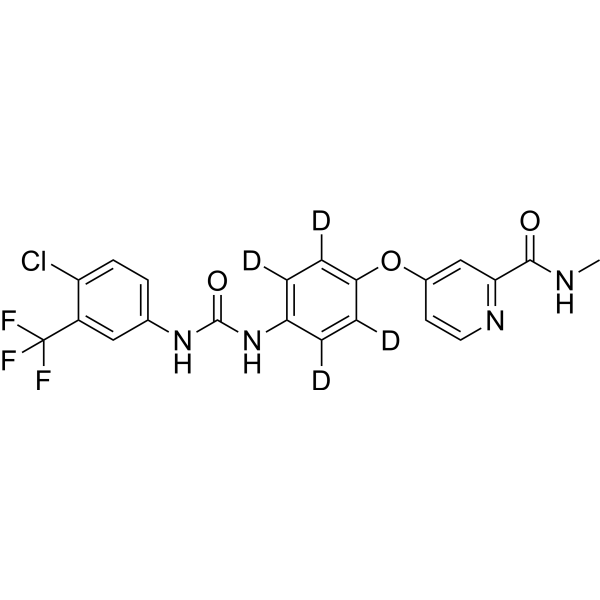 0 ImagesSynonyms: Bay 43-9006-d4
Sorafenib-d4 (Bay 43-9006-d4) is the deuterated-labeled Sorafenib (HY-10201). Sorafenib (Bay 43-9006) is a potent oral active multikinase inhibitor. Sorafenib blocks autophosphorylation and activity of receptor tyrosine kinases (VEGFR-2, VEGFR-3) and RAF family kinases, thereby suppressing the RAF/MEK/ERK and PI3K/Akt pathways, inhibiting STAT3 phosphorylation, and selectively inhibiting the MAPK pathway in cancer cells. Sorafenib induces cell cycle arrest, autophagy, apoptosis, and PARP cleavage, reduces Bcl-2, Bcl-XL, cyclin D1 levels, and activates Bak and Bax. Sorafenib inhibits tumor growth and metastasis in mouse and rat models. Sorafenib can be used for cancer research, such as colon, breast, non-small-cell lung cancer (NSCLC), ovarian, pancreatic, melanoma, colorectal and hepatocellular carcinoma.
-
OSU-03013
 0 ImagesCat. No.: HY-122352CAS No.: 742112-34-1
OSU-03013 is a Celecoxib (HY-14398) analog. OSU-03013 can promote apoptosis, up-regulate E-cadherin, and down-regulate β-catenin, c-myc, Wnt1, and N-cadherin. OSU-03013 reduces cell migration and invasion. OSU-03013 regulates both Wnt and mTOR expression to inhibit colon cancer (CC) cell proliferation. OSU-03013 can be used for CC cancer research.
-
Sorafenib-d3 tosylate
 0 ImagesCat. No.: HY-10201S4CAS No.: 1333386-17-6Synonyms: Donafenib tosylate; Bay 43-9006-d3 tosylate
Sorafenib-d3 (Donafenib) tosylate is the deuterated-labeled Sorafenib tosylate (HY-10201A). Sorafenib (Bay 43-9006) tosylate is a potent oral active multikinase inhibitor. Sorafenib blocks autophosphorylation and activity of receptor tyrosine kinases (VEGFR-2, VEGFR-3) and RAF family kinases, thereby suppressing the RAF/MEK/ERK and PI3K/Akt pathways, inhibiting STAT3 phosphorylation, and selectively inhibiting the MAPK pathway in cancer cells. Sorafenib tosylate induces cell cycle arrest, autophagy, apoptosis, and PARP cleavage, reduces Bcl-2, Bcl-XL, cyclin D1 levels, and activates Bak and Bax. Sorafenib tosylate inhibits tumor growth and metastasis in mouse and rat models. Sorafenib tosylate can be used for cancer research, such as colon, breast, non-small-cell lung cancer (NSCLC), ovarian, pancreatic, melanoma, colorectal and hepatocellular carcinoma.
-
anti-TNBC agent-9
 0 ImagesCat. No.: HY-172551
anti-TNBC agent-9 (Compound 3as) is an anti-cancer agent for triple-negative breast cancer (TNBC). anti-TNBC agent-9 exhibits significant inhibitory activity against MDA-MB-453 cells with an IC50 value of 8.5 μM. anti-TNBC agent-9 inhibits tumor cell migration by upregulating E-cadherin and downregulating N-cadherin, matrix metalloproteinase 2 (MMP2), and MMP9. anti-TNBC agent-9 induces apoptosis by increasing the expression of the pro-apoptotic protein BAX and decreasing the expression of the anti-apoptotic protein BCL-2, thereby inhibiting tumor cell proliferation.
-
HAV peptide
 0 ImagesCat. No.: HY-P11154CAS No.: 244103-75-1Synonyms: Ac-SHAVSS-NH2
HAV peptide (Ac-SHAVSS-NH2) is a peptide containing His-Ala-Val. HAV peptide affects the E-cadherin signaling pathway. HAV peptide regulates intercellular junctions.
-
Sorafenib tosylate (Standard)
 0 ImagesSynonyms: Bay 43-9006 tosylate (Standard)
Sorafenib (tosylate) (Standard) (Bay 43-9006 (tosylate) (Standard)) is the analytical standard of Sorafenib (tosylate) (HY-10201A). This product is intended for research and analytical applications. Sorafenib (Bay 43-9006) tosylate is a potent oral active multikinase inhibitor. Sorafenib blocks autophosphorylation and activity of receptor tyrosine kinases (VEGFR-2, VEGFR-3) and RAF family kinases, thereby suppressing the RAF/MEK/ERK and PI3K/Akt pathways, inhibiting STAT3 phosphorylation, and selectively inhibiting the MAPK pathway in cancer cells. Sorafenib tosylate induces cell cycle arrest, autophagy, apoptosis, and PARP cleavage, reduces Bcl-2, Bcl-XL, cyclin D1 levels, and activates Bak and Bax. Sorafenib tosylate inhibits tumor growth and metastasis in mouse and rat models. Sorafenib tosylate can be used for cancer research, such as colon, breast, non-small-cell lung cancer (NSCLC), ovarian, pancreatic, melanoma, colorectal and hepatocellular carcinoma.
- 1



