



Sorafenib tosylate (Standard)
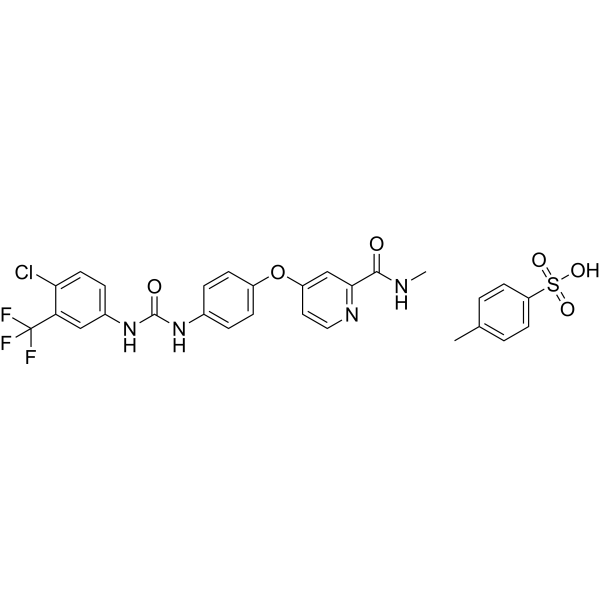
Sorafenib (tosylate) (Standard) (Bay 43-9006 (tosylate) (Standard)) is the analytical standard of Sorafenib (tosylate) (HY-10201A). This product is intended for research and analytical applications. Sorafenib (Bay 43-9006) tosylate is a potent oral active multikinase inhibitor. Sorafenib blocks autophosphorylation and activity of receptor tyrosine kinases (VEGFR-2, VEGFR-3) and RAF family kinases, thereby suppressing the RAF/MEK/ERK and PI3K/Akt pathways, inhibiting STAT3 phosphorylation, and selectively inhibiting the MAPK pathway in cancer cells. Sorafenib tosylate induces cell cycle arrest, autophagy, apoptosis, and PARP cleavage, reduces Bcl-2, Bcl-XL, cyclin D1 levels, and activates Bak and Bax. Sorafenib tosylate inhibits tumor growth and metastasis in mouse and rat models. Sorafenib tosylate can be used for cancer research, such as colon, breast, non-small-cell lung cancer (NSCLC), ovarian, pancreatic, melanoma, colorectal and hepatocellular carcinoma.
For research use only. We do not sell to patients.
- Purity : 98%
- CAS No.: 475207-59-1
- Formula: C28H24ClF3N4O6S
- Molecular Weight:637.03
-
Storage:
Please store the product under the recommended conditions in the Certificate of Analysis.


To place orders, for customer services and technical support, please contact: MedChemExpress USA
Tel: 609-228-6898 E-mail: [email protected] [email protected]


-
 Product Information
-
Chemical Information
- Purity & Documentation
-
 Help & FAQs


-
HY-10201A
Sorafenib tosylateMultikinase Inhibitor -
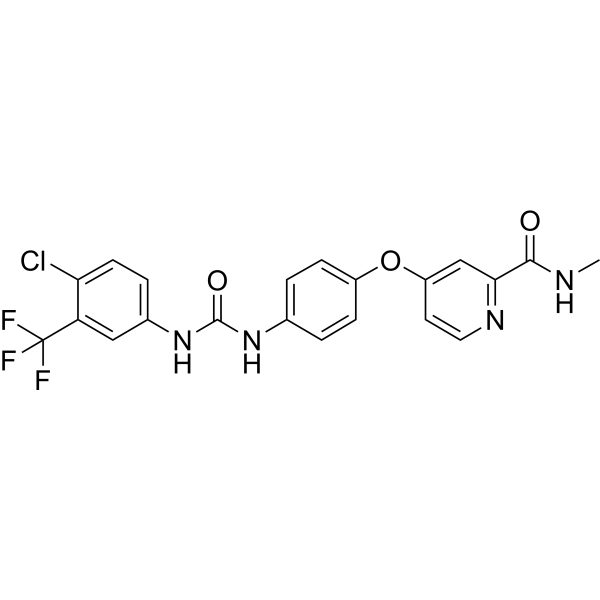
HY-10201
SorafenibMultikinase Inhibitor -

HY-10201R
Sorafenib (Standard)Reference Standard -
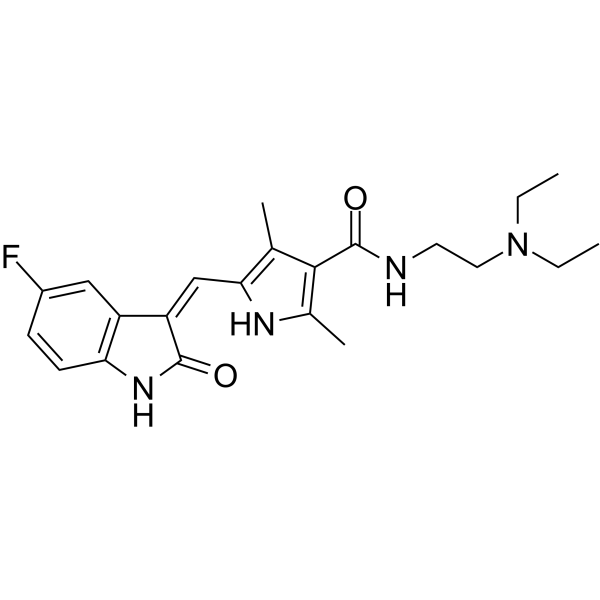
HY-10255A
SunitinibMulti-targeted RTK Inhibitor -
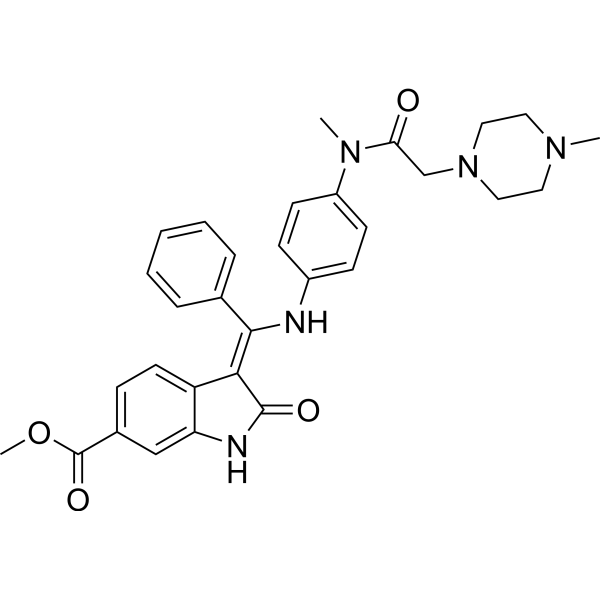
HY-50904
NintedanibPDGFR/VEGFR/FGFR Inhibitor -
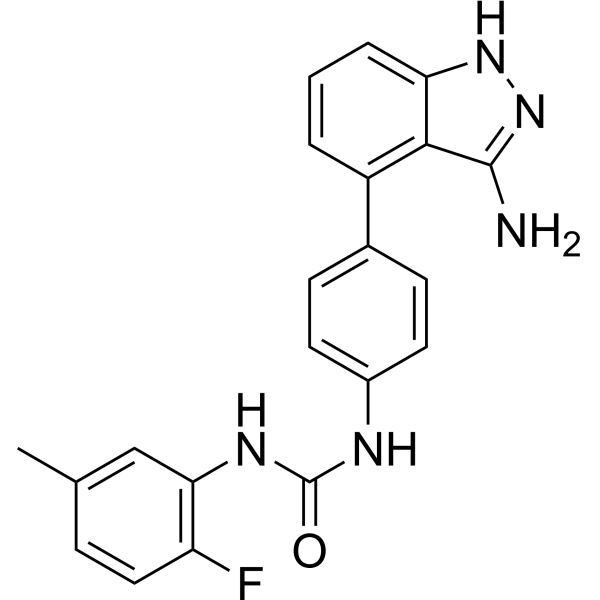
HY-50751
LinifanibMulti-Targeted RTK Inhibitor -
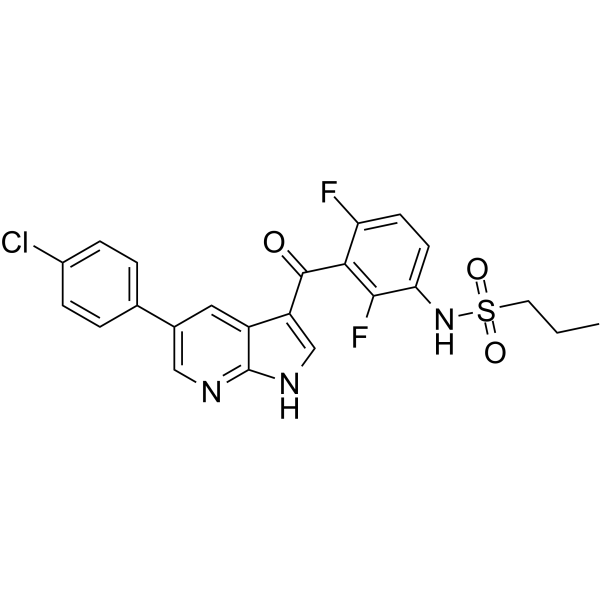
HY-12057
VemurafenibB-Raf Inhibitor -
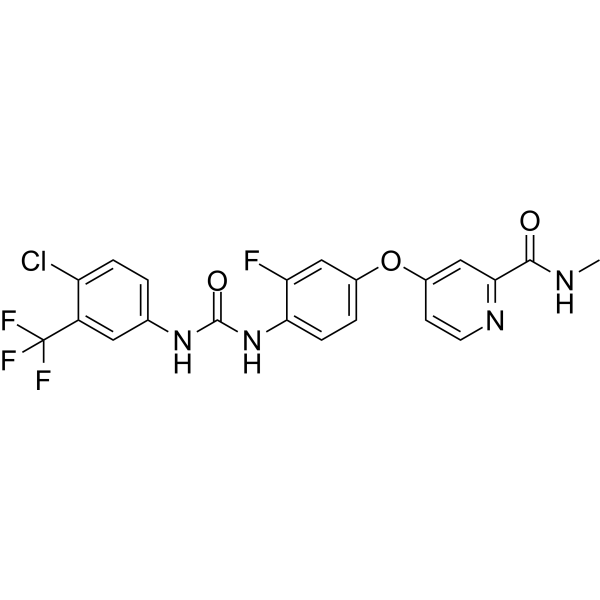
HY-10331
RegorafenibMulti-kinase Inhibitor -
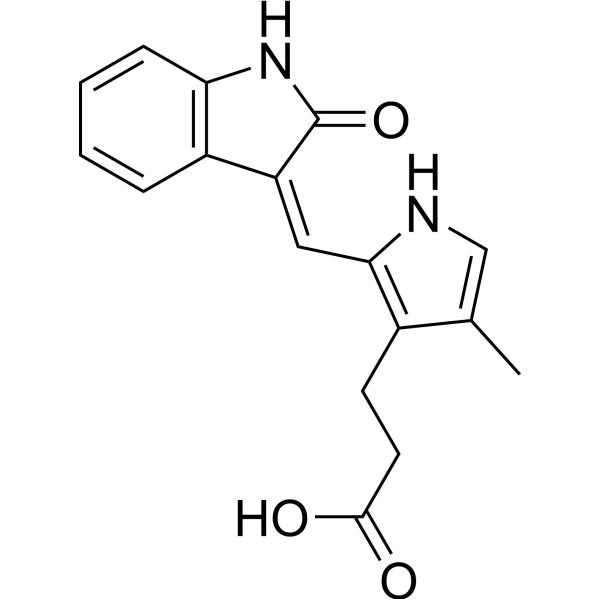
HY-10407
SU 5402Tyrosine Kinase Inhibitor -
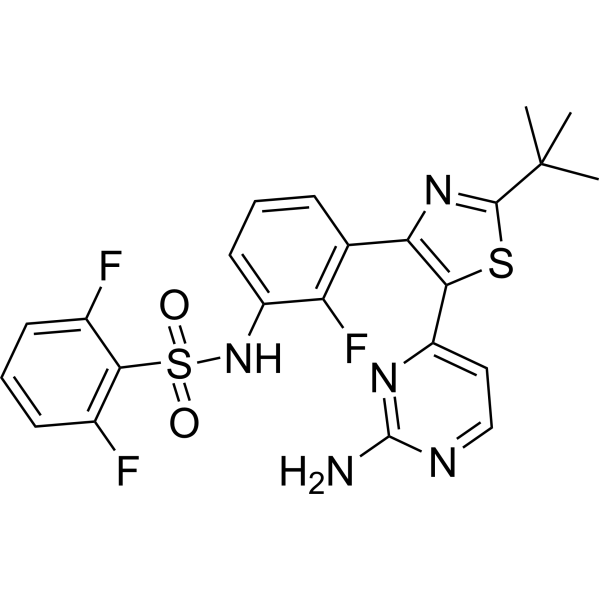
HY-14660
DabrafenibBRAF Inhibitor -
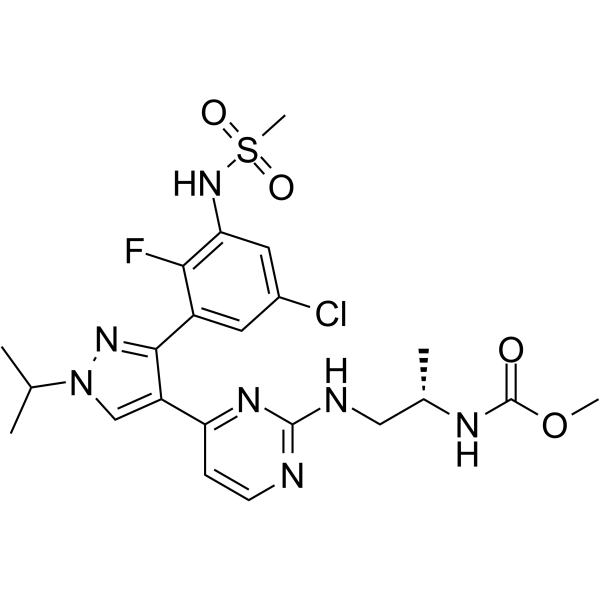
HY-15605
EncorafenibBRAF Inhibitor -
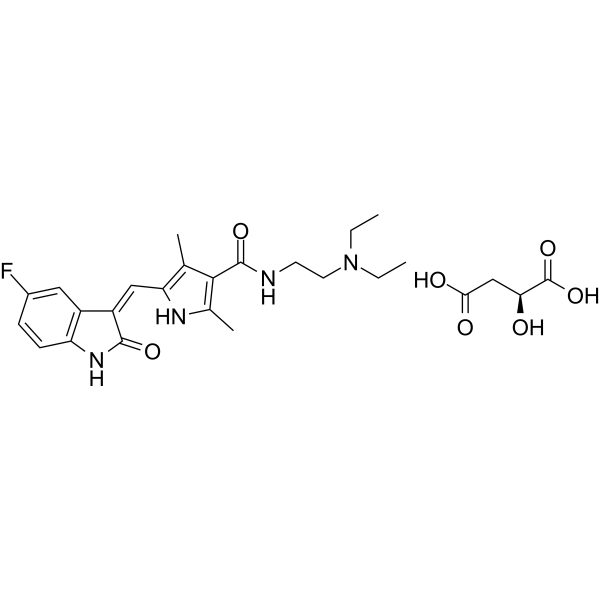
HY-10255
Sunitinib MalateTyrosine Kinase Inhibitor


Product Information
Information
Application
The compound is the grade of analytical standard, which is the reference standard supplied assay. It is commonly used in qualitative, quantitative and methodological research experiments in HPLC, GC and MS.


Chemical Information
-
CAS No. 475207-59-1
-
Molecular Weight 637.03
-
Formula C28H24ClF3N4O6S
-
SMILES
O=S(C1=CC=C(C)C=C1)(O)=O.O=C(NC2=CC=C(C=C2)OC3=CC(C(NC)=O)=NC=C3)NC4=CC=C(Cl)C(C(F)(F)F)=C4
-
Synonyms
Bay 43-9006 tosylate (Standard)
-
Shipping
Room temperature in continental US; may vary elsewhere.
-
Storage
Please store the product under the recommended conditions in the Certificate of Analysis.


Purity & Documentation
References
[1]. Wilhelm SM, et al. BAY 43-9006 exhibits broad spectrum oral antitumor activity and targets the RAF/MEK/ERK pathway and receptor tyrosine kinases involved in tumor progression and angiogenesis. Cancer Res. 2004 Oct 1;64(19):7099-109. [Content Brief]
[2]. Heim M, et al. The Raf kinase inhibitor BAY 43-9006 reduces cellular uptake of platinum compounds and cytotoxicity in human colorectal carcinoma cell lines. Anticancer Drugs. 2005;16(2):129-136. [Content Brief]
[3]. Gu FM, et al. Sorafenib inhibits growth and metastasis of hepatocellular carcinoma by blocking STAT3. World J Gastroenterol. 2011 Sep 14;17(34):3922-32. [Content Brief]
[4]. El-Ashmawy NE, et al. Sorafenib effect on liver neoplastic changes in rats: more than a kinase inhibitor. Clin Exp Med. 2016 Apr 16. [Content Brief]
[5]. Li M, et al. Activation of an AKT/FOXM1/STMN1 pathway drives resistance to tyrosine kinase inhibitors in lung cancer. Br J Cancer. 2017;117(7):974-983. [Content Brief]
[6]. Jin W, et al. Long non-coding RNA TUC338 is functionally involved in sorafenib-sensitized hepatocarcinoma cells by targeting RASAL1. Oncol Rep. 2017;37(1):273-280. [Content Brief]

Calculators
Concentration (start) × Volume (start) = Concentration (final) × Volume (final)


Sorafenib tosylate (Standard) Related Classifications
HY-10201AR Related Classifications
 Powered by Bioz
Keywords
- Sorafenib tosylate (Standard)
- 475207-59-1
- Bay 43-9006 tosylate (Standard)
- Reference Standards
- Raf
- VEGFR
- FLT3
- Autophagy
- Apoptosis
- STAT
- Akt
- MMP
- Cadherin
- p38 MAPK
- ERK
- MEK
- PI3K
- PARP
- Bcl-2 Family
- VEGFR-2
- Flt-3
- c-KIT
- PI3K/Akt pathway
- MDA-MB-231 human breast carcinoma cells
- PDGFR-β
- BRAF
- RAF/MEK/ERK pathway
- Raf-1
- VEGFR-3
- Inhibitor
- inhibitor
- inhibit