



Cadherin Activator
- 1
-
Aristolactam I
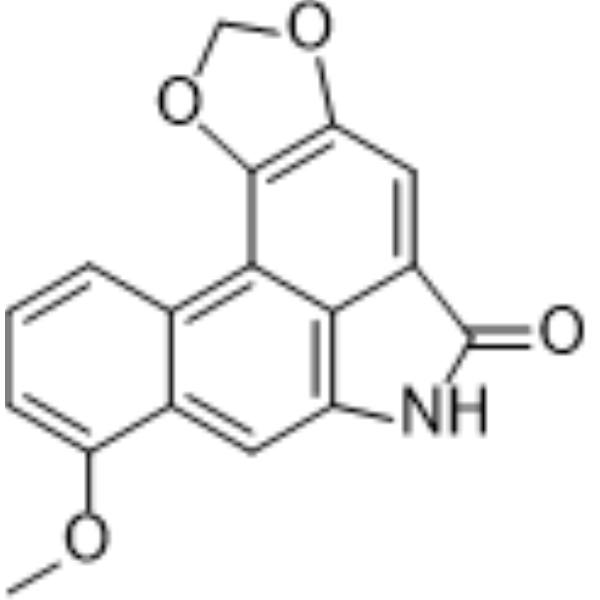 0 ImagesSynonyms: Aristololactam; Aristolactam
Aristolactam I is an AQP1 inhibitor and Aristolochic acid I metabolite. Aristolactam I can be isolated from Aristolochia plants. Aristolactam I downregulates Twist1 expression, increases E-cadherin expression, and activates the TGF-β/Smad signaling pathway. Aristolactam I has anticancer activity against breast cancer. Aristolactam I is nephrotoxic. Aristolactam I is mainly used in the study of breast cancer and kidney diseases such as renal interstitial fibrosis.
-
E-Cadherin activator-1
 0 Images
E-cadherin activator-1 (Compound 13m) is an E-Cadherin activator. E-cadherin activator-1 can be used in the study of colorectal carcinoma.
-
NKP608
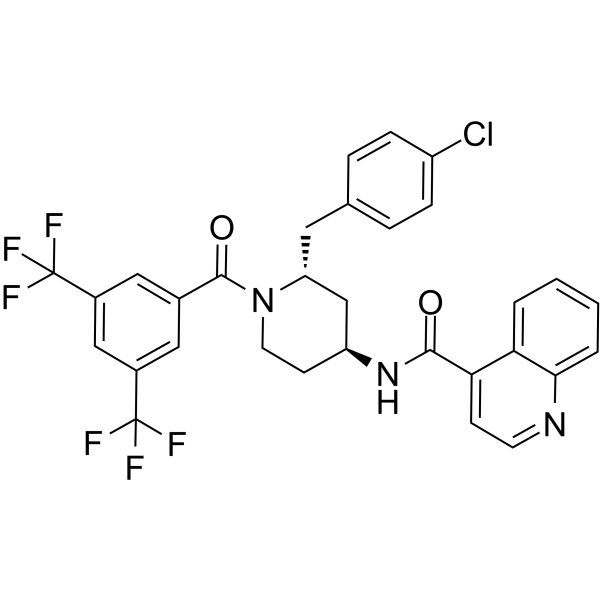 0 Images
NKP608 is a non-peptidic derivative of 4-aminopiperidine, a highly selective, orally active, neurokinin-1 (NK1) receptor antagonist with IC50 of 2.6 nM. NKP608 is active both in vitro and in vivo, showing extremely low affinity for NK2, NK3 receptors. NKP608 exerts its effects by blocking the NK₁ receptor, regulate cell proliferation and apoptosis, affect neurotransmitter functions and gastric mucosal repair mechanisms, and suppress the Wnt/β-catenin pathway in antitumor research. NKP608 is applicable to research related to various diseases, including cough, anxiety disorders, depression, gastric mucosal injury, and colorectal cancer.
-
7-Hydroxystaurosporine
 0 ImagesCat. No.: HY-13661CAS No.: 112953-11-4Synonyms: UCN-01; KRX-0601
7-Hydroxystaurosporine (UCN-01), a derivative of Staurosporine (HY-15141), is a selective protein kinase C (PKC) inhibitor with antitumor activity. 7-hydroxystaurosporine induces apoptosis and inhibits cell proliferation in colon carcinoma and leukemia cells, suppresses invasion and migration in glioblastoma cells. 7-Hydroxystaurosporine exhibits efficacy in breast cancer xenograft mouse models. 7-Hydroxystaurosporine can be used for colon carcinoma, breast cancer, glioblastoma and leukemia research.
-
(R)-MMP408
 0 Images
(R)-MMP408 is an isomer of MMP408 (HY-12093). MMP408 is an orally active MMP-12 inhibitor (IC50=2.0 nM for hMMP-12) that effectively interferes with the epithelial-mesenchymal transition (EMT) process. MMP408 significantly upregulates the expression of E-cadherin in nasal epithelial cells, while inhibiting mesenchymal markers such as vimentin, α-smooth muscle actin and fibronectin, thereby reversing the EMT phenotype. MMP408 is used in studies of airway remodeling-related diseases, including chronic rhinosinusitis with nasal polyps, chronic obstructive pulmonary disease (COPD) and asthma.
-
Nef-M1
 0 Images
Nef-M1 (Nef-Motif-1) is an antagonist peptide targeting CXCR4 and an apoptosis inducer derived from a myristoylated protein encoded by the nef gene in HIV. Nef-M1 inhibits tumor angiogenesis and epithelial-mesenchymal transition (EMT). Nef-M1 activates the apoptosis pathway by increasing the level of caspase-3 in cancer cells. Nef-M1 simultaneously inhibits VEGF-A, p-GSK-3β and vimentin, and enhances E-cadherin, thereby inhibiting angiogenesis and EMT processes. Nef-M1 can be used in the study of colorectal cancer and breast cancer.
-
(Rac)-AAA
 0 Images
(Rac)-AAA is a regulator and inhibitor targeting GPR75. By blocking the 20-HETE-induced downregulation of GPR75 expression, (Rac)-AAA effectively inhibits the activation of key downstream signaling pathways including EGFR, AKT, NF-κB and FAK. (Rac)-AAA reverses 20-HETE-mediated epithelial-mesenchymal transition, which is specifically characterized by downregulating vimentin (vimentin), upregulating E-Cadherin, as well as reducing MMP-2 activity and cancer cell migration ability. (Rac)-AAA also abolishes the 20-HETE-induced upregulation of HIC-5 expression and anchorage-independent growth, and modulates the subcellular localization of PKC-α and phosphorylated AKT. (Rac)-AAA is investigated in androgen-independent prostate cancer (castration-resistant prostate cancer).
-
Ligusticum cycloprolactam
 0 ImagesCat. No.: HY-N17383CAS No.: 2283387-37-9
Ligusticum cycloprolactam is a potent, orally active, and CNS-penetrant TLR4/NF-κB inhibitor, exhibiting anti-inflammatory and neuroprotective activity. Ligusticum cycloprolactam reduces FPR1 expression, inhibits NLRP3 inflammasome, TLR4/NF-κB, hepatic MAPK and TGF-β signaling, and selectively activates hepatic FXR. Ligusticum cycloprolactam attenuates pro-inflammatory mediator production, enhances anti-inflammatory cytokine secretion, regulates renal uric acid transporters, and preserves intestinal microbiota composition. Ligusticum cycloprolactam can be used for the research of ischemic stroke, hyperuricemic nephropathy, neuroinflammation, and metabolic dysfunction-associated fatty liver disease.
-
Salviamarinic acid A
 0 ImagesCat. No.: HY-N17650CAS No.: 3038746-92-5
Salviamarinic acid A is a water-soluble phenolic acid that can be extracted from Salvia miltiorrhiza with potent anti-pulmonary fibrosis activity. Salviamarinic acid A significantly increases cell viability, cell index, cell motility and E-cadherin expression, and reduces TGF-β1, α-SMA and Collagen I levels. Salviamarinic acid A can be used for pulmonary fibrosis research.
-
Antimicrobial Peptide YD
 0 ImagesCat. No.: HY-P11913CAS No.: 2124174-65-6
Antimicrobial Peptide YD is an Antimicrobial peptide. Antimicrobial Peptide YD attenuates the TLR4/MYD88/NF-κB signaling pathway, inhibits ROS production, upregulates the expression of antioxidant enzymes, reduces the levels of inflammation-related factors, and prevents the downregulation of E-cadherin and upregulation of Vimentin. Antimicrobial Peptide YD exhibits activity against Gram-positive bacteria, Gram-negative bacteria, and multidrug-resistant bacteria. Antimicrobial Peptide YD possesses anti-inflammatory, antifibrotic, and antioxidant effects. Antimicrobial Peptide YD can be used in pulmonary fibrosis research.
-
MM129
 0 ImagesCat. No.: HY-189206
MM129 is an anticancer agent. MM129 inhibits key oncogenic signaling molecules such as AKT, mTOR, and CDK2, and downregulates the expression of PD-L1. MM129 induces cell cycle arrest. MM129 induces Apoptosis. MM129 induces DNA damage. MM129 induces oxidative stress. MM129 exhibits chemosensitizing properties. MM129 restores the expression of E-cadherin. MM129 can be used in the research of colorectal cancer.
-
PEG9MA10-PAB10-GalMA10
 0 ImagesCat. No.: HY-184926
PEG9MA10-PAB10-GalMA10 is a CD147 LYTAC degrader. PEG9MA10-PAB10-GalMA10 binds to the asialoglycoprotein receptor (ASGPR) via its galactose methacrylate domain, mediating its uptake by hepatoma cells. PEG9MA10-PAB10-GalMA10 induces lysosome-dependent degradation of CD147, resulting in concurrent loss of associated MCT1 and MCT4. PEG9MA10-PAB10-GalMA10 reduces extracellular lactate levels, increases intracellular lactate accumulation, inhibits glycolytic activity, and enhances mitochondrial respiratory capacity. PEG9MA10-PAB10-GalMA10 decreases the secretion of MMP-2 and MMP-9, and upregulates the expression of E-cadherin. PEG9MA10-PAB10-GalMA10 exhibits anti-tumor efficacy in hepatoma models. PEG9MA10-PAB10-GalMA10 can be used for research on liver cancer (hepatocellular carcinoma).
-
Picrasidine J
 0 ImagesCat. No.: HY-N16719CAS No.: 100234-62-6
Picrasidine J is a selective inhibitor targeting the KLK-10 protease and the ERK signaling pathway. Picrasidine J inhibits epithelial-mesenchymal transition (EMT) by upregulating E-Cadherin and ZO-1 and downregulating β-catenin and Snail, while simultaneously reducing KLK-10 expression and inhibiting ERK phosphorylation, thereby exhibiting significant anti-migratory and anti-invasive activity. Picrasidine J can inhibit the metastasis of head and neck squamous cell carcinoma (HNSCC) and is primarily used in anti-metastasis research for head and neck tumors.
-
NF-κB/STAT3/iNOS-IN-1
 0 ImagesCat. No.: HY-184692
NF-κB/STAT3/iNOS-IN-1 is a NF-κB/STAT3/iNOS inhibitor. NF-κB/STAT3/iNOS-IN-1 reduces the expression of inflammatory mediators TNF-α, IL-1β, IL-6, IL-8 and COX-2. NF-κB/STAT3/iNOS-IN-1 upregulates the expression of epithelial barrier-related proteins E-cadherin, Occludin and Zonula occludens-1. NF-κB/STAT3/iNOS-IN-1 alleviates disease severity and histopathological damage in mouse colitis models. NF-κB/STAT3/iNOS-IN-1 can be used for the research of inflammatory bowel disease (colitis).
-
JNK3-IN-10
 0 ImagesCat. No.: HY-181556CAS No.: 3085181-00-3
JNK3-IN-10 is a blood-brain barrier-impermeable JNK3 inhibitor (IC50=0.257 nM) with over 400-fold selectivity over JNK1. JNK3-IN-10 blocks the JNK3-mediated signaling pathway downstream of TGF-β1, inhibits TGF-β1-induced phosphorylation of c-Jun, reduces the expression of pro-fibrotic markers, and restores the expression of the epithelial protein E-cadherin. JNK3-IN-10 exhibits low cytotoxicity, anti-fibrotic, cytoprotective and renoprotective effects, and alleviates albuminuria, glomerulosclerosis and podocyte foot process fusion. JNK3-IN-10 can be used for the research of chronic kidney disease, glomerulosclerosis and adriamycin-induced nephropathy.
-
Cystatin B agonist 1
 0 ImagesCat. No.: HY-175291
Cystatin B agonist 1 is an orally active MMP-2/9 inhibitor. Cystatin B agonist 1 exhibits inhibitory effects with IC50 values of 3.95 and 3.43 μM against U87 and T98G cells, respectively. Cystatin B agonist 1 induces the cell-cycle arrest at S phase, inhibits angiogenesis, and suppresses migration and invasion of MG cells. Cystatin B agonist 1 inhibits tumor growth in U87 MG xenograft model. Cystatin B agonist 1 can be used for the study of malignant glioma (MG).

- 1



