



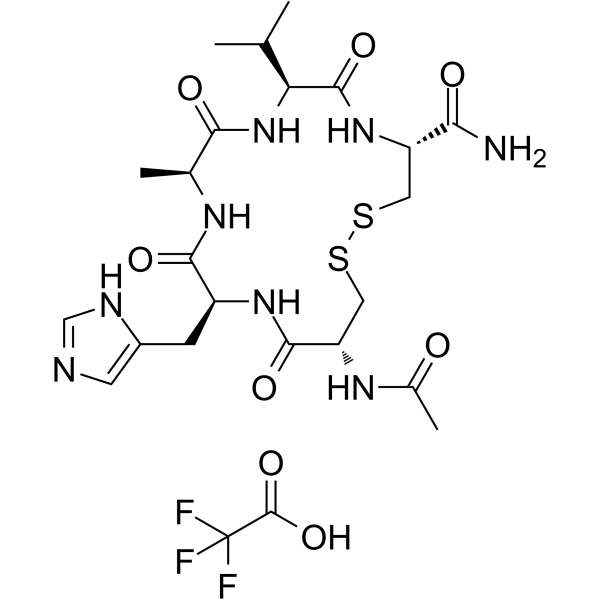
ADH-1 trifluoroacetate
Based on 10 publication(s) in Google Scholar
ADH-1 trifluoroacetate is an N-cadherin antagonist, which inhibits N-cadherin mediated cell adhesion.
For research use only. We do not sell to patients.
- Purity : 99.74%
- CAS No.: 1135237-88-5
- Formula: C24H35F3N8O8S2
- Molecular Weight:684.71
-
Storage:
Sealed storage, away from moisture.
Powder -80°C, 2 years , -20°C, 1 year* In solvent : -80°C, 6 months; -20°C, 1 month (sealed storage, away from moisture)

To place orders, for customer services and technical support, please contact: MedChemExpress USA
Tel: 609-228-6898 E-mail: [email protected] [email protected]


-
 Biological Activity
-
Chemical Information
-
Solvent & Solubility
- Purity & Documentation
- References
-
 Help & FAQs


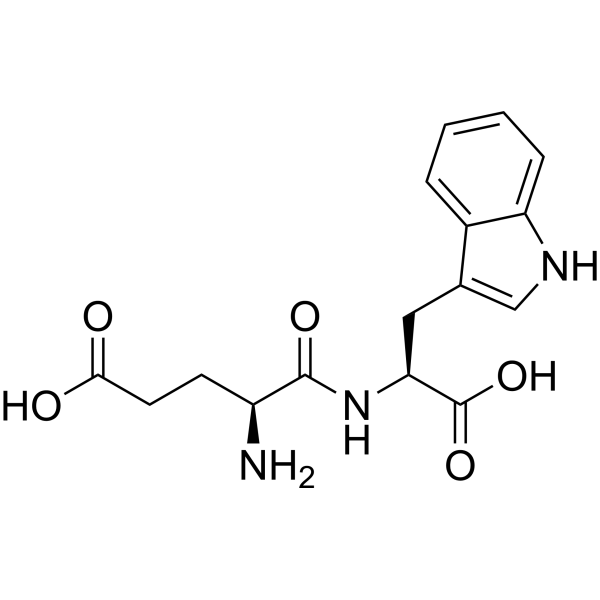
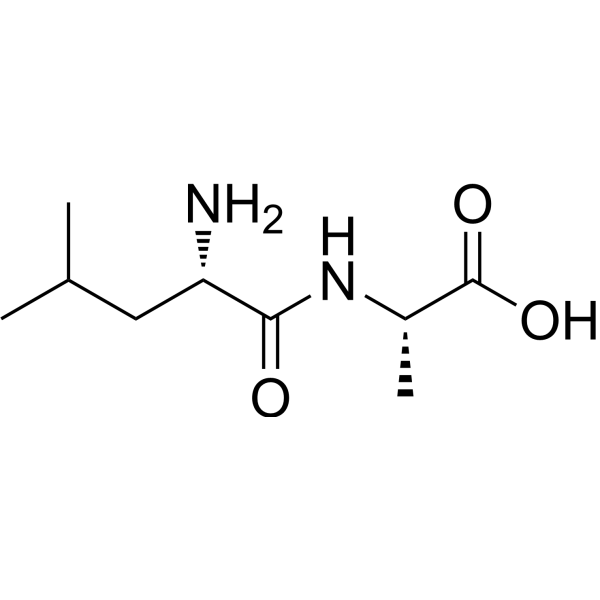

Publications Citing Use of MedChemExpress (MCE) ADH-1 trifluoroacetate
More- Cell Death Dis. 2022 Jun 20;13(6):557. [Abstract]
- Oncogene. 2022 Nov;41(46):5020-5031. [Abstract]
- Sci Rep. 2019 Feb 6;9(1):1517. [Abstract]
- J Cell Mol Med. 2022 Apr;26(8):2392-2403. [Abstract]
- iScience. 2024 Feb 6;27(3):109119. [Abstract]
- J Pain Res. 2020 Aug 12:13:2065-2072. [Abstract]
- Biochem Biophys Res Commun. 2019 Dec 3;520(2):243-249. [Abstract]
- bioRxiv. 2025 Oct 3.
- bioRxiv. 2025 Oct 24.
- bioRxiv. 2023 Jul 25:2023.07.22.550169. [Abstract]
 Customer Validation & Images

-
Cell Proliferation/Viability Assay
-
In Vivo Efficacy Study
-
In Vivo Efficacy Study
-
WB



Biological Activity
Description
In Vitro
ADH-1 (0.2 mg/mL) blocks collagen I-mediated changes in pancreatic cancer cells, and is highly effective at preventing cell motility that is induced by expression of N-cadherin. ADH-1 (0, 0.1, 0.2, 0.5 and 1.0 mg/mL) induces apoptosis in a dose-dependent and N-cadherin-dependent manner[1].
MedChemExpress (MCE) has not independently confirmed the accuracy of these methods. They are for reference only. .
In Vivo
MedChemExpress (MCE) has not independently confirmed the accuracy of these methods. They are for reference only.


Chemical Information
-
CAS No. 1135237-88-5
-
Appearance Solid
-
Molecular Weight 684.71
-
Formula C24H35F3N8O8S2
-
Color White to off-white
-
Shipping
Room temperature in continental US; may vary elsewhere.
-
Storage
Sealed storage, away from moisture
Powder -80°C 2 years -20°C 1 year * In solvent : -80°C, 6 months; -20°C, 1 month (sealed storage, away from moisture)


Publications (10)
-
Journal Impact Factor
-
Most Recent
-
Cell Death Dis
Co-loaded lapatinib/PAB by ferritin nanoparticles eliminated ECM-detached cluster cells via modulating EGFR in triple-negative breast cancer. [Abstract]2022 Jun 20;13(6):557. PMID: 35725558 -
Oncogene
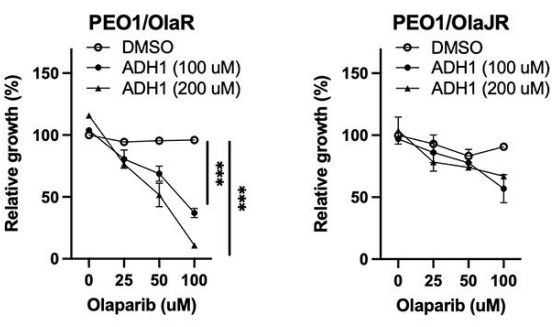
Distinct roles of treatment schemes and BRCA2 on the restoration of homologous recombination DNA repair and PARP inhibitor resistance in ovarian cancer. [Abstract]2022 Nov;41(46):5020-5031. PMID: 36224341
ADH-1 trifluoroacetate purchased from MedChemExpress. Usage Cited in: Oncogene. 2022 Nov;41(46):5020-5031. [Abstract]
Cell growth was examined by XTT assay. Cells were treated with olaparib and/or N-cadherin inhibitor (ADH-1, 0-100 μM) at indicated doses for 72 hours.
-
Sci Rep
The RGD motif is involved in CD97/ADGRE5-promoted cell adhesion and viability of HT1080 cells. [Abstract]2019 Feb 6;9(1):1517. PMID: 30728423 -
J Cell Mol Med
Telmisartan anti-cancer activities mechanism through targeting N-cadherin by mimicking ADH-1 function. [Abstract]2022 Apr;26(8):2392-2403. PMID: 35224849 -
iScience
Dendritic cells overcome Cre/Lox induced gene deficiency by siphoning cytosolic material from surrounding cells. [Abstract]2024 Feb 6;27(3):109119. PMID: 38384841 -
J Pain Res
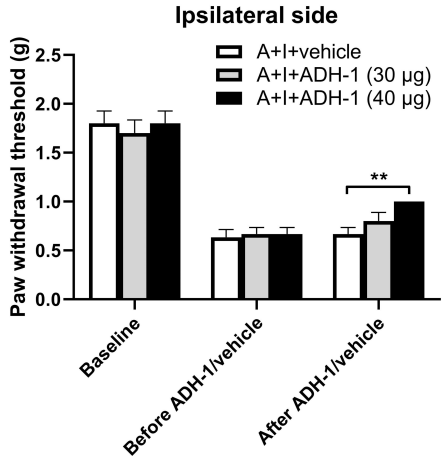
Spinal N-Cadherin/CREB Signaling Contributes to Chronic Alcohol Consumption-Enhanced Postsurgical Pain. [Abstract]2020 Aug 12:13:2065-2072. PMID: 32848450
ADH-1 trifluoroacetate purchased from MedChemExpress. Usage Cited in: J Pain Res. 2020 Aug 12:13:2065-2072. [Abstract]
On day 20 after plantar incision and 5-week ethanol consumption, intrathecal injection of ADH-1 (40 μg), a specific N-cadherin inhibitor, significantly increased the decreased paw withdrawal threshold on the ipsilateral side compared to the vehicle control group.
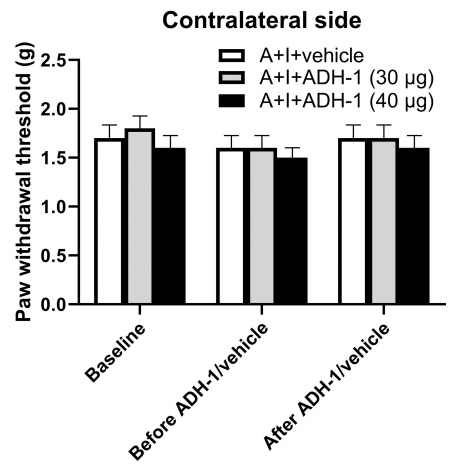
ADH-1 trifluoroacetate purchased from MedChemExpress. Usage Cited in: J Pain Res. 2020 Aug 12:13:2065-2072. [Abstract]
On day 20 after plantar incision and 5-week ethanol consumption, intrathecal injection of ADH-1 (40 μg). The ADH-1 treatment had no effect on the paw withdrawal threshold on the contralateral side.
-
Biochem Biophys Res Commun
2019 Dec 3;520(2):243-249. PMID: 31594642
ADH-1 trifluoroacetate purchased from MedChemExpress. Usage Cited in: Biochem Biophys Res Commun. 2019 Dec 3;520(2):243-249. [Abstract]
HT1080 stable cells were cultured in the absence or presence of exherin (ADH-1, 100 μg/mL), and the level of MMP-9 was evaluated by MMP zymography.
-
-
-
bioRxiv
Dendritic Cells Overcome Cre/Lox Induced Gene Deficiency by Siphoning Material From Neighboring Cells Using Intracellular Monitoring-a Novel Mechanism of Antigen Acquisition. [Abstract]2023 Jul 25:2023.07.22.550169. PMID: 37546718


Solvent & Solubility
In Vitro:
DMSO : ≥ 43 mg/mL (62.80 mM; Hygroscopic DMSO has a significant impact on the solubility of product, please use newly opened DMSO)
H2O : 33.33 mg/mL (48.68 mM; Need ultrasonic)
* "≥" means soluble, but saturation unknown.
Please refer to the solubility information to select the appropriate solvent. Once prepared, please aliquot and store the solution to prevent product inactivation from repeated freeze-thaw cycles.
Storage method and period of stock solution: -80°C, 6 months; -20°C, 1 month (sealed storage, away from moisture). When stored at -80°C, please use it within 6 months. When stored at -20°C, please use it within 1 month.
* Note: If you choose water as the stock solution, please dilute it to the working solution, then filter and sterilize it with a 0.22 μm filter before use.
Please refer to the solubility information to select the appropriate solvent. Once prepared, please aliquot and store the solution to prevent product inactivation from repeated freeze-thaw cycles.
Storage method and period of stock solution: -80°C, 6 months; -20°C, 1 month (sealed storage, away from moisture). When stored at -80°C, please use it within 6 months. When stored at -20°C, please use it within 1 month.
* Note: If you choose water as the stock solution, please dilute it to the working solution, then filter and sterilize it with a 0.22 μm filter before use.
Concentration (start) × Volume (start) = Concentration (final) × Volume (final)
In Vivo:
Select the appropriate dissolution method based on your experimental animal and administration route.
- For the following dissolution methods, please ensure to first prepare a clear stock solution using an In Vitro approach and then sequentially add co-solvents:
- To ensure reliable experimental results, the clarified stock solution can be appropriately stored based on storage conditions. As for the working solution for In Vivo experiments, it is recommended to prepare freshly and use it on the same day.
- The percentages shown for the solvents indicate their volumetric ratio in the final prepared solution. If precipitation or phase separation occurs during preparation, heat and/or sonication can be used to aid dissolution.
Add each solvent one by one: 10% DMSO 40% PEG300 5% Tween-80 45% Saline
Solubility: ≥ 2.5 mg/mL (3.65 mM); Clear solution
This protocol yields a clear solution of ≥ 2.5 mg/mL (saturation unknown).
Taking 1 mL working solution as an example, add 100 μL DMSO stock solution (25.0 mg/mL) to 400 μL PEG300, and mix evenly; then add 50 μL Tween-80 and mix evenly; then add 450 μL Saline to adjust the volume to 1 mL.
Preparation of Saline: Dissolve 0.9 g sodium chloride in ddH₂O and dilute to 100 mL to obtain a clear Saline solution.
Add each solvent one by one: 10% DMSO 90% (20% SBE-β-CD in Saline)
Solubility: ≥ 2.5 mg/mL (3.65 mM); Clear solution
This protocol yields a clear solution of ≥ 2.5 mg/mL (saturation unknown).
Taking 1 mL working solution as an example, add 100 μL DMSO stock solution (25.0 mg/mL) to 900 μL 20% SBE-β-CD in Saline, and mix evenly.
Preparation of 20% SBE-β-CD in Saline (4°C, storage for one week): 2 g SBE-β-CD powder is dissolved in 10 mL Saline, completely dissolve until clear.
For the following dissolution methods, please prepare the working solution directly:
It is recommended to prepare fresh solutions and use them promptly within a short period of time.
The percentages shown for the solvents indicate their volumetric ratio in the final prepared solution. If precipitation or phase separation occurs during preparation, heat and/or sonication can be used to aid dissolution.
Add each solvent one by one: PBS
Solubility: 50 mg/mL (73.02 mM); Clear solution; Need ultrasonic
In Vivo Dissolution Calculator
Please enter the basic information of animal experiments:
-
-
-
-
Recommended: Prepare an additional quantity of animals to account for potential losses during experiments.
Working solution concentration: 0.22 mg/mL
This product has good water solubility, please refer to the measured solubility data in water/PBS/Saline for details.


Purity & Documentation
-
Data Sheet (283 KB)
-
SDS (252 KB)
- English - EN (252 KB)
- Français - FR (252 KB)
- Deutsch - DE (252 KB)
- Norwegian - NO (252 KB)
- Español - ES (252 KB)
- Swedish - SV (252 KB)
- Italian - IT (252 KB)
- Korean - KR (252 KB)
- Portuguese - PT (252 KB)
-
Handling Instructions (2659 KB)
References
[1]. Shintani Y, et al. ADH-1 suppresses N-cadherin-dependent pancreatic cancer progression. Int J Cancer. 2008 Jan 1;122(1):71-7. [Content Brief]
[2]. Li H, et al. ADH1, an N-cadherin inhibitor, evaluated in preclinical models of angiogenesis and androgen-independent prostate cancer. Anticancer Drugs. 2007 Jun;18(5):563-8. [Content Brief]
[3]. Turley RS, et al. Targeting N-cadherin increases vascular permeability and differentially activates AKT in melanoma. Ann Surg. 2015 Feb;261(2):368-77 [Content Brief]


Complete Stock Solution Preparation Table
Please refer to the solubility information to select the appropriate solvent. Once prepared, please aliquot and store the solution to prevent product inactivation from repeated freeze-thaw cycles.
Storage method and period of stock solution: -80°C, 6 months; -20°C, 1 month (sealed storage, away from moisture). When stored at -80°C, please use it within 6 months. When stored at -20°C, please use it within 1 month.
| Optional Solvent | Concentration Solvent Mass | 1 mg | 5 mg | 10 mg | 25 mg |
|---|---|---|---|---|---|
| H2O / DMSO | 1 mM | 1.4605 mL | 7.3024 mL | 14.6047 mL | 36.5118 mL |
| 5 mM | 0.2921 mL | 1.4605 mL | 2.9209 mL | 7.3024 mL | |
| 10 mM | 0.1460 mL | 0.7302 mL | 1.4605 mL | 3.6512 mL | |
| 15 mM | 0.0974 mL | 0.4868 mL | 0.9736 mL | 2.4341 mL | |
| 20 mM | 0.0730 mL | 0.3651 mL | 0.7302 mL | 1.8256 mL | |
| 25 mM | 0.0584 mL | 0.2921 mL | 0.5842 mL | 1.4605 mL | |
| 30 mM | 0.0487 mL | 0.2434 mL | 0.4868 mL | 1.2171 mL | |
| 40 mM | 0.0365 mL | 0.1826 mL | 0.3651 mL | 0.9128 mL | |
| DMSO | 50 mM | 0.0292 mL | 0.1460 mL | 0.2921 mL | 0.7302 mL |
| 60 mM | 0.0243 mL | 0.1217 mL | 0.2434 mL | 0.6085 mL |
* Note: If you choose water as the stock solution, please dilute it to the working solution, then filter and sterilize it with a 0.22 μm filter before use.


ADH-1 trifluoroacetate Related Classifications
HY-13541A Related Classifications
 Powered by Bioz