1. Search Result
Search Result
Results for "

glutathione S-transferase inducer

" in MedChemExpress (MCE) Product Catalog:

18

Inhibitors & Agonists

4

Natural
Products

1

Isotope-Labeled Compounds

Cat. No. Product Name Target Research Areas Chemical Structure
  • HY-135318
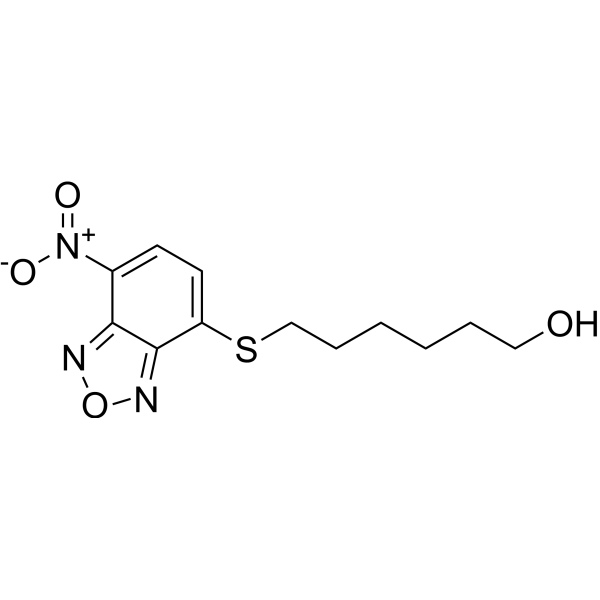
    NBDHEX
    2 Publications Verification

    Apoptosis Autophagy Glutathione S-transferase Cancer
    NBDHEX is a potent glutathione S-transferase P1-1 (GSTP1-1) inhibitor. NBDHEX induces apoptosis of tumor cells. NBDHEX acts as an anticancer agent by inhibiting GSTs catalytic activity, avoiding inconvenience of the inhibitor extrusion from the cell by specific pumps and disrupting the interaction between the GSTP1-1 and key signaling effectors. NBDHEX can also act as late-phase autophagy inhibitor .
    NBDHEX
  • HY-N1916
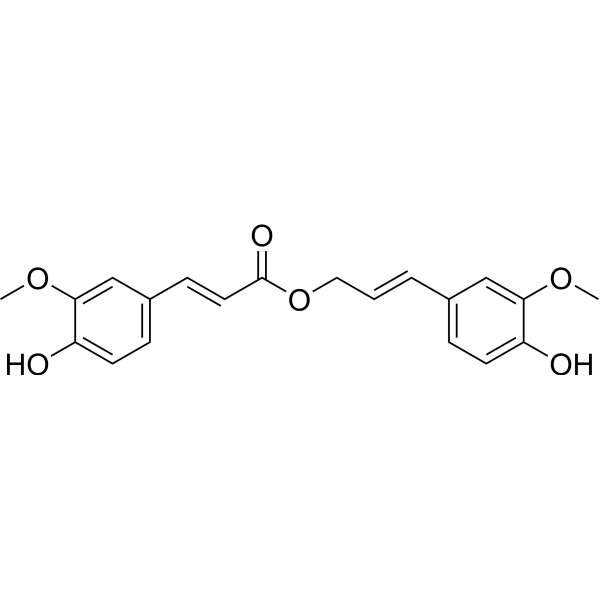
    Coniferyl ferulate
    1 Publications Verification

    Glutathione S-transferase P-glycoprotein Apoptosis iGluR CaMK p38 MAPK Reactive Oxygen Species (ROS) Bacterial Infection Cardiovascular Disease Neurological Disease Inflammation/Immunology Cancer
    Coniferyl ferulate is an orally active phenolic acid compound. Coniferyl ferulate is a potent inhibitor of glutathione S-transferase (GST) (IC50 = 0.3 μM), which downregulates P-gp expression, induces apoptosis in B-MD-C1 (ADR+/+) cells, and reverses multidrug resistance. Coniferyl ferulate blocks the NMDAR/NR2B-CaMKII-MAPKs signaling pathway, inhibits ROS production and mitochondrial apoptosis, while reshapes the intestinal microbiota and microbial metabolism, ameliorates colonic inflammation and alleviates depressive symptoms in mice. Coniferyl ferulate can alleviate the toxicity of xylene to hematopoietic stem and progenitor cells by targeting Mgst2. Coniferyl ferulate exhibits antibacterial activity against the Gram-positive Bacillus subtilis and Staphylococcus aureus .
    Coniferyl ferulate
  • HY-136376

    Environmental Pollutants Herbicide Others
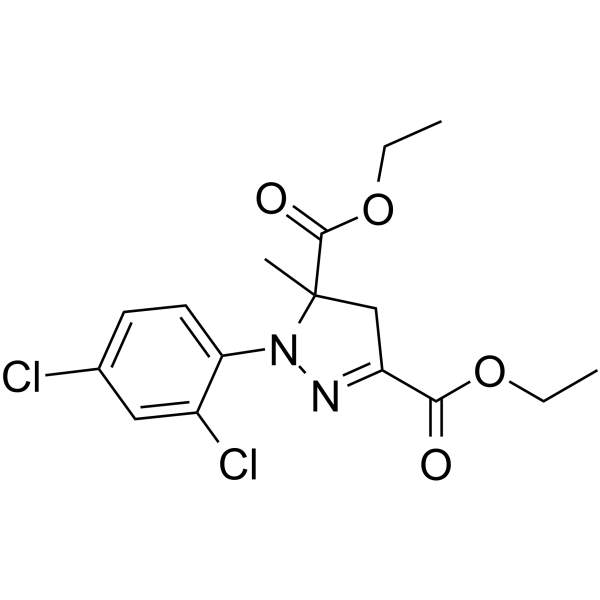
    Mefenpyr-diethyl is a pyrazoline-type herbicide safener that functions to enhance lipid biosynthesis. Mefenpyr-diethyl effectively prevents herbicide-induced phytotoxic damage caused by herbicides such as fenoxaprop-p-ethyl (HY-B2013) and mesosulfuron-methyl (HY-126987) by protecting cereal crops including wheat. Mefenpyr-diethyl significantly increases lipid content in wheat either when applied alone or in combination with the herbicide fenoxaprop-p-ethyl. The mechanism of action of Mefenpyr-diethyl does not involve the induction of glutathione S-transferase (GST) activity in wheat .
    Mefenpyr-diethyl
  • HY-132281

    Glutathione S-transferase Metabolic Disease
    16-Oxokahweol, a Kahweol (HY-N6258) derivative, is a glutathione S-transferase inducer .
    16-Oxokahweol
  • HY-16124

    TLK-286; TER286

    DNA-PK Apoptosis Cancer
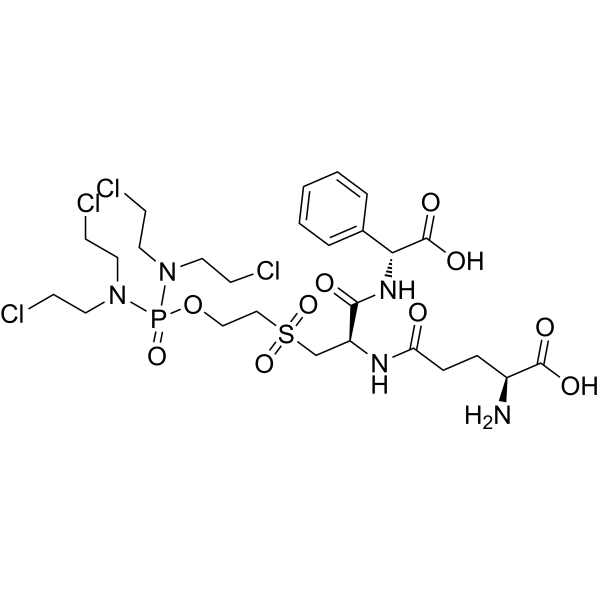
    Canfosfamide (TLK-286, TER286) is a glutathione analogue prodrug that is activated by glutathione S-transferase P1-1 and induces apoptosis. Canfosfamide also inhibits the catalytic kinase activity of DNA-dependent protein kinase (DNA-PK). Canfosfamide produces an anticancer alkylating agent and a glutathione derivative after activation. Canfosfamide can be used to research malignancies .
    Canfosfamide
  • HY-B1640R
    Ethacrynic acid (Standard)
    Maximum Cited Publications
    9 Publications Verification

    Etacrynic acid (Standard)

    Reference Standards Glutathione S-transferase NF-κB Calcium Channel Inflammation/Immunology Cancer
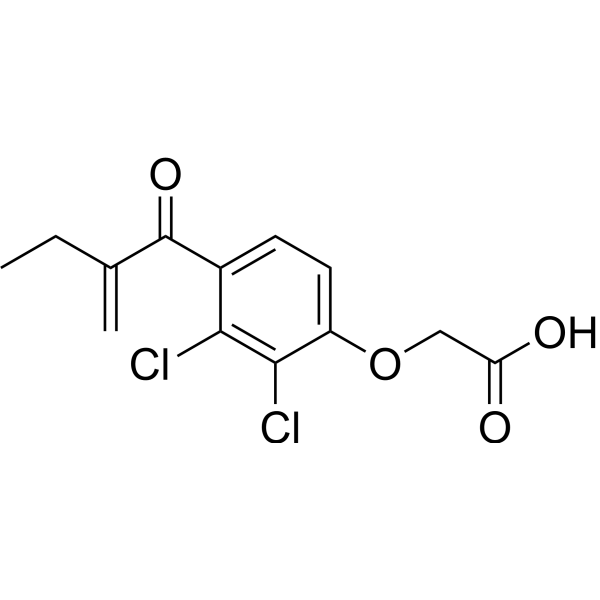
    Ethacrynic acid (Standard) is the analytical standard of Ethacrynic acid. This product is intended for research and analytical applications. Ethacrynic acid (Etacrynic acid) is a diuretic. Ethacrynic acid is an inhibitor of glutathione S-transferases (GSTs). Ethacrynic acid is a potent inhibitor of NF-kB-signaling pathway, and also modulates leukotriene formation. Ethacrynic acid also inhibits L-type voltage-dependent and store-operated calcium channel, leading to relaxation of airway smooth muscle (ASM) cells. Ethacrynic acid has anti-inflammatory properties that reduces the retinoid-induced ear edema in mice .
    Ethacrynic acid (Standard)
  • HY-W020788

    CGA 154281

    Environmental Pollutants Glutathione S-transferase Estrogen Receptor/ERR Pregnane X Receptor (PXR) FXR Metabolic Disease Cancer
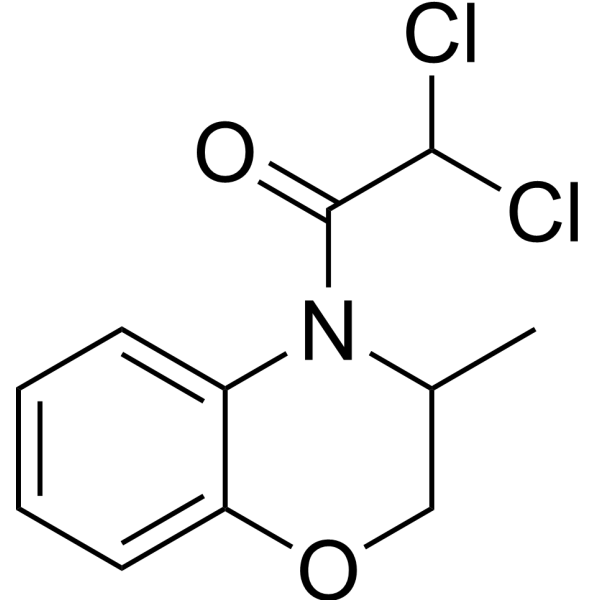
    Benoxacor (CGA 154281) is a herbicide safener and xenobiotic metabolism regulator. Benoxacor protects maize from the toxicity of metolachlor mainly by inducing detoxifying enzymes such as Glutathione S-transferase. Benoxacor also activates FXR, PXR and ERRα, and inhibits aromatase (aromatase). However, Benoxacor exhibits potential subacute oral toxicity and a high risk of hepatotoxicity in animal models. Benoxacor induces reactive oxygen species accumulation, interferes with embryonic heart development, and causes increased liver and kidney weights as well as alterations in gut microbiota in mice. Benoxacor can be used in studies related to hepatic steatosis, infertility, breast cancer and developmental toxicity .
    Benoxacor
  • HY-W024365

    PROTAC Linkers Cancer
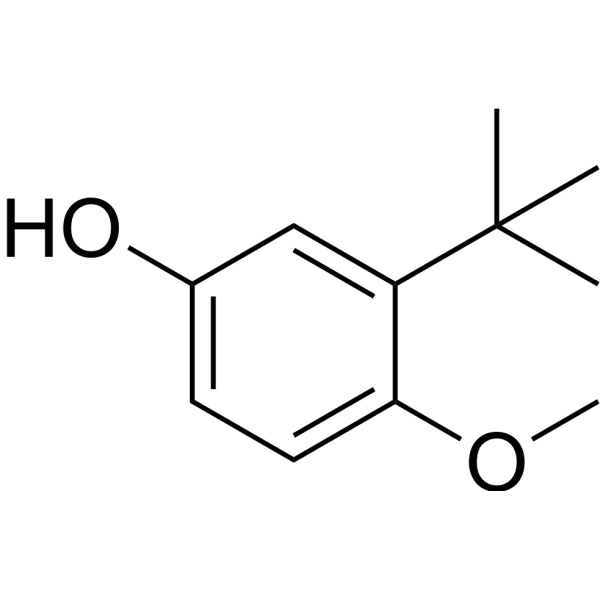
    3-tert-Butyl-4-methoxyphenol is a PROTAC linker, belongs to alkyl/ether class, with insecticidal activity. 3-tert-Butyl-4-methoxyphenol also induced increased activities of glutathione (GSH) S-transferase and epoxide hydrolase in the liver and forestomach tissues of A/HeJ mice, regulating the carcinogen metabolism system .
    3-tert-Butyl-4-methoxyphenol
  • HY-116726

    Glutathione S-transferase Cancer
    Crambene is an orally active cyanide compound isolated from cruciferous vegetables. Crambene has a cancer-preventive effect and induces significant upregulation of quinone reductase and glutathione S-transferase in vitro and in vivo .
    Crambene
  • HY-W975966

    Keap1-Nrf2 Neurological Disease
    CPDT is an orally active and highly potent inducer of phase 2 enzymes and an activator of Nrf2. The activities of key phase 2 enzymes, including glutathione S-transferase, NAD(P)H:quinone:oxidoreductase 1 and glutamate cysteine synthetase, and levels of glutathione were elevated by CPDT in rat bladder in vivo and in cultured bladder cells in vitro [2].
    CPDT
  • HY-W020788R

    CGA 154281 (Standard)

    Reference Standards Glutathione S-transferase Estrogen Receptor/ERR Pregnane X Receptor (PXR) FXR Others
    Benoxacor (Standard) is the analytical standard of Benoxacor. This product is intended for research and analytical applications. Benoxacor (CGA 154281) is a herbicide safener and xenobiotic metabolism regulator. Benoxacor protects maize from the toxicity of metolachlor mainly by inducing detoxifying enzymes such as Glutathione S-transferase. Benoxacor also activates FXR, PXR and ERRα, and inhibits aromatase (aromatase). However, Benoxacor exhibits potential subacute oral toxicity and a high risk of hepatotoxicity in animal models. Benoxacor induces reactive oxygen species accumulation, interferes with embryonic heart development, and causes increased liver and kidney weights as well as alterations in gut microbiota in mice. Benoxacor can be used in studies related to hepatic steatosis, infertility, breast cancer and developmental toxicity .
    Benoxacor (Standard)
  • HY-W100026S

    Isotope-Labeled Compounds Glutathione S-transferase Estrogen Receptor/ERR Endocrinology
    Galaxolide-d6 (mixture of diastereomers) (>80%) is the deuterium labeled Galaxolide (HY-W100026). Galaxolide can induce estrogenic activity (Estrogen Receptor/ERR), trigger oxidative stress and genotoxicity, and induce EROD and GST (Glutathione S-transferase) enzyme activity .
    Galaxolide-d6 (mixture of diastereomers) (>80%)
  • HY-W154265

    Glutathione S-transferase Apoptosis Cancer
    2,2′-Dihydroxychalcone, a flavonoid, is a glutathione S-transferase (GST) inhibitor with an IC50 of 28.9 μM in human colon cancer cells. 2,2′-Dihydroxychalcone induces cell cycle arrest and apoptosis in prostate cancer cells. 2,2′-Dihydroxychalcone has anticancer and anti-inflammatory properties .
    2,2′-Dihydroxychalcone
  • HY-B1640A

    Etacrynic acid sodium; Sodium etacrynate

    NF-κB Glutathione S-transferase Calcium Channel NO Synthase Cardiovascular Disease Inflammation/Immunology Cancer
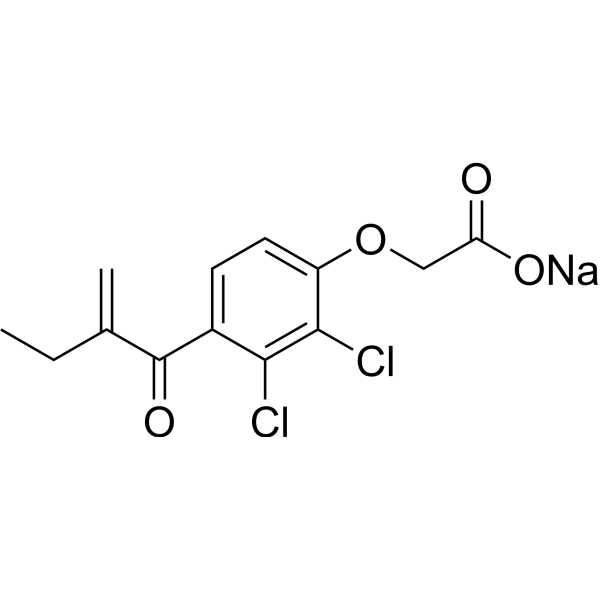
    Ethacrynic acid (Etacrynic acid sodium) sodium is a diuretic. Ethacrynic acid sodium is an inhibitor of glutathione S-transferases (GSTs). Ethacrynic acid sodium is a potent inhibitor of NF-kB-signaling pathway, and also modulates leukotriene formation. Ethacrynic acid sodium also inhibits L-type voltage-dependent and store-operated calcium channel, leading to relaxation of airway smooth muscle (ASM) cells. Ethacrynic acid sodium has anti-inflammatory properties that reduces the retinoid-induced ear edema in mice .
    Ethacrynic acid sodium
  • HY-108538

    Glutathione S-transferase NF-κB Calcium Channel Inflammation/Immunology
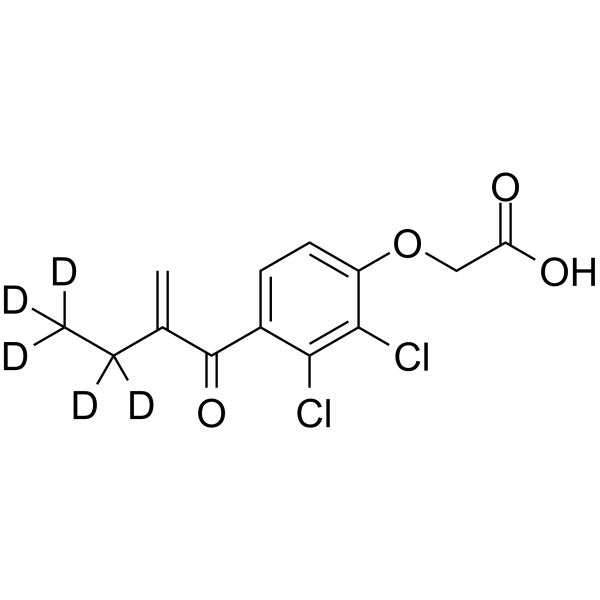
    Ethacrynic acid D5 is a deuterium labeled Ethacrynic acid. Ethacrynic acid is a diuretic. Ethacrynic acid is an inhibitor of glutathione S-transferases (GSTs). Ethacrynic acid is a potent inhibitor of NF-kB-signaling pathway, and also modulates leukotriene formation. Ethacrynic acid also inhibits L-type voltage-dependent and store-operated calcium channel, leading to relaxation of airway smooth muscle (ASM) cells. Ethacrynic acid has anti-inflammatory properties that reduces the retinoid-induced ear edema in mice .
    Ethacrynic acid D5
  • HY-W024365R

    PROTAC Linkers Reference Standards Cancer
    3-tert-Butyl-4-methoxyphenol (Standard) is the analytical standard of 3-tert-Butyl-4-methoxyphenol. This product is intended for research and analytical applications. 3-tert-Butyl-4-methoxyphenol is a PROTAC linker, belongs to alkyl/ether class, with insecticidal activity. 3-tert-Butyl-4-methoxyphenol also induced increased activities of glutathione (GSH) S-transferase and epoxide hydrolase in the liver and forestomach tissues of A/HeJ mice, regulating the carcinogen metabolism system .
    3-tert-Butyl-4-methoxyphenol (Standard)
  • HY-177958

    Lactate Dehydrogenase Glutathione S-transferase Cholinesterase (ChE) Parasite Infection Cancer
    ACS03 is a hybrid thiophene-acridine compound. ACS03 induces an increase in lactate dehydrogenase, glutathione S-transferase, and AChE activities. ACS03 has antileishmanial activity. ACS03 exhibits selective anti-cancer effects against colon carcinoma .
    ACS03
  • HY-N17963

    Glutathione S-transferase Influenza Virus Interleukin Related IFNAR STAT Infection
    Cappariloside A is a larvicide that exhibits larvicidal activity against Aedes aegypti larvae and reduces larval glutathione-S-transferase activity. Cappariloside A also possesses antiviral activity, decreases the level of phosphorylated STAT1 in cells, inhibits the replication of influenza viruses H1N1, H3N2, PIV3 and ADV, and downregulates the expression of IL-6, IP-10, MIG, RANTES/CCL-5, IFN-β and IL-29. Cappariloside A suppresses the inflammatory response induced by mouse lung-adapted influenza virus strains. Cappariloside A can be used in studies related to larvicidal applications and influenza virus infection .
    Cappariloside A

Inquiry Online

Your information is safe with us. * Required Fields.

Salutation


Country or Region *

Applicant Name *


Organization Name *

Department *


Email Address *


Product Name *

Cat. No.


Requested quantity *

Phone Number *


Remarks

Inquiry Online

Inquiry Information

Product Name:
Cat. No.:
Quantity:
MCE Japan Authorized Agent:

