20 Results for "

hyphal growth

" in MedChemExpress (MCE) Product Catalog:
Products (20)

20 Results for "hyphal growth" in MCE Product Catalog:

Cat. No.: HY-N6784
CAS No.: 11050-94-5
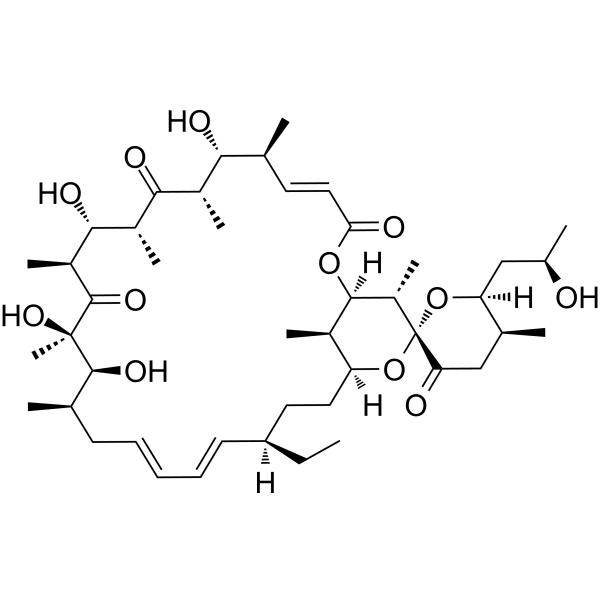
Oligomycin B is an antibiotic that acts as a non-selective inhibitor of ATP Synthase. Oligomycin B increases mitochondrial membrane potential. Oligomycin B induces apoptosis and necrosis. Oligomycin B impairs the motility of Plasmopara viticola zoospores and induces their lysis. Oligomycin B inhibits Magnaporthe oryzae (wheat blast fungus) and suppresses the development of wheat blast. Oligomycin B reduces hyphal growth and spore germination of Botrytis cinerea, and protects Arabidopsis thaliana against Botrytis cinerea infection. Oligomycin B exacerbates cytotoxic brain edema in rats with cerebral cortical contusion, increases intracranial pressure and brain water content, and aggravates mitochondrial damage in these rats. Oligomycin B is used in studies related to grape downy mildew, traumatic brain injury, wheat blast, and gray mold .
loading...
    loading...
Cat. No.: HY-121999
CAS No.: 17990-16-8
Purity:  99.54%
Synonyms: (Z)-Abienol
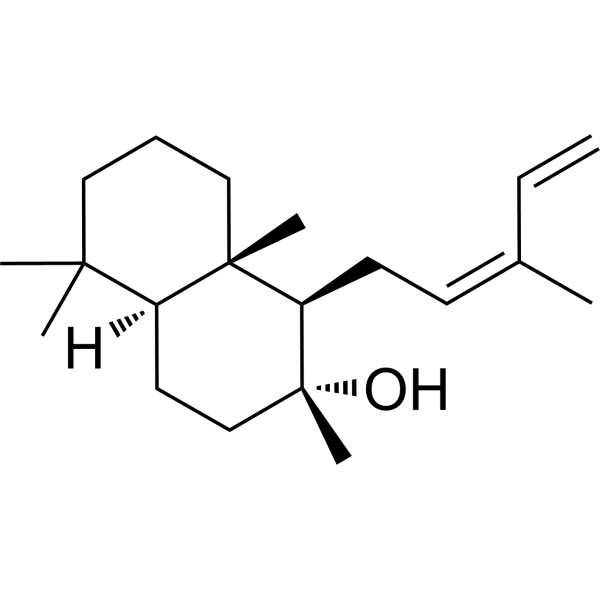
(+)-cis-Abienol (Compound Z-abienol), a diterpenoid, can be isolated from leaves of tobacco. (+)-cis-Abienol inhibits hyphal growth of P. nicotianae .
loading...
    loading...
Cat. No.: HY-124833
CAS No.: 81-61-8
Purity:  97.1%
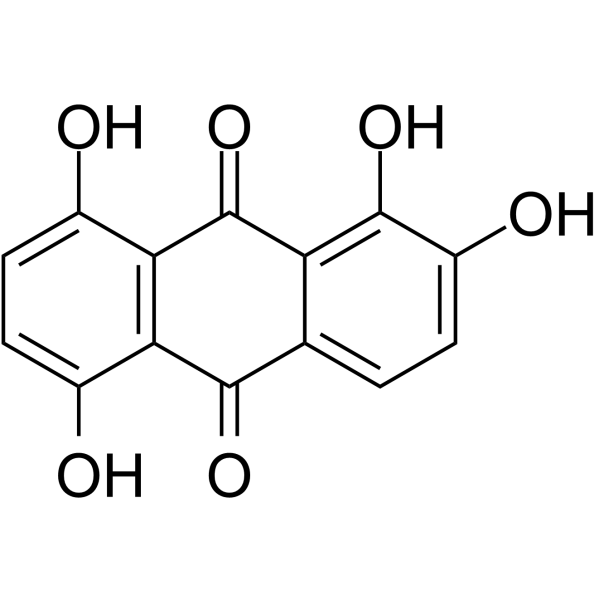
Quinalizarin is a protein kinase CK2 inhibitor with a Ki of 0.052 μM. Quinalizarin exhibits antifungal and anticancer activities. Quinalizarin induces ROS production, apoptotic signaling, mitochondrial pathway activation, cell cycle arrest, and cytotoxicity in cancer cells. Quinalizarin inhibits hyphal growth, biofilm formation, and mature biofilm integrity of Candida albicans. Quinalizarin can be used in research related to cancer and fungal infections .
loading...
    loading...
Cat. No.: HY-P10304A
Synonyms: Cyclo(Pro-Arg) TFA
Target:  

Fungal

Research Areas:  

Infection

Cyclo (Arg-Pro) TFA is a chitinase inhibitor. Cyclo (Arg-Pro) TFA disrupts cell separation and morphological transition of yeast by inhibiting chitinase activity. Cyclo (Arg-Pro) TFA prevents cell separation of Saccharomyces cerevisiae, leading to the formation of grape-like cell clusters, without inhibiting cell growth. Cyclo (Arg-Pro) TFA blocks the morphological transition of Candida albicans from yeast form to hyphal form, without inhibiting cell growth .
loading...
    loading...
Cat. No.: HY-N2558
CAS No.: 19668-69-0
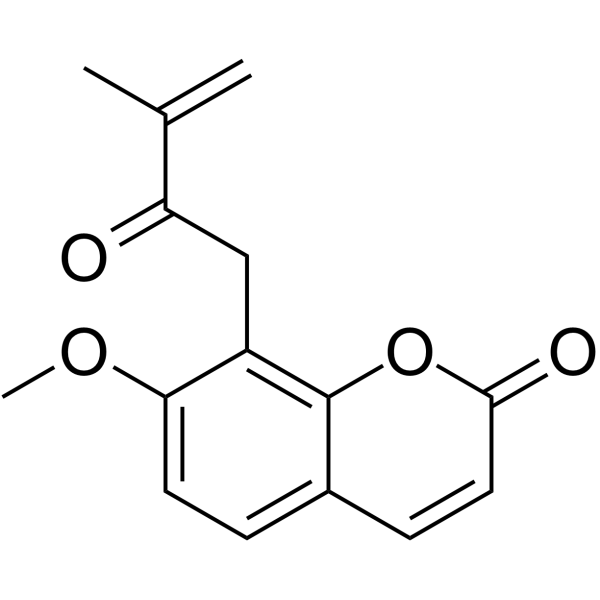
Murrayone is a coumarin compound with antifungal and antiplatelet activities. Murrayone disrupts fungal redox homeostasis, impairs cell membrane integrity, inhibits sporulation, spore germination and hyphal growth, and causes morphological damage to fungal cells. Murrayone reduces the disease severity of blueberry fruits infected with Botrytis cinerea. Murrayone can be used in studies related to fungal infections and vascular diseases .
loading...
    loading...
Cat. No.: HY-178732
CAS No.: 1463913-43-0
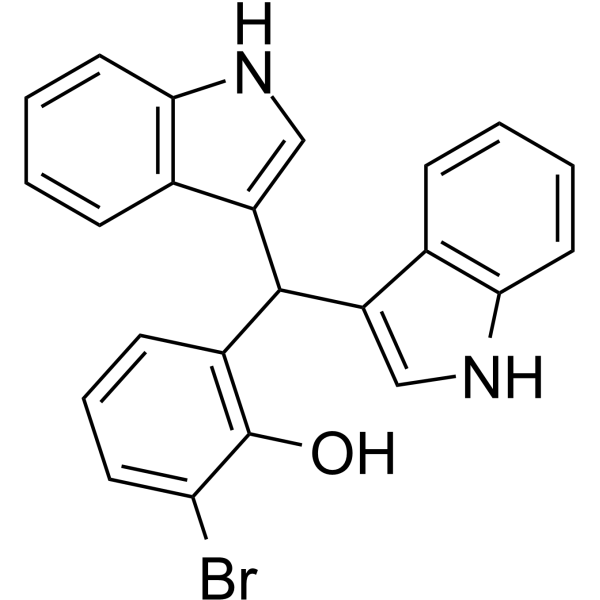
AB-22, a vinyl sulfate compound, is an orally active antifungal agent. AB-22 inhibits hyphal growth and biofilm initiation by inhibiting the gene expression of ALS3, HWP1, and ECE1 in Candida albicans SC5314 cells. AB-22 can be used for the research of infrction, such as systemic candidiasis .

loading...
    loading...
Cat. No.: HY-120921
CAS No.: 156052-68-5
Synonyms: RH-7281
Research Areas:  

Infection

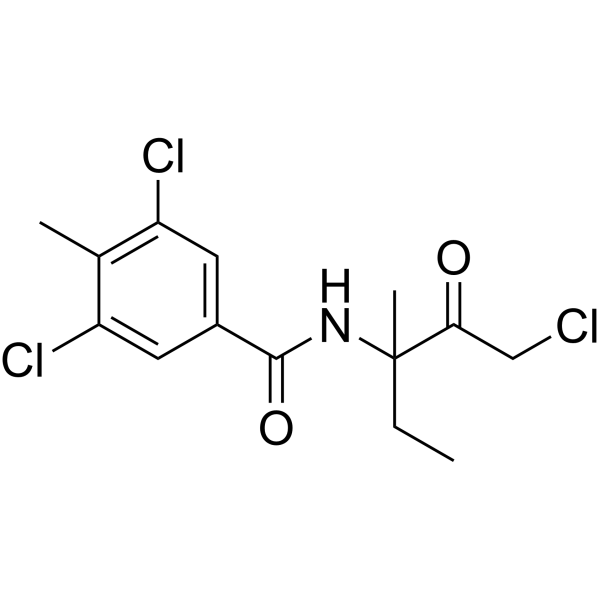
Zoxamide (RH-7281) is an oomycete Fungicide and covalent β-tubulin inhibitor. RH-7281 inhibits the assembly of tubulin into microtubules in vitro. Zoxamide binds covalently to β-tubulin, disrupting microtubule assembly and the cytoskeleton. Zoxamide blocks nuclear division in germinated hyphae of Phytophthora capsici and inhibits hyphal growth of Phytophthora capsici .
loading...
    loading...
Cat. No.: HY-N15600
CAS No.: 68053-32-7
Synonyms: (-)-Merulidial
Merulidial (Compound 1) is an antibiotic and cytotoxic agent with a sesquiterpene dialdehyde structure. Merulidial significantly inhibits the germination of spores and the hyphal growth of the wood-roting basidiomycete Heterobasidion annosum (H. annosum) and the saprophytic mould Cladosporium cucumerinum (C.cucumerinum). Merulidial also inhibits a variety of bacteria, algae and DNA synthesis of ECA cells. Merulidial shows a strong anticancer activity with IC50 s of 20 and 10 μg/mL for ECA and L1210 cells, respectively .
loading...
    loading...
Cat. No.: HY-145873
CAS No.: 2759037-58-4
Target:  

Fungal

Research Areas:  

Infection

BI-10 is an antifungal compound. BI-10 combined with Fluconazole can inhibit hyphal growth, result in ROS accumulation, and decrease mitochondrial membrane potential (MMP) as well as altering membrane permeability .
loading...
    loading...
Cat. No.: HY-169202
CAS No.: 3055029-65-4
Target:  

Fungal

Research Areas:  

Infection

Antifungal agent 118 (compund C22) inhibits the hyphal growth of V. mali by inducing oxidative damage and disrupting the integrity of the cell membrane .
loading...
    loading...
Cat. No.: HY-161856
Target:  

mTOR Fungal

Research Areas:  

Others

Antifungal agent 106 (Compound Z31) is a benzoic acid derivative and a potential fungicide against Monilinia fructicola. Antifungal agent 106 exhibits antifungal activity with an EC50 value of 11.8 mg/L. It affects hyphal growth by disrupting cell membrane integrity, leading to increased membrane permeability and release of intracellular electrolytes. Antifungal agent 106 can be used in research related to brown rot of stone fruits .
loading...
    loading...
Cat. No.: HY-178051
Research Areas:  

Infection

Antifungal agent 135 (Compound C2), an antifungal agent, is a Succinate dehydrogenase (SDH) inhibitor with an IC50 of 1.99 μM. Antifungal agent 135 has potent antifungal activities against Valsa mali, Sclerotinia sclerotiorum and Phytophthora capsici with EC50 s of 0.280, 1.11 and 0.130 mg/L, respectively. Antifungal agent 135 shows protective and curative activities against Phytophthora capsici and Valsa mali by effectively disrupting hyphal structural integrity and inhibiting mycelial growth .
loading...
    loading...
Cat. No.: HY-183759
CAS No.: 2132414-06-1
Synonyms: SYN551769
Target:  

Fungal

Research Areas:  

Infection

Feneptamidoquin (SYN551769) is a quinoline Fungicide. The combination of Feneptamidoquin and Eugenol (HY-N0337) potently inhibits mycelial growth of Botrytis cinerea. Feneptamidoquin can be used in studies related to gray mold .
loading...
    loading...
Cat. No.: HY-184728
Target:  

Fungal PKA

Research Areas:  

Infection

Antifungal agent-169 (compound 5p) is an antifungal agent that inhibits fluconazole (HY-B0101)-susceptible Candida albicans SC5314 with an MIC50 of 0.28 μM. Antifungal agent-169 reduces the expression levels of cAMP-PKA pathway-related genes including RAS1, EFG1, BCR1, ECE1 and HWP1 in Candida albicans. Antifungal agent-169 inhibits biofilm formation and hyphal growth of Candida albicans. Antifungal agent-169 can be used in studies related to Candida albicans infection .
loading...
    loading...
Cat. No.: HY-N19791
CAS No.: 13410-15-6
6-Methoxymellein, a phytoalexin, is a NF-κB inhibitor. 6-Methoxymellein reduces nuclear localization and DNA binding activity of NF-κB p65 and p50 subunits. 6-Methoxymellein decreases mRNA transcription and secretion of IL-6 and IL-8. 6-Methoxymellein reduces the proportion of CD44 +/CD24 breast cancer cells, decreases expression of c-Myc, Sox-2 and Oct4, inhibits proliferation and migration of breast cancer cells, and reduces mammosphere growth. 6-Methoxymellein inhibits fungal growth of Trichophyton rubrum and Botrytis cinerea, and inhibits Trichophyton rubrum biofilm formation via hyphal disintegration. 6-Methoxymellein can be used for the research of breast cancer, tinea corporis, and carrot post-harvest storage rot .
loading...
    loading...
Cat. No.: HY-W102893
CAS No.: 99910-50-6
4,6-Dibromo indole is a natural product found in the adipose tissue of bottlenose dolphins, algae, and invertebrates including species of the genus Tubastrea, with multiple activities such as nematicidal and antifungal properties. 4,6-Dibromo indole inhibits the motility of Caenorhabditis elegans and induces a multi-stage nematicidal effect. 4,6-Dibromo indole inhibits the growth, biofilm formation, and yeast-hypha transition of Candida, induces ROS accumulation, disrupts hyphal networks, and reduces biofilm biomass. 4,6-Dibromo indole can be used in studies on crop damage related to nematode infestation and Candida infection .
loading...
    loading...
Cat. No.: HY-181610
CAS No.: 3112883-32-3
Research Areas:  

Infection

SDH-IN-45 is a succinate dehydrogenase BcSDH inhibitor and mycelial growth inhibitor targeting Botrytis cinerea, with an IC50 of 5.97 μg/mL against Botrytis cinerea. SDH-IN-45 inhibits succinate dehydrogenase, a component of the mitochondrial electron transport chain, via a unique binding mode, thereby regulating fungal energy metabolism. SDH-IN-45 causes morphological damage to Botrytis cinerea mycelia, leading to collapse and shrinkage of mycelial structures. SDH-IN-45 exhibits in vitro fungicidal activity against Botrytis cinerea. SDH-IN-45 can be used in research related to cucumber gray mold .
loading...
    loading...
Cat. No.: HY-181346
CAS No.: 3103433-67-3
Research Areas:  

Infection

SDH-IN-44 is a succinate dehydrogenase (SDH) inhibitor with an IC50 of 12.5 μg/mL against Alternaria solani. SDH-IN-44 exhibits antifungal activity and inhibits fungal mycelial growth. SDH-IN-44 is applicable to research related to fungal infections .
loading...
    loading...
Cat. No.: HY-187509
Research Areas:  

Infection

Succinate dehydrogenase-IN-13 is a succinate dehydrogenase inhibitor with an IC50 of 8.69 μM against Rhizoctonia solani. Succinate dehydrogenase-IN-13 binds stably within the succinate dehydrogenase active site to disrupt fungal respiration and energy metabolism, and induces hyphal distortion and mitochondrial damage in Rhizoctonia solani. Succinate dehydrogenase-IN-13 reduces intracellular ATP levels in Rhizoctonia solani mycelia. Succinate dehydrogenase-IN-13 can be used for the research of Rhizoctonia solani infection, Botrytis cinerea infection .
loading...
    loading...
Cat. No.: HY-183722
Research Areas:  

Infection

SDH-IN-46 is a succinate dehydrogenase (SDH) inhibitor with an IC50 of 1.21 μM. SDH-IN-46 disrupts fungal respiration via mitochondrial respiratory chain enzyme targeting and exhibits broad-spectrum antifungal activity. SDH-IN-46 exhibits substantial protective effects against S. sclerotiorum on oilseed rape leaves, Rhizoctonia solani on rice leaves, and Valsa mali on apple fruits .
loading...
    loading...
  • 1

