1. Search Result
Search Result
Results for "

living tissues

" in MedChemExpress (MCE) Product Catalog:

30

Inhibitors & Agonists

1

Screening Libraries

24

Fluorescent Dyes

1

Biochemical Assay Reagents

1

Peptides

Cat. No. Product Name Target Research Areas Chemical Structure
  • HY-116215
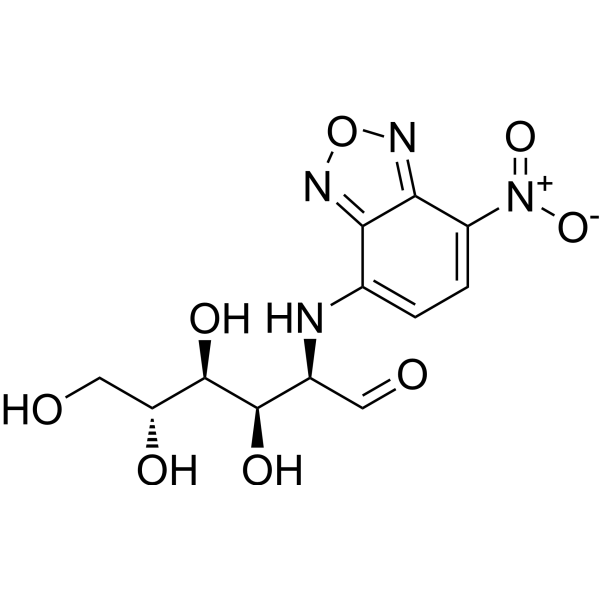
    2-NBDG
    70+ Cited Publications

    Fluorescent Dye Others
    2-NBDG is a fluorescently-labeled deoxyglucose analog that is used primarily to directly monitor glucose uptake by living cells and tissues. It is also used as a topical contrast reagent for the detection of neoplasia. 2-NBDG can be used in real-time confocal, high-resolution, or wide-field fluorescence microscopy as well as in flow cytometry. The probe can be excited by the Argon laser at 488 nm to give the environment-sensitive fluorescence. It has lower photostability than the rhodamine-based fluorescent probes.
    2-NBDG
  • HY-D0714
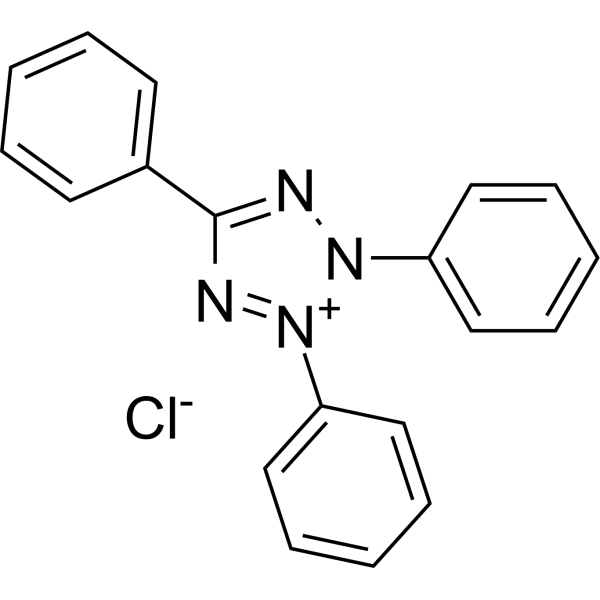
    Tetrazolium Red
    5+ Cited Publications

    2,3,5-Triphenyltetrazolium chloride; TPTZ; TTC

    Biochemical Assay Reagents Cardiovascular Disease
    Tetrazolium Red (2,3,5-Triphenyltetrazolium chloride; TTC) is a not brain-penetrant, colorless, water-soluble dye that is reduced by mitochondrial enzymes to a deep red, water-insoluble compound (formazan) mainly in the mitochondria of living cells. Tetrazolium Red is used to observe the activity of dehydrogenase, and it turns colorless to red when exposed to hydrogen. Tetrazolium Red distinguishes between surviving and infarcted brain tissue after stroke. Tetrazolium Red has been used to stain heart tissue to measure the extent of acute lesions and also used to stain brain tissue to detect the size of the infarcted area. The absorption wavelength of Tetrazolium Red is 570 nm .
    Tetrazolium Red
  • HY-D0220
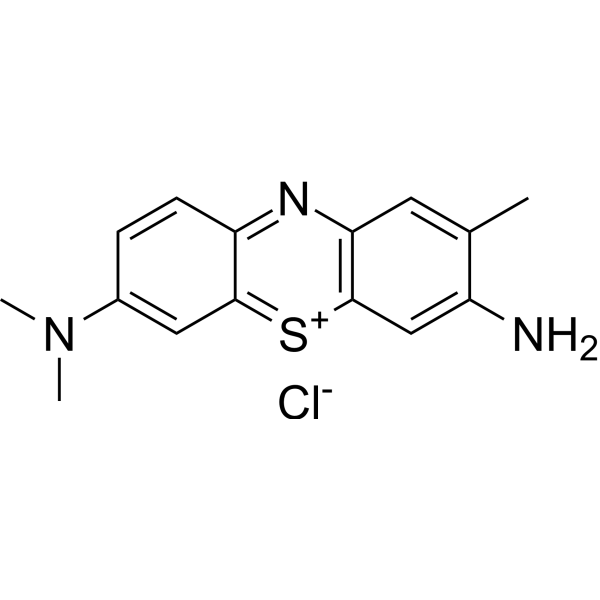
    Toluidine Blue
    3 Publications Verification

    Toluidine Blue O

    Fluorescent Dye Cancer
    Toluidine Blue (Toluidine Blue O) is an alkaline quinonimine dye (vivo dye) with high affinity for acidic tissue components, staining nuclei blue and polysaccharides purple. Toluidine Blue shows heterostaining properties for mast cells, mucins and chondrocytes. Toluidine Blue can stain different components of plant tissues and cells in different colours. Toluidine Blue is also used as a diagnostic aid to identify malignant lesions, such as cancer .
    Toluidine Blue
  • HY-D0970
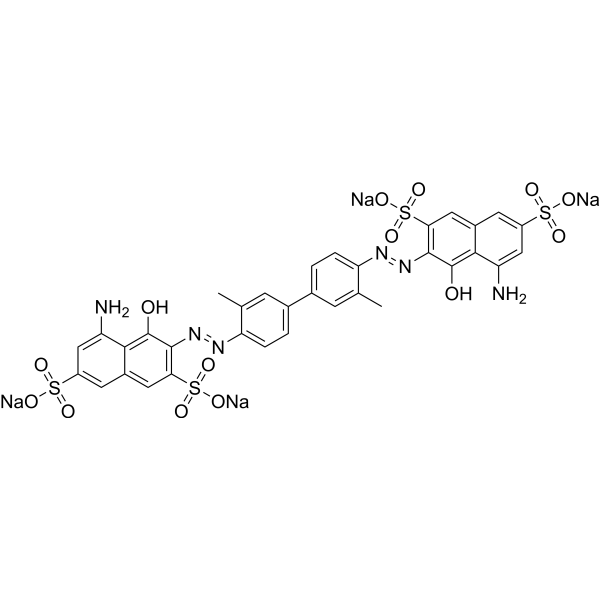
    Diphenyl Blue
    2 Publications Verification

    Direct Blue 14; Trypan Blue

    Fluorescent Dye Others
    Diphenyl Blue (Trypan Blue) is a cell active dye, the most commonly used dye for the identification of dead cells, of en used to test cell membrane integrity and cell viability. Diphenyl Blue staining is one of the methods for tissue and cell culture. When cells are deactivated or have incomplete cell membranes, Diphenyl Blue can stain them Blue. Normal living cells with intact cell membranes reject Diphenyl blue and do not stain them blue. However, macrophages are capable of phagocytosis of Diphenyl Blue, so it can be used as a living stain for macrophages .
    Diphenyl Blue
  • HY-W094758A

    Fluorescent Dye Cancer
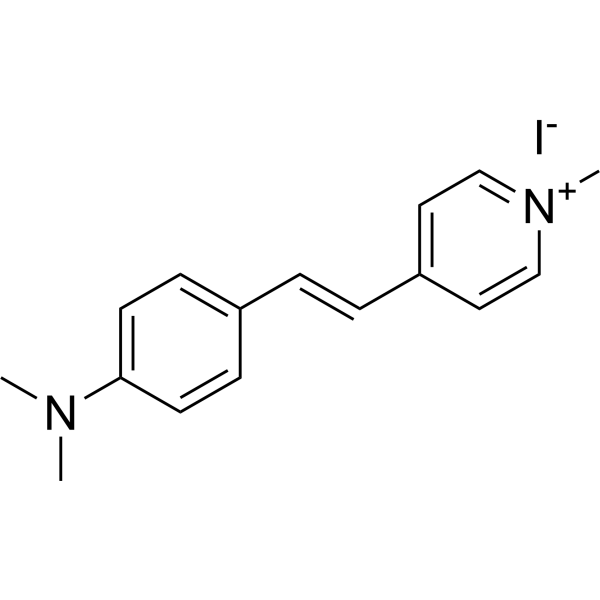
    4-Di-1-ASP is a styryl dye used to stain glioma cells in living brain tissue for analysis of cell structure, viability, proliferation and endocytosis, cytokinesis and phagocytosis, as well as for observation of mitochondrial structures in living cells. 4-Di-1-ASP fluoresces green when imaged microscopically (λexem = 475/606 nm) .
    4-Di-1-ASP
  • HY-P4154

    ALM-488

    Fluorescent Dye Neurological Disease Cancer
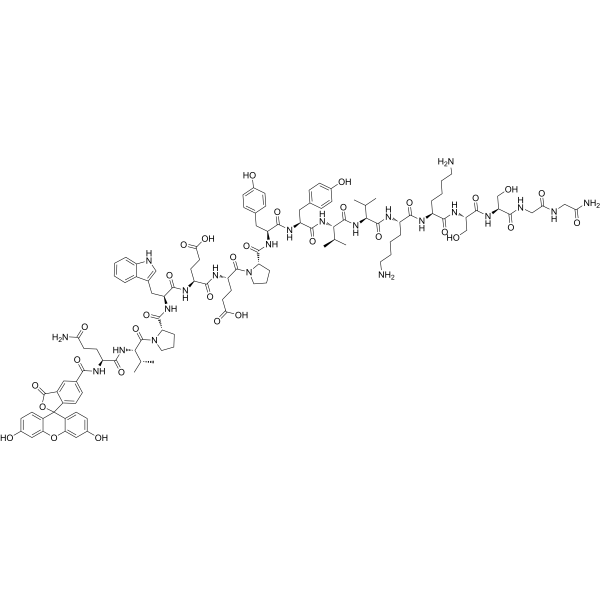
    Bevonescein (ALM-488) is a fluorescein-conjugated peptide that facilitates the targeted delivery of a fluorescent moiety (5-FAM (HY-66022)) to nerves after intravenous (IV) administration. Bevonescein binds nerve-associated connective tissue, labels peripheral nerves under real-time fluorescence imaging (FL) in living mice and human ex vivo nerve tissue. Bevonescein is a peptide-linked tracer which fluorescently labeled both intact and degenerated nerves (Ex/Em = 480/530 nm) .
    Bevonescein
  • HY-D2836

    FITC-Hyaluronate (MW 1000000)

    Fluorescent Dye Others
    FITC-HA (MW 1000000) is hyaluronic acid (HA) (HY-B0633A) labeled with FITC (HY-66019). FITC-HA retains the ability of HA to bind to receptors (such as CD44) and form extracellular matrices, while it can be detected by fluorescence microscopy or flow cytometry for tracing the localization, binding, internalization and metabolic pathways of HA in cells, tissues or living organisms (Ex/Em ≈ 490/520 nM) .
    FITC-HA (MW 1000000)
  • HY-DY1019

    Fluorescent Dye Others
    2-NBDG (solution) is a fluorescently-labeled deoxyglucose analog that is used primarily to directly monitor glucose uptake by living cells and tissues. It is also used as a topical contrast reagent for the detection of neoplasia. 2-NBDG can be used in real-time confocal, high-resolution, or wide-field fluorescence microscopy as well as in flow cytometry. The probe can be excited by the Argon laser at 488 nm to give the environment-sensitive fluorescence. It has lower photostability than the rhodamine-based fluorescent probes.
    Solvent and Concentration: Sterile PBS: 5 mM
    2-NBDG (solution)
  • HY-D2318

    Fluorescent Dye Others
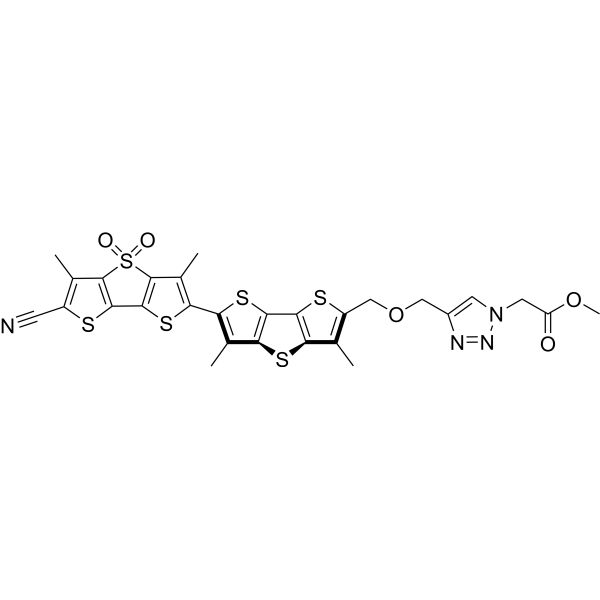
    Flipper-TR 5 is a Flipper probe containing a terminal carboxylate for retention on the plasma membrane. Flipper-TR 5 selectively labels the cytoplasmic membrane, and exhibits excellent mechanical sensitivity, negligible cytotoxicity and controllable phototoxicity .
    Flipper-TR 5
  • HY-D2344

    3-Benzothiazole-daphnetin

    Fluorescent Dye Others
    3-BTD (3-Benzothiazole-daphnetin) is a Catechol-O-methyltransferase (COMT) two-photon fluorescence probe. 3-BTD can also be used for biological imaging of endogenous COMT in living cells and tissue sections .
    3-BTD
  • HY-D1275

    Fluorescent Dye Others
    CAY10731 (compound 3) is a highly selective fluorescent probe for detection of hydrogen sulfide (H2S). CAY10731 is used to monitor exo- and endogenous H2S in both cancer and normal cells. CAY10731 is applied for imaging of H2S in living tissues at variable depths and in nematodes .
    CAY10731
  • HY-130013

    Fluorescent Dye Others
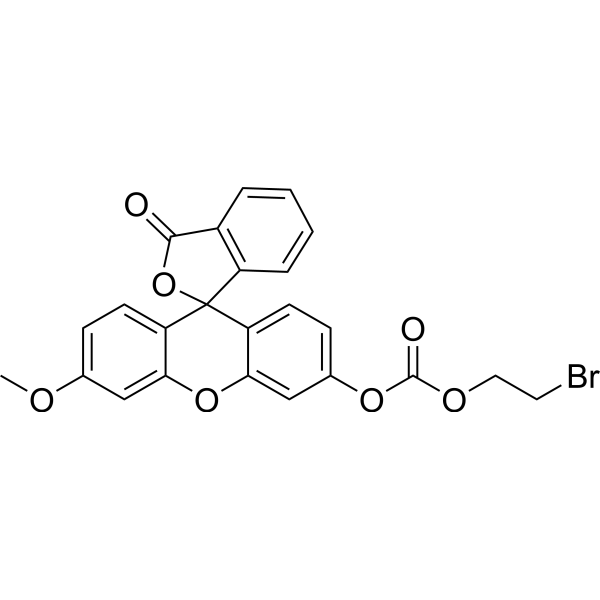
    HKYellow-AM (6/12-mixture) is a yellow fluorescent probe that can detect ONOO- in living cells and tissues with high selectivity and sensitivity without cytotoxicity .
    HKYellow-AM (6/12-mixture)
  • HY-D2836I

    FITC-Hyaluronate (MW 5000)

    Fluorescent Dye Others
    FITC-HA (MW 5000) is hyaluronic acid (HA) (HY-B0633A) labeled with FITC (HY-66019). FITC-HA retains the ability of HA to bind to receptors (such as CD44) and form extracellular matrices, while it can be detected by fluorescence microscopy or flow cytometry for tracing the localization, binding, internalization and metabolic pathways of HA in cells, tissues or living organisms (Ex/Em ≈ 490/520 nM) .
    FITC-HA (MW 5000)
  • HY-D2994

    SNAP-MaP555

    Fluorescent Dye Others
    SPY555-BG (SNAP-MaP555) is the benzylguanine derivative of SPY555 fluorophore. SPY555-BG emits light in the orange part of the UV-ViS spectrum. SPY555-BG is fluorogenic, highly cell permeable and well suited for STED and SIM superresolution imaging. SPY555-BG can be imaged with a standard Cy3 filterset. SPY555-BG can be used for widefield, confocal, SIM or STED imaging in living or fixed cells and tissue .
    SPY555-BG
  • HY-103336

    T1117

    GPR55 Cannabinoid Receptor Cardiovascular Disease
    Tocrifluor 1117 (T1117), a fluorescent form of the cannabinoid CB1 receptor antagonist AM251 (HY-15443), is a selective fluorescent GPR55 ligand. Tocrifluor 1117 is a potent tool for identifying the cellular location of cannabinoid receptors (including GPR55 in living tissues) (Ex/Em=543/590 nm) .
    Tocrifluor 1117
  • HY-D2836B

    FITC-Hyaluronate (MW 200000)

    Fluorescent Dye Others
    FITC-HA (MW 200000) is hyaluronic acid (HA) (HY-B0633A) labeled with FITC (HY-66019). FITC-HA retains the ability of HA to bind to receptors (such as CD44) and form extracellular matrices, while it can be detected by fluorescence microscopy or flow cytometry for tracing the localization, binding, internalization and metabolic pathways of HA in cells, tissues or living organisms (Ex/Em ≈ 490/520 nM) .
    FITC-HA (MW 200000)
  • HY-D2836D

    FITC-Hyaluronate (MW 50000)

    Fluorescent Dye Others
    FITC-HA (MW 50000) is hyaluronic acid (HA) (HY-B0633A) labeled with FITC (HY-66019). FITC-HA retains the ability of HA to bind to receptors (such as CD44) and form extracellular matrices, while it can be detected by fluorescence microscopy or flow cytometry for tracing the localization, binding, internalization and metabolic pathways of HA in cells, tissues or living organisms (Ex/Em ≈ 490/520 nM) .
    FITC-HA (MW 50000)
  • HY-D2836C

    FITC-Hyaluronate (MW 100000)

    Fluorescent Dye Others
    FITC-HA (MW 100000) is hyaluronic acid (HA) (HY-B0633A) labeled with FITC (HY-66019). FITC-HA retains the ability of HA to bind to receptors (such as CD44) and form extracellular matrices, while it can be detected by fluorescence microscopy or flow cytometry for tracing the localization, binding, internalization and metabolic pathways of HA in cells, tissues or living organisms (Ex/Em ≈ 490/520 nM) .
    FITC-HA (MW 100000)
  • HY-D2836E

    FITC-Hyaluronate (MW 10000)

    Fluorescent Dye Others
    FITC-HA (MW 10000) is hyaluronic acid (HA) (HY-B0633A) labeled with FITC (HY-66019). FITC-HA retains the ability of HA to bind to receptors (such as CD44) and form extracellular matrices, while it can be detected by fluorescence microscopy or flow cytometry for tracing the localization, binding, internalization and metabolic pathways of HA in cells, tissues or living organisms (Ex/Em ≈ 490/520 nM) .
    FITC-HA (MW 10000)
  • HY-D2836J

    FITC-Hyaluronate (MW 3000)

    Fluorescent Dye Others
    FITC-HA (MW 3000) is hyaluronic acid (HA) (HY-B0633A) labeled with FITC (HY-66019). FITC-HA retains the ability of HA to bind to receptors (such as CD44) and form extracellular matrices, while it can be detected by fluorescence microscopy or flow cytometry for tracing the localization, binding, internalization and metabolic pathways of HA in cells, tissues or living organisms (Ex/Em ≈ 490/520 nM) .
    FITC-HA (MW 3000)
  • HY-D2836A

    FITC-Hyaluronate (MW 500000)

    Fluorescent Dye Others
    FITC-HA (MW 500000) is hyaluronic acid (HA) (HY-B0633A) labeled with FITC (HY-66019). FITC-HA retains the ability of HA to bind to receptors (such as CD44) and form extracellular matrices, while it can be detected by fluorescence microscopy or flow cytometry for tracing the localization, binding, internalization and metabolic pathways of HA in cells, tissues or living organisms (Ex/Em ≈ 490/520 nM) .
    FITC-HA (MW 500000)
  • HY-136675

    Fluorescent Dye Others
    ASMI is a ratiometric, two-photon excited fluorescent probe, composed of a highly two-photon active and biocompatible merocyanine fluorophore and an acrylate moiety as a thiol reactive site. ASMI is able to selectively detect and monitor mitochondrial Cys with rapid responsiveness, imaging living cells and intact tissues with high contrast and brightness at a depth of 150 μm. The two-photon action cross section (Φσmax) of ASMI is 65.2 GM, corresponding to an excitation wavelength (λex) of 740 nm.
    ASMI
  • HY-D3267

    Fluorescent Dye Others
    ACu1 is a copper (I)-selective two-photon fluorescent probe that enables the visual imaging of Cu + distribution in living cells and tissues .
    ACu1
  • HY-D2970

    Fluorescent Dye Neurological Disease
    Golgi-P is a near-infrared Golgi-targeted fluorescent probe specifically used for the detection of Golgi polarity in living cells and living tissues. Golgi-P exhibits a significant polarity-dependent spectral behavior, with its emission wavelength shifting redward with polarity (Ex/Em: 700 nm/780-825 nm). Golgi-P achieves near-infrared fluorescence imaging directly in the brain tissue of depressed mice. Golgi-P combines polarity sensing with Golgi-targeting functionality, providing a new tool for the molecular diagnosis of depression .
    Golgi-P
  • HY-D3411

    Fluorescent Dye Others
    Rhobo6 is a cell-impermeable glycan-binding, fluorescence turn-on imaging agent with a Kd of 53 µM for glycans. Rhobo6 reversibly binds target glycans and enables wash-free live ECM visualization. Rhobo6 can be used for fluorescent labeling of ECM in living samples or decellularized tissues (Ex/Em = 488/561 nm) .
    Rhobo6
  • HY-D2836H

    FITC-Hyaluronate (MW 7000)

    Fluorescent Dye Others
    FITC-HA (MW 7000) is hyaluronic acid (HA) (HY-B0633A) labeled with FITC (HY-66019). FITC-HA retains the ability of HA to bind to receptors (such as CD44) and form extracellular matrices, while it can be detected by fluorescence microscopy or flow cytometry for tracing the localization, binding, internalization and metabolic pathways of HA in cells, tissues or living organisms (Ex/Em ≈ 490/520 nM) .
    FITC-HA (MW 7000)
  • HY-D3179

    Fluorescent Dye BCRP Neurological Disease
    CDg13 is a fluorescent probe that specifically detects living neural stem/progenitor cells. CDg13 localizes to the endoplasmic reticulum via its dihexyl moiety, with no interaction with endoplasmic reticulum biomolecules. CDg13 undergoes selective efflux by active ABCG2 transporters, with increased intracellular accumulation following ABCG2 inhibition or knockdown. CDg13 isolates and enriches self-renewable neural stem/progenitor cells from embryonic mouse brain tissue, stains neural stem/progenitor cells brightly, and sorts ABCG2low cell populations from heterogeneous populations . (Ex/Em = 520/553 nm)
    CDg13
  • HY-D3187

    Fluorescent Dye Glycosidase Infection Cancer
    HMRef-αMan is a substrate-based green fluorescent probe (Ex/Em=465 nm/515 nm) targeting MAN2C1 (α-mannosidase). HMRef-αMan can be specifically cleaved by MAN2C1 to generate a highly fluorescent product, which thus gets activated to produce green fluorescence in malignant breast tissues, benign lesions and living cancer cells. The signal intensity of HMRef-αMan is directly correlated with MAN2C1 activity, and it can effectively detect tiny breast cancer lesions with a diameter of less than 1 mm. When used in combination with the red-emitting γ-glutamyl transpeptidase (GGT) probe gGlu-2OMe SiR600 (HY-D3188), HMRef-αMan enables precise optical differentiation of breast tissue types via a dual-color imaging strategy. HMRef-αMan has been widely used in the research of breast diseases such as breast cancer, fibroadenoma, phyllodes tumor and various types of papilloma .
    HMRef-αMan
  • HY-D3181

    Fluorescent Dye Caspase Cancer
    CyGbPF is a granzyme B-specific near-infrared fluorescent probe. CyGbPF can be cleaved by granzyme B to remove the peptide cage group, restoring near-infrared fluorescence. CyGbPF passively accumulates in mouse tumors, and its activated fluorescence correlates with granzyme B expression, CD8 + cytotoxic T lymphocyte populations, and CD4 + helper T lymphocyte populations in tumor tissues. CyGbPF is efficiently cleared by the kidneys, enabling the assessment of immune activation via optical urine analysis. CyGbPF allows real-time non-invasive evaluation of cancer immunotherapeutic efficacy in living animals. CyGbPF can be used in research on cancers such as breast cancer. Excitation wavelength/emission wavelength: approximately 658 nm/approximately 717 nm .
    CyGbPF
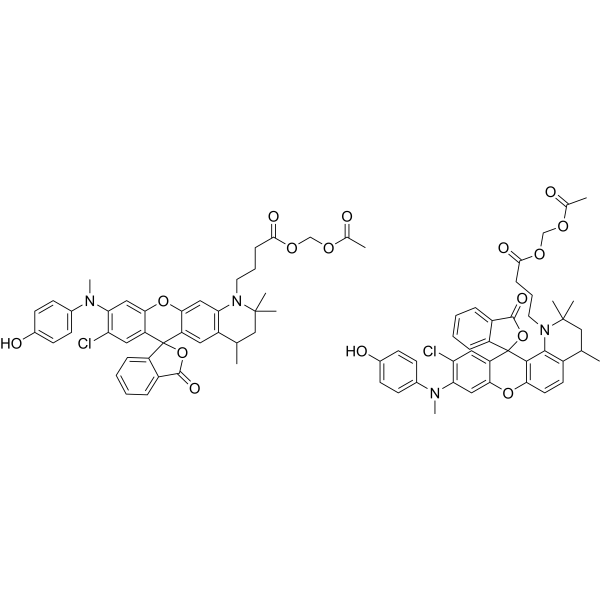
  • HY-W783351

    Coppersensor 790 acetoxymethyl ester

    Fluorescent Dye Metabolic Disease
    CS790AM (Coppersensor 790 acetoxymethyl ester) is a cell-permeable, Cu +-targeted near-infrared fluorescent probe (λabs=760 nm, λem=790 nm) applicable to live cells. CS790AM can cross lipophilic cell membranes, and is converted into negatively charged CS790 under the action of intracellular esterases to be retained, thus enabling highly sensitive, reversible "turn-on" detection of labile Cu + pools in live cells and mice. CS790AM possesses excellent biocompatibility and selectivity, avoids interference from other metal ions, shows no obvious toxicity, and can be rapidly cleared. CS790AM allows long-term longitudinal monitoring of individual mice, visualizes copper levels in internal organs and isolated livers, and effectively evaluates abnormal copper accumulation in Wilson's disease models (Atp7b -/-) as well as dynamic changes after chelator treatment. CS790AM can be used for research on Wilson's disease and related copper metabolic disorders .
    CS790AM

Inquiry Online

Your information is safe with us. * Required Fields.

Salutation


Country or Region *

Applicant Name *


Organization Name *

Department *


Email Address *


Product Name *

Cat. No.


Requested quantity *

Phone Number *


Remarks

Inquiry Online

Inquiry Information

Product Name:
Cat. No.:
Quantity:
MCE Japan Authorized Agent:

