



Toluidine Blue
Based on 4 publication(s) in Google Scholar
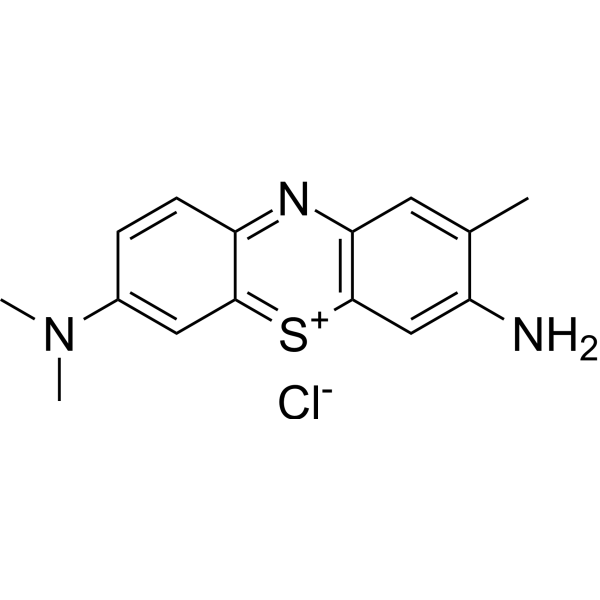
Toluidine Blue (Toluidine Blue O) is an alkaline quinonimine dye (vivo dye) with high affinity for acidic tissue components, staining nuclei blue and polysaccharides purple. Toluidine Blue shows heterostaining properties for mast cells, mucins and chondrocytes. Toluidine Blue can stain different components of plant tissues and cells in different colours. Toluidine Blue is also used as a diagnostic aid to identify malignant lesions, such as cancer.
For research use only. We do not sell to patients.
- CAS No.: 92-31-9
- Formula: C15H16ClN3S
- Molecular Weight:305.83
-
Storage:
4°C, sealed storage, away from moisture and light
* In solvent : -80°C, 6 months; -20°C, 1 month (sealed storage, away from moisture and light)

To place orders, for customer services and technical support, please contact: MedChemExpress USA
Tel: 609-228-6898 E-mail: [email protected] [email protected]


-
 Biological Activity
-
Chemical Information
-
Solvent & Solubility
- Protocols
- Purity & Documentation
- References
-
 Help & FAQs


-
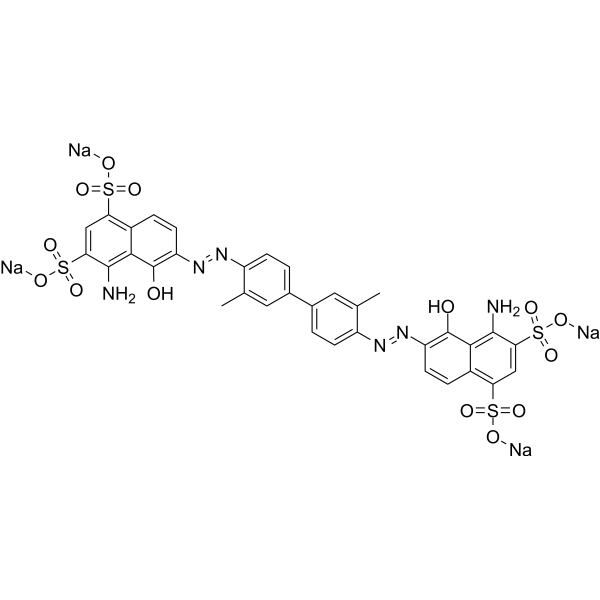
HY-B1102
Evans BlueL-glutamate Uptake Inhibitor -
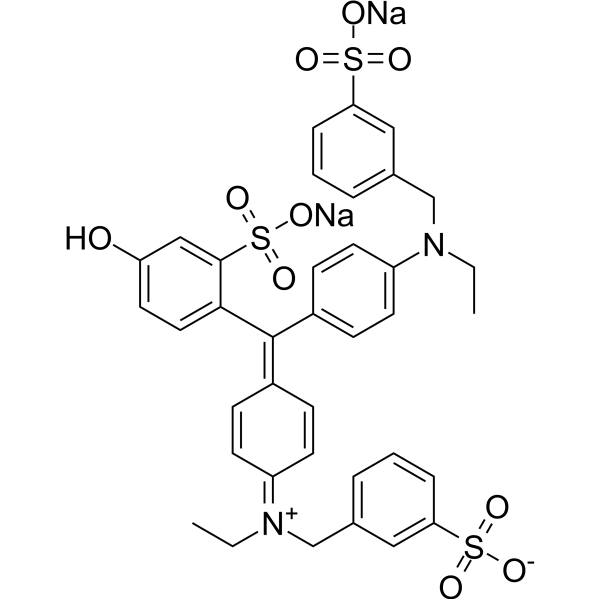
HY-D0914
Fast Green FCFSea Green Triarylmethane Food Dye -
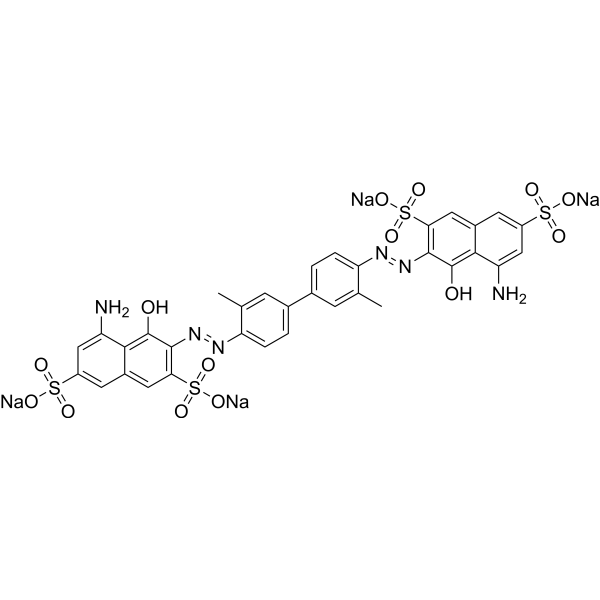
HY-D0970
Diphenyl BlueReference Dye -

HY-W250145
Acid Black 2Alcohol-Soluble Absorber -
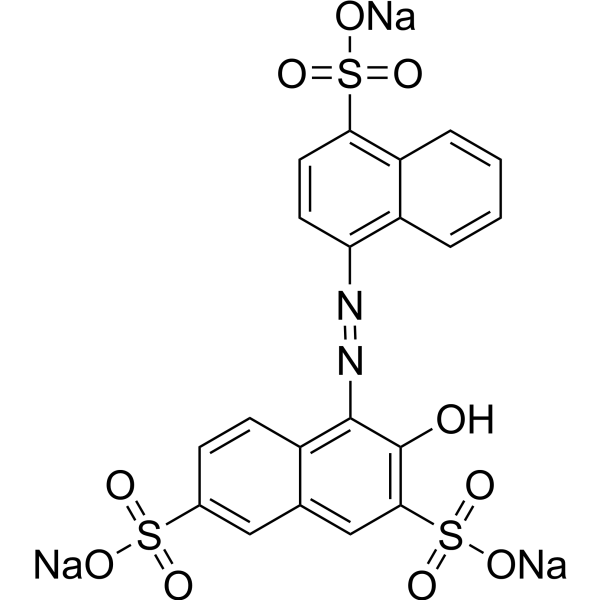
HY-D0307A
AmaranthOrganic Azo Dye -

HY-W088068
Wright's stainNucleic Acid/protein Dye -
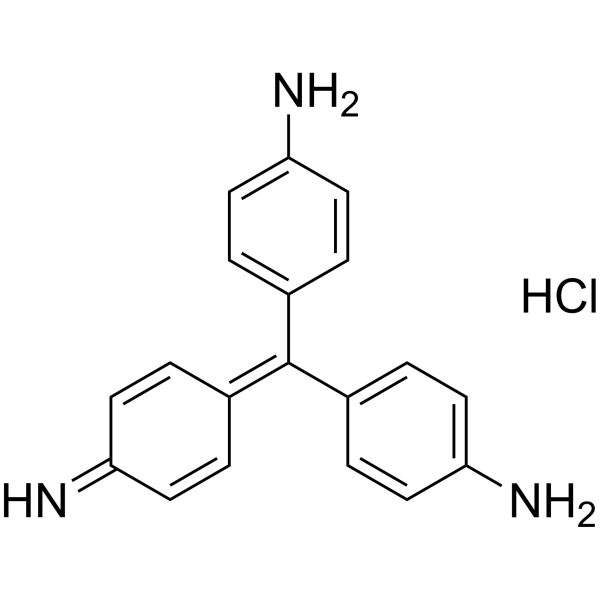
HY-W127770
Pararosaniline hydrochlorideBasic Dye -

HY-W250148
Solvent black 5Biochemical Assay Reagent -
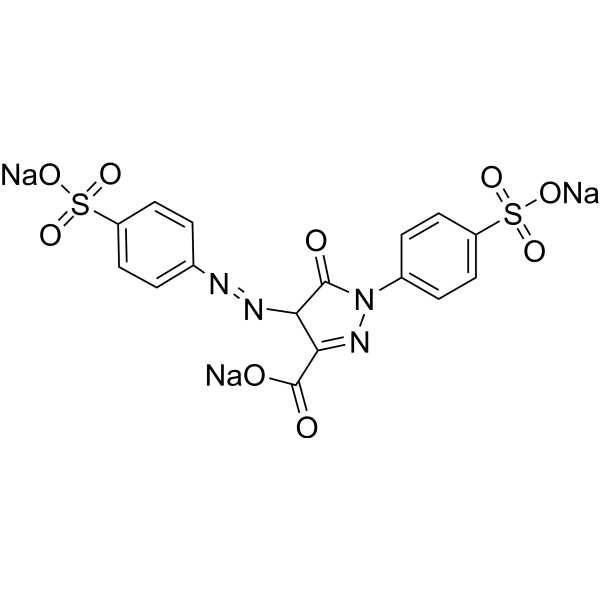
HY-D0257
TartrazineAzo Dye -
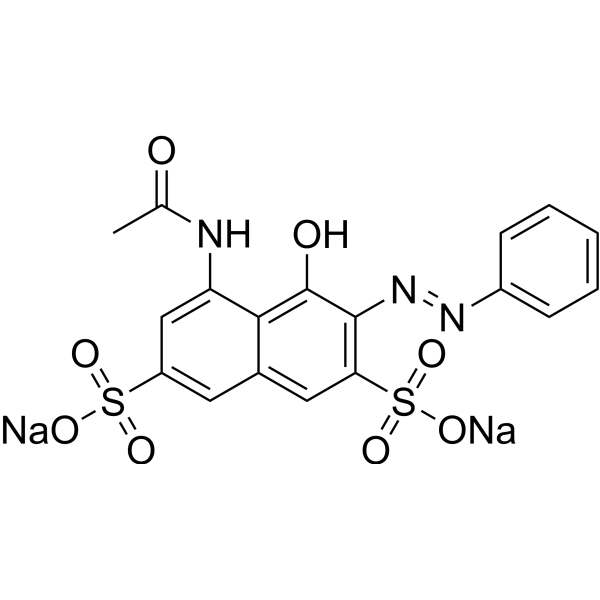
HY-D1379
AzophloxineRed Azo Dye -
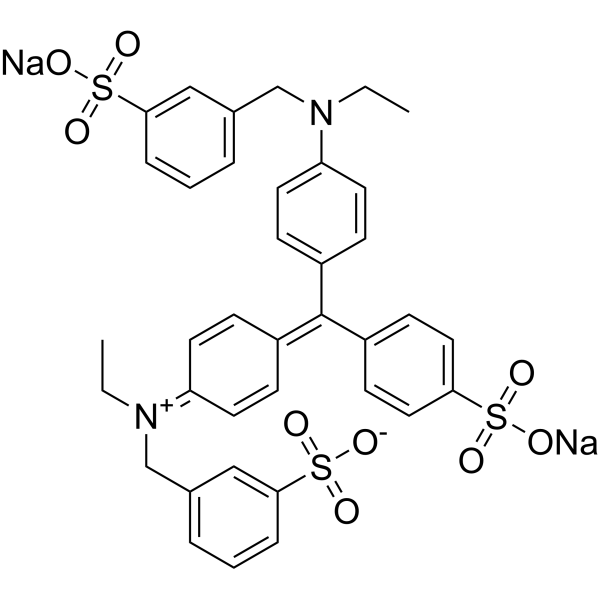
HY-126367
Light green SF yellowishDye -
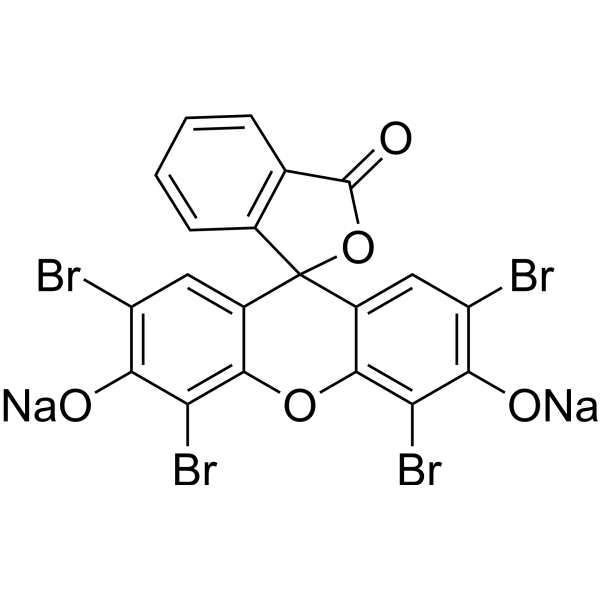
HY-D0505A
Eosin Y disodiumDye Molecule
Publications Citing Use of MedChemExpress (MCE) Toluidine Blue
More

Biological Activity
Description
In Vitro
Guide (Following is our recommended protocol. This protocol only provides a guideline, and should be modified according to your specific needs).
Detection of infiltrating Mast cells[1]:
1. Tissue processing
1) Immersed tissue samples in 10% buffered formalin for 24 h.
2) Remove tissues from the fixative and place in 70% alcohol.
3) Embed in paraffin: sequentially incubate in 70, 85, 95, and 100% ethanol, xylene, and molten paraffin (30 min incubation each), and set tissues in paraffin blocks.
4) Cut paraffin-embedded tissue in 5-7 μm sections and place onto glass slides.
5) Bake the slides for a minimum of 1 h at 55°C before use.
2. Tissue staining
1) De-wax paraffin-embedded tissue sections by immersing slides 5 min in xylene (or Histo-Clear), and rehydrate tissue by sequential immersions (5 min each) in 100%, 95%, and 70% ethanol and a final 2 min immersion in distilled water.
2) Place the slides in Harris’ hematoxylin solution for 70 s.
3) Briefly wash the excess of hematoxylin by immersing the slides two or three times in clean tap water. Briefly tap the slides on paper towels to remove excess water.
4) Immerse slides briefly three times in 70% alcohol, and wash again in clean tap water for 3 min. Remove excess water.
5) Place slides in Scott’s bluing solution for up to a minute. This step gently transforms hematoxylin into an insoluble blue color within the nucleus.
6) Inspect the slides under the bright-light microscope to ensure the nuclei are properly stained.
7) Wash slides in clean tap water for 3 min, and remove excess water.
8) Immerse slides in clean ~1.1% Toluidine Blue solution for 4 min.
(Note 1).
9) Wash slides in clean tap water for 3 min and remove excess water.
10) Quickly dip the slides three times in one batch of 70% ethanol and then dip them five times in 5% eosin solution.
11) Dehydrate the slides by successive immersion in 70% (2 min), 95% (twice, 2 min each), and 100% ethanol (twice, 2 min each); conclude this step by immersing the slides in xylene (or Histo-Clear) (twice, 3 min each).
12) Permanently mount each slide with a clean coverslip using xylene-based mounting medium.
13) Let slides dry for a minimum of 60 min before analyzing them under the bright-light microscope.
Note 1: 1.1% Toluidine Blue solution: mix 1.1 g Toluidine Blue with 100 mL 0.1 M sodium acetate buffer pH 4. Stir well. Adjust the pH to 2.0-2.5 by adding drops of 1 M hydrochloric acid. Staining is performed at 25 °C, protected from light. Ready to use.
Application of Toluidine Blue[2][3]:
1. Connective tissue mucins, especially acid mucins. The tissue stains purple to red, while the background is stained blue.
2. Mast cell granules stain purple in color due to the presence of heparin and histamine.
3. Amyloid stain blue but under polarized light they give a bright red birefringence.
4. Endocrine cell granules are stained purple to red (concentration of stain is 0.01%).
5. Sulfatides stain red brown or yellow. Only lipids that are sufficiently acidic to induce a metachromatic shift are stained.
6. Corneybacterium diphtheria contains granules with polymerized inorganic polyphosphate, which stains red violet color.
7. Helicobacter stains dark blue against a variably blue background (concentration of stain is 1%).
8. Toluidine Blue can be used to stain frozen section because of the rapidity of the staining procedure (10-20 s) and better clarity of the cells.
9. Toluidine Blue can also dye the lignins of the plant blue-green, the phloem blue-purple, and the rest of the plant pale blue-green.
MedChemExpress (MCE) has not independently confirmed the accuracy of these methods. They are for reference only.
Clinical Trial
| NCT Number | Sponsor | Condition | Start Date |
Phase

|
|---|---|---|---|---|
| NCT01329991 | 2011-05 | PHASE1 |


Chemical Information
-
CAS No. 92-31-9
-
Appearance Solid
-
Molecular Weight 305.83
-
Formula C15H16ClN3S
-
Color Green to dark green
-
SMILES
CC1=CC2=C([S+]=C3C=C(N(C)C)C=CC3=N2)C=C1N.[Cl-]
-
Synonyms
Toluidine Blue O
-
Shipping
Room temperature in continental US; may vary elsewhere.
-
Storage
4°C, sealed storage, away from moisture and light
* In solvent : -80°C, 6 months; -20°C, 1 month (sealed storage, away from moisture and light)


Publications (4)
-
Journal Impact Factor
-
Most Recent
-
J Nanobiotechnology
Biomimetic ferritin nanocages for synergistic co-delivery of metformin and rapamycin restore neurodevelopmental homeostasis in autism spectrum disorders. [Abstract]2025 Oct 14;23(1):670. PMID: 41083985 -
J Nanobiotechnology
Single BMSC-derived cartilage organoids for gradient heterogeneous osteochondral regeneration by leveraging native vascular microenvironment. [Abstract]2025 Apr 29;23(1):325. PMID: 40301867 -
-
J Biochem Mol Toxicol
Knockdown of Secreted Phosphoprotein 1 Inhibits Pyroptosis and IL-17 Signaling Pathway to Alleviate Epilepsy Progression. [Abstract]2025 Nov;39(11):e70608. PMID: 41236407


Solvent & Solubility
In Vitro:
DMSO : 20.83 mg/mL (68.11 mM; ultrasonic and warming and heat to 80°C; Hygroscopic DMSO has a significant impact on the solubility of product, please use newly opened DMSO)
H2O : 5 mg/mL (16.35 mM; ultrasonic and warming and heat to 60°C)
Please refer to the solubility information to select the appropriate solvent. Once prepared, please aliquot and store the solution to prevent product inactivation from repeated freeze-thaw cycles.
Storage method and period of stock solution: -80°C, 6 months; -20°C, 1 month (sealed storage, away from moisture and light). When stored at -80°C, please use it within 6 months. When stored at -20°C, please use it within 1 month.
* Note: If you choose water as the stock solution, please dilute it to the working solution, then filter and sterilize it with a 0.22 μm filter before use.
Please refer to the solubility information to select the appropriate solvent. Once prepared, please aliquot and store the solution to prevent product inactivation from repeated freeze-thaw cycles.
Storage method and period of stock solution: -80°C, 6 months; -20°C, 1 month (sealed storage, away from moisture and light). When stored at -80°C, please use it within 6 months. When stored at -20°C, please use it within 1 month.
* Note: If you choose water as the stock solution, please dilute it to the working solution, then filter and sterilize it with a 0.22 μm filter before use.
Concentration (start) × Volume (start) = Concentration (final) × Volume (final)


Purity & Documentation
-
Data Sheet (286 KB)
-
SDS (393 KB)
- English - EN (393 KB)
- Français - FR (393 KB)
- Deutsch - DE (393 KB)
- Norwegian - NO (393 KB)
- Español - ES (393 KB)
- Swedish - SV (393 KB)
- Italian - IT (393 KB)
- Korean - KR (393 KB)
- Portuguese - PT (393 KB)
-
Handling Instructions (2659 KB)
References
[1]. Puebla-Osorio N, et al. Detection of Infiltrating Mast Cells Using a Modified Toluidine Blue Staining. Methods Mol Biol. 2017;1627:213-222. [Content Brief]
[2]. Sridharan G, et al. Toluidine blue: A review of its chemistry and clinical utility. J Oral Maxillofac Pathol. 2012;16(2):251-255. [Content Brief]


Complete Stock Solution Preparation Table
Please refer to the solubility information to select the appropriate solvent. Once prepared, please aliquot and store the solution to prevent product inactivation from repeated freeze-thaw cycles.
Storage method and period of stock solution: -80°C, 6 months; -20°C, 1 month (sealed storage, away from moisture and light). When stored at -80°C, please use it within 6 months. When stored at -20°C, please use it within 1 month.
| Optional Solvent | Concentration Solvent Mass | 1 mg | 5 mg | 10 mg | 25 mg |
|---|---|---|---|---|---|
| H2O / DMSO | 1 mM | 3.2698 mL | 16.3490 mL | 32.6979 mL | 81.7448 mL |
| 5 mM | 0.6540 mL | 3.2698 mL | 6.5396 mL | 16.3490 mL | |
| 10 mM | 0.3270 mL | 1.6349 mL | 3.2698 mL | 8.1745 mL | |
| 15 mM | 0.2180 mL | 1.0899 mL | 2.1799 mL | 5.4497 mL | |
| DMSO | 20 mM | 0.1635 mL | 0.8174 mL | 1.6349 mL | 4.0872 mL |
| 25 mM | 0.1308 mL | 0.6540 mL | 1.3079 mL | 3.2698 mL | |
| 30 mM | 0.1090 mL | 0.5450 mL | 1.0899 mL | 2.7248 mL | |
| 40 mM | 0.0817 mL | 0.4087 mL | 0.8174 mL | 2.0436 mL | |
| 50 mM | 0.0654 mL | 0.3270 mL | 0.6540 mL | 1.6349 mL | |
| 60 mM | 0.0545 mL | 0.2725 mL | 0.5450 mL | 1.3624 mL |
* Note: If you choose water as the stock solution, please dilute it to the working solution, then filter and sterilize it with a 0.22 μm filter before use.


Toluidine Blue Related Classifications
HY-D0220 Related Classifications
 Powered by Bioz