1. Search Result
Search Result
Results for "

local+anesthetic

" in MedChemExpress (MCE) Product Catalog:

46

Inhibitors & Agonists

1

Screening Libraries

3

Natural
Products

3

Isotope-Labeled Compounds

Cat. No. Product Name Target Research Areas Chemical Structure
  • HY-B0985
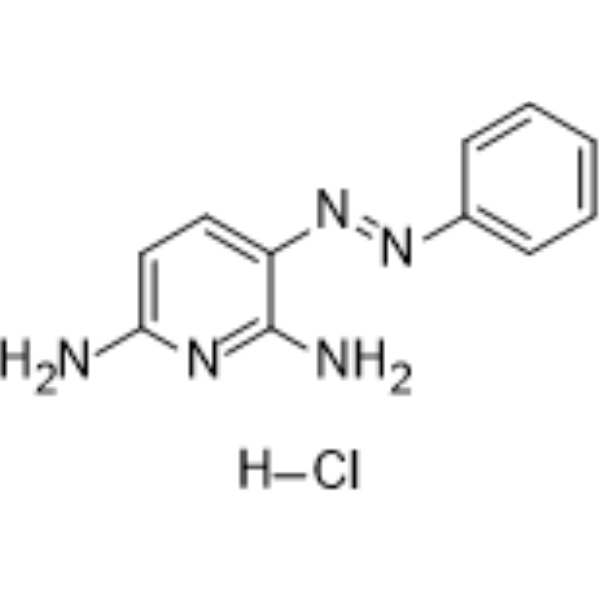
    Phenazopyridine hydrochloride
    2 Publications Verification

    TRP Channel Neurological Disease
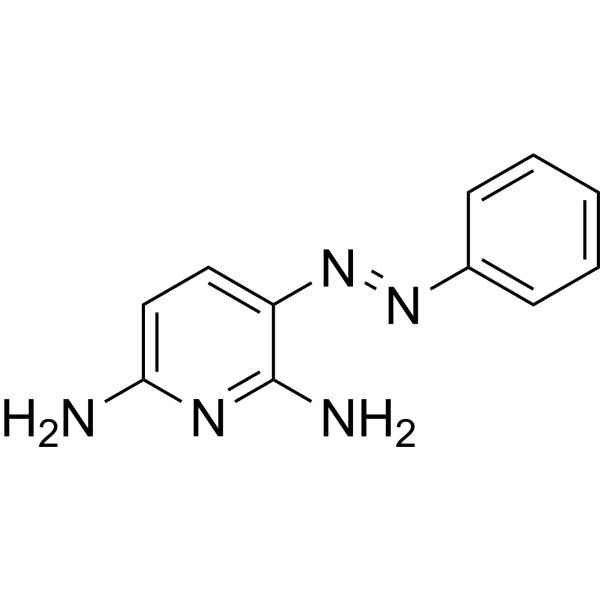
    Phenazopyridine hydrochlorideis a competitive SARM1 inhibitor, with IC50 145 μM. Phenazopyridine hydrochlorideis a TRPM8 antagonist. Phenazopyridine hydrochloride has a local anesthetic/analgesic effect. Phenazopyridine hydrochlorideis used to relieve painful symptoms of conditions such as cystitis and urethritis. Phenazopyridine hydrochloridecan promote neuronal differentiation and can also be used in the study of traumatic brain injury, peripheral neuropathy and neurodegenerative diseases .
    Phenazopyridine hydrochloride
  • HY-Y0258
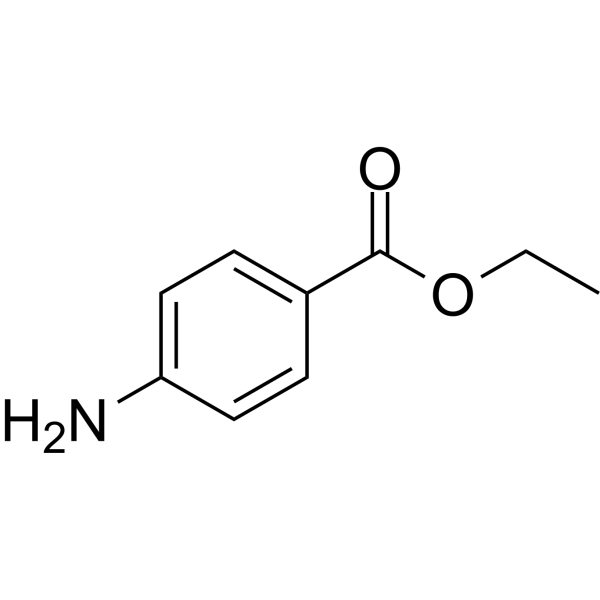
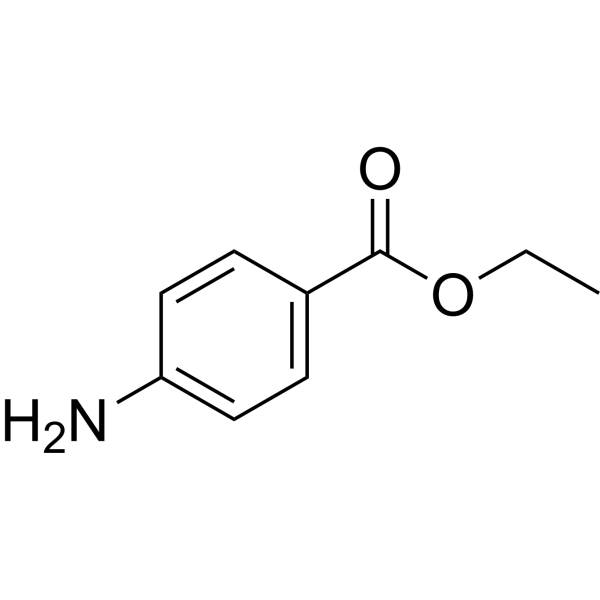
    Benzocaine
    1 Publications Verification

    Environmental Pollutants Sodium Channel Bacterial Infection Neurological Disease
    Benzocaine is an orally active local anesthetic. Benzocaine non-competitively inhibits the binding of Ca-ATPase to Ca 2+, with an IC50 of 47.1 mM. Benzocaine exerts anesthetic effects by blocking voltage-gated sodium channels. Benzocaine induces methemoglobinemia in various experimental animals .
    Benzocaine
  • HY-B0517
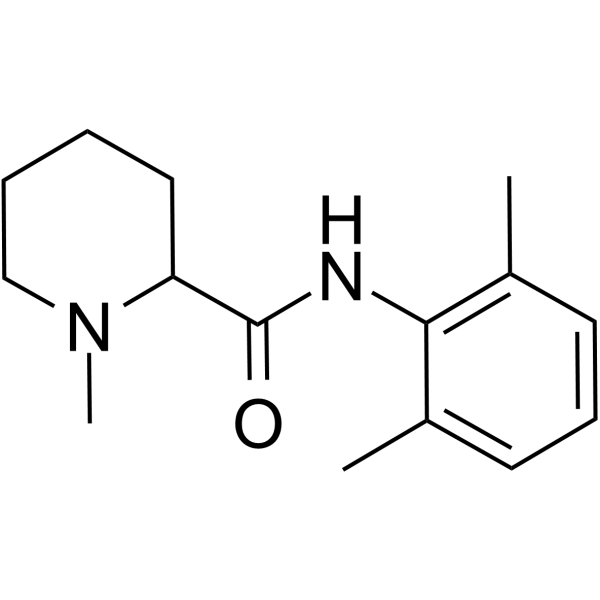
    Mepivacaine
    1 Publications Verification

    Sodium Channel Neurological Disease
    Mepivacaine is an amide-type local anesthetic agent. Mepivacaine binds to specific voltage-gated sodium ion channels in neuronal cell membranes, which inhibits both sodium influx and membrane depolarization .
    Mepivacaine
  • HY-Y1314
    Dimethyl sulfone
    3 Publications Verification

    Bacterial Metabolic Disease
    Dimethyl sulfone (Methyl Sulfonyl Methane) is a metabolic product of endogenous methanethiol metabolism and intestinal bacterial metabolism. Dimethyl sulfone inhibits choriocapillary endothelial (CCE) cell proliferation, also has many biological effects, including antiinflammatory, antioxidant, and local anesthetic effects that could be neuroprotective .
    Dimethyl sulfone
  • HY-B1704
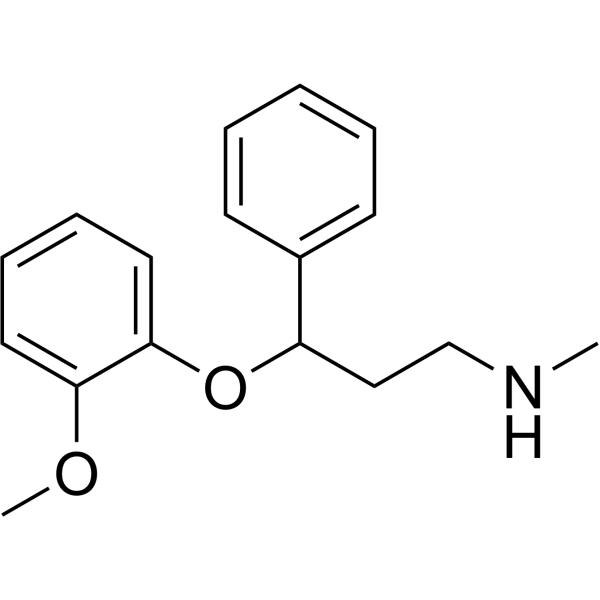
    Nisoxetine
    1 Publications Verification

    Monoamine Transporter Sodium Channel Neurological Disease
    Nisoxetine is a potent and selective inhibitor of noradrenaline transporter (NET), with a Kd of 0.76 nM. Nisoxetine is an antidepressant and local anesthetic, it can block voltage-gated sodium channels .
    Nisoxetine
  • HY-Y0258A
    Benzocaine (hydrochloride)
    1 Publications Verification

    Sodium Channel Calcium Channel Neurological Disease
    Benzocaine hydrochloride is an orally active local anesthetic. Benzocaine hydrochloride non-competitively inhibits the binding of Ca-ATPase to Ca 2+, with an IC50 of 47.1 mM. Benzocaine hydrochloride exerts anesthetic effects by blocking voltage-gated sodium channels. Benzocaine hydrochloride induces methemoglobinemia in various experimental animals .
    Benzocaine (hydrochloride)
  • HY-66012
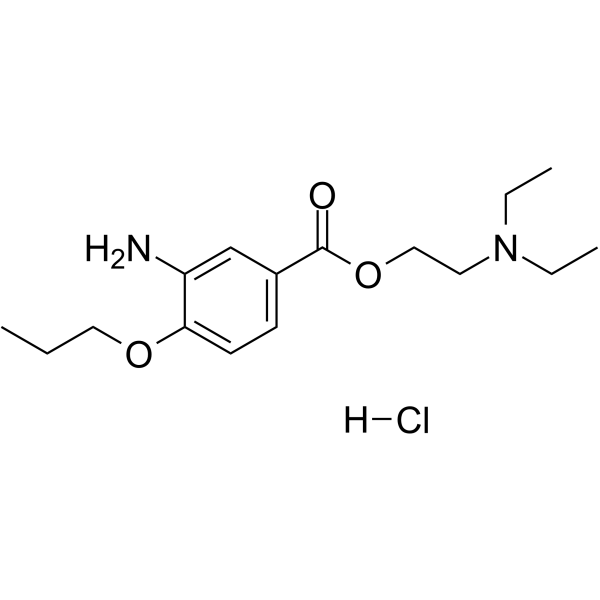
    Proparacaine hydrochloride
    2 Publications Verification

    Proxymetacaine hydrochloride

    Sodium Channel Neurological Disease
    Proparacaine (Proxymetacaine) hydrochloride is a local anesthetic. Proparacaine hydrochloride blocks voltage-gated sodium channels on neuronal cell membranes, thereby inhibiting signal conduction and nociceptive signal transmission. Proparacaine hydrochloride blocks nociceptive signals in the eye and induces ocular muscle relaxation to reduce eye movement during surgery. Proparacaine hydrochloride is used in research related to cataracts .
    Proparacaine hydrochloride
  • HY-B1007
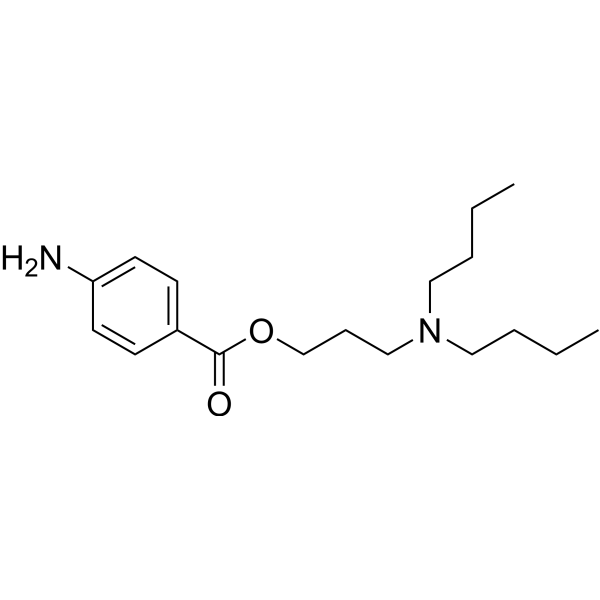
    Butacaine
    2 Publications Verification

    Sodium Channel Neurological Disease
    Butacaine is a reversible nerve conduction blocker. Butacaine acts on the nervous system and nerve fibers, can cause both sensory and motor paralysis. Butacaine inhibits the NavBh currents. Butacaine can form inclusion complexes with α-cyclodextrin (α-CD) and β-cyclodextrin (β-CD). Butacaine is commonly used as a negative control for other local anesthetics .
    Butacaine
  • HY-B0516

    Hoe-045

    Sodium Channel NF-κB NOD-like Receptor (NLR) Neurological Disease Inflammation/Immunology
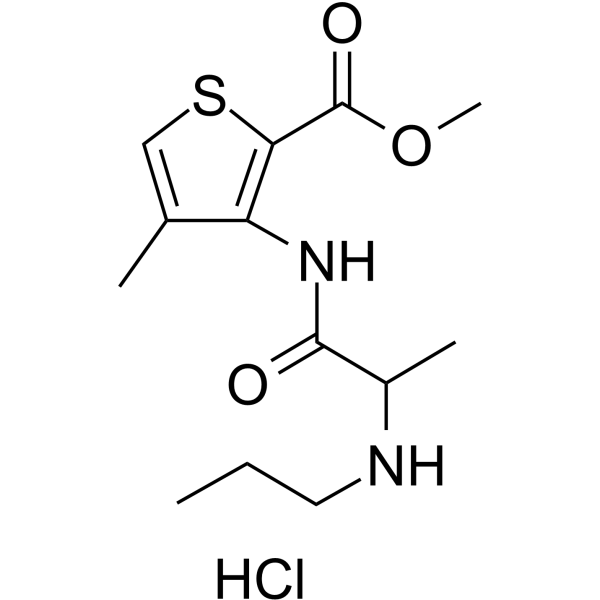
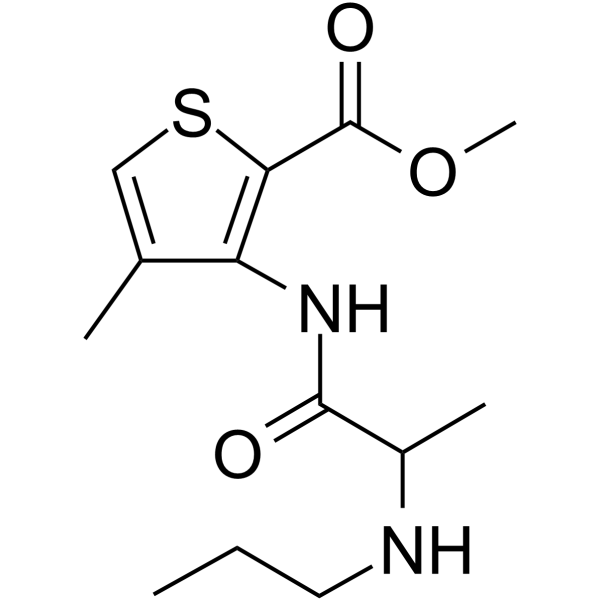
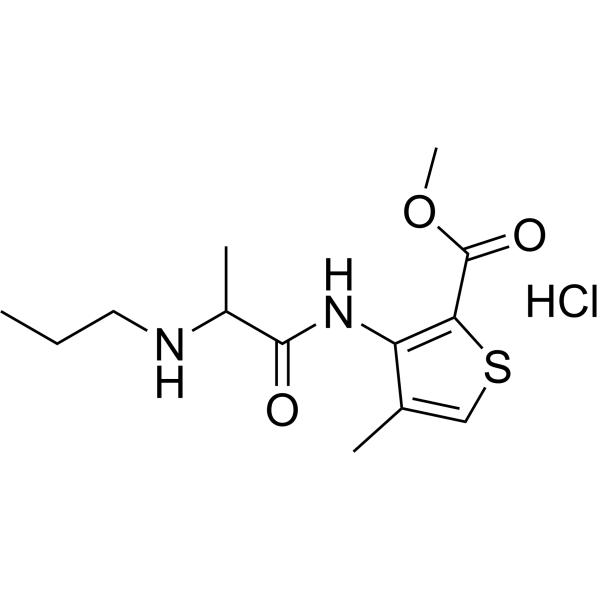
    Articaine (Hoe-045) hydrochloride is a selective inhibitor of voltage-gated sodium channels (such as rNav1.4, hNav1.7, and rNav1.8), with an IC50 of 15.8 μM for open-state Na + channels, and IC50 of 40.6 μM and 378 μM for inactivated and resting-state Na + channels, respectively. Articaine hydrochloride exerts local anesthetic activity by inhibiting Na + influx to block nerve impulse conduction, and can also inhibit NF-κB activation and NLRP3 inflammasome pathways, exhibiting anti-inflammatory function. Articaine hydrochloride can be used in the study of dental local anesthesia and inflammatory-related diseases (such as acute kidney injury) .
    Articaine hydrochloride
  • HY-B1704A
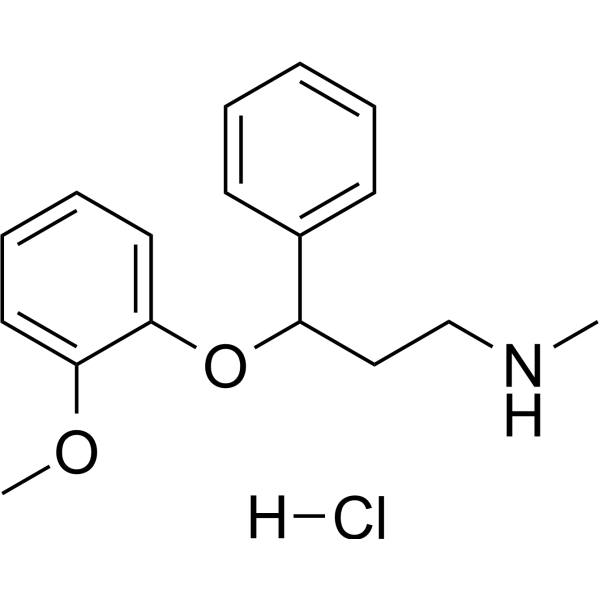
    Nisoxetine hydrochloride
    1 Publications Verification

    Monoamine Transporter Sodium Channel Neurological Disease
    Nisoxetine hydrochloride is a potent and selective inhibitor of noradrenaline transporter (NET), with a Kd of 0.76 nM. Nisoxetine hydrochloride is an antidepressant and local anesthetic, it can block voltage-gated sodium channels .
    Nisoxetine hydrochloride
  • HY-B1032

    (±)-Dropropizine; UCB-196

    Histamine Receptor Neurological Disease
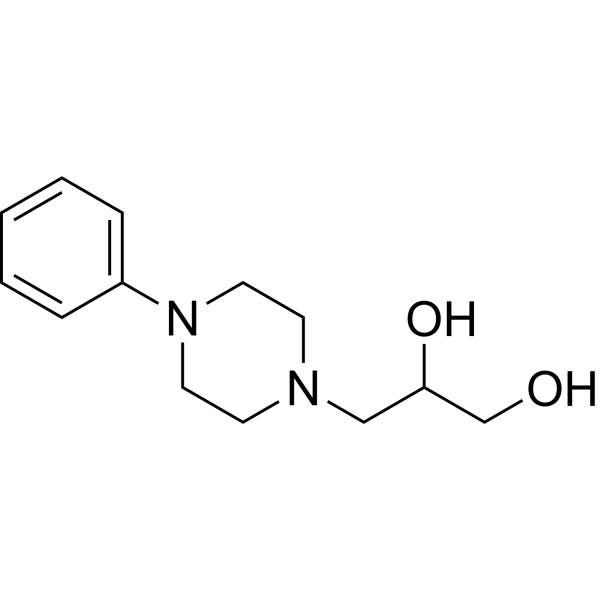
    Dropropizine ((±)-Dropropizine; UCB-196) is an orally effective, peripherally selective antitussive that inhibits the activity of peripheral receptors and afferent nerves in the respiratory tract. Dropropizine acts on the cough reflex pathway, does not pass the blood-brain barrier, and has no central nervous system side effects. Dropropizine mainly regulates the level of sensory neuropeptides and inhibits the afferent signal transmission of the cough reflex, thereby alleviating the symptoms of dry cough, and has both mild local anesthetic and antihistamine activity. Dropropizine is mainly used for symptomatic research on dry cough caused by respiratory diseases .
    Dropropizine
  • HY-121870

    Larocaine

    Drug Derivative Cytochrome P450 Neurological Disease
    Dimethocaine (Larocaine) is a cocaine derivative and ester-type local anesthetic. Dimethocaine is metabolized by hP450 1A2, 2C19, 2D6, and 3A4 in vitro. Dimethocaine exhibits locomotor-promoting, reinforcing, and anxiogenic effects .
    Dimethocaine
  • HY-B0985A
    Phenazopyridine
    2 Publications Verification

    TRP Channel Neurological Disease
    Phenazopyridine is a competitive SARM1 inhibitor, with IC50 145 μM. Phenazopyridine is a TRPM8 antagonist. Phenazopyridine has a local anesthetic/analgesic effect. Phenazopyridine is used to relieve painful symptoms of conditions such as cystitis and urethritis. Phenazopyridine can promote neuronal differentiation and can also be used in the study of traumatic brain injury, peripheral neuropathy and neurodegenerative diseases .
    Phenazopyridine
  • HY-116548

    Dopamine Receptor Neurological Disease
    Nitracaine is a structural analog of Dimethocaine (HY-121870), a local anesthetic that inhibits dopamine reuptake through the dopamine transporter .
    Nitracaine
  • HY-B2080

    EDC

    Sodium Channel Infection Others
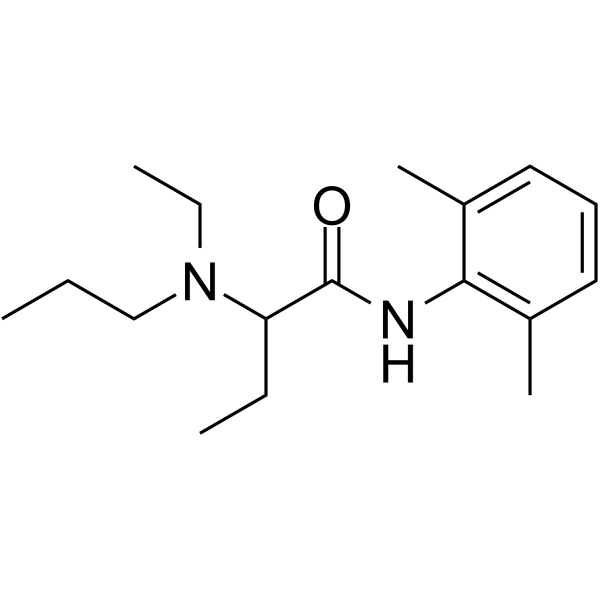
    Etidocaine (EDC) is a long aminoamide local anesthetic .
    Etidocaine
  • HY-Z6848

    Sodium Channel Neurological Disease
    (R)-(+)-Bupivacaine hydrochloride is a voltage-gated sodium channel inhibitor. (R)-(+)-Bupivacaine hydrochloride can selectively block the voltage-gated sodium channels on nerve cell membranes, inhibit the influx of sodium ions, and thus prevent the generation and conduction of nerve impulses, exerting local anesthetic activity. (R)-(+)-Bupivacaine hydrochloride can be used in research of acute pains .
    (R)-(+)-Bupivacaine hydrochloride
  • HY-19699

    NAAM; 1-Naphthaleneacetamide; α-Naphthylacetamide

    Environmental Pollutants Phytohormone Neurological Disease Endocrinology
    1-Naphthylacetamide is an orally active nonsteroidal anti-inflammatory agent (NAIA) and also an indole-type auxin plant growth regulator. 1-Naphthylacetamide inhibits inflammatory response-related pathways and modulates plant hormone signaling, exhibiting anti-inflammatory, local anesthetic, antispasmodic, analgesic, and diuretic activities. 1-Naphthylacetamide promotes plant cell expansion, differentiation, and fruit enlargement. Additionally, 1-Naphthylacetamide induces central nervous system (CNS) depression in mice, characterized by reduced spontaneous activity, decreased irritability, decreased muscle tone, and attenuated ear-cuff reflex, ipsilateral flexor reflex, and corneal reflex [1][2].
    1-Naphthylacetamide
  • HY-B0517S

    Sodium Channel Neurological Disease
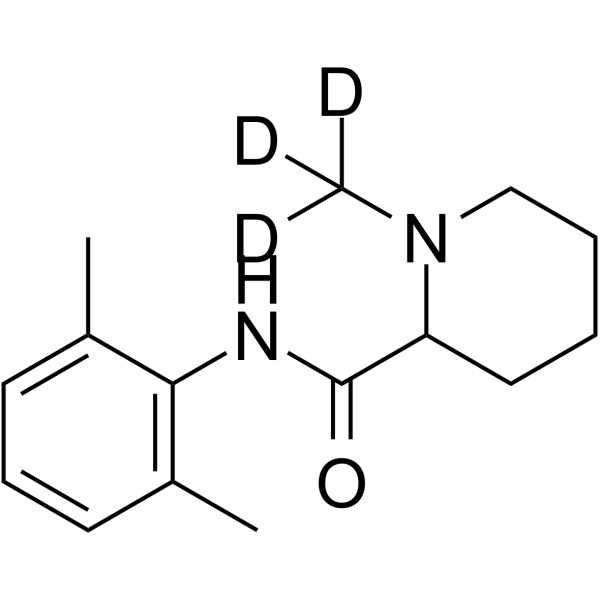
    Mepivacaine-d3 is the deuterium labeled Mepivacaine. Mepivacaine is an amide-type local anesthetic agent. Mepivacaine binds to specific voltage-gated sodium ion channels in neuronal cell membranes, which inhibits both sodium influx and membrane depolarization .
    Mepivacaine-d3
  • HY-Y0258R
    Benzocaine (Standard)
    1 Publications Verification

    Reference Standards Sodium Channel Bacterial Neurological Disease
    Benzocaine (Standard) is the analytical standard of Benzocaine (HY-Y0258). This product is intended for research and analytical applications. Benzocaine is an orally active local anesthetic. Benzocaine non-competitively inhibits the binding of Ca-ATPase to Ca 2+, with an IC50 of 47.1 mM. Benzocaine exerts anesthetic effects by blocking voltage-gated sodium channels. Benzocaine induces methemoglobinemia in various experimental animals .
    Benzocaine (Standard)
  • HY-B0516A

    Hoe-045 free base

    Sodium Channel NF-κB NOD-like Receptor (NLR) Neurological Disease Inflammation/Immunology
    Articaine (Hoe-045) is a selective inhibitor of voltage-gated sodium channels (such as rNav1.4, hNav1.7, and rNav1.8), with an IC50 of 15.8 μM for open-state Na + channels, and IC50 of 40.6 μM and 378 μM for inactivated and resting-state Na + channels, respectively. Articaine exerts local anesthetic activity by inhibiting Na + influx to block nerve impulse conduction, and can also inhibit NF-κB activation and NLRP3 inflammasome pathways, exhibiting anti-inflammatory function. Articaine can be used in the study of dental local anesthesia and inflammatory-related diseases (such as acute kidney injury) .
    Articaine
  • HY-121891

    Others Others
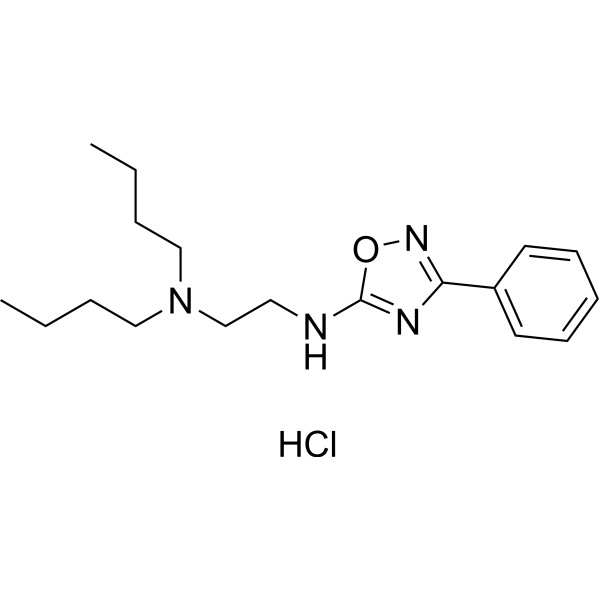
    Rhinocaine is a compound with local anesthetic activity.
    Rhinocaine
  • HY-105525A

    NIH 10908

    Opioid Receptor Others
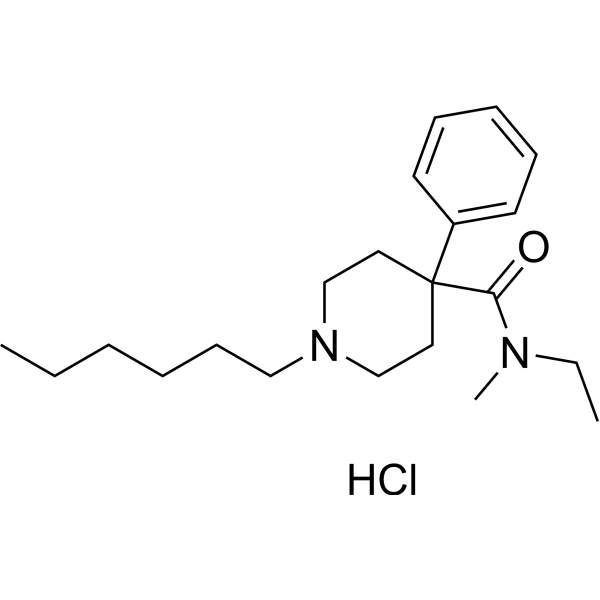
    Sameridine hydrochloride is a local anesthetic and local analgesic .
    Sameridine hydrochloride
  • HY-16259

    Ricainide hydrochloride; LY 135837

    Sodium Channel Cardiovascular Disease
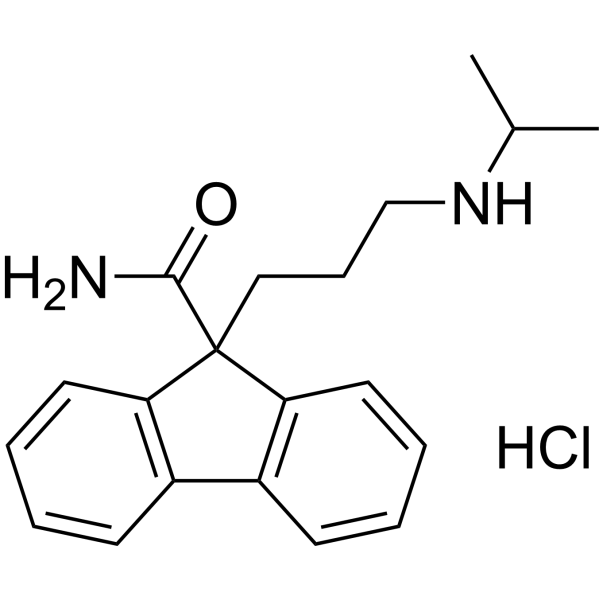
    Indecainide hydrochloride is a potent and orally active class I local anesthetic antiarrhythmic agent. Indecainide hydrochloride has Na +-channel-blocking activity .
    Indecainide hydrochloride
  • HY-118833

    Calcium Channel Cardiovascular Disease
    RAC 109 is a local anesthetic. RAC 109 reduces ventricular conduction velocity and myocardial contractility in rabbits in a stereospecific manner (EC50=30 μM) .
    RAC 109
  • HY-119913

    Ahistan

    Histamine Receptor Neurological Disease
    Dacemazine (Ahistan) is a phenothiazine derivative that acts as a histamine H1 receptor antagonist. Dacemazine exhibits local anesthetic activity and can alleviate spasms induced by acetylcholine and histamine .
    Dacemazine
  • HY-122364

    Adrenergic Receptor Cardiovascular Disease
    Bucumolol hydrochloride is a β-adrenergic receptor antagonist that can slow heart rate (negative chronotropic effect) and reduce cardiac contractility (negative inotropic effect). Bucumolol hydrochloride has antiarrhythmic and local anesthetic activity and can be used in the study of cardiovascular diseases .
    Bucumolol hydrochloride
  • HY-B1704R

    Monoamine Transporter Sodium Channel Neurological Disease
    Nisoxetine (Standard) is the analytical standard of Nisoxetine. This product is intended for research and analytical applications. Nisoxetine is a potent and selective inhibitor of noradrenaline transporter (NET), with a Kd of 0.76 nM. Nisoxetine is an antidepressant and local anesthetic, it can block voltage-gated sodium channels .
    Nisoxetine (Standard)
  • HY-105651A

    Cholinesterase (ChE) Cardiovascular Disease
    Butalamine (hydrochloride) is a peripheral vasodilator with local anesthetic effects. :Butalamine (hydrochloride) can produce in animals coronary vasodilation, local anaesthesia, analgesia and a papaverine like action in duodenal preparations. Butalamine (hydrochloride) causes a slowing in rate of spontaneous activity, a decrease in amplitude and a reduction in isolated human smooth muscle .
    Butalamine hydrochloride
  • HY-B0517R

    Reference Standards Sodium Channel Neurological Disease
    Mepivacaine (Standard) is the analytical standard of Mepivacaine. This product is intended for research and analytical applications. Mepivacaine is an amide-type local anesthetic agent. Mepivacaine binds to specific voltage-gated sodium ion channels in neuronal cell membranes, which inhibits both sodium influx and membrane depolarization .
    Mepivacaine (Standard)
  • HY-114987

    iGluR Neurological Disease
    EMD 21657 is a derivative of Piracetam (HY-B0585). EMD 21657 inhibits LOT compound action potential, and enhances the local anesthetic effect of Hexanol (HY-W032022). EMD 21657 exhibits hemolytic effect, and can be used in research about alcoholic encephalopathy syndrome .
    EMD 21657
  • HY-Y0258S

    Isotope-Labeled Compounds Sodium Channel Neurological Disease
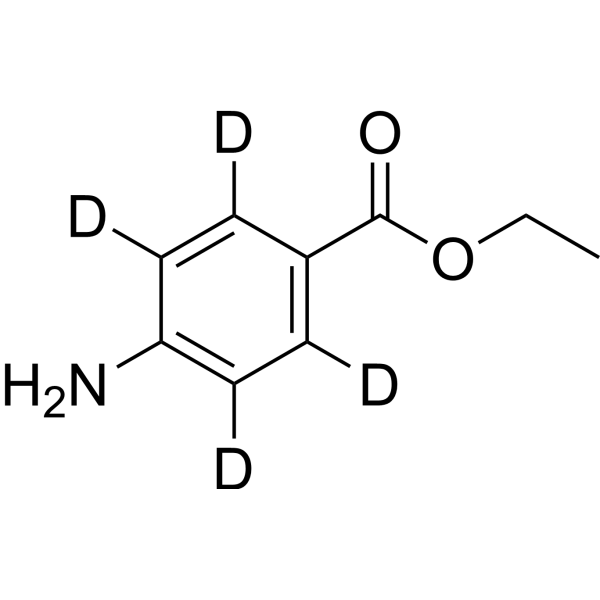
    Benzocaine-d4 is the deuterium labeled Benzocaine (HY-Y0258). Benzocaine is an orally active local anesthetic. Benzocaine non-competitively inhibits the binding of Ca-ATPase to Ca 2+, with an IC50 of 47.1 mM. Benzocaine exerts anesthetic effects by blocking voltage-gated sodium channels. Benzocaine induces methemoglobinemia in various experimental animals .
    Benzocaine-d4
  • HY-105651AR

    Cholinesterase (ChE) Reference Standards Cardiovascular Disease
    Butalamine (hydrochloride) (Standard) is the analytical standard of Butalamine (hydrochloride). This product is intended for research and analytical applications. Butalamine (hydrochloride) is a peripheral vasodilator with local anesthetic effects. :Butalamine (hydrochloride) can produce in animals coronary vasodilation, local anaesthesia, analgesia and a papaverine like action in duodenal preparations. Butalamine (hydrochloride) causes a slowing in rate of spontaneous activity, a decrease in amplitude and a reduction in isolated human smooth muscle .
    Butalamine hydrochloride (Standard)
  • HY-Y0258S1

    Sodium Channel Neurological Disease
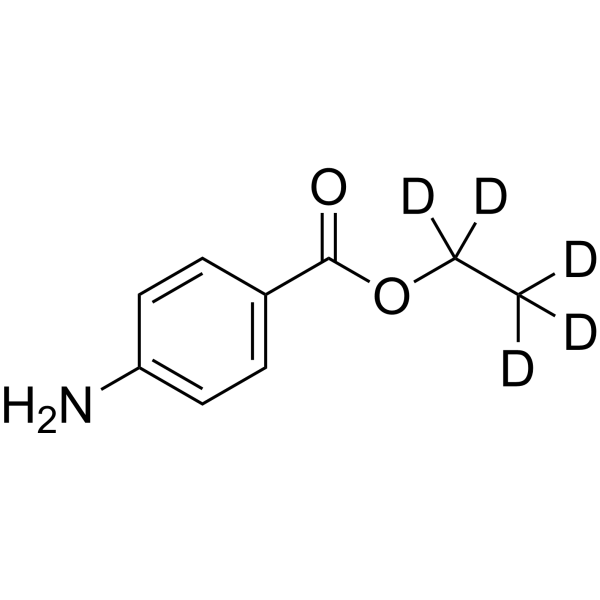
    Benzocaine-(ethyl-d5) is the deuterium labeled Benzocaine (HY-Y0258). Benzocaine is an orally active local anesthetic. Benzocaine non-competitively inhibits the binding of Ca-ATPase to Ca 2+, with an IC50 of 47.1 mM. Benzocaine exerts anesthetic effects by blocking voltage-gated sodium channels. Benzocaine induces methemoglobinemia in various experimental animals .
    Benzocaine-(ethyl-d5)
  • HY-66012R

    Proxymetacaine hydrochloride (Standard)

    Reference Standards Sodium Channel Neurological Disease
    Proparacaine (Hydrochloride) (Standard) is the analytical standard of Proparacaine (Hydrochloride). This product is intended for research and analytical applications. Proparacaine hydrochloride is a local anesthetic. Proparacaine hydrochloride blocks voltage-gated sodium channels on neuronal cell membranes, thereby inhibiting signal conduction and nociceptive signal transmission. Proparacaine hydrochloride blocks nociceptive signals in the eye and induces ocular muscle relaxation to reduce eye movement during surgery. Proparacaine hydrochloride is used in research related to cataracts.
    Proparacaine hydrochloride (Standard)
  • HY-Y0258AR

    Reference Standards Bacterial Sodium Channel Neurological Disease
    Benzocaine hydrochloride (Standard) is an analytical standard of Benzocaine hydrochloride (HY-Y0258A). This product is intended for research and analytical applications. Benzocaine hydrochloride is an orally active local anesthetic. Benzocaine hydrochloride non-competitively inhibits the binding of Ca-ATPase to Ca 2+, with a IC50 of 47.1 mM. Benzocaine hydrochloride exerts anesthetic effects by blocking voltage-gated sodium channels. Benzocaine hydrochloride induces methemoglobinemia in various experimental animals .
    Benzocaine (hydrochloride) (Standard)
  • HY-Y1314R

    Drug Metabolite Reference Standards Endogenous Metabolite Metabolic Disease
    Dimethyl sulfone (Standard) is the analytical standard of Dimethyl sulfone. This product is intended for research and analytical applications. Dimethyl sulfone (Methyl Sulfonyl Methane) is a metabolic product of endogenous methanethiol metabolism and intestinal bacterial metabolism. Dimethyl sulfone inhibits choriocapillary endothelial (CCE) cell proliferation, also has many biological effects, including antiinflammatory, antioxidant, and local anesthetic effects that could be neuroprotective .
    Dimethyl sulfone (Standard)
  • HY-B0985R

    Reference Standards TRP Channel Neurological Disease
    Phenazopyridine (hydrochloride) (Standard) is the analytical standard of Phenazopyridine (hydrochloride). This product is intended for research and analytical applications. Phenazopyridine hydrochlorideis a competitive SARM1 inhibitor, with IC50 145 μM. Phenazopyridine hydrochlorideis a TRPM8 antagonist. Phenazopyridine hydrochloride has a local anesthetic/analgesic effect. Phenazopyridine hydrochlorideis used to relieve painful symptoms of conditions such as cystitis and urethritis. Phenazopyridine hydrochloridecan promote neuronal differentiation and can also be used in the study of traumatic brain injury, peripheral neuropathy and neurodegenerative diseases .
    Phenazopyridine hydrochloride (Standard)
  • HY-121670

    Others Neurological Disease
    Ambenoxan is a central nervous system-acting skeletal muscle relaxant that is effective in mice, rats, rabbits, dogs, and monkeys without loss of the righting reflex. It has no peripheral neuromuscular blocking effects and significantly reduces or eliminates decerebrate rigidity in rabbits, but does not antagonize the effects of strychnine, leptazol, or tremorine. Like other central nervous system depressants, ambenoxan prolongs sleep duration with hexobarbitone, but it has no local anesthetic effects. In anesthetized cats, the agent lowers blood pressure and reduces the pressor response to epinephrine, but has no effect on norepinephrine.
    Ambenoxan
  • HY-121670A

    Adrenergic Receptor Neurological Disease
    Ambenoxan hydrochloride is a central nervous system-acting skeletal muscle relaxant that is effective in mice, rats, rabbits, dogs, and monkeys without loss of the righting reflex. It has no peripheral neuromuscular blocking effects and significantly reduces or eliminates decerebrate rigidity in rabbits, but does not antagonize the effects of strychnine, leptazol, or tremorine. Like other central nervous system depressants, ambenoxan prolongs sleep duration with hexobarbitone, but it has no local anesthetic effects. In anesthetized cats, the agent lowers blood pressure and reduces the pressor response to epinephrine, but has no effect on norepinephrine.
    Ambenoxan hydrochloride
  • HY-B0516R

    Hoe-045 (Standard)

    Reference Standards Sodium Channel NF-κB NOD-like Receptor (NLR) Neurological Disease
    Articaine (Hoe-045) hydrochloride (Standard) is the analytical standard of Articaine hydrochloride (HY-B0516). This product is intended for research and analytical applications. Articaine (Hoe-045) hydrochloride is a selective inhibitor of voltage-gated sodium channels (such as rNav1.4, hNav1.7, and rNav1.8), with an IC50 of 15.8 μM for open-state Na + channels, and IC50 of 40.6 μM and 378 μM for inactivated and resting-state Na + channels, respectively. Articaine hydrochloride exerts local anesthetic activity by inhibiting Na + influx to block nerve impulse conduction, and can also inhibit NF-κB activation and NLRP3 inflammasome pathways, exhibiting anti-inflammatory function. Articaine hydrochloride can be used in the study of dental local anesthesia and inflammatory-related diseases (such as acute kidney injury) .
    Articaine hydrochloride (Standard)
  • HY-B0516AR

    Hoe-045 free base (Standard)

    Reference Standards Sodium Channel NF-κB NOD-like Receptor (NLR) Inflammation/Immunology
    Articaine (Standard) is the analytical standard of Articaine (HY-B0516A). This product is intended for research and analytical applications. Articaine (Hoe-045) hydrochloride is a selective inhibitor of voltage-gated sodium channels (such as rNav1.4, hNav1.7, and rNav1.8), with an IC50 of 15.8 μM for open-state Na + channels, and IC50 of 40.6 μM and 378 μM for inactivated and resting-state Na + channels, respectively. Articaine hydrochloride exerts local anesthetic activity by inhibiting Na + influx to block nerve impulse conduction, and can also inhibit NF-κB activation and NLRP3 inflammasome pathways, exhibiting anti-inflammatory function. Articaine hydrochloride can be used in the study of dental local anesthesia and inflammatory-related diseases (such as acute kidney injury) .
    Articaine (Standard)
  • HY-122050

    Sodium Channel Neurological Disease
    Oe-9000 is a compound with local anesthetic activity that inhibits voltage-gated Na + currents in neurons, including both TTX-resistant and TTX-sensitive currents, with effects superior to those of some other local anesthetics.
    Oe-9000
  • HY-A0254

    Cyclain

    Others Neurological Disease
    Hexylcaine (Cyclain) is a local anesthetic. Hexylcaine has the characteristics of fast onset, strong effect, moderate duration, and high safety .
    Hexylcaine
  • HY-N19049

    Others Neurological Disease
    Acmella oleracea extract, derived from the leaves and buds of the Acmella oleracea plant, is a versatile natural ingredient. It contains various bioactive compounds, including alkylamide alkaloids such as acmella alcohol, which impart a tingling sensation and local anesthetic effect to the extract.
    Acmella oleracea extract
  • HY-66012A

    Proxymetacaine

    Sodium Channel Neurological Disease
    Proparacaine (Proxymetacaine) is a local anesthetic. Proparacaine blocks voltage-gated sodium channels on neuronal cell membranes, thereby inhibiting signal conduction and nociceptive signal transmission. Proparacaine blocks nociceptive signals in the eye and induces ocular muscle relaxation to reduce eye movement during surgery. Proparacaine is used in research related to cataracts .
    Proparacaine
  • HY-105525

    NIH 10908 free base

    Opioid Receptor Neurological Disease
    Sameridine (NIH-10908 free base) is a weak partial agonist of the μ-opioid receptor. Sameridine shows local anesthetic and analgesic properties. Sameridine has minimal respiratory depression at low doses, but can suppress ventilatory response at high doses. Sameridine can be used for the study of analgesic effect .
    Sameridine

Inquiry Online

Your information is safe with us. * Required Fields.

Salutation


Country or Region *

Applicant Name *


Organization Name *

Department *


Email Address *


Product Name *

Cat. No.


Requested quantity *

Phone Number *


Remarks

Inquiry Online

Inquiry Information

Product Name:
Cat. No.:
Quantity:
MCE Japan Authorized Agent: