
1. Search Result
Search Result
Results for "

nanoparticle formulations

" in MedChemExpress (MCE) Product Catalog:

26

Inhibitors & Agonists

8

Biochemical Assay Reagents

1

Inhibitory Antibodies

3

Natural
Products

1

Isotope-Labeled Compounds

14

Oligonucleotides

Cat. No. Product Name Target Research Areas Chemical Structure
  • HY-P99974
    Nab-Paclitaxel
    4 Publications Verification

    nanoparticle albumin-bound Paclitaxel; nanoparticle albumin-bound ABI-007

    Microtubule/Tubulin Apoptosis Autophagy Cancer
    Nab-Paclitaxel (Nanoparticle albumin-bound Paclitaxel) is an albumin-bound nanoparticle formulation of Paclitaxel (HY-B0015). Nab-Paclitaxel is composed of albumin and the active pharmaceutical ingredient Paclitaxel, in which human albumin is used as an excipient to disperse and stabilize particles and carry the main drug. Nab-Paclitaxel is a solvent-free taxane with higher response rates and improved tolerability. Nab-Paclitaxel displays less toxicity and greater antitumor activity. Nab-Paclitaxel is more readily available for tumor cell uptake in three rhabdomyosarcoma, seven neuroblastoma cell lines, and one ostersarcoma cell line Nab-Paclitaxel can be studied in cancer research for example breast cancer and solid tumors. (The product specifications below only indicate the effective content of Paditaxel, the actual albumin quality depends on the batch; the ratio of each ingredient in this product is Paditaxel: albumin -1:7~1:11) .
    Nab-Paclitaxel
  • HY-B1620L

    PVP, average Mw~40000; Polyvidone, average Mw~40000; Povidone, average Mw~40000

    Environmental Pollutants Biochemical Assay Reagents Others
    Polyvinylpyrrolidone, average Mw~40000 is a multifunctional synthetic polymer with an average molecular weight of 40,000 Da. Polyvinylpyrrolidone, average Mw~40000 is widely used to synthesize nanoparticles. Polyvinylpyrrolidone, average Mw~40000 is a versatile excipient for both conventional formulations and novel controlled or targeted delivery systems, serving as a binder, coating agent, suspending agent, pore-former, solubilizer, stabilizer, etc .
    Polyvinylpyrrolidone, average Mw~40000
  • HY-N16040

    Liposome Others
    DMG-pSar25 is a double lipid-tailed polysarcosine lipid with 25 sarcosine moieties, serving as a PEG lipid substitute in lipid nanoparticle formulations for mRNA delivery. DMG-pSar25 supports mRNA delivery in lipid nanoparticle formulations .
    DMG-pSar25
  • HY-145794

    Liposome Cancer
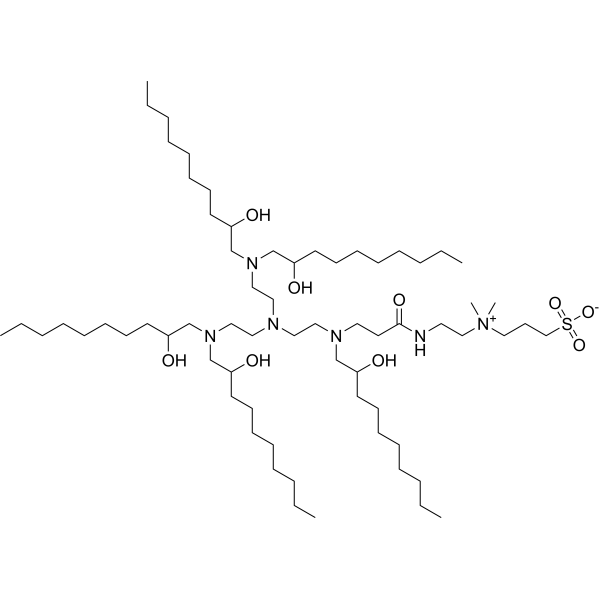
    ZA3-Ep10 is a zwitterionic lipid used in lipid nanoparticles formulation for in vivo RNA delivery.
    ZA3-Ep10
  • HY-144012

    16:0 PEG2000 PE ammonium; 1,2-Dipalmitoyl-sn-glycero-3-phosphoethanolamine-N-[methoxy(polyethylene glycol)-2000] ammonium

    Liposome Others
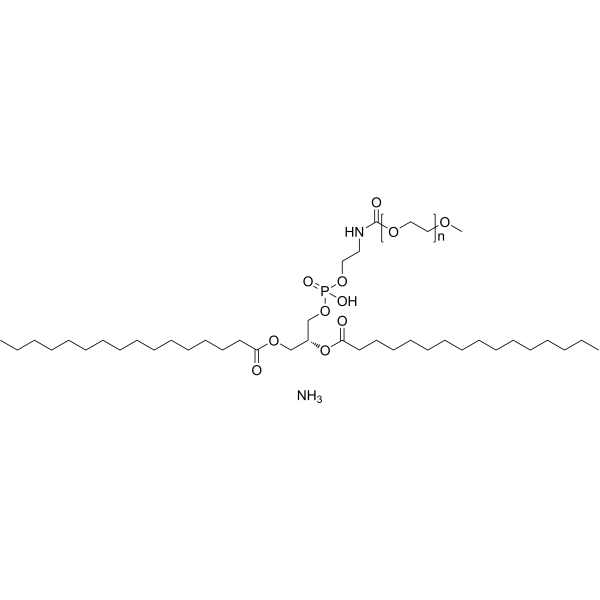
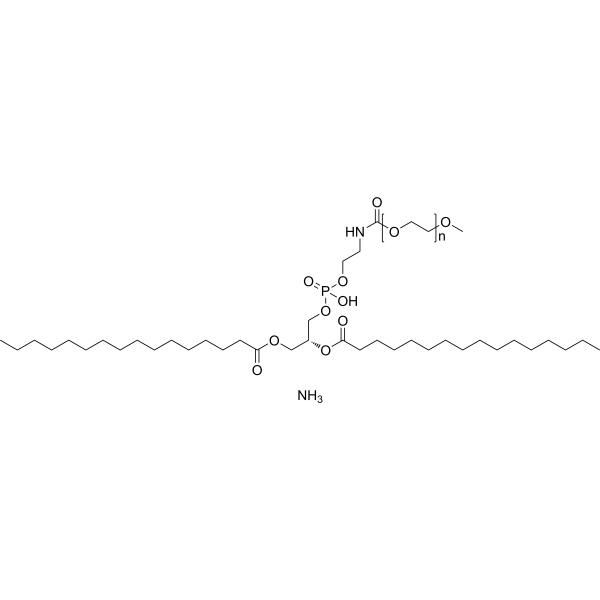
    DPPE-PEG2000 ammonium (16:0 PEG5000 PE) is a polymer-lipid conjugate and LipoParticle stabilizer with a PEG chain of 5,000 g/mol molecular weight attached to its polar head, and it can be internalized by biological membranes. DPPE-PEG2000 ammonium enables LipoParticle to maintain colloidal stability after 20-fold dilution in PBS or cell culture medium, and prevents aggregate formation during lyophilization and rehydration. DPPE-PEG2000 ammonium helps enhance the non-cytotoxic property of LipoParticle formulations against human osteoblasts. DPPE-PEG2000 ammonium serves as a PEG lipid functional end group for synthesizing liposomes (LPs), is used in the design of conjugated polymer nanoparticles, and applies to research related to bone and joint infections .
    DPPE-PEG2000 ammonium
  • HY-153235

    mRNA SARS-CoV Liposome Infection
    COVID-19 Spike Protein mRNA-LNP is a lipid nanoparticle (LNP) containing mRNA encoding COVID-19 Spike Protein. COVID-19 Spike Protein undertakes the functions of virus binding with host cell receptors, thereby mediating the entry of COVID-19 virus into cells. COVID-19 Spike Protein is an important site of action for host neutralizing antibodies and a key target for vaccine design. COVID-19 Spike Protein mRNA-LNP can be used for RNA delivery, vaccine formulation and design targeting SARS-CoV-2 .
    COVID-19 Spike Protein mRNA-LNP
  • HY-144012H

    16:0 PEG5000 PE; 1,2-Dipalmitoyl-sn-glycero-3-phosphoethanolamine-N-[methoxy(polyethylene glycol)-5000] ammonium

    Liposome Others
    DPPE-PEG5000 (16:0 PEG5000 PE) is a polymer-lipid conjugate and LipoParticle stabilizer with a PEG chain of 5,000 g/mol molecular weight attached to its polar head, and it can be internalized by biological membranes. DPPE-PEG5000 enables LipoParticle to maintain colloidal stability after 20-fold dilution in PBS or cell culture medium, and prevents aggregate formation during lyophilization and rehydration. DPPE-PEG5000 helps enhance the non-cytotoxic property of LipoParticle formulations against human osteoblasts. DPPE-PEG5000 serves as a PEG lipid functional end group for synthesizing liposomes (LPs), is used in the design of conjugated polymer nanoparticles, and applies to research related to bone and joint infections .
    DPPE-PEG5000
  • HY-137499

    Liposome Endogenous Metabolite Neurological Disease
    NT1-O12B, an endogenous chemical and a neurotransmitter-derived lipidoid (NT-lipidoid), is an effective carrier for enhanced brain delivery of several blood-brain barrier (BBB)-impermeable cargos. Doping NT1-O12B into BBB-impermeable lipid nanoparticles (LNPs) gives the LNPs the ability to cross the BBB. NT-lipidoids formulation not only facilitate cargo crossing of the BBB, but also delivery of the cargo into neuronal cells for functional gene silencing or gene recombination .
    NT1-O12B
  • HY-160113E

    Biochemical Assay Reagents Others
    Sodium phosphate buffer 0.1M, pH 8.0 is an aqueous sodium phosphate buffer with a concentration of 0.1M and a pH value of 8.0. Sodium phosphate buffer 0.1M, pH 8.0 can be used for the preparation of hydrated micellar membranes, the construction of pH-sensitive nanocarriers, and the maintenance of stable environmental conditions for pH-cleavable PEG-Hz-PE micelles. Sodium phosphate buffer 0.1M, pH 8.0 can also serve as a universal solvent, reaction medium and eluent, and is widely applied in experimental processes such as antibody thiolation, nanoparticle purification and cross-linking reactions .
    Sodium phosphate buffer 0.1M, pH 8.0
  • HY-116282P

    Bacterial Infection Inflammation/Immunology
    Dextran sulfate, high sulfate (MW 5000) is a type of dextran sulfate with a high degree of sulfation. Dextran sulfate sodium can be used to induce ulcerative colitis models, and the greater the total number of sulfur atoms, the stronger the induced toxic effect. Dextran sulfate has certain antibacterial activity, and can form the ionic cross-linking core of nanoparticles together with chitosan, serving as a highly efficient dressing material to accelerate wound healing .
    Dextran sulfate, high sulfate (MW 5000)
  • HY-N11554

    Bacterial Infection
    (-)-Codonopsine is an alkaloid with antibacterial activity. (-)-Codonopsine can be used in research related to Staphylococcus aureus and Escherichia coli infections .
    (-)-Codonopsine
  • HY-156100

    Liposome Others
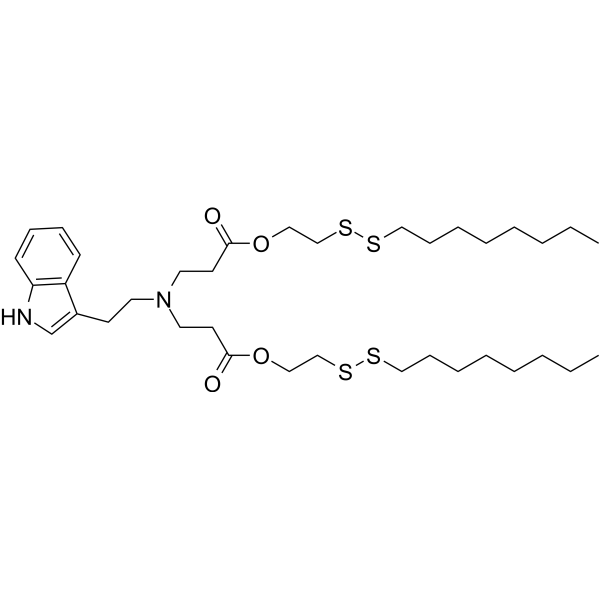
    C12-4 is an ionizable lipid for lipid nanoparticles (LNPs) formulation.
    C12-4
  • HY-160705

    Liposome Cancer
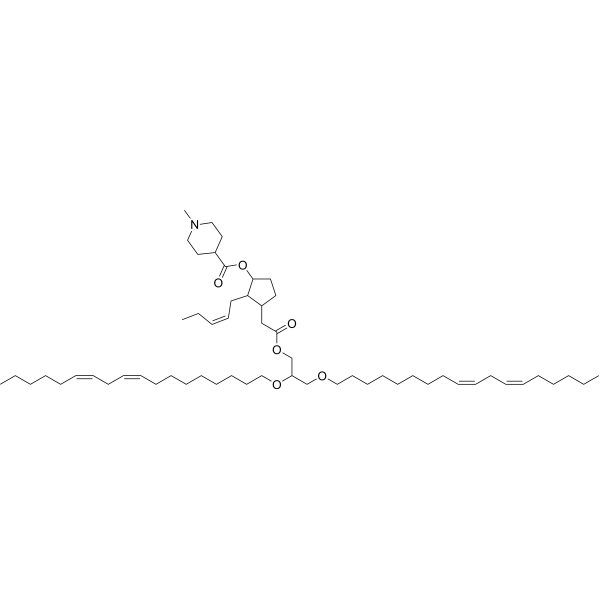
    PNI 132, an ionizable lipid derived from the patent WO2020252589A, is useful in the formulation of lipid nanoparticles.
    PNI 132
  • HY-W143375

    Bacterial Infection
    Phytantriol is an aliphatic alcohol that can be used to form nanoparticles. Phytantriol-based cubosome formulation as an antimicrobial against Lipopolysaccharides (HY-D1056) (LPS)-deficient gram-Negative bacteria .
    Phytantriol
  • HY-177614

    AD3133 sodium

    VEGFR Cancer
    ALN-3133 sodium is a siRNA that targets VEGF, and it is one of the siRNAs in ALN-VSP.ALN-VSP is a lipid nanoparticle formulation containing two siRNAs for kinesin spindle protein (KSP) and VEGF with potential antitumor activity.
    ALN-3133 sodium
  • HY-177613A

    AD12115 sodium

    Kinesin Cancer
    ALN-12115 sodium is a siRNA that targets kinesin spindle protein (KSP), and it is one of the siRNAs in ALN-VSP.ALN-VSP is a lipid nanoparticle formulation containing two siRNAs for KSP and VEGF with potential antitumor activity.
    ALN-12115 sodium
  • HY-177613

    AD12115

    Kinesin Cancer
    ALN-12115 is a siRNA that targets kinesin spindle protein (KSP), and it is one of the siRNAs in ALN-VSP.ALN-VSP is a lipid nanoparticle formulation containing two siRNAs for KSP and VEGF with potential antitumor activity.
    ALN-12115
  • HY-171898

    Liposome Inflammation/Immunology Cancer
    Lipid I97 is an ionizable lipid derived from vitamin B5 (pKa = 6.23). Lipid I97 can be used to generate lipid nanoparticles (LNPs) for mRNA delivery in vivo. Lipid I97 can be studied in research for enhancing mRNA transfection efficiency and long-term stability as well as formulation of mRNA vaccines .
    Lipid I97
  • HY-169801

    Glucocorticoid Receptor Interleukin Related Inflammation/Immunology
    Rofleponide 21-palmitate is a lipophilic Corticosteroid prodrug. Rofleponide 21-palmitate reduces subcutaneous edema, plasma haptoglobin levels, and plasma levels of IL-6, KC, IP-10, MCP-1. Rofleponide 21-palmitate increases and prolongs mRNA-encoded protein expression in lipid nanoparticle formulations .
    Rofleponide 21-palmitate
  • HY-19873

    Photosensitizer Cancer
    SL-052 is a hypocrellin-based photosensitizer that has recently shown promising results in clinical and preclinical testing for cancer photodynamic therapy (PDT). SL-052 is encapsulated in biodegradable polylactic-co-glycolic acid (PLGA) polymer nanoparticles optimized using single emulsion solvent evaporation technology. The SL-052-PLGA nanoparticles were more effective in PDT treatment of subcutaneous SCCVII squamous cell carcinoma compared to polyvinylpyrrolidone (PVP)-based and standard liposomal SL-052 formulations. A longer time interval between drug injection and tumor illumination can improve tumor cure rates, and SL-052-PLGA nanoparticles showed the best therapeutic effect among all SL-052 formulations.
    SL-052
  • HY-159176

    Cytochrome P450 Cancer
    Antitumor agent-183 (compound 3f) has antitumor activity with metabolic stability. Antitumor agent-183 inhibits cancer cell growth, with IC50s less than 5 nM for A549, HCT116, and HS578T cells. The albumin-bound nanoparticle formulation of Antitumor agent-183 has prolonged retention in the tumor tissues .
    Antitumor agent-183
  • HY-165604

    Liposome Others
    C14-490, an ionizable cationic lipid (pKa = 5.94), is used for the synthesis of lipid nanoparticles (LNPs). C14-490 LNPs is used as the basis for subsequent study of in utero gene editing in HSCs. C14-490 LNPs are used to encapsulate SpCas9 mRNA and TTR sgRNA using optimized B5 formulation parameters and surface conjugation to CD45 antibody F(ab’)2 fragments-Systematically optimized Targeted Editing Machinery LNPs (STEM LNPs) .
    C14-490
  • HY-185284

    Liposome Others
    MeDZ lipid is a zwitterion-type ionizable endosomal membrane destabilizer and anti-inflammatory agent that promotes endosomal escape. When incorporated into LNP formulations, MeDZ lipid enhances mRNA expression in lymph node antigen-presenting cells and promotes cytotoxic T cell activation. MeDZ lipid is compatible with existing targeted nanoparticle formulations to improve mRNA delivery efficiency .
    MeDZ lipid
  • HY-W1130407

    Liposome Others
    CP-LC-1073 is a specific ionizable cationic amino lipid derived from the amino acid homocysteine. CP-LC-1073 can used in lipid nanoparticle (LNP) formulations for efficient in vivo delivery and expression of RNA (mRNA, cRNA, saRNA).
    CP-LC-1073
  • HY-176027

    Liposome Others
    CP-LC-1422 is a homocysteine-derived ionizable amino lipid with high RNA delivery capability and can mediate high-level protein expression in vivo. CP-LC-1422 exhibits significant spleen targeting via intravenous injection in a lipid nanoparticle (LNP) formulation with no significant toxicity observed .
    CP-LC-1422
  • HY-185404

    Drug Intermediate Others
    DSPE-PEG8-OH is a monodisperse lipid-polyethylene glycol conjugate featuring a hydrophobic 1,2-distearoyl-sn-glycero-3-phosphoethanolamine (DSPE) anchor, an 8-unit discrete (PEG8) spacer, and a terminal hydroxyl (-OH) group. DSPE-PEG8-OH is primarily used in liposome formulation, nanoparticle surface modification, and targeted drug delivery systems.
    DSPE-PEG8-OH

Inquiry Online

Your information is safe with us. * Required Fields.

Salutation


Country or Region *

Applicant Name *


Organization Name *

Department *


Email Address *


Product Name *

Cat. No.


Requested quantity *

Phone Number *


Remarks

Inquiry Online

Inquiry Information

Product Name:
Cat. No.:
Quantity:
MCE Japan Authorized Agent:

