

Search Result
Results for "
neuromodulator
" in MedChemExpress (MCE) Product Catalog:
6
Isotope-Labeled Compounds
| Cat. No. |
Product Name |
Target |
Research Areas |
Chemical Structure |
-
- HY-P0201
-
-
-
- HY-B2132
-
|
3-(2-Aminoethyl)indole~2-(3-Indolyl)ethylamine
|
Endogenous Metabolite
5-HT Receptor
Aryl Hydrocarbon Receptor
|
Neurological Disease
Metabolic Disease
|
|
Tryptamine is a selective, blood-brain-penetrating 5-HT4 receptor agonist (EC50=1-3 mM) and an endogenous ligand of the aryl hydrocarbon receptor (AHR) (Kd=10-50 nM). Tryptamine promotes intestinal anion secretion and fluid transport by activating G protein-coupled receptors (GPCRs) and accelerates gastrointestinal motility. Tryptamine regulates Th17/Treg balance to inhibit neuroinflammation, competitively binds to 5-HT receptors to regulate central nervous system activity, and participates in temperature regulation and spinal reflex regulation as a neuromodulator. Tryptamine can be used to study intestinal motility disorders such as functional constipation, and has shown significant efficacy in multiple sclerosis models .
|
-
-
- HY-B0528A
-
|
(±)-p-Octopamine hydrochloride
|
Adrenergic Receptor
Endogenous Metabolite
|
Neurological Disease
Endocrinology
|
|
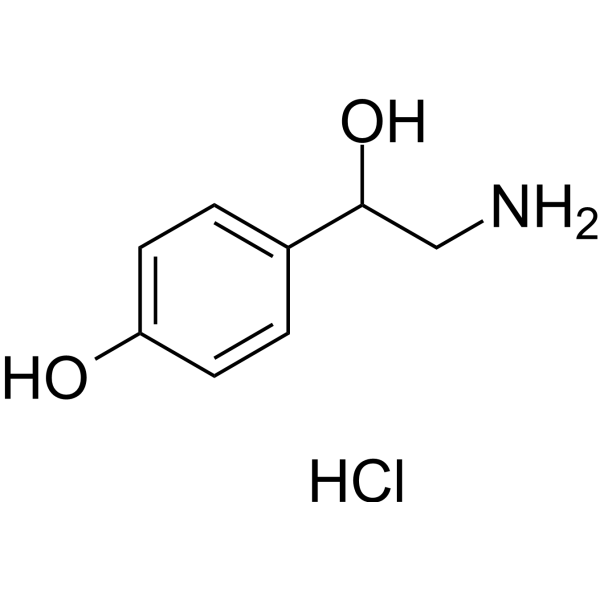
Octopamine ((±)-p-Octopamine) hydrochloride, a biogenic monoamine structurally related to noradrenaline, acts as a neurohormone, a neuromodulator and a neurotransmitter in invertebrates. Octopamine hydrochloride can stimulate alpha2-adrenoceptors (ARs) in Chinese hamster ovary cells transfected with human alpha2-ARs. Octopamine hydrochloride increased glycogenolysis, glycolysis, oxygen uptake, gluconeogenesis and the portal perfusion pressure .
|
-
-
- HY-103638A
-
-
-
- HY-42068
-
|
(R)-Aspartic acid; D-(-)-Aspartic acid
|
Pyroptosis
|
Neurological Disease
|
|
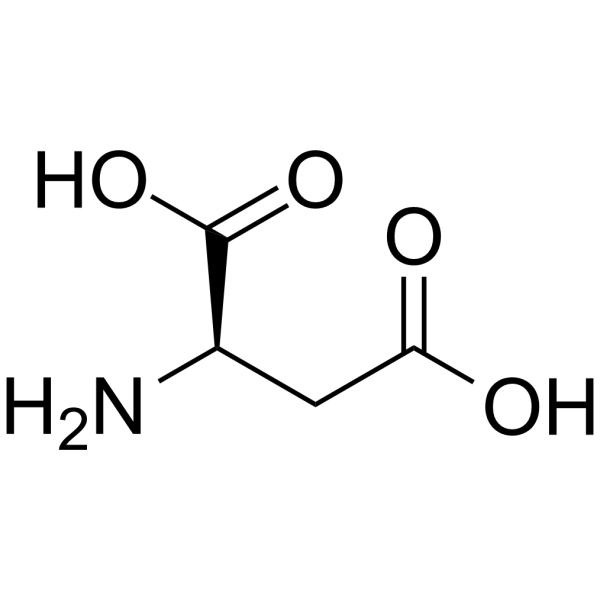
(-)-Aspartic acid is a pyroptosis inhibitor. (-)-Aspartic acid acts as a neurotransmitter and neuromodulator, participates in hormone synthesis and regulation, and plays a role in nervous system development and endocrine system .
|
-
-
- HY-113439
-
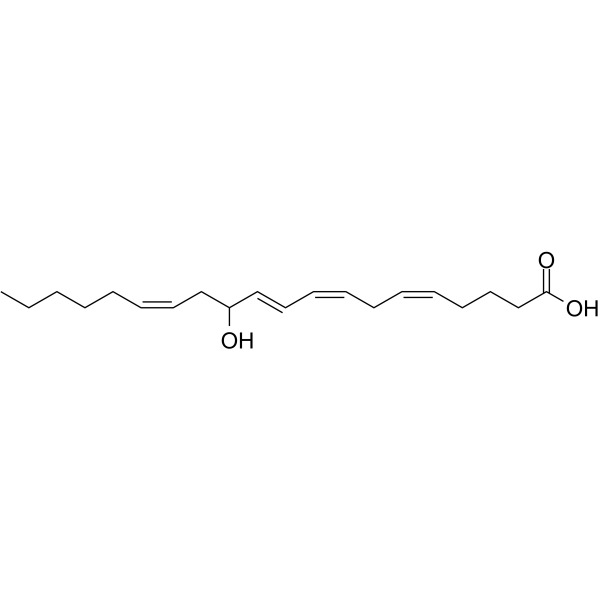
12-HETE
2 Publications Verification
|
Apoptosis
|
Cardiovascular Disease
Inflammation/Immunology
|
|
12-HETE, a major metabolic product of arachidonic acid using 12-LOX catalysis, inhibits cell apoptosis in a dose-dependent manner. 12-HETE promotes the activation and nuclear translocation of NF-κB through the integrin-linked kinase (ILK) pathway .12-HETE has both anti-thrombotic and pro-thrombotic effects . 12-HETE is a neuromodulator .
|
-
-
- HY-P1723
-
Spexin
2 Publications Verification
Neuropeptide Q
|
Neuropeptide Y Receptor
Apoptosis
Ferroptosis
Autophagy
|
Cardiovascular Disease
Neurological Disease
|
|
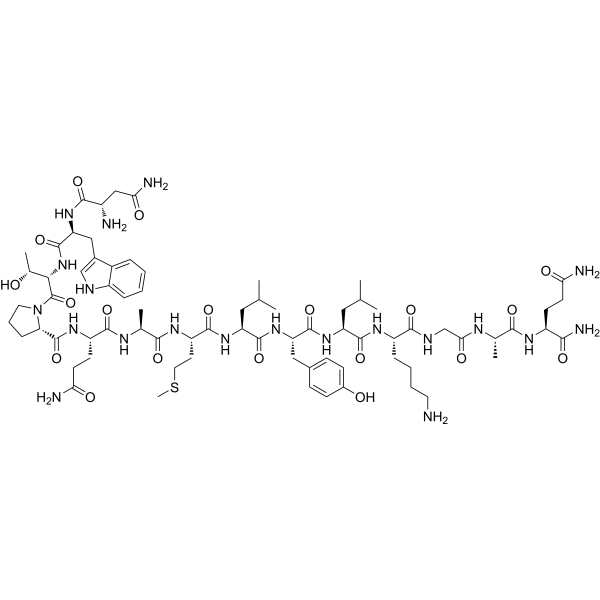
Spexin (Neuropeptide Q) is a selective agonist of galanin receptors GAL2 and GAL3, and is a conserved peptide that functions as a neurotransmitter/neuromodulator and endocrine factor. Spexin can function through both central and peripheral actions. Spexin upregulates Beclin 1 to inhibit ferroptosis induced by excessive autophagy, reduces the uptake of long-chain fatty acids by adipocytes, and regulates energy metabolism by increasing lipid oxidation (e.g., reducing the respiratory exchange ratio in rodents). Spexin improves cardiac function in the Doxorubicin hydrochloride (HY-15142)-induced cardiotoxicity model, protects mitochondrial membrane potential, and reduces iron accumulation and lipid peroxidation. Spexin can be used to study obesity and its related metabolic disorders, cardiovascular diseases (e.g., cardioprotection), and side effects of tumor chemotherapy .
|
-
-
- HY-113439S
-
|
|
Apoptosis
|
Cardiovascular Disease
Inflammation/Immunology
|
|
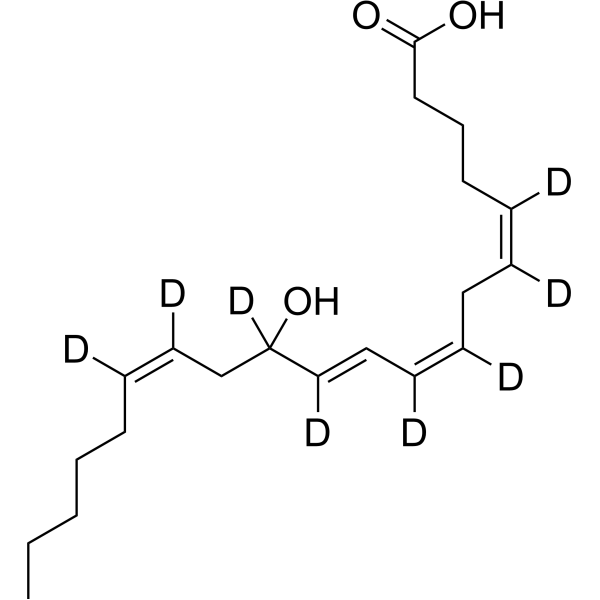
12-HETE-d8 is the deuterium labeled 12-HETE. 12-HETE, a major metabolic product of arachidonic acid using 12-LOX catalysis, inhibits cell apoptosis in a dose-dependent manner. 12-HETE promotes the activation and nuclear translocation of NF-κB through the integrin-linked kinase (ILK) pathway .12-HETE has both anti-thrombotic and pro-thrombotic effects . 12-HETE is a neuromodulator .
|
-
-
- HY-128975
-
-
-
- HY-P0201A
-
-
-
- HY-P2546
-
|
|
Neurokinin Receptor
|
Neurological Disease
|
|
Biotin-Substance P is the biotin tagged Substance P. Substance P (Neurokinin P) is a neuropeptide, acting as a neurotransmitter and as a neuromodulator in the CNS. The endogenous receptor for substance P is neurokinin 1 receptor (NK1-receptor, NK1R) .
|
-
-
- HY-14948
-
|
RWJ-333369
|
Sodium Channel
|
Neurological Disease
|
|
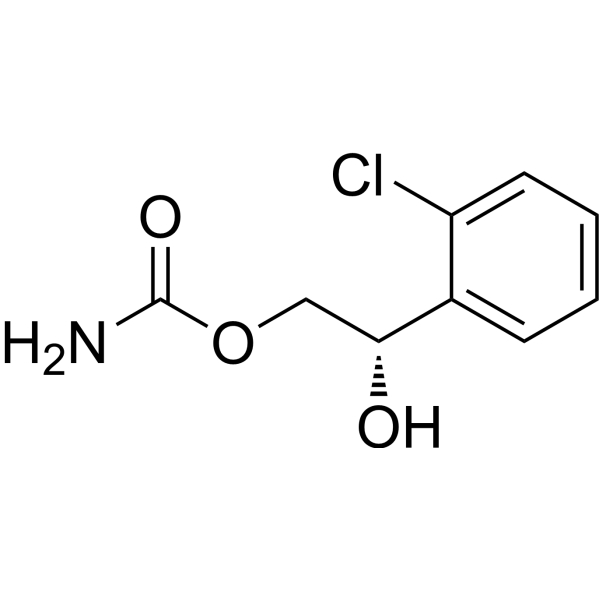
Carisbamate (RWJ-333369) is an orally active neuromodulator. Carisbamate prevents the development and production of epilep-like discharges and has a neuroprotective effect after in vitro epilepticus-like injury. Carisbamate has good antiepileptic activity in genetic models of generalized and nonconvulsive epilepsy .
|
-
-
- HY-114883
-
|
L-Homocarnosine
|
GABA Receptor
Endogenous Metabolite
|
Neurological Disease
Inflammation/Immunology
|
|
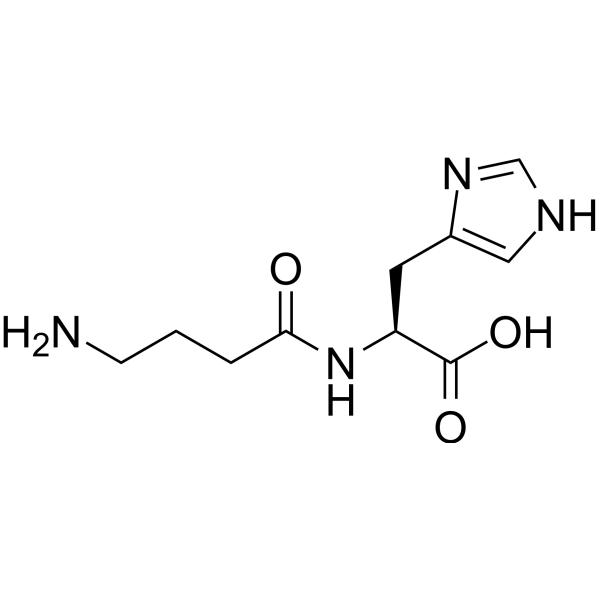
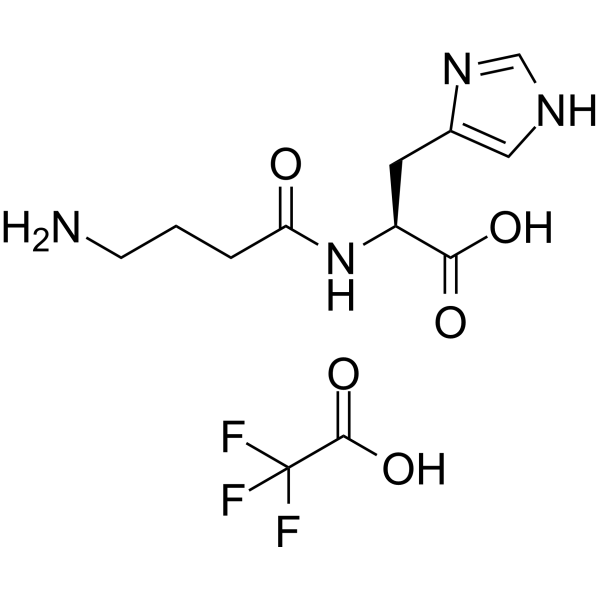
Homocarnosine is a dipeptide of γ-aminobutyric acid (GABA) and histidine unique to brain. Homocarnosine is an inhibitory neuromodulator synthesized in the neuron from GABA and exhibiting anticonvulsant effects .Homocarnosine has antioxidant and anti-inflammatory actions, prevention of DNA damage, and inhibition of advanced glycation end-product formation .
|
-
-
- HY-P1437
-
|
|
Neuropeptide Y Receptor
|
Neurological Disease
|
|
Neuropeptide S (mouse) is a bioactive peptide. Neuropeptide S (mouse), as a neurotransmitter/neuromodulator of 20 amino acids, can be used for the research of arousal, anxiety, locomotion, feeding behaviors, memory and agent addiction .
|
-
-
- HY-114883A
-
|
L-Homocarnosine TFA
|
GABA Receptor
Endogenous Metabolite
|
Neurological Disease
|
|
Homocarnosine TFA is a dipeptide of γ-aminobutyric acid (GABA) and histidine unique to brain. Homocarnosine TFA is an inhibitory neuromodulator synthesized in the neuron from GABA and exhibiting anticonvulsant effects . Homocarnosine TFA has antioxidant and anti-inflammatory actions, prevention of DNA damage, and inhibition of advanced glycation end-product formation .
|
-
-
- HY-B0528AR
-
|
(±)-p-Octopamine hydrochloride (Standard)
|
Reference Standards
Adrenergic Receptor
Endogenous Metabolite
|
Neurological Disease
Endocrinology
|
|
Octopamine (hydrochloride) (Standard) is the analytical standard of Octopamine (hydrochloride). This product is intended for research and analytical applications. Octopamine ((±)-p-Octopamine) hydrochloride, a biogenic monoamine structurally related to noradrenaline, acts as a neurohormone, a neuromodulator and a neurotransmitter in invertebrates. Octopamine hydrochloride can stimulate alpha2-adrenoceptors (ARs) in Chinese hamster ovary cells transfected with human alpha2-ARs. Octopamine hydrochloride increased glycogenolysis, glycolysis, oxygen uptake, gluconeogenesis and the portal perfusion pressure .
|
-
-
- HY-P0275
-
-
-
- HY-B2132R
-
|
3-(2-Aminoethyl)indole~2-(3-Indolyl)ethylamine (Standard)
|
Endogenous Metabolite
|
Others
|
|
Tryptamine (Standard) is the analytical standard of Tryptamine. This product is intended for research and analytical applications. Tryptamine is a monoamine alkaloid, similar to other trace amines, is believed to play a role as a neuromodulator or neurotransmitter.
|
-
-
- HY-103638AR
-
|
3-O-methyl Dopamine (Standard)
|
Reference Standards
Endogenous Metabolite
|
Neurological Disease
|
|
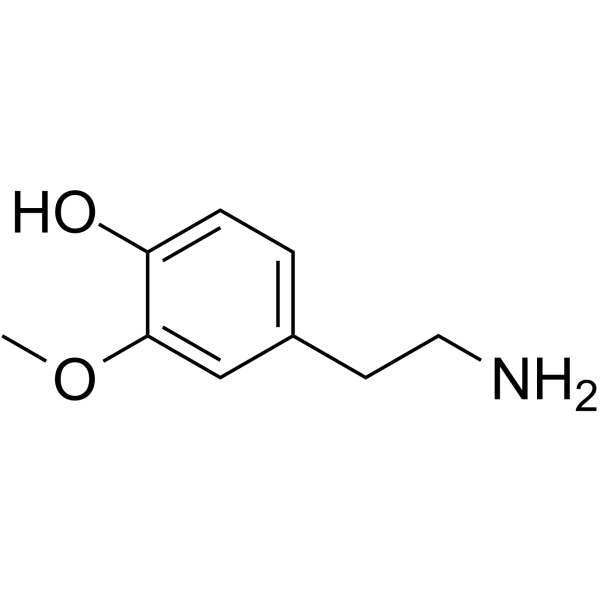
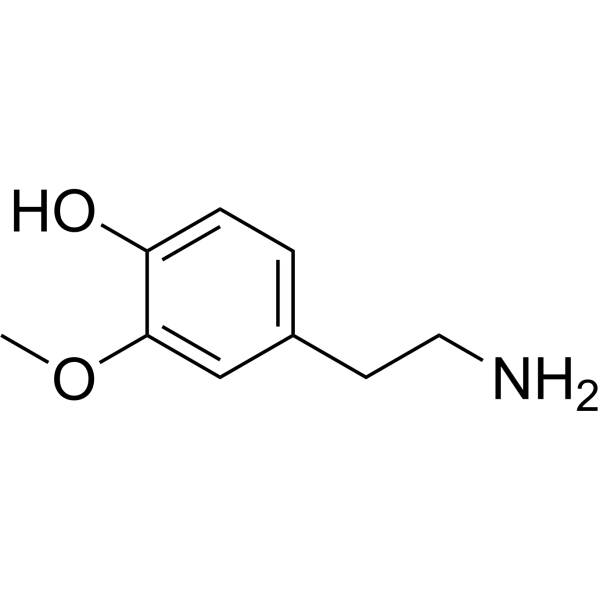
3-Methoxytyramine (Standard) is the analytical standard of 3-Methoxytyramine. This product is intended for research and analytical applications. 3-Methoxytyramine, a well known extracellular metabolite of 3-hydroxytyramine/dopamine, is a neuromodulator.
|
-
-
- HY-P0201AF
-
|
|
Fluorescent Dye
Endogenous Metabolite
|
Cancer
|
|
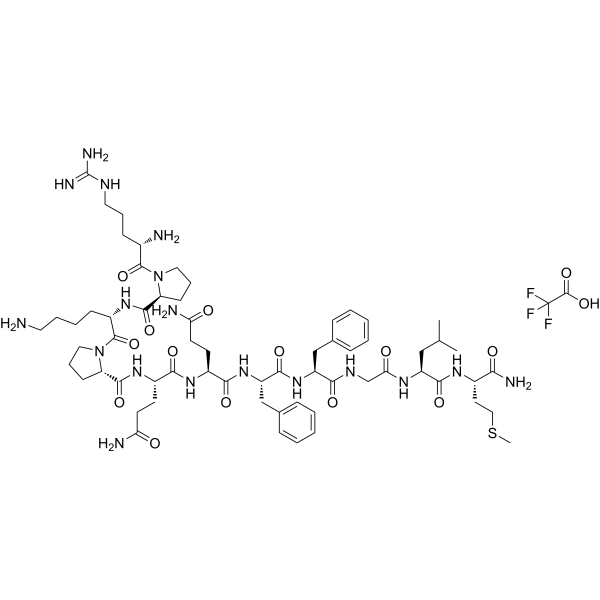
Substance P, FAM-labeled (TFA) is Substance P TFA (HY-P02101A) labeled with FAM fluorophore. Substance P TFA (Neurokinin P TFA) is a neuropeptide that acts as a neurotransmitter and neuromodulator in the central nervous system. The endogenous receptor of Substance P is neurokinin 1 receptor (NK1R) .
|
-
-
- HY-P3925
-
|
|
Neurokinin Receptor
|
Neurological Disease
|
|
[His11]Substance P is an analog of Substance P (HY-P0201). Substance P is a neuropeptide, acting as a neurotransmitter and as a neuromodulator in the CNS .
|
-
-
- HY-B0528
-
|
|
Adrenergic Receptor
Endogenous Metabolite
|
Neurological Disease
Endocrinology
|
|
Octopamine is a biogenic monoamine structurally related to noradrenaline, acts as a neurohormone, a neuromodulator and a neurotransmitter in invertebrates. Octopamine can stimulate alpha2-adrenoceptors (ARs) in Chinese hamster ovary cells transfected with human alpha2-ARs. Octopamine increased glycogenolysis, glycolysis, oxygen uptake, gluconeogenesis and the portal perfusion pressure .
|
-
-
- HY-B0681
-
-
-
- HY-P3927
-
|
[MePhe8-MeGly9] Substance P
|
Neurokinin Receptor
|
Neurological Disease
|
|
[MePhe8,Sar9] Substance P ([MePhe8-MeGly9] Substance P) is an analog of Substance P (HY-P0201). Substance P is a neuropeptide, acting as a neurotransmitter and as a neuromodulator in the CNS .
|
-
-
- HY-34713
-
-
-
- HY-P1723A
-
|
Neuropeptide Q TFA
|
Neuropeptide Y Receptor
Apoptosis
Ferroptosis
Autophagy
|
Cardiovascular Disease
Metabolic Disease
|
|
Spexin (Neuropeptide Q) TFA is a selective agonist of galanin receptors GAL2 and GAL3, and is a conserved peptide that functions as a neurotransmitter/neuromodulator and endocrine factor. Spexin TFA can function through both central and peripheral actions. Spexin TFA upregulates Beclin 1 to inhibit ferroptosis induced by excessive autophagy, reduces the uptake of long-chain fatty acids by adipocytes, and regulates energy metabolism by increasing lipid oxidation (e.g., reducing the respiratory exchange ratio in rodents). Spexin TFA improves cardiac function in the Doxorubicin hydrochloride (HY-15142)-induced cardiotoxicity model, protects mitochondrial membrane potential, and reduces iron accumulation and lipid peroxidation. Spexin TFA can be used to study obesity and its related metabolic disorders, cardiovascular diseases (e.g., cardioprotection), and side effects of tumor chemotherapy .
|
-
-
- HY-113356
-
-
-
- HY-14948A
-
|
(R)-RWJ-333369
|
Drug Isomer
|
Neurological Disease
|
|
(R)-Carisbamate ((R)-RWJ-333369) is the R-Enantiomer of Carisbamate (HY-14948). Carisbamate is an orally active neuromodulator .
|
-
-
- HY-145475
-
-
-
- HY-P3922
-
|
|
Neurokinin Receptor
|
Neurological Disease
|
|
[Gly11] Substance P is an analog of Substance P (HY-P0201). Substance P is a neuropeptide, acting as a neurotransmitter and as a neuromodulator in the CNS .
|
-
-
- HY-B2132S
-
|
|
Isotope-Labeled Compounds
|
Neurological Disease
|
|
Tryptamine-d2 (hydrochloride) is a deuterium labeled Tryptamine hydrochloride. Tryptamine hydrochloride is a monoamine alkaloid, similar to other trace amines, is believed to play a role as a neuromodulator or neurotransmitter .
|
-
-
- HY-172532
-
|
N-Acetylagmatine acetate
|
Drug Derivative
|
Neurological Disease
|
|
Acetylagmatine (N-Acetylagmatine) acetate is a product formed by agmatine N-acetyltransferase (AgmNAT) catalyzing the reaction of acetyl-CoA and Agmatine (HY-101238). Agmatine is the product of arginine decarboxylation. Agmatine is a neurotransmitter and neuromodulator in mammalian brain .
|
-
-
- HY-42068R
-
|
(R)-Aspartic acid (Standard); D-(-)-Aspartic acid (Standard)
|
Reference Standards
Pyroptosis
|
Neurological Disease
|
|
(-)-Aspartic acid (Standard) is the analytical standard of (-)-Aspartic acid. This product is intended for research and analytical applications. (-)-Aspartic acid is a pyroptosis inhibitor. (-)-Aspartic acid acts as a neurotransmitter and neuromodulator, participates in hormone synthesis and regulation, and plays a role in nervous system development and endocrine system .
|
-
-
- HY-128975R
-
|
|
Endogenous Metabolite
Reference Standards
|
Neurological Disease
|
|
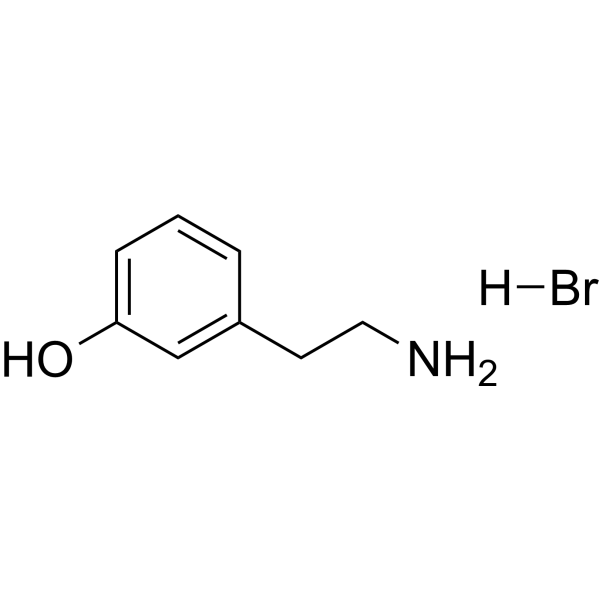
m-Tyramine (hydrobromide) (Standard) is the analytical standard of m-Tyramine (hydrobromide). This product is intended for research and analytical applications. m-Tyramine hydrobromide is an endogenous trace amine neuromodulator. m-Tyramine hydrobromide has effects on the adrenergic and dopaminergic receptor[1, 2].
|
-
-
- HY-B0528AS
-
|
(±)-p-Octopamine-d4 hydrochloride
|
Adrenergic Receptor
Endogenous Metabolite
|
Neurological Disease
Endocrinology
|
|
Octopamine-d4 (hydrochloride) is the deuterium labeled Octopamine hydrochloride. Octopamine ((±)-p-Octopamine) hydrochloride, a biogenic monoamine structurally related to noradrenaline, acts as a neurohormone, a neuromodulator and a neurotransmitter in invertebrates. Octopamine hydrochloride can stimulate alpha2-adrenoceptors (ARs) in Chinese hamster ovary cells transfected with human alpha2-ARs. Octopamine hydrochloride increased glycogenolysis, glycolysis, oxygen uptake, gluconeogenesis and the portal perfusion pressure .
|
-
-
- HY-W707539
-
|
RWJ-333369-d215N
|
Isotope-Labeled Compounds
Sodium Channel
|
Neurological Disease
|
|
Carisbamate-d2,- 15N (RWJ-333369-d2,- 15N) is the deuterium labeled Carisbamate (HY-14948). Carisbamate (RWJ-333369) is an orally active neuromodulator. Carisbamate prevents the development and production of epilep-like discharges and has a neuroprotective effect after in vitro epilepticus-like injury. Carisbamate has good antiepileptic activity in genetic models of generalized and nonconvulsive epilepsy .
|
-
-
- HY-W747928
-
|
(R)-Aspartic acid-d3; D-(-)-Aspartic acid-d3
|
Isotope-Labeled Compounds
Pyroptosis
|
Others
|
|
(-)-Aspartic acid-d3 ((R)-Aspartic acid-d3) is the deuterium labeled (-)-Aspartic acid (HY-42068). (-)-Aspartic acid is a pyroptosis inhibitor. (-)-Aspartic acid acts as a neurotransmitter and neuromodulator, participates in hormone synthesis and regulation, and plays a role in nervous system development and endocrine system.
|
-
-
-
HY-L212
-
|
|
126 compounds
|
|
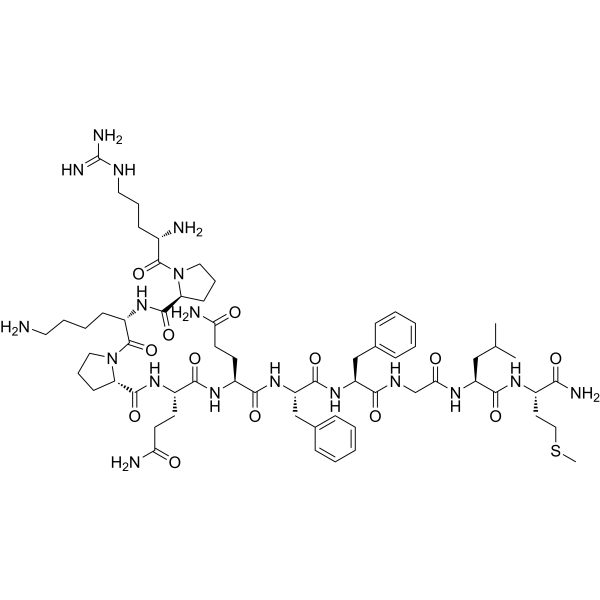
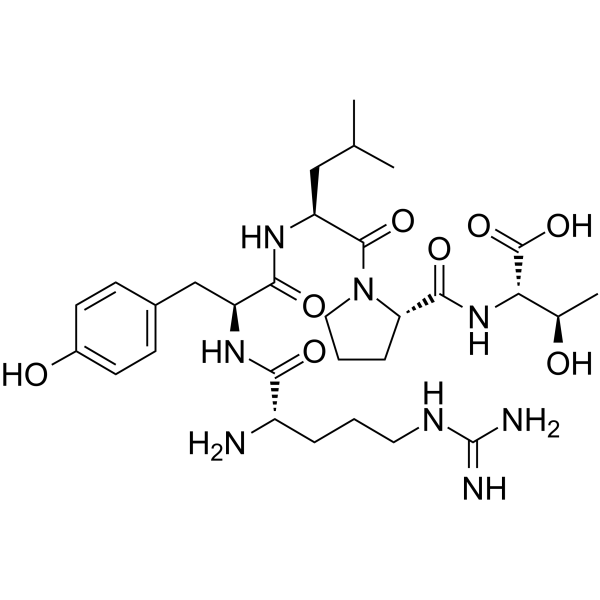
Neuropeptides are small proteins produced and released by neurons through the regulation of secretory pathways, expressed in neurons and have transmitter or co-transmitter functions, and are used as nerve substrates. Neuropeptides are by far the largest and most diverse signaling molecules in the brain and have been implicated in the development of diseases and drugs. Neuropeptides are involved in inflammatory and immune diseases and have an impact on epithelial, vascular, and connective tissue cells proliferation and tissue repair. Studies have shown that neuropeptides are particularly important when the nervous system is challenged, such as stress, injury, or substance abuse. Substance P is a neuropeptide that acts as a neurotransmitter and neuromodulator in the central nervous system and is currently in clinical research and has been shown to be involved in inflammatory processes and pain.
MCE can provide 126 neuropeptides that can be used for scientific research.
|
| Cat. No. |
Product Name |
Target |
Research Area |
-
- HY-P0201
-
-
- HY-P1723
-
Spexin
2 Publications Verification
Neuropeptide Q
|
Neuropeptide Y Receptor
Apoptosis
Ferroptosis
Autophagy
|
Cardiovascular Disease
Neurological Disease
|
|
Spexin (Neuropeptide Q) is a selective agonist of galanin receptors GAL2 and GAL3, and is a conserved peptide that functions as a neurotransmitter/neuromodulator and endocrine factor. Spexin can function through both central and peripheral actions. Spexin upregulates Beclin 1 to inhibit ferroptosis induced by excessive autophagy, reduces the uptake of long-chain fatty acids by adipocytes, and regulates energy metabolism by increasing lipid oxidation (e.g., reducing the respiratory exchange ratio in rodents). Spexin improves cardiac function in the Doxorubicin hydrochloride (HY-15142)-induced cardiotoxicity model, protects mitochondrial membrane potential, and reduces iron accumulation and lipid peroxidation. Spexin can be used to study obesity and its related metabolic disorders, cardiovascular diseases (e.g., cardioprotection), and side effects of tumor chemotherapy .
|
-
- HY-P0201A
-
-
- HY-P2546
-
|
|
Neurokinin Receptor
|
Neurological Disease
|
|
Biotin-Substance P is the biotin tagged Substance P. Substance P (Neurokinin P) is a neuropeptide, acting as a neurotransmitter and as a neuromodulator in the CNS. The endogenous receptor for substance P is neurokinin 1 receptor (NK1-receptor, NK1R) .
|
-
- HY-114883
-
|
L-Homocarnosine
|
GABA Receptor
Endogenous Metabolite
|
Neurological Disease
Inflammation/Immunology
|
|
Homocarnosine is a dipeptide of γ-aminobutyric acid (GABA) and histidine unique to brain. Homocarnosine is an inhibitory neuromodulator synthesized in the neuron from GABA and exhibiting anticonvulsant effects .Homocarnosine has antioxidant and anti-inflammatory actions, prevention of DNA damage, and inhibition of advanced glycation end-product formation .
|
-
- HY-P1437
-
|
|
Neuropeptide Y Receptor
|
Neurological Disease
|
|
Neuropeptide S (mouse) is a bioactive peptide. Neuropeptide S (mouse), as a neurotransmitter/neuromodulator of 20 amino acids, can be used for the research of arousal, anxiety, locomotion, feeding behaviors, memory and agent addiction .
|
-
- HY-114883A
-
|
L-Homocarnosine TFA
|
GABA Receptor
Endogenous Metabolite
|
Neurological Disease
|
|
Homocarnosine TFA is a dipeptide of γ-aminobutyric acid (GABA) and histidine unique to brain. Homocarnosine TFA is an inhibitory neuromodulator synthesized in the neuron from GABA and exhibiting anticonvulsant effects . Homocarnosine TFA has antioxidant and anti-inflammatory actions, prevention of DNA damage, and inhibition of advanced glycation end-product formation .
|
-
- HY-P0275
-
-
- HY-P0201AF
-
|
|
Fluorescent Dye
Endogenous Metabolite
|
Cancer
|
|
Substance P, FAM-labeled (TFA) is Substance P TFA (HY-P02101A) labeled with FAM fluorophore. Substance P TFA (Neurokinin P TFA) is a neuropeptide that acts as a neurotransmitter and neuromodulator in the central nervous system. The endogenous receptor of Substance P is neurokinin 1 receptor (NK1R) .
|
-
- HY-P3925
-
|
|
Neurokinin Receptor
|
Neurological Disease
|
|
[His11]Substance P is an analog of Substance P (HY-P0201). Substance P is a neuropeptide, acting as a neurotransmitter and as a neuromodulator in the CNS .
|
-
- HY-P3927
-
|
[MePhe8-MeGly9] Substance P
|
Neurokinin Receptor
|
Neurological Disease
|
|
[MePhe8,Sar9] Substance P ([MePhe8-MeGly9] Substance P) is an analog of Substance P (HY-P0201). Substance P is a neuropeptide, acting as a neurotransmitter and as a neuromodulator in the CNS .
|
-
- HY-P1723A
-
|
Neuropeptide Q TFA
|
Neuropeptide Y Receptor
Apoptosis
Ferroptosis
Autophagy
|
Cardiovascular Disease
Metabolic Disease
|
|
Spexin (Neuropeptide Q) TFA is a selective agonist of galanin receptors GAL2 and GAL3, and is a conserved peptide that functions as a neurotransmitter/neuromodulator and endocrine factor. Spexin TFA can function through both central and peripheral actions. Spexin TFA upregulates Beclin 1 to inhibit ferroptosis induced by excessive autophagy, reduces the uptake of long-chain fatty acids by adipocytes, and regulates energy metabolism by increasing lipid oxidation (e.g., reducing the respiratory exchange ratio in rodents). Spexin TFA improves cardiac function in the Doxorubicin hydrochloride (HY-15142)-induced cardiotoxicity model, protects mitochondrial membrane potential, and reduces iron accumulation and lipid peroxidation. Spexin TFA can be used to study obesity and its related metabolic disorders, cardiovascular diseases (e.g., cardioprotection), and side effects of tumor chemotherapy .
|
-
- HY-P3922
-
|
|
Neurokinin Receptor
|
Neurological Disease
|
|
[Gly11] Substance P is an analog of Substance P (HY-P0201). Substance P is a neuropeptide, acting as a neurotransmitter and as a neuromodulator in the CNS .
|
-
- HY-P1761
-
|
|
Peptides
|
Neurological Disease
|
|
Prepro VIP (111-122), human is a prepro-vasoactive intestinal polypeptide (VIP)-derived peptide, corresponding to residues 111-122. VIP is present in the peripheral and the central nervous systems where it functions as a nonadrenergic, noncholinergic neurotransmitter or neuromodulator .
|
| Cat. No. |
Product Name |
Category |
Target |
Chemical Structure |
-
- HY-P0201
-
-
-
- HY-B2132
-
|
3-(2-Aminoethyl)indole~2-(3-Indolyl)ethylamine
|
Alkaloids
Microorganisms
Classification of Application Fields
Other Diseases
Endogenous metabolite
Disease Research Fields
Indole Alkaloids
|
Endogenous Metabolite
5-HT Receptor
Aryl Hydrocarbon Receptor
|
|
Tryptamine is a selective, blood-brain-penetrating 5-HT4 receptor agonist (EC50=1-3 mM) and an endogenous ligand of the aryl hydrocarbon receptor (AHR) (Kd=10-50 nM). Tryptamine promotes intestinal anion secretion and fluid transport by activating G protein-coupled receptors (GPCRs) and accelerates gastrointestinal motility. Tryptamine regulates Th17/Treg balance to inhibit neuroinflammation, competitively binds to 5-HT receptors to regulate central nervous system activity, and participates in temperature regulation and spinal reflex regulation as a neuromodulator. Tryptamine can be used to study intestinal motility disorders such as functional constipation, and has shown significant efficacy in multiple sclerosis models .
|
-
-
- HY-B0528A
-
-
-
- HY-103638A
-
-
-
- HY-42068
-
-
-
- HY-113439
-
12-HETE
2 Publications Verification
|
Microorganisms
Source Classification
|
Apoptosis
|
|
12-HETE, a major metabolic product of arachidonic acid using 12-LOX catalysis, inhibits cell apoptosis in a dose-dependent manner. 12-HETE promotes the activation and nuclear translocation of NF-κB through the integrin-linked kinase (ILK) pathway .12-HETE has both anti-thrombotic and pro-thrombotic effects . 12-HETE is a neuromodulator .
|
-
-
- HY-128975
-
-
-
- HY-114883
-
-
-
- HY-114883A
-
-
-
- HY-B0528AR
-
|
(±)-p-Octopamine hydrochloride (Standard)
|
Structural Classification
Monophenols
Phenols
Endogenous metabolite
Source Classification
|
Reference Standards
Adrenergic Receptor
Endogenous Metabolite
|
|
Octopamine (hydrochloride) (Standard) is the analytical standard of Octopamine (hydrochloride). This product is intended for research and analytical applications. Octopamine ((±)-p-Octopamine) hydrochloride, a biogenic monoamine structurally related to noradrenaline, acts as a neurohormone, a neuromodulator and a neurotransmitter in invertebrates. Octopamine hydrochloride can stimulate alpha2-adrenoceptors (ARs) in Chinese hamster ovary cells transfected with human alpha2-ARs. Octopamine hydrochloride increased glycogenolysis, glycolysis, oxygen uptake, gluconeogenesis and the portal perfusion pressure .
|
-
-
- HY-P0275
-
-
-
- HY-B2132R
-
-
-
- HY-103638AR
-
-
-
- HY-B0528
-
|
|
Monophenols
Microorganisms
Phenols
Source Classification
|
Adrenergic Receptor
Endogenous Metabolite
|
|
Octopamine is a biogenic monoamine structurally related to noradrenaline, acts as a neurohormone, a neuromodulator and a neurotransmitter in invertebrates. Octopamine can stimulate alpha2-adrenoceptors (ARs) in Chinese hamster ovary cells transfected with human alpha2-ARs. Octopamine increased glycogenolysis, glycolysis, oxygen uptake, gluconeogenesis and the portal perfusion pressure .
|
-
-
- HY-113356
-
-
-
- HY-42068R
-
-
-
- HY-128975R
-
-
| Cat. No. |
Product Name |
Chemical Structure |
-
- HY-113439S
-
2 Publications Verification
|
|
12-HETE-d8 is the deuterium labeled 12-HETE. 12-HETE, a major metabolic product of arachidonic acid using 12-LOX catalysis, inhibits cell apoptosis in a dose-dependent manner. 12-HETE promotes the activation and nuclear translocation of NF-κB through the integrin-linked kinase (ILK) pathway .12-HETE has both anti-thrombotic and pro-thrombotic effects . 12-HETE is a neuromodulator .
|
-
-
- HY-B2132S1
-
|
|
|
Tryptamine-d4 (hydrochloride) is the deuterium labeled Tryptamine hydrochloride. Tryptamine hydrochloride, a monoamine alkaloid, similar to other trace amines, is believed to play a role as a neuromodulator or neurotransmitter .
|
-
-
- HY-B2132S
-
|
|
|
Tryptamine-d2 (hydrochloride) is a deuterium labeled Tryptamine hydrochloride. Tryptamine hydrochloride is a monoamine alkaloid, similar to other trace amines, is believed to play a role as a neuromodulator or neurotransmitter .
|
-
-
- HY-B0528AS
-
|
|
|
Octopamine-d4 (hydrochloride) is the deuterium labeled Octopamine hydrochloride. Octopamine ((±)-p-Octopamine) hydrochloride, a biogenic monoamine structurally related to noradrenaline, acts as a neurohormone, a neuromodulator and a neurotransmitter in invertebrates. Octopamine hydrochloride can stimulate alpha2-adrenoceptors (ARs) in Chinese hamster ovary cells transfected with human alpha2-ARs. Octopamine hydrochloride increased glycogenolysis, glycolysis, oxygen uptake, gluconeogenesis and the portal perfusion pressure .
|
-
-
- HY-W707539
-
|
|
|
Carisbamate-d2,- 15N (RWJ-333369-d2,- 15N) is the deuterium labeled Carisbamate (HY-14948). Carisbamate (RWJ-333369) is an orally active neuromodulator. Carisbamate prevents the development and production of epilep-like discharges and has a neuroprotective effect after in vitro epilepticus-like injury. Carisbamate has good antiepileptic activity in genetic models of generalized and nonconvulsive epilepsy .
|
-
-
- HY-W747928
-
|
|
|
(-)-Aspartic acid-d3 ((R)-Aspartic acid-d3) is the deuterium labeled (-)-Aspartic acid (HY-42068). (-)-Aspartic acid is a pyroptosis inhibitor. (-)-Aspartic acid acts as a neurotransmitter and neuromodulator, participates in hormone synthesis and regulation, and plays a role in nervous system development and endocrine system.
|
-
Your information is safe with us. * Required Fields.
Inquiry Information
- Product Name:
- Cat. No.:
- Quantity:
- MCE Japan Authorized Agent:

