



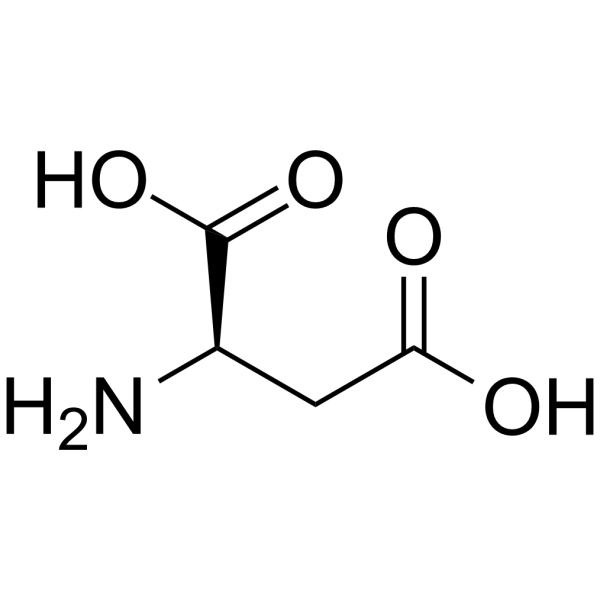
(-)-Aspartic acid

Based on 1 Customer Validation
(-)-Aspartic acid is a pyroptosis inhibitor. (-)-Aspartic acid acts as a neurotransmitter and neuromodulator, participates in hormone synthesis and regulation, and plays a role in nervous system development and endocrine system.
For research use only. We do not sell to patients.
- Purity : 99.78%
- CAS No.: 1783-96-6
- Formula: C4H7NO4
- Molecular Weight:133.10
-
Storage:Powder -20°C, 3 years , 4°C, 2 years ; In solvent -80°C, 2 years , -20°C, 1 year

To place orders, for customer services and technical support, please contact: MedChemExpress USA
Tel: 609-228-6898 E-mail: [email protected] [email protected]


-
 Biological Activity
-
Chemical Information
-
Solvent & Solubility
- Protocols
- Purity & Documentation
- References
-
 Help & FAQs


-
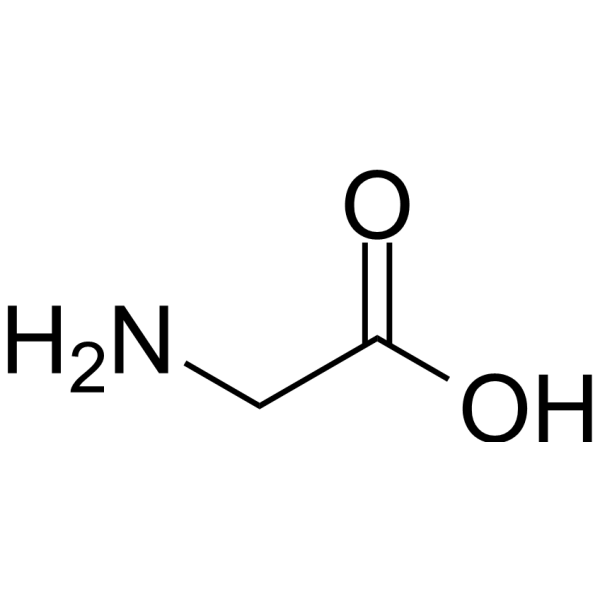
HY-Y0966
GlycineNMDAR Agonist -
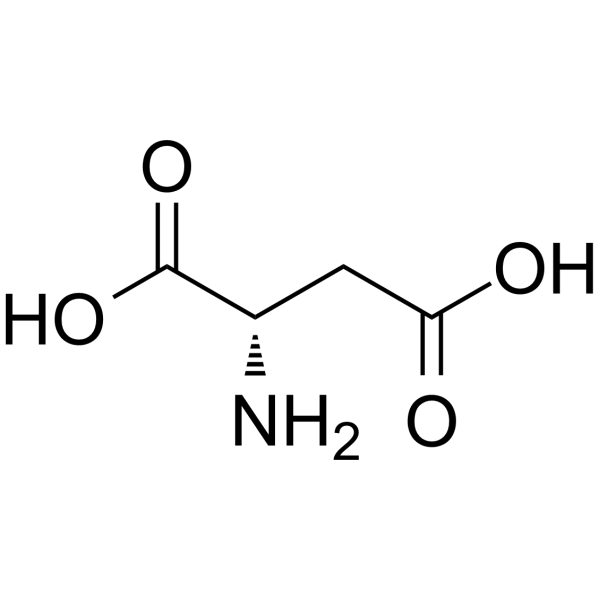
HY-N0666
L-Aspartic acidNMDA Receptor Agonist -
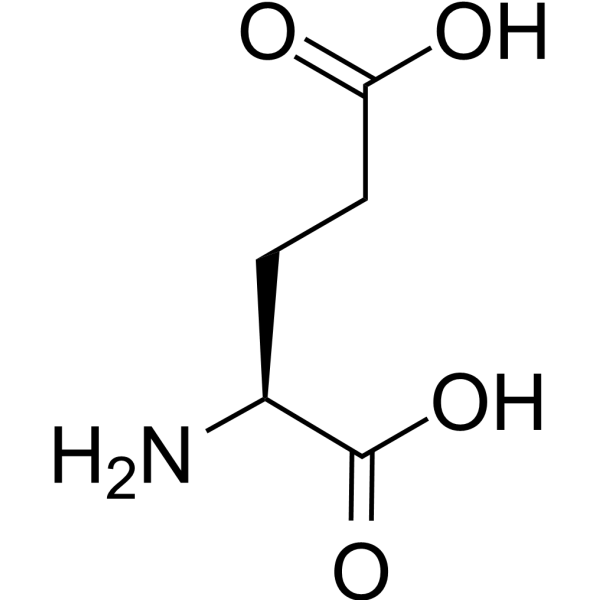
HY-14608
L-Glutamic acidGlutamate Receptors Agonist -
HY-13694
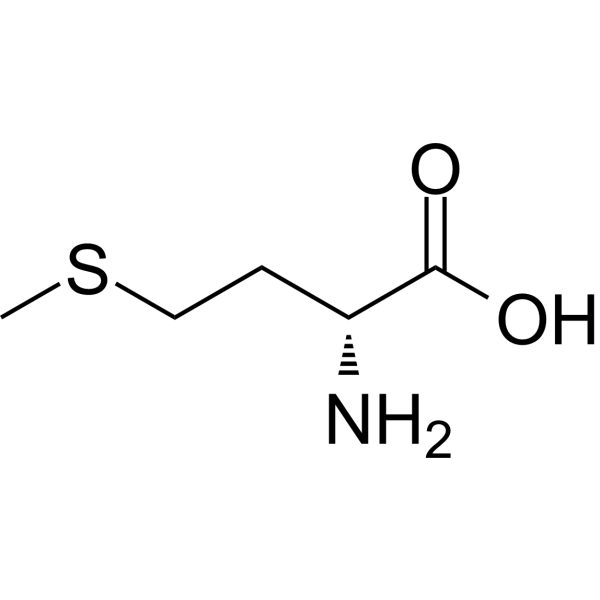
MethionineEndogenous Metabolite -
HY-18569
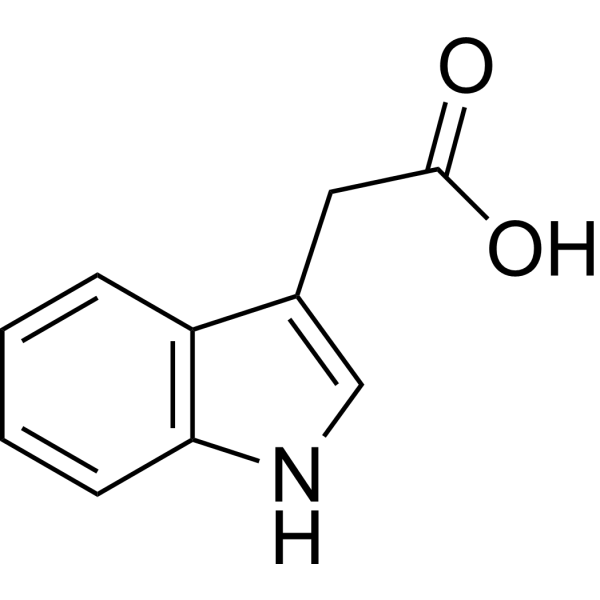
3-Indoleacetic acidPlant Growth Regulator -
HY-100805
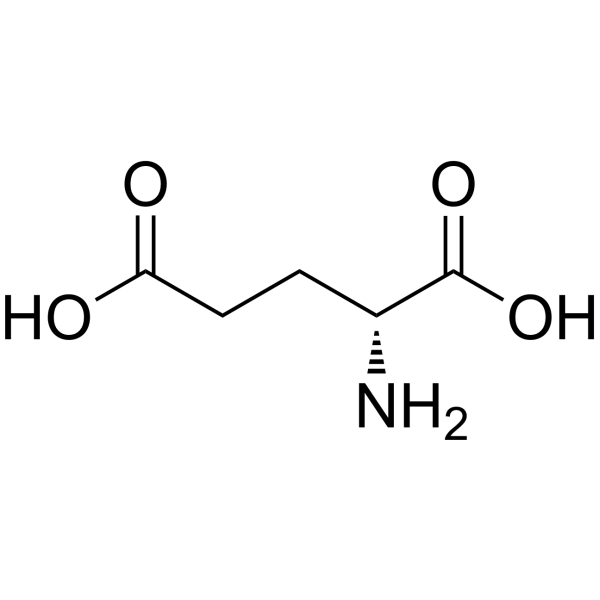
D-Glutamic acidEndogenous Metabolite -
HY-B0240
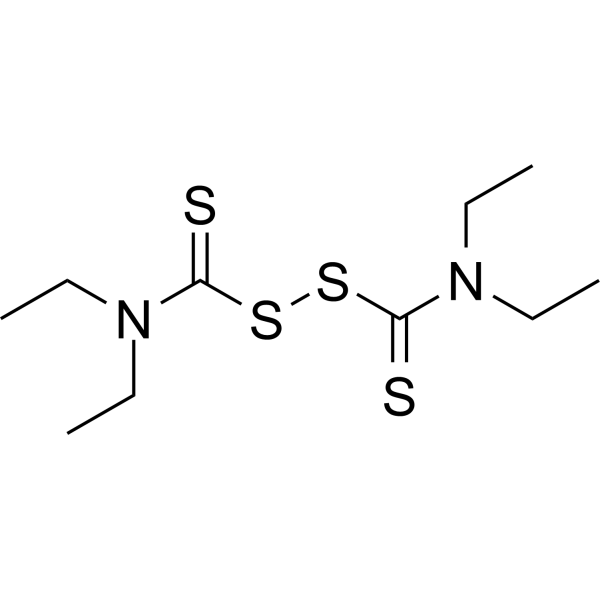
DisulfiramALDH1 Inhibitor -
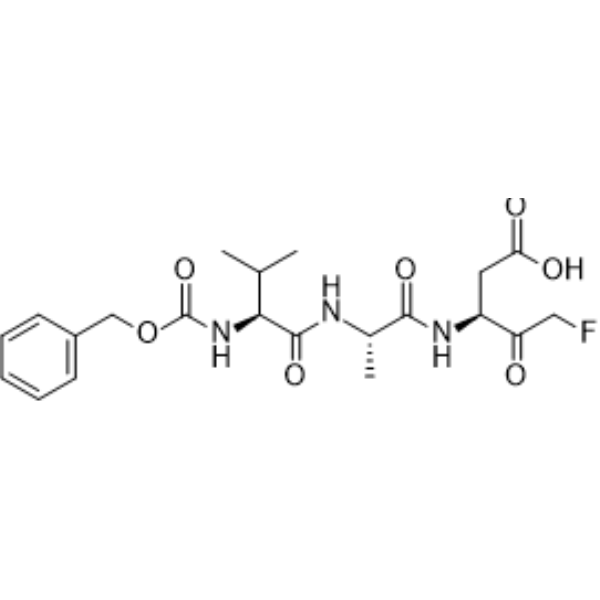
HY-16658B
Z-VAD-FMKPan-Caspase Inhibitor -
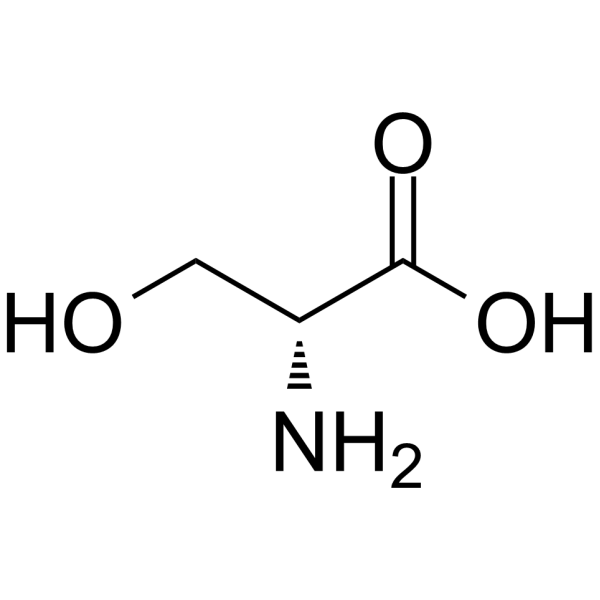
HY-100808
D-SerineEndogenous Metabolite -
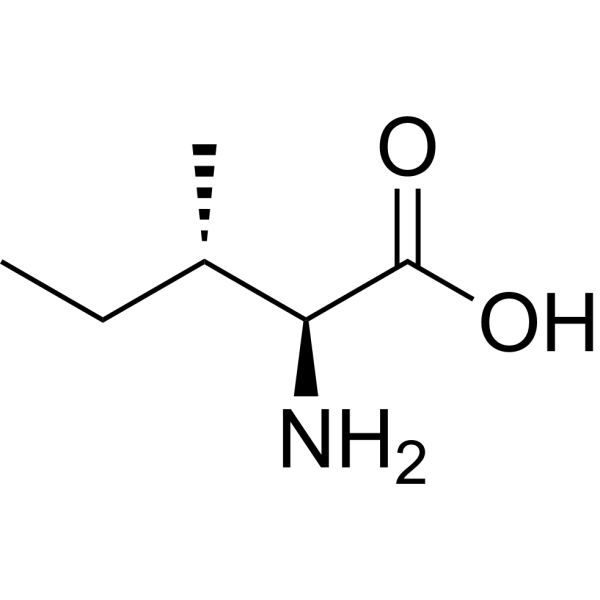
HY-N0771
L-IsoleucineEndogenous Metabolite, L-enantiomer of Isoleucine -

HY-171007
IRF1-IN-2IRF1 Inhibitor -
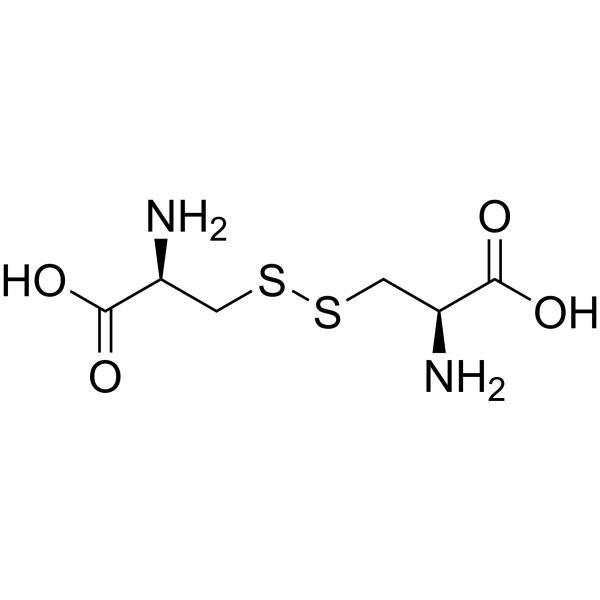
HY-N0394
L-CystineNrf2 Activator/ROS Inhibitor


Biological Activity
Description
Cellular Effect
|
Cell Line

|
Type | Value | Description | References |
|---|---|---|---|---|
| CHO | EC50 |
>1000 μM
Compound: (R)-1
|
Agonistic activity at mGlu2 receptor expressed in CHO cells
Agonistic activity at mGlu2 receptor expressed in CHO cells
|
[PMID: 8759641] |
| CHO | EC50 |
>1000 μM
Compound: (R)-1
|
Agonistic activity at mGlu6 receptor expressed in CHO cells
Agonistic activity at mGlu6 receptor expressed in CHO cells
|
[PMID: 8759641] |
| CHO | EC50 |
>1000 μM
Compound: (R)-1
|
Agonistic activity at mGlu1-alpha receptor expressed in CHO cells
Agonistic activity at mGlu1-alpha receptor expressed in CHO cells
|
[PMID: 8759641] |
| HEK293 | EC50 |
398 μM
Compound: D-asp
|
Inhibition of the Excitatory Amino Acid Transporter 1 (EAAT1, SLC1A3) as assessed by a phenotypic impedance-based assay detecting changes in cell morphology by L-glutamate uptake in HEK-293 JumpIN-SLC1A3 cells
Inhibition of the Excitatory Amino Acid Transporter 1 (EAAT1, SLC1A3) as assessed by a phenotypic impedance-based assay detecting changes in cell morphology by L-glutamate uptake in HEK-293 JumpIN-SLC1A3 cells
|
[PMID: 35677430] |
| HEK293 | EC50 |
398 μM
Compound: D-asp
|
Inhibition of the Excitatory Amino Acid Transporter 1 (EAAT1, SLC1A3) as assessed by a phenotypic impedance-based assay detecting changes in cell morphology by L-glutamate uptake in HEK-293 JumpIN-SLC1A3 cells (PubChem AID: 1745862)
Inhibition of the Excitatory Amino Acid Transporter 1 (EAAT1, SLC1A3) as assessed by a phenotypic impedance-based assay detecting changes in cell morphology by L-glutamate uptake in HEK-293 JumpIN-SLC1A3 cells (PubChem AID: 1745862)
|
[PMID: 35677430] |
In Vitro
(-)-Aspartic acid (1, 10, 30 mM) inhibits HGF cell pyroptosis through the TLRs-NLRP3-caspase 1-GSDMD pathway to prevent gingival fibroblast inflammation[1]. (-)-Aspartic acid (0.1, 1, 10 nM, 48 h) stimulates steroid production in mammalian Leydig cell lines by regulating LH receptor (LHR) exposure on the cell membrane[2]. (-)-Aspartic acid acts as a neuropeptide co transmitter by releasing glutamate or GABA as its main neurotransmitter pathway [5]. (-)-Aspartic acidactivates cAMP dependent gene transcription, inhibits CREB function, reduces BDNF expression, and induces excitotoxic neuronal death[5].
MedChemExpress (MCE) has not independently confirmed the accuracy of these methods. They are for reference only. Further protocols information, click here.
-
Cell Line:Human gingival fibroblasts (HGFs)
-
Concentration:1, 10, 30 mM
-
Incubation Time:
-
Result:Inhibited the expression of NLRP3, caspase-1, GSDMD, IL-1 β, and IL-18 genes
-
Cell Line:MA-10 cell
-
Concentration:0.1, 1, 10 nM
-
Incubation Time:48 h
-
Result:Increased the expression level of steroidogenic acute regulatory (StAR) protein with hCG
In Vivo
MedChemExpress (MCE) has not independently confirmed the accuracy of these methods. They are for reference only.
-
Animal Model:Adult male rats[3].
-
Dosage:0.5, 1, 2, 4 μmol/g
-
Administration:Intraperitoneal injection (i.p.)
-
Result:Increased production of LH, testosterone, and progesterone in the blood.
-
Animal Model:85-day-old male rats[4].
-
Dosage:2.0 μmol/g
-
Administration:Intraperitoneal injection (i.p.)
-
Result:Increased levels of gonadotropin-releasing hormone (GnRH), prolactin (PRL), luteinizing hormone (LH), and growth hormone (GH) in rats.


Chemical Information
-
CAS No. 1783-96-6
-
Appearance Solid
-
Molecular Weight 133.10
-
Formula C4H7NO4
-
Color White to off-white
-
SMILES
N[C@@H](C(O)=O)CC(O)=O
-
Synonyms
(R)-Aspartic acid; D-(-)-Aspartic acid
-
Structure Classification
-
Initial Source
-
Shipping
Room temperature in continental US; may vary elsewhere.
-
Storage
Powder -20°C 3 years 4°C 2 years In solvent -80°C 2 years -20°C 1 year


Solvent & Solubility
In Vitro:
H2O : 66.67 mg/mL (500.90 mM; ultrasonic and adjust pH to 7 with 1M NaOH)
DMSO : < 1 mg/mL (insoluble or slightly soluble)
Please refer to the solubility information to select the appropriate solvent. Once prepared, please aliquot and store the solution to prevent product inactivation from repeated freeze-thaw cycles.
Storage method and period of stock solution: -80°C, 2 years; -20°C, 1 year. When stored at -80°C, please use it within 2 years. When stored at -20°C, please use it within 1 year.
* Note: If you choose water as the stock solution, please dilute it to the working solution, then filter and sterilize it with a 0.22 μm filter before use.
Please refer to the solubility information to select the appropriate solvent. Once prepared, please aliquot and store the solution to prevent product inactivation from repeated freeze-thaw cycles.
Storage method and period of stock solution: -80°C, 2 years; -20°C, 1 year. When stored at -80°C, please use it within 2 years. When stored at -20°C, please use it within 1 year.
* Note: If you choose water as the stock solution, please dilute it to the working solution, then filter and sterilize it with a 0.22 μm filter before use.
Concentration (start) × Volume (start) = Concentration (final) × Volume (final)
In Vivo:
For the following dissolution methods, please prepare the working solution directly:
It is recommended to prepare fresh solutions and use them promptly within a short period of time.
The percentages shown for the solvents indicate their volumetric ratio in the final prepared solution. If precipitation or phase separation occurs during preparation, heat and/or sonication can be used to aid dissolution.
Add each solvent one by one: PBS
Solubility: 2 mg/mL (15.03 mM); Clear solution; Need ultrasonic and warming and heat to 60°C

Protocols
-
Research Protocol for Endocrine Diseases
Endocrine diseases often arise from disrupted hormone production, hormone signaling, or target-tissue responsiveness; for diabetes-focused endocrine disease models, insulin signaling regulates glucose uptake, hepatic glucose output, lipid metabolism, and β-cell compensation. Type 2 diabetes develops through interacting defects in insulin resistance, β-cell dysfunction, adipose inflammation, hepatic glucose overproduction, altered incretin signaling, and ectopic lipid metabolism. A major unresolved question is whether endocrine dysfunction is driven primarily by target-tissue insulin resistance, intrinsic β-cell failure, immune/inflammatory stress, or combined multi-organ failure that differs by disease stage.
-
Pyroptosis Solutions
Pyroptosis is a lytic inflammatory cell-death pathway executed by gasdermin pores, most classically through inflammasome-mediated activation of caspase-1, cleavage of gasdermin D, membrane pore formation, LDH release, and secretion of IL-1β and IL-18. The canonical pathway is commonly modeled by priming cells with an inflammatory signal such as LPS to induce pro-IL-1β and inflammasome components, followed by an activation signal such as ATP or nigericin to activate NLRP3, ASC speck formation, caspase-1 cleavage, GSDMD cleavage, cytokine release, and pyroptotic membrane rupture. The non-canonical pathway is triggered when cytosolic LPS activates mouse caspase-11 or human caspase-4/5, leading to GSDMD cleavage and pyroptosis, and this can secondarily activate NLRP3-dependent IL-1β release. Pyroptosis is linked to inflammatory injury, infection, cancer, liver disease, ocular disease, placental inflammation, and other disease phenotypes, but unresolved questions include which gasdermin fam


Purity & Documentation
-
Data Sheet (278 KB)
-
SDS (394 KB)
- English - EN (394 KB)
- Français - FR (394 KB)
- Deutsch - DE (394 KB)
- Norwegian - NO (394 KB)
- Español - ES (394 KB)
- Swedish - SV (394 KB)
- Italian - IT (394 KB)
- Korean - KR (394 KB)
- Portuguese - PT (394 KB)
-
Handling Instructions (2659 KB)
References
[1]. Xuechun Du, et al. D-aspartic acid protects against gingival fbroblasts infammation by suppressing pyroptosis. Mol Biol Rep. 2022 Jul;49(7):5821-5829. [Content Brief]
[2]. Di Nisio A, et al. D-Aspartic acid stimulates steroidogenesis through the delay of LH receptor internalization in a mammalian Leydig cell line. J Endocrinol Invest. 2016 Feb;39(2):207-213. [Content Brief]
[3]. D'Aniello A, et al. Involvement of D-aspartic acid in the synthesis of testosterone in rat testes. Life Sci. 1996;59(2):97-104. [Content Brief]
[4]. D'Aniello A, et al. Occurrence of D-aspartic acid and N-methyl-D-aspartic acid in rat neuroendocrine tissues and their role in the modulation of luteinizing hormone and growth hormone release. FASEB J. 2000 Apr;14(5):699-714. [Content Brief]
[5]. D'Aniello A. D-Aspartic acid: an endogenous amino acid with an important neuroendocrine role. Brain Res Rev. 2007 Feb;53(2):215-34. [Content Brief]


Complete Stock Solution Preparation Table
Please refer to the solubility information to select the appropriate solvent. Once prepared, please aliquot and store the solution to prevent product inactivation from repeated freeze-thaw cycles.
Storage method and period of stock solution: -80°C, 2 years; -20°C, 1 year. When stored at -80°C, please use it within 2 years. When stored at -20°C, please use it within 1 year.
| Optional Solvent | Concentration Solvent Mass | 1 mg | 5 mg | 10 mg | 25 mg |
|---|---|---|---|---|---|
| H2O | 1 mM | 7.5131 mL | 37.5657 mL | 75.1315 mL | 187.8287 mL |
| 5 mM | 1.5026 mL | 7.5131 mL | 15.0263 mL | 37.5657 mL | |
| 10 mM | 0.7513 mL | 3.7566 mL | 7.5131 mL | 18.7829 mL | |
| 15 mM | 0.5009 mL | 2.5044 mL | 5.0088 mL | 12.5219 mL | |
| 20 mM | 0.3757 mL | 1.8783 mL | 3.7566 mL | 9.3914 mL | |
| 25 mM | 0.3005 mL | 1.5026 mL | 3.0053 mL | 7.5131 mL | |
| 30 mM | 0.2504 mL | 1.2522 mL | 2.5044 mL | 6.2610 mL | |
| 40 mM | 0.1878 mL | 0.9391 mL | 1.8783 mL | 4.6957 mL | |
| 50 mM | 0.1503 mL | 0.7513 mL | 1.5026 mL | 3.7566 mL | |
| 60 mM | 0.1252 mL | 0.6261 mL | 1.2522 mL | 3.1305 mL | |
| 80 mM | 0.0939 mL | 0.4696 mL | 0.9391 mL | 2.3479 mL | |
| 100 mM | 0.0751 mL | 0.3757 mL | 0.7513 mL | 1.8783 mL |
* Note: If you choose water as the stock solution, please dilute it to the working solution, then filter and sterilize it with a 0.22 μm filter before use.


(-)-Aspartic acid Related Classifications
HY-42068 Related Classifications
 Powered by Bioz