Search Result
Results for "
neuronal voltage-gated
" in MedChemExpress (MCE) Product Catalog:
12
Isotope-Labeled Compounds
| Cat. No. |
Product Name |
Target |
Research Areas |
Chemical Structure |
-
- HY-B0495
-
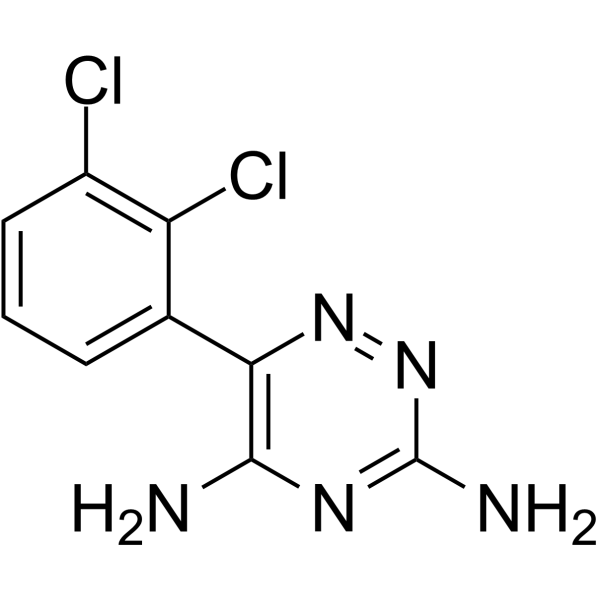
Lamotrigine
Maximum Cited Publications
7 Publications Verification
LTG; BW430C
|
Sodium Channel
Autophagy
|
Neurological Disease
Cancer
|
|
Lamotrigine (BW430C) is a potent and orally active anticonvulsant or antiepileptic agent. Lamotrigine selectively blocks voltage-gated Na + channels, stabilizing presynaptic neuronal membranes and inhibiting glutamate release. Lamotrigine can be used for the research of epilepsy, focal seizure, et al .
|
-
-
- HY-142240
-
|
HSK16149
|
Calcium Channel
|
Neurological Disease
|
|
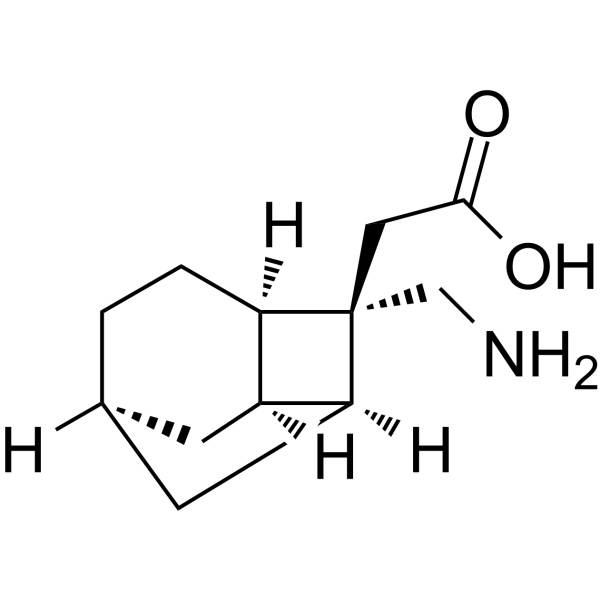
Crisugabalin is an orally active, selective ligand for the α2δ subunit of voltage-gated calcium channels, with a target IC50 of 3.96 nM in rats. Crisugabalin inhibits the binding of [ 3H]gabapentin to the α2δ subunit, reduces calcium influx, decreases neuronal excitability, and impairs nociceptive transmission. Crisugabalin alleviates mechanical allodynia, neuropathic pain and inflammatory pain in rats, and reduces phase II pain behaviors. Crisugabalin can be used in research related to chronic pain, neuropathic pain, diabetic neuropathy, fibromyalgia, inflammatory pain, diabetic peripheral neuropathy and postherpetic neuralgia.
|
-
-
- HY-147423
-
|
NBI-921352; XEN901
|
Sodium Channel
|
Neurological Disease
|
|
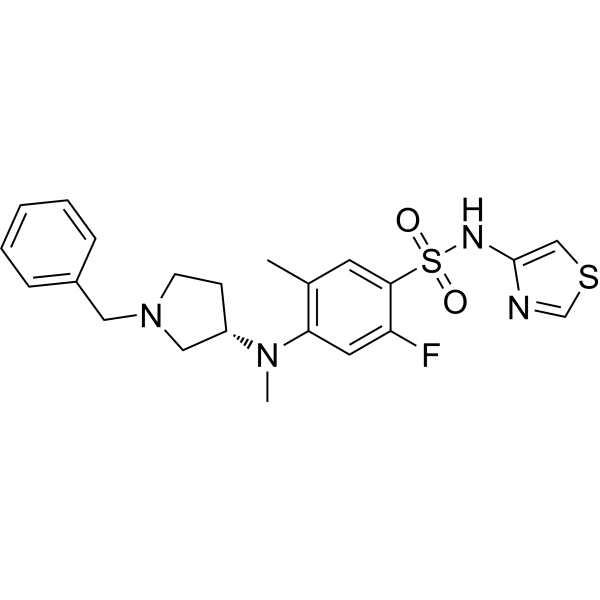
Zandatrigine (NBI-921352; XEN901) is a selective, orally active, voltage-gated sodium channel NaV1.6/SCN8A inhibitor that can penetrate the blood-brain barrier. Zandatrigine inhibits sodium influx by non-covalently binding to the VSD4 structure of NaV1.6, blocking the persistent and resuscitative currents under pathological conditions. Zandatrigine can reduce neuronal hyperexcitability and reduce epileptic seizures. Zandatrigine is 134-756-fold selective for other isoforms such as NaV1.1 and NaV1.2, and has minimal effect on NaV1.1 expressed by inhibitory interneurons. Zandatrigine can be used to study NaV1.6-mediated neuroexcitability diseases such as SCN8A-related developmental epileptic encephalopathy (SCN8A-DEE) and adult focal epilepsy .
|
-
-
- HY-B0517
-
|
|
Sodium Channel
|
Neurological Disease
|
|
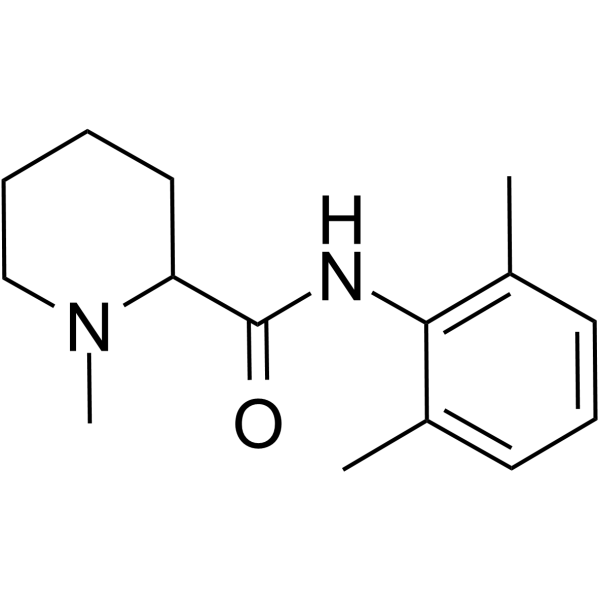
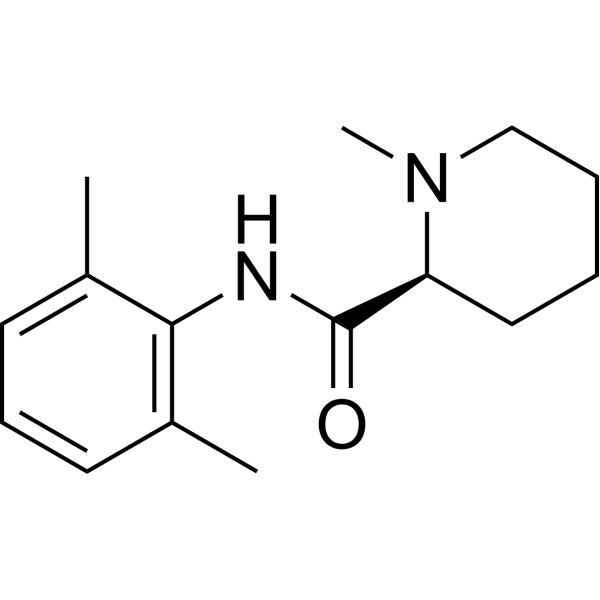
Mepivacaine is an amide-type local anesthetic agent. Mepivacaine binds to specific voltage-gated sodium ion channels in neuronal cell membranes, which inhibits both sodium influx and membrane depolarization .
|
-
-
- HY-A0081
-
|
|
Dopamine Receptor
SARS-CoV
Sodium Channel
|
Neurological Disease
Cancer
|
|
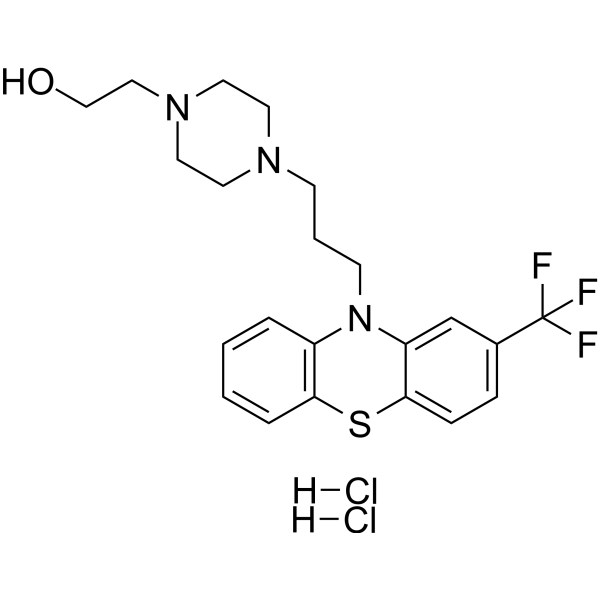
Fluphenazine dihydrochloride is a potent, orally active phenothiazine-based dopamine receptor antagonist. Fluphenazine dihydrochloride blocks neuronal voltage-gated sodium channels. Fluphenazine dihydrochloride acts primarily through antagonism of postsynaptic dopamine-2 receptors in mesolimbic, nigrostriatal, and tuberoinfundibular neural pathways. Fluphenazine dihydrochloride can antagonize Methylphenidate-induced stereotyped gnawing and inhibit climbing behaviour in mice. Fluphenazine dihydrochloride can be used for researching psychosis and painful peripheral neuropathy associated with diabetes and has potential to inhibit SARS-CoV-2 .
|
-
-
- HY-A0082
-
|
Difenidol hydrochloride
|
mAChR
Sodium Channel
|
Neurological Disease
|
|
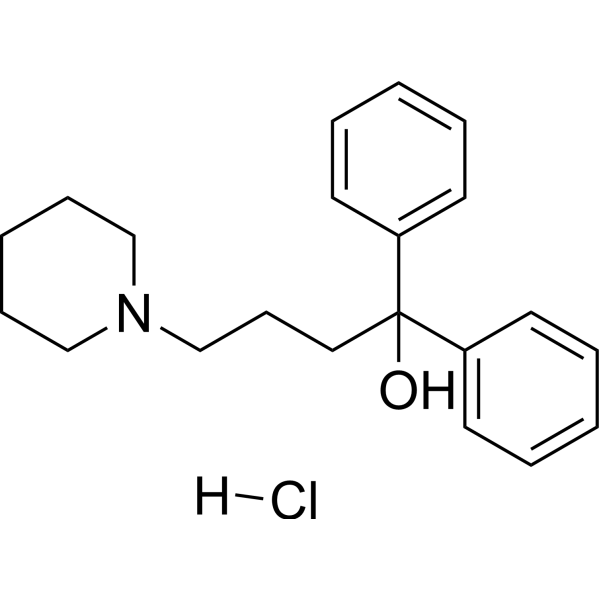
Diphenidol hydrochloride (Difenidol hydrochloride) is a non-selective muscarinic M1-M4 receptor antagonist, has anti-arrhythmic activity. Diphenidol hydrochloride is also a potent non-specific blocker of voltage-gated ion channels (Na +, K +, and Ca 2+) in neuronal cells. Diphenidol hydrochloride can be used in the study of antivertigo and antinausea .
|
-
-
- HY-B0517A
-
|
|
Sodium Channel
|
Neurological Disease
|
|
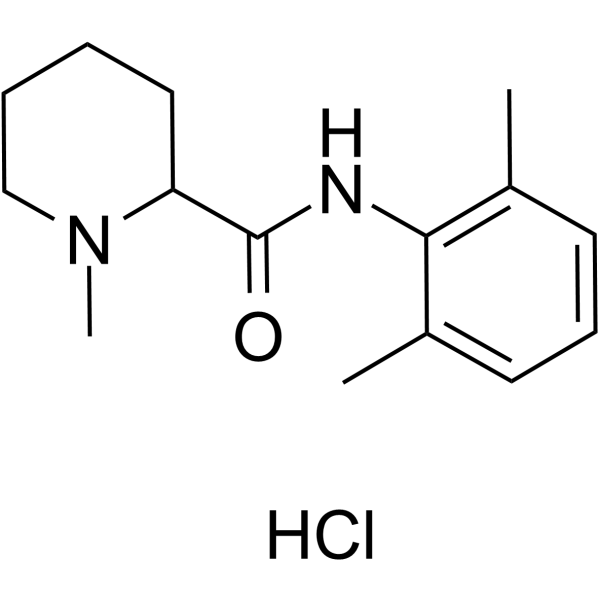
Mepivacaine hydrochloride binds to specific voltage-gated sodium ion channels in neuronal cell membranes, which inhibits both sodium influx and membrane depolarization .
|
-
-
- HY-119980
-
|
|
Sodium Channel
Dopamine Receptor
SARS-CoV
|
Infection
Neurological Disease
Cancer
|
|
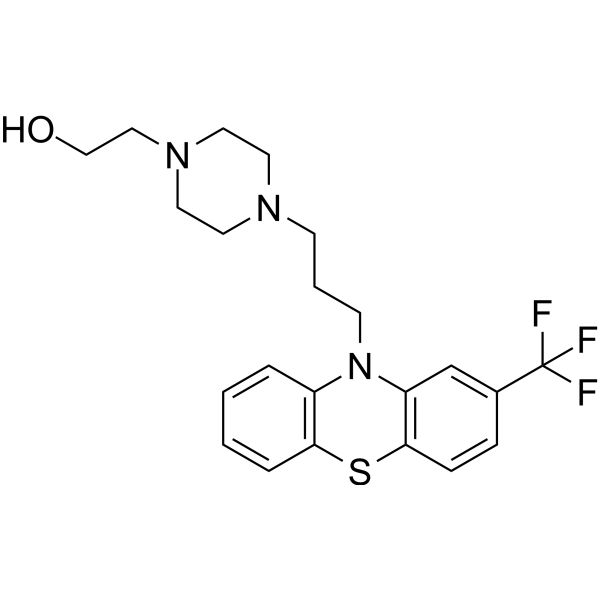
Fluphenazine is a potent, orally active phenothiazine-based dopamine receptor antagonist. Fluphenazine blocks neuronal voltage-gated sodium channels. Fluphenazine acts primarily through antagonism of postsynaptic dopamine-2 receptors in mesolimbic, nigrostriatal, and tuberoinfundibular neural pathways. Fluphenazine can antagonize Methylphenidate-induced stereotyped gnawing and inhibit climbing behaviour in mice. Fluphenazine can be used for researching psychosis and painful peripheral neuropathy associated with diabetes and has potential to inhibit SARS-CoV-2 .
|
-
-
- HY-66012
-
|
Proxymetacaine hydrochloride
|
Sodium Channel
|
Neurological Disease
|
|
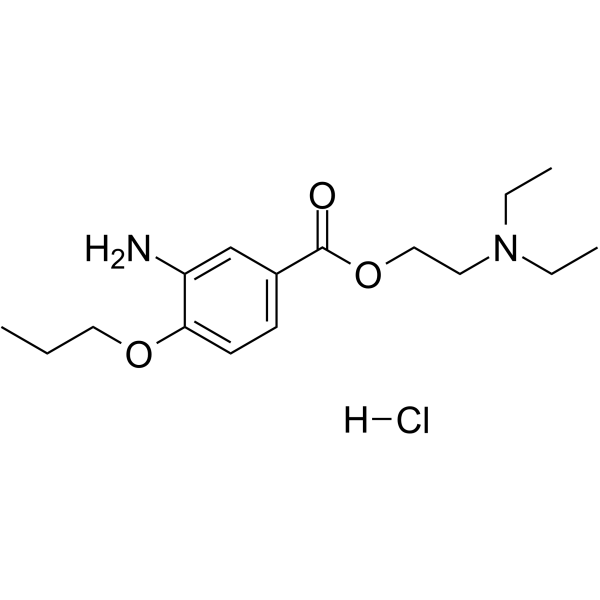
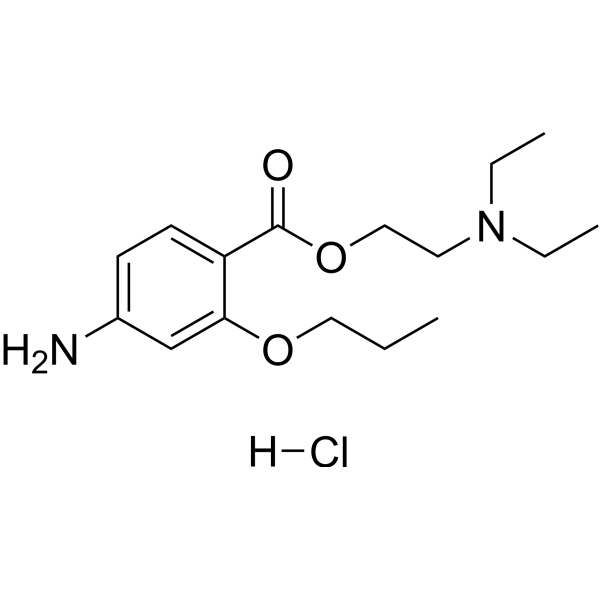
Proparacaine (Proxymetacaine) hydrochloride is a local anesthetic. Proparacaine hydrochloride blocks voltage-gated sodium channels on neuronal cell membranes, thereby inhibiting signal conduction and nociceptive signal transmission. Proparacaine hydrochloride blocks nociceptive signals in the eye and induces ocular muscle relaxation to reduce eye movement during surgery. Proparacaine hydrochloride is used in research related to cataracts .
|
-
-
- HY-B0495R
-
|
LTG (Standard); BW430C (Standard)
|
Reference Standards
Sodium Channel
|
Neurological Disease
|
|
Lamotrigine (Standard) is the analytical standard of Lamotrigine. This product is intended for research and analytical applications. Lamotrigine (BW430C) is a potent and orally active anticonvulsant or antiepileptic agent. Lamotrigine selectively blocks voltage-gated Na + channels, stabilizing presynaptic neuronal membranes and inhibiting glutamate release. Lamotrigine can be used for the research of epilepsy, focal seizure, et al .
|
-
-
- HY-119961
-
|
Dexivacaine; (S)-Mepivacaine
|
Sodium Channel
|
Cardiovascular Disease
|
|
(+)-Mepivacaine is a racemic isomer of Mepivacaine (HY-B0517), which has analgesic and vasoconstrictive activity. Mepivacaine is an amide type agent that temporarily causes local loss of consciousness. Mepivacaine binds to specific voltage-gated sodium channels on neuronal cell membranes, inhibiting sodium influx and membrane depolarization .
|
-
-
- HY-B0495S4
-
|
LTG-13C3; BW430C-13C3
|
Sodium Channel
Autophagy
|
Neurological Disease
|
|
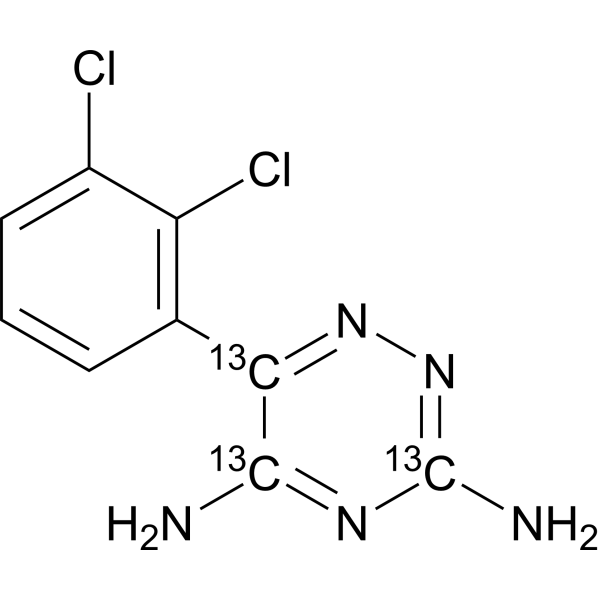
Lamotrigine- 13C3 is the 13C-labeled Lamotrigine. Lamotrigine (BW430C) is a potent and orally active anticonvulsant or antiepileptic agent. Lamotrigine selectively blocks voltage-gated Na+ channels, stabilizing presynaptic neuronal membranes and inhibiting glutamate release. Lamotrigine can be used for the research of epilepsy, focal seizure, et al .
|
-
-
- HY-B0495S5
-
|
LTG-d3; BW430C-d3
|
Autophagy
Sodium Channel
|
Neurological Disease
|
|
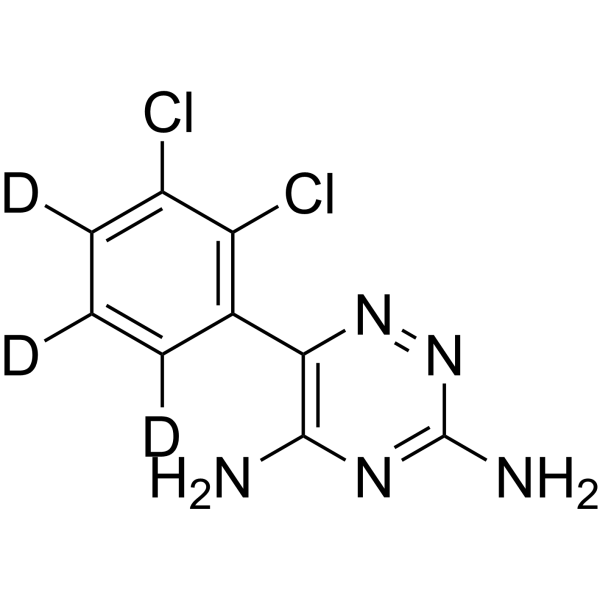
Lamotrigine-d3 is the deuterium labeled Lamotrigine . Lamotrigine (BW430C) is a potent and orally active anticonvulsant or antiepileptic agent. Lamotrigine selectively blocks voltage-gated Na+ channels, stabilizing presynaptic neuronal membranes and inhibiting glutamate release. Lamotrigine can be used for the research of epilepsy, focal seizure, et al .
|
-
-
- HY-B0495S3
-
|
|
Autophagy
Sodium Channel
|
Neurological Disease
|
|
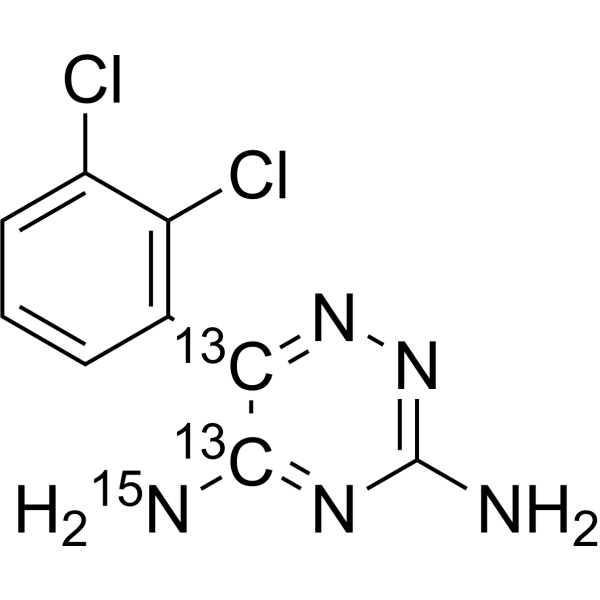
Lamotrigine- 13C2, 15N is the 13C and 15N labeled Lamotrigine . Lamotrigine (BW430C) is a potent and orally active anticonvulsant or antiepileptic agent. Lamotrigine selectively blocks voltage-gated Na+ channels, stabilizing presynaptic neuronal membranes and inhibiting glutamate release. Lamotrigine can be used for the research of epilepsy, focal seizure, et al .
|
-
-
- HY-119980S
-
|
|
Isotope-Labeled Compounds
Sodium Channel
Dopamine Receptor
SARS-CoV
|
Others
|
|
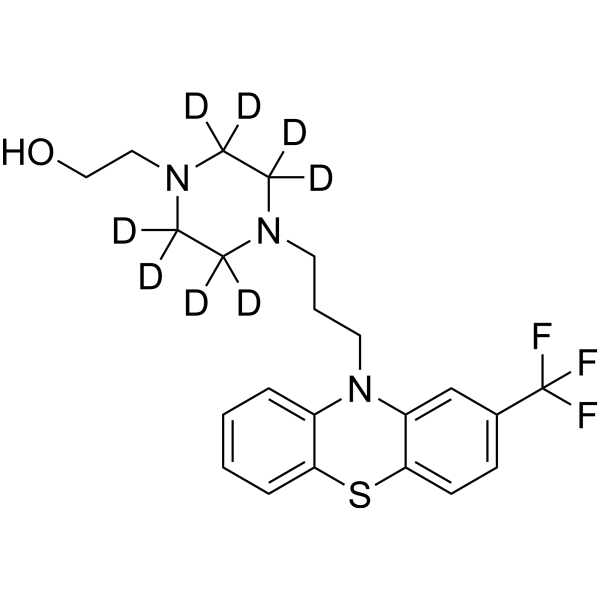
Fluphenazine-d8 is the deuterium labeled Fluphenazine. Fluphenazine is a potent, orally active phenothiazine-based dopamine receptor antagonist. Fluphenazine blocks neuronal voltage-gated sodium channels. Fluphenazine acts primarily through antagonism of postsynaptic dopamine-2 receptors in mesolimbic, nigrostriatal, and tuberoinfundibular neural pathways. Fluphenazine can antagonize Methylphenidate-induced stereotyped gnawing and inhibit climbing behaviour in mice. Fluphenazine can be used for researching psychosis and painful peripheral neuropathy associated with diabetes and has potential to inhibit SARS-CoV-2 .
|
-
-
- HY-B0517S
-
|
|
Sodium Channel
|
Neurological Disease
|
|
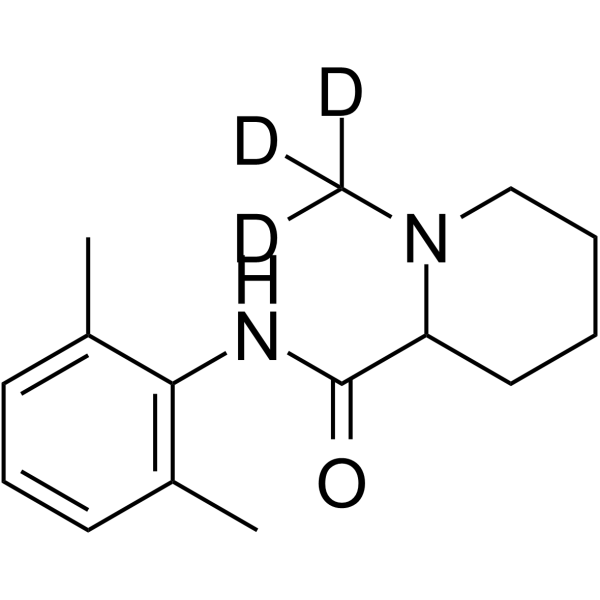
Mepivacaine-d3 is the deuterium labeled Mepivacaine. Mepivacaine is an amide-type local anesthetic agent. Mepivacaine binds to specific voltage-gated sodium ion channels in neuronal cell membranes, which inhibits both sodium influx and membrane depolarization .
|
-
-
- HY-110032
-
|
LTG isethionate; BW430C isethionate
|
Sodium Channel
Autophagy
|
Neurological Disease
Cancer
|
|
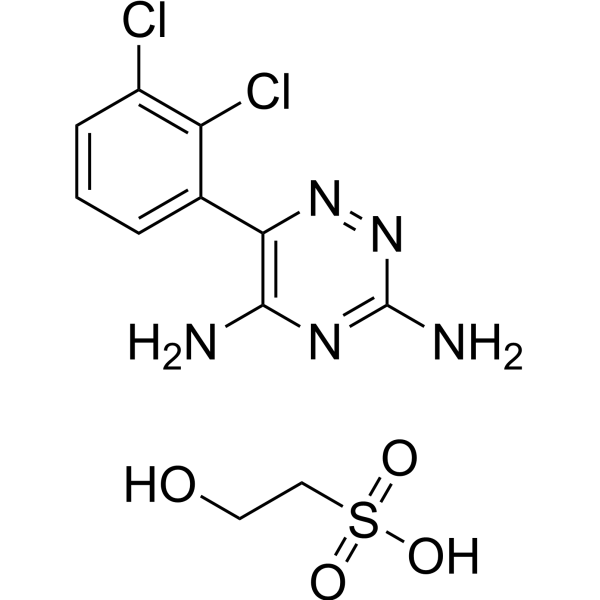
Lamotrigine (BW430C) isethionate is a potent and orally active anticonvulsant or antiepileptic agent. Lamotrigine isethionate selectively blocks voltage-gated Na + channels, stabilizing presynaptic neuronal membranes and inhibiting glutamate release. Lamotrigine isethionate can be used for the research of epilepsy, focal seizure, et al .
|
-
-
- HY-A0270
-
|
|
mAChR
Sodium Channel
|
Neurological Disease
|
|
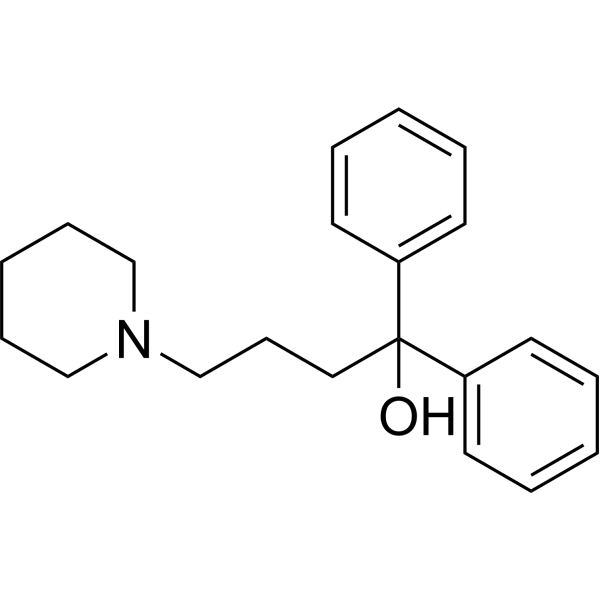
Diphenidol is a non-selective muscarinic M1-M4 receptor antagonist, has anti-arrhythmic activity. Diphenidol is also a potent non-specific blocker of voltage-gated ion channels (Na +, K +, and Ca 2+) in neuronal cells. Diphenidol can be used in the study of antivertigo and antinausea .
|
-
-
- HY-B0495S1
-
|
LTG-13C,d3; BW430C-13C,d3
|
Isotope-Labeled Compounds
Sodium Channel
Autophagy
|
Neurological Disease
|
|
Lamotrigine- 13C,d3 is the 13C- and deuterium labeled Lamotrigine. Lamotrigine (BW430C) is a potent and orally active anticonvulsant or antiepileptic agent. Lamotrigine selectively blocks voltage-gated Na+ channels, stabilizing presynaptic neuronal membranes and inhibiting glutamate release. Lamotrigine can be used for the research of epilepsy,?focal seizure, et al .
|
-
-
- HY-W740651
-
|
|
Insecticide
Sodium Channel
|
Infection
|
|
Jasmolin II is an insecticide targeting voltage-gated sodium channels in insects. Jasmolin II leads to neuronal hyperexcitation and insect paralysis. Jasmolin II is promising for research of agricultural pests .
|
-
-
- HY-117275A
-
-
-
- HY-119980B
-
|
|
Dopamine Receptor
Sodium Channel
SARS-CoV
|
Neurological Disease
Cancer
|
|
Fluphenazine hydrochloride is a potent, orally active phenothiazine-based dopamine receptor antagonist. Fluphenazine hydrochloride blocks neuronal voltage-gated sodium channels. Fluphenazine hydrochloride acts primarily through antagonism of postsynaptic dopamine-2 receptors in mesolimbic, nigrostriatal, and tuberoinfundibular neural pathways. Fluphenazine hydrochloride can antagonize Methylphenidate-induced stereotyped gnawing and inhibit climbing behaviour in mice. Fluphenazine hydrochloride can be used for researching psychosis and painful peripheral neuropathy associated with diabetes and has potential to inhibit SARS-CoV-2 .
|
-
-
- HY-119980A
-
|
|
Dopamine Receptor
Sodium Channel
SARS-CoV
|
Infection
Neurological Disease
Cancer
|
|
Fluphenazine dimaleate is a potent, orally active phenothiazine-based dopamine receptor antagonist. Fluphenazine dimaleate blocks neuronal voltage-gated sodium channels. Fluphenazine dimaleate acts primarily through antagonism of postsynaptic dopamine-2 receptors in mesolimbic, nigrostriatal, and tuberoinfundibular neural pathways. Fluphenazine dimaleate can antagonize Methylphenidate-induced stereotyped gnawing and inhibit climbing behaviour in mice. Fluphenazine dimaleate can be used for researching psychosis and painful peripheral neuropathy associated with diabetes and has potential to inhibit SARS-CoV-2 .
|
-
-
- HY-P5869
-
|
|
Calcium Channel
Sodium Channel
|
Neurological Disease
|
|
Kurtoxin is a selective Cav3 (T-type) voltage-gated Ca 2+ channel gating inhibitor with a Kd of 15 nM for Cav3.1 (α1G T-type) Ca 2+ channel. Kurtoxin can interact with high affinity with native neuronal high-threshold L-type, N-type, and P-type Ca 2+ channels in central and peripheral neurons. Kurtoxin also shows cross-reactivity with voltage-gated Na + channel .
|
-
-
- HY-B0517AR
-
|
|
Reference Standards
Sodium Channel
|
Neurological Disease
|
|
Mepivacaine (hydrochloride) (Standard) is the analytical standard of Mepivacaine (hydrochloride). This product is intended for research and analytical applications. Mepivacaine hydrochloride binds to specific voltage-gated sodium ion channels in neuronal cell membranes, which inhibits both sodium influx and membrane depolarization .
|
-
-
- HY-B0495A
-
|
LTG hydrate; BW430C hydrate
|
Sodium Channel
Autophagy
|
Neurological Disease
Cancer
|
|
Lamotrigine hydrate is a potent and orally active anticonvulsant or antiepileptic agent. Lamotrigine hydrate selectively blocks voltage-gated Na + channels, stabilizing presynaptic neuronal membranes and inhibiting glutamate release. Lamotrigine hydrate can be used for the research of epilepsy, focal seizure, et al .
|
-
-
- HY-B0517R
-
|
|
Reference Standards
Sodium Channel
|
Neurological Disease
|
|
Mepivacaine (Standard) is the analytical standard of Mepivacaine. This product is intended for research and analytical applications. Mepivacaine is an amide-type local anesthetic agent. Mepivacaine binds to specific voltage-gated sodium ion channels in neuronal cell membranes, which inhibits both sodium influx and membrane depolarization .
|
-
-
- HY-B0495S7
-
|
LTG-13C; BW430C-13C
|
Isotope-Labeled Compounds
|
Neurological Disease
Cancer
|
|
Lamotrigine- 13C (LTG- 13C) is 13C labeled Lamotrigine. Lamotrigine (BW430C) is a potent and orally active anticonvulsant or antiepileptic agent. Lamotrigine selectively blocks voltage-gated Na + channels, stabilizing presynaptic neuronal membranes and inhibiting glutamate release. Lamotrigine can be used for the research of epilepsy,?focal seizure, et al .
|
-
-
- HY-66012R
-
|
Proxymetacaine hydrochloride (Standard)
|
Reference Standards
Sodium Channel
|
Neurological Disease
|
|
Proparacaine (Hydrochloride) (Standard) is the analytical standard of Proparacaine (Hydrochloride). This product is intended for research and analytical applications. Proparacaine hydrochloride is a local anesthetic. Proparacaine hydrochloride blocks voltage-gated sodium channels on neuronal cell membranes, thereby inhibiting signal conduction and nociceptive signal transmission. Proparacaine hydrochloride blocks nociceptive signals in the eye and induces ocular muscle relaxation to reduce eye movement during surgery. Proparacaine hydrochloride is used in research related to cataracts.
|
-
-
- HY-B0495S
-
|
LTG-13C3,d3; BW430C-13C3,d3
|
Isotope-Labeled Compounds
Sodium Channel
Autophagy
|
Neurological Disease
|
|
Lamotrigine- 13C3,d3 is the 13C-labeled Lamotrigine. Lamotrigine (BW430C) is a potent and orally active anticonvulsant or antiepileptic agent. Lamotrigine selectively blocks voltage-gated Na+ channels, stabilizing presynaptic neuronal membranes and inhibiting glutamate release. Lamotrigine can be used for the research of epilepsy,?focal seizure, et al .
|
-
-
- HY-B0495S8
-
|
LTG-13C7,15N; BW430C-13C7,15N
|
Isotope-Labeled Compounds
Autophagy
Sodium Channel
|
Neurological Disease
Cancer
|
|
Lamotrigine- 13C7, 15N (LTG- 13C7, 15N) is 13C and 15N labeled Lamotrigine. Lamotrigine (BW430C) is a potent and orally active anticonvulsant or antiepileptic agent. Lamotrigine selectively blocks voltage-gated Na + channels, stabilizing presynaptic neuronal membranes and inhibiting glutamate release. Lamotrigine can be used for the research of epilepsy,?focal seizure, et al .
|
-
-
- HY-A0082R
-
|
Difenidol hydrochloride (Standard)
|
Reference Standards
mAChR
Sodium Channel
|
Neurological Disease
|
|
Diphenidol (hydrochloride) (Standard) is the analytical standard of Diphenidol (hydrochloride). This product is intended for research and analytical applications. Diphenidol hydrochloride (Difenidol hydrochloride) is a non-selective muscarinic M1-M4 receptor antagonist, has anti-arrhythmic activity. Diphenidol hydrochloride is also a potent non-specific blocker of voltage-gated ion channels (Na+, K+, and Ca2+) in neuronal cells. Diphenidol hydrochloride can be used in the study of antivertigo and antinausea [4] .
|
-
-
- HY-B0495S6
-
|
LTG-13C2,15N2,d3; BW430C-13C2,15N2,d3
|
Autophagy
Sodium Channel
Isotope-Labeled Compounds
|
Neurological Disease
Cancer
|
|
Lamotrigine- 13C2, 15N2,d3 is 15N and deuterated labeled Lamotrigine (HY-B0495). Lamotrigine (BW430C) is a potent and orally active anticonvulsant or antiepileptic agent. Lamotrigine selectively blocks voltage-gated Na + channels, stabilizing presynaptic neuronal membranes and inhibiting glutamate release. Lamotrigine can be used for the research of epilepsy, focal seizure, et al .
|
-
-
- HY-A0082S
-
|
Difenidol hydrochloride-d10
|
Isotope-Labeled Compounds
Sodium Channel
mAChR
|
Neurological Disease
|
|
Diphenidol-d10 (hydrochloride) (Difenidol hydrochloride-d10) is deuterium labeled Diphenidol (hydrochloride). Diphenidol hydrochloride (Difenidol hydrochloride) is a non-selective muscarinic M1-M4 receptor antagonist, has anti-arrhythmic activity. Diphenidol hydrochloride is also a potent non-specific blocker of voltage-gated ion channels (Na +, K +, and Ca 2+) in neuronal cells. Diphenidol hydrochloride can be used in the study of antivertigo and antinausea .
|
-
-
- HY-119980BS
-
|
|
Isotope-Labeled Compounds
Dopamine Receptor
Sodium Channel
SARS-CoV
|
Neurological Disease
Cancer
|
|
Fluphenazine-d6 (hydrochloride) is deuterium labeled Fluphenazine (hydrochloride). Fluphenazine hydrochloride is a potent, orally active phenothiazine-based dopamine receptor antagonist. Fluphenazine hydrochloride blocks neuronal voltage-gated sodium channels. Fluphenazine hydrochloride acts primarily through antagonism of postsynaptic dopamine-2 receptors in mesolimbic, nigrostriatal, and tuberoinfundibular neural pathways. Fluphenazine hydrochloride can antagonize Methylphenidate-induced stereotyped gnawing and inhibit climbing behaviour in mice. Fluphenazine hydrochloride can be used for researching psychosis and painful peripheral neuropathy associated with diabetes and has potential to inhibit SARS-CoV-2 .
|
-
-
- HY-A0081R
-
|
|
Reference Standards
Dopamine Receptor
SARS-CoV
Sodium Channel
|
Neurological Disease
Cancer
|
|
Fluphenazine (dihydrochloride) (Standard) is the analytical standard of Fluphenazine (dihydrochloride). This product is intended for research and analytical applications. Fluphenazine dihydrochloride is a potent, orally active phenothiazine-based dopamine receptor antagonist. Fluphenazine dihydrochloride blocks neuronal voltage-gated sodium channels. Fluphenazine dihydrochloride acts primarily through antagonism of postsynaptic dopamine-2 receptors in mesolimbic, nigrostriatal, and tuberoinfundibular neural pathways. Fluphenazine dihydrochloride can antagonize Methylphenidate-induced stereotyped gnawing and inhibit climbing behaviour in mice. Fluphenazine dihydrochloride can be used for researching psychosis and painful peripheral neuropathy associated with diabetes and has potential to inhibit SARS-CoV-2 .
|
-
-
- HY-66012A
-
|
Proxymetacaine
|
Sodium Channel
|
Neurological Disease
|
|
Proparacaine (Proxymetacaine) is a local anesthetic. Proparacaine blocks voltage-gated sodium channels on neuronal cell membranes, thereby inhibiting signal conduction and nociceptive signal transmission. Proparacaine blocks nociceptive signals in the eye and induces ocular muscle relaxation to reduce eye movement during surgery. Proparacaine is used in research related to cataracts .
|
-
| Cat. No. |
Product Name |
Target |
Research Area |
-
- HY-P5869
-
|
|
Calcium Channel
Sodium Channel
|
Neurological Disease
|
|
Kurtoxin is a selective Cav3 (T-type) voltage-gated Ca 2+ channel gating inhibitor with a Kd of 15 nM for Cav3.1 (α1G T-type) Ca 2+ channel. Kurtoxin can interact with high affinity with native neuronal high-threshold L-type, N-type, and P-type Ca 2+ channels in central and peripheral neurons. Kurtoxin also shows cross-reactivity with voltage-gated Na + channel .
|
| Cat. No. |
Product Name |
Category |
Target |
Chemical Structure |
| Cat. No. |
Product Name |
Chemical Structure |
-
- HY-B0495S4
-
|
|
|
Lamotrigine- 13C3 is the 13C-labeled Lamotrigine. Lamotrigine (BW430C) is a potent and orally active anticonvulsant or antiepileptic agent. Lamotrigine selectively blocks voltage-gated Na+ channels, stabilizing presynaptic neuronal membranes and inhibiting glutamate release. Lamotrigine can be used for the research of epilepsy, focal seizure, et al .
|
-
-
- HY-B0495S5
-
|
|
|
Lamotrigine-d3 is the deuterium labeled Lamotrigine . Lamotrigine (BW430C) is a potent and orally active anticonvulsant or antiepileptic agent. Lamotrigine selectively blocks voltage-gated Na+ channels, stabilizing presynaptic neuronal membranes and inhibiting glutamate release. Lamotrigine can be used for the research of epilepsy, focal seizure, et al .
|
-
-
- HY-B0495S3
-
|
|
|
Lamotrigine- 13C2, 15N is the 13C and 15N labeled Lamotrigine . Lamotrigine (BW430C) is a potent and orally active anticonvulsant or antiepileptic agent. Lamotrigine selectively blocks voltage-gated Na+ channels, stabilizing presynaptic neuronal membranes and inhibiting glutamate release. Lamotrigine can be used for the research of epilepsy, focal seizure, et al .
|
-
-
- HY-119980S
-
|
|
|
Fluphenazine-d8 is the deuterium labeled Fluphenazine. Fluphenazine is a potent, orally active phenothiazine-based dopamine receptor antagonist. Fluphenazine blocks neuronal voltage-gated sodium channels. Fluphenazine acts primarily through antagonism of postsynaptic dopamine-2 receptors in mesolimbic, nigrostriatal, and tuberoinfundibular neural pathways. Fluphenazine can antagonize Methylphenidate-induced stereotyped gnawing and inhibit climbing behaviour in mice. Fluphenazine can be used for researching psychosis and painful peripheral neuropathy associated with diabetes and has potential to inhibit SARS-CoV-2 .
|
-
-
- HY-B0517S
-
|
|
|
Mepivacaine-d3 is the deuterium labeled Mepivacaine. Mepivacaine is an amide-type local anesthetic agent. Mepivacaine binds to specific voltage-gated sodium ion channels in neuronal cell membranes, which inhibits both sodium influx and membrane depolarization .
|
-
-
- HY-B0495S1
-
|
|
|
Lamotrigine- 13C,d3 is the 13C- and deuterium labeled Lamotrigine. Lamotrigine (BW430C) is a potent and orally active anticonvulsant or antiepileptic agent. Lamotrigine selectively blocks voltage-gated Na+ channels, stabilizing presynaptic neuronal membranes and inhibiting glutamate release. Lamotrigine can be used for the research of epilepsy,?focal seizure, et al .
|
-
-
- HY-B0495S7
-
|
|
|
Lamotrigine- 13C (LTG- 13C) is 13C labeled Lamotrigine. Lamotrigine (BW430C) is a potent and orally active anticonvulsant or antiepileptic agent. Lamotrigine selectively blocks voltage-gated Na + channels, stabilizing presynaptic neuronal membranes and inhibiting glutamate release. Lamotrigine can be used for the research of epilepsy,?focal seizure, et al .
|
-
-
- HY-B0495S
-
|
|
|
Lamotrigine- 13C3,d3 is the 13C-labeled Lamotrigine. Lamotrigine (BW430C) is a potent and orally active anticonvulsant or antiepileptic agent. Lamotrigine selectively blocks voltage-gated Na+ channels, stabilizing presynaptic neuronal membranes and inhibiting glutamate release. Lamotrigine can be used for the research of epilepsy,?focal seizure, et al .
|
-
-
- HY-B0495S8
-
|
|
|
Lamotrigine- 13C7, 15N (LTG- 13C7, 15N) is 13C and 15N labeled Lamotrigine. Lamotrigine (BW430C) is a potent and orally active anticonvulsant or antiepileptic agent. Lamotrigine selectively blocks voltage-gated Na + channels, stabilizing presynaptic neuronal membranes and inhibiting glutamate release. Lamotrigine can be used for the research of epilepsy,?focal seizure, et al .
|
-
-
- HY-B0495S6
-
|
|
|
Lamotrigine- 13C2, 15N2,d3 is 15N and deuterated labeled Lamotrigine (HY-B0495). Lamotrigine (BW430C) is a potent and orally active anticonvulsant or antiepileptic agent. Lamotrigine selectively blocks voltage-gated Na + channels, stabilizing presynaptic neuronal membranes and inhibiting glutamate release. Lamotrigine can be used for the research of epilepsy, focal seizure, et al .
|
-
-
- HY-A0082S
-
|
|
|
Diphenidol-d10 (hydrochloride) (Difenidol hydrochloride-d10) is deuterium labeled Diphenidol (hydrochloride). Diphenidol hydrochloride (Difenidol hydrochloride) is a non-selective muscarinic M1-M4 receptor antagonist, has anti-arrhythmic activity. Diphenidol hydrochloride is also a potent non-specific blocker of voltage-gated ion channels (Na +, K +, and Ca 2+) in neuronal cells. Diphenidol hydrochloride can be used in the study of antivertigo and antinausea .
|
-
-
- HY-119980BS
-
|
|
|
Fluphenazine-d6 (hydrochloride) is deuterium labeled Fluphenazine (hydrochloride). Fluphenazine hydrochloride is a potent, orally active phenothiazine-based dopamine receptor antagonist. Fluphenazine hydrochloride blocks neuronal voltage-gated sodium channels. Fluphenazine hydrochloride acts primarily through antagonism of postsynaptic dopamine-2 receptors in mesolimbic, nigrostriatal, and tuberoinfundibular neural pathways. Fluphenazine hydrochloride can antagonize Methylphenidate-induced stereotyped gnawing and inhibit climbing behaviour in mice. Fluphenazine hydrochloride can be used for researching psychosis and painful peripheral neuropathy associated with diabetes and has potential to inhibit SARS-CoV-2 .
|
-
Your information is safe with us. * Required Fields.
Inquiry Information
- Product Name:
- Cat. No.:
- Quantity:
- MCE Japan Authorized Agent:

