



Diphenidol hydrochloride (Standard)
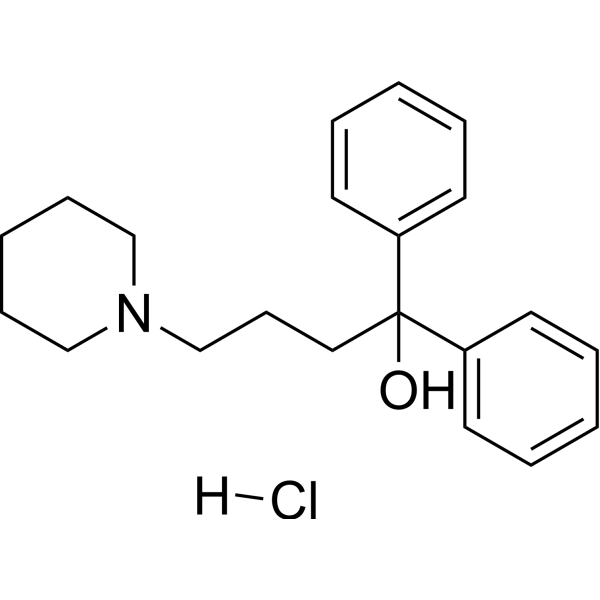
Diphenidol (hydrochloride) (Standard) is the analytical standard of Diphenidol (hydrochloride). This product is intended for research and analytical applications. Diphenidol hydrochloride (Difenidol hydrochloride) is a non-selective muscarinic M1-M4 receptor antagonist, has anti-arrhythmic activity. Diphenidol hydrochloride is also a potent non-specific blocker of voltage-gated ion channels (Na+, K+, and Ca2+) in neuronal cells. Diphenidol hydrochloride can be used in the study of antivertigo and antinausea[4].
For research use only. We do not sell to patients.
- Purity : 98%
- CAS No.: 3254-89-5
- Formula: C21H28ClNO
- Molecular Weight:345.91
-
Storage:
Please store the product under the recommended conditions in the Certificate of Analysis.


To place orders, for customer services and technical support, please contact: MedChemExpress USA
Tel: 609-228-6898 E-mail: [email protected] [email protected]


-
 Product Information
-
Chemical Information
- Purity & Documentation
-
 Help & FAQs


-
HY-A0082
Diphenidol hydrochlorideMuscarinic M1-4 Receptor Antagonist -
HY-17465
GlycopyrrolateMuscarinic Receptor Antagonist -
HY-B0241
Ipratropium bromidemAChR Antagonist -
HY-B0267A
Oxybutynin chloridemAChR Antagonist -
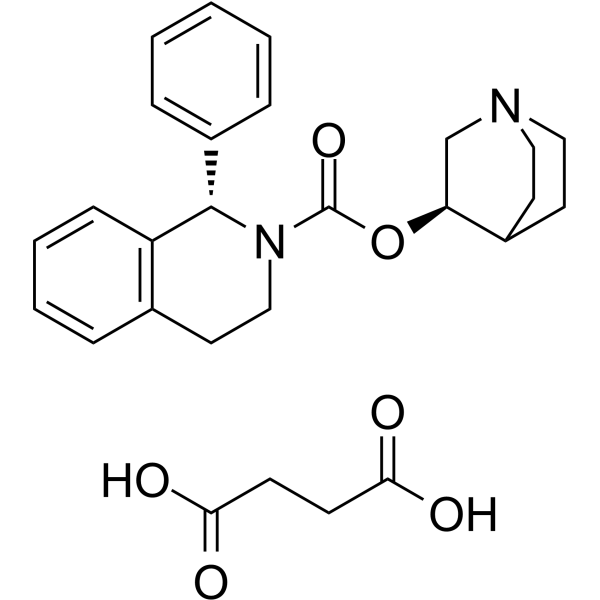
HY-A0002
Solifenacin SuccinateMuscarinic Receptor Antagonist -
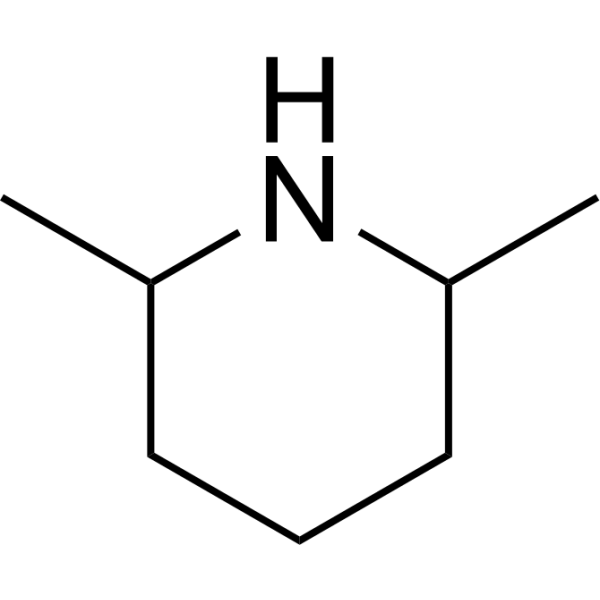
HY-B1191
NanofinGanglionic Blocker -

HY-17465R
Glycopyrrolate (Standard)Muscarinic Receptor Antagonist -
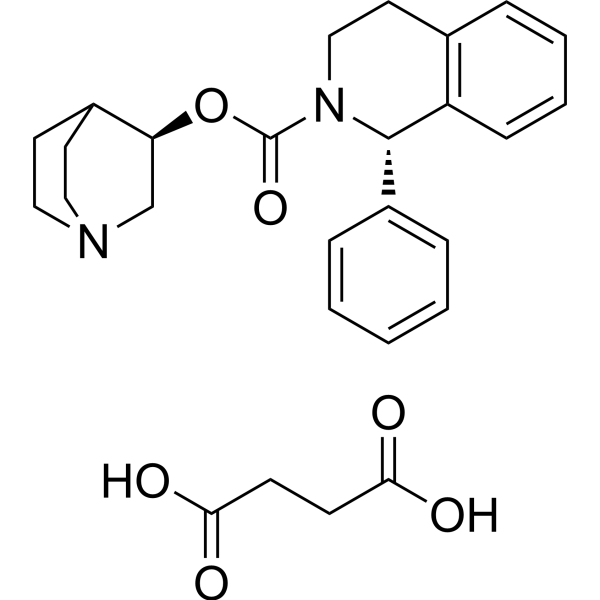
HY-A0002R
Solifenacin Succinate (Standard)Muscarinic Receptor Antagonist -
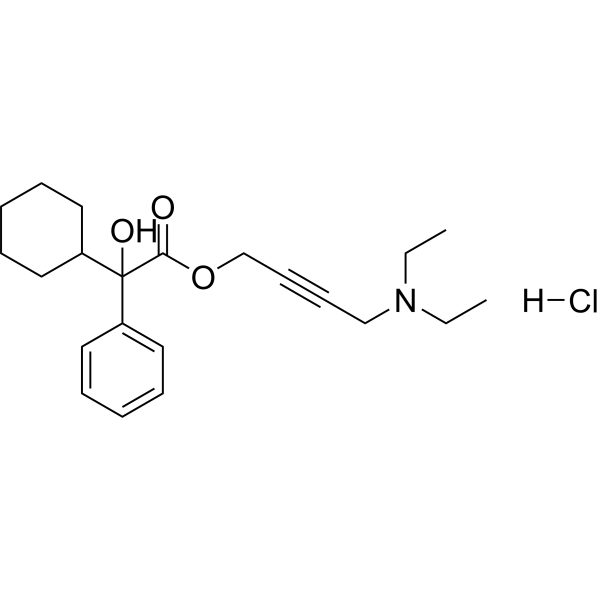
HY-B0267AR
Oxybutynin chloride (Standard)mAChR Antagonist


Product Information
Information
Application
The compound is the grade of analytical standard, which is the reference standard supplied assay. It is commonly used in qualitative, quantitative and methodological research experiments in HPLC, GC and MS.


Chemical Information
-
CAS No. 3254-89-5
-
Molecular Weight 345.91
-
Formula C21H28ClNO
-
SMILES
OC(C1=CC=CC=C1)(C2=CC=CC=C2)CCCN3CCCCC3.[H]Cl
-
Synonyms
Difenidol hydrochloride (Standard)
-
Shipping
Room temperature in continental US; may vary elsewhere.
-
Storage
Please store the product under the recommended conditions in the Certificate of Analysis.


Purity & Documentation
References
[1]. Leung YM, et al. Inhibition of voltage-gated K+ channels and Ca2+ channels by diphenidol. Pharmacol Rep. 2012;64(3):739-44. [Content Brief]
[2]. Leung YM, et al. Diphenidol inhibited sodium currents and produced spinal anesthesia. Neuropharmacology. 2010 Jun;58(7):1147-52. [Content Brief]
[3]. Leung YM, et al. Diphenidol inhibited sodium currents and produced spinal anesthesia. Neuropharmacology. 2010 Jun;58(7):1147-52. [Content Brief]
[4]. Chen YW, et al. Systemic diphenidol reduces neuropathic allodynia and TNF-alpha overexpression in rats after chronic constriction injury. Neurosci Lett. 2013 Sep 27;552:62-5. [Content Brief]
[5]. Takeda N, et al. Neuropharmacological mechanisms of emesis. I. Effects of antiemetic drugs on motion- and apomorphine-induced pica in rats. Methods Find Exp Clin Pharmacol. 1995 Nov;17(9):589-90. [Content Brief]

Calculators
Concentration (start) × Volume (start) = Concentration (final) × Volume (final)


Diphenidol hydrochloride (Standard) Related Classifications
HY-A0082R Related Classifications
 Powered by Bioz