
1. Search Result
Search Result
Results for "

protein synthesis initiation

" in MedChemExpress (MCE) Product Catalog:

20

Inhibitors & Agonists

3

Biochemical Assay Reagents

1

Peptides

3

Natural
Products

4

Isotope-Labeled Compounds

1

Oligonucleotides

Cat. No. Product Name Target Research Areas Chemical Structure
  • HY-10394
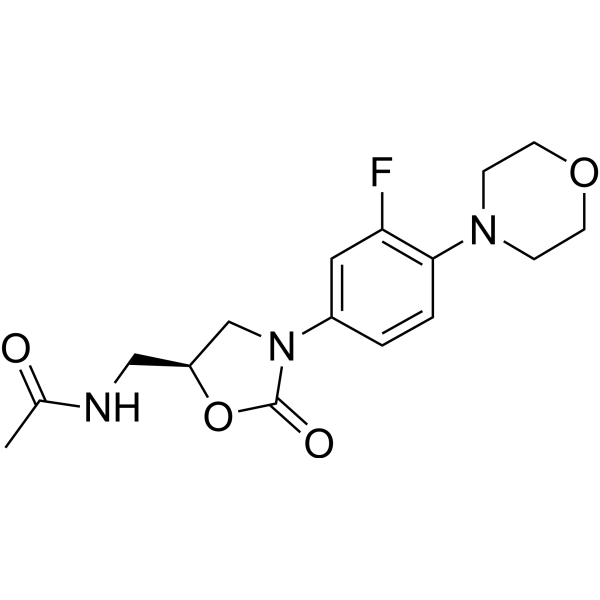
    Linezolid
    Maximum Cited Publications
    52 Publications Verification

    PNU-100766

    Bacterial Antibiotic Infection Cancer
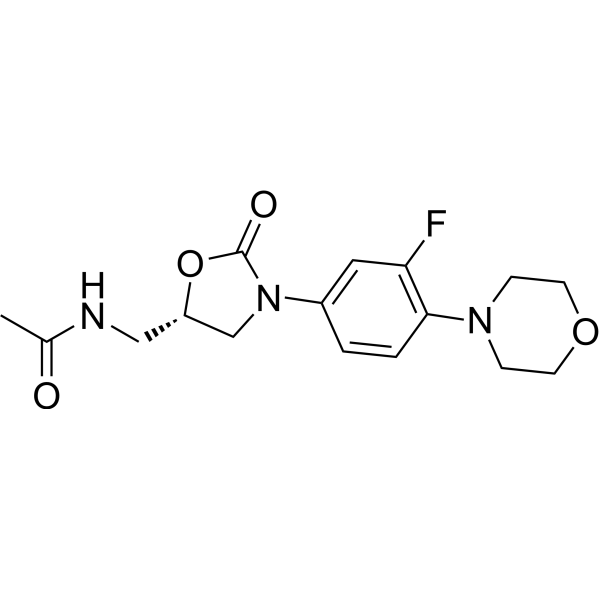
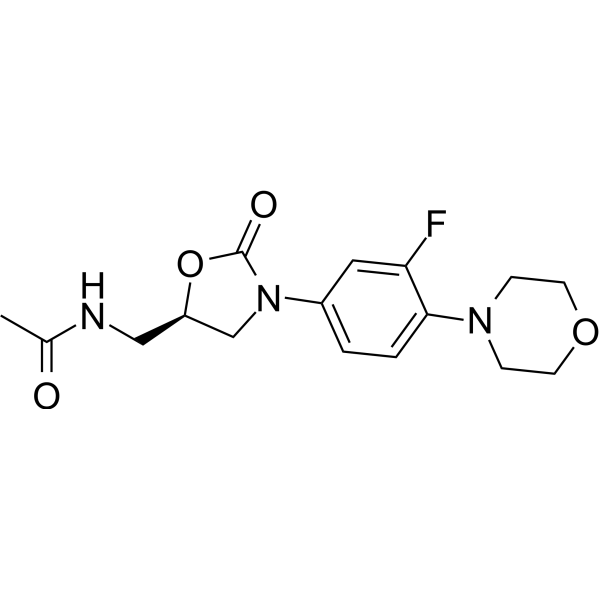
    Linezolid (PNU-100766) is the first member of the class of oxazolidinone synthetic antibiotic. Linezolid acts by inhibiting the initiation of bacterial protein synthesis. Linezolid is used for the treatment of serious infections caused by Gram-positive bacteria that are resistant to several other antibiotics .
    Linezolid
  • HY-W014233
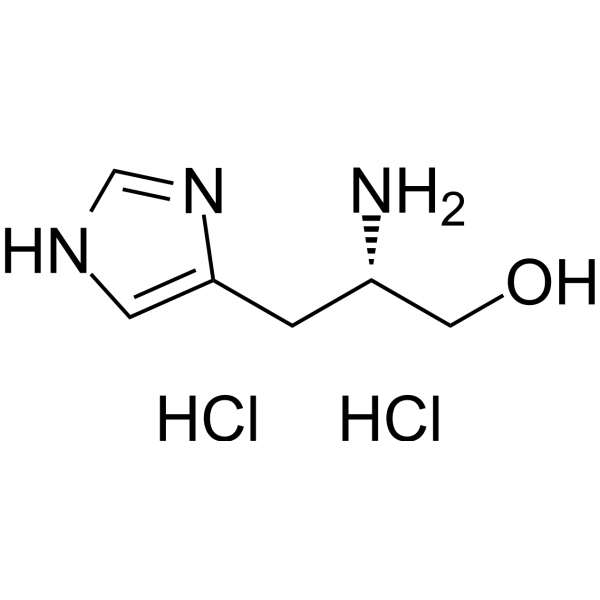
    L-Histidinol dihydrochloride
    1 Publications Verification

    Endogenous Metabolite Aminoacyl-tRNA Synthetase Cancer
    L-Histidinol dihydrochloride is an orally active histidyl-tRNA synthetase inhibitor. L-Histidinol dihydrochloride interferes with the initiation stage of protein synthesis, thus affecting cell proliferation and metabolism. L-Histidinol dihydrochloride has the effect of modulating the sensitivity of tumor cells to chemotherapeutic agents. L-Histidinol dihydrochloride reduces the toxicity of certain chemotherapeutic agents to normal tissues and enhance the sensitivity of tumor cells to chemotherapeutic agents .
    L-Histidinol dihydrochloride
  • HY-136453
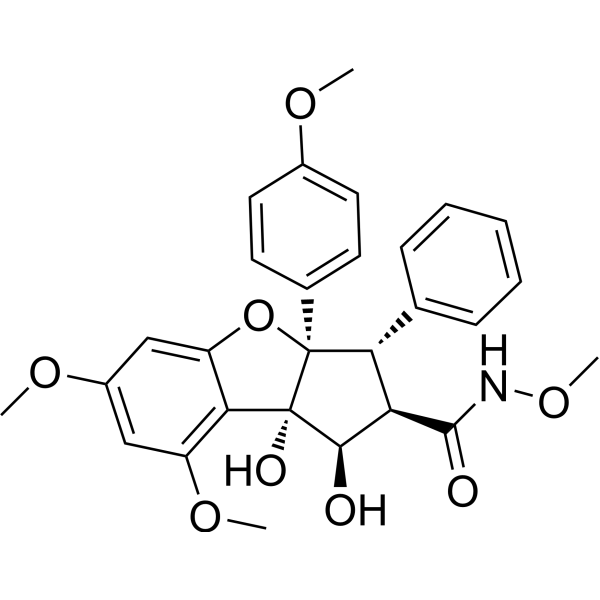
    CR-1-31-B
    10+ Cited Publications

    Eukaryotic Initiation Factor (eIF) Apoptosis Cancer
    CR-1-31-B is a synthetic rocaglate and a potent eIF4A inhibitor. CR-1-31-B exhibits powerful inhibitory effects over eIF4A by perturbing the interaction between eIF4A and RNA, sequentially impeding initiation during protein synthesis. CR-1-31-B perturbs association of Plasmodium falciparum eIF4A (PfeIF4A) with RNA. CR-1-31-B induces apoptosis of neuroblastoma and gallbladder cancer cells .
    CR-1-31-B
  • HY-10393

    PNU-100592

    Bacterial Antibiotic Infection
    Eperezolid (PNU-100592) is an orally active protein synthesis inhibitor that targets the bacterial 50S ribosomal subunit. Eperezolid competitively binds to a specific site on the ribosomal 50S subunit (overlapping with the binding sites of chloramphenicol (HY-B0239) and lincomycin (HY-117660)) to inhibit the translation initiation stage and exert antibacterial activity. Eperezolid can induce host cell autophagy to enhance the clearance of intracellular mycobacteria, and its MIC90 for Staphylococcus aureus and Enterococcus is 1-4 μg/mL. Eperezolid is mainly used for antibacterial research on infections with Gram-positive bacteria such as methicillin-resistant (HY-121544) Staphylococci and vancomycin-resistant (HY-B0671) Enterococci, as well as infections with intracellular bacteria such as Mycobacterium tuberculosis .
    Eperezolid
  • HY-10394S
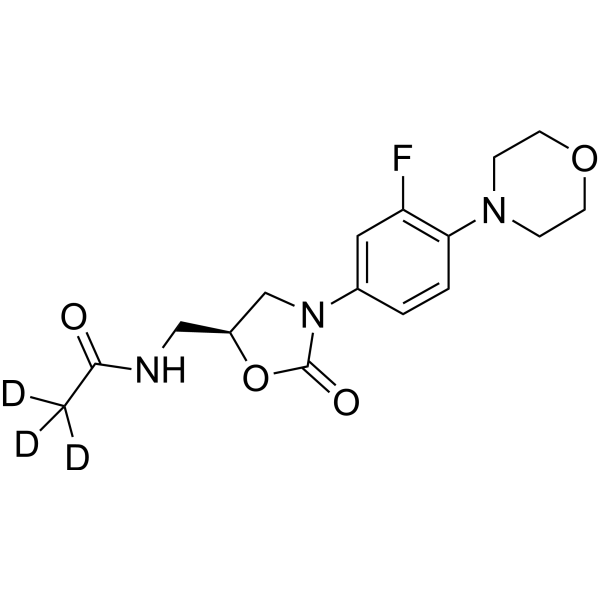
    Linezolid-d3
    1 Publications Verification

    PNU-100766-d3

    Bacterial Antibiotic Infection
    Linezolid-d3 (PNU-100766-d3) is a deuterium labeled Linezolid (PNU-100766). Linezolid is a synthetic antibiotic that acts by inhibiting the initiation of bacterial protein synthesis .
    Linezolid-d3
  • HY-131920A

    Polyuridylic acid potassium

    DNA/RNA Synthesis Others
    Polyuridylic acid potassium is a polynucleotide. In protein synthesis systems based on active mammalian ribosomes, Polyuridylic acid potassium acts as a specific messenger to induce the biosynthesis of polyphenylalanine, with no effect on the incorporation of non-phenylalanine amino acids. Polyuridylic acid potassium serves as a template to promote the non-enzymatic synthesis of oligoadenylates .
    Poly(U) potassium
  • HY-N11857

    Antibiotic Bacterial Infection
    Gentamicin C2 is an aminoglycoside antibiotic with broad-spectrum bactericidal activity, selectively binding to the bacterial 16S rRNA A-site. Gentamicin C2 interferes with protein synthesis initiation and translation fidelity to exert bactericidal effects. Gentamicin C2 can be used for the research of bacterial infections .
    Gentamicin C2
  • HY-139098

    m7Gp3G

    DNA/RNA Synthesis Others
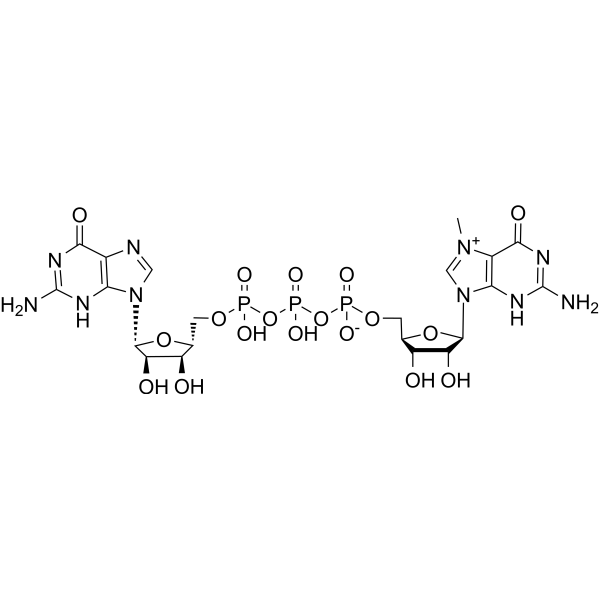
    7-Methyl-diguanosine triphosphate (m7Gp3G) is an mRNA cap structure analog that inhibits in vitro protein synthesis by binding to the translation initiation complex. 7-Methyl-diguanosine triphosphate binds to eIF4E, promotes cap-dependent translation initiation, stabilizes mRNA, and acts as a translation enhancer. 7-Methyl-diguanosine triphosphate can be used to prepare synthetic capped RNA transcripts for studies related to mRNA translation, splicing, turnover, and intracellular transport .
    7-Methyl-diguanosine triphosphate
  • HY-10394R

    PNU-100766 (Standard)

    Reference Standards Bacterial Antibiotic Infection
    Linezolid (Standard) is the analytical standard of Linezolid. This product is intended for research and analytical applications. Linezolid (PNU-100766) is the first member of the class of oxazolidinone synthetic antibiotic. Linezolid acts by inhibiting the initiation of bacterial protein synthesis. Linezolid is used for the treatment of serious infections caused by Gram-positive bacteria that are resistant to several other antibiotics .
    Linezolid (Standard)
  • HY-10394S1

    PNU-100766-d8

    Antibiotic Bacterial Isotope-Labeled Compounds Infection
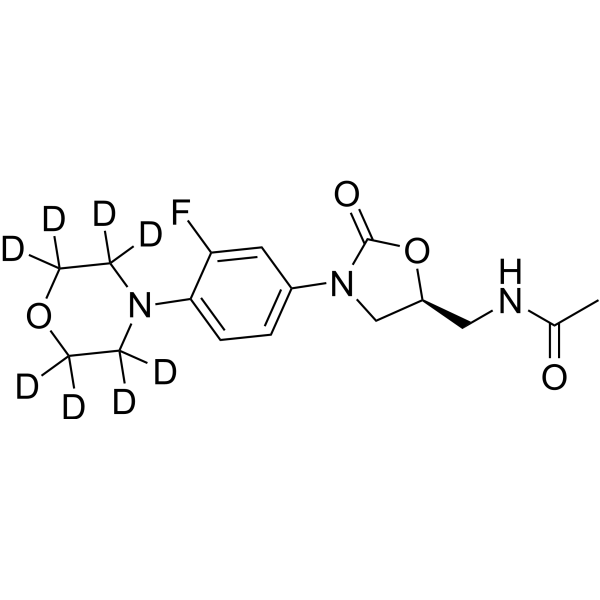
    PNU-100766-d8 is deuterated labeled Linezolid (HY-10394). Linezolid (PNU-100766) is the first member of the class of oxazolidinone synthetic antibiotic. Linezolid acts by inhibiting the initiation of bacterial protein synthesis. Linezolid is used for the treatment of serious infections caused by Gram-positive bacteria that are resistant to several other antibiotics .
    Linezolid-d8
  • HY-135397

    (R)-PNU-100766

    Drug Metabolite Infection
    (R)-Linezolid is an impurity of Linezolid (PNU-100766). Linezolid, the first member of the class of oxazolidinone synthetic antibiotic, acts by inhibiting the initiation of bacterial protein synthesis .
    (R)-​Linezolid
  • HY-W064342S

    Isotope-Labeled Compounds Endogenous Metabolite Aminoacyl-tRNA Synthetase Cancer
    L-Histidinol-d3 ((S)-2-Amino-3-(1H-imidazol-5-yl)propan-1-ol-d3) is the deuterium labeled L-Histidinol (HY-W014233). L-Histidinol is an orally active histidyl-tRNA synthetase inhibitor. L-Histidinol interferes with the initiation stage of protein synthesis, thus affecting cell proliferation and metabolism. L-Histidinol has the effect of modulating the sensitivity of tumor cells to chemotherapeutic agents. L-Histidinol reduces the toxicity of certain chemotherapeutic agents to normal tissues and enhance the sensitivity of tumor cells to chemotherapeutic agents .
    L-Histidinol-d3
  • HY-P5637

    Bacterial Infection
    Tur1A is an antimicrobial peptide derived from bottlenose dolphins Tursiops truncates. Tur1A inhibits bacterial protein synthesis by binding to ribosomes and blocking the transition from the initiation stage to the extension stage .
    Tur1A
  • HY-W235043

    DNA/RNA Synthesis Infection
    Methyl 3-Oxodecanoate has been shown to have virulence factor activity against human pathogens and is active against fluorescent haplophyllum and culture supernatant. Methyl 3-oxodecanoate has also been shown to inhibit DNA synthesis by inhibiting protein synthesis at the level of translation initiation. Reagent grade, for research purpose.
    Methyl 3-oxodecanoate
  • HY-135397R

    (R)-PNU-100766 (Standard)

    Drug Metabolite Reference Standards Infection
    (R)-​Linezolid (Standard) is the analytical standard of (R)-​Linezolid. This product is intended for research and analytical applications. (R)-Linezolid is an impurity of Linezolid (PNU-100766). Linezolid, the first member of the class of oxazolidinone synthetic antibiotic, acts by inhibiting the initiation of bacterial protein synthesis .
    (R)-?Linezolid (Standard)
  • HY-135397S

    Isotope-Labeled Compounds Infection
    (R)-Linezolid-d3 ((R)-PNU-100766-d3) is the deuterium labeled (R)-Linezolid. (R)-Linezolid is an impurity of Linezolid (PNU-100766). Linezolid, the first member of the class of oxazolidinone synthetic antibiotic, acts by inhibiting the initiation of bacterial protein synthesis .
    (R)-Linezolid-d3
  • HY-12770R

    Mebeverine metabolite Mebeverine alcohol (Standard)

    Reference Standards Drug Metabolite Neurological Disease
    Mebeverine alcohol (Standard) is an analytical standard for Mebeverine alcohol. This product is intended for research and analytical applications. Eperezolid (PNU-100592) is an orally active protein synthesis inhibitor that targets the bacterial 50S ribosomal subunit. Eperezolid competitively binds to a specific site on the ribosomal 50S subunit (overlapping with the binding sites of Chloramphenicol (HY-B0239) and Lincomycin (HY-117660)) to inhibit the translation initiation stage and exert antibacterial activity. Eperezolid can induce host cell autophagy to enhance the clearance of intracellular mycobacteria, and its MIC90 for Staphylococcus aureus and Enterococcus is 1-4 μg/mL. Eperezolid is mainly used for antibacterial research on infections with Gram-positive bacteria such as methicillin-resistant (HY-121544) Staphylococci and vancomycin-resistant (HY-B0671) Enterococci, as well as infections with intracellular bacteria such as Mycobacterium tuberculosis .
    Mebeverine alcohol (Standard)
  • HY-139098A

    m7Gp3G ammonium

    DNA/RNA Synthesis Others
    7-Methyl-diguanosine triphosphate (m7Gp3G) ammonium is an mRNA cap structure analog that inhibits in vitro protein synthesis by binding to the translation initiation complex. 7-Methyl-diguanosine triphosphate ammonium binds to eIF4E, promotes cap-dependent translation initiation, stabilizes mRNA, and acts as a translation enhancer. 7-Methyl-diguanosine triphosphate ammonium can be used to prepare synthetic capped RNA transcripts for studies related to mRNA translation, splicing, turnover, and intracellular transport .
    7-Methyl-diguanosine triphosphate ammonium
  • HY-W014233R

    Endogenous Metabolite Reference Standards Aminoacyl-tRNA Synthetase Cancer
    L-Histidinol (dihydrochloride) (Standard) is the analytical standard of L-Histidinol (dihydrochloride) (HY-W014233). This product is intended for research and analytical applications. L-Histidinol dihydrochloride is an orally active histidyl-tRNA synthetase inhibitor. L-Histidinol dihydrochloride interferes with the initiation stage of protein synthesis, thus affecting cell proliferation and metabolism. L-Histidinol dihydrochloride has the effect of modulating the sensitivity of tumor cells to chemotherapeutic agents. L-Histidinol dihydrochloride reduces the toxicity of certain chemotherapeutic agents to normal tissues and enhance the sensitivity of tumor cells to chemotherapeutic agents .
    L-Histidinol dihydrochloride (Standard)
  • HY-181406

    Eukaryotic Initiation Factor (eIF) Potassium Channel Neurological Disease
    eIF2B activator-1 (Compound 7a) is a eIF2B activator with a pEC50 value of 7.3. eIF2B activator-1 exhibits significant hERG inhibitory activity, with a pIC50 value of 5.7. eIF2B activator-1 can be used in research related to Huntington's disease, Parkinson's disease, and amyotrophic lateral sclerosis (ALS).
    eIF2B activator-1

Inquiry Online

Your information is safe with us. * Required Fields.

Salutation


Country or Region *

Applicant Name *


Organization Name *

Department *


Email Address *


Product Name *

Cat. No.


Requested quantity *

Phone Number *


Remarks

Inquiry Online

Inquiry Information

Product Name:
Cat. No.:
Quantity:
MCE Japan Authorized Agent:

