1. Search Result
Search Result
Results for "

selective dopamine transporter inhibitor

" in MedChemExpress (MCE) Product Catalog:

38

Inhibitors & Agonists

6

Natural
Products

5

Isotope-Labeled Compounds

Cat. No. Product Name Target Research Areas Chemical Structure
  • HY-13217
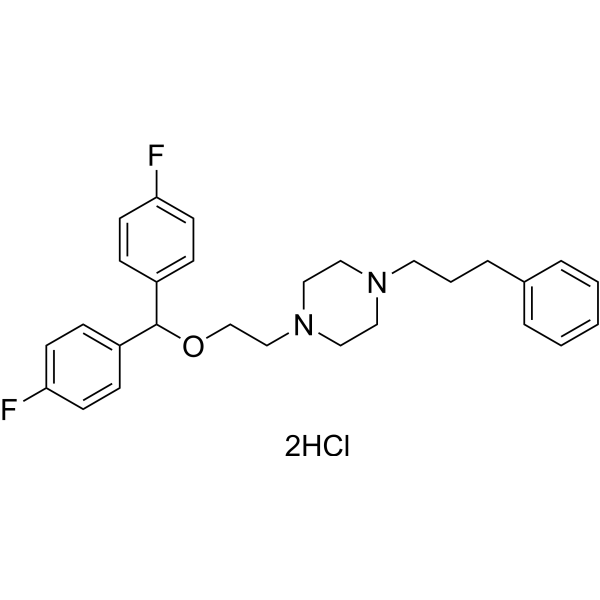
    Vanoxerine dihydrochloride
    5+ Cited Publications

    GBR-12909 dihydrochloride; I893 dihydrochloride

    Dopamine Transporter Neurological Disease
    Vanoxerine dihydrochloride (GBR-12909 dihydrochloride) is a competitive, potent, and highly selective dopamine reuptake inhibitor (Ki=1 nM). Vanoxerine dihydrochloride (GBR-12909 dihydrochloride) binds to the target site on the dopamine transporter (DAT) .
    Vanoxerine dihydrochloride
  • HY-14258
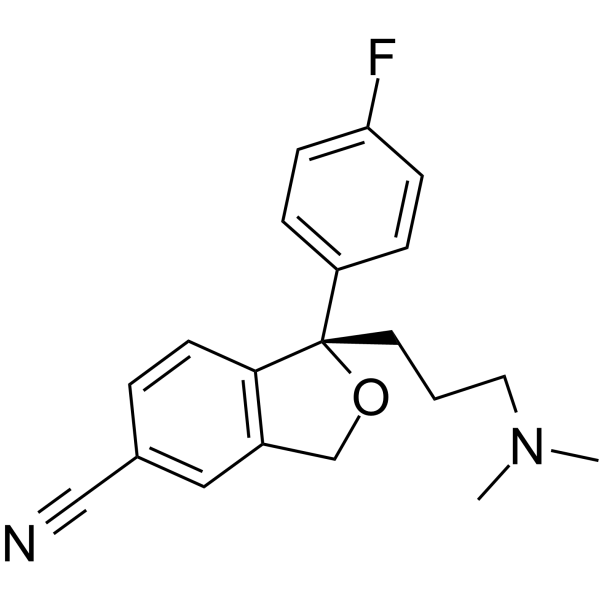
    Escitalopram
    10+ Cited Publications

    (S)-Citalopram; (S)-(+)-Citalopram

    Serotonin Transporter Neurological Disease
    Escitalopram ((S)-Citalopram), the S-enantiomer of racemic Citalopram, is a selective serotonin reuptake inhibitor (SSRI) with a Ki of 0.89 nM. Escitalopram has ∼30 fold higher binding affinity than its R(-)-enantiomer and shows selectivity over both dopamine transporter (DAT) and norepinephrine transporter (NET). Escitalopram is an antidepressant for the research of major depression .
    Escitalopram
  • HY-14258A
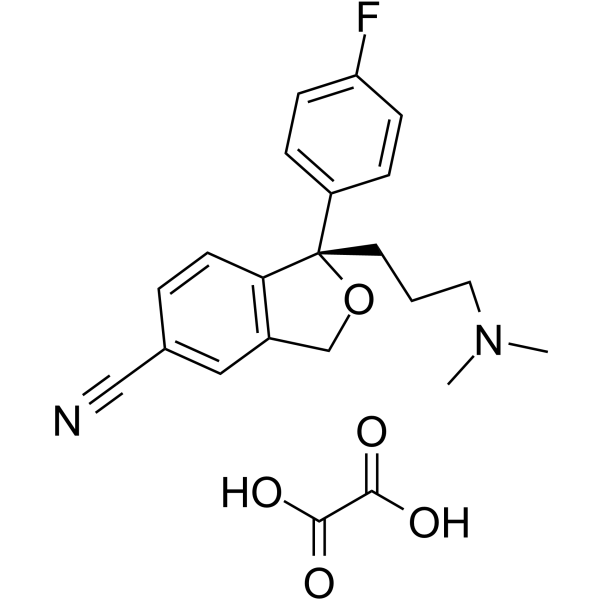
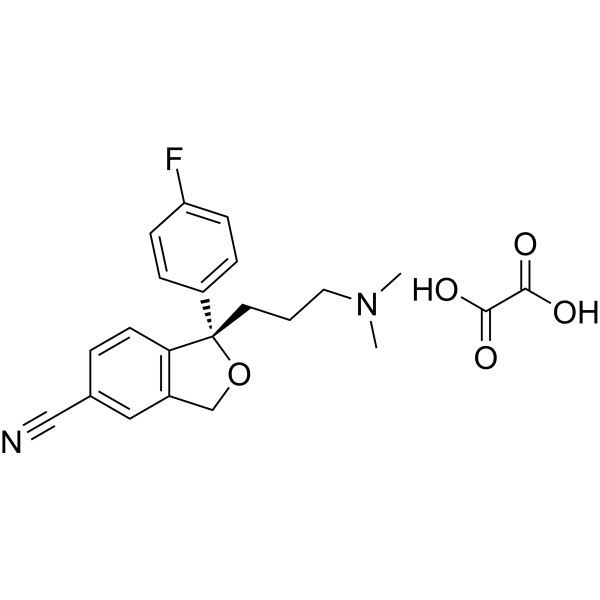
    Escitalopram oxalate
    Maximum Cited Publications
    11 Publications Verification

    (S)-Citalopram oxalate; (S)-(+)-Citalopram oxalate

    Serotonin Transporter Neurological Disease Cancer
    Escitalopram ((S)-Citalopram) oxalate, the S-enantiomer of racemic Citalopram, is a selective serotonin reuptake inhibitor (SSRI) with a Ki of 0.89 nM. Escitalopram oxalate has ∼30 fold higher binding affinity than its R(-)-enantiomer and shows selectivity over both dopamine transporter (DAT) and norepinephrine transporter (NET). Escitalopram oxalate is an antidepressant for the research of major depression .
    Escitalopram oxalate
  • HY-17385
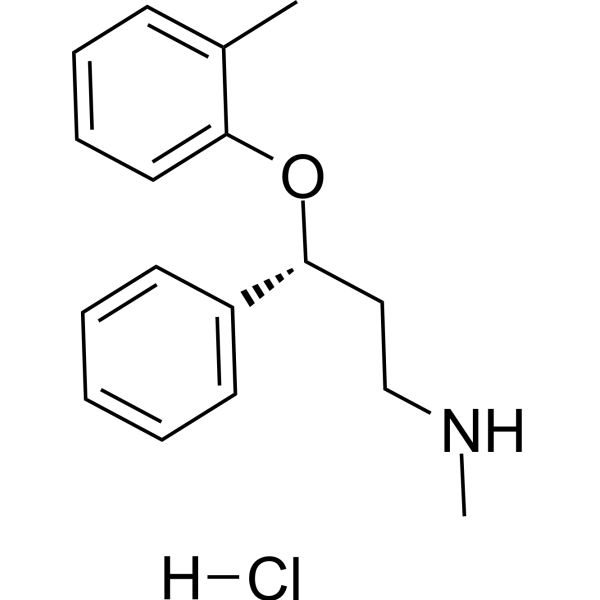
    Atomoxetine hydrochloride
    4 Publications Verification

    Tomoxetine hydrochloride; (R)-Tomoxetine hydrochloride; LY 139603

    Adrenergic Receptor Serotonin Transporter Sodium Channel Neurological Disease Cancer
    Atomoxetine (Tomoxetine) hydrochloride is a selective noradrenaline reuptake inhibitor with Ki values of 5 nM, 77 nM and 1451 nM for norepinephrine (NE), serotonin (5-HT) and dopamine (DA) transporters, respectively. Atomoxetine hydrochloride is a potent Na + channels (VGSCs) blocker. Atomoxetine hydrochloride can be used for attention-deficit hyperactivity disorder (ADHD) research .
    Atomoxetine hydrochloride
  • HY-B0927

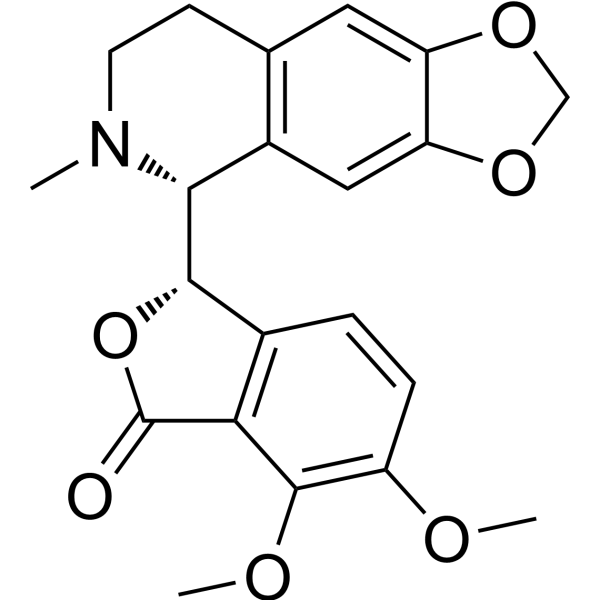
    (-)-β-Hydrastine; (1R,9S)-β-Hydrastine

    Tyrosine Hydroxylase Dopamine Receptor OAT Neurological Disease
    Hydrastine ((-)-β-Hydrastine; (1R,9S)-β-Hydrastine) is a selective competitive inhibitor of tyrosine hydroxylase (TH), inhibiting dopamine biosynthesis (IC50=20.7 μM, PC12 cells). Hydrastine also inhibits the organic cation transporter OCT1 (IC50=6.6 μM). Hydrastine may cause neuronal toxicity through mitochondrial dysfunction rather than oxidative stress damage, and can aggravate cell apoptosis when combined with L-DOPA. Hydrastine can be used to study Parkinson's disease-related dopaminergic neuronal damage .
    Hydrastine
  • HY-103430A
    SKF-83566
    2 Publications Verification

    Dopamine Receptor 5-HT Receptor Adenylate Cyclase Neurological Disease
    SKF-83566 is a potent, blood-brain permeable and orally active D1-like dopamine receptor (D1DR) antagonist and a weaker competitive antagonist at the vascular 5-HT2 receptor (Ki=11 nM) . SKF-83566 is a competitive DAT (dopamine transporter) inhibitor with an IC50 of 5.7 μM . SKF-83566 also shows selective inhibition for adenylyl cyclase 2 (AC2) over AC1 and AC5 in the isolated rabbit thoracic aorta . SKF-83566 can be used for research of parkinson’s disease and nicotine craving alleviation .
    SKF-83566
  • HY-13217A
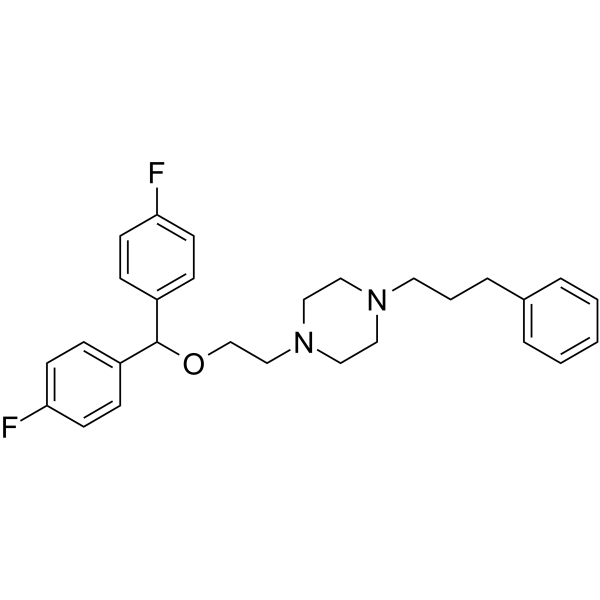
    Vanoxerine
    5+ Cited Publications

    GBR 12909; I893

    Dopamine Transporter Neurological Disease
    Vanoxerine (GBR-12909) is a competitive, potent, and highly selective dopamine reuptake inhibitor (Ki=1 nM). Vanoxerine (GBR-12909) binds to the target site on the dopamine transporter (DAT) .
    Vanoxerine
  • HY-14258AR

    (S)-Citalopram oxalate (Standard); (S)-(+)-Citalopram oxalate (Standard)

    Reference Standards Serotonin Transporter Neurological Disease Cancer
    Escitalopram (oxalate) (Standard) is the analytical standard of Escitalopram (oxalate). This product is intended for research and analytical applications. Escitalopram ((S)-Citalopram) oxalate, the S-enantiomer of racemic Citalopram, is a selective serotonin reuptake inhibitor (SSRI) with a Ki of 0.89 nM. Escitalopram oxalate has ∼30 fold higher binding affinity than its R(-)-enantiomer and shows selectivity over both dopamine transporter (DAT) and norepinephrine transporter (NET). Escitalopram oxalate is an antidepressant for the research of major depression .
    Escitalopram oxalate (Standard)
  • HY-N7506

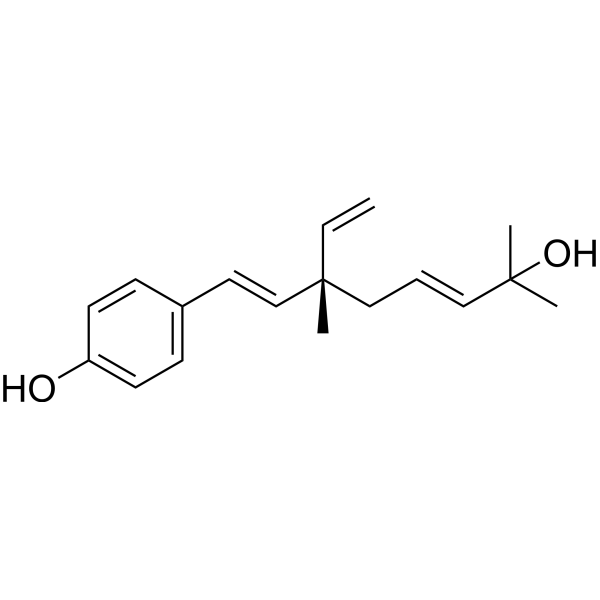
    Delta3,2-Hydroxylbakuchiol

    Monoamine Transporter Dopamine Transporter Neurological Disease
    13-Hydroxyisobakuchiol (Delta3,2-Hydroxylbakuchiol), an analog of Bakuchiol (HY-N0235) that can be isolated from Psoralea corylifolia (L.), is a potent selective monoamine transporter inhibitor. 13-Hydroxyisobakuchiol is more selective for the dopamine transporter (DAT) (IC50 = 0.58 μM) and norepinephrine transporter (NET) (IC50 = 0.69 μM) than for the serotonin transporter (SERT) (IC50 = 312.02 μM). 13-Hydroxyisobakuchiol increases the activity of intact mice and improves the decreased activity of reserpinized mice in vivo. 13-Hydroxyisobakuchiol can be used for the research of disorders such as Parkinson's disease and depression .
    13-Hydroxyisobakuchiol
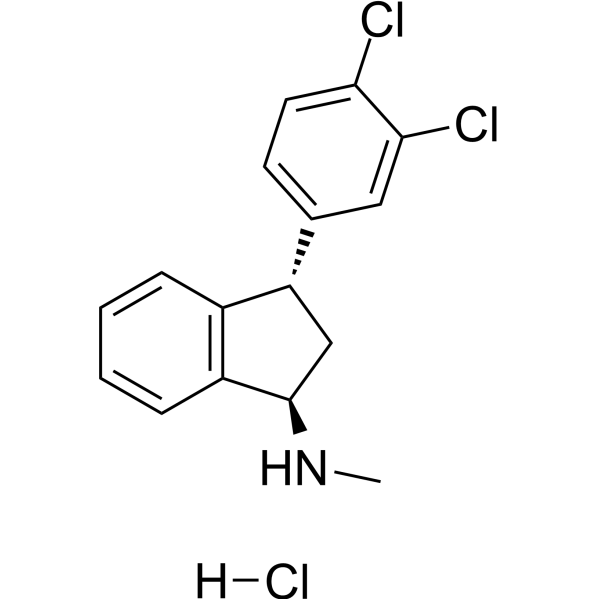
  • HY-110019

    Lu 19-005

    Serotonin Transporter Dopamine Transporter Neurological Disease
    Indatraline hydrochloride (Lu 19-005) is a non-selective monoamine transporter inhibitor that blocks the reuptake of neurotransmitters (dopamine, serotonin, and norepinephrine). Indatraline hydrochloride can be used for the research of antidepressive. Indatraline hydrochloride induces autophagy while simultaneously inhibiting cell proliferation. Indatraline hydrochloride may also serve to direct the development of new agents for autophagy-related diseases such as atherosclerosis or restenosis .
    Indatraline hydrochloride
  • HY-107370
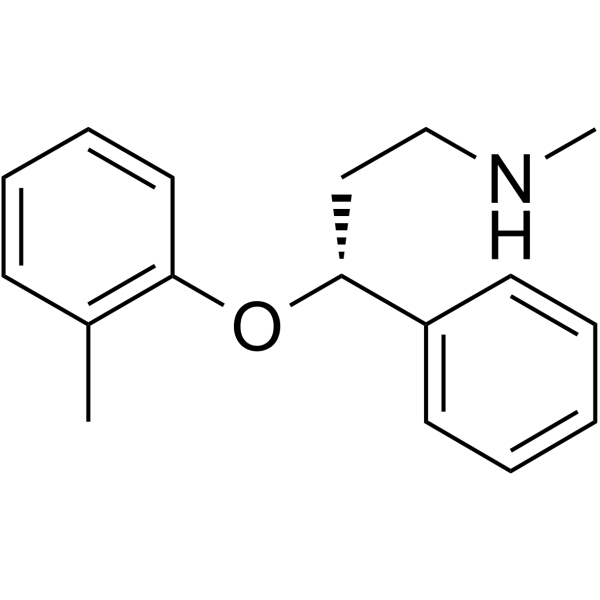
    Atomoxetine
    4 Publications Verification

    Tomoxetine; (R)-Tomoxetine

    Serotonin Transporter Sodium Channel Neurological Disease Cancer
    Atomoxetine (Tomoxetine) is a selective noradrenaline reuptake inhibitor with Ki values of 5, 77 and 1451 nM for norepinephrine (NE), serotonin (5-HT) and dopamine (DA) transporters, respectively. Atomoxetine (Tomoxetine) increases of DAEX and NEEX in the PFC and enhances catecholaminergic neurotransmission. Atomoxetine (Tomoxetine) is a potent Na + channels (VGSCs) blocker. Atomoxetine (Tomoxetine) can be used for attention-deficit hyperactivity disorder (ADHD) research .
    Atomoxetine
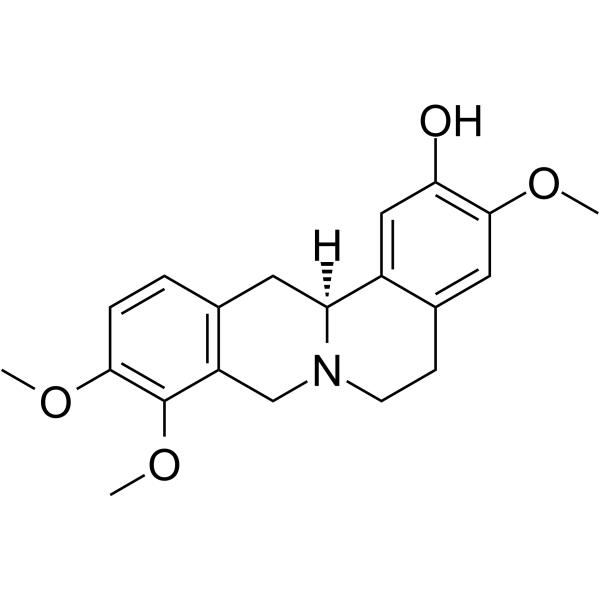
  • HY-N0927

    Tetrahydrocolumbamine; (S)-Tetrahydrocolumbamine

    Dopamine Receptor Others Neurological Disease
    (-)-Isocorypalmine (Tetrahydrocolumbamine; (S)-Tetrahydrocolumbamine) is a dopamine receptor ligand and modulator capable of crossing the blood-brain barrier. (-)-Isocorypalmine exhibits receptor selectivity, acting as a partial agonist of dopamine D1 and D5 receptors (coupled via Gs proteins), as well as an antagonist of D2, D3 and D4 receptors (by blocking Gi protein-mediated signaling). (-)-Isocorypalmine shows no significant binding to various non-dopamine receptors, ion channels and transporters. (-)-Isocorypalmine is metabolically stable in vivo, effectively inhibits spontaneous and cocaine-induced hyperlocomotion, sensitization and conditioned place preference in mice, and does not induce addictive place preference when administered alone. (-)-Isocorypalmine can be used in addiction research .
    (-)-Isocorypalmine
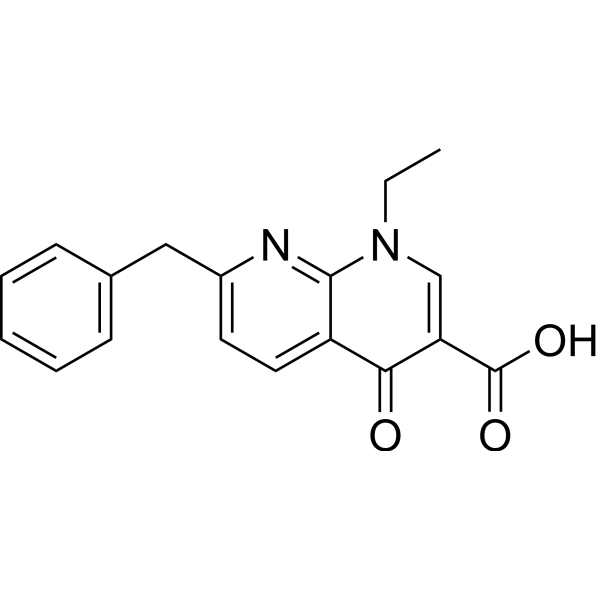
  • HY-116211

    WIN-25978

    Biochemical Assay Reagents Neurological Disease
    Amfonelic acid (WIN-25978) is a highly selective dopamine reuptake inhibitor. Amfonelic acid interferes with the in vitro neuronal uptake of norepinephrine in the iris of rats, but does not alter the concentrations of norepinephrine or dopamine in the whole mouse brain. Amfonelic acid can be used as a pharmacological tool to study the brain reward system, dopamine pathway and dopamine transporter .
    Amfonelic acid
  • HY-163384

    Dopamine Transporter Neurological Disease
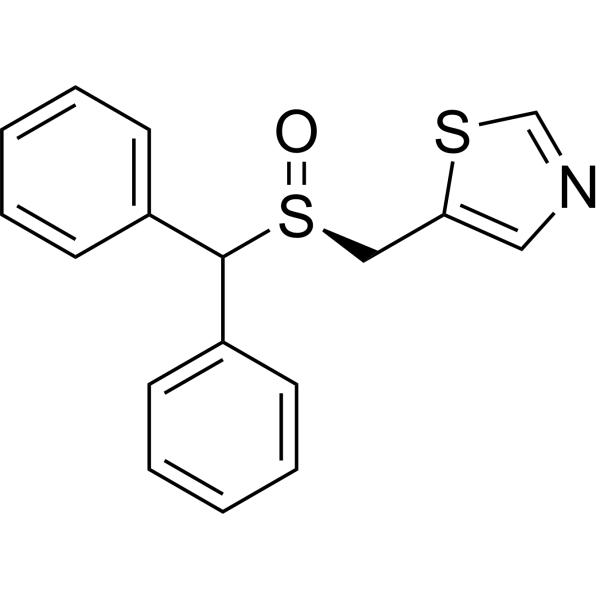
    (S)-CE-123 is a potent, selective, and novel atypical dopamine transporter (DAT) inhibitor with an EC50 of 2.76 μM in uptake inhibition assays conducted in HEK293 cells stably expressing human isoforms of DAT. (S)-CE-123, a Modafinil analogue, is able to penetrate the blood–brain barrier. (S)-CE-123 improves cognitive and motivational processes in experimental animals .
    (S)-CE-123
  • HY-14258AS

    Serotonin Transporter Neurological Disease
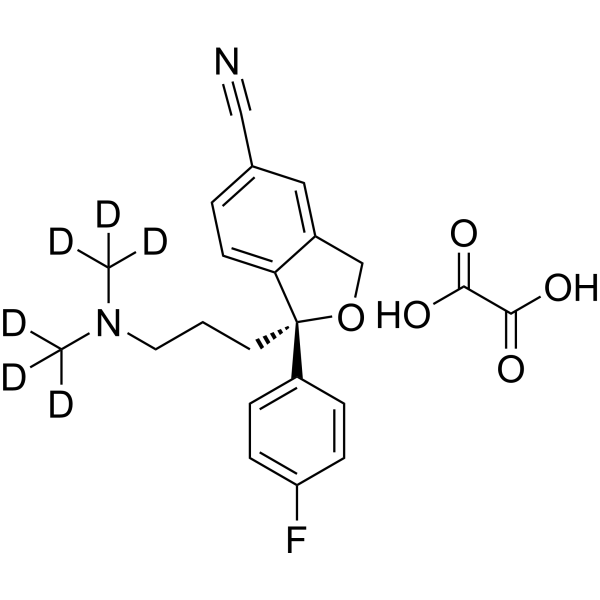
    Escitalopram-d6 (oxalate) is the deuterium labeled Escitalopram oxalate. Escitalopram ((S)-Citalopram) oxalate, the S-enantiomer of racemic Citalopram, is a selective serotonin reuptake inhibitor (SSRI) with a Ki of 0.89 nM. Escitalopram oxalate has ~30 fold higher binding affinity than its R(-)-enantiomer and shows selectivity over both dopamine transporter (DAT) and norepinephrine transporter (NET). Escitalopram oxalate is an antidepressant for the research of major depression .
    Escitalopram-d6 oxalate
  • HY-117883

    Monoamine Transporter Neurological Disease
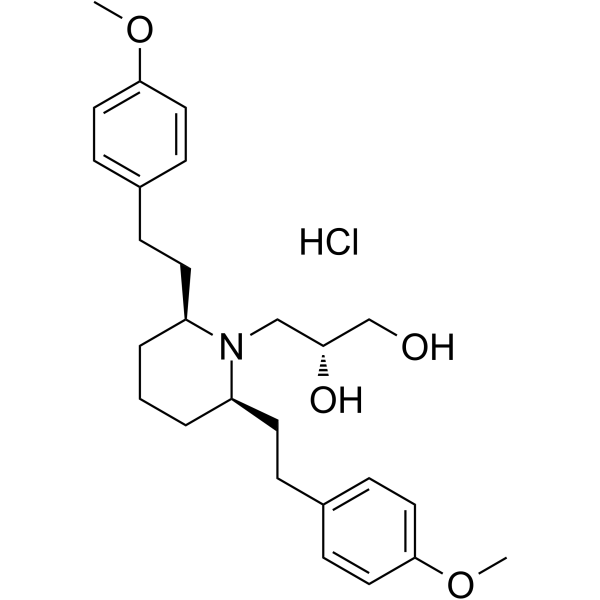
    GZ-793A is an orally active and selective vesicular monoamine transporter-2 (VMAT2) inhibitor, with an Ki of 0.029 µM. GZ-793A inhibits the neurochemical effects of methamphetamine (METH)-induced dopamine release. GZ-793A can be used for research of METH addiction .
    GZ-793A
  • HY-14258AS1

    (S)-Citalopram-d4 oxalate; (S)-(+)-Citalopram-d4 oxalate

    Isotope-Labeled Compounds Serotonin Transporter Neurological Disease
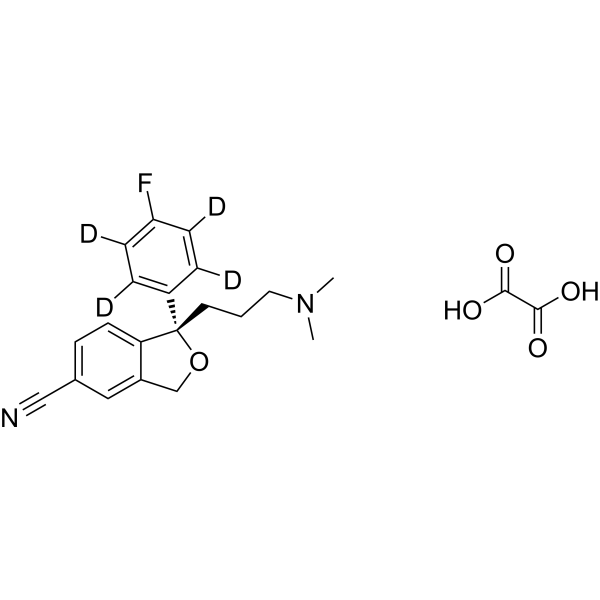
    Escitalopram-d4 (oxalate) is deuterium labeled Escitalopram (oxalate). Escitalopram ((S)-Citalopram) oxalate, the S-enantiomer of racemic Citalopram, is a selective serotonin reuptake inhibitor (SSRI) with a Ki of 0.89 nM. Escitalopram oxalate has ~30 fold higher binding affinity than its R(-)-enantiomer and shows selectivity over both dopamine transporter (DAT) and norepinephrine transporter (NET). Escitalopram oxalate is an antidepressant for the research of major depression .
    Escitalopram-d4 oxalate
  • HY-107055

    Dopamine Transporter Neurological Disease
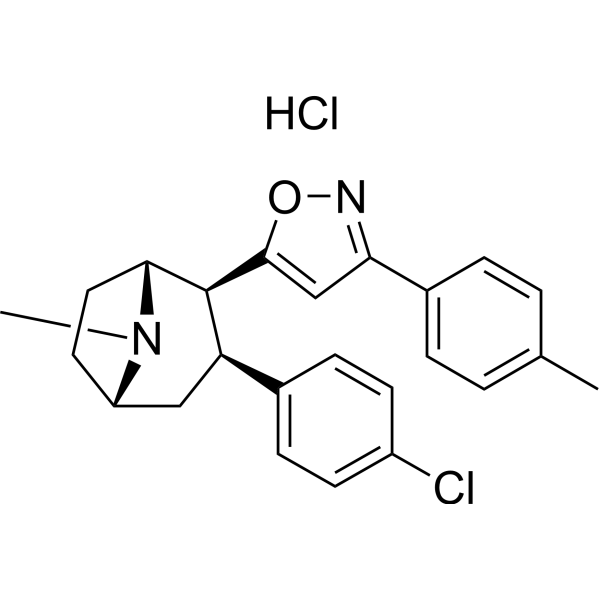
    RTI 336 is a phenyltropane analog, as well as a potent and selective dopamine transporter (DAT) inhibitor. RTI 336 inhibits addictive agent induced locomotor activity and self-administration in Lewis rats. RTI 336 exhibits inhibitory effects depending on inherent NAc DAT levels .
    RTI 336
  • HY-107370A

    (Rac)-Tomoxetine hydrochloride; (Rac)-LY 139603

    Serotonin Transporter Sodium Channel Metabolic Disease Cancer
    (Rac)-Atomoxetine hydrochloride ((Rac)-Tomoxetine (hydrochloride); (Rac)-LY 139603) is the racemic mixture of Atomoxetine hydrochloride (HY-17385). Atomoxetine hydrochloride is a selective noradrenaline reuptake inhibitor with Ki values of 5, 77 and 1451 nM for norepinephrine (NE), serotonin (5-HT) and dopamine (DA) transporters, respectively. Atomoxetine hydrochloride increases of DAEX and NEEX in the PFC and enhances catecholaminergic neurotransmission. Atomoxetine hydrochloride is a potent Na + channels (VGSCs) blocker. Atomoxetine hydrochloride can be used for attention-deficit hyperactivity disorder (ADHD) research .
    (Rac)-Atomoxetine hydrochloride
  • HY-105297

    5-HT Receptor Neurological Disease
    BMS-505130 fumarate is a potent, selective and orally active serotonin transport inhibitor with a Ki for binding to the serotonin transporter of 0.18 nM (Ki for norepinephrine and dopamine transporters of 4.6 and 2.1 μM, respectively). BMS-505130 fumarate can be used for the research of neurological disease, such as depression .
    BMS-505130 fumarate
  • HY-161913

    Dopamine Transporter Neurological Disease
    AC-4-248 is an atypical non-competitive dopamine transporter (DAT) inhibitor and reduces the potency of cocaine to inhibit DAT. AC-4-248 is a non-selective inhibitor of SLC6 transporters with IC50 values for hDAT, hSERT, and hNET of 45.5 μM, 96.2 μM, and 250 μM, respectively .
    AC-4-248
  • HY-13217R

    GBR-12909 dihydrochloride (Standard); I893 dihydrochloride (Standard)

    Dopamine Transporter Reference Standards Neurological Disease
    Vanoxerine (dihydrochloride) (Standard) is the analytical standard of Vanoxerine (dihydrochloride). This product is intended for research and analytical applications. Vanoxerine dihydrochloride (GBR-12909 dihydrochloride) is a competitive, potent, and highly selective dopamine reuptake inhibitor (Ki=1 nM). Vanoxerine dihydrochloride (GBR-12909 dihydrochloride) binds to the target site on the dopamine transporter (DAT) .
    Vanoxerine dihydrochloride (Standard)
  • HY-10427

    NRI-022

    Histone Methyltransferase Neurological Disease
    WAY-260022 is a selective norepinephrine reuptake inhibitor with potent inhibitory activity on norepinephrine reuptake. WAY-260022 exhibits excellent selectivity in inhibiting serotonin and dopamine transporters. WAY-260022 also showed oral efficacy in a rat model of thermoregulatory dysfunction .
    WAY-260022
  • HY-14258R

    (S)-Citalopram (Standard); (S)-(+)-Citalopram (Standard)

    Serotonin Transporter Reference Standards Neurological Disease Cancer
    Escitalopram (Standard) is the analytical standard of Escitalopram. This product is intended for research and analytical applications. Escitalopram ((S)-Citalopram), the S-enantiomer of racemic Citalopram, is a selective serotonin reuptake inhibitor (SSRI) with a Ki of 0.89 nM. Escitalopram has ~30 fold higher binding affinity than its R(-)-enantiomer and shows selectivity over both dopamine transporter (DAT) and norepinephrine transporter (NET). Escitalopram is an antidepressant for the research of major depression .
    Escitalopram (Standard)
  • HY-152171

    Monoamine Transporter Neurological Disease
    GZ-11608 is a potent and selective vesicular monoamine transporter-2 (VMAT2) inhibitor with high affinity (Ki = 25 nM). GZ-11608 decreases methamphetamine-induced dopamine release from isolated synaptic vesicles from brain dopaminergic neurons. GZ-11608 exhibits rapid brain penetration and without neurotoxicity. GZ-11608 can be used for the research of methamphetamine use disorder .
    GZ-11608
  • HY-116062A

    Histone Methyltransferase Neurological Disease
    JNJ-7925476 is a triple reuptake inhibitor that selectively and potently inhibits the activity of the serotonin transporter (SERT), norepinephrine transporter (NET), and dopamine transporter (DAT). JNJ-7925476 is rapidly absorbed into the blood and its concentration in the brain is 7-fold higher than that in plasma. The occupancy ED(50) values of JNJ-7925476 for SERT, NET, and DAT in the rat brain are 0.18, 0.09, and 2.4 mg/kg, respectively. JNJ-7925476 rapidly induces a significant increase in the levels of extracellular serotonin, dopamine, and norepinephrine in the rat cerebral cortex in a dose-dependent manner. JNJ-7925476 exhibits potent antidepressant-like activity in the mouse tail suspension test. These results suggest that JNJ-7925476 has in vivo efficacy in biochemical and behavioral models of depression .
    JNJ-7925476
  • HY-10427A

    iso-NRI-022

    Serotonin Transporter Dopamine Transporter Cardiovascular Disease
    iso-WAY-260022 (Compound 13R) is an orally active, brain-penetrant and selective norepinephrine transporter (hNET) inhibitor with an IC50 value of 140 nM. iso-WAY-260022 also shows inhibitory effects on human serotonin (hSERT) and dopamine transporters (hDAT). iso-WAY-260022 inhibits norepinephrine reuptake and increases hypothalamic norepinephrine levels to regulate thermoregulatory center function. iso-WAY-260022 is promising for research of vasomotor symptoms, such as menopausal hot flushes, night sweats .
    iso-WAY-260022
  • HY-17385R

    Tomoxetine hydrochloride (Standard); (R)-Tomoxetine hydrochloride (Standard); LY 139603 (Standard)

    Reference Standards Adrenergic Receptor Serotonin Transporter Sodium Channel Neurological Disease Cancer
    Atomoxetine (hydrochloride) (Standard) is the analytical standard of Atomoxetine (hydrochloride). This product is intended for research and analytical applications. Atomoxetine (Tomoxetine) hydrochloride is a selective noradrenaline reuptake inhibitor with Ki values of 5 nM, 77 nM and 1451 nM for norepinephrine (NE), serotonin (5-HT) and dopamine (DA) transporters, respectively. Atomoxetine hydrochloride is a potent Na+ channels (VGSCs) blocker. Atomoxetine hydrochloride can be used for attention-deficit hyperactivity disorder (ADHD) research .
    Atomoxetine hydrochloride (Standard)
  • HY-107370S

    Tomoxetine-d7; (R)-Tomoxetine-d7

    Isotope-Labeled Compounds Serotonin Transporter Sodium Channel Neurological Disease Cancer
    Atomoxetine-d7 (Tomoxetine-d7) is deuterium labeled Atomoxetine. Atomoxetine (Tomoxetine) is a selective noradrenaline reuptake inhibitor with Ki values of 5, 77 and 1451 nM for norepinephrine (NE), serotonin (5-HT) and dopamine (DA) transporters, respectively. Atomoxetine (Tomoxetine) increases of DAEX and NEEX in the PFC and enhances catecholaminergic neurotransmission. Atomoxetine (Tomoxetine) is a potent Na + channels (VGSCs) blocker. Atomoxetine (Tomoxetine) can be used for attention-deficit hyperactivity disorder (ADHD) research .
    Atomoxetine-d7
  • HY-107370S1

    Tomoxetine-d5; (R)-Tomoxetine-d5

    Isotope-Labeled Compounds Neurological Disease Cancer
    Atomoxetine-d5 (Tomoxetine-d5) is deuterium labeled Atomoxetine. Atomoxetine (Tomoxetine) is a selective noradrenaline reuptake inhibitor with Ki values of 5, 77 and 1451 nM for norepinephrine (NE), serotonin (5-HT) and dopamine (DA) transporters, respectively. Atomoxetine (Tomoxetine) increases of DAEX and NEEX in the PFC and enhances catecholaminergic neurotransmission. Atomoxetine (Tomoxetine) is a potent Na + channels (VGSCs) blocker. Atomoxetine (Tomoxetine) can be used for attention-deficit hyperactivity disorder (ADHD) research .
    Atomoxetine-d5
  • HY-103430

    Dopamine Receptor 5-HT Receptor Adenylate Cyclase Neurological Disease
    SKF-83566 hydrobromide is a potent, blood-brain permeable and orally active D1-like dopamine receptor (D1DR) antagonist and a weaker competitive antagonist at the vascular 5-HT2 receptor (Ki=11 nM) . SKF-83566 is a competitive DAT (dopamine transporter) inhibitor with an IC50 of 5.7 μM . SKF-83566 also shows selective inhibition for adenylyl cyclase 2 (AC2) over AC1 and AC5 in the isolated rabbit thoracic aorta . SKF-83566 can be used for the research of parkinson’s disease and nicotine craving alleviation .
    SKF-83566 hydrobromide
  • HY-141554A

    (2S,3S,11bR)-DHTBZ

    Monoamine Transporter Neurological Disease
    (2S,3S,11bR)-Dihydrotetrabenazine ((2S,3S,11bR)-DHTBZ) is a highly selective inhibitor of vesicular monoamine transporter 2 (VMAT2) with a Ki value of 593 nM. (2S,3S,11bR)-Dihydrotetrabenazine inhibits vesicular transport of monoamine neurotransmitters like dopamine and serotonin, reducing their synaptic release. (2S,3S,11bR)-Dihydrotetrabenazine is promising for research of Huntington's chorea and other hyperkinetic disorders .
    (2S,3S,11bR)-Dihydrotetrabenazine
  • HY-B0927R

    (-)-β-Hydrastine (Standard); (1R,9S)-β-Hydrastine (Standard)

    Reference Standards Tyrosine Hydroxylase Dopamine Receptor OAT Others
    Hydrastine (Standard) is the analytical standard of Hydrastine (HY-B0927). This product is intended for research and analytical applications. Hydrastine ((-)-β-Hydrastine; (1R,9S)-β-Hydrastine) is a selective competitive inhibitor of tyrosine hydroxylase (TH), inhibiting dopamine biosynthesis (IC50=20.7 μM, PC12 cells). Hydrastine also inhibits the organic cation transporter OCT1 (IC50=6.6 μM). Hydrastine may cause neuronal toxicity through mitochondrial dysfunction rather than oxidative stress damage, and can aggravate cell apoptosis when combined with L-DOPA. Hydrastine can be used to study Parkinson's disease-related dopaminergic neuronal damage .
    Hydrastine (Standard)
  • HY-129215

    Dopamine Transporter Serotonin Transporter Cannabinoid Receptor Sigma Receptor Neurological Disease
    RTI-371 is a highly selective atypical dopamine transporter (DAT) inhibitor that crosses the blood-brain barrier. RTI-371 exhibits potent inhibitory activity in cell lines transfected with human DAT (IC50 = 8.7 nM) and shows high binding affinity for rat DAT with a Ki value of 7.81 nM. RTI-371 also acts as a positive allosteric modulator of the human cannabinoid 1 receptor (hCB1 receptor), enhancing the activity of cannabinoid receptor agonists in a concentration-dependent manner. RTI-371 can be used for the research of stimulant abuse and Parkinson's disease .
    RTI-371
  • HY-124186

    Dopamine Receptor 5-HT Receptor Neurological Disease
    LR1143 is a dopamine transporter (DAT) and 5-HT uptake inhibitor, with IC50 values of 3.4 nM and 112 nM in rats, respectively. LR1143 binds to DAT labeled with the dopamine reuptake inhibitor GBR 12935 (HY-12242A), with an IC50 of 4.4 nM. LR1143 shows lower selectivity for DAT than for serotonin reuptake sites. LR1143 can be used in studies related to cocaine abuse .
    LR1143
  • HY-17385S1

    Tomoxetine-d7 hydrochloride; (R)-Tomoxetine-d7 hydrochloride

    Isotope-Labeled Compounds Serotonin Transporter Adrenergic Receptor Sodium Channel Neurological Disease Cancer
    Atomoxetine-d7 hydrochloride (Tomoxetine-d7 hydrochloride) is the deuterium labeled Atomoxetine hydrochloride (HY-17385). Atomoxetine (Tomoxetine) hydrochloride is a selective noradrenaline reuptake inhibitor with Ki values of 5 nM, 77 nM and 1451 nM for norepinephrine (NE), serotonin (5-HT) and dopamine (DA) transporters, respectively. Atomoxetine hydrochloride is a potent Na+ channels (VGSCs) blocker. Atomoxetine hydrochloride can be used for attention-deficit hyperactivity disorder (ADHD) research .
    Atomoxetine-d7 hydrochloride
  • HY-103430AR

    Reference Standards Dopamine Receptor 5-HT Receptor Adenylate Cyclase Neurological Disease
    SKF-83566 (Standard) is the analytical standard of SKF-83566 (HY-103430A). This product is intended for research and analytical applications. SKF-83566 is a potent, blood-brain permeable and orally active D1-like dopamine receptor (D1DR) antagonist and a weaker competitive antagonist at the vascular 5-HT2 receptor (Ki=11 nM) . SKF-83566 is a competitive DAT (dopamine transporter) inhibitor with an IC50 of 5.7 μM . SKF-83566 also shows selective inhibition for adenylyl cyclase 2 (AC2) over AC1 and AC5 in the isolated rabbit thoracic aorta . SKF-83566 can be used for research of parkinson’s disease and nicotine craving alleviation .
    SKF-83566 (Standard)
  • HY-W1025152

    Aminotransferases (Transaminases) GABA Receptor Neurological Disease
    CPP-115 hydrochloride is an orally active, selective GABA-AT inhibitor with a Ki value of 9.7 μM. CPP-115 hydrochloride blocks GABA degradation and increases GABA levels in the brain. CPP-115 hydrochloride does not bind to GABA transporters, does not displace GABA from GABAA/GABAB receptors, and does not act as an agonist/antagonist of GABAC receptors. CPP-115 hydrochloride reduces cocaine-induced dopamine release, blocks cocaine-induced conditioned place preference, and suppresses seizure activity in a rat model of infantile spasms. CPP-115 hydrochloride can be used in research related to infantile spasms and epilepsy .
    CPP-115 hydrochloride

Inquiry Online

Your information is safe with us. * Required Fields.

Salutation


Country or Region *

Applicant Name *


Organization Name *

Department *


Email Address *


Product Name *

Cat. No.


Requested quantity *

Phone Number *


Remarks

Inquiry Online

Inquiry Information

Product Name:
Cat. No.:
Quantity:
MCE Japan Authorized Agent:

