1. Search Result
Search Result
Results for "

stress response genes

" in MedChemExpress (MCE) Product Catalog:

21

Inhibitors & Agonists

2

Screening Libraries

1

Fluorescent Dyes

1

Inhibitory Antibodies

4

Natural
Products

1

Isotope-Labeled Compounds

1

Click Chemistry

2

Oligonucleotides

Cat. No. Product Name Target Research Areas Chemical Structure
  • HY-113324
    NADPH
    15+ Cited Publications

    Endogenous Metabolite Cancer
    NADPH is a coenzyme of glutathione reductase (GR), thioredoxin reductase (TrxR) and NADPH oxidase (NOX), and participates in redox reactions as a hydrogen donor. NADPH has the characteristic of selectively participating in the regulation of cellular redox homeostasis. NADPH exerts antioxidant activity and resists reactive oxygen species (ROS) damage by providing reducing equivalents for the regeneration of glutathione (GSH) and thioredoxin (Trx); at the same time, it acts as a substrate of NOX to generate superoxide anions, mediating oxidative stress and immune response. NADPH participates in maintaining the intracellular reducing environment, biosynthesis and regulating gene expression (such as the Nrf2 pathway), and is mainly used in the study of oxidative stress-related diseases (such as cardiovascular diseases, neurodegenerative diseases, cancer) and immune regulation mechanisms .
    NADPH
  • HY-W012382

    Endogenous Metabolite Metabolic Disease Cancer
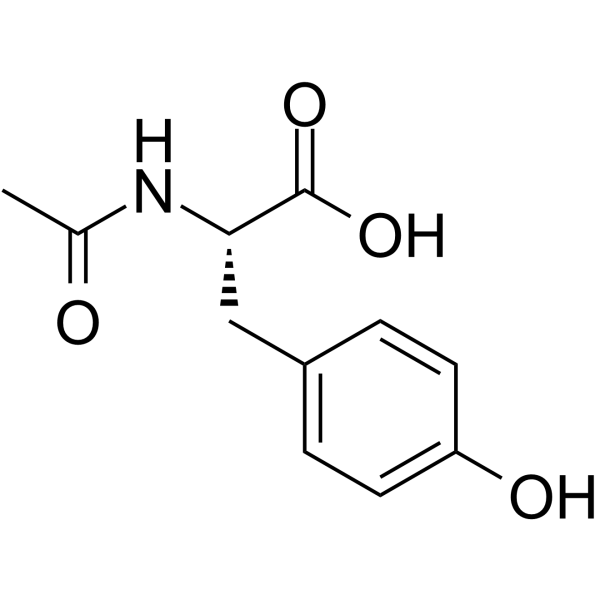
    N-Acetyl-L-tyrosine is an orally active endogenous mitochondrial stress response regulator that can permeate the cell membrane by passive diffusion. N-Acetyl-L-tyrosine induces low-level reactive oxygen species (ROS) generation by transiently perturbing mitochondrial membrane potential, triggering reverse signaling to activate FoxO and Keap1 pathways. As a result, N-Acetyl-L-tyrosine enhances the expression of antioxidant enzyme genes, exerting anti-stress and cytoprotective effects. N-Acetyl-L-tyrosine can improve heat stress tolerance, inhibit tumor growth, and regulate energy metabolism. N-Acetyl-L-tyrosine can be used in the research of aging, metabolic diseases (such as diabetes), and cancer .
    N-Acetyl-L-tyrosine
  • HY-13755A
    (R)-Sulforaphane
    2 Publications Verification

    L-Sulforaphane

    Keap1-Nrf2 Bcl-2 Family Caspase Reactive Oxygen Species (ROS) NF-κB Inflammation/Immunology Cancer
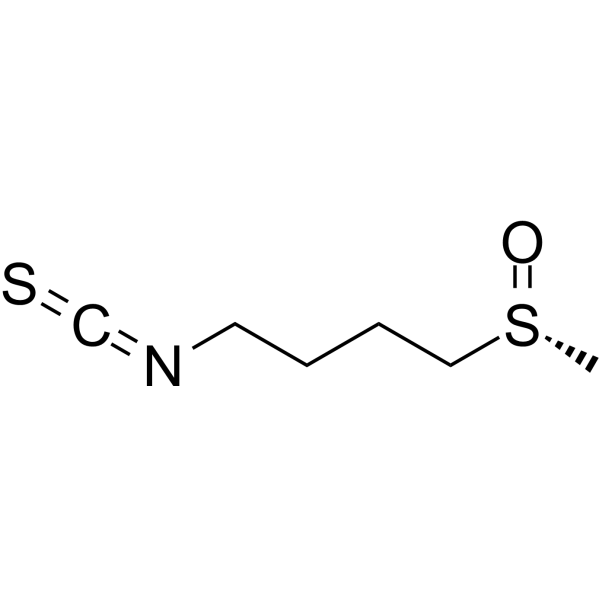
    (R)-Sulforaphane (L-Sulforaphane) is a orally active, potent inducer of the Keap1/Nrf2/ARE pathway, exhibiting antioxidant and anticancer activities. (R)-Sulforaphane primarily functions by upregulating phase II detoxifying enzymes in cells, aiding in the removal of carcinogens and combating oxidative stress. (R)-Sulforaphane is capable of modulating gene expression, influencing various signaling pathways, including Nrf2, NF-κB, and AP-1. (R)-Sulforaphane can be used in studies of tumor biology, antioxidant defense mechanisms, as well as inflammation and immune responses .
    (R)-Sulforaphane
  • HY-153205

    Biochemical Assay Reagents Inflammation/Immunology
    Aluminum hydroxide adjuvant is a vaccine aluminum adjuvant. The aluminum content is 9-11 mg/mL. Aluminum hydroxide adjuvant induces the differentiation of macrophages into a new type of mature, specialized antigen-presenting cells in vitro . It has a strong adsorption capacity for negatively charged antigens, a significant sustained-release effect, no stress response, high safety, and can effectively induce immune responses in the body. It is suitable for various veterinary vaccines, including inactivated vaccines or gene-engineered subunit vaccines for bacterial and viral diseases of livestock and poultry. It is suitable for various veterinary vaccines, including inactivated vaccines or gene-engineered subunit vaccines for bacterial and viral diseases of livestock and poultry.
    Aluminum hydroxide adjuvant
  • HY-B0877
    Halcinonide
    1 Publications Verification

    SQ-18566

    Smo Caspase RAR/RXR CDK Cardiovascular Disease Neurological Disease Inflammation/Immunology
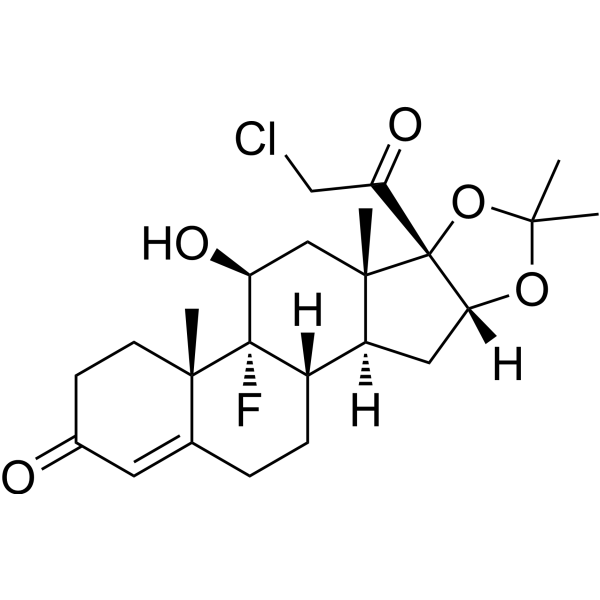
    Halcinonide (SQ-18566) is an orally active Smoothened (Smo) agonist. Halcinonide activates the Hedgehog signaling pathway by binding to Smo and promoting its internalization and expression, thereby activating Gli transcription factors. Halcinonide not only stimulates cell proliferation, increases the expression of cyclin D2/CDK6 and inhibits the degradation of caspase-3, but also suppresses Bcl-2/Bax-mediated apoptosis, oxidative stress and inflammatory responses. Halcinonide activates RxRγ to upregulate the expression of myelin genes, thereby reducing cerebral infarction and improving behavioral deficits. Halcinonide has been used in studies related to multiple sclerosis and ischemic stroke .
    Halcinonide
  • HY-110084
    BTZO-1
    2 Publications Verification

    Macrophage migration inhibitory factor (MIF) Apoptosis Cardiovascular Disease
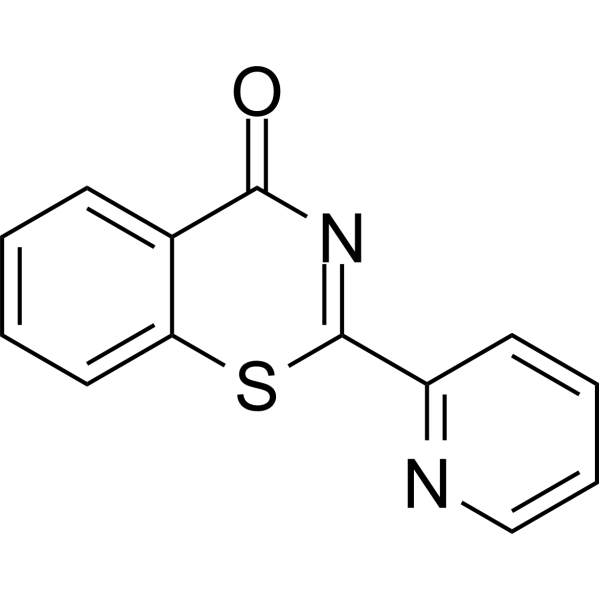
    BTZO-1, a chemical probe, binds to Macrophage migration inhibitory factor (MIF) with a Kd value of 68.6 nM, and its binding requires the N-terminal Pro1. BTZO-1 can activate antioxidant response element (ARE)-mediated gene expression and suppress oxidative stress-induced cardiomyocyte apoptosis in vitro .
    BTZO-1
  • HY-159747

    Toll-like Receptor (TLR) Inflammation/Immunology
    Aluminum hydroxide adjuvant (aluminum : 4~6 mg/mL) is a micron level water-based aluminum hydroxide adjuvant. The aluminum content is 4 - 6 mg/ml. It has a strong adsorption capacity for negatively charged antigens, a significant sustained-release effect, no stress response, high safety, and can effectively induce immune responses in the body. It is suitable for various veterinary vaccines, including inactivated vaccines or gene-engineered subunit vaccines for bacterial and viral diseases of livestock and poultry.
    Aluminum hydroxide adjuvant aluminum : 4~6 mg/mL
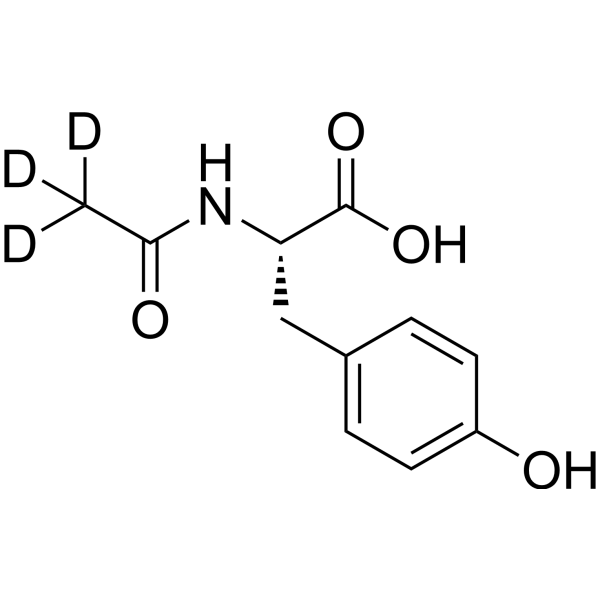
  • HY-W012382S

    Isotope-Labeled Compounds Endogenous Metabolite Metabolic Disease Cancer
    N-Acetyl-L-tyrosine-d3 is the deuterated form of N-Acetyl-L-tyrosine (HY-W012382). N-Acetyl-L-tyrosine is an orally active endogenous mitochondrial stress response regulator that can permeate the cell membrane by passive diffusion. N-Acetyl-L-tyrosine induces low-level reactive oxygen species (ROS) generation by transiently perturbing mitochondrial membrane potential, triggering reverse signaling to activate FoxO and Keap1 pathways. As a result, N-Acetyl-L-tyrosine enhances the expression of antioxidant enzyme genes, exerting anti-stress and cytoprotective effects. N-Acetyl-L-tyrosine can improve heat stress tolerance, inhibit tumor growth, and regulate energy metabolism. N-Acetyl-L-tyrosine can be used in the research of aging, metabolic diseases (such as diabetes), and cancer .
    N-Acetyl-L-tyrosine-d3
  • HY-141439

    Keap1-Nrf2 Quinone Reductase Glutathione S-transferase Apoptosis TNF Receptor Inflammation/Immunology Cancer
    TBE 31 is an orally active Keap1/Nrf2 pathway activator and NQO1 inducer with a Dm value of 1.1 nM for NQO1. TBE 31 binds to cysteine residues of Keap1, inhibits ubiquitination and degradation of Nrf2, thereby activating the expression of ARE-dependent genes. TBE 31 induces cytoprotective enzymes including NQO1 and GST isoforms, promotes Nrf2 accumulation, and upregulates Nrf2-regulated genes related to antioxidation and lipid metabolism. TBE 31 inhibits pro-inflammatory responses, formation of AFB1-DNA adducts, endoplasmic reticulum stress, cell apoptosis (apoptosis), hepatic fibrosis, oxidative stress, and the expression of ChREBP. TBE 31 reduces the number of tumors in a mouse model of ultraviolet-induced skin carcinogenesis. TBE 31 enhances nerve growth factor-induced neurite outgrowth. TBE 31 attenuates LPS-induced serum TNF-α levels and immobility time in mice. TBE 31 can be used in research related to liver cancer, skin cancer, inflammation-related depression, and non-alcoholic steatohepatitis .
    TBE 31
  • HY-144867

    HSP Cancer
    CCT245232 is a potent inhibitor of heat shock factor 1 (HSF1). HSF1 is the master regulator of the heat shock response, in which multiple genes are induced in response to temperature increase and other stresses. CCT245232 has the potential for the research of proliferative diseases, such as cancer (extracted from patent WO2015049535A1) .



    CCT245232
  • HY-124771

    Apoptosis Metabolic Disease
    RH01386 is a small molecule that can prevent endoplasmic reticulum stress (ERS)-induced β cell dysfunction and death, and inhibits proapoptotic gene expression. RH01386 restores ERS-impaired glucose-stimulated insulin secretion responses. RH01386 has the potential for type 2 diabetes treatment .
    RH01386
  • HY-W012382R

    Reference Standards Endogenous Metabolite Metabolic Disease Cancer
    N-Acetyl-L-tyrosine (Standard) is the analytical standard of N-Acetyl-L-tyrosine (HY-W012382). This product is intended for research and analytical applications. N-Acetyl-L-tyrosine is an orally active endogenous mitochondrial stress response regulator that can permeate the cell membrane by passive diffusion. N-Acetyl-L-tyrosine induces low-level reactive oxygen species (ROS) generation by transiently perturbing mitochondrial membrane potential, triggering reverse signaling to activate FoxO and Keap1 pathways. As a result, N-Acetyl-L-tyrosine enhances the expression of antioxidant enzyme genes, exerting anti-stress and cytoprotective effects. N-Acetyl-L-tyrosine can improve heat stress tolerance, inhibit tumor growth, and regulate energy metabolism. N-Acetyl-L-tyrosine can be used in the research of aging, metabolic diseases (such as diabetes), and cancer .
    N-Acetyl-L-tyrosine (Standard)
  • HY-175862

    Aldose Reductase Reactive Oxygen Species (ROS) PI3K Akt SOD p38 MAPK Keap1-Nrf2 Metabolic Disease
    ALR2-IN-9 is a potent ALR2 inhibitor (IC50 = 21.8 nM) with excellent antioxidant activity (EC50 for DPPH radical scavenging = 2.8 μM). ALR2-IN-9 interacts directly with Reactive Oxygen Species (ROS)/Reactive Nitrogen Species (RNS) and interrupts the free radical chain reactions, and as an endogenous enzymatic antioxidant regulator, which regulates enzyme functions of CAT and SOD. ALR2-IN-9 regulates PI3K/Akt/Nrf2 pathway to attenuate hyperglycemia-mediated mitochondrial superoxide overproduction in vitro, and ameliorates CuSO4- and H2O2-induced oxidative stress in vivo. ALR2-IN-9 prolongs lifespan of C. elegans via the regulation of stress response genes such as PMK-1. ALR2-IN-9 is a promising anti-aging drug candidate. ALR2-IN-9 can be used for diabetic complication research .
    ALR2-IN-9
  • HY-121033

    Sigma Receptor p38 MAPK Apoptosis Cancer
    BS148 is a selective sigma-2 receptor (S2R) agonist with a Ki 20 nM. BS148 shows >80-fold selective for S2R than S1R. BS148 activates the endoplasmic reticulum stress response through the upregulation of protein kinase R-like ER kinase (PERK), activating transcription factor 4 (ATF4) genes, and C/EBP homologous protein (CHOP). BS148 induces apoptosis in melanoma cell. BS148 downregulates genes related to the cholesterol pathway and activates the MAPK signaling pathway. BS148 can be used for the study of melanoma .
    BS148
  • HY-120825

    Apoptosis DNA/RNA Synthesis Reactive Oxygen Species (ROS) Keap1-Nrf2 Cancer
    QD 232 is a quinazolinedione-based ROS inducer and an apoptosis inducer with cytotoxicity and redox regulatory activity. QD 232 promotes ROS accumulation, activates the NRF2-mediated oxidative stress response and unfolded protein response pathways, and upregulates downstream antioxidant and stress response genes. QD 232 inhibits mtDNA transcription driven by HSP2 and LSP promoters, and impairs mitochondrial oxidative phosphorylation function. QD 232 induces apoptosis of pancreatic ductal adenocarcinoma cells and exerts cytotoxicity against gemcitabine (HY-17026)-resistant pancreatic ductal adenocarcinoma cells. QD 232 delays tumor growth in a mouse pancreatic cancer xenograft model .
    QD 232
  • HY-183326

    IDMF

    Keap1-Nrf2 Inflammation/Immunology
    Isosorbide di-(methyl fumarate) (IDMF), topical DMF (HY-17363) derivative, is an NRF2/ARE pathway activator. Isosorbide di-(methyl fumarate) downregulates ANCR targets, modulates epithelial differentiation, represses proinflammatory cytokine genes, IL-17A- and TNF-induced keratinocyte genes, psoriatic skin lesion-specific genes, and immune response genes. Isosorbide di-(methyl fumarate) stimulates oxidative stress response gene transcription, reduces erythema and scaling in Imiquimod (HY-B0180)-induced psoriasiform lesions. Isosorbide di-(methyl fumarate) exhibits no genotoxicity or radiation sensitivity in skin fibroblasts, is nonirritating and nonsensitizing in rodent models. Isosorbide di-(methyl fumarate) can be used for the research of psoriasis vulgaris .
    Isosorbide di-(methyl fumarate)
  • HY-182040

    NF-κB Heme Oxygenase (HO) Interleukin Related Reactive Oxygen Species (ROS) NO Synthase Inflammation/Immunology
    Nrf2 activator-24 is a Nrf2 activator with anti-inflammatory and antioxidant activities. Nrf2 activator-24 promotes the nuclear translocation of Nrf2, thereby inducing the expression of downstream antioxidant and cytoprotective genes. Nrf2 activator-24 inhibits cytokine-driven inflammatory responses in keratinocytes. Nrf2 activator-24 attenuates inflammation, nitrosation and oxidative stress responses in macrophages. Nrf2 activator-24 alleviates local inflammation and atopic dermatitis-like symptoms in DNCB-induced mouse models. Nrf2 activator-24 can be used in research related to atopic dermatitis .
    Nrf2 activator-24
  • HY-W714183

    Herbicide ERK p38 MAPK JNK PI3K Akt Apoptosis Microtubule/Tubulin Metabolic Disease
    Dinitramine is a herbicide. Dinitramine activates the Erk/P38/JNK/MAPK pathway and inactivates the PI3k/Akt pathway in testicular cells. Dinitramine induces endoplasmic reticulum stress, dysregulation of calcium homeostasis in the cytoplasm and mitochondria, apoptosis, and downregulated expression of cell cycle genes in testicular cells. Dinitramine reduces the viability and proliferation capacity of testicular cells, and inhibits cell division by suppressing the synthesis of tubulin. Dinitramine induces abnormal heart development, inhibited angiogenesis, inflammatory responses, apoptosis, and impaired embryonic growth in zebrafish embryos .
    Dinitramine
  • HY-P9S0124

    ORM-6151 Antibody; BMS-986497 Antibody

    Cancer
    Anti-CD33 Antibody (OR000283) (ORM-6151 Antibody; BMS-986497 Antibody) is an antibody targeting CD33. It is generated by grafting the FAb (H&L) sequence of Gemtuzumab (HY-P99971) onto an IgG1 Fc carrying the N297A mutation, which inhibits Fc-γR binding. Anti-CD33 Antibody (OR000283) can be used to construct degrader-antibody conjugates (DACs), such as ORM-6151 (HY-171792) .
    Anti-CD33 Antibody (OR000283)
  • HY-D1236

    Parasite Deubiquitinase PARP Cancer
    Fluorescent brightener 71 (FB71) is an inhibitor targeting deubiquitinases UCHL5 and USP14, as well as a CD40 ligand. Fluorescent brightener 71 blocks enzymatic activity, induces apoptosis, inhibits cell growth and triggers reactive oxygen species production. Meanwhile, Fluorescent brightener 71 upregulates the expression of oxidative stress-related genes gpx-4 and sod-4, and reversibly increases the protein levels of UCHL5 and USP14 through a feedback response. Fluorescent brightener 71 inhibits the growth, movement and reproductive capacity of Caenorhabditis elegans, and also exhibits concentration-dependent toxic effects. Fluorescent brightener 71 can be applied to scientific research in related fields such as breast cancer .
    Fluorescent brightener 71
  • HY-119578

    Cytochrome P450 Cancer
    Imiprothrin is an inducer that induces CYP1A2 and metallothionein 1a, with significant genotoxicity and cytotoxicity. In rat hepatocytes, Imiprothrin initiates detoxification responses by triggering the overexpression of these two genes. Imiprothrin induces chromosomal aberrations and micronucleus formation in rat bone marrow cells, and causes DNA damage in hepatocytes. Imiprothrin triggers oxidative stress in rats, leading to lipid peroxidation, excessive reactive oxygen species production and redox imbalance, which in turn impairs liver and kidney functions and causes tissue damage. Imiprothrin inhibits weight gain in mice, and even causes high mortality in female mice at high doses. However, it shows no carcinogenicity in rat experiments; among relevant indicators, aspartate aminotransferase and total protein are identified as sensitive toxicity biomarkers .
    Imiprothrin

Inquiry Online

Your information is safe with us. * Required Fields.

Salutation


Country or Region *

Applicant Name *


Organization Name *

Department *


Email Address *


Product Name *

Cat. No.


Requested quantity *

Phone Number *


Remarks

Inquiry Online

Inquiry Information

Product Name:
Cat. No.:
Quantity:
MCE Japan Authorized Agent: