



Halcinonide
Based on 1 publication(s) in Google Scholar
Halcinonide (SQ-18566) is an orally active Smoothened (Smo) agonist. Halcinonide activates the Hedgehog signaling pathway by binding to Smo and promoting its internalization and expression, thereby activating Gli transcription factors. Halcinonide not only stimulates cell proliferation, increases the expression of cyclin D2/CDK6 and inhibits the degradation of caspase-3, but also suppresses Bcl-2/Bax-mediated apoptosis, oxidative stress and inflammatory responses. Halcinonide activates RxRγ to upregulate the expression of myelin genes, thereby reducing cerebral infarction and improving behavioral deficits. Halcinonide has been used in studies related to multiple sclerosis and ischemic stroke.
For research use only. We do not sell to patients.
- Purity : 98.29%
- CAS No.: 3093-35-4
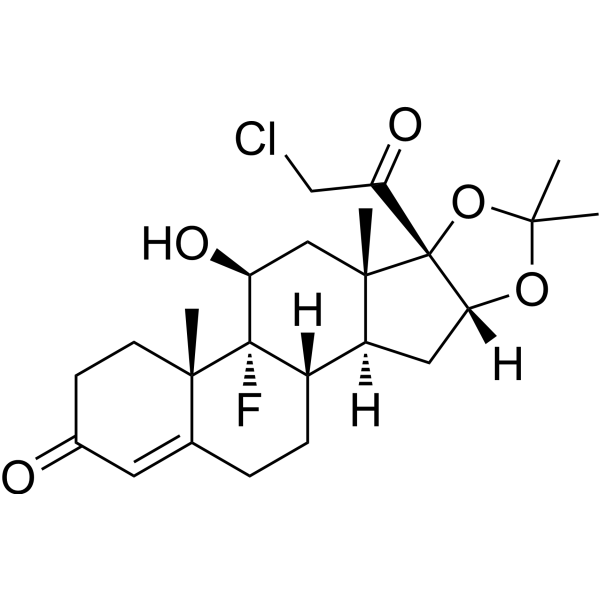
- Formula: C24H32ClFO5
- Molecular Weight:454.96
-
Storage:Powder -20°C, 3 years , 4°C, 2 years ; In solvent -80°C, 2 years , -20°C, 1 year

To place orders, for customer services and technical support, please contact: MedChemExpress USA
Tel: 609-228-6898 E-mail: [email protected] [email protected]


-
 Biological Activity
-
Chemical Information
-
Solvent & Solubility
- Protocols
- Purity & Documentation
- References
-
 Help & FAQs


-
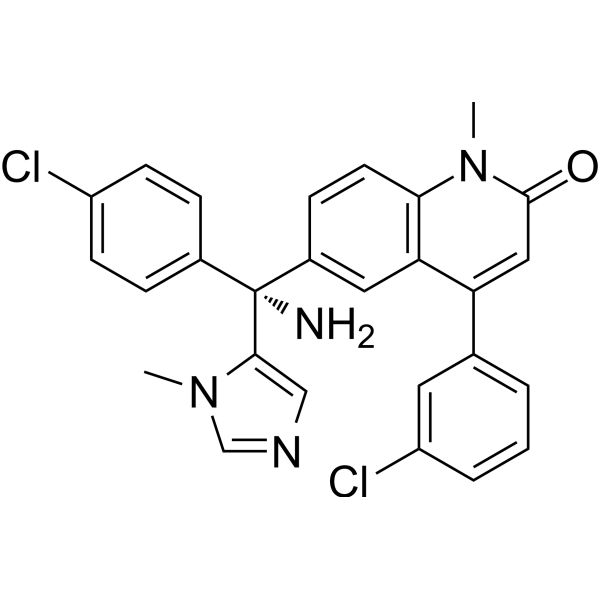
HY-10502
TipifarnibFTase Inhibitor -
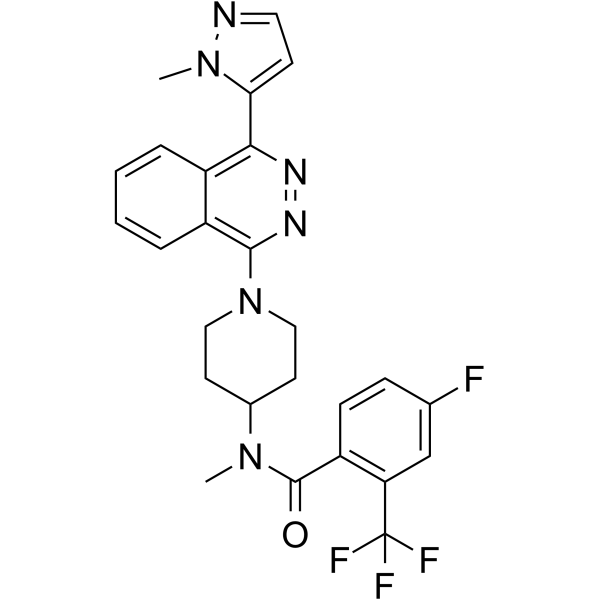
HY-13242
TaladegibSMO Antagonist -
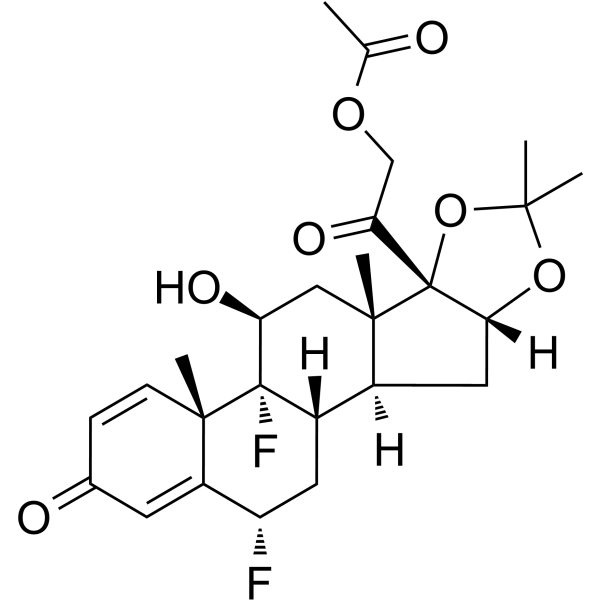
HY-B0485
FluocinonideGlucocorticoid Receptor Agonist -
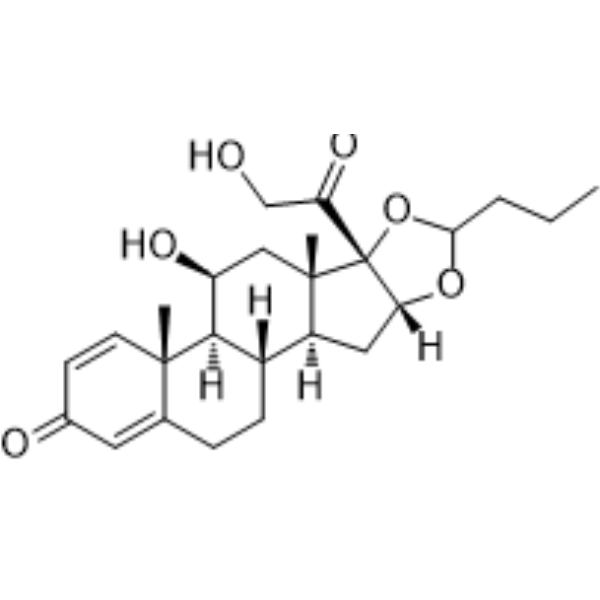
HY-13580
BudesonideGlucocorticoid Receptor Agonist -
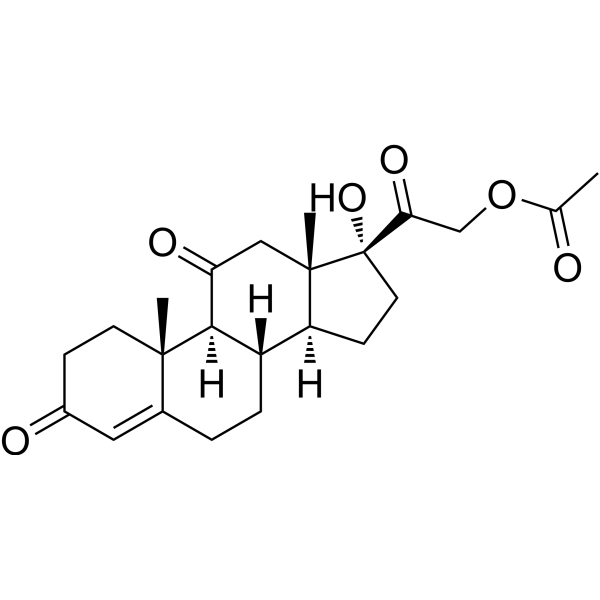
HY-17461A
Cortisone acetateGlucocorticoid Receptor Agonist -
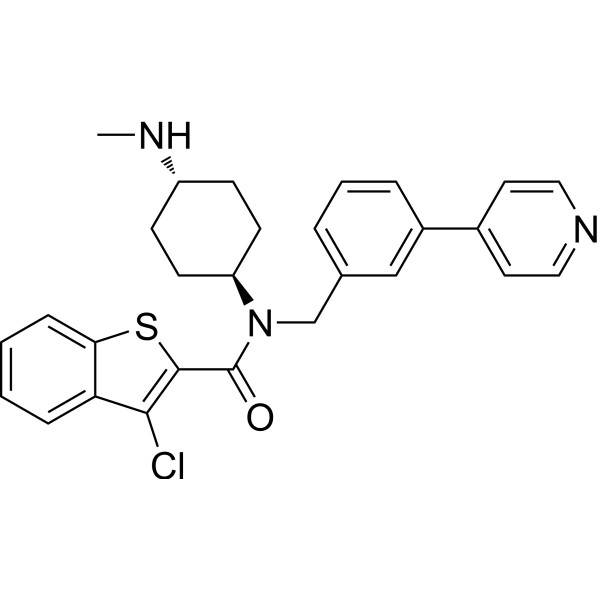
HY-12848
SAGSmoothened Agonist -
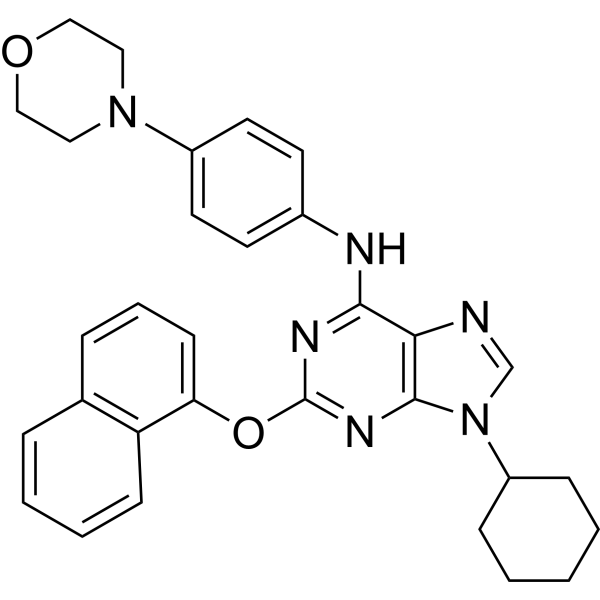
HY-15108
PurmorphamineSmoothened Receptor Agonist -

HY-B0877R
Halcinonide (Standard)Smo Agonist -
HY-17463
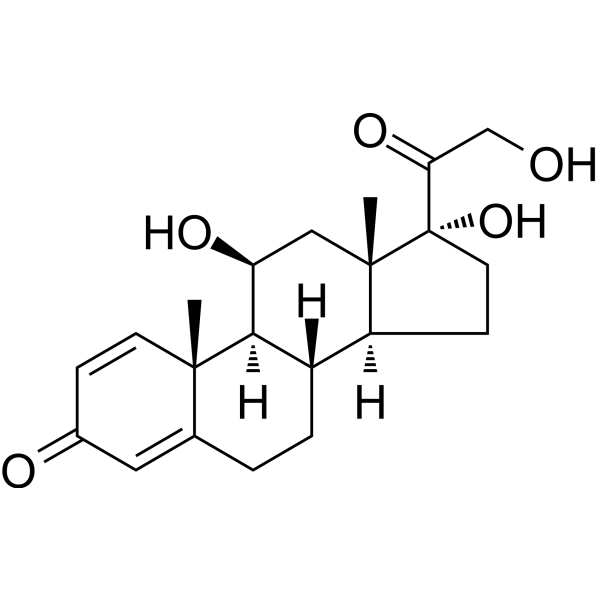
PrednisoloneGlucocorticoid -
HY-16582A
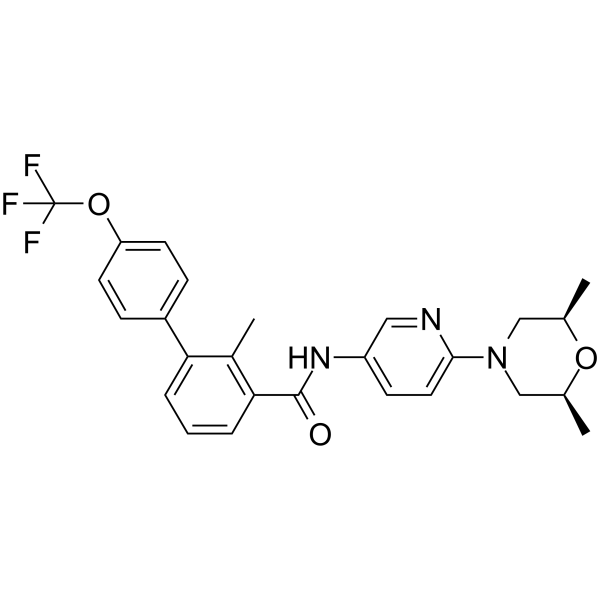
SonidegibSmo Antagonist -
HY-B0251
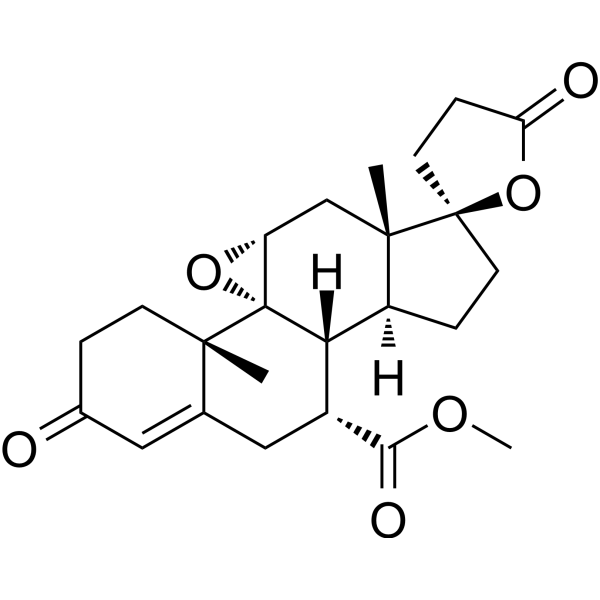
EplerenoneAldosterone Blocker -
HY-15108G
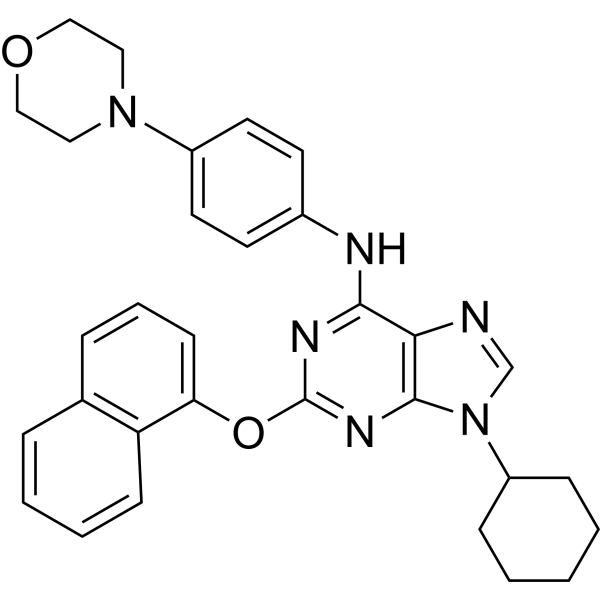
Purmorphamine (GMP)Smo Receptor Agonist (GMP)
Publications Citing Use of MedChemExpress (MCE) Halcinonide
MoreAll Caspase Isoforms
More

Biological Activity
Description
IC50 & Target
|
Cdk6/cyclin D2 |
Caspase 3 |
In Vitro
Halcinonide (1-25 μM; 48 h) acts as a Smoothened agonist to up-regulate MBP, PLP, CNP, MOG, RxRγ, and Gli1 gene expression in Oli-neuM mouse oligodendrocyte cells, with 10 μM treatment for 48h driving significant myelin gene induction that is dependent on both Smoothened and RxRγ activation[1].
Halcinonide (0-10 μM; 2 h) acts as a Smo agonist in U2OS cells stably expressing Smo-633 and βarr2-GFP, inducing βarr2-GFP aggregation with an EC50 of 1,100 nM and an efficacy of 0.99[2].
Halcinonide (0-10 μM; 30 h) activates downstream Hedgehog signaling in Shh-LIGHT2 cells, inducing Gli-luciferase activity with an EC50 of 1.8 nM and an efficacy of 0.74, and synergizes with Shh to enhance this activity[2].
Halcinonide (25 μM; 64 h) up-regulates cyclin D2 expression and inhibits caspase-3 degradation in primary mouse cerebellar granule cell precursors[2].
Halcinonide (10-100 nM; 24 h) protects PC12 cells from H2O2-induced oxidative stress, improving cell viability and reducing intracellular ROS generation[3].
Halcinonide (10-100 nM; 24 h) modulates the Shh signaling pathway and Bcl-2/Bax-mediated apoptosis in PC12 cells treated with H2O2, upregulating SMO and Bcl-2 while downregulating Sufu, Bax, and Caspase-3[3].
MedChemExpress (MCE) has not independently confirmed the accuracy of these methods. They are for reference only.
-
Cell Line:PC12 cells (under OGD/R stress)
-
Concentration:10 nM, 100 nM (24 h pre-incubation)
-
Incubation Time:24 h (pre-incubation); 6 h (OGD); 24 h (reperfusion)
-
Result:Reversed OGD/R-induced decreases in SMO and Bcl-2 protein levels.
Reversed OGD/R-induced increases in Sufu, Bax, and Caspase-3 protein levels.
In Vivo
MedChemExpress (MCE) has not independently confirmed the accuracy of these methods. They are for reference only.
-
Animal Model:Sprague-Dawley rat with Ischemic stroke (male, 2-3 months old, 180-220 g, SPF grade, middle cerebral artery occlusion/reperfusion model)[3]
-
Dosage:20 mg/kg
-
Administration:p.o.; daily; 7 days
-
Result:Reduced neurological deficit scores relative to untreated MCAO rats.
Reduced cerebral infarction volume relative to untreated MCAO rats.
Improved abnormal brain histological features observed via H&E staining.
Reduced the number of TUNEL-positive apoptotic cells in brain tissue.
Upregulated SMO and Bcl-2 protein expression in brain tissue.
Downregulated Sufu, Bax, and Caspase-3 protein expression in brain tissue.
Increased serum LDH activity.
Reduced serum lactic acid levels.
Restored serum MPO, MDA, SOD, GSH, and GSSG levels toward normal.
Reduced serum TNF-α and IL-6 levels.
- RNA extraction experimental
- Annexin V plus membrane-impermeant dye apoptosis staining
- BrdU Incorporation Assay
- ROS/oxidative-stress fluorescent staining
- Somatic Cell Culture
- CFSE Dye Dilution Proliferation Assay
- Dye-dilution cell tracking and proliferation staining
- CCK-8/WST-8 Cell Proliferation Assay
- Protocol for Cell Cycle
- Cell Counting-Based Growth Curve Assay
- Colony Formation (Clonogenic) Assay
- Cell Viability Determination by MTT Colorimetric Assay
- EdU Incorporation Assay (Click Chemistry-Based DNA Synthesis Measurement)
- Ki-67 Immunostaining Proliferation Assay
- Detection of Apoptosis
- TUNEL staining for apoptotic DNA fragmentation
- PCNA Immunodetection Proliferation Assay
- Protocol for Cell Counting and Cell Density Analysis
- Apoptosis Solutions
- MTT Cell Proliferation Assay


Chemical Information
-
CAS No. 3093-35-4
-
Appearance Solid
-
Molecular Weight 454.96
-
Formula C24H32ClFO5
-
Color Light yellow to yellow
-
SMILES
C[C@@]12[C@@]3(C(CCl)=O)[C@@](OC(C)(O3)C)([H])C[C@@]1([H])[C@]4([H])CCC5=CC(CC[C@]5(C)[C@@]4(F)[C@@H](O)C2)=O
-
Synonyms
SQ-18566
-
Shipping
Room temperature in continental US; may vary elsewhere.
-
Storage
Powder -20°C 3 years 4°C 2 years In solvent -80°C 2 years -20°C 1 year


Publications (1)
-
Journal Impact Factor
-
Most Recent
-
Nat Commun
Coronavirus envelope protein activates TMED10-mediated unconventional secretion of inflammatory factors. [Abstract]2024 Oct 8;15(1):8708. PMID: 39379362


Solvent & Solubility
In Vitro:
DMSO : 100 mg/mL (219.80 mM; Need ultrasonic; Hygroscopic DMSO has a significant impact on the solubility of product, please use newly opened DMSO)
Please refer to the solubility information to select the appropriate solvent. Once prepared, please aliquot and store the solution to prevent product inactivation from repeated freeze-thaw cycles.
Storage method and period of stock solution: -80°C, 2 years; -20°C, 1 year. When stored at -80°C, please use it within 2 years. When stored at -20°C, please use it within 1 year.
Please refer to the solubility information to select the appropriate solvent. Once prepared, please aliquot and store the solution to prevent product inactivation from repeated freeze-thaw cycles.
Storage method and period of stock solution: -80°C, 2 years; -20°C, 1 year. When stored at -80°C, please use it within 2 years. When stored at -20°C, please use it within 1 year.
Concentration (start) × Volume (start) = Concentration (final) × Volume (final)


Purity & Documentation
-
Data Sheet (284 KB)
-
SDS (418 KB)
- English - EN (418 KB)
- Français - FR (418 KB)
- Deutsch - DE (418 KB)
- Norwegian - NO (418 KB)
- Español - ES (418 KB)
- Swedish - SV (418 KB)
- Italian - IT (418 KB)
- Korean - KR (418 KB)
- Portuguese - PT (418 KB)
-
Handling Instructions (2659 KB)
References
[1]. Porcu G, et al. Clobetasol and Halcinonide Act as Smoothened Agonists to Promote Myelin Gene Expression and RxRγ Receptor Activation. PLoS One. 2015;10(12):e0144550. Published 2015 Dec 10. [Content Brief]
[2]. Wang J, et al. Identification of select glucocorticoids as Smoothened agonists: potential utility for regenerative medicine. Proc Natl Acad Sci U S A. 2010;107(20):9323-9328. [Content Brief]
[3]. Liu J, et al. Halcinonide activates smoothened to ameliorate ischemic stroke injury. Life Sci. 2025;361:123324. [Content Brief]


Complete Stock Solution Preparation Table
Please refer to the solubility information to select the appropriate solvent. Once prepared, please aliquot and store the solution to prevent product inactivation from repeated freeze-thaw cycles.
Storage method and period of stock solution: -80°C, 2 years; -20°C, 1 year. When stored at -80°C, please use it within 2 years. When stored at -20°C, please use it within 1 year.
| Optional Solvent | Concentration Solvent Mass | 1 mg | 5 mg | 10 mg | 25 mg |
|---|---|---|---|---|---|
| DMSO | 1 mM | 2.1980 mL | 10.9900 mL | 21.9800 mL | 54.9499 mL |
| 5 mM | 0.4396 mL | 2.1980 mL | 4.3960 mL | 10.9900 mL | |
| 10 mM | 0.2198 mL | 1.0990 mL | 2.1980 mL | 5.4950 mL | |
| 15 mM | 0.1465 mL | 0.7327 mL | 1.4653 mL | 3.6633 mL | |
| 20 mM | 0.1099 mL | 0.5495 mL | 1.0990 mL | 2.7475 mL | |
| 25 mM | 0.0879 mL | 0.4396 mL | 0.8792 mL | 2.1980 mL | |
| 30 mM | 0.0733 mL | 0.3663 mL | 0.7327 mL | 1.8317 mL | |
| 40 mM | 0.0549 mL | 0.2747 mL | 0.5495 mL | 1.3737 mL | |
| 50 mM | 0.0440 mL | 0.2198 mL | 0.4396 mL | 1.0990 mL | |
| 60 mM | 0.0366 mL | 0.1832 mL | 0.3663 mL | 0.9158 mL | |
| 80 mM | 0.0275 mL | 0.1374 mL | 0.2747 mL | 0.6869 mL | |
| 100 mM | 0.0220 mL | 0.1099 mL | 0.2198 mL | 0.5495 mL |


Halcinonide Related Classifications
HY-B0877 Related Classifications
 Powered by Bioz