
1. Search Result
Search Result
Results for "

the yeast Candida albicans

" in MedChemExpress (MCE) Product Catalog:

27

Inhibitors & Agonists

7

Peptides

8

Natural
Products

3

Isotope-Labeled Compounds

Cat. No. Product Name Target Research Areas Chemical Structure
  • HY-A0132
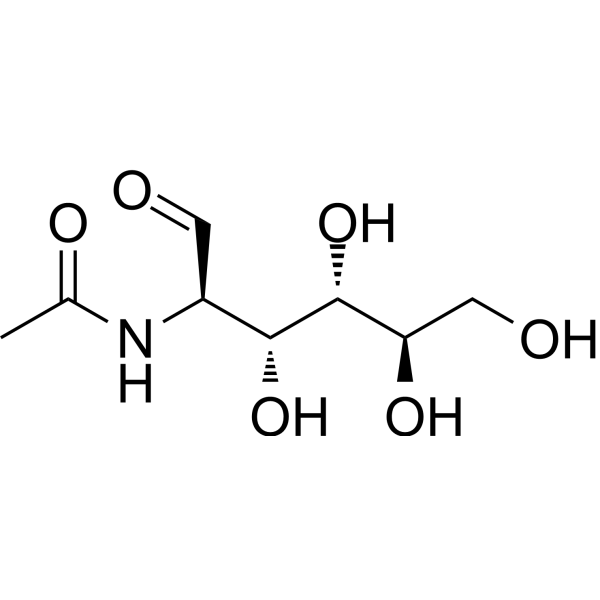
    N-Acetyl-D-glucosamine
    2 Publications Verification

    N-Acetyl-2-amino-2-deoxy-D-glucose

    Endogenous Metabolite Drug Derivative Drug Isomer Interleukin Related Metabolic Disease Inflammation/Immunology Cancer
    N-Acetyl-D-Glucosamine (N-Acetyl-2-amino-2-deoxy-D-glucose), the D isomer of N-acetylglucosamine, is an orally active monosaccharide derivative of glucose with anti-tumor and anti-inflammation properties. N-Acetyl-D-Glucosamine is also a bacterial metabolite, which is found in Escherichia coli. N-Acetyl-D-Glucosamine can induce yeast-mycelial conversion in Candida albicans. N-Acetyl-D-Glucosamine also enhances healing of cartilaginous injuries in rabbits .
    N-Acetyl-D-glucosamine
  • HY-W012444

    Antibiotic Fungal Infection
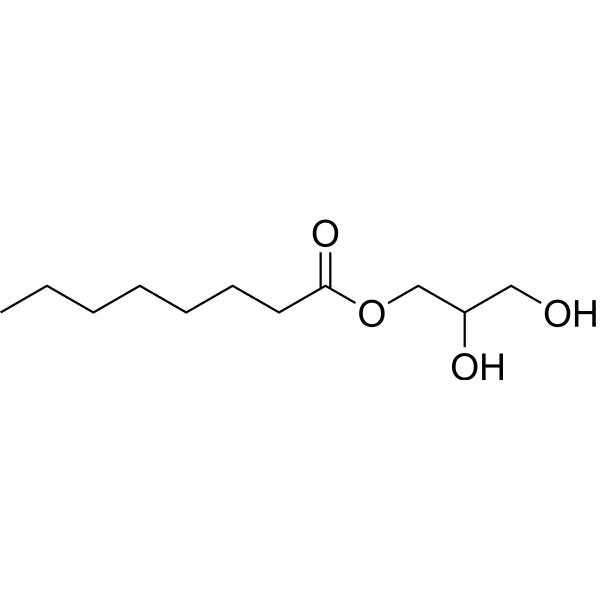
    Glyceryl 1-monooctanoate is a glycerol monolaurate derivative. Glyceryl 1-monooctanoate is a broad-spectrum antimicrobial, suppresses the growth of pathogenic yeast (Candida albicans and Candida parapsilosis), as well as Gram-positive (Staphylococcus aureus) and Gram-negative (Escherichia coli, Klebsiella pneumoniae) bacteria .
    Glyceryl 1-monooctanoate
  • HY-P10304

    Cyclo(Pro-Arg)

    Fungal Others
    Cyclo(Arg-Pro) (Cyclo(Pro-Arg)) is an inhibitor for chitinase. Cyclo(Arg-Pro) inhibits cell separation of Saccharomyces cerevisiae, without affecting its growth. Cyclo(Arg-Pro) inhibits the morphological change of Candida albicans from yeast form to filamentous form .
    Cyclo(Arg-Pro)
  • HY-124701

    Fungal Infection
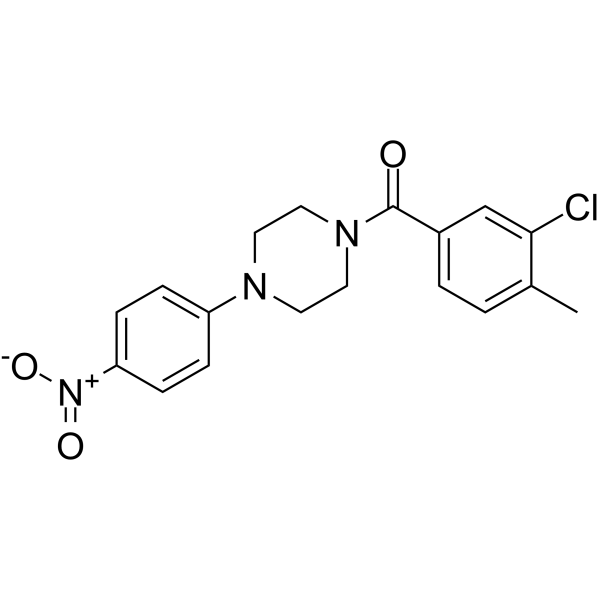
    Filastatin is a long-lasting inhibitor of Candida albicans filamentation. Filastatin inhibits adhesion by multiple pathogenic Candida species with an IC50 of ~3 μM in the GFP-based adhesion assay. Filastatin inhibits fungal adhesion to polystyrene and human cells, the yeast-to-hyphal morphological transition, induction of the hyphal-specific HWP1 promoter. Filastatin has potent antifungal effect .
    Filastatin
  • HY-P1629

    Bacterial Fungal Antibiotic Infection
    Temporin A is a short alpha-helical antimicrobial peptide isolated from the skin of the frog Rana temporaria. Temporin A is effective against a broad spectrum of Gram-positive bacteria. Temporin A interacts directly with the cell membrane of the microorganism and it is non-toxic to erythrocytes at concentrations that are antimicrobial. Temporin A also has antifungal activities (against yeast-like Candida albicans) .
    Temporin A
  • HY-N7626

    Fungal Glycosidase Infection
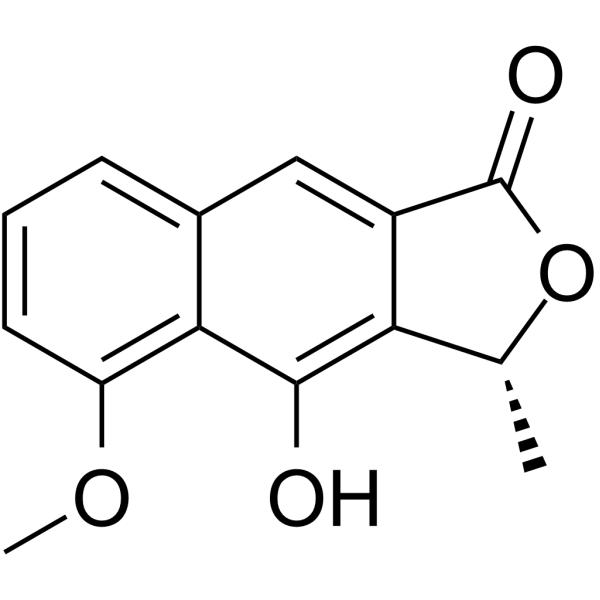
    Eleutherol is a naphthalene isolated from E. americana with antifungal activities . Eleutherol is against yeasts Candida albicans, C. tropicalis, Saccharomyces cerevisiae and Cryptococcus neoformans with MIC values between 7.8 µg/mL and 250 µg/mL . Eleutherol inhibits α-glucosidase function with an IC50>1.00 mM .
    Eleutherol
  • HY-163462

    Fungal Infection
    Poacic Acid is a plant-derived stilbenoid with an antifungal activity. Poacic Acid localizes to the yeast cell wall and disrupts the production and assembly of β-1,3-glucan in the fungal cell walls. Poacic Acid exhibits fungicidal activity to Saccharomyces cerevisiae and plasma membrane-compromised Candida albicans mutants .
    Poacic acid
  • HY-P10304A

    Cyclo(Pro-Arg) TFA

    Fungal Infection
    Cyclo (Arg-Pro) TFA is a chitinase inhibitor. Cyclo (Arg-Pro) TFA disrupts cell separation and morphological transition of yeast by inhibiting chitinase activity. Cyclo (Arg-Pro) TFA prevents cell separation of Saccharomyces cerevisiae, leading to the formation of grape-like cell clusters, without inhibiting cell growth. Cyclo (Arg-Pro) TFA blocks the morphological transition of Candida albicans from yeast form to hyphal form, without inhibiting cell growth .
    Cyclo(Arg-Pro) TFA
  • HY-P10304C

    Fungal Infection
    Cyclo(Pro-dArg) is an inhibitor of chitinase. Cyclo(Pro-dArg) inhibits the cell separation of Saccharomyces cerevisiae but does not affect its growth. Cyclo(Pro-dArg) inhibits the transition of Candida albicans from yeast to filamentous morphology.
    Cyclo(Pro-dArg)
  • HY-N11772

    Fungal Infection
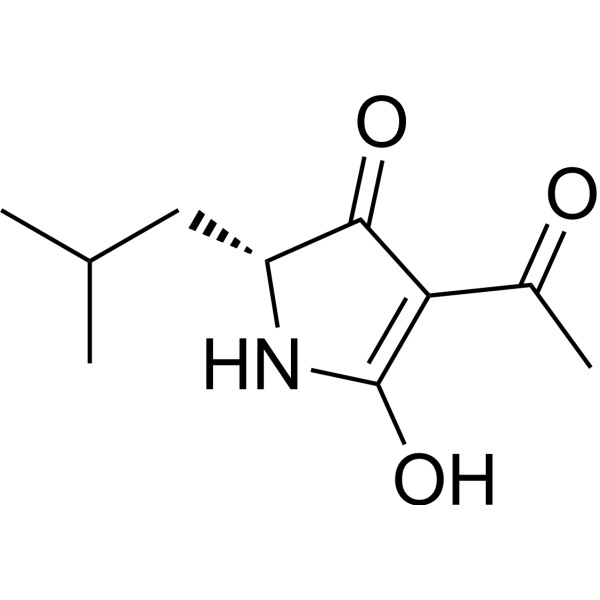
    Mutanocyclin is a potent antifungal agent. Mutanocyclin inhibits Candida albicans (C. albicans) filamentation. Mutanocyclin decreases the mRNA expression of HWP1, ECE1, FLO8, TEC1. Mutanocyclin inhibits yeast-form in ex vivo mouse .
    Mutanocyclin
  • HY-P3916

    Bacterial Infection Inflammation/Immunology
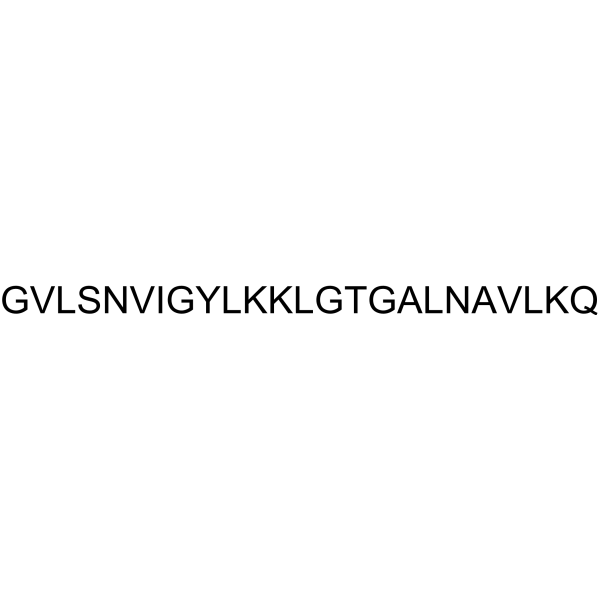
    GVLSNVIGYLKKLGTGALNAVLKQ is an antimicrobial peptide with 24-amino acid. GVLSNVIGYLKKLGTGALNAVLKQ can potentially form α-helix. GVLSNVIGYLKKLGTGALNAVLKQ (PGQ) has activity against Gram-negative, Gram-positive bacteria and the yeast Candida albicans .
    GVLSNVIGYLKKLGTGALNAVLKQ
  • HY-P11191

    Bacterial Infection
    AR-23 is a melittin-related antimicrobial peptide that can be isolated from Rana tagoi. AR-23 exhibits broad-spectrum growth inhibitory activity against aerobic bacteria, the opportunistic yeast pathogen Candida albicans and clinical isolates of Methicillin (HY-121544)-resistant Staphylococcus aureus (MRSA). AR-23 can be used for antimicrobial research .
    AR-23
  • HY-N14908

    Bacterial Infection
    Peptaibolin has anti-Gram-positive bacteria and yeast activity, but the antibacterial activity is weak. Peptaibolin inhibits Subtilis ATCC 6633 and candida albicans with MICs (μg/mL) of 100, 100, respectively .
    Peptaibolin
  • HY-N14020

    GlbC

    Antibiotic Fungal Infection Cancer
    Glidobactin C (GlbC) is an anti-tumor antibiotic. Glidobactin C (GlbC) has the activity against pathogenic fungi and yeast. Glidobactin C has anti-Candida albicans and Aspergillus fumigatus activity with a MIC of 0.8 μg/mL. Glidobactin C also extends the survival of mice inoculated with leukemia P388 cells .
    Glidobactin C
  • HY-116686

    Cytochrome P450 Fungal Infection
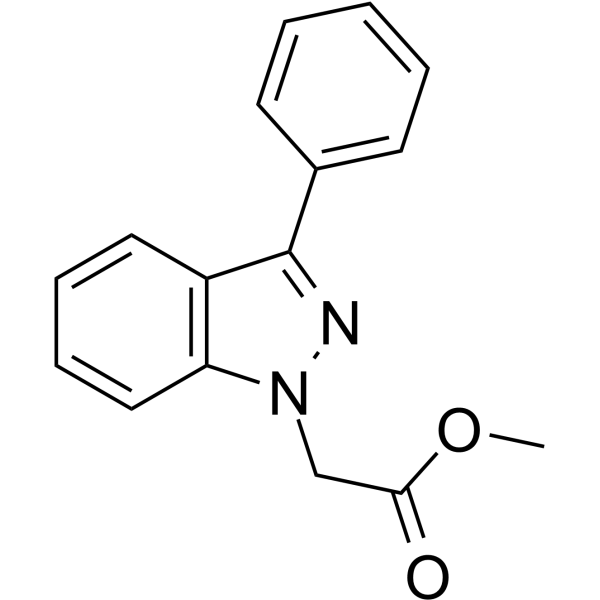
    Inz-1 is a potent and selective mitochondrial cytochrome bc1 inhibitor for yeast (IC50=8.092 μM) over humans (IC50=45.320 μM). Inz-1 reverses Fluconazole (HY-B0101) or other triazole antifungals’ resistance in the pathogenic fungus Candida albicans .
    Inz-1
  • HY-159585

    Cytochrome P450 Fungal Infection
    CYP51-IN-20 (compound 5b) is an inhibitor of CYP51 and has antifungal activity. CYP51-IN-20 has a significant inhibitory effect on Candida albicans ATCC 10231, downregulates ERG11 (Cyp51) gene expression, and significantly reduces the yeast-to-hyphae morphological transition. CYP51-IN-20 can synergize with Voriconazole (HY-76200) to occupy the entire CYP51 binding site and exert a synergistic inhibitory effect in the Glechoma moth model .
    CYP51-IN-20
  • HY-A0132S14

    N-Acetyl-2-amino-2-deoxy-D-glucose-d3

    Isotope-Labeled Compounds Endogenous Metabolite Drug Derivative Interleukin Related Drug Isomer Metabolic Disease Inflammation/Immunology Cancer
    N-Acetyl-D-glucosamine-d3 (N-Acetyl-2-amino-2-deoxy-D-glucose-d3) is deuterium labeled N-Acetyl-D-glucosamine. N-Acetyl-D-Glucosamine (N-Acetyl-2-amino-2-deoxy-D-glucose), the D isomer of N-acetylglucosamine, is an orally active monosaccharide derivative of glucose with anti-tumor and anti-inflammation properties. N-Acetyl-D-Glucosamine is also a bacterial metabolite, which is found in Escherichia coli. N-Acetyl-D-Glucosamine can induce yeast-mycelial conversion in Candida albicans. N-Acetyl-D-Glucosamine also enhances healing of cartilaginous injuries in rabbits .
    N-Acetyl-D-glucosamine-d3
  • HY-125735

    Bacterial Infection
    Sch725674 is a macrolide compound with antimicrobial activity against brewer's yeast and Candida albicans, with MICs of 8 and 32 μg/ml .
    Sch725674
  • HY-183333

    Fungal Infection
    CHNQD-02204 is a potent and selective antifungal agent with in vitro activity against Candida albicans, with a MIC of 0.025 μg/mL. CHNQD-02204 inhibits ergosterol biosynthesis, disrupts the membrane integrity and biofilm formation of Candida albicans, and suppresses the morphological transition of Candida albicans from yeast to hyphal form. CHNQD-02204 can be used in studies related to candidal infections .
    CHNQD-02204
  • HY-N14547

    Fungal Infection
    Crotocin has the fungal activity of anti-cryptococcus neoforme, candida albicans, Tinea trichoderma of brewer's yeast, and can be inactivated by blood .
    Crotocin
  • HY-108874A

    Levorin (≥50%); Vanobid (≥50%); Candimon (≥50%)

    Antibiotic Fungal Infection
    Candicidin (≥50%) (Levorin (≥50%)) is an Antifungal antibiotic. Candicidin (≥50%) exhibits potent antifungal activity against yeasts and yeast-like fungi, such as Candida albicans and Saccharomyces cerevisiae. Low concentrations of Candicidin (≥50%) do not adversely affect pea seed germination .
    Candicidin (≥50%)
  • HY-N15042

    Fungal Infection
    9-Hydroxyoudemansin A is an antibiotic. 9-Hydroxyoudemansin A has antifungal activity, has an MIC of 12.5 μg/mL against ochre-like yeast, and is resistant to fungi such as Candida albicans, Crimson Yeast, Penicillium and Streptomyces with MICs are all> 50 μg/mL. No anti-bacterial effect .
    9-Hydroxyoudemansin A
  • HY-P10304D

    Fungal Infection
    Cyclo(Pro-dArg) acetate is a chitinase inhibitor. Cyclo(Pro-dArg) acetate inhibits the cell separation of Saccharomyces cerevisiae but does not affect its growth. Cyclo(Pro-dArg) acetate inhibits the transition of Candida albicans from yeast to filamentous morphology .
    Cyclo(Pro-dArg) acetate
  • HY-181114

    P-glycoprotein Fungal Infection
    P-gp-IN-34 (compound 4a) is an Mdr1p (Mdr1 pump) inhibitor. P-gp-IN-34 inhibits yeast to hyphal shift in Candida albicans. P-gp-IN-34 can be used for the research of candidiasis .
    P-gp-IN-34
  • HY-179163

    Cytochrome P450 Fungal Infection
    CYP51-IN-29 (Compound B3) is a CYP51 inhibitor and antifungal agent. CYP51-IN-29 effectively suppresses the yeast-to-hyphal transition. CYP51-IN-29 exhibits potent antifungal activity against Candida albicans .
    CYP51-IN-29
  • HY-W012444S

    Isotope-Labeled Compounds Antibiotic Fungal Infection
    Glyceryl 1-monooctanoate-d15 is the deuterium labeled Glyceryl 1-monooctanoate (HY-W012444). Glyceryl 1-monooctanoate is a glycerol monolaurate derivative. Glyceryl 1-monooctanoate is a broad-spectrum antimicrobial, suppresses the growth of pathogenic yeast (Candida albicans and Candida parapsilosis), as well as Gram-positive (Staphylococcus aureus) and Gram-negative (Escherichia coli, Klebsiella pneumoniae) bacteria .
    Glyceryl 1-monooctanoate-d15
  • HY-W704402

    Isotope-Labeled Compounds Antibiotic Fungal Infection
    Glyceryl 1-monooctanoate-d5 is the deuterium labeled Glyceryl 1-monooctanoate (HY-W012444). Glyceryl 1-monooctanoate is a glycerol monolaurate derivative. Glyceryl 1-monooctanoate is a broad-spectrum antimicrobial, suppresses the growth of pathogenic yeast (Candida albicans and Candida parapsilosis), as well as Gram-positive (Staphylococcus aureus) and Gram-negative (Escherichia coli, Klebsiella pneumoniae) bacteria .
    Glyceryl 1-monooctanoate-d5

Inquiry Online

Your information is safe with us. * Required Fields.

Salutation


Country or Region *

Applicant Name *


Organization Name *

Department *


Email Address *


Product Name *

Cat. No.


Requested quantity *

Phone Number *


Remarks

Inquiry Online

Inquiry Information

Product Name:
Cat. No.:
Quantity:
MCE Japan Authorized Agent:

