



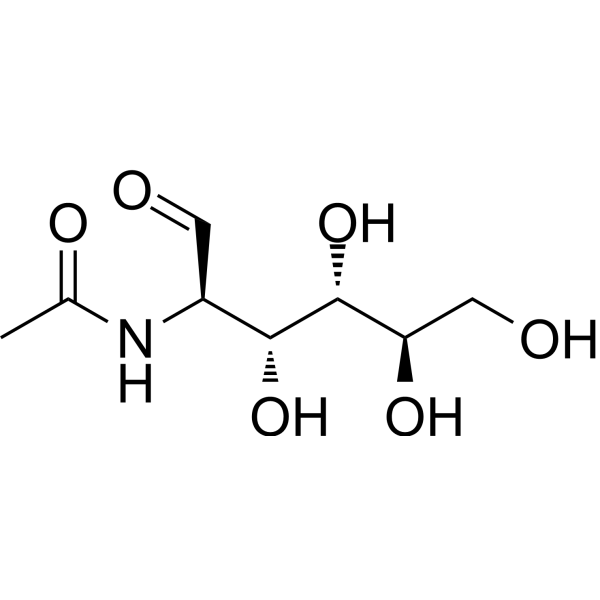
N-Acetyl-D-glucosamine
Based on 3 publication(s) in Google Scholar
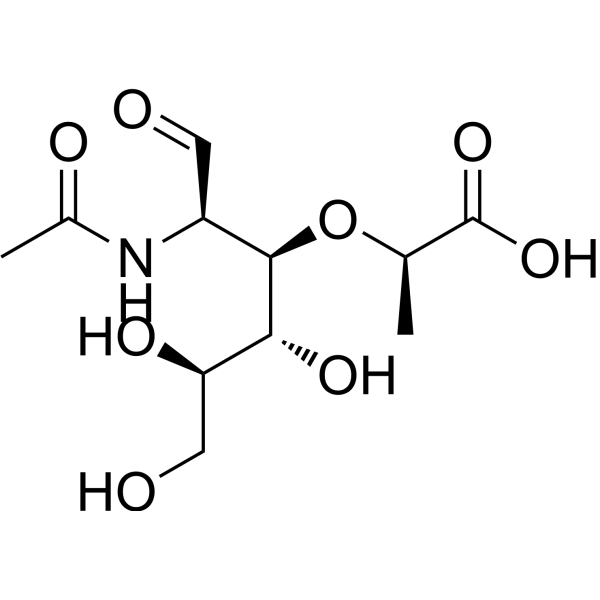
N-Acetyl-D-Glucosamine (N-Acetyl-2-amino-2-deoxy-D-glucose), the D isomer of N-acetylglucosamine, is an orally active monosaccharide derivative of glucose with anti-tumor and anti-inflammation properties. N-Acetyl-D-Glucosamine is also a bacterial metabolite, which is found in Escherichia coli. N-Acetyl-D-Glucosamine can induce yeast-mycelial conversion in Candida albicans. N-Acetyl-D-Glucosamine also enhances healing of cartilaginous injuries in rabbits.
For research use only. We do not sell to patients.
- Purity : 99.69%
- CAS No.: 7512-17-6
- Formula: C8H15NO6
- Molecular Weight:221.21
-
Storage:
-20°C, stored under nitrogen
* In solvent : -80°C, 6 months; -20°C, 1 month (stored under nitrogen)

To place orders, for customer services and technical support, please contact: MedChemExpress USA
Tel: 609-228-6898 E-mail: [email protected] [email protected]


-
 Biological Activity
-
Chemical Information
-
Solvent & Solubility
- Purity & Documentation
- References
-
 Help & FAQs


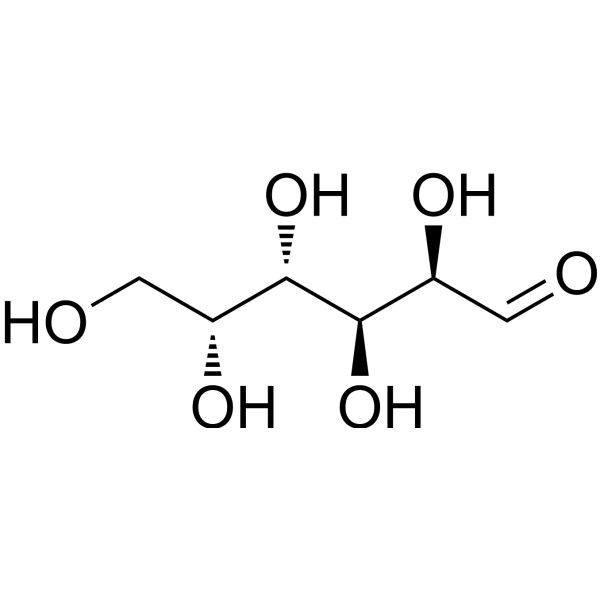
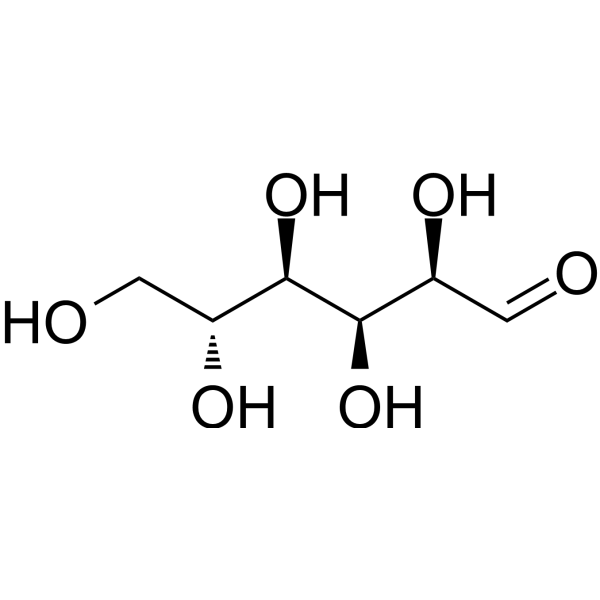
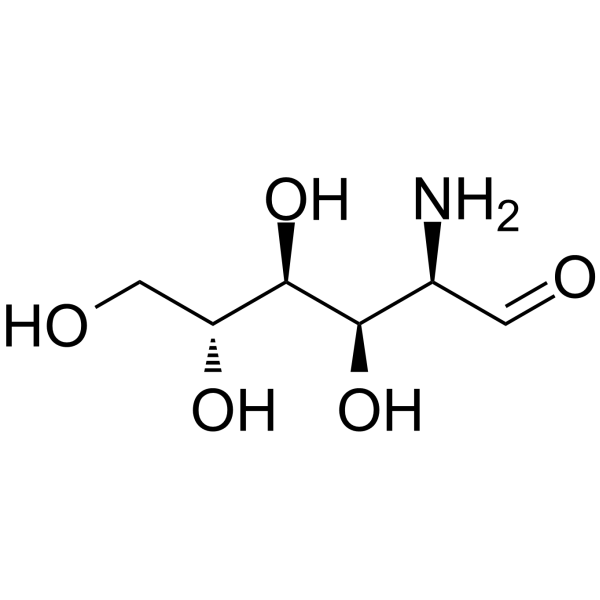
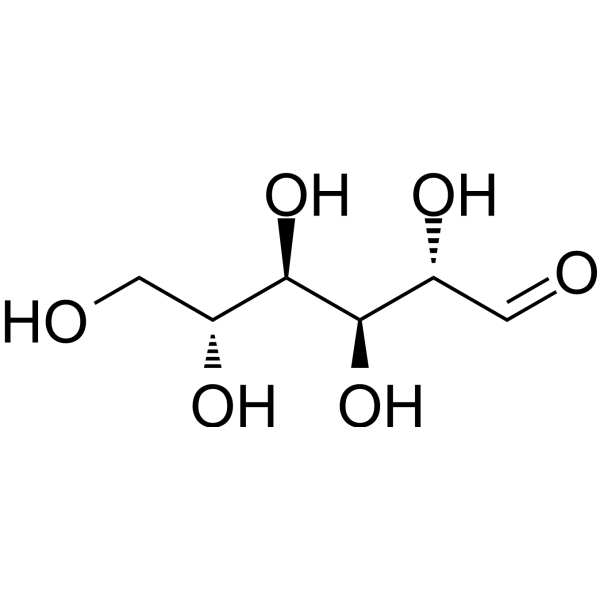
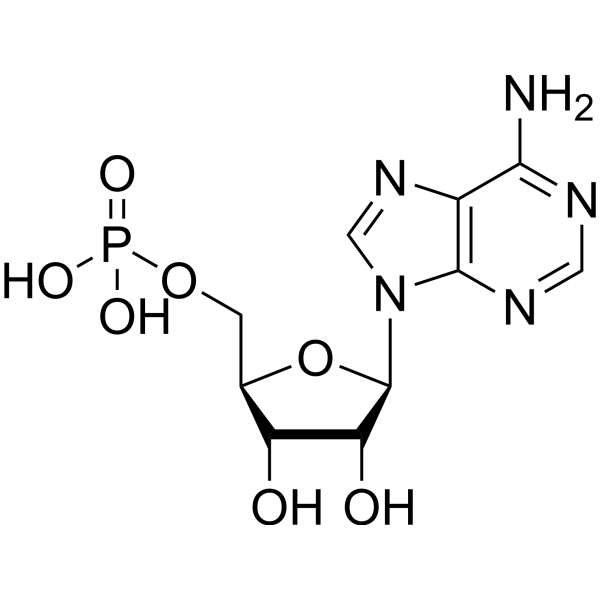
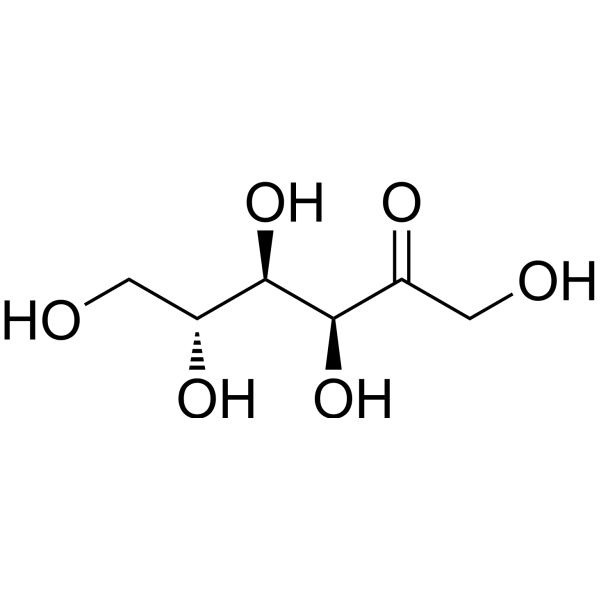
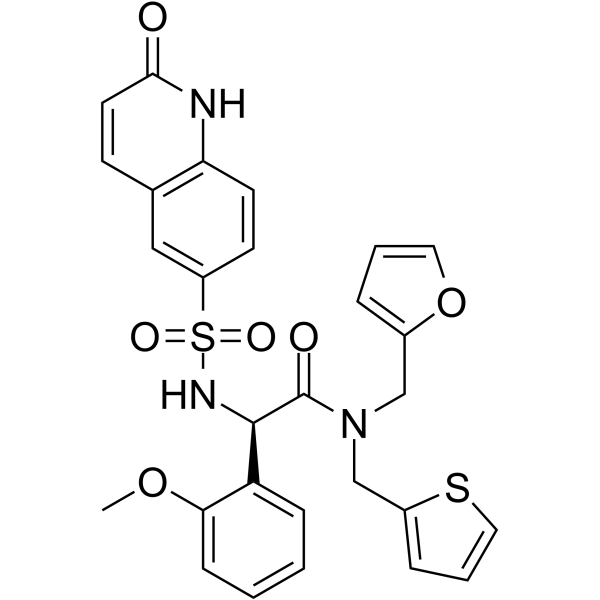
Publications Citing Use of MedChemExpress (MCE) N-Acetyl-D-glucosamine
More Customer Validation & Images

-
ELISA
-
IF
-
WB
-
In Vivo Efficacy Study
-
IF
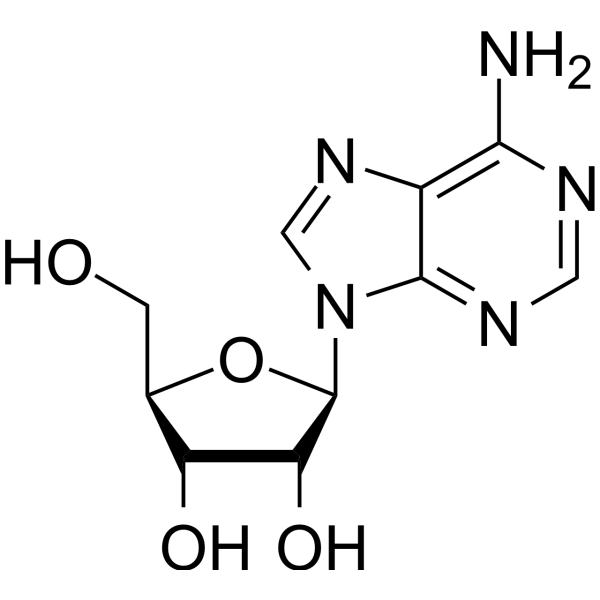
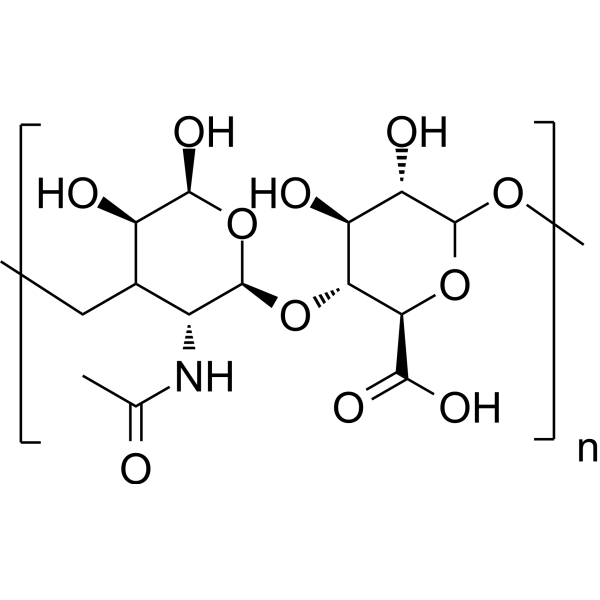
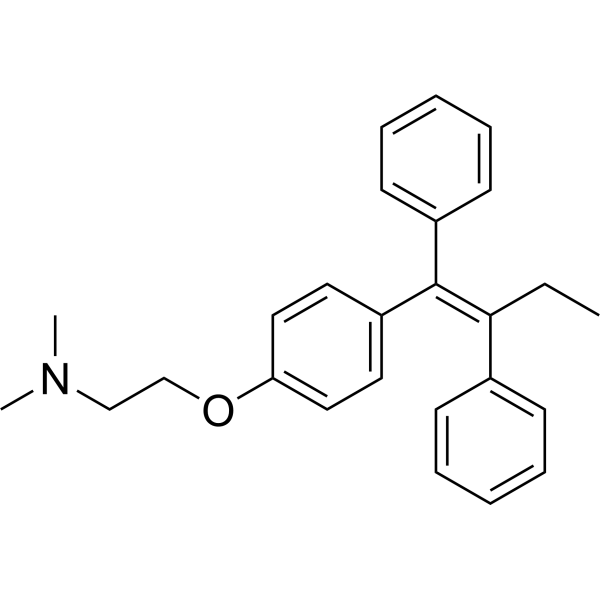
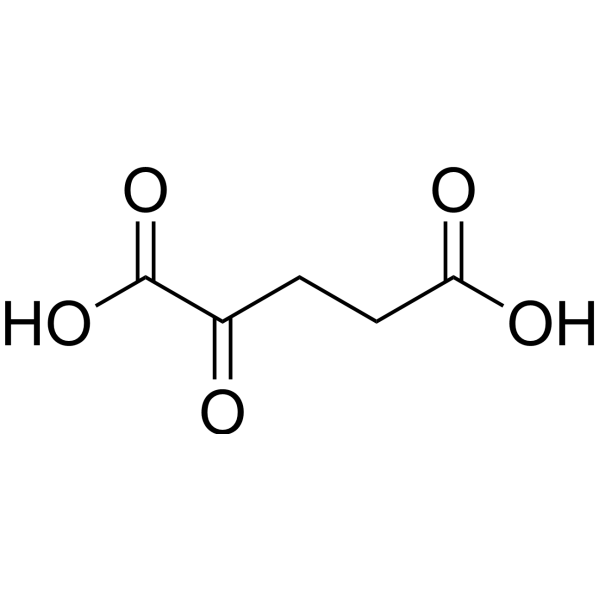
All Endogenous Metabolite Isoforms
More

Biological Activity
Description
IC50 & Target
|
Human Endogenous Metabolite |
Microbial Metabolite |
IL-6 |
IL-1β |
In Vitro
In Vivo
MedChemExpress (MCE) has not independently confirmed the accuracy of these methods. They are for reference only.
-
Animal Model:Mouse or rat tumor models[2]
-
Dosage:1, 2, or 4% (w/w)
-
Administration:mixed in powdered diet, daily for 28 days before transplantation of the tumor cells and daily for 14 days after transplantation of the tumor cells
-
Result:Significantly lowered the tumor volumes calculated in the NACOS 2% (369.8±74.0 mm3), NACOS 4% (307.5±107.0 mm3) and significantly increased serum IFN-γ and IL-12p70 levels.
Clinical Trial
| NCT Number | Sponsor | Condition | Start Date |
Phase

|
|---|---|---|---|---|
| NCT01329991 | Plexxikon| | 2011-05 | PHASE1 |


Chemical Information
-
CAS No. 7512-17-6
-
Appearance Solid
-
Molecular Weight 221.21
-
Formula C8H15NO6
-
Color White to off-white
-
SMILES
O=C[C@@H]([C@@H](O)[C@H](O)[C@H](O)CO)NC(C)=O
-
Synonyms
N-Acetyl-2-amino-2-deoxy-D-glucose
-
Structure Classification
-
Initial Source
-
Shipping
Room temperature in continental US; may vary elsewhere.
-
Storage
-20°C, stored under nitrogen
* In solvent : -80°C, 6 months; -20°C, 1 month (stored under nitrogen)


Publications (3)
-
Journal Impact Factor
-
Most Recent
-
J Neuroinflammation
Ogt-mediated O-GlcNAcylation inhibits astrocytes activation through modulating NF-κB signaling pathway. [Abstract]2023 Jun 22;20(1):146. PMID: 37349834
N-Acetyl-D-glucosamine purchased from MedChemExpress. Usage Cited in: J Neuroinflammation. 2023 Jun 22;20(1):146. [Abstract]
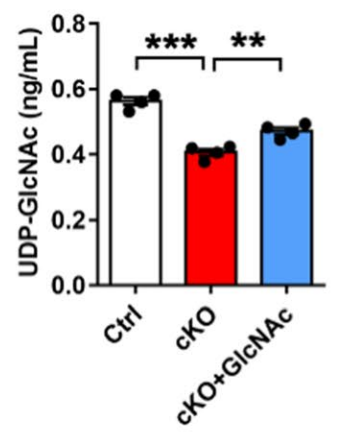
N-Acetyl-D-Glucosamine (GlcNAc) (20 μM; 72 h) replenishment significantly increased UDP-GlcNAc level of cKO astrocytes.
N-Acetyl-D-glucosamine purchased from MedChemExpress. Usage Cited in: J Neuroinflammation. 2023 Jun 22;20(1):146. [Abstract]
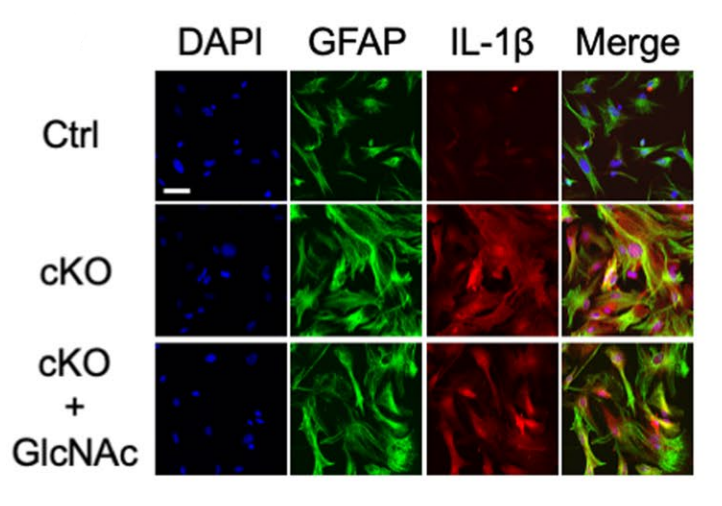
N-Acetyl-D-Glucosamine (GlcNAc) (20 μM; 72 h) supplementation reduced the staining intensity of GFAP and IL-1β of the cultured cKO astrocytes.
N-Acetyl-D-glucosamine purchased from MedChemExpress. Usage Cited in: J Neuroinflammation. 2023 Jun 22;20(1):146. [Abstract]
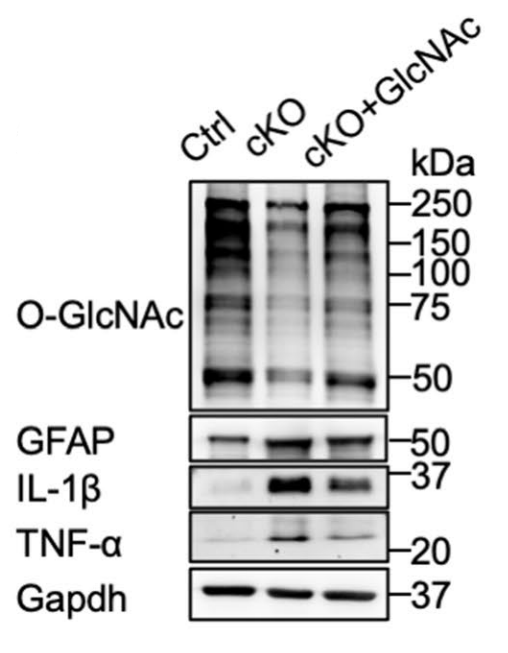
N-Acetyl-D-Glucosamine (GlcNAc) (20 μM; 72 h) supplementation significantly restored the decreased level of O-GlcNAcylation, and reduced the levels of GFAP, IL-1β and TNF-α of cKO astrocytes in vitro.
N-Acetyl-D-glucosamine purchased from MedChemExpress. Usage Cited in: J Neuroinflammation. 2023 Jun 22;20(1):146. [Abstract]
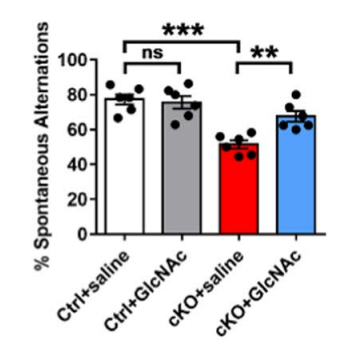
Y maze spontaneous alternation task test results showed that N-Acetyl-D-Glucosamine (GlcNAc) (400 mg/kg; i.p.; once daily for 14 d) increased the percentage of spontaneous alternations of cKO mice.
N-Acetyl-D-glucosamine purchased from MedChemExpress. Usage Cited in: J Neuroinflammation. 2023 Jun 22;20(1):146. [Abstract]
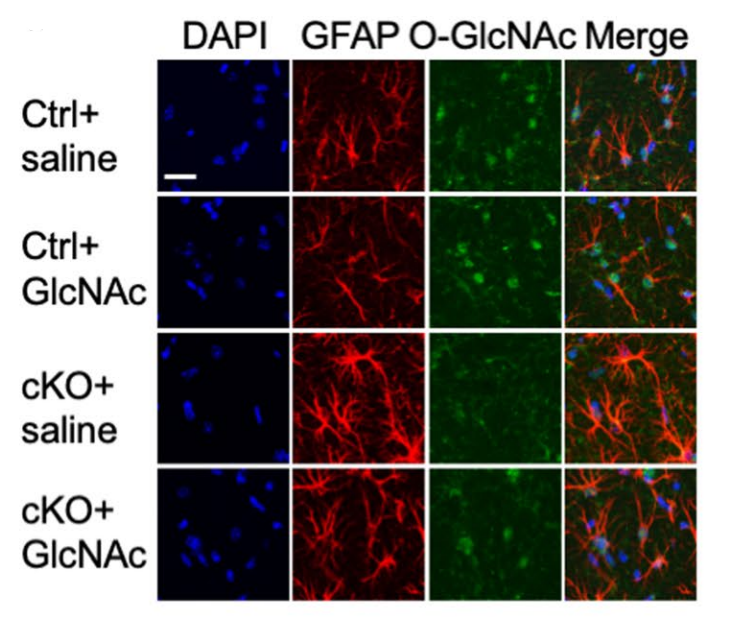
N-Acetyl-D-Glucosamine (GlcNAc) (400 mg/kg; i.p.; once daily for 14 d) supplementation significantly increased the immunostaining intensity of O-GlcNAcylation in the brain of cKO mice.
-
Dev Cell
A pathological role of O-GlcNAcylation-driven TR11B production and function in lung adenocarcinoma. [Abstract]2025 Sep 3:S1534-5807(25)00530-1. PMID: 40930100 -


Solvent & Solubility
In Vitro:
DMSO : 125 mg/mL (565.07 mM; ultrasonic and warming and heat to 60°C; Hygroscopic DMSO has a significant impact on the solubility of product, please use newly opened DMSO)
H2O : 100 mg/mL (452.06 mM; Need ultrasonic)
Please refer to the solubility information to select the appropriate solvent. Once prepared, please aliquot and store the solution to prevent product inactivation from repeated freeze-thaw cycles.
Storage method and period of stock solution: -80°C, 6 months; -20°C, 1 month (stored under nitrogen). When stored at -80°C, please use it within 6 months. When stored at -20°C, please use it within 1 month.
* Note: If you choose water as the stock solution, please dilute it to the working solution, then filter and sterilize it with a 0.22 μm filter before use.
Please refer to the solubility information to select the appropriate solvent. Once prepared, please aliquot and store the solution to prevent product inactivation from repeated freeze-thaw cycles.
Storage method and period of stock solution: -80°C, 6 months; -20°C, 1 month (stored under nitrogen). When stored at -80°C, please use it within 6 months. When stored at -20°C, please use it within 1 month.
* Note: If you choose water as the stock solution, please dilute it to the working solution, then filter and sterilize it with a 0.22 μm filter before use.
Concentration (start) × Volume (start) = Concentration (final) × Volume (final)
In Vivo:
Select the appropriate dissolution method based on your experimental animal and administration route.
- For the following dissolution methods, please ensure to first prepare a clear stock solution using an In Vitro approach and then sequentially add co-solvents:
- To ensure reliable experimental results, the clarified stock solution can be appropriately stored based on storage conditions. As for the working solution for In Vivo experiments, it is recommended to prepare freshly and use it on the same day.
- The percentages shown for the solvents indicate their volumetric ratio in the final prepared solution. If precipitation or phase separation occurs during preparation, heat and/or sonication can be used to aid dissolution.
Add each solvent one by one: 10% DMSO 40% PEG300 5% Tween-80 45% Saline
Solubility: ≥ 3.25 mg/mL (14.69 mM); Clear solution
This protocol yields a clear solution of ≥ 3.25 mg/mL (saturation unknown).
Taking 1 mL working solution as an example, add 100 μL DMSO stock solution (32.5 mg/mL) to 400 μL PEG300, and mix evenly; then add 50 μL Tween-80 and mix evenly; then add 450 μL Saline to adjust the volume to 1 mL.
Preparation of Saline: Dissolve 0.9 g sodium chloride in ddH₂O and dilute to 100 mL to obtain a clear Saline solution.
Add each solvent one by one: 10% DMSO 90% (20% SBE-β-CD in Saline)
Solubility: ≥ 3.25 mg/mL (14.69 mM); Clear solution
This protocol yields a clear solution of ≥ 3.25 mg/mL (saturation unknown).
Taking 1 mL working solution as an example, add 100 μL DMSO stock solution (32.5 mg/mL) to 900 μL 20% SBE-β-CD in Saline, and mix evenly.
Preparation of 20% SBE-β-CD in Saline (4°C, storage for one week): 2 g SBE-β-CD powder is dissolved in 10 mL Saline, completely dissolve until clear.
For the following dissolution methods, please prepare the working solution directly:
It is recommended to prepare fresh solutions and use them promptly within a short period of time.
The percentages shown for the solvents indicate their volumetric ratio in the final prepared solution. If precipitation or phase separation occurs during preparation, heat and/or sonication can be used to aid dissolution.
Add each solvent one by one: PBS
Solubility: 50 mg/mL (226.03 mM); Clear solution; Need ultrasonic
In Vivo Dissolution Calculator
Please enter the basic information of animal experiments:
-
-
-
-
Recommended: Prepare an additional quantity of animals to account for potential losses during experiments.
Working solution concentration: 0.22 mg/mL
This product has good water solubility, please refer to the measured solubility data in water/PBS/Saline for details.


Purity & Documentation
-
Data Sheet (276 KB)
-
SDS (396 KB)
- English - EN (396 KB)
- Français - FR (396 KB)
- Deutsch - DE (396 KB)
- Norwegian - NO (396 KB)
- Español - ES (396 KB)
- Swedish - SV (396 KB)
- Italian - IT (396 KB)
- Korean - KR (396 KB)
- Portuguese - PT (396 KB)
-
Handling Instructions (2659 KB)
References
[1]. Simonetti N, et al. Yeast-mycelial conversion induced by N-acetyl-D-glucosamine in Candida albicans. Nature. 1974 Jul 26;250(464):344-6. [Content Brief]
[2]. Masuda S, et al. Anti-tumor properties of orally administered glucosamine and N-acetyl-D-glucosamine oligomers in a mouse model. Carbohydr Polym. 2014 Oct 13;111:783-7. [Content Brief]


Complete Stock Solution Preparation Table
Please refer to the solubility information to select the appropriate solvent. Once prepared, please aliquot and store the solution to prevent product inactivation from repeated freeze-thaw cycles.
Storage method and period of stock solution: -80°C, 6 months; -20°C, 1 month (stored under nitrogen). When stored at -80°C, please use it within 6 months. When stored at -20°C, please use it within 1 month.
| Optional Solvent | Concentration Solvent Mass | 1 mg | 5 mg | 10 mg | 25 mg |
|---|---|---|---|---|---|
| H2O / DMSO | 1 mM | 4.5206 mL | 22.6030 mL | 45.2059 mL | 113.0148 mL |
| 5 mM | 0.9041 mL | 4.5206 mL | 9.0412 mL | 22.6030 mL | |
| 10 mM | 0.4521 mL | 2.2603 mL | 4.5206 mL | 11.3015 mL | |
| 15 mM | 0.3014 mL | 1.5069 mL | 3.0137 mL | 7.5343 mL | |
| 20 mM | 0.2260 mL | 1.1301 mL | 2.2603 mL | 5.6507 mL | |
| 25 mM | 0.1808 mL | 0.9041 mL | 1.8082 mL | 4.5206 mL | |
| 30 mM | 0.1507 mL | 0.7534 mL | 1.5069 mL | 3.7672 mL | |
| 40 mM | 0.1130 mL | 0.5651 mL | 1.1301 mL | 2.8254 mL | |
| 50 mM | 0.0904 mL | 0.4521 mL | 0.9041 mL | 2.2603 mL | |
| 60 mM | 0.0753 mL | 0.3767 mL | 0.7534 mL | 1.8836 mL | |
| 80 mM | 0.0565 mL | 0.2825 mL | 0.5651 mL | 1.4127 mL | |
| 100 mM | 0.0452 mL | 0.2260 mL | 0.4521 mL | 1.1301 mL |
* Note: If you choose water as the stock solution, please dilute it to the working solution, then filter and sterilize it with a 0.22 μm filter before use.


N-Acetyl-D-glucosamine Related Classifications
HY-A0132 Related Classifications
 Powered by Bioz