



Glucosamines
- 1
- 2
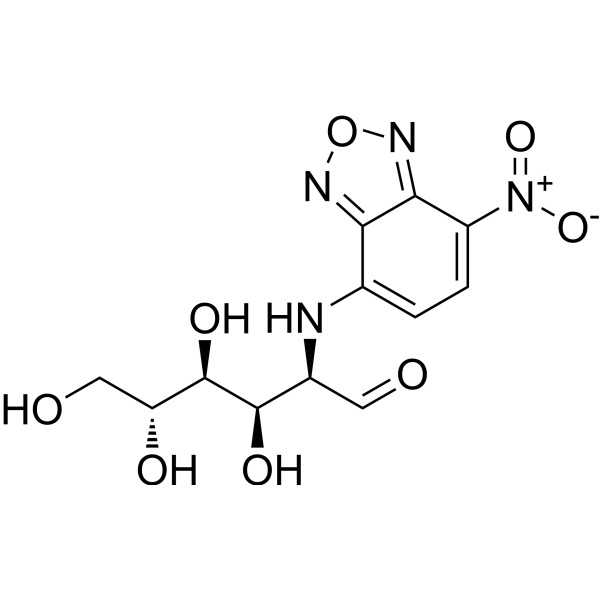
- Formula: C12H14N4O8
- Molecular Weight: 342.26
2-NBDG is a fluorescently-labeled deoxyglucose analog that is used primarily to directly monitor glucose uptake by living cells and tissues. It is also used as a topical contrast reagent for the detection of neoplasia. 2-NBDG can be used in real-time confocal, high-resolution, or wide-field fluorescence microscopy as well as in flow cytometry. The probe can be excited by the Argon laser at 488 nm to give the environment-sensitive fluorescence. It has lower photostability than the rhodamine-based fluorescent probes.
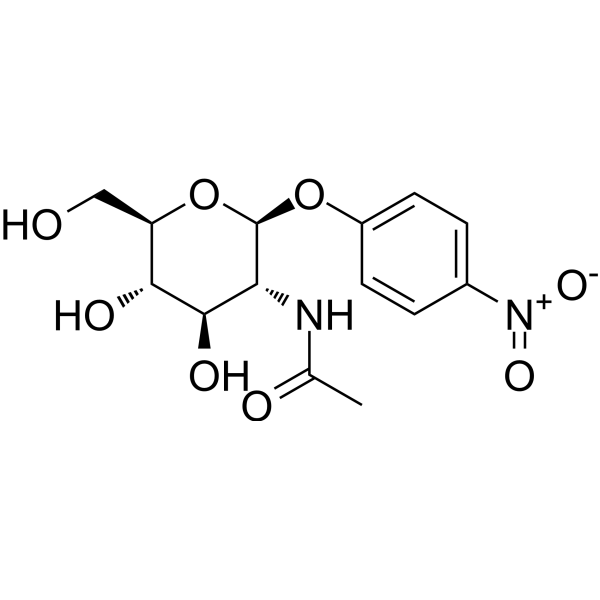
- Formula: C14H18N2O8
- Molecular Weight: 342.30
4-Nitrophenyl-N-acetyl-β-D-glucosaminide, an artificial substrate of N-acetyl-beta-D-hexosaminidase (NAGase), can be used in rapid and accurate rate assay for N-acetyl-beta-D-hexosaminidase. 4-Nitrophenyl-N-acetyl-β-D-glucosaminide is highly soluble and stable. 4-Nitrophenyl-N-acetyl-β-D-glucosaminide can be used for the study of renal tubular injury.
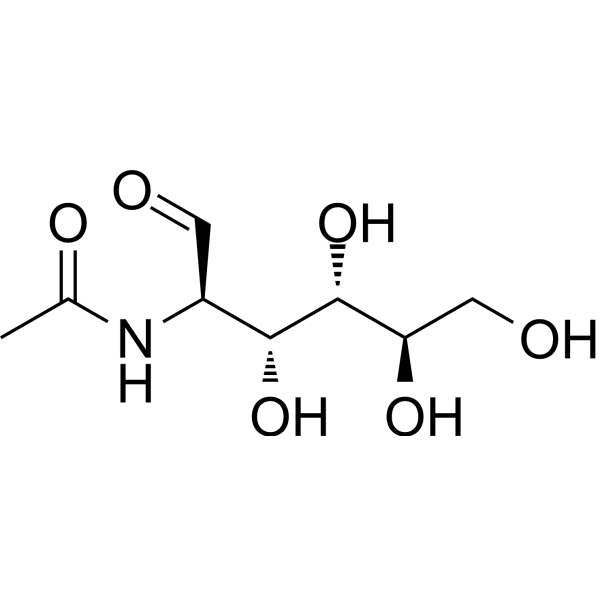
- Formula: C8H15NO6
- Molecular Weight: 221.21
N-Acetyl-D-Glucosamine (N-Acetyl-2-amino-2-deoxy-D-glucose), the D isomer of N-acetylglucosamine, is an orally active monosaccharide derivative of glucose with anti-tumor and anti-inflammation properties. N-Acetyl-D-Glucosamine is also a bacterial metabolite, which is found in Escherichia coli. N-Acetyl-D-Glucosamine can induce yeast-mycelial conversion in Candida albicans. N-Acetyl-D-Glucosamine also enhances healing of cartilaginous injuries in rabbits.
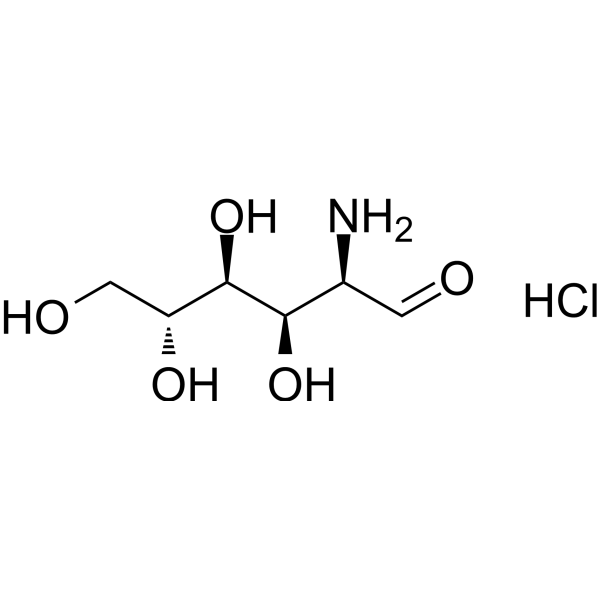
- Formula: C6H14ClNO5
- Molecular Weight: 215.63
Glucosamine hydrochloride (D-Glucosamine hydrochloride) is an amino sugar and a prominent precursor in the biochemical synthesis of glycosylated proteins and lipids, is used as a dietary supplement. Glucosamine hydrochloride also is a natural constituent of glycosaminoglycans in the cartilage matrix and synovial fluid, which when administered exogenously, exerts pharmacological effects on osteoarthritic cartilage and chondrocytes.
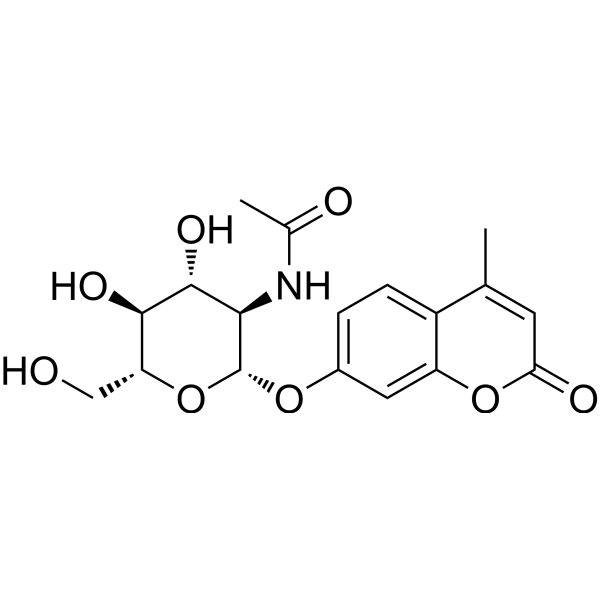
- Formula: C18H21NO8
- Molecular Weight: 379.36
4-Methylumbelliferyl-2-acetamido-2-deoxy-β-D-Glucopyranoside is a fluorogenic substrate for N-acetyl-β-D-glucosaminidase.

- Formula: C16H23NO10
- Molecular Weight: 389.35
β-D-Glucopyranose,2-(acetylamino)-2-deoxy,1,3,4,6-tetraacetate is a class of biochemical reagents used in glycobiology research. Glycobiology studies the structure, synthesis, biology, and evolution of sugars. It involves carbohydrate chemistry, enzymology of glycan formation and degradation, protein-glycan recognition, and the role of glycans in biological systems. This field is closely related to basic research, biomedicine, and biotechnology.
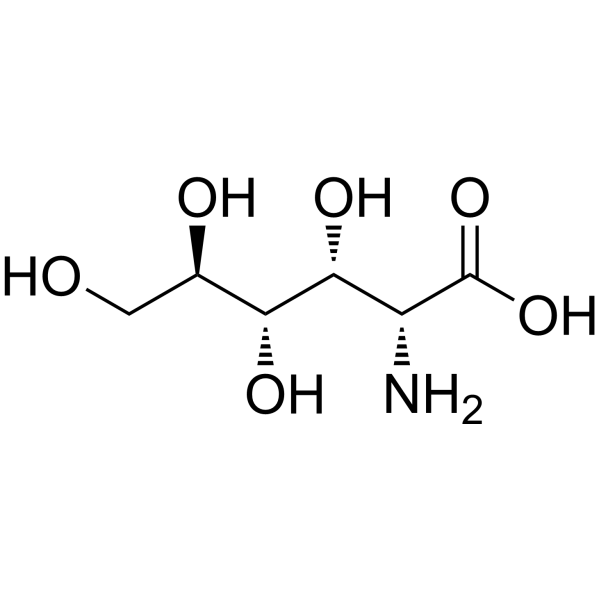
- Formula: C6H13NO6
- Molecular Weight: 195.17
D-Glucosamic acid is an endogenous metabolite.

- Formula: C14H22ClNO9
- Molecular Weight: 383.78
1,3,4,6-Tetra-O-acetyl-2-amino-2-desoxy-β-D-glucopyranose (hydrochloride) is a class of biochemical reagents used in glycobiology research. Glycobiology studies the structure, synthesis, biology, and evolution of sugars. It involves carbohydrate chemistry, enzymology of glycan formation and degradation, protein-glycan recognition, and the role of glycans in biological systems. This field is closely related to basic research, biomedicine, and biotechnology.

- Formula: C14H20ClNO8
- Molecular Weight: 365.76
Chloro 2-acetamido-2-deoxy-3,4,6-tri-O-acetyl-α-D-glucopyranose is a class of biochemical reagents used in glycobiology research. Glycobiology studies the structure, synthesis, biology, and evolution of sugars. It involves carbohydrate chemistry, enzymology of glycan formation and degradation, protein-glycan recognition, and the role of glycans in biological systems. This field is closely related to basic research, biomedicine, and biotechnology.

- Formula: C15H18N4O5
- Molecular Weight: 334.33
2-Acetamido-4,6-O-benzylidene-2-deoxy-β-D-glucopyranosyl is a class of biochemical reagents used in glycobiology research. Glycobiology studies the structure, synthesis, biology, and evolution of sugars. It involves carbohydrate chemistry, enzymology of glycan formation and degradation, protein-glycan recognition, and the role of glycans in biological systems. This field is closely related to basic research, biomedicine, and biotechnology.

- Formula: C27H27NO11
- Molecular Weight: 541.50
4-Methoxyphenyl 3,4, 6-tri-o-acetyl-2-deoxy-2-phthalimido-β-d-Glucopyranoside (4-methoxyphenyl) 3,4, 6-tri-o-acetyl-2-deoxy-2-phthalimido-beta-d-Glucopyranoside is a class of biochemical reagents used in glycobiology research. Glycobiology studies the structure, synthesis, biology, and evolution of sugars. It deals with carbohydrate chemistry, glycan formation and degradation enzymology, protein-glycan recognition, and the role of glycans in biological systems. The field is closely related to basic research, biomedicine and biotechnology.

- Formula: C21H23NO9S
- Molecular Weight: 465.47
Methyl 3,4,6-tri-O-acetyl-2-deoxy-2-phthalimido-1-thio-β-D-glucopyranoside is a class of biochemical reagents used in glycobiology research. Glycobiology studies the structure, synthesis, biology, and evolution of sugars. It involves carbohydrate chemistry, enzymology of glycan formation and degradation, protein-glycan recognition, and the role of glycans in biological systems. This field is closely related to basic research, biomedicine, and biotechnology.

- Formula: C20H21N3O6
- Molecular Weight: 399.40
4-Methoxyphenyl 2-azido-4,6-O-benzylidene-2-deoxy-β-D-glucopyranoside is a class of biochemical reagents used in glycobiology research. Glycobiology studies the structure, synthesis, biology, and evolution of sugars. It involves carbohydrate chemistry, enzymology of glycan formation and degradation, protein-glycan recognition, and the role of glycans in biological systems. This field is closely related to basic research, biomedicine, and biotechnology.

- Formula: C35H33NO8
- Molecular Weight: 595.64
4-Methoxyphenyl 3,6-Di-O-benzyl-2-deoxy-2-phthalimido-β-D-glucopyranoside is a class of biochemical reagents used in glycobiology research. Glycobiology studies the structure, synthesis, biology, and evolution of sugars. It involves carbohydrate chemistry, enzymology of glycan formation and degradation, protein-glycan recognition, and the role of glycans in biological systems. This field is closely related to basic research, biomedicine, and biotechnology.

- Formula: C14H20N4O8
- Molecular Weight: 372.33
Elmycin B is a biochemical assay reagent.

- Formula: C15H21NO6
- Molecular Weight: 311.33
Benzyl 2-acetamido-2-deoxy-beta-D-glucopyranoside is a class of biochemical reagents used in glycobiology research. Glycobiology studies the structure, synthesis, biology, and evolution of sugars. It involves carbohydrate chemistry, enzymology of glycan formation and degradation, protein-glycan recognition, and the role of glycans in biological systems. This field is closely related to basic research, biomedicine, and biotechnology.

- Formula: C18H30N4O7S
- Molecular Weight: 446.52
N-GlcNAc-Biotin is a biotinylated biochemical assay reagent, that can be used as a biological material or organic compound for life science related research.
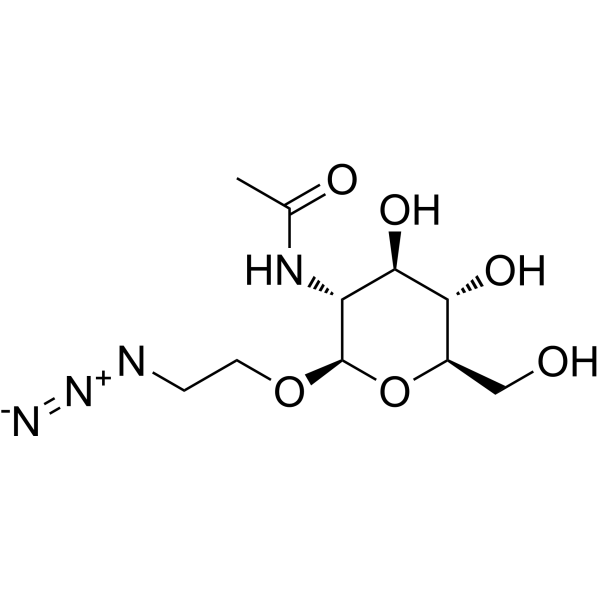
- Formula: C10H18N4O6
- Molecular Weight: 290.27
2-Azidoethyl 2-Acetamido-2-deoxy-β-D-glucopyranoside is a biochemical reagent that can be used as a biological material or organic compound for life science related research. 2-Azidoethyl 2-Acetamido-2-deoxy-β-D-glucopyranoside is a click chemistry reagent, it contains an Azide group and can undergo copper-catalyzed azide-alkyne cycloaddition reaction (CuAAc) with molecules containing Alkyne groups. It can also undergo strain-promoted alkyne-azide cycloaddition (SPAAC) reactions with molecules containing DBCO or BCN groups.
![GlcNPhth[36Bn,4Ac]-β-MP](https://file.medchemexpress.com/product_pic/hy-w145548.gif "Click to View GlcNPhth[36Bn,4Ac]-β-MP Product Detail")
- Formula: C37H35NO9
- Molecular Weight: 637.68
GlcNPhth[36Bn,4Ac]-β-MP is a biochemical reagent that can be used as a biological material or organic compound for life science related research.
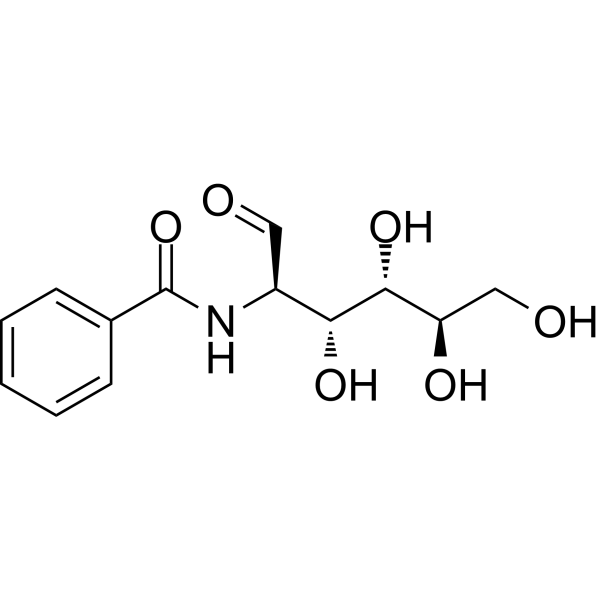
- Formula: C13H17NO6
- Molecular Weight: 283.28
N-Benzoyl-D-glucosamine is a biochemical reagent that can be used as a biological material or organic compound for life science related research.
- 1
- 2



