



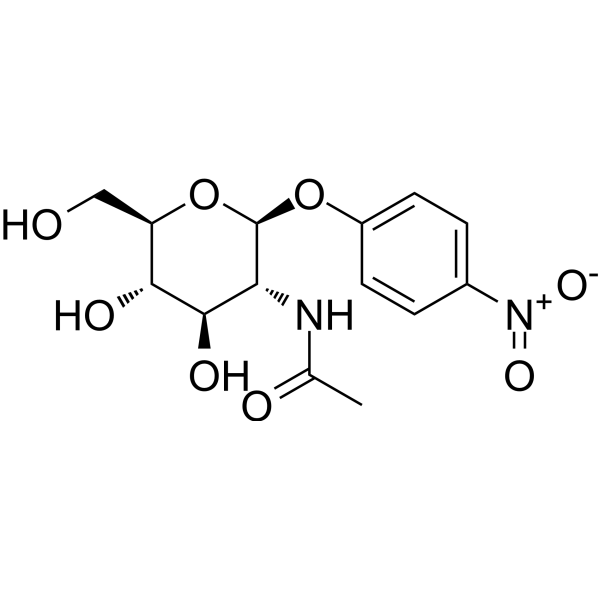
4-Nitrophenyl-N-acetyl-β-D-glucosaminide
Based on 1 publication(s) in Google Scholar
4-Nitrophenyl-N-acetyl-β-D-glucosaminide, an artificial substrate of N-acetyl-beta-D-hexosaminidase (NAGase), can be used in rapid and accurate rate assay for N-acetyl-beta-D-hexosaminidase. 4-Nitrophenyl-N-acetyl-β-D-glucosaminide is highly soluble and stable. 4-Nitrophenyl-N-acetyl-β-D-glucosaminide can be used for the study of renal tubular injury.
For research use only. We do not sell to patients.
- Purity : 99.97%
- CAS No.: 3459-18-5
- Formula: C14H18N2O8
- Molecular Weight:342.30
-
Storage:Powder -20°C, 3 years , 4°C, 2 years ; In solvent -80°C, 6 months , -20°C, 1 month

To place orders, for customer services and technical support, please contact: MedChemExpress USA
Tel: 609-228-6898 E-mail: [email protected] [email protected]


-
 Biological Activity
-
Chemical Information
-
Solvent & Solubility
- Purity & Documentation
- References
-
 Help & FAQs


-
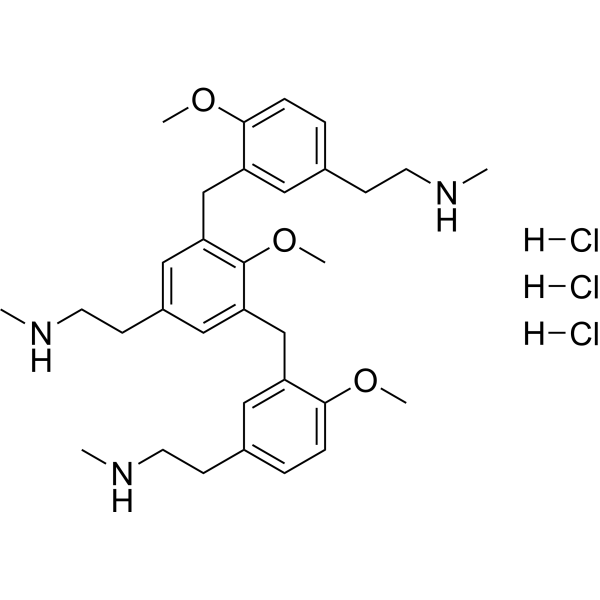
HY-130592
Compound 48/80 trihydrochloride -
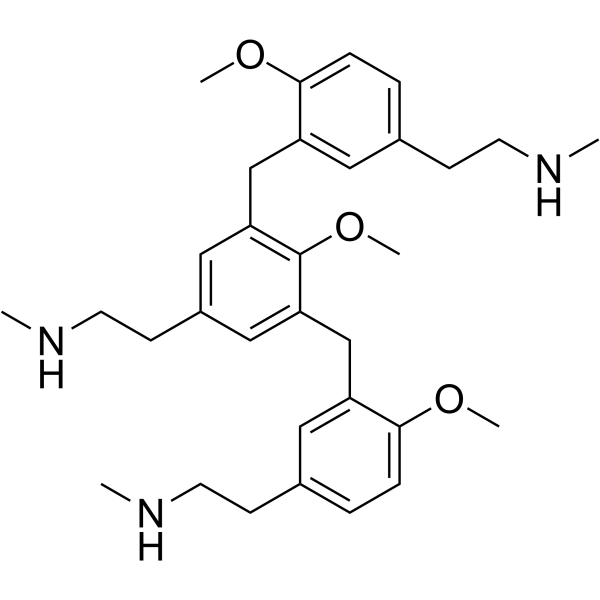
HY-115768
Compound 48/80 -
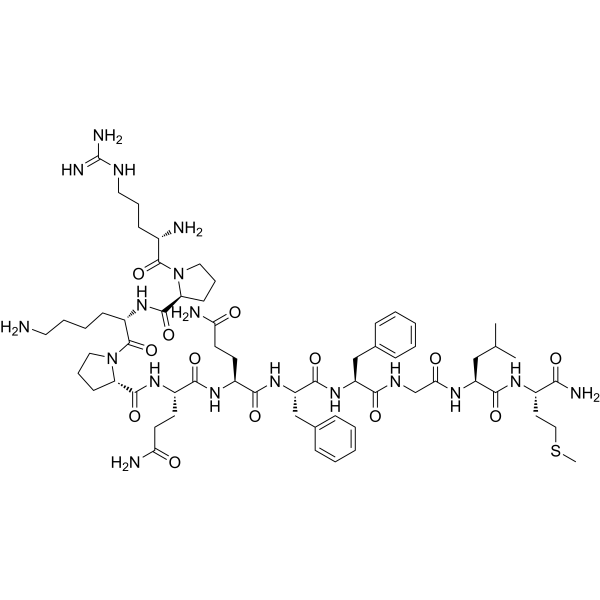
HY-P0201
Substance P -
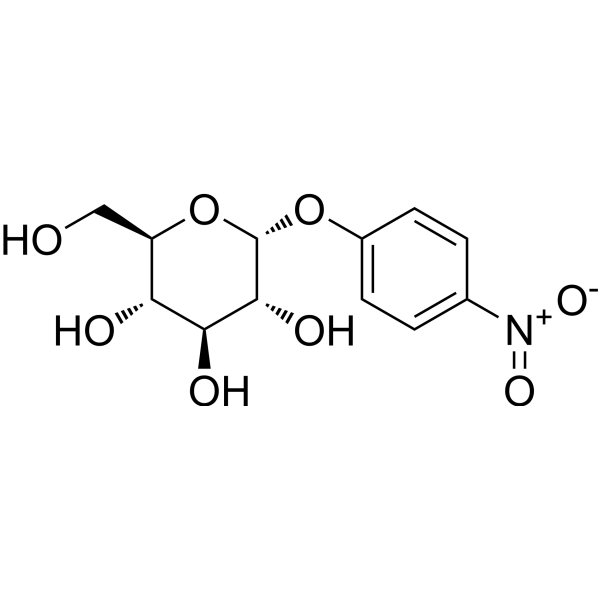
HY-W011411
4-Nitrophenyl a-D-glucopyranoside -
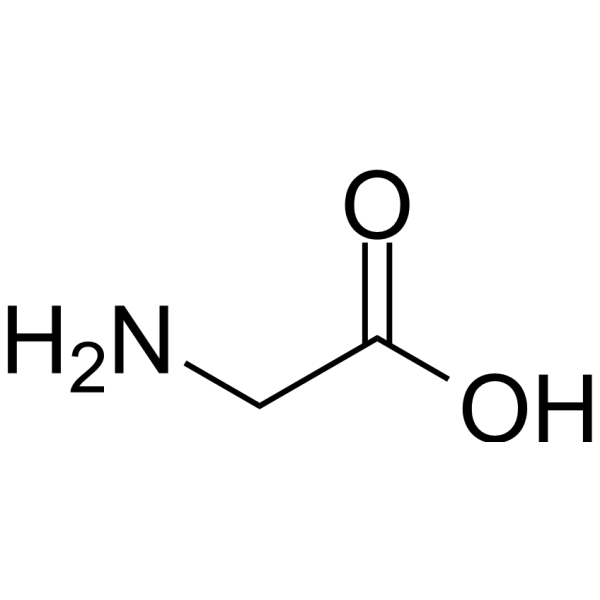
HY-Y0966
Glycine -
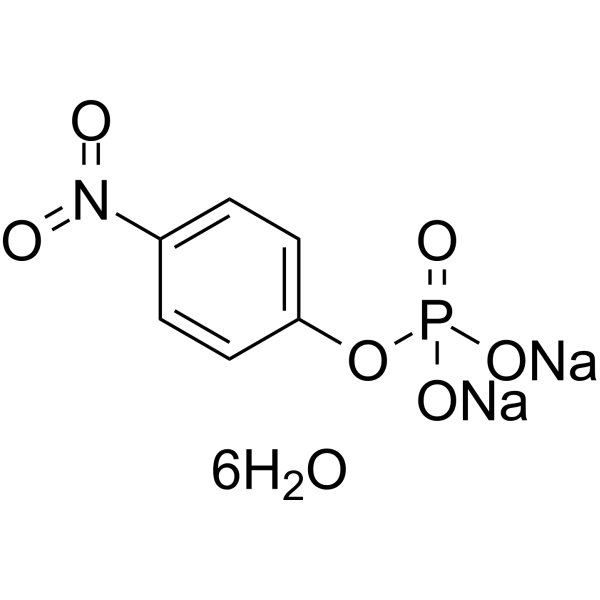
HY-116022A
4-Nitrophenyl phosphate disodium hexahydrate -
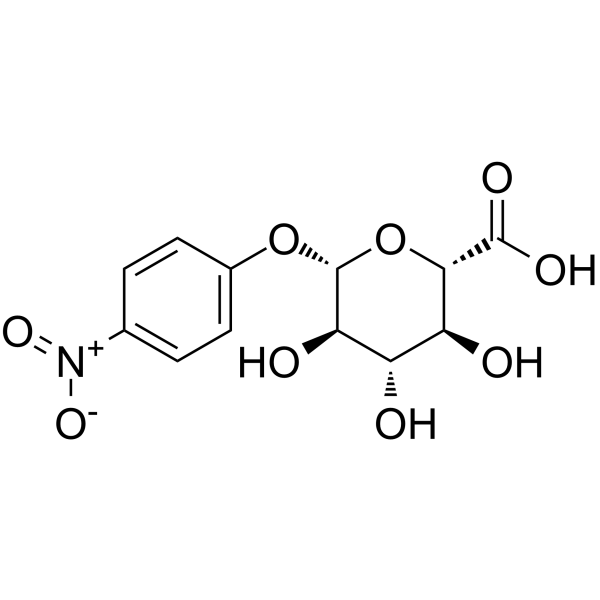
HY-W039892
4-Nitrophenyl β-D-glucuronide -
HY-10219
Rapamycin -
HY-15927
4-Nitrophenyl β-D-glucopyranoside -
HY-13259
MG-132 -

HY-D0842A
BSA Protein (Low Endotoxin,Fatty acid free) -
HY-N0437
Progesterone
Publications Citing Use of MedChemExpress (MCE) 4-Nitrophenyl-N-acetyl-β-D-glucosaminide
More

Biological Activity
Description
Cellular Effect
|
Cell Line

|
Type | Value | Description | References |
|---|---|---|---|---|
| Monocyte | IC50 |
42 nM
Compound: 39; AVR-48
|
Inhibition of TLR4 expression in human monocytes
Inhibition of TLR4 expression in human monocytes
|
[PMID: 35307617] |
In Vitro
4-Nitrophenyl-N-acetyl-β-D-glucosaminide (2.4 mM, in 0.1 M citrate buffer, pH 4.5, 5 min) acts as an artificial substrate for NAGase[1].
4-Nitrophenyl-N-acetyl-β-D-glucosaminide (2 mM, 100 μL, 15 min) acts as an specific substrate for N-acetyl-β-glucosaminidase in the epidermis of Penaeus aztecus[3].
MedChemExpress (MCE) has not independently confirmed the accuracy of these methods. They are for reference only.


Chemical Information
-
CAS No. 3459-18-5
-
Appearance Solid
-
Molecular Weight 342.30
-
Formula C14H18N2O8
-
Color White to off-white
-
SMILES
CC(N[C@H]([C@H]([C@@H]([C@H](O1)CO)O)O)[C@@H]1OC2=CC=C(C=C2)[N+]([O-])=O)=O
-
Shipping
Room temperature in continental US; may vary elsewhere.
-
Storage
Powder -20°C 3 years 4°C 2 years In solvent -80°C 6 months -20°C 1 month


Publications (1)
-
Journal Impact Factor
-
Most Recent
-
Int J Mol Sci
Adjuvant-Free Murine Models of Allergic Sensitization to the Major Soybean Allergen Gly m 4. [Abstract]2025 Dec 3;26(23):11695. PMID: 41373840


Solvent & Solubility
In Vitro:
DMSO : 40 mg/mL (116.86 mM; ultrasonic and adjust pH to 2 with 1 M HCl; Hygroscopic DMSO has a significant impact on the solubility of product, please use newly opened DMSO)
H2O : 2 mg/mL (5.84 mM; ultrasonic and warming and heat to 60°C)
Please refer to the solubility information to select the appropriate solvent. Once prepared, please aliquot and store the solution to prevent product inactivation from repeated freeze-thaw cycles.
Storage method and period of stock solution: -80°C, 6 months; -20°C, 1 month. When stored at -80°C, please use it within 6 months. When stored at -20°C, please use it within 1 month.
* Note: If you choose water as the stock solution, please dilute it to the working solution, then filter and sterilize it with a 0.22 μm filter before use.
Please refer to the solubility information to select the appropriate solvent. Once prepared, please aliquot and store the solution to prevent product inactivation from repeated freeze-thaw cycles.
Storage method and period of stock solution: -80°C, 6 months; -20°C, 1 month. When stored at -80°C, please use it within 6 months. When stored at -20°C, please use it within 1 month.
* Note: If you choose water as the stock solution, please dilute it to the working solution, then filter and sterilize it with a 0.22 μm filter before use.
Concentration (start) × Volume (start) = Concentration (final) × Volume (final)
In Vivo:
Select the appropriate dissolution method based on your experimental animal and administration route.
- For the following dissolution methods, please ensure to first prepare a clear stock solution using an In Vitro approach and then sequentially add co-solvents:
- To ensure reliable experimental results, the clarified stock solution can be appropriately stored based on storage conditions. As for the working solution for In Vivo experiments, it is recommended to prepare freshly and use it on the same day.
- The percentages shown for the solvents indicate their volumetric ratio in the final prepared solution. If precipitation or phase separation occurs during preparation, heat and/or sonication can be used to aid dissolution.
Add each solvent one by one: 10% DMSO 40% PEG300 5% Tween-80 45% Saline
Solubility: ≥ 1.25 mg/mL (3.65 mM); Clear solution
This protocol yields a clear solution of ≥ 1.25 mg/mL (saturation unknown).
Taking 1 mL working solution as an example, add 100 μL DMSO stock solution (12.5 mg/mL) to 400 μL PEG300, and mix evenly; then add 50 μL Tween-80 and mix evenly; then add 450 μL Saline to adjust the volume to 1 mL.
Preparation of Saline: Dissolve 0.9 g sodium chloride in ddH₂O and dilute to 100 mL to obtain a clear Saline solution.
Add each solvent one by one: 10% DMSO 90% (20% SBE-β-CD in Saline)
Solubility: ≥ 1.25 mg/mL (3.65 mM); Clear solution
This protocol yields a clear solution of ≥ 1.25 mg/mL (saturation unknown).
Taking 1 mL working solution as an example, add 100 μL DMSO stock solution (12.5 mg/mL) to 900 μL 20% SBE-β-CD in Saline, and mix evenly.
Preparation of 20% SBE-β-CD in Saline (4°C, storage for one week): 2 g SBE-β-CD powder is dissolved in 10 mL Saline, completely dissolve until clear.
In Vivo Dissolution Calculator
Please enter the basic information of animal experiments:
-
-
-
-
Recommended: Prepare an additional quantity of animals to account for potential losses during experiments.
Please enter your animal formula composition:
-
%DMSO +
Recommended: Keep the proportion of DMSO in working solution below 2% if your animal is weak.
-
%+
-
+%Tween-80 + +
-
%Saline +
The co-solvents required include: DMSO, . All of co-solvents are available by MedChemExpress (MCE). , Tween 80. All of co-solvents are available by MedChemExpress (MCE).
Working solution concentration: 0.22 mg/mL
Method for preparing stock solution: mg drug dissolved in μL DMSO. Stock solution concentration: mg/mL.
1. Take μL DMSO stock solution;
2. Add μL .
μL , mix evenly;
3. Then add μL Tween 80, mix evenly;
4. Then add μL
Please ensure that the stock solution in the first step is dissolved to a clear state, and add co-solvents in sequence. You can use ultrasonic heating (ultrasonic cleaner, recommended frequency 20-40 kHz), vortexing, etc. to assist dissolution.


Purity & Documentation
-
Data Sheet (276 KB)
-
SDS (393 KB)
- English - EN (393 KB)
- Français - FR (393 KB)
- Deutsch - DE (393 KB)
- Norwegian - NO (393 KB)
- Español - ES (393 KB)
- Swedish - SV (393 KB)
- Italian - IT (393 KB)
- Korean - KR (393 KB)
- Portuguese - PT (393 KB)
-
Handling Instructions (2659 KB)
References
[1]. Shibata H, et, al. Rate assay of N-acetyl-beta-D-hexosaminidase with 4-nitrophenyl N-acetyl-beta-D-glucosaminide as an artificial substrate. Clin Chim Acta. 1996 Jul 15;251(1):53-64. [Content Brief]
[2]. Skálová S, et al. The diagnostic role of urinary N-acetyl-beta-D-glucosaminidase (NAG) activity in the detection of renal tubular impairment. Acta Medica (Hradec Kralove). 2005;48(2):75-80. [Content Brief]
[3]. Zou E, et al. Effects of hypoxia and sedimentary naphthalene on the activity of N-acetyl-beta-glucosaminidase in the epidermis of the brown shrimp, Penaeus aztecus. Bull Environ Contam Toxicol. 2009 May;82(5):579-82. [Content Brief]


Complete Stock Solution Preparation Table
Please refer to the solubility information to select the appropriate solvent. Once prepared, please aliquot and store the solution to prevent product inactivation from repeated freeze-thaw cycles.
Storage method and period of stock solution: -80°C, 6 months; -20°C, 1 month. When stored at -80°C, please use it within 6 months. When stored at -20°C, please use it within 1 month.
| Optional Solvent | Concentration Solvent Mass | 1 mg | 5 mg | 10 mg | 25 mg |
|---|---|---|---|---|---|
| H2O / DMSO | 1 mM | 2.9214 mL | 14.6069 mL | 29.2138 mL | 73.0345 mL |
| 5 mM | 0.5843 mL | 2.9214 mL | 5.8428 mL | 14.6069 mL | |
| DMSO | 10 mM | 0.2921 mL | 1.4607 mL | 2.9214 mL | 7.3034 mL |
| 15 mM | 0.1948 mL | 0.9738 mL | 1.9476 mL | 4.8690 mL | |
| 20 mM | 0.1461 mL | 0.7303 mL | 1.4607 mL | 3.6517 mL | |
| 25 mM | 0.1169 mL | 0.5843 mL | 1.1686 mL | 2.9214 mL | |
| 30 mM | 0.0974 mL | 0.4869 mL | 0.9738 mL | 2.4345 mL | |
| 40 mM | 0.0730 mL | 0.3652 mL | 0.7303 mL | 1.8259 mL | |
| 50 mM | 0.0584 mL | 0.2921 mL | 0.5843 mL | 1.4607 mL | |
| 60 mM | 0.0487 mL | 0.2434 mL | 0.4869 mL | 1.2172 mL | |
| 80 mM | 0.0365 mL | 0.1826 mL | 0.3652 mL | 0.9129 mL | |
| 100 mM | 0.0292 mL | 0.1461 mL | 0.2921 mL | 0.7303 mL |
* Note: If you choose water as the stock solution, please dilute it to the working solution, then filter and sterilize it with a 0.22 μm filter before use.


4-Nitrophenyl-N-acetyl-β-D-glucosaminide Related Classifications
HY-W011183 Related Classifications
 Powered by Bioz