



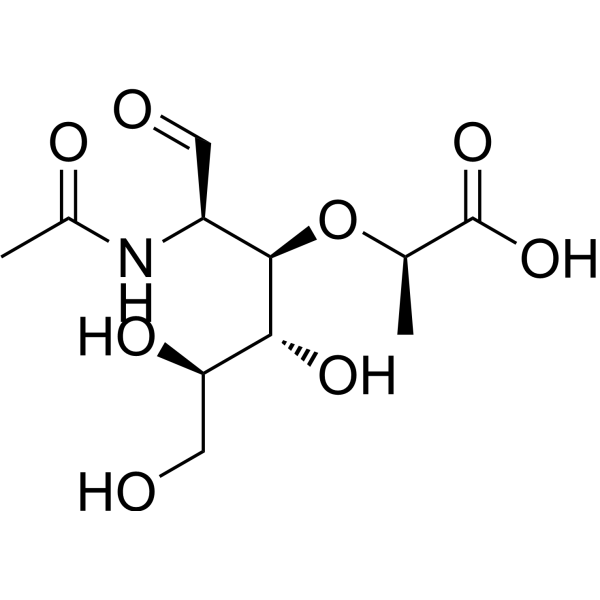
N-Acetylmuramic acid

Based on 1 Customer Validation
N-acetylmuramic acid is a component of the bacterial cell wall peptidoglycan, essential for maintaining cell shape and integrity. N-acetylmuramic acid inhibits spore germination by inhibiting a coat-associated hexosaminidase and a core enzyme. N-acetylmuramic acid is required by Bacteroides forsythus for proliferation and the maintenance of its cell shape. N-Acetylmuramic acid inhibits the p38 MAPK/NF-κB signaling pathway, and exhibits anti-inflammatory activity. N-Acetylmuramic acid is orally active.
For research use only. We do not sell to patients.
- Purity : 99.9%
- CAS No.: 10597-89-4
- Formula: C11H19NO8
- Molecular Weight:293.27
-
Storage:
-20°C, stored under nitrogen
* In solvent : -80°C, 6 months; -20°C, 1 month (stored under nitrogen)

To place orders, for customer services and technical support, please contact: MedChemExpress USA
Tel: 609-228-6898 E-mail: [email protected] [email protected]


-
 Biological Activity
-
Chemical Information
-
Solvent & Solubility
- Protocols
- Purity & Documentation
- References
-
 Help & FAQs




Biological Activity
Description
IC50 & Target
|
Human Endogenous Metabolite |
In Vitro
N-Acetylmuramic acid (0.1-10 mg/L, 5 days) destroys the cell wall, enables the normal growth of B. forsythus and the formation of a typical filamentous morphology[3].
N-Acetylmuramic acid (100-300 μg/mL, 18 h) reduces the expressions of iNOS and COX-2, inhibits and the secretion of TNF-α and IL-1β in LPS (HY-D1056)-stimulated RAW264.7 cell[4].
MedChemExpress (MCE) has not independently confirmed the accuracy of these methods. They are for reference only. Further protocols information, click here.
-
Cell Line:RAW264.7
-
Concentration:100-300 μg/mL
-
Incubation Time:48 h
-
Result:Inhibited the expression of iNOS and COX-2.
In Vivo
MedChemExpress (MCE) has not independently confirmed the accuracy of these methods. They are for reference only.
-
Animal Model:E. coli-infected mouse models[4]
-
Dosage:10-40 mg/kg
-
Administration:po, once daily for 25 days
-
Result:Inhibited E. coli-induced villus edema and thickening, increased the level of sIgA in mouse intestine.


Chemical Information
-
CAS No. 10597-89-4
-
Appearance Solid
-
Molecular Weight 293.27
-
Formula C11H19NO8
-
Color White to off-white
-
SMILES
CC(N[C@@H](C=O)[C@@H](O[C@H](C)C(O)=O)[C@H](O)[C@H](O)CO)=O
-
Synonyms
MurNAc; NAMA
-
Structure Classification
-
Initial Source
-
Shipping
Room temperature in continental US; may vary elsewhere.
-
Storage
-20°C, stored under nitrogen
* In solvent : -80°C, 6 months; -20°C, 1 month (stored under nitrogen)


Solvent & Solubility
In Vitro:
H2O : 100 mg/mL (340.98 mM; Need ultrasonic)
Please refer to the solubility information to select the appropriate solvent. Once prepared, please aliquot and store the solution to prevent product inactivation from repeated freeze-thaw cycles.
Storage method and period of stock solution: -80°C, 6 months; -20°C, 1 month (stored under nitrogen). When stored at -80°C, please use it within 6 months. When stored at -20°C, please use it within 1 month.
* Note: If you choose water as the stock solution, please dilute it to the working solution, then filter and sterilize it with a 0.22 μm filter before use.
Please refer to the solubility information to select the appropriate solvent. Once prepared, please aliquot and store the solution to prevent product inactivation from repeated freeze-thaw cycles.
Storage method and period of stock solution: -80°C, 6 months; -20°C, 1 month (stored under nitrogen). When stored at -80°C, please use it within 6 months. When stored at -20°C, please use it within 1 month.
* Note: If you choose water as the stock solution, please dilute it to the working solution, then filter and sterilize it with a 0.22 μm filter before use.
Concentration (start) × Volume (start) = Concentration (final) × Volume (final)

Protocols
-
Cotton Pellet Granuloma
Cotton pellet granuloma is a classical in vivo chronic inflammation model used to evaluate the anti-inflammatory potential of test substances by measuring their ability to inhibit granuloma tissue formation around an implanted foreign body (cotton pellet) in rodents. The method is based on the biological response to a sterile implanted material, which induces proliferative phase inflammation characterized by fibroblast proliferation and collagen-rich granuloma formation, and the final readout reflects the extent of chronic inflammatory tissue growth surrounding the pellet. In multiple preclinical pharmacological evaluations, inhibition of cotton pellet-induced granuloma formation has been used as an indicator of anti-inflammatory activity in both synthetic and natural product screening contexts.
-
Carrageenan-Induced Paw Edema
Carrageenan-induced paw edema is an acute inflammation model in which intraplantar injection of carrageenan induces localized inflammatory swelling characterized by vascular permeability, leukocyte infiltration, and production of inflammatory mediators such as prostaglandins and cytokines, making it widely used to evaluate anti-inflammatory agents in vivo. The resulting paw volume or thickness increase is quantified over time as a direct readout of inflammatory intensity and drug efficacy, typically reflecting cyclooxygenase-mediated prostaglandin-driven edema formation and immune cell recruitment in peripheral tissue[20].
-
Research Protocol for Inflammation-related Diseases
The NLRP3 inflammasome is a cytosolic innate immune signaling platform that integrates priming signals and danger-signal activation to promote caspase-1 activation, maturation of IL-1β and IL-18, and gasdermin D-mediated pyroptotic cell death. The core experimental logic is to determine whether inflammatory disease phenotypes are driven by increased NLRP3 expression, ASC-containing inflammasome assembly, caspase-1 cleavage, GSDMD cleavage, and extracellular release of IL-1β/IL-18 rather than by nonspecific cell injury alone. The pathway is strongly linked to inflammation-related disease phenotypes because monosodium urate crystals activate NALP3/NLRP3 inflammasome signaling in gout-like crystal inflammation, cholesterol crystals activate NLRP3 inflammasomes in atherogenesis models, and DSS-induced intestinal inflammation has been reported to involve NLRP3 inflammasome activity. However, experimental colitis studies also show context-dependent protective effects of NLRP3 inflammasome co
-
Cell Viability Determination by MTT Colorimetric Assay
The following protocol uses the MTT colorimetric assay as a classic literature-established method for assessing cell viability/metabolic activity in cultured mammalian cells. MTT[3-(4,5-dimethylthiazol-2-yl)-2,5-diphenyltetrazolium bromide] is reduced by metabolically active cells to a colored formazan product; the amount of formazan is quantified spectrophotometrically and provides an indirect measure of metabolically active viable cells. Importantly, MTT reduction reflects cellular oxidoreductase/metabolic activity rather than an absolute direct count of living cells, so changes in cellular metabolism can alter the signal independently of cell number.


Purity & Documentation
-
Data Sheet (278 KB)
-
SDS (557 KB)
- English - EN (557 KB)
- Français - FR (557 KB)
- Deutsch - DE (557 KB)
- Norwegian - NO (557 KB)
- Español - ES (557 KB)
- Swedish - SV (557 KB)
- Italian - IT (557 KB)
- Korean - KR (557 KB)
- Portuguese - PT (557 KB)
-
Handling Instructions (2659 KB)
References
[1]. Herbold DR, Glaser L. Interaction of N-acetylmuramic acid L-alanine amidase with cell wall polymers. J Biol Chem. 1975 Sep 25;250(18):7231-8 [Content Brief]
[2]. Brown W, et al. N-acetylmuramic acid inhibits spore germination and germination enzymes. J Basic Microbiol. 1990;30(2):67-72 [Content Brief]
[3]. Wyss C. Dependence of proliferation of Bacteroides forsythus on exogenous N-acetylmuramic acid. Infect Immun. 1989 Jun;57(6):1757-9 [Content Brief]


Complete Stock Solution Preparation Table
Please refer to the solubility information to select the appropriate solvent. Once prepared, please aliquot and store the solution to prevent product inactivation from repeated freeze-thaw cycles.
Storage method and period of stock solution: -80°C, 6 months; -20°C, 1 month (stored under nitrogen). When stored at -80°C, please use it within 6 months. When stored at -20°C, please use it within 1 month.
| Optional Solvent | Concentration Solvent Mass | 1 mg | 5 mg | 10 mg | 25 mg |
|---|---|---|---|---|---|
| H2O | 1 mM | 3.4098 mL | 17.0491 mL | 34.0983 mL | 85.2457 mL |
| 5 mM | 0.6820 mL | 3.4098 mL | 6.8197 mL | 17.0491 mL | |
| 10 mM | 0.3410 mL | 1.7049 mL | 3.4098 mL | 8.5246 mL | |
| 15 mM | 0.2273 mL | 1.1366 mL | 2.2732 mL | 5.6830 mL | |
| 20 mM | 0.1705 mL | 0.8525 mL | 1.7049 mL | 4.2623 mL | |
| 25 mM | 0.1364 mL | 0.6820 mL | 1.3639 mL | 3.4098 mL | |
| 30 mM | 0.1137 mL | 0.5683 mL | 1.1366 mL | 2.8415 mL | |
| 40 mM | 0.0852 mL | 0.4262 mL | 0.8525 mL | 2.1311 mL | |
| 50 mM | 0.0682 mL | 0.3410 mL | 0.6820 mL | 1.7049 mL | |
| 60 mM | 0.0568 mL | 0.2842 mL | 0.5683 mL | 1.4208 mL | |
| 80 mM | 0.0426 mL | 0.2131 mL | 0.4262 mL | 1.0656 mL | |
| 100 mM | 0.0341 mL | 0.1705 mL | 0.3410 mL | 0.8525 mL |
* Note: If you choose water as the stock solution, please dilute it to the working solution, then filter and sterilize it with a 0.22 μm filter before use.


N-Acetylmuramic acid Related Classifications
HY-W009274 Related Classifications
 Powered by Bioz