1. Apoptosis
  2. Bcl-2 Family
  3. AZD-5991

AZD-5991 est un inhibiteur de Mcl-1 qui est puissant et sélectif avec un IC50 de 0,7 nM dans le test FRET et un Kd de 0,17 nM dans le test de résonance plasmonique de surface (SPR).

AZD-5991 is a potent and selective Mcl-1 inhibitor with an IC50 of 0.7 nM in FRET assay and a Kd of 0.17 nM in surface plasmon resonance (SPR) assay.

For research use only. We do not sell to patients.

CAS No. : 2143061-81-6

Size Price Stock Quantity
Solid + Solvent (Highly Recommended)
10 mM * 1 mL in DMSO
ready for reconstitution
In-stock
Solution
10 mM * 1 mL in DMSO In-stock
Solid
5 mg In-stock
10 mg In-stock
25 mg In-stock
50 mg In-stock
100 mg In-stock
200 mg   Get quote  
500 mg   Get quote  

* Please select Quantity before adding items.

This product is a controlled substance and not for sale in your territory.

Customer Review

Based on 19 publication(s) in Google Scholar

Other Forms of AZD-5991:

Top Publications Citing Use of Products

    AZD-5991 purchased from MedChemExpress. Usage Cited in: Nat Commun. 2025 Aug 21;16(1):7689.  [Abstract]

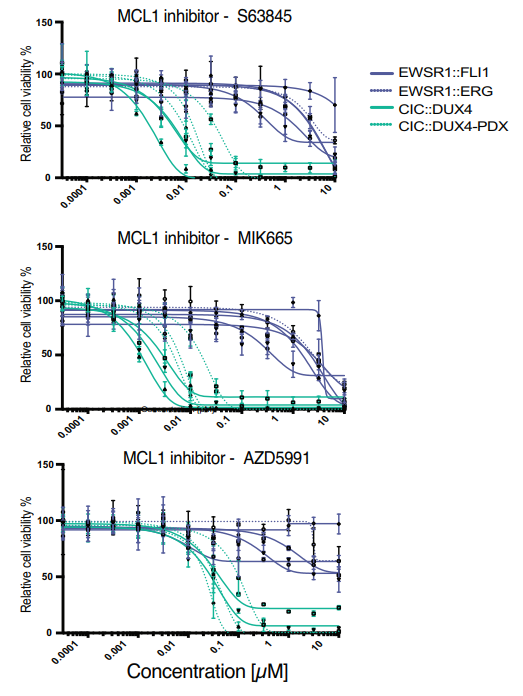
    CDS tumoroids were highly sensitive to AZD-5991 (0.0001-10 μM).

    AZD-5991 purchased from MedChemExpress. Usage Cited in: Nat Commun. 2025 Jan 2;16(1):256.  [Abstract]

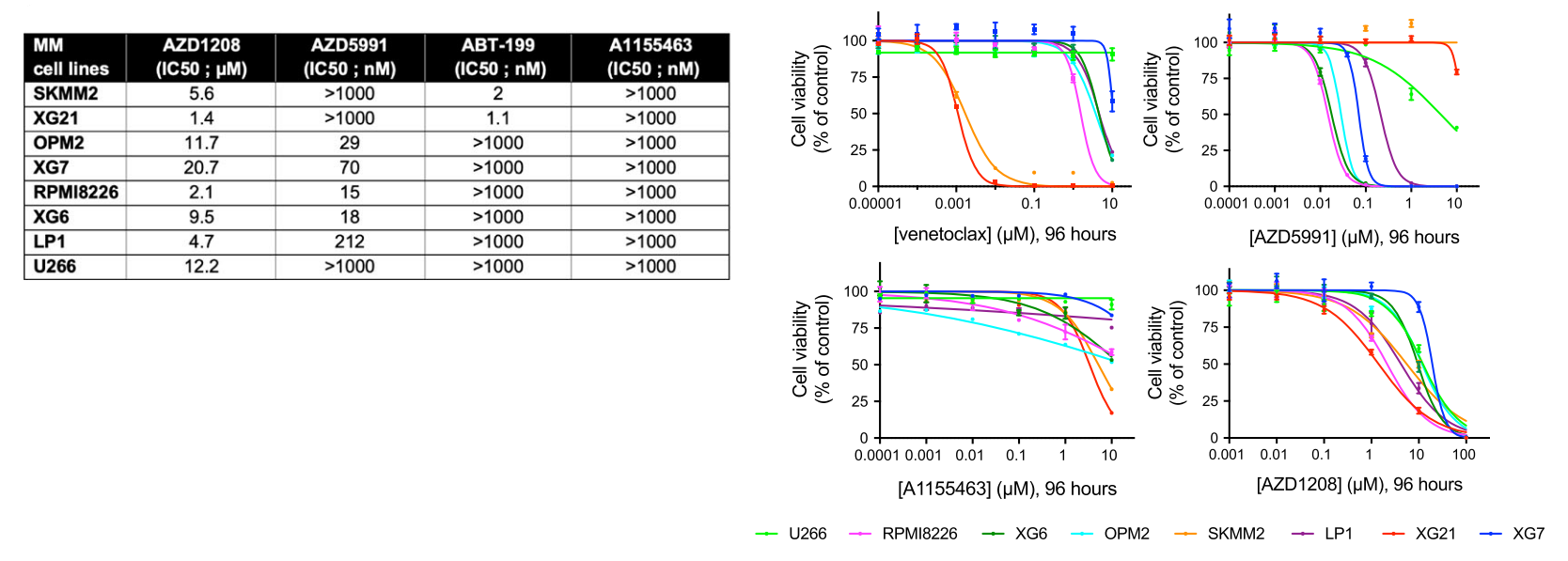
    Cell viability in MMCLs after treatment with AZD-5991 (0.0001-10 μM), with calculated IC50 values.

    AZD-5991 purchased from MedChemExpress. Usage Cited in: Mol Cell. 2024 Apr 4;84(7):1338-1353.e8.  [Abstract]

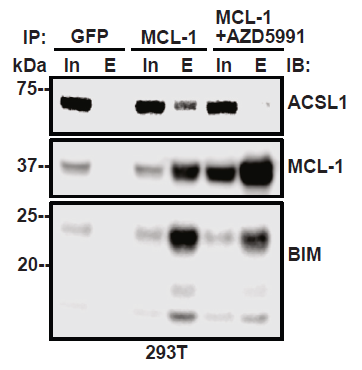
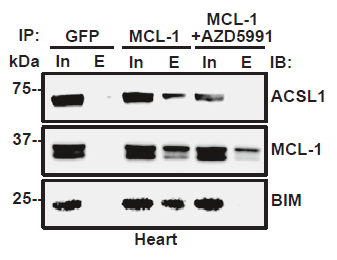
    MCL-1 inhibitors AZD-5991 (500 nM) stabilized MCL-1, but repressed the ability of human MCL-1 to co-precipitate with ACSL1 and BIM in 293T cells.

    AZD-5991 purchased from MedChemExpress. Usage Cited in: Mol Cell. 2024 Apr 4;84(7):1338-1353.e8.  [Abstract]

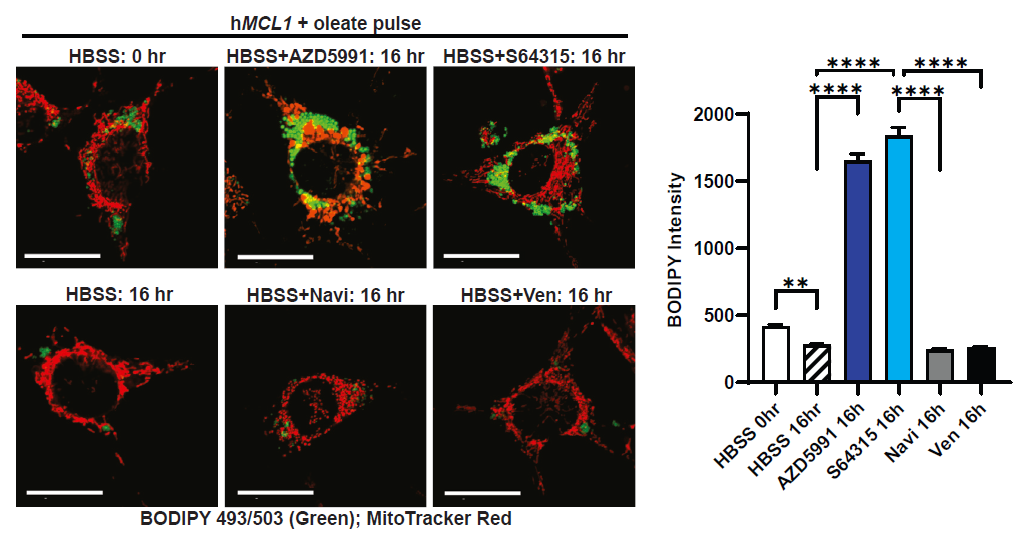
    MCL-1 inhibitors AZD-5991 (500 nM) significantly repressed the utilization of oleate-containing LDs in Mcl1F/F Rosa-ERCreT2 MEFs reconstituted with human MCL1.

    AZD-5991 purchased from MedChemExpress. Usage Cited in: Mol Cell. 2024 Apr 4;84(7):1338-1353.e8.  [Abstract]

    MCL-1 inhibitor AZD-5991 (1 mM) disrupted BIM and ACSL1 interactions with MCL-1.

    View All Bcl-2 Family Isoform Specific Products:

    • Biological Activity

    • Protocol

    • Purity & Documentation

    • References

    • Customer Review

    Description

    AZD-5991 is a potent and selective Mcl-1 inhibitor with an IC50 of 0.7 nM in FRET assay and a Kd of 0.17 nM in surface plasmon resonance (SPR) assay[1].

    IC50 & Target[1]

    Mcl-1

    0.7 nM (IC50)

    Mcl-1

    0.17 nM (Kd)

    Cellular Effect
    Cell Line Type Value Description References
    AMO1 EC50
    22.9 nM
    Compound: AZD5991
    Antiproliferative activity against human AMO1 cells assessed as reduction in cell viability
    Antiproliferative activity against human AMO1 cells assessed as reduction in cell viability
    [PMID: 38597264]
    K562 IC50
    29.6 μM
    Compound: 5; AZD5991
    Antiproliferative activity against human K562 cells assessed as decrease in cell viability measured after 72 hrs by MTT assay
    Antiproliferative activity against human K562 cells assessed as decrease in cell viability measured after 72 hrs by MTT assay
    [PMID: 34342996]
    MOLP-8 EC50
    33 nM
    Compound: AZD5991
    Antiproliferative activity against human MOLP8 cells assessed as reduction in cell viability incubated for 24 hrs by Celltiter-Glo reagent based assay
    Antiproliferative activity against human MOLP8 cells assessed as reduction in cell viability incubated for 24 hrs by Celltiter-Glo reagent based assay
    [PMID: 38597264]
    MV4-11 EC50
    24 nM
    Compound: AZD5991
    Antiproliferative activity against human MV4-11 cells assessed as reduction in cell viability incubated for 24 hrs by Celltiter-Glo reagent based assay
    Antiproliferative activity against human MV4-11 cells assessed as reduction in cell viability incubated for 24 hrs by Celltiter-Glo reagent based assay
    [PMID: 38597264]
    MV4-11 EC50
    34.9 nM
    Compound: AZD5991
    Antiproliferative activity against human MV4-11 cells assessed as reduction in cell viability
    Antiproliferative activity against human MV4-11 cells assessed as reduction in cell viability
    [PMID: 38597264]
    MV4-11 IC50
    0.024 μM
    Compound: 5; AZD5991
    Antiproliferative activity against human MV4-11 cells assessed as decrease in cell viability measured after 72 hrs by MTT assay
    Antiproliferative activity against human MV4-11 cells assessed as decrease in cell viability measured after 72 hrs by MTT assay
    [PMID: 34342996]
    NCI-H23 EC50
    190 nM
    Compound: AZD5991
    Antiproliferative activity against human NCI-H23 cells assessed as reduction in cell viability incubated for 24 hrs by Celltiter-Glo reagent based assay
    Antiproliferative activity against human NCI-H23 cells assessed as reduction in cell viability incubated for 24 hrs by Celltiter-Glo reagent based assay
    [PMID: 38597264]
    NCI-H23 IC50
    0.19 μM
    Compound: 5; AZD5991
    Antiproliferative activity against human NCI-H23 cells assessed as decrease in cell viability measured after 72 hrs by MTT assay
    Antiproliferative activity against human NCI-H23 cells assessed as decrease in cell viability measured after 72 hrs by MTT assay
    [PMID: 34342996]
    NCI-H929 EC50
    31.7 nM
    Compound: AZD5991
    Antiproliferative activity against human NCI-H929 cells assessed as reduction in cell viability
    Antiproliferative activity against human NCI-H929 cells assessed as reduction in cell viability
    [PMID: 38597264]
    NCI-H929 IC50
    0.036 μM
    Compound: 5; AZD5991
    Antiproliferative activity against human NCI-H929 cells assessed as decrease in cell viability measured after 72 hrs by MTT assay
    Antiproliferative activity against human NCI-H929 cells assessed as decrease in cell viability measured after 72 hrs by MTT assay
    [PMID: 34342996]
    SK-BR-3 IC50
    30 μM
    Compound: 5; AZD5991
    Antiproliferative activity against human SK-BR-3 cells assessed as decrease in cell viability measured after 72 hrs by MTT assay
    Antiproliferative activity against human SK-BR-3 cells assessed as decrease in cell viability measured after 72 hrs by MTT assay
    [PMID: 34342996]
    In Vitro

    The selectivity of AZD-5991 is evaluated against pro-survival Bcl-2 family members using FRET assays. AZD-5991 is selective for Mcl-1 (IC50 0.72 nM, Ki=200 pM) vs. Bcl-2 (IC50=20 μM, Ki=6.8 μM), Bcl-xL (IC50=36 μM, Ki=18 μM), Bcl-w (IC50=49 μM, Ki=25 μM), and Bfl-1 (IC50=24 μM, Ki=12 μM). MOLP-8, MV4-11, and NCI-H23 cells are treated with AZD5991 (EC50=0.033, 0.024, 0.19 μM, respectively).AZD5991 binds directly to Mcl-1 and induces rapid apoptosis in cancer cells, most notably myeloma and acute myeloid leukemia, by activating the Bak-dependent mitochondrial apoptotic pathway. AZD5991 reduces the levels of Mcl-1 protein in AZD5991-sensitive but not in AZD5991-resistant MM cell lines further supporting the notion that activation of caspases by AZD5991 reduces Mcl-1 protein levels in AZD5991-sensitive cell lines[1].

    MedChemExpress (MCE) has not independently confirmed the accuracy of these methods. They are for reference only.

    In Vivo

    A single intravenous (i.v.) dose of AZD5991 leads to a dose-dependent antitumor effect ranging from tumor growth inhibition (TGI) to tumor regression (TR). Ten days after treatment, AZD5991 shows 52% and 93% TGI (p<0.0001) at 10 and 30 mg/kg, respectively. At the same time point, AZD5991 at 60 mg/kg leads to 99% TR with no detectable tumors in 6 out of 7 mice, while complete TR is seen in 7 out of 7 mice in the 100 mg/kg dose group. AZD5991 also shows a dose-dependent duration of response with tumors in the 100 mg/kg group growing back later than those in the 60 mg/kg group. The magnitude of in vivo tumor efficacy is correlated with activation of caspase-3 in the tumor and concentration of AZD5991 in plasma. Treatment with AZD5991 was well tolerated at all dose levels with no significant body weight loss. A single dose of AZD5991 36 days after the first dose causes tumor regression in 4 out of 4 mice. In mice dosed with AZD5991 at 100 mg/kg on day 0 and day 1, tumors grow back later than those dosed with a single dose of AZD5991 at the same dose level[1].

    MedChemExpress (MCE) has not independently confirmed the accuracy of these methods. They are for reference only.

    Clinical Trial
    Molecular Weight

    672.26

    Formula

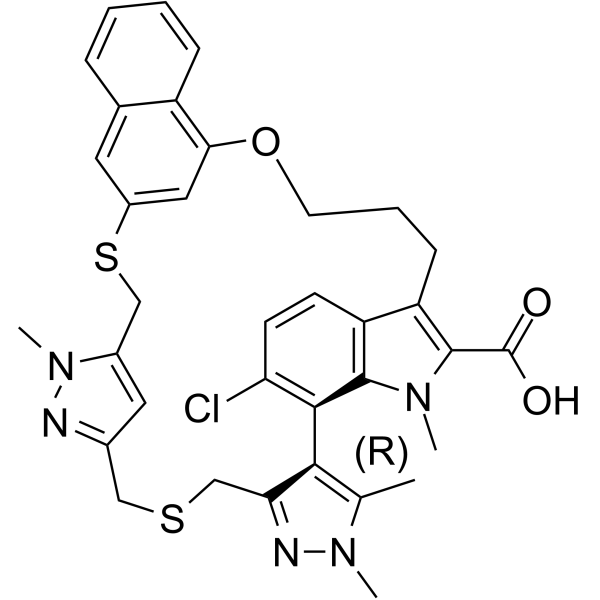
    C35H34ClN5O3S2

    CAS No.
    Appearance

    Solid

    Color

    White to off-white

    SMILES

    O=C(O)C1=C(CCCOC2=C(C=CC=C3)C3=CC4=C2)C5=C(N1C)C(C6=C(C)N(C)N=C6CSCC7=NN(C)C(CS4)=C7)=C(Cl)C=C5

    Shipping

    Room temperature in continental US; may vary elsewhere.

    Storage
    Powder -20°C 3 years
    4°C 2 years
    In solvent -80°C 1 year
    -20°C 6 months
    Solvent & Solubility
    In Vitro: 

    DMSO : 250 mg/mL (371.88 mM; Need ultrasonic; Hygroscopic DMSO has a significant impact on the solubility of product, please use newly opened DMSO)

    Preparing
    Stock Solutions
    Concentration Solvent Mass 1 mg 5 mg 10 mg
    1 mM 1.4875 mL 7.4376 mL 14.8752 mL
    5 mM 0.2975 mL 1.4875 mL 2.9750 mL
    View the Complete Stock Solution Preparation Table

    * Please refer to the solubility information to select the appropriate solvent. Once prepared, please aliquot and store the solution to prevent product inactivation from repeated freeze-thaw cycles.
    Storage method and period of stock solution: -80°C, 1 year; -20°C, 6 months. When stored at -80°C, please use it within 1 year. When stored at -20°C, please use it within 6 months.

    • Molarity Calculator

    • Dilution Calculator

    Mass (g) = Concentration (mol/L) × Volume (L) × Molecular Weight (g/mol)

    Mass
    =
    Concentration
    ×
    Volume
    ×
    Molecular Weight *

    Concentration (start) × Volume (start) = Concentration (final) × Volume (final)

    This equation is commonly abbreviated as: C1V1 = C2V2

    Concentration (start)

    C1

    ×
    Volume (start)

    V1

    =
    Concentration (final)

    C2

    ×
    Volume (final)

    V2

    In Vivo:

    Select the appropriate dissolution method based on your experimental animal and administration route.

    For the following dissolution methods, please ensure to first prepare a clear stock solution using an In Vitro approach and then sequentially add co-solvents:
    To ensure reliable experimental results, the clarified stock solution can be appropriately stored based on storage conditions. As for the working solution for in vivo experiments, it is recommended to prepare freshly and use it on the same day.
    The percentages shown for the solvents indicate their volumetric ratio in the final prepared solution. If precipitation or phase separation occurs during preparation, heat and/or sonication can be used to aid dissolution.

    • Protocol 1

      Add each solvent one by one:  10% DMSO    40% PEG300    5% Tween-80    45% Saline

      Solubility: ≥ 2.08 mg/mL (3.09 mM); Clear solution

      This protocol yields a clear solution of ≥ 2.08 mg/mL (saturation unknown).

      Taking 1 mL working solution as an example, add 100 μL DMSO stock solution (20.8 mg/mL) to 400 μL PEG300, and mix evenly; then add 50 μL Tween-80 and mix evenly; then add 450 μL Saline to adjust the volume to 1 mL.

      Preparation of Saline: Dissolve 0.9 g sodium chloride in ddH₂O and dilute to 100 mL to obtain a clear Saline solution.
    • Protocol 2

      Add each solvent one by one:  10% DMSO    90% (20% SBE-β-CD in Saline)

      Solubility: 2.08 mg/mL (3.09 mM); Suspended solution; Need ultrasonic

      This protocol yields a suspended solution of 2.08 mg/mL. Suspended solution can be used for oral and intraperitoneal injection.

      Taking 1 mL working solution as an example, add 100 μL DMSO stock solution (20.8 mg/mL) to 900 μL 20% SBE-β-CD in Saline, and mix evenly.

      Preparation of 20% SBE-β-CD in Saline (4°C, storage for one week): 2 g SBE-β-CD powder is dissolved in 10 mL Saline, completely dissolve until clear.
    In Vivo Dissolution Calculator
    Please enter the basic information of animal experiments:

    Dosage

    mg/kg

    Animal weight
    (per animal)

    g

    Dosing volume
    (per animal)

    μL

    Number of animals

    Recommended: Prepare an additional quantity of animals to account for potential losses during experiments.
    Please enter your animal formula composition:
    %
    DMSO +
    +
    %
    Tween-80 +
    %
    Saline
    Recommended: Keep the proportion of DMSO in working solution below 2% if your animal is weak.
    The co-solvents required include: DMSO, . All of co-solvents are available by MedChemExpress (MCE). , Tween 80. All of co-solvents are available by MedChemExpress (MCE).
    Calculation results:
    Working solution concentration: mg/mL
    Method for preparing stock solution: mg drug dissolved in μL  DMSO (Stock solution concentration: mg/mL).
    The concentration of the stock solution you require exceeds the measured solubility. The following solution is for reference only. If necessary, please contact MedChemExpress (MCE).
    Method for preparing in vivo working solution for animal experiments: Take μL DMSO stock solution, add μL . μL , mix evenly, next add μL Tween 80, mix evenly, then add μL Saline.
     If the continuous dosing period exceeds half a month, please choose this protocol carefully.
    Please ensure that the stock solution in the first step is dissolved to a clear state, and add co-solvents in sequence. You can use ultrasonic heating (ultrasonic cleaner, recommended frequency 20-40 kHz), vortexing, etc. to assist dissolution.
    Purity & Documentation

    Purity: 99.79%

    References
    Animal Administration
    [1]

    Mice and Rats[1]
    In mice, drugs (e.g., AZD5991; 10-100 mg/kg) are dosed intravenously in a volume of 5 mL/kg except for Venetoclax that is dosed orally in a volume of 10 mL/kg. One million MV4-11, five million MOLP-8, ten million NCI-H929 or five million OCI-AML3 cells are injected subcutaneously in the right flank of mice in a volume of 0.1 mL. In rats, AZD5991 (10-100 mg/kg) is dosed intravenously in a volume of 10 mL/kg. Ten million MV4-11 cells are injected subcutaneously in the right flank of rats in a volume of 0.1 mL. Tumor volumes (measured by caliper), animal body weight, and tumor condition are recorded twice weekly for the duration of the study. The tumor volume is calculated[1].

    MCE has not independently confirmed the accuracy of these methods. They are for reference only.

    References

    Complete Stock Solution Preparation Table

    * Please refer to the solubility information to select the appropriate solvent. Once prepared, please aliquot and store the solution to prevent product inactivation from repeated freeze-thaw cycles.
    Storage method and period of stock solution: -80°C, 1 year; -20°C, 6 months. When stored at -80°C, please use it within 1 year. When stored at -20°C, please use it within 6 months.

    Optional Solvent Concentration Solvent Mass 1 mg 5 mg 10 mg 25 mg
    DMSO 1 mM 1.4875 mL 7.4376 mL 14.8752 mL 37.1880 mL
    5 mM 0.2975 mL 1.4875 mL 2.9750 mL 7.4376 mL
    10 mM 0.1488 mL 0.7438 mL 1.4875 mL 3.7188 mL
    15 mM 0.0992 mL 0.4958 mL 0.9917 mL 2.4792 mL
    20 mM 0.0744 mL 0.3719 mL 0.7438 mL 1.8594 mL
    25 mM 0.0595 mL 0.2975 mL 0.5950 mL 1.4875 mL
    30 mM 0.0496 mL 0.2479 mL 0.4958 mL 1.2396 mL
    40 mM 0.0372 mL 0.1859 mL 0.3719 mL 0.9297 mL
    50 mM 0.0298 mL 0.1488 mL 0.2975 mL 0.7438 mL
    60 mM 0.0248 mL 0.1240 mL 0.2479 mL 0.6198 mL
    80 mM 0.0186 mL 0.0930 mL 0.1859 mL 0.4648 mL
    100 mM 0.0149 mL 0.0744 mL 0.1488 mL 0.3719 mL
    • No file chosen (Maximum size is: 1024 Kb)
    • If you have published this work, please enter the PubMed ID.
    • Your name will appear on the site.
    Help & FAQs
    • Do most proteins show cross-species activity?

      Species cross-reactivity must be investigated individually for each product. Many human cytokines will produce a nice response in mouse cell lines, and many mouse proteins will show activity on human cells. Other proteins may have a lower specific activity when used in the opposite species.

    Your Recently Viewed Products:

    Inquiry Online

    Your information is safe with us. * Required Fields.

    Product Name


    Requested Quantity *

    Applicant Name *


    Salutation

    Email Address *


    Phone Number *

    Department


    Organization Name *

    City

    State

    Country or Region *


    Remarks

    Bulk Inquiry

    Inquiry Information

    Product Name:
    AZD-5991
    Cat. No.:
    HY-101533
    Quantity:
    MCE Japan Authorized Agent: