



Magnolin
Based on 2 publication(s) in Google Scholar
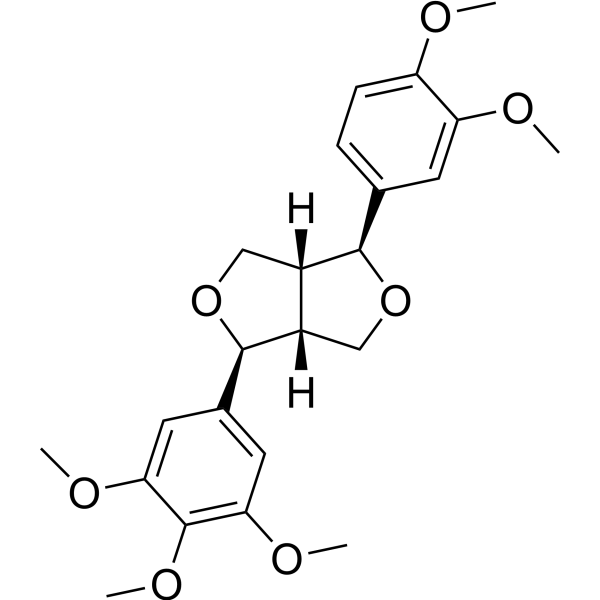
Magnolin, a major component of Magnolia liliiflora, inhibits the Ras/ERKs/RSK2 signaling axis by targeting the active pocket of ERK1 and ERK2 with IC50s of 87 nM and 16.5 nM, respectively.
For research use only. We do not sell to patients.
- Purity : 99.98%
- CAS No.: 31008-18-1
- Formula: C23H28O7
- Molecular Weight:416.46
-
Storage:Powder -20°C, 3 years , 4°C, 2 years ; In solvent -80°C, 6 months , -20°C, 1 month

To place orders, for customer services and technical support, please contact: MedChemExpress USA
Tel: 609-228-6898 E-mail: [email protected] [email protected]


-
 Biological Activity
-
Chemical Information
-
Solvent & Solubility
- Purity & Documentation
- References
-
 Help & FAQs


-
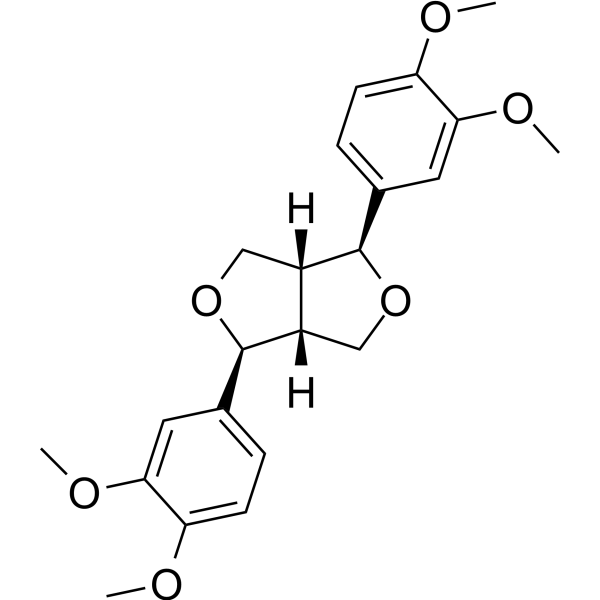
HY-N2180
(+)-EudesminFurofuran Lignan -
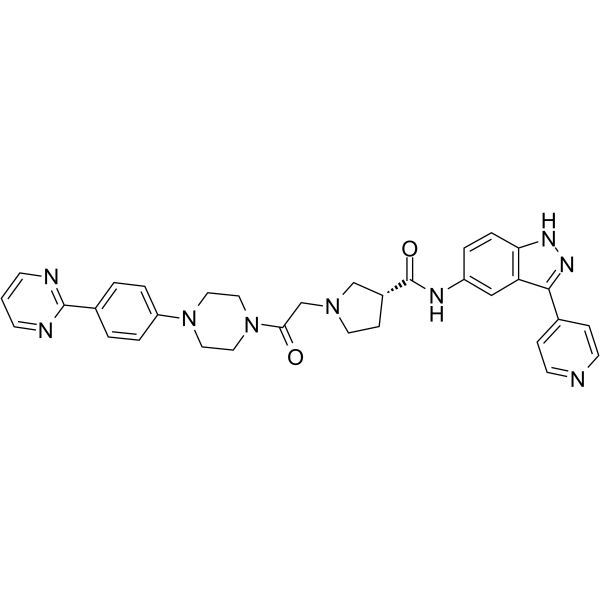
HY-50846
SCH772984ERK1/2 Inhibitor -
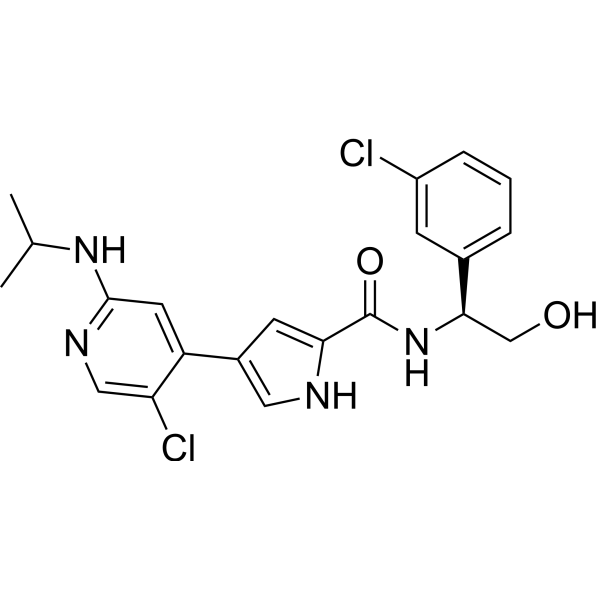
HY-15816
UlixertinibERK1/2 Inhibitor -
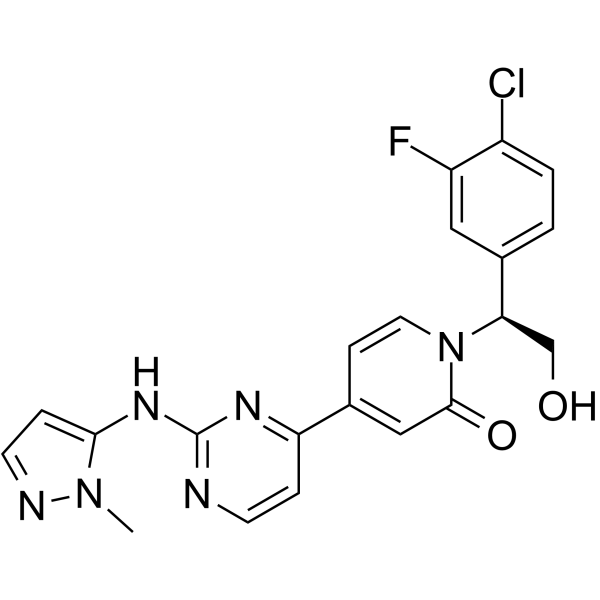
HY-15947
RavoxertinibERK1/2 Inhibitor -
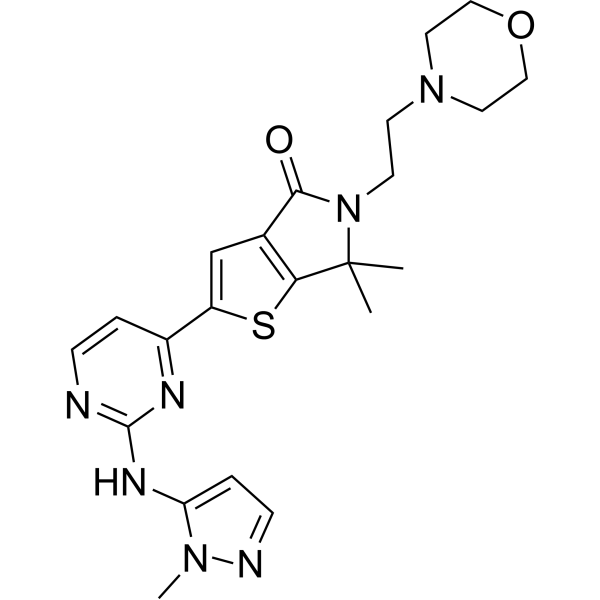
HY-101494
TemuterkibERK1/ERK2 Inhibitor -
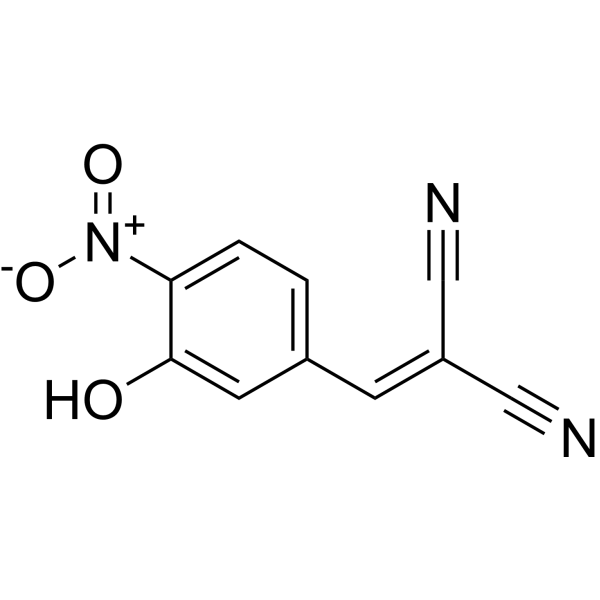
HY-108330
AG126Tyrosine Kinase Inhibitor -
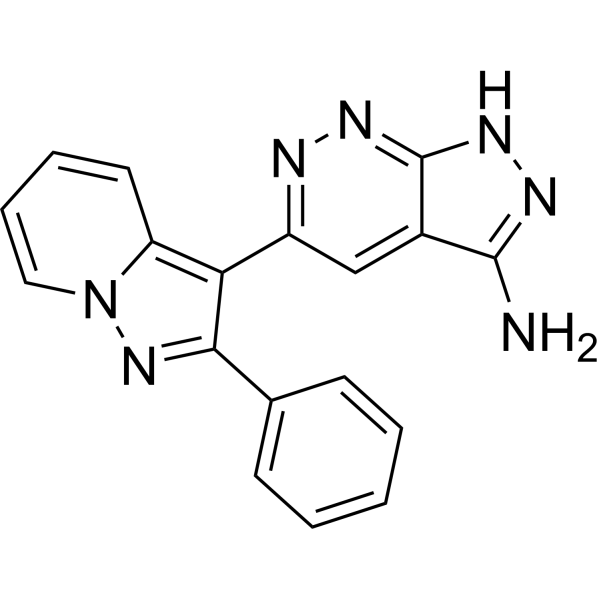
HY-12275
FR 180204ERK Inhibitor -
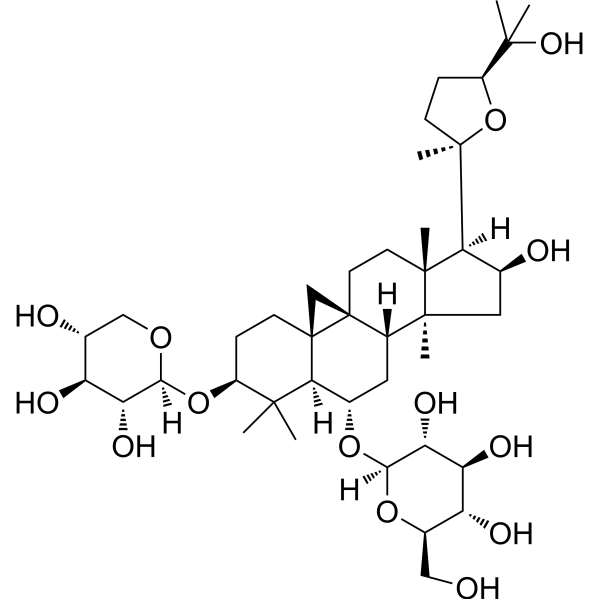
HY-N0431
Astragaloside IVMMP Inhibitor -
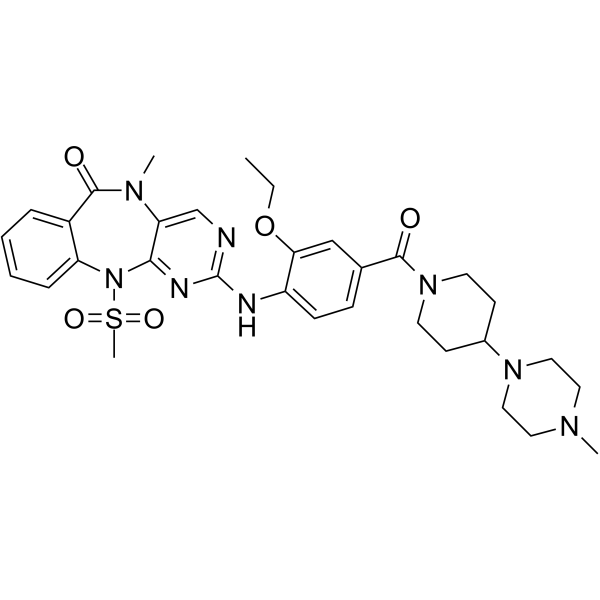
HY-101846
AX-15836ERK5 Inhibitor -
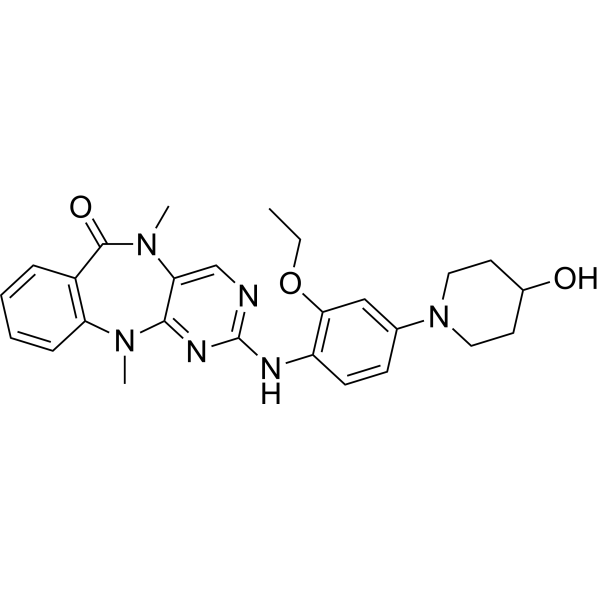
HY-14443
XMD8-92ERK5/BRD4 Inhibitor -
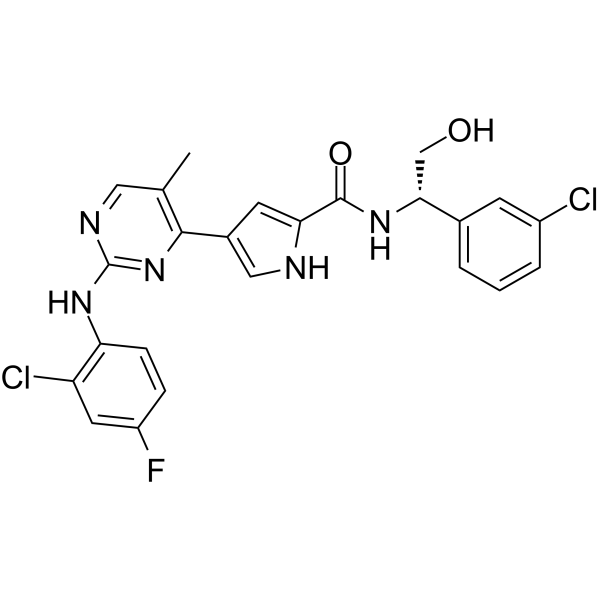
HY-14178
VX-11eERK Inhibitor -
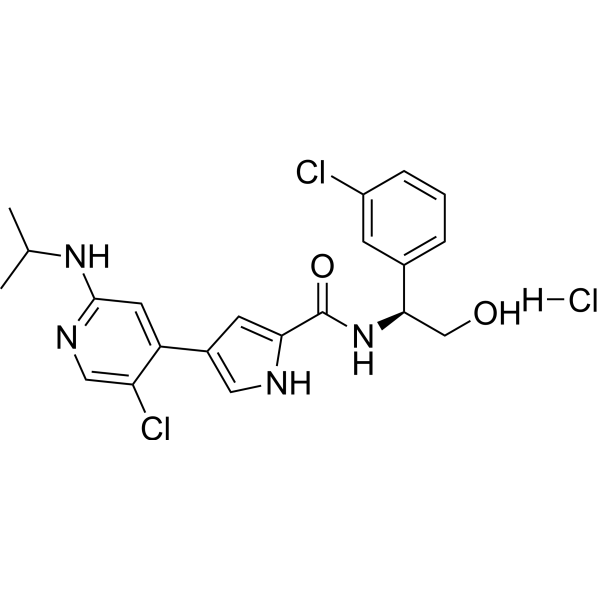
HY-15816A
Ulixertinib hydrochlorideERK1/2 Inhibitor
Publications Citing Use of MedChemExpress (MCE) Magnolin
More

Biological Activity
Description
IC50 & Target
[1]|
ERK2 16.5 nM (IC50) |
ERK1 87 nM (IC50) |
Cellular Effect
|
Cell Line

|
Type | Value | Description | References |
|---|---|---|---|---|
| BV-2 | IC50 |
20.5 μM
Compound: 2
|
Inhibition of NO production in LPS-stimulated mouse BV2 cells assessed as nitrite accumulation after 20 hrs by Griess reagent method
Inhibition of NO production in LPS-stimulated mouse BV2 cells assessed as nitrite accumulation after 20 hrs by Griess reagent method
|
[PMID: 19110419] |
In Vitro
Magnolin is a natural compound abundantly found in Magnolia flos, which has been traditionally used in oriental medicine to treat headaches, nasal congestion and anti-inflammatory reactions. Magnolin targets the active pockets of ERK1 and ERK2, which are important signaling molecules in cancer cell metastasis. Magnolin inhibits NF-κB transactivation activity by suppressing the ERKs/RSK2 signaling pathway. Magnolin inhibits the production of tumor necrosis factor-α (TNF-α) and prostaglandin E2 (PGE2) by inhibiting extracellular signal-regulated kinases (ERKs), which are key signaling molecules in the regulation of cell proliferation, transformation and cancer cell metastasis. JB6 Cl41 cell migration enhanced by EGF treatment is dramatically suppressed by Magnolin treatment in a dose-dependent manner. Magnolin inhibits ERK1/2/RSK2 signaling-mediated IκBα phosphorylation at Ser32, resulting in the inhibition of NF-κB activation and cell migration[1].
MedChemExpress (MCE) has not independently confirmed the accuracy of these methods. They are for reference only.


Chemical Information
-
CAS No. 31008-18-1
-
Appearance Solid
-
Molecular Weight 416.46
-
Formula C23H28O7
-
Color White to off-white
-
SMILES
COC1=C(OC)C(OC)=CC([C@H]2OC[C@]3([H])[C@@H](C4=CC=C(OC)C(OC)=C4)OC[C@@]32[H])=C1
-
Structure Classification
-
Initial Source
-
Shipping
Room temperature in continental US; may vary elsewhere.
-
Storage
Powder -20°C 3 years 4°C 2 years In solvent -80°C 6 months -20°C 1 month


Publications (2)
-
Journal Impact Factor
-
Most Recent
-
Phytomedicine
Magnolin Promotes PINK1-Parkin-mediated Mitophagy in Diffuse Large B-cell Lymphoma Cells via PPAR-γ Pathway. [Abstract]2025 Sep:145:157059. PMID: 40680330 -
Brain Res Bull
Progesterone Suppresses Cholesterol Esterification in APP/PS1 mice and a cell model of Alzheimer's Disease. [Abstract]2021 Aug:173:162-173. PMID: 34044033


Solvent & Solubility
In Vitro:
DMSO : 66.67 mg/mL (160.09 mM; Need ultrasonic; Hygroscopic DMSO has a significant impact on the solubility of product, please use newly opened DMSO)
Please refer to the solubility information to select the appropriate solvent. Once prepared, please aliquot and store the solution to prevent product inactivation from repeated freeze-thaw cycles.
Storage method and period of stock solution: -80°C, 6 months; -20°C, 1 month. When stored at -80°C, please use it within 6 months. When stored at -20°C, please use it within 1 month.
Please refer to the solubility information to select the appropriate solvent. Once prepared, please aliquot and store the solution to prevent product inactivation from repeated freeze-thaw cycles.
Storage method and period of stock solution: -80°C, 6 months; -20°C, 1 month. When stored at -80°C, please use it within 6 months. When stored at -20°C, please use it within 1 month.
Concentration (start) × Volume (start) = Concentration (final) × Volume (final)
In Vivo:
Select the appropriate dissolution method based on your experimental animal and administration route.
- For the following dissolution methods, please ensure to first prepare a clear stock solution using an In Vitro approach and then sequentially add co-solvents:
- To ensure reliable experimental results, the clarified stock solution can be appropriately stored based on storage conditions. As for the working solution for In Vivo experiments, it is recommended to prepare freshly and use it on the same day.
- The percentages shown for the solvents indicate their volumetric ratio in the final prepared solution. If precipitation or phase separation occurs during preparation, heat and/or sonication can be used to aid dissolution.
Add each solvent one by one: 10% DMSO 40% PEG300 5% Tween-80 45% Saline
Solubility: ≥ 2.5 mg/mL (6.00 mM); Clear solution
This protocol yields a clear solution of ≥ 2.5 mg/mL (saturation unknown).
Taking 1 mL working solution as an example, add 100 μL DMSO stock solution (25.0 mg/mL) to 400 μL PEG300, and mix evenly; then add 50 μL Tween-80 and mix evenly; then add 450 μL Saline to adjust the volume to 1 mL.
Preparation of Saline: Dissolve 0.9 g sodium chloride in ddH₂O and dilute to 100 mL to obtain a clear Saline solution.
Add each solvent one by one: 10% DMSO 90% (20% SBE-β-CD in Saline)
Solubility: ≥ 2.5 mg/mL (6.00 mM); Clear solution
This protocol yields a clear solution of ≥ 2.5 mg/mL (saturation unknown).
Taking 1 mL working solution as an example, add 100 μL DMSO stock solution (25.0 mg/mL) to 900 μL 20% SBE-β-CD in Saline, and mix evenly.
Preparation of 20% SBE-β-CD in Saline (4°C, storage for one week): 2 g SBE-β-CD powder is dissolved in 10 mL Saline, completely dissolve until clear.
In Vivo Dissolution Calculator
Please enter the basic information of animal experiments:
-
-
-
-
Recommended: Prepare an additional quantity of animals to account for potential losses during experiments.
Please enter your animal formula composition:
-
%DMSO +
Recommended: Keep the proportion of DMSO in working solution below 2% if your animal is weak.
-
%+
-
+%Tween-80 + +
-
%Saline +
The co-solvents required include: DMSO, . All of co-solvents are available by MedChemExpress (MCE). , Tween 80. All of co-solvents are available by MedChemExpress (MCE).
Working solution concentration: 0.22 mg/mL
Method for preparing stock solution: mg drug dissolved in μL DMSO. Stock solution concentration: mg/mL.
1. Take μL DMSO stock solution;
2. Add μL .
μL , mix evenly;
3. Then add μL Tween 80, mix evenly;
4. Then add μL
Please ensure that the stock solution in the first step is dissolved to a clear state, and add co-solvents in sequence. You can use ultrasonic heating (ultrasonic cleaner, recommended frequency 20-40 kHz), vortexing, etc. to assist dissolution.


Purity & Documentation
-
Data Sheet (280 KB)
-
SDS (393 KB)
- English - EN (393 KB)
- Français - FR (393 KB)
- Deutsch - DE (393 KB)
- Norwegian - NO (393 KB)
- Español - ES (393 KB)
- Swedish - SV (393 KB)
- Italian - IT (393 KB)
- Korean - KR (393 KB)
- Portuguese - PT (393 KB)
-
Handling Instructions (2659 KB)
References


Complete Stock Solution Preparation Table
Please refer to the solubility information to select the appropriate solvent. Once prepared, please aliquot and store the solution to prevent product inactivation from repeated freeze-thaw cycles.
Storage method and period of stock solution: -80°C, 6 months; -20°C, 1 month. When stored at -80°C, please use it within 6 months. When stored at -20°C, please use it within 1 month.
| Optional Solvent | Concentration Solvent Mass | 1 mg | 5 mg | 10 mg | 25 mg |
|---|---|---|---|---|---|
| DMSO | 1 mM | 2.4012 mL | 12.0060 mL | 24.0119 mL | 60.0298 mL |
| 5 mM | 0.4802 mL | 2.4012 mL | 4.8024 mL | 12.0060 mL | |
| 10 mM | 0.2401 mL | 1.2006 mL | 2.4012 mL | 6.0030 mL | |
| 15 mM | 0.1601 mL | 0.8004 mL | 1.6008 mL | 4.0020 mL | |
| 20 mM | 0.1201 mL | 0.6003 mL | 1.2006 mL | 3.0015 mL | |
| 25 mM | 0.0960 mL | 0.4802 mL | 0.9605 mL | 2.4012 mL | |
| 30 mM | 0.0800 mL | 0.4002 mL | 0.8004 mL | 2.0010 mL | |
| 40 mM | 0.0600 mL | 0.3001 mL | 0.6003 mL | 1.5007 mL | |
| 50 mM | 0.0480 mL | 0.2401 mL | 0.4802 mL | 1.2006 mL | |
| 60 mM | 0.0400 mL | 0.2001 mL | 0.4002 mL | 1.0005 mL | |
| 80 mM | 0.0300 mL | 0.1501 mL | 0.3001 mL | 0.7504 mL | |
| 100 mM | 0.0240 mL | 0.1201 mL | 0.2401 mL | 0.6003 mL |


Magnolin Related Classifications
HY-N1374 Related Classifications
 Powered by Bioz