



Grassofermata
Based on 12 publication(s) in Google Scholar
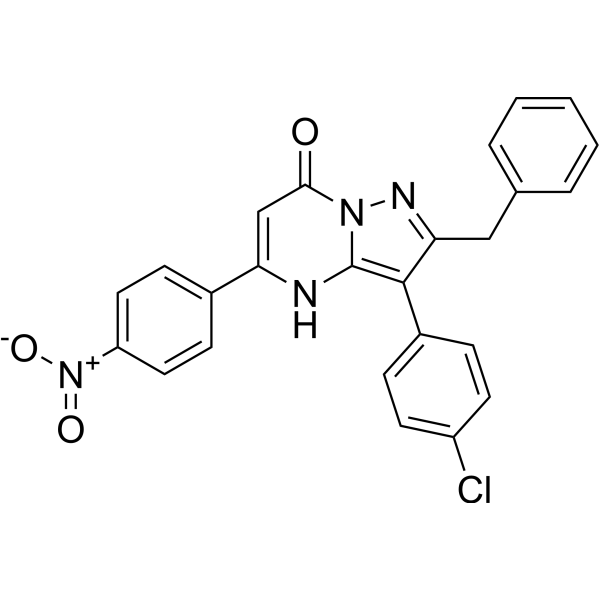
Grassofermata is a dual Arf1/Arf6 activation inhibitor. ADP ribosylation factors (Arfs) are members of the Arf family of GTP-binding proteins of the Ras superfamily.
Nur für Forschungszwecke. Wir verkaufen nicht an Patienten.
- Reinheit : 99.10%
- CAS. Nr.: 419547-11-8
- Formel: C25H17ClN4O3
- Molecular Weight:456.88
-
Speicherung:Powder -20°C, 3 years , 4°C, 2 years ; In solvent -80°C, 6 months , -20°C, 1 month

To place orders, for customer services and technical support, please contact: MedChemExpress USA
Tel: 609-228-6898 E-mail: [email protected] [email protected]


-
 Biologische Aktivität
-
Chemical Information
-
Lösungsmittel & Löslichkeit
- Reinheit & Dokumentation
- Verweise
-
 Help & FAQs


-
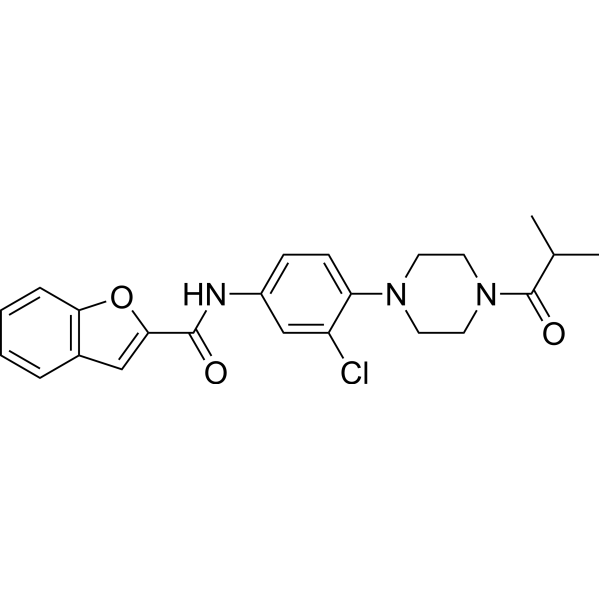
HY-139950
RasarfinRas/ARF6 Inhibitor -
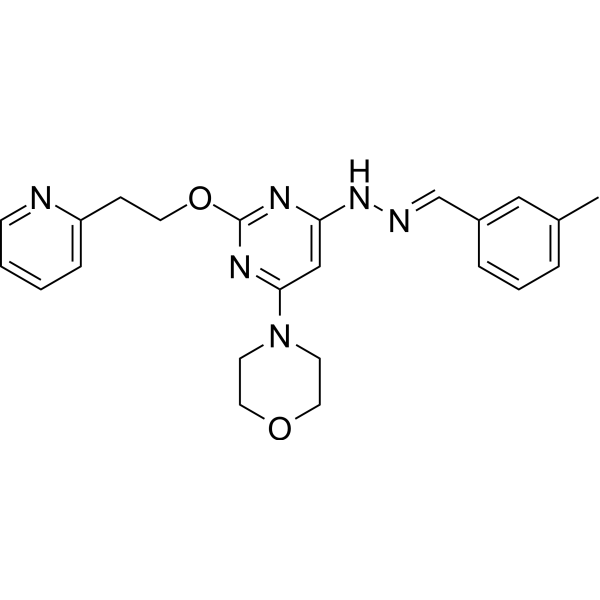
HY-14644
ApilimodIL-12/IL-23 Inhibitor -
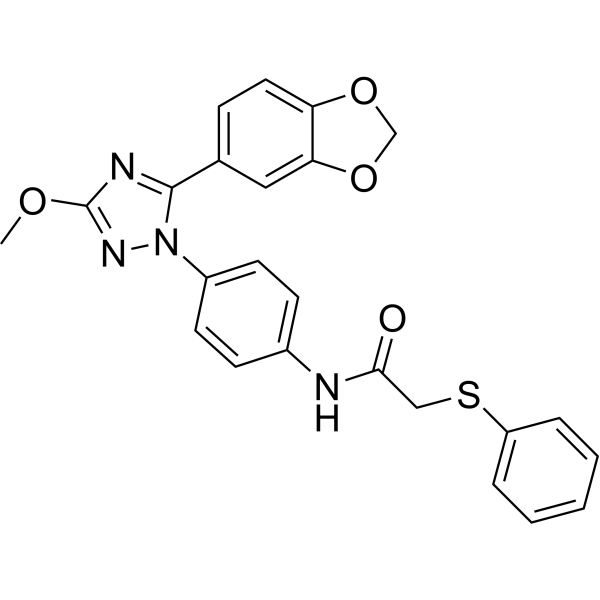
HY-100559
SecinH3Sec7 GEF Inhibitor -
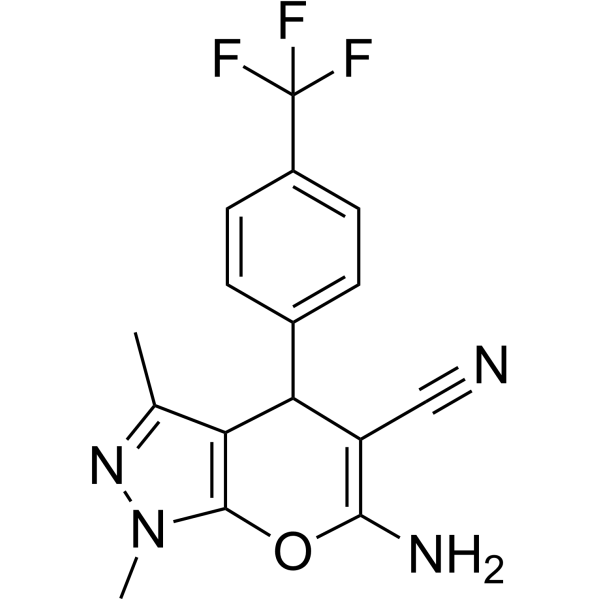
HY-12875
BQU57Ral Inhibitior -
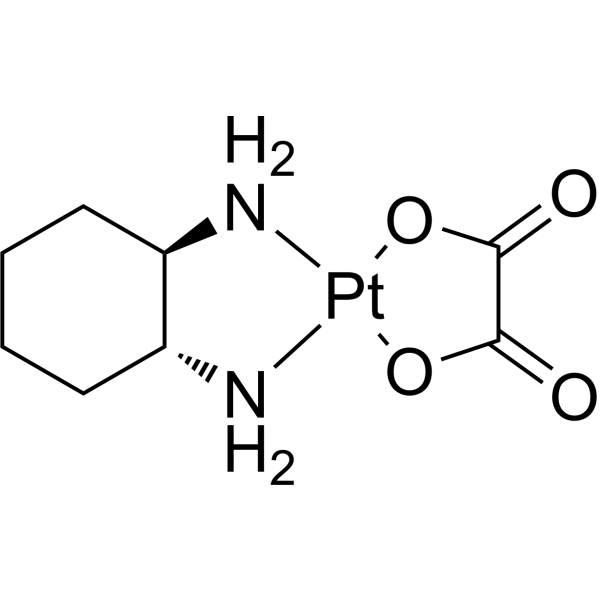
HY-17371
OxaliplatinDNA Synthesis Inhibitor -
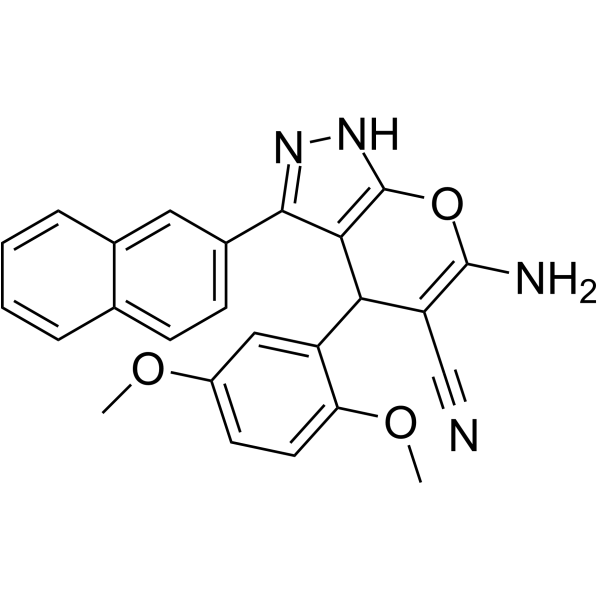
HY-12873
RBC8RALA/RALB Inhibitor -
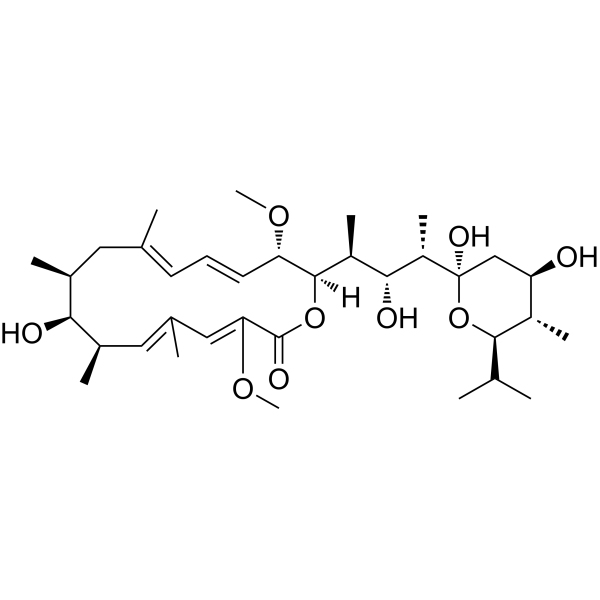
HY-100558
Bafilomycin A1V-ATPase Inhibitor -
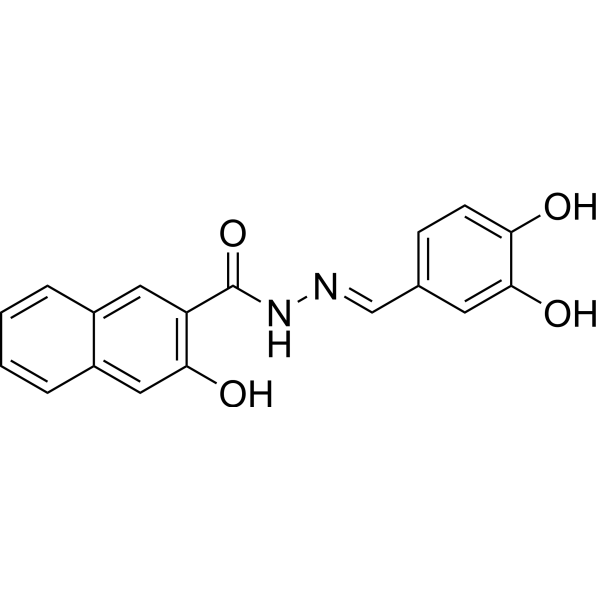
HY-15304
DynasoreAutophagy Inducer -
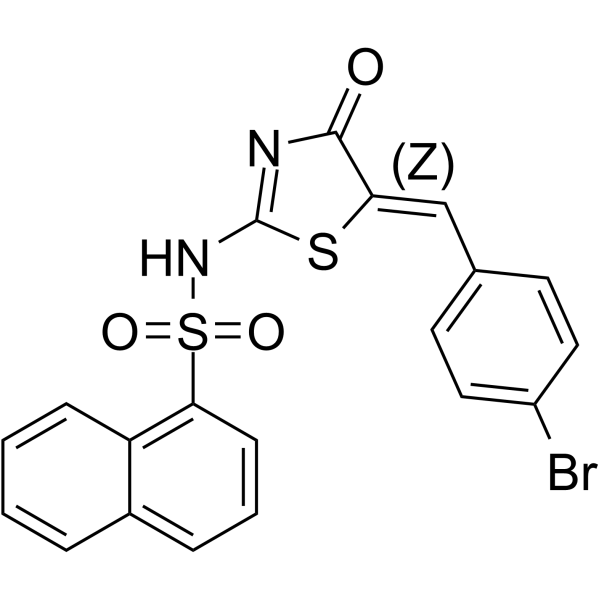
HY-115604
Pitstop 2Clathrin Inhibitor -
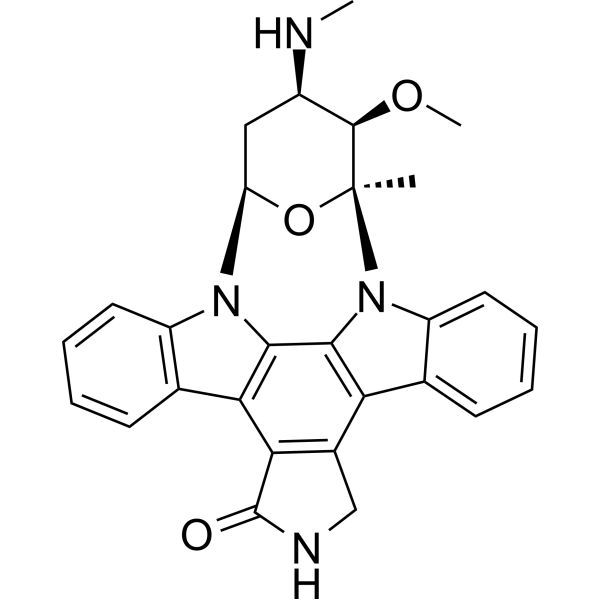
HY-15141
StaurosporinePKC/PKA Inhibitor -
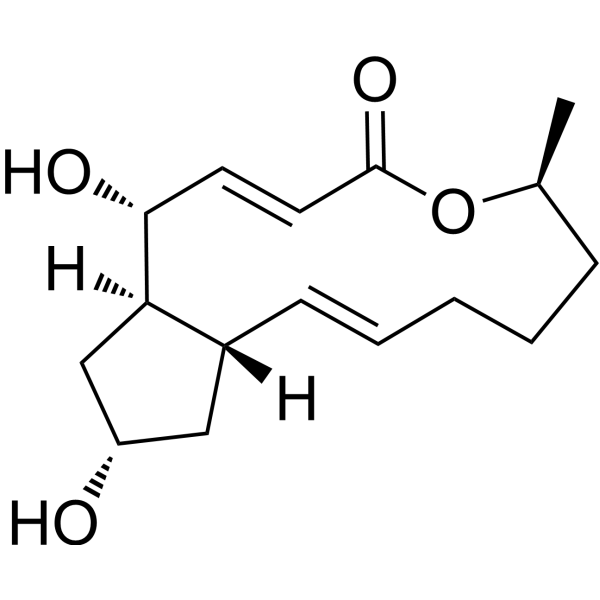
HY-16592
Brefeldin AProtein Transport Inhibitor -
HY-13259
MG-132Proteasome Inhibitor
Publications Citing Use of MedChemExpress (MCE) Grassofermata
More- Nature. 2026 Jun;654(8118):495-503. [Abstract]
- J Extracell Vesicles. 2024 Apr;13(4):e12426. [Abstract]
- Adv Funct Mater. 2024 May 1.
- ACS Nano. 2024 Feb 27;18(8):6463-6476. [Abstract]
- J Control Release. 2025 Jun 10:382:113709. [Abstract]
- Angiogenesis. 2025 Aug 25;28(4):46. [Abstract]
- Cancer Cell Int. 2025 Jun 20;25(1):218. [Abstract]
- Res Sq. 2026 Mar 11.
- University of Texas. 2025.
- bioRxiv. 2024 September 24.
- bioRxiv. 2024 September 13.
- University of Texas. 2023 Dec.
 Customer Validation & Images

-
Flow Cytometry
-
Flow Cytometry
-
WB
-
Bio/Physico-chemical Assay


Biologische Aktivität
Beschreibung
IC50 & Target
Cellular Effect
|
Cell Line

|
Type | Value | Description | References |
|---|---|---|---|---|
| HepG2 | IC50 |
6.3 μM
Compound: Grassofermata; CB5
|
Inhibition of FATP2 in human HepG2 cells assessed as decrease in fatty acid transport after 5 mins by trypan blue dye based fluorescence quenching method
Inhibition of FATP2 in human HepG2 cells assessed as decrease in fatty acid transport after 5 mins by trypan blue dye based fluorescence quenching method
|
[PMID: 27446528] |
In Vitro
Grassofermata directly binds to Arf6. Based on a structural homology model of the Arf6/Arf6-GEF complex, it is predicted that Grassofermata associates with Arf6 at the Arf6 GEF-binding area, which is distinct from the guanine nucleotide-binding pocket of Arf6. Grassofermata blocks ARNO- and GEP100-mediated guanine nucleotide exchange on Arf6. The treatment of uveal melanoma cells with Grassofermata interferes with anchorage-independent growth of the cell[1]. Grassofermata is a dual Arf1/Arf6 inhibitor and is more effective toward Arf1 than Arf6. Grassofermata blocks spontaneous activation of Arf6 and its activation by cytohesins and BRAG. Grassofermata is an inhibitor of the spontaneous activation of Arf6, and it also inhibits the activation of Arf6 by its GEFs, ARNO and BRAG2, in solution. The inhibitory profile of Grassofermata is analyzed at a concentration of 25 μM, which is reported to result in almost total inhibition of spontaneous and GEF-stimulated Arf6 activation in vitro. Under the conditions used in assays, Grassofermata inhibits spontaneous nucleotide exchange of Δ13Arf6 by ~15%. Grassofermata inhibits the activation of Δ13Arf6 by BRAG2Sec7PH by 25%. Δ17Arf1 has no measurable spontaneous nucleotide exchange. Activation of Δ17Arf1 by BRAG2Sec7PH is inhibited by Grassofermata, and the efficiency is markedly higher than that for Arf6 (50%). In a dose-response experiment, nucleotide exchange rates are reduced by 50% by 10 μM Grassofermata for Δ17Arf1 while 50% inhibition is not achieved even at 25 μM Grassofermata for Δ13Arf6[2].
MedChemExpress (MCE) has not independently confirmed the accuracy of these methods. They are for reference only. .
In Vivo


Chemical Information
-
CAS. Nr. 419547-11-8
-
Appearance Solid
-
Molecular Weight 456.88
-
Formel C25H17ClN4O3
-
Color Light yellow to yellow
-
SMILES
O=C1C=C(C2=CC=C([N+]([O-])=O)C=C2)NC3=C(C4=CC=C(Cl)C=C4)C(CC5=CC=CC=C5)=NN13
-
Synonyms
NAV-2729
-
Versand
Room temperature in continental US; may vary elsewhere.
-
Speicherung
Powder -20°C 3 years 4°C 2 years In solvent -80°C 6 months -20°C 1 month


Publications (12)
-
Journal Impact Factor
-
Most Recent
-
Nature
2026 Jun;654(8118):495-503. PMID: 42056510 -
J Extracell Vesicles
Proton pump inhibitors enhance macropinocytosis-mediated extracellular vesicle endocytosis by inducing membrane v-ATPase assembly. [Abstract]2024 Apr;13(4):e12426. PMID: 38532609 -
-
ACS Nano
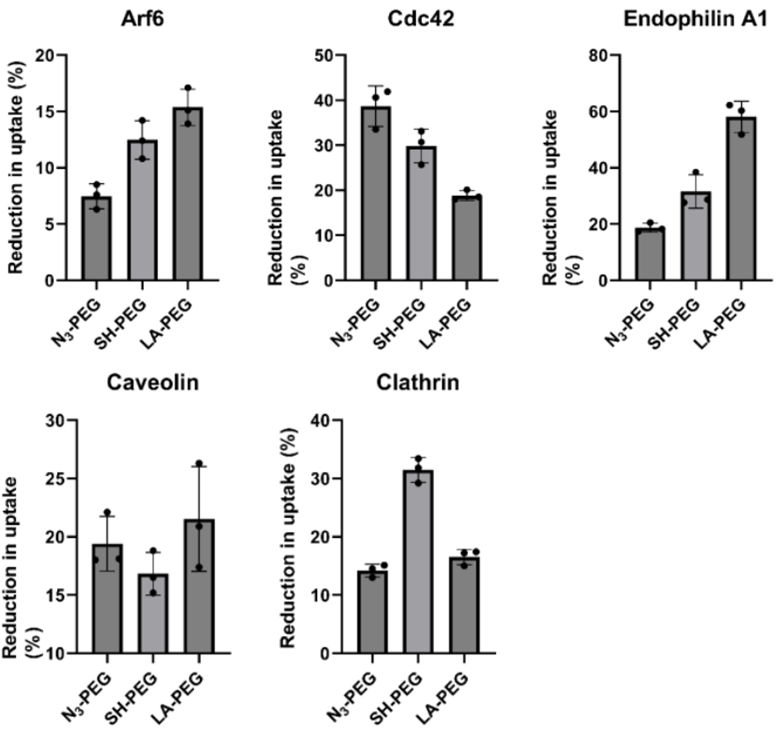
Uncovering the Importance of Ligand Mobility on Cellular Uptake of Nanoparticles: Insights from Experimental, Computational, and Theoretical Investigations. [Abstract]2024 Feb 27;18(8):6463-6476. PMID: 38346263
Grassofermata purchased from MedChemExpress. Usage Cited in: ACS Nano. 2024 Feb 27;18(8):6463-6476. [Abstract]
Cellular uptake of gold nanoparticles functionalized with different types of PEGs. In this case, the activity of Arf6, Cdc42, Endophilin A1, Caveolin, and Clathrin was respectively blocked with Grassofermata (NAV-2729) (20 μM, 2 h), CID44216842 (0.5 μM, 2 h), shRNA, PitoStop2 (10 μM, 2 h), and WL-47 (0.8 μM, 1 h) prior to the coculture with nanoparticles.
-
J Control Release
Intracellular processing of DNA-lipid nanoparticles: A quantitative assessment by image segmentation. [Abstract]2025 Jun 10:382:113709. PMID: 40228670 -
Angiogenesis
G3BP1 maintains endothelial barrier integrity through dual mechanisms: direct stabilization of junction protein mRNAs and suppression of the inflammatory MYD88-ARNO-ARF6 pathway. [Abstract]2025 Aug 25;28(4):46. PMID: 40855241 -
Cancer Cell Int
Identification and validation of ARF6 for a potential prognostic biomarker of acute myeloid leukemia. [Abstract]2025 Jun 20;25(1):218. PMID: 40542378
Grassofermata purchased from MedChemExpress. Usage Cited in: Cancer Cell Int. 2025 Jun 20;25(1):218. [Abstract]
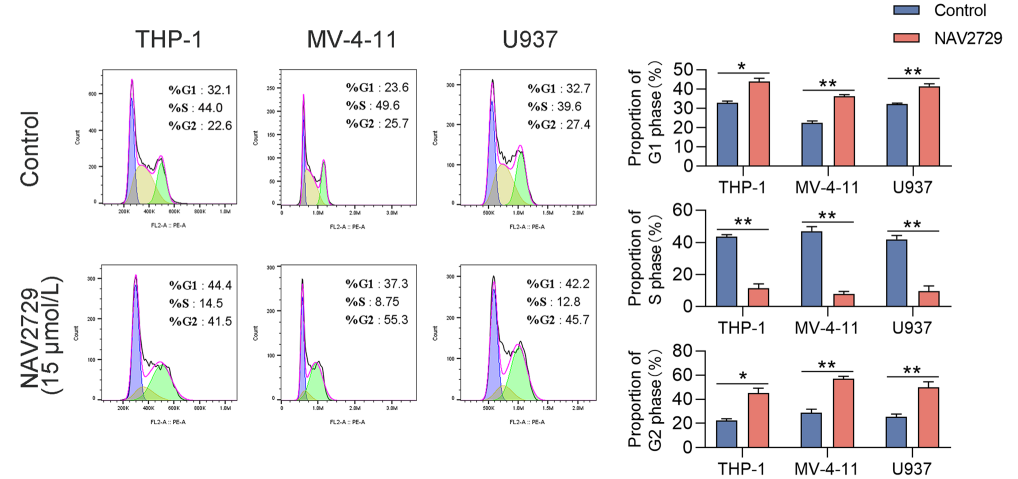
Grassofermata (NAV-2729) (15 µM; 48 h) induced cell cycle arrest by inhibiting ARF6 in AML cell lines.
Grassofermata purchased from MedChemExpress. Usage Cited in: Cancer Cell Int. 2025 Jun 20;25(1):218. [Abstract]
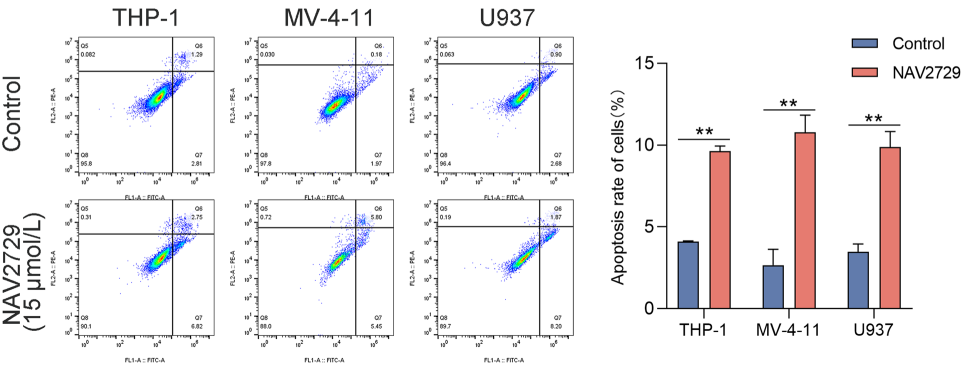
Grassofermata (NAV-2729) (15 µM; 48 h) promoted apoptosis by inhibiting ARF6 in AML cell lines.
Grassofermata purchased from MedChemExpress. Usage Cited in: Cancer Cell Int. 2025 Jun 20;25(1):218. [Abstract]
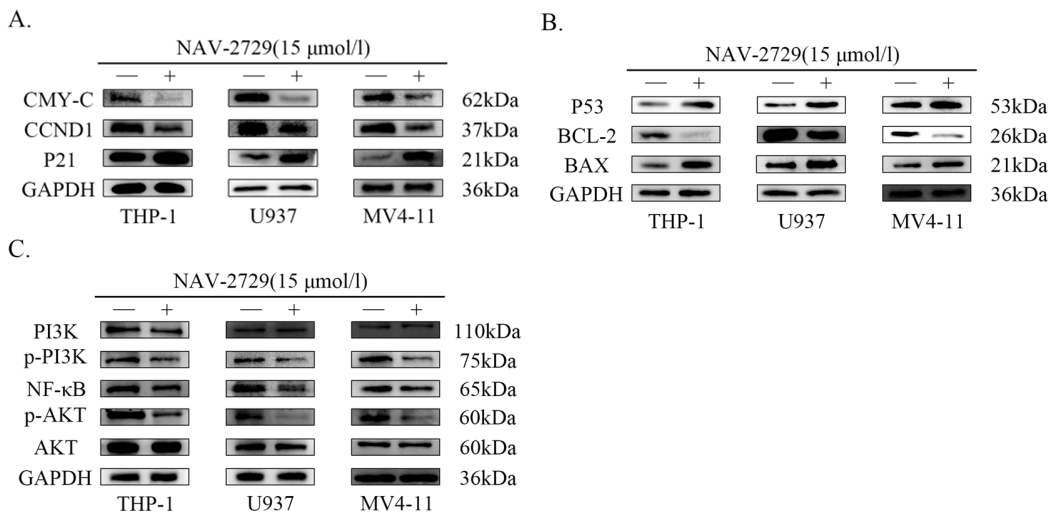
ARF6 inhibitor (Grassofermata (NAV-2729)) (15 μmol/l; 48 h) regulated the PI3K/AKT/NF-κB signaling pathway to suppressed the proliferation and induced apoptosis in AML cells. (A) Expression of BCL-2 decreased and expression of P53 and BAX increased with NAV-2729. (B) Expression of CCND1 and C-MYC decreased and P21 increased with NAV-2729. (C) The levels of PI3K/AKT/NF-κB signaling pathway-related proteins were altered by NAV-2729 treatment (n=3 in each group).
-
-
-
-
-


Lösungsmittel & Löslichkeit
In Vitro:
DMSO : 50 mg/mL (109.44 mM; Need ultrasonic; Hygroscopic DMSO has a significant impact on the solubility of product, please use newly opened DMSO)
Please refer to the solubility information to select the appropriate solvent. Once prepared, please aliquot and store the solution to prevent product inactivation from repeated freeze-thaw cycles.
Storage method and period of stock solution: -80°C, 6 months; -20°C, 1 month. When stored at -80°C, please use it within 6 months. When stored at -20°C, please use it within 1 month.
Please refer to the solubility information to select the appropriate solvent. Once prepared, please aliquot and store the solution to prevent product inactivation from repeated freeze-thaw cycles.
Storage method and period of stock solution: -80°C, 6 months; -20°C, 1 month. When stored at -80°C, please use it within 6 months. When stored at -20°C, please use it within 1 month.
Konzentration (Stammlösung) × Volumen (Stammlösung) = Konzentration (Ziellösung) × Volumen (Ziellösung)
In Vivo:
Select the appropriate dissolution method based on your experimental animal and administration route.
- For the following dissolution methods, please ensure to first prepare a clear stock solution using an In Vitro approach and then sequentially add co-solvents:
- To ensure reliable experimental results, the clarified stock solution can be appropriately stored based on storage conditions. As for the working solution for In Vivo experiments, it is recommended to prepare freshly and use it on the same day.
- The percentages shown for the solvents indicate their volumetric ratio in the final prepared solution. If precipitation or phase separation occurs during preparation, heat and/or sonication can be used to aid dissolution.
Add each solvent one by one: 10% DMSO 90% (20% SBE-β-CD in Saline)
Solubility: 2.08 mg/mL (4.55 mM); Suspended solution; Need ultrasonic
This protocol yields a suspended solution of 2.08 mg/mL. Suspended solution can be used for oral and intraperitoneal injection.
Taking 1 mL working solution as an example, add 100 μL DMSO stock solution (20.8 mg/mL) to 900 μL 20% SBE-β-CD in Saline, and mix evenly.
Preparation of 20% SBE-β-CD in Saline (4°C, storage for one week): 2 g SBE-β-CD powder is dissolved in 10 mL Saline, completely dissolve until clear.
In Vivo Dissolution Calculator
Please enter the basic information of animal experiments:
-
-
-
-
Recommended: Prepare an additional quantity of animals to account for potential losses during experiments.
Please enter your animal formula composition:
-
%DMSO +
Recommended: Keep the proportion of DMSO in working solution below 2% if your animal is weak.
-
%+
-
+%Tween-80 + +
-
%Saline +
The co-solvents required include: DMSO, . All of co-solvents are available by MedChemExpress (MCE). , Tween 80. All of co-solvents are available by MedChemExpress (MCE).
Working solution concentration: 0.22 mg/mL
Method for preparing stock solution: mg drug dissolved in μL DMSO. Stock solution concentration: mg/mL.
1. Take μL DMSO stock solution;
2. Add μL .
μL , mix evenly;
3. Then add μL Tween 80, mix evenly;
4. Then add μL
Please ensure that the stock solution in the first step is dissolved to a clear state, and add co-solvents in sequence. You can use ultrasonic heating (ultrasonic cleaner, recommended frequency 20-40 kHz), vortexing, etc. to assist dissolution.


Reinheit & Dokumentation
-
Data Sheet (278 KB)
-
SDS (393 KB)
- English - EN (393 KB)
- Français - FR (393 KB)
- Deutsch - DE (393 KB)
- Norwegian - NO (393 KB)
- Español - ES (393 KB)
- Swedish - SV (393 KB)
- Italian - IT (393 KB)
- Korean - KR (393 KB)
- Portuguese - PT (393 KB)
-
Handling Instructions (2659 KB)
Verweise
[1]. Yamauchi Y, et al. Machineries regulating the activity of the small GTPase Arf6 in cancer cells are potential targets for developing innovative anti-cancer drugs. Adv Biol Regul. 2017 Jan;63:115-121. [Content Brief]
[2]. Benabdi S, et al. Family-wide Analysis of the Inhibition of Arf Guanine Nucleotide Exchange Factors with Small Molecules: Evidence of Unique Inhibitory Profiles. Biochemistry. 2017 Sep 26;56(38):5125-5133. [Content Brief]


Complete Stock Solution Preparation Table
Please refer to the solubility information to select the appropriate solvent. Once prepared, please aliquot and store the solution to prevent product inactivation from repeated freeze-thaw cycles.
Storage method and period of stock solution: -80°C, 6 months; -20°C, 1 month. When stored at -80°C, please use it within 6 months. When stored at -20°C, please use it within 1 month.
| Optional Solvent | Concentration Solvent Mass | 1 mg | 5 mg | 10 mg | 25 mg |
|---|---|---|---|---|---|
| DMSO | 1 mM | 2.1888 mL | 10.9438 mL | 21.8876 mL | 54.7190 mL |
| 5 mM | 0.4378 mL | 2.1888 mL | 4.3775 mL | 10.9438 mL | |
| 10 mM | 0.2189 mL | 1.0944 mL | 2.1888 mL | 5.4719 mL | |
| 15 mM | 0.1459 mL | 0.7296 mL | 1.4592 mL | 3.6479 mL | |
| 20 mM | 0.1094 mL | 0.5472 mL | 1.0944 mL | 2.7359 mL | |
| 25 mM | 0.0876 mL | 0.4378 mL | 0.8755 mL | 2.1888 mL | |
| 30 mM | 0.0730 mL | 0.3648 mL | 0.7296 mL | 1.8240 mL | |
| 40 mM | 0.0547 mL | 0.2736 mL | 0.5472 mL | 1.3680 mL | |
| 50 mM | 0.0438 mL | 0.2189 mL | 0.4378 mL | 1.0944 mL | |
| 60 mM | 0.0365 mL | 0.1824 mL | 0.3648 mL | 0.9120 mL | |
| 80 mM | 0.0274 mL | 0.1368 mL | 0.2736 mL | 0.6840 mL | |
| 100 mM | 0.0219 mL | 0.1094 mL | 0.2189 mL | 0.5472 mL |


Grassofermata Related Classifications
HY-112473 Related Classifications
 Powered by Bioz