



Amyloid-β
β-amyloid peptide; Aβ; Abeta
Amyloid-β (Aβ) denotes peptides of 36–43 amino acids that are crucially involved in Alzheimer's disease as the main component of theamyloid plaques found in the brains of Alzheimer patients. The peptides result from the amyloid precursor protein (APP), which is being cut by certain enzymes to yield Aβ. Amyloid-β molecules can aggregate to form flexible soluble oligomers which may exist in several forms. Amyloid-β peptide is due to overproduction of Aβ and/or the failure of clearance mechanisms. Amyloid-β self-aggregates into oligomers, which can be of various sizes, and forms diffuse and neuritic plaques in the parenchyma and blood vessels. Amyloid-β oligomers and plaques are potent synaptotoxins, block proteasome function, inhibit mitochondrial activity, alter intracellular Ca2+levels and stimulate inflammatory processes. Loss of the normal physiological functions of Aβ is also thought to contribute to neuronal dysfunction.
All Product Categories
-
Amyloid-β Inhibitors
(489)
View all products
-
Amyloid-β Agonists
(2)
View all products
-
Amyloid-β Antagonists
(5)
View all products
-
Amyloid-β Activators
(5)
View all products
-
Amyloid-β Modulators
(4)
View all products
-
Amyloid-β Chemicals
(7)
View all products
-
Amyloid-β Inducers
(5)
View all products
-
Amyloid-β Degraders
(6)
View all products
-
Amyloid-β Controls
(3)
View all products
-
Amyloid-β Substrate
(1)
View all products
-
Amyloid-β Ligands
(11)
View all products
-
Amyloid-β Related Products (767)
Related Products (767)

-
Antibodies (9)
-
BuChE-IN-6
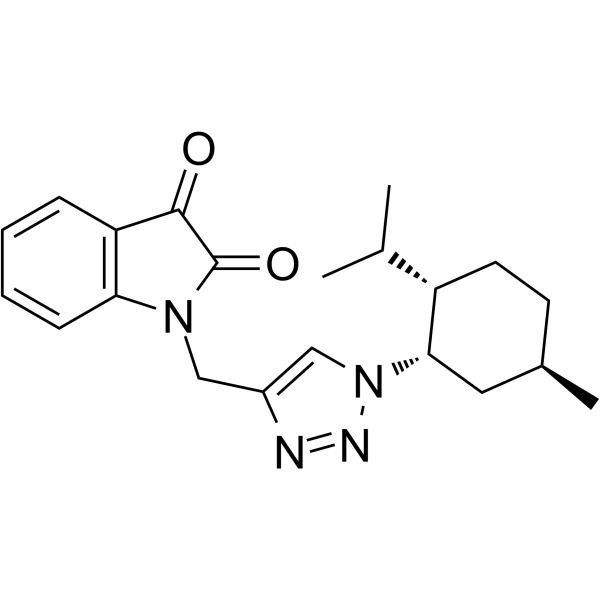 0 ImagesCat. No.: HY-146251CAS No.: 2003213-07-6BuChE-IN-6 (compound 1b) is a potent and selective BuChE (butyrylcholinesterase) inhibitor, with IC50 values of 0.46 and 0.51 μM for eqBuChE and hBuChE, respectively. BuChE-IN-6 also inhibits Aβ42 self-aggregation.
-
Cy5-β-Amyloid (42-1), human TFA
 0 ImagesCat. No.: HY-P1362FASynonyms: Cy5-Amyloid β Peptide (42-1)(human) (TFACy5-β-Amyloid (42-1), human is a Cy5 fluorescently-labelled β-Amyloid (42-1, human) peptide (λex= 633 nm and λem= 670 nm). β-Amyloid (42-1), human is the inactive form of Amyloid β Peptide (1-42). Its active form, β-Amyloid (1-42), may play a key role in the pathogenesis of Alzheimer's disease.
-
GSK-933776
 0 ImagesCat. No.: HY-P990595
-
SJ-300
 0 ImagesCat. No.: HY-179459CAS No.: 1210357-06-4SJ-300 is a potent and selective, orally active and brain-penetrat DKK3-LRP1 interaction inhibitor. SJ-300 restores Aβ clearance in AD models. SJ 300 binds to mLRPIV with a Kd of 7.9 μM, inhibits the DKK3 mLRPIV complex with an IC50 of 3.2 μM, and does not disrupt the binding of Aβ to LRP1. SJ 300 rescues cognitive function and ameliorates neuropathology (Aβ plaque reduction ≈ 73.3 %) in vivo. SJ 300 can be employed for research in Alzheimer’s disease.
-
Beauveriolide III
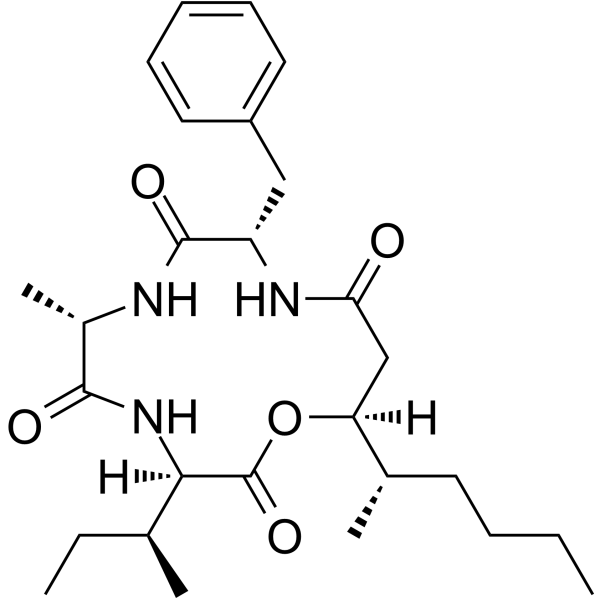 0 ImagesBeauveriolide III is an inhibitor of lipid droplet formation in mouse macrophages.
-
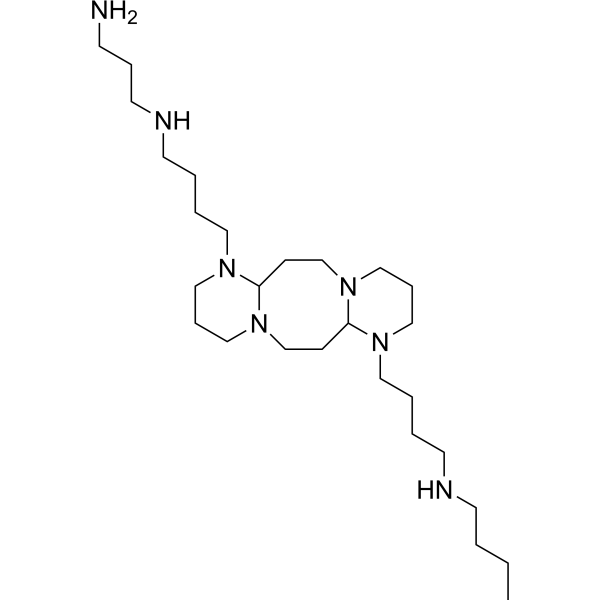
5-TAMRA-Amyloid β-Protein (1-40)
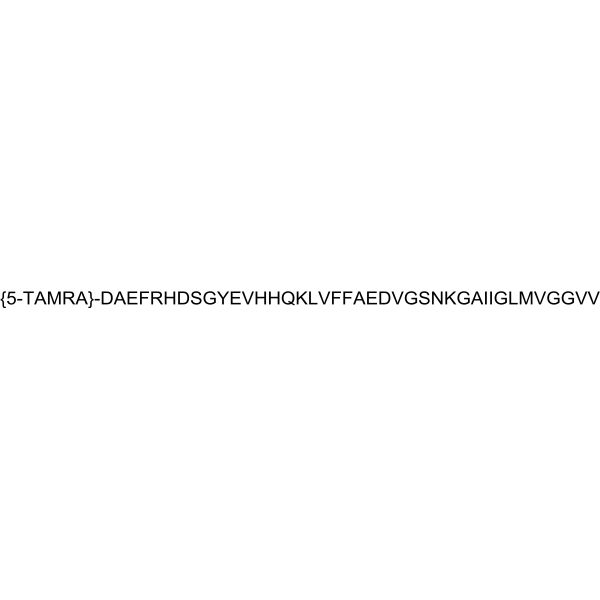 0 ImagesCat. No.: HY-P4878CAS No.: 1802087-81-55-TAMRA-Amyloid β-Protein (1-40) is a fluorescent (TAMRA)-labeled Amyloid β-Protein (1-40), Abs/Em=544/572 nm.
-
Multitarget AD-IN-5
 0 ImagesCat. No.: HY-181041Multitarget AD-IN-5 (Compound 20), 9-Aminoacridine (HY-B1422) derivative, is a neuroprotective agent. Multitarget AD-IN-5 shows IC50 values of 0.614, 0.448, 3.73 and 1.55 μM for hAChE, hBChE, hMAO-A and hMAO-B. Multitarget AD-IN-5 can reduce length and diameter of Aβ42 fibers, and decrease the number of fibers per unit area. Multitarget AD-IN-5 can be used for research of Alzheimer's disease.
-
AJ-4
 0 ImagesCat. No.: HY-184742AJ-4 is an orally active, blood-brain barrier-permeable GSK-3β/AChE inhibitor, with an IC50 of 4.7 nM against GSK-3β and 2.97 μM against AChE. AJ-4 increases the level of phosphorylated GSK-3β and reduces the expression of Amyloid-β and phosphorylated Tau. AJ-4 improves scopolamine-induced learning and memory impairment and alleviates hippocampal neuron damage in AD mice. AJ-4 can be used for the research of Alzheimer's disease.
-
AChE/BChE-IN-12
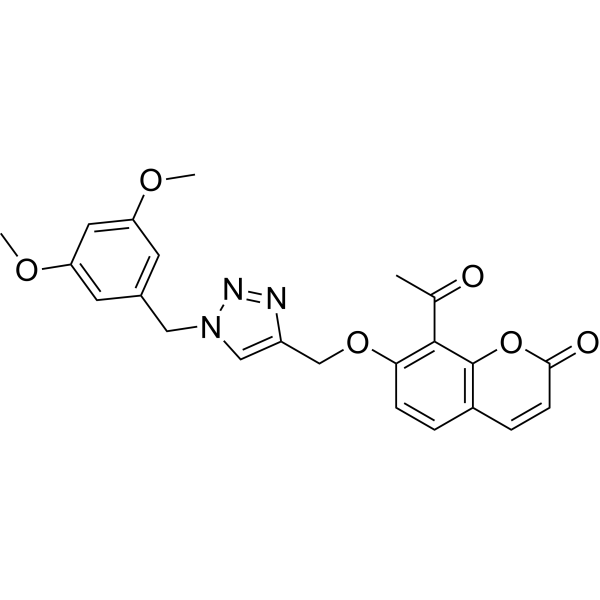 0 ImagesCat. No.: HY-149211AChE/BChE-IN-12 (compound 10b), a 3,5-dimethoxy analogue, is a potent AChE, BChE, and β-secretase-1 (BACE-1) inhibitor, with IC50 values of 2.57, 3.26, and 10.65 μM, respectively. AChE/BChE-IN-12 crosses the blood-brain barrier via passive diffusion and inhibits the self-aggregation of amyloid-β monomers. AChE/BChE-IN-12 can be used for Alzheimer’s disease (AD) research.
-
BTA-EG6
 0 ImagesCat. No.: HY-182328CAS No.: 921193-29-5BTA-EG6 is a brain-penetrant aggregated amyloid-β (Aβ) peptide binder with a Kd of 290 nM for Aβ1-42. BTA-EG6 binds to aggregated Aβ and forms protein-resistive coatings that block interactions between Aβ and catalase. BTA-EG6 protects neuroblastoma cells from Aβ-induced toxicity and oxidative stress, and inhibits Aβ-induced increases in cellular hydrogen peroxide (H2O2) levels. BTA-EG6 can be used for the research of alzheimer’s disease (AD).
-
Dendrobine-N-oxide
 0 ImagesCat. No.: HY-N21794CAS No.: 40072-57-9Dendrobine-N-oxide is a dendrobine-type sesquiterpene alkaloid. It is isolated from Dendrobium nobile. Dendrobine-N-oxide inhibits neuroinflammation, reduces β-Amyloid accumulation, enhances the expression of neurotrophic factors, suppresses the hyperphosphorylation of Tau protein, and exerts anti-neuronal Apoptosis effects. Dendrobine-N-oxide shows no anticancer activity against colon cancer and pancreatic adenocarcinoma. It is used in research on neurodegenerative diseases.
-
Aβ aggregation-IN-2
 0 ImagesCat. No.: HY-173282Aβ aggregation-IN-2 (Compound 8i) is an inhibitor of amyloid-β protein (Aβ42) aggregation, showing approximately 91% inhibition of Aβ42 aggregation at 25 μM. It also exhibits Aβ42 disaggregation effects and antioxidant activity. Aβ aggregation-IN-2 can be used for research in the field of Alzheimer's disease.
-
Aftobetin
 0 ImagesCat. No.: HY-108010CAS No.: 1208971-05-4Aftobetin is a non-invasive molecular probe used for the early diagnosis of Alzheimer's disease (AD). Aftobetin can specifically bind to the aggregated β-amyloid peptide (Aβ) in the lens of the eye, enabling the early diagnosis of AD through a rapid and painless detection method.
-
β-Amyloid (1-11)
 0 ImagesCat. No.: HY-P1510CAS No.: 190436-05-6β-Amyloid (1-11) is a fragment of Amyloid-β peptide, maybe used in the research of neurological disease.
-
SCH 900229
 0 ImagesCat. No.: HY-18157CAS No.: 1100361-36-1SCH 900229 is a potent γ-secretase inhibitor with selective activity against PS1. The Aβ40 IC50 value of SCH 900229 is 1.3 nM, showing its excellent ability in reducing Aβ. SCH 900229 has shown good Aβ-lowering effects after oral administration in preclinical animal models. SCH 900229 has been advanced to human clinical trials for further development of compounds for the inhibition of Alzheimer's disease.
-
hAChE/hBACE-1-IN-4
 0 ImagesCat. No.: HY-161512CAS No.: 229476-71-5hAChE/hBACE-1-IN-4 (compound AK-2) is a quinazoline derivative. hAChE/hBACE-1-IN-4 shows significant inhibitory activity against hAChE and hBACE-1 enzymes (hAChE, IC50=0.283 μM; hBACE-1, IC50=0.231 μM). hAChE/hBACE-1-IN-4 has the potential to inhibit Aβ aggregation. hAChE/hBACE-1-IN-4 has non-neurotoxicity , blood-brain barrier permeability and oral activity. hAChE/hBACE-1-IN-4 can be used in Alzheimer's disease research.
-
RAGE/SERT-IN-1
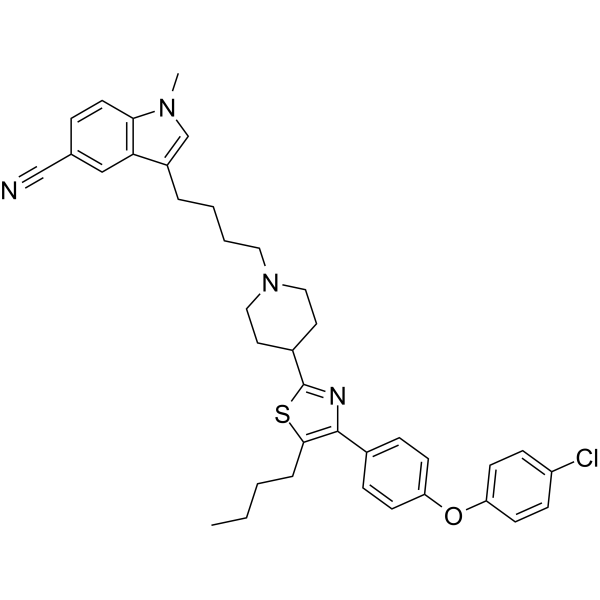 0 ImagesCat. No.: HY-146619CAS No.: 2766739-35-7RAGE/SERT-IN-1 is a potent and orally active advanced glycation end products (RAGE) and serotonin transporter (SERT) inhibitor with IC50s of 8.26 μM and 31.09 nM, respectively. RAGE/SERT-IN-1 exhibits significant neuroprotective effect against Aβ25-35-induced neuronal damage and alleviates depressive behavior of mice. RAGE/SERT-IN-1 can be used for researching the comorbidity of Alzheimer's disease and depression.
-
Protriptyline hydrochloride (Standard)
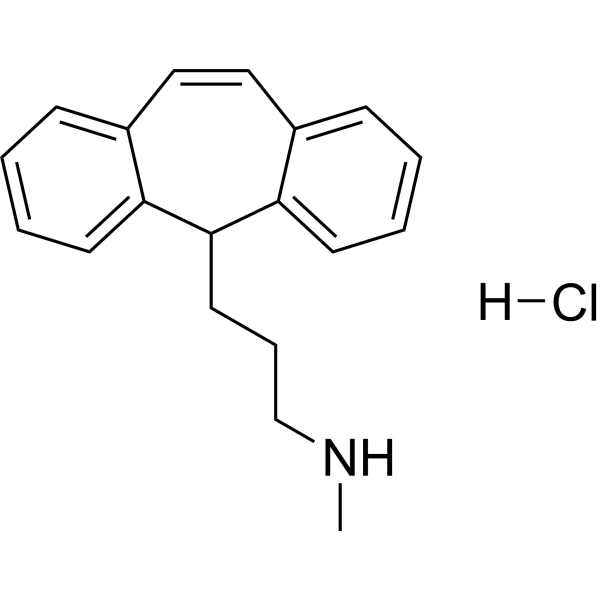 0 ImagesProtriptyline hydrochloride (Standard) is the analytical standard of Protriptyline hydrochloride (HY-B0949). This product is intended for research and analytical applications. Protriptyline hydrochloride is a potent tricyclic antidepressant (TCA). Protriptyline hydrochloride inhibits AChE activity with an IC50 value of 0.06 mM and inhibits Aβ self-assembly. Protriptyline hydrochloride can be used for the study of depression and Alzheimers disease.
-
SEN 304
 0 ImagesCat. No.: HY-P10578CAS No.: 906357-94-6SEN 304 is an Aβ aggregation inhibitor. SEN 304 can bind directly to Aβ(1-42), delay β-sheet formation and promote aggregation of toxic oligomers into a nontoxic form. SEN 304 can be used for research of Alzheimer’s disease.




