



Apoptosis
Apoptosis
Apoptosis is a distinctive form of cell death exhibiting specific morphological and biochemical characteristics, including cell membrane blebbing, chromatin condensation, genomic DNA fragmentation, and exposure of specific phagocytosis signaling molecules on the cell surface. Cells undergoing apoptosis differ from those dying through necrosis. Necrotic cells are usually recognized by the immune system as a danger signal and, thus, resulting in inflammation; in contrast, apoptotic death is quiet and orderly.
There are two major pathways of apoptotic cell death induction: The intrinsic pathway, also called the Bcl-2-regulated or mitochondrial pathway, is activated by various developmental cues or cytotoxic insults, such as viral infection, DNA damage and growth-factor deprivation, and is strictly controlled by the BCL-2 family of proteins. The extrinsic or death-receptor pathway is triggered by ligation of death receptors (members of the tumor necrosis factor (TNF) receptor family, such as Fas or TNF receptor-1 (TNFR1)) that contain an intracellular death domain, which can recruit and activate caspase-8 through the adaptor protein Fas-associated death domain (FADD; also known as MORT1) at the cell surface. This recruitment causes subsequent activation of downstream (effector) caspases, such as caspase-3, -6 or -7, without any involvement of the BCL-2 family.
Studies suggest that alterations in cell survival contribute to the pathogenesis of a number of human diseases, including cancer, viral infections, autoimmune diseases, neurodegenerative disorders, and AIDS (acquired immunodeficiency syndrome). Treatments designed to specifically alter the apoptotic threshold may have the potential to change the natural progression of some of these diseases.
All Product Categories
-
Apoptosis Inhibitors
(903)
View all products
-
Apoptosis Agonists
(7)
View all products
-
Apoptosis Antagonists
(9)
View all products
-
Apoptosis Activators
(362)
View all products
-
Apoptosis Modulators
(60)
View all products
-
Apoptosis Inducers
(7899)
View all products
-
Apoptosis Degrader
(1)
View all products
-
Apoptosis Controls
(33)
View all products
-
Apoptosis Related Products (9835)
Related Products (9835)

-
Antibodies (120)
-
Azurin p28 peptide TFA
 0 ImagesCat. No.: HY-P5910AAzurin p28 peptide TFA is a tumor-penetrated antitumor peptide. Azurin p28 peptide TFA redues proteasomal degradation of p53 through formation of a p28: p53 complex. Azurin p28 peptide TFA induces apoptosis or cell cycle arrest. Azurin p28 peptide TFA inhibits p53-positive tumor growths. Azurin p28 peptide TFA shows antiangiogenic effect by inhibiting phosphorylation of VEGFR-2, FAK and Akt.
-
Argipressin diacetate
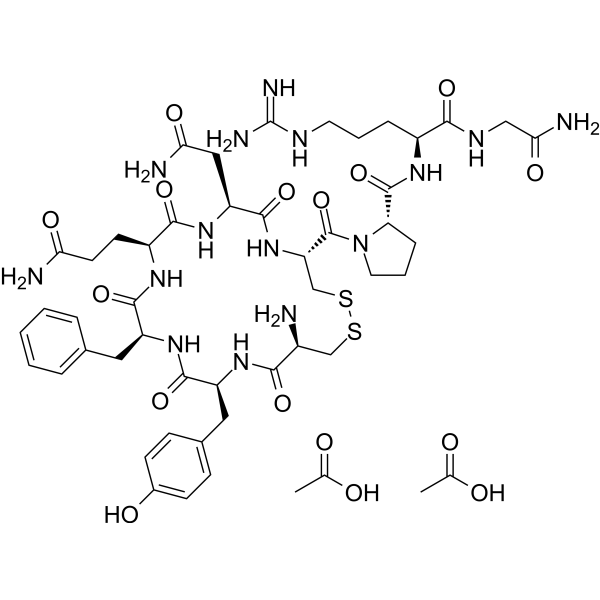 0 ImagesCat. No.: HY-P0049ACAS No.: 75499-44-4Synonyms: Arg8-vasopressin diacetate; AVP diacetate; ADHArgipressin (diacetate) (AVP (diacetate), also known as antidiuretic hormone (ADH)) is a 9 amino acid neuropeptide secreted by the posterior pituitary. Argipressin (diacetate) (AVP (diacetate)) can regulate the biological effects of fluid balance, osmolality and cardiovascular through three separate G-protein coupled receptors (GPCRs), namely Avpr1a (V1a), Avpr1b (V1b) and Avpr2 (V2). Argipressin (diacetate) (AVP (diacetate)) also have potentially important effects on centrally regulated metabolic processes.
-
Taurochenodeoxycholic acid-d4-1 sodium
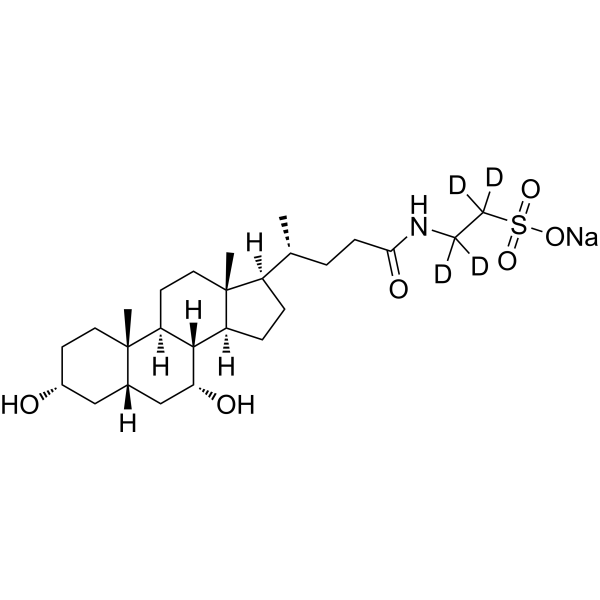 0 ImagesCat. No.: HY-N1429S2Synonyms: 12-Deoxycholyltaurine-d4-1 sodiumTaurochenodeoxycholic acid-d4-1 (sodium) is the deuterium labeled Taurochenodeoxycholic acid. Taurochenodeoxycholic acid (12-Deoxycholyltaurine) sodium is one of the main bioactive substances of animals' bile acid. Taurochenodeoxycholic acid sodium induces apoptosis and shows obvious anti-inflammatory and immune regulation properties.
-
PROTAC EGFR degrader 18
 0 ImagesCat. No.: HY-184497PROTAC EGFR degrader 18 is a VHL-based PROTAC degrader targeting EGFR. PROTAC EGFR degrader 18 inhibits tumor cell proliferation and induces apoptosis. When functionalized with hyaluronic acid, PROTAC EGFR degrader 18 achieves specific enrichment at tumor sites via CD44-mediated targeting, exerting anti-tumor activity while significantly reducing systemic toxicity. PROTAC EGFR degrader 18 can be used for the research of non-small cell lung cancer.
-
Maxadilan
 0 ImagesCat. No.: HY-P3483CAS No.: 135374-80-0Maxadilan is a specific irreversible PAC1 receptor agonist and a potent vasodilator peptide present in the salivary glands of sand flies. Maxadilan exhibits anti-apoptotic activity in hADSCs. Maxadilan inhibits pro-inflammatory cytokines (TNF-α) and enhances anti-inflammatory mediators (IL-10). Maxadilan can activate leukocytes and inhibit vascular permeability through PAC1 receptors. Maxadilan promotes neural differentiation of human adipose-derived stem cells. Maxadilan can be used to study endotoxin shock, atherosclerosis, and neurodegenerative diseases[1][2][3][4][5].
-
Dienogest-d6
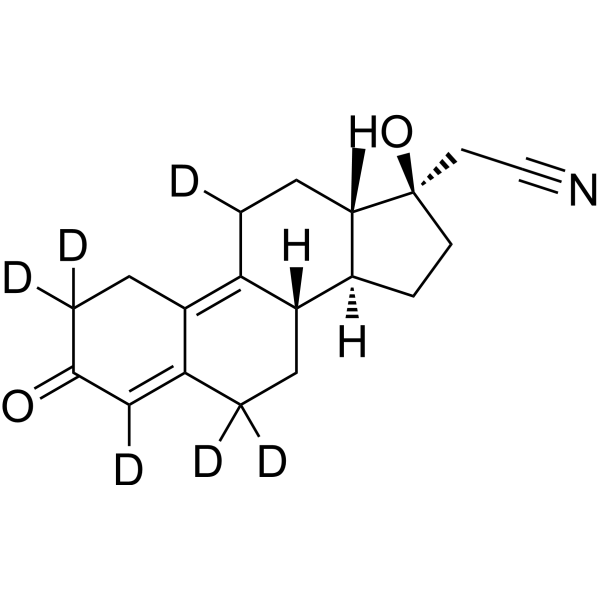 0 ImagesCat. No.: HY-B0084S2Purity: 99.92%Synonyms: STS 557-d6Dienogest-d6 is deuterium labeled Dienogest (HY-B0084). Dienogest is an orally active progesterone receptor agonist that can be used in the study of endometriosis.
-
Dutasteride (Standard)
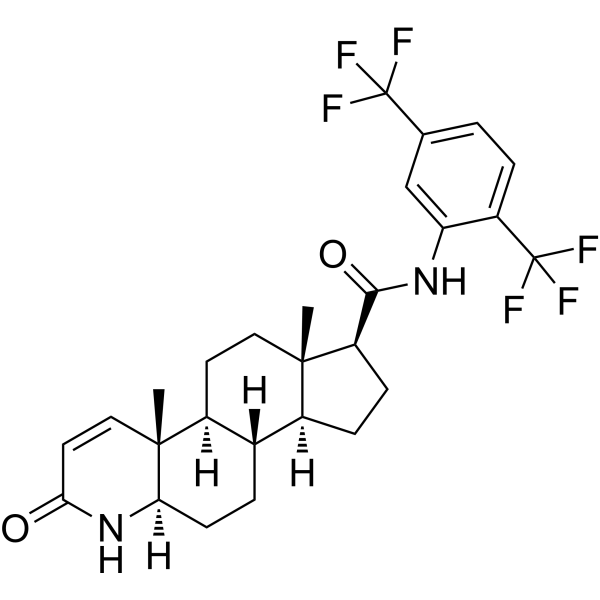 0 ImagesSynonyms: GG 745 (Standard); GI 198745 (Standard)Dutasteride (Standard) is the analytical standard of Dutasteride. This product is intended for research and analytical applications. Dutasteride (GG745) is a potent inhibitor of both 5α-reductase isozymes. Dutasteride may possess off-target effects on the androgen receptor (AR) due to its structural similarity to DHT.
-
Ammonium chloride, for molecular biology
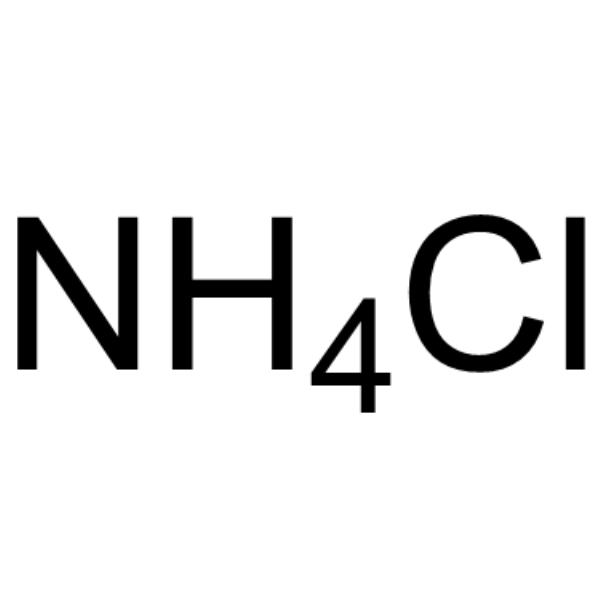 0 ImagesCat. No.: HY-Y1269DCAS No.: 12125-02-9Synonyms: Salmiac, for molecular biologyAmmonium chloride (Salmiac), for molecular biology is an inhibitor of Slc26a4 and SMAD2. Ammonium chloride, for molecular biology reduces the protein expression level of Slc26a4 in lung tissue, and attenuates ozone-induced increases in proinflammatory cytokines, inflammatory cells, pulmonary resistance, goblet cell hyperplasia, peribronchial inflammation and thiocyanate levels in mouse tissues and bronchoalveolar lavage fluid. Ammonium chloride, for molecular biology decreases the level of phosphorylated SMAD2, inhibits autophagy by reducing autophagy-related proteins, and enhances Cisplatin (HY-17394)-induced cancer cell apoptosis and DNA double-strand breaks. Ammonium chloride, for molecular biology also inhibits the TCA cycle, reduces ATP production, increases glucose utilization, regulates the levels of lactic acid, glutamic acid and ATP, and induces morphological degeneration of neuroblastoma cells. Ammonium chloride, for molecular biology can be used in studies related to ozone-induced airway injury, hepatocellular carcinoma, human cervical cancer, hepatic encephalopathy, Reye syndrome, epilepsy and neurodegenerative diseases.

-
TJ08
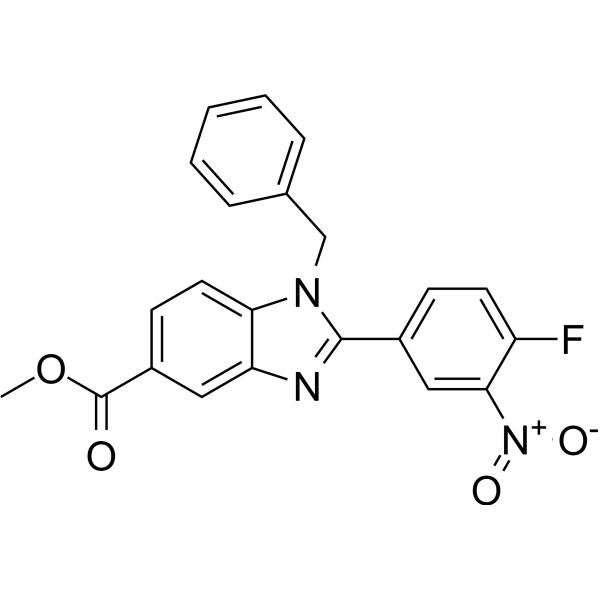 0 ImagesCat. No.: HY-152135CAS No.: 2924274-19-9TJ08, a 1,2,5-trisubstituted benzimidazole derivative, efficiently induces G1/S phase arrest and promotes apoptosis in various cancer cells. TJ08 is an anticancer agent.
-
Thalidomide-piperidine-O-azetidine-boc
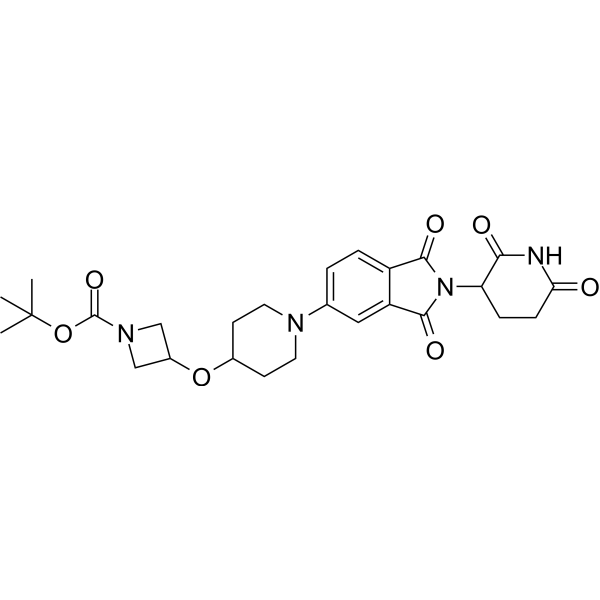 0 ImagesCat. No.: HY-161185CAS No.: 2991611-55-1
-
Pancratistatin
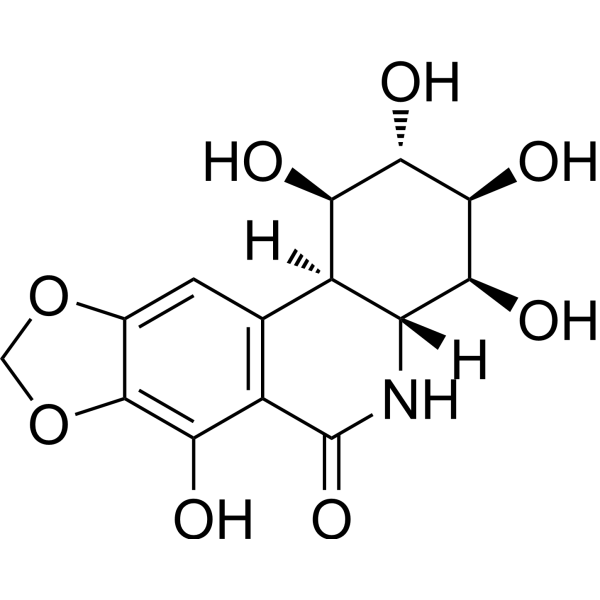 0 ImagesCat. No.: HY-102010CAS No.: 96203-70-2Synonyms: (+)-PancratistatinPancratistatin is an isoquinoline alkaloid that can be isolated from Hymenocallis littoralis. Pancratistatin induces apoptosis of human melanoma cells. Pancratistatin can be used for the research of neuroblastoma, leukemia and breast cancer.
-
FLT3/HDAC-IN-1
 0 ImagesCat. No.: HY-169076FLT3/HDAC-IN-1 is a dual inhibitor of FLT3/HDAC, with IC50 values of 30.4, 52.4, and 14.7 nM for FLT3, HDAC1, and HDAC3, respectively. FLT3/HDAC-IN-1 can induce apoptosis in MV-4-11 cells and has anti-proliferative effects on FLT3 mutant-transformed BaF3 cells. FLT3/HDAC-IN-1 is being researched for its potential in treating hard-to-treat solid tumors and hematological malignancies.
-
Tubulin polymerization-IN-66
 0 ImagesCat. No.: HY-161825Tubulin polymerization-IN-66 (Compound 13) inhibits colony formation and tubulin polymerization. Tubulin polymerization-IN-66 induces apoptosis. Tubulin polymerization-IN-66 inhibits cell viability of A549, A2780, SKOV3, HCC827 cells, with IC50s of 0.84, 0.38, 0.31, 0.34 nM respectively. Tubulin polymerization-IN-66 is also active against the Paclitaxel (HY-B0015)-resistant cancer cell line A2780/T and its parental cell line A2780.
-
PARP/VEGFR3-IN-1
 0 ImagesCat. No.: HY-179020PARP/VEGFR3-IN-1 (Compound 18) is a dual PARP-VEGFR3 target inhibitor. Its IC50 values for PARP1, PARP2, and VEGFR3 are 0.0763, 0.0366, and 4.25 nM respectively. PARP/VEGFR3-IN-1 has no inhibitory effect on VEGFR1/2 and shows subtype selectivity. PARP/VEGFR3-IN-1 exhibits significant anti-proliferative activity in various cancer cells (leukemia, lung cancer, and triple-negative breast cancer). PARP/VEGFR3-IN-1 induces DNA damage and cell cycle arrest. PARP/VEGFR3-IN-1 triggers various forms of cell death by inducing apoptosis and autophagy. PARP/VEGFR3-IN-1 can be formulated into nanodelivery systems, significantly enhancing tumor targeting and therapeutic window.
-
7,8-Dihydroneopterin (Standard)
 0 ImagesCat. No.: HY-136341RCAS No.: 1218-98-0Sanguinarine (Standard) is the analytical standard of Sanguinarine. This product is intended for research and analytical applications. Sanguinarine (Sanguinarin), a benzophenanthridine alkaloid derived from the root of Sanguinaria Canadensis, can stimulate apoptosis via activating the production of reactive oxygen species (ROS). Sanguinarine-induced apoptosis is associated with the activation of JNK and NF-κB.
-
AKT-IN-28
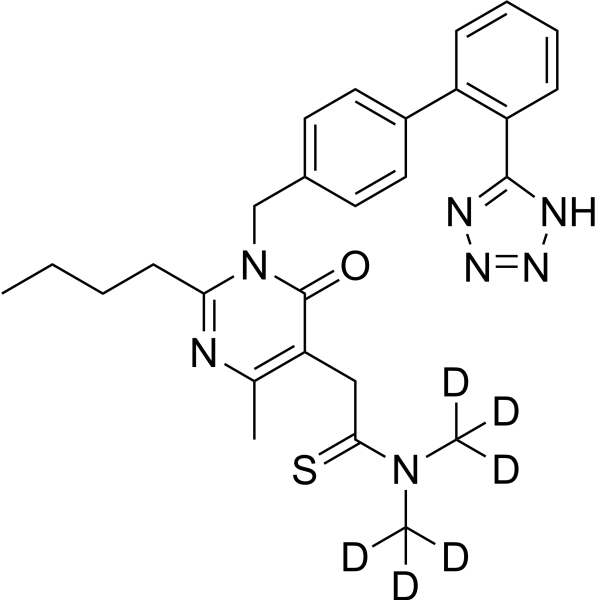
 0 ImagesCat. No.: HY-174254CAS No.: 3099809-16-9AKT-IN-28 is an Akt allosteric inhibitor, a derivative of Shikonin (HY-N0822). AKT-IN-28 effectively binds to the allosteric site of Akt through hydrophobic and hydrogen interactions with Kd of 2.07 μM. AKT-IN-28 significantly inhibits Akt activity, induces cell apoptosis, arrests cell cycle in G2/M phase, and suppresses proliferation, migration and metabolism of KRAS mutant colorectal cancer cells.
-
TS-IN-6
 0 ImagesCat. No.: HY-172172TS-IN-6 (Compound 10) is a thymidylate synthase (TS) inhibitor with an IC50 value of 0.54 μM, demonstrating significant antiproliferative activity. TS-IN-6 induces G1 phase cell cycle arrest and apoptosis (marked by substantial increases in both early and late apoptotic rates) and shows potential for research on cancers such as colon, breast, and liver cancers.
-
SphK1-IN-2
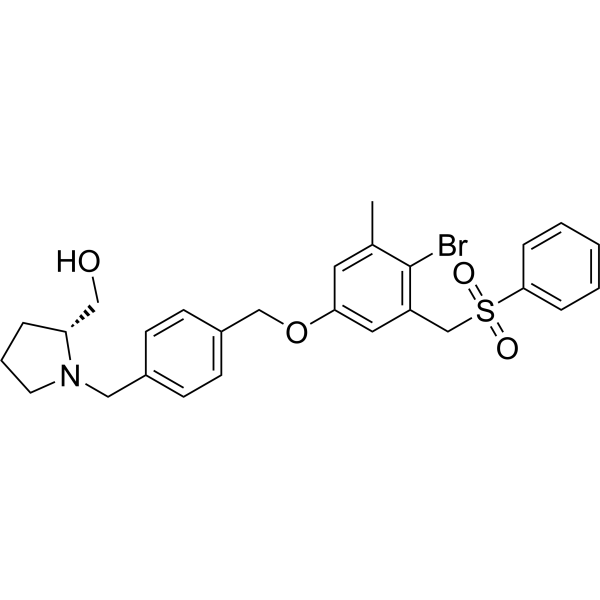 0 ImagesCat. No.: HY-150615CAS No.: 3031483-60-7




