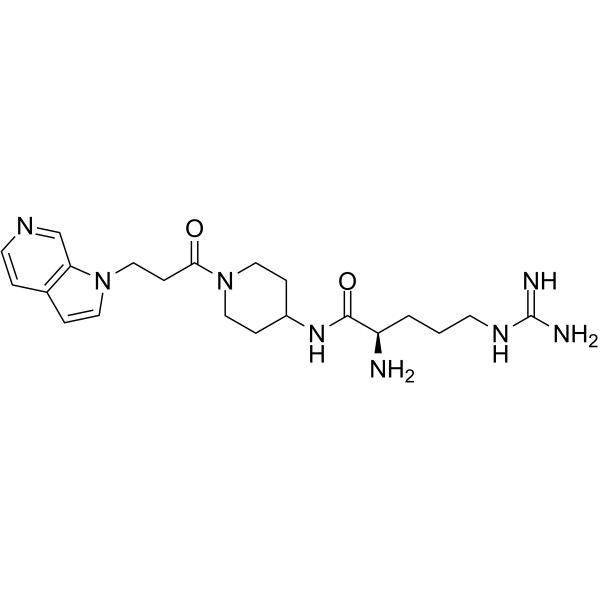
CXCR
CXC chemokine receptors; C-X-C motif chemokine receptors
CXCRs (CXC chemokine receptors) are integral membrane proteins that specifically bind and respond to cytokines of the CXC chemokine family. They represent one subfamily of chemokine receptors, a large family of G protein-linked receptors that are known as seven transmembrane (7-TM) proteins, since they span thecell membrane seven times. There are currently seven known CXC chemokine receptors in mammals, named CXCR1 through CXCR7. CXCR1 and CXCR2 are closely related receptors that recognize CXC chemokines that possess an E-L-R amino acid motif immediately adjacent to their CXC motif. CXCR3 is expressed predominantly on T lymphocytes. CXCR4 is the receptor for a chemokine known as CXCL12 (or SDF-1) and, as with CCR5, is utilized by HIV-1 to gain entry into target cells. The chemokine receptor CXCR5 is selectively expressed on B cells and is involved in lymphocyte homing and the development of normal lymphoid tissue. CXCR6 was formerly called three different names (STRL33, BONZO, and TYMSTR) before being assigned CXCR6 based on its chromosomal location and its similarity to other chemokine receptors in its gene sequence. CXCR7 was originally called RDC-1 (an orphan receptor) but has since been shown to cause chemotaxis in T lymphocytes in response to CXCL12 (the ligand for CXCR4) prompting the renaming of this molecule as CXCR7.
CXCR Isoform Specific Products
All Product Categories
-
CXCR Inhibitors
(107)
View all products
-
CXCR Agonists
(25)
View all products
-
CXCR Antagonists
(128)
View all products
-
CXCR Activators
(12)
View all products
-
CXCR Modulators
(19)
View all products
-
CXCR Inducer
(1)
View all products
-
CXCR Degrader
(1)
View all products
-
CXCR Controls
(2)
View all products
-
CXCR Ligand
(1)
View all products
-
CXC Chemokines Proteins
(140)
View all products
-
CXC Chemokine Receptor Proteins
(13)
View all products
-
CXCR2 Proteins
(3)
View all products
-
CXCR3 Proteins
(3)
View all products
-
CXCR4 Proteins
(6)
View all products
-
CXCR Related Products (355)
Related Products (355)

-
Recombinant Proteins (153)
-
Antibodies (9)
-
Related Compound Screening Libraries (1)
-
CXCR Isoform Comparison
-
Cyclic MKEY TFA
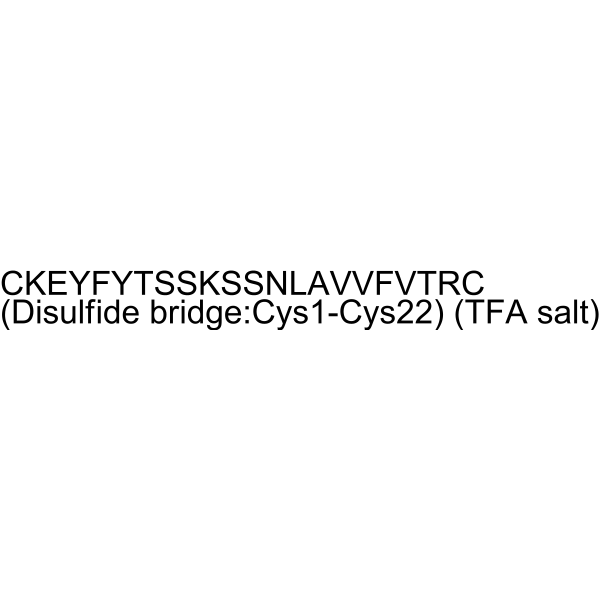 0 ImagesCat. No.: HY-P1949APurity: 98.47%Cyclic MKEY TFA is a synthetic cyclic peptide inhibitor of CXCL4-CCL5 heterodimer formation, which protects against atherosclerosis and aortic aneurysm formation by mediating inflammation. Cyclic MKEY TFA also protects against stroke-induced brain injury in mice.
-
Anti-Mouse CCL5 Antibody (R6G9)
 0 ImagesCat. No.: HY-P991753Anti-Mouse CCL5 Antibody (R6G9) is a neutralizing agent that binds to CCL5 to inhibit its chemotactic activity towards CD4+ T cells.Anti-Mouse CCL5 Antibody (R6G9) does not suppress CD4+ T cell migration towards infection-derived liver cells, reduce CD4+ T cell hepatic accumulation, or impair CD4+ T cell migratory capacity.Anti-Mouse CCL5 Antibody (R6G9) serves as a tool to assess CCL5’s role in in vivo target cell killing by LCMV-specific CD8+ effector T cells.Anti-Mouse CCL5 Antibody (R6G9) can be used for the research of malaria infection and lymphocytic choriomeningitis virus infection.
-
(±)-NBI-74330
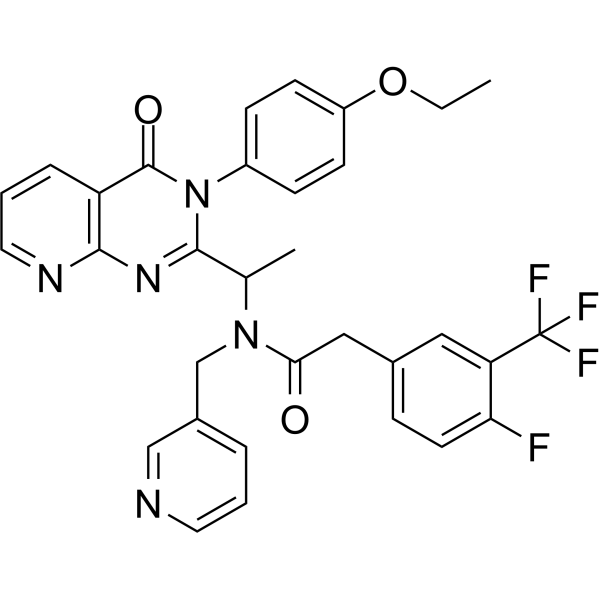 0 Images(±)-NBI-74330 is a potent and selective CXCR3 antagonist. (±)-NBI-74330 not only reduces tactile and thermal hypersensitivity but also enhances the analgesic properties of morphine. (±)-NBI-74330 can reduce microglial cell activation, increase astroglial cell activation, and downregulate the expression of some CXCR3 ligands in a rat neuropathic pain model.

-
Elubrixin
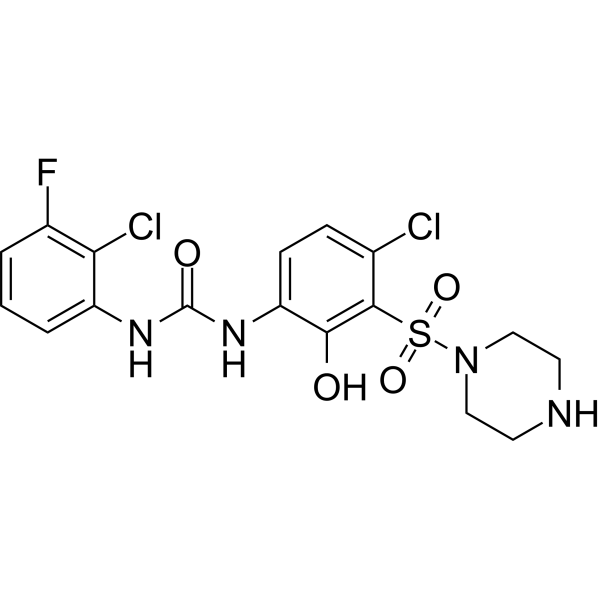 0 ImagesCat. No.: HY-18263ACAS No.: 688763-64-6Synonyms: SB-656933Elubrixin (SB-656933) is a potent, selective, competitive, reversible and orally active CXCR2 antagonist and an IL-8 receptor antagonist. Elubrixin inhibits neutrophil CD11b upregulation (IC50 of 260.7 nM) and shape change (IC50 of 310.5 nM). Elubrixin has the potential for inflammatory diseases research, such as inflammatory bowel disease and airway inflammation.
-
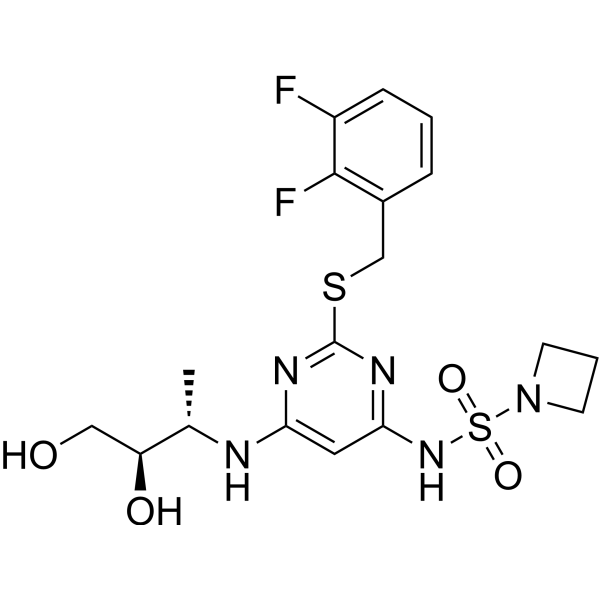
(R,R)-CXCR2-IN-2
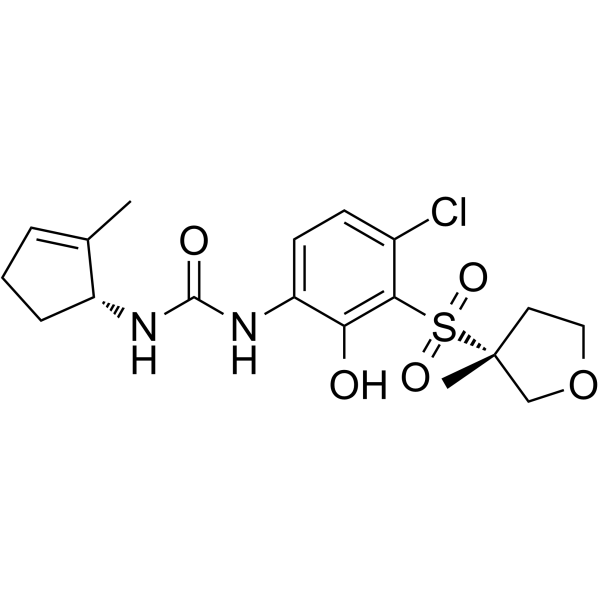 0 Images(R,R)-CXCR2-IN-2 (compound 67), diastereoisomer of CXCR2-IN-2 (compound 68) (HY-120878), is a CXCR2 antagonist with a pIC50 of 9 and 6.8 in the Tango assay and d in the HWB Gro-α induced CD11b expression assay, respectively.
-
DPM-1003
 0 ImagesCat. No.: HY-160550CAS No.: 3018836-86-4DPM-1003 is a modulator of protein tyrosine phosphatase 1B (PTP1B) and C-X-C chemokine receptor 4 (CXCR4). DPM-1003 binds to the non-catalytic disordered C-terminal fragment of PTP1B. DPM-1003 inhibits the PI3Kγ-mediated AKT/mTOR signaling pathway downstream of CXCR4. DPM-1003 improves the survival rate of mice in a transfusion-related acute lung injury model, and exerts a lung injury protective effect in preclinical mouse models of acute lung injury and sepsis. DPM-1003 can be used in research related to acute lung injury, acute respiratory distress syndrome, transfusion-related acute lung injury and sepsis.
-
IT1t
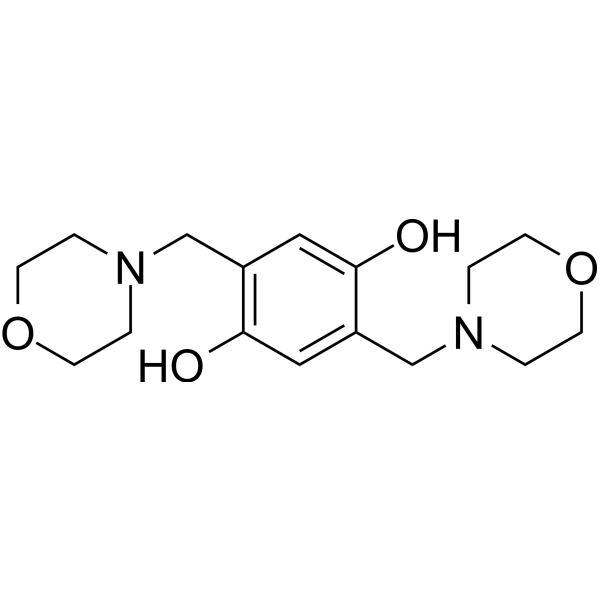
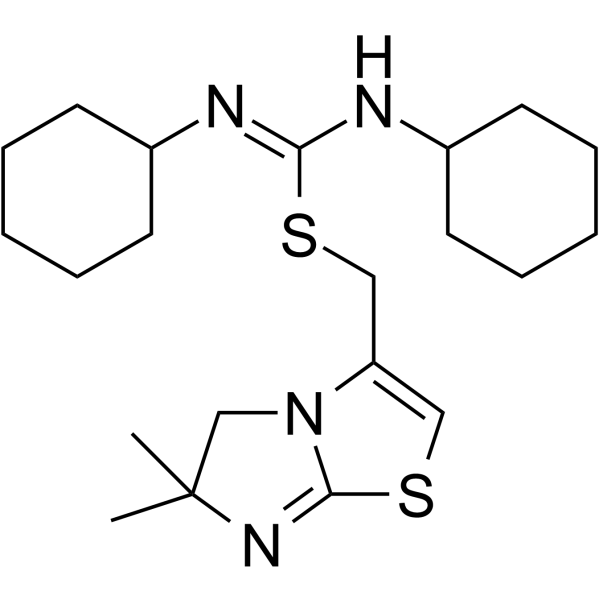 0 ImagesCat. No.: HY-101458CAS No.: 864677-55-4IT1t is a potent CXCR4 antagonist; inhibits CXCL12/CXCR4 interaction with an IC50 of 2.1 nM.
-
Peptide R54 acetate
 0 ImagesCat. No.: HY-P11011APurity: 99.88%Synonyms: Pep R54 acetate; CXCR4 antagonist peptide 19 acetatePeptide R54 acetate (Pep R54 acetate) is a CXCR4 antagonist. Peptide R54 acetate inhibits CXCL12-dependent activation of pERK1/2 and pAKT. The combination of Peptide R54 acetate and Nivolumab (HY-P9903) suppresses melanoma growth. Peptide R54 (acetate) is applicable to research related to melanoma and ovarian cancer.
-
CXCR4 antagonist 10
 0 ImagesCXCR4 antagonist 10 (compound 21) is a potent antagonist of CXCR4, with the IC50 of 7.8 nM. CXCR4 antagonist 10 plays an important role in cancer research.
-
Peptide R
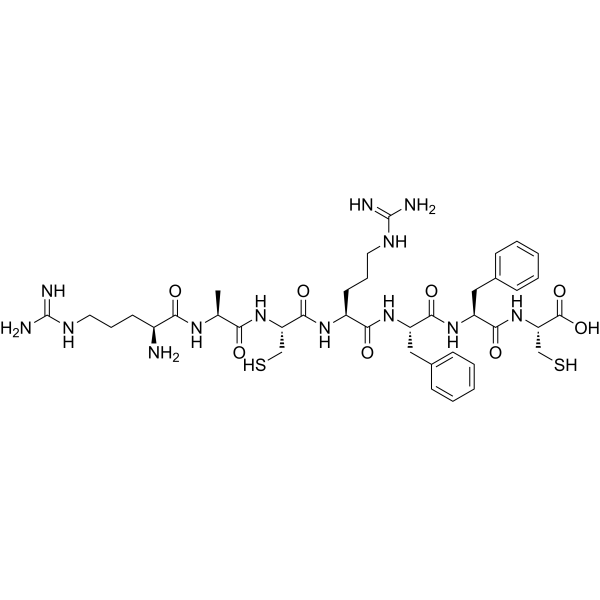 0 ImagesCat. No.: HY-P4111CAS No.: 1318232-11-9Peptide R is a cyclic peptide and a specific CXCR4 antagonist. Peptide R exhibits excellent ability to effectively remodel tumor stroma. Peptide R has potential for use in tumor research.
-
Peptide R TFA
 0 ImagesCat. No.: HY-P4111APurity: 98.34%Peptide R (TFA) is a synthetic and specific CXCR4 antagonist. Peptide R (TFA) shows outstanding capacities to remodel the tumor stroma. Peptide R (TFA) can be used for solid tumor (glioblastoma, etc.) research.
-
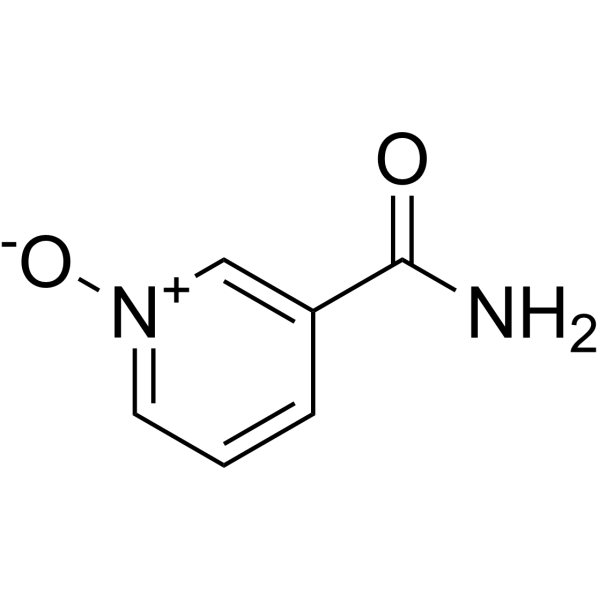
Hit 14
 0 ImagesCat. No.: HY-162632CAS No.: 440338-68-1Hit 14 is an inhibitor for C-X-C chemokine receptor type 4 (CXCR4) with IC50 of 254 nM. Hit 14 inhibits the migration and invasion of cell MDA-MB-231. Hit 14 inhibits the Akt phosphorylation, exhibits anti-inflammatory activity, and ameliorateds the ear swelling and damage in mouse models.
-
Peptide R analogue 10
 0 ImagesPeptide R analogue 10 (compound 10) is an analog of the CXCR4 antagonist peptide Peptide R (HY-P4111) with stronger antagonistic potency, specificity and plasma stability. Peptide R analogue 10 can inhibit CXCL12-mediated cell migration, ERK phosphorylation and CXCR4 internalization. Peptide R analogue 10 can be used in the study of CXCR4 overexpressing leukemia and colon cancer.
-
ALX 40-4C
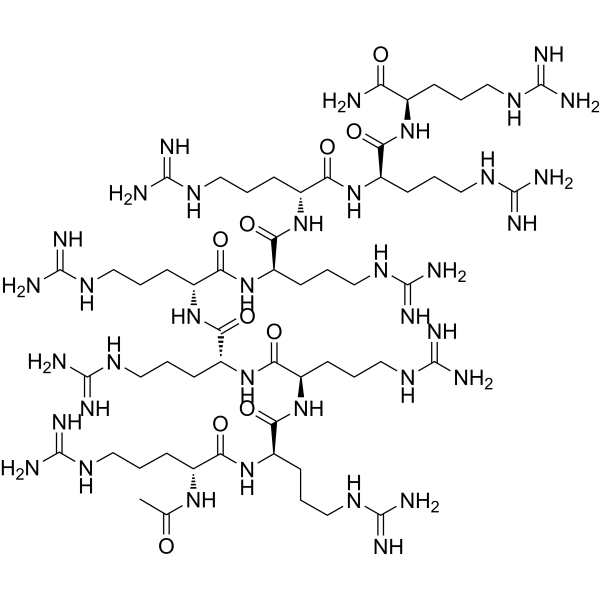 0 ImagesCat. No.: HY-P7061CAS No.: 143413-49-4
-
CXCR4 antagonist 9
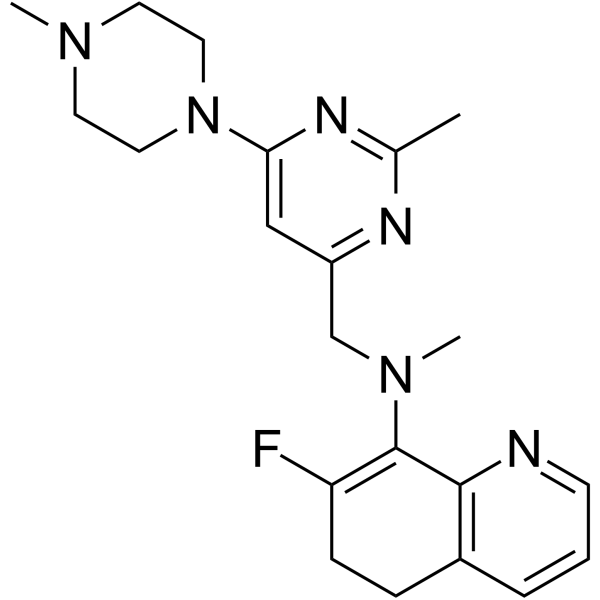 0 ImagesCat. No.: HY-147979CAS No.: 2304750-83-0CXCR4 antagonist 9 (Compound 2) is a CXCR4 antagonist with an IC50 of 15 nM. CXCR4 antagonist 9 inhibits CXCL12 induced cytosolic calcium increase with an IC50 of 1.3 nM.