



IT1t
Based on 6 publication(s) in Google Scholar
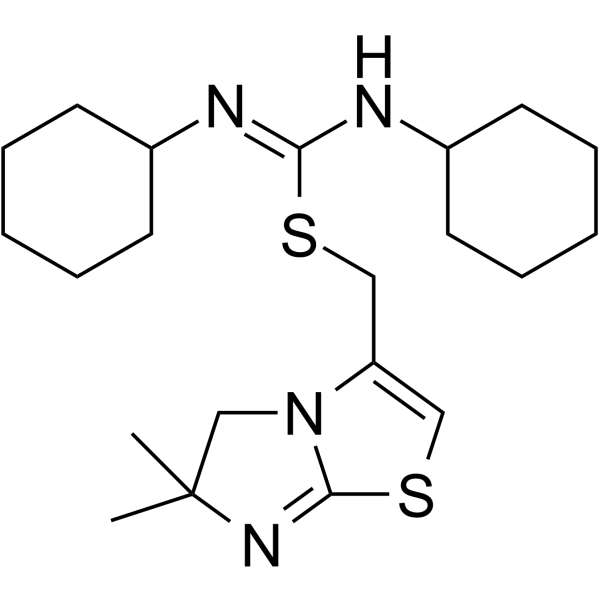
IT1t is a potent CXCR4 antagonist; inhibits CXCL12/CXCR4 interaction with an IC50 of 2.1 nM.
For research use only. We do not sell to patients.
- CAS No.: 864677-55-4
- Formula: C21H34N4S2
- Molecular Weight:406.65
-
Storage:
Please store the product under the recommended conditions in the Certificate of Analysis.

To place orders, for customer services and technical support, please contact: MedChemExpress USA
Tel: 609-228-6898 E-mail: [email protected] [email protected]


-
 Biological Activity
-
Chemical Information
- Purity & Documentation
- References
-
 Help & FAQs


-
HY-50101
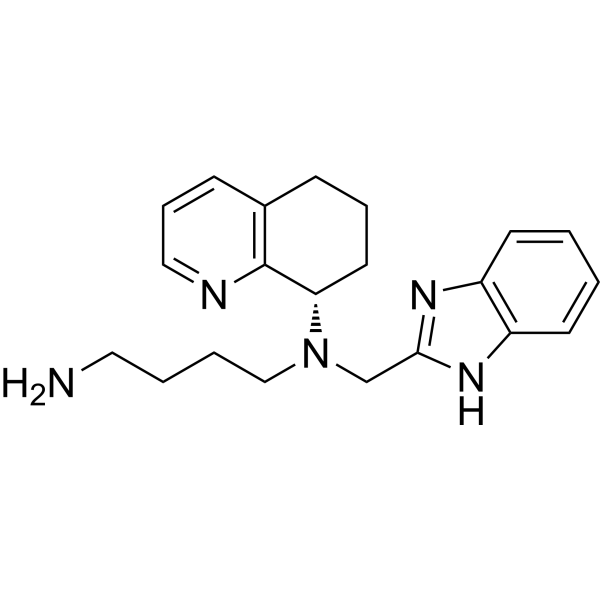
MavorixaforCXCR4 Antagonist -
HY-10046
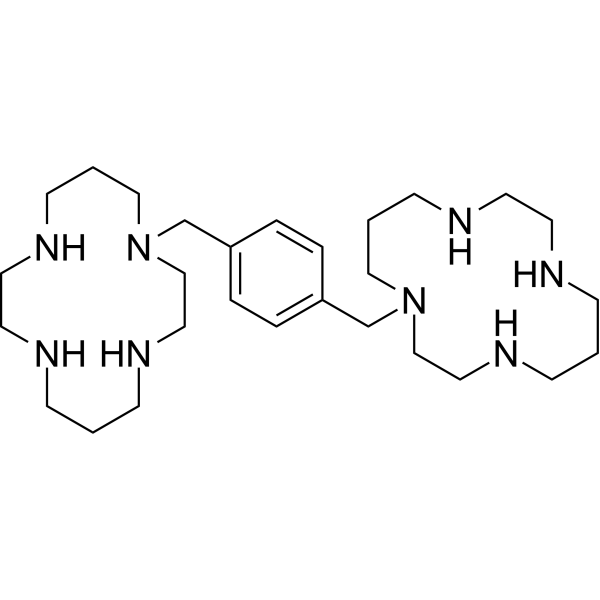
PlerixaforCXCR4 Antagonist -
HY-15971
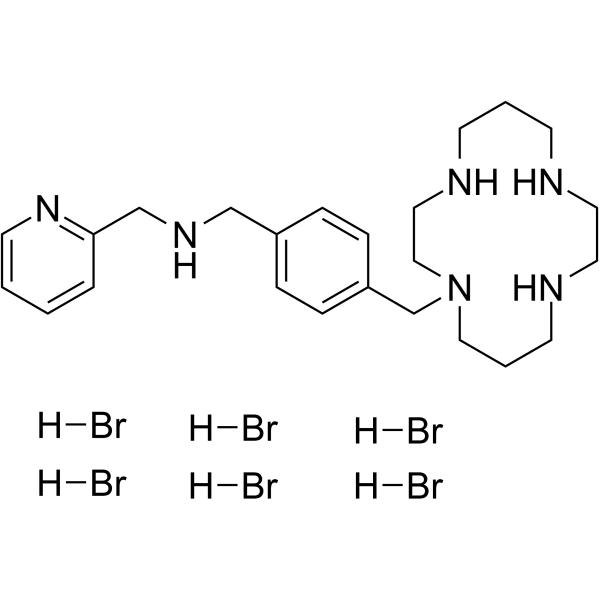
AMD 3465 hexahydrobromideCXCR4 Antagonist -
HY-50912
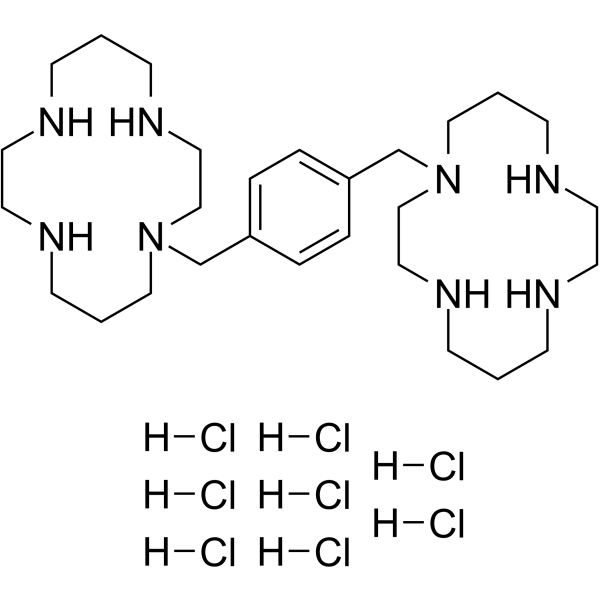
Plerixafor octahydrochlorideCXCR4 Antagonist -
HY-101407
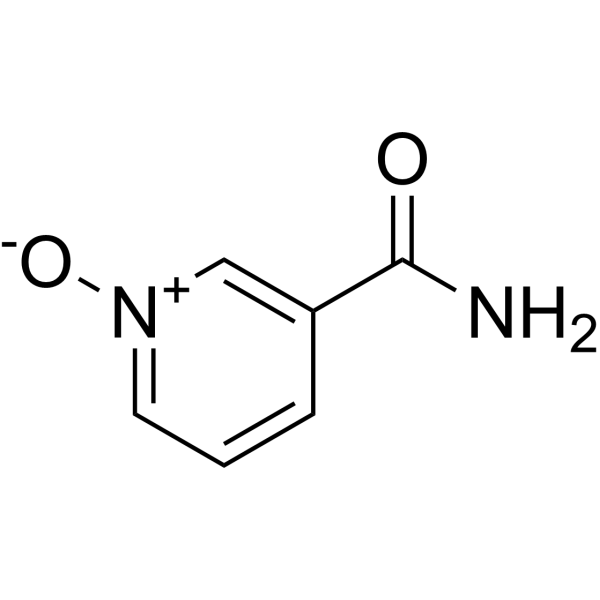
Nicotinamide N-oxideCXCR2 Receptor Antagonist -
HY-15971A
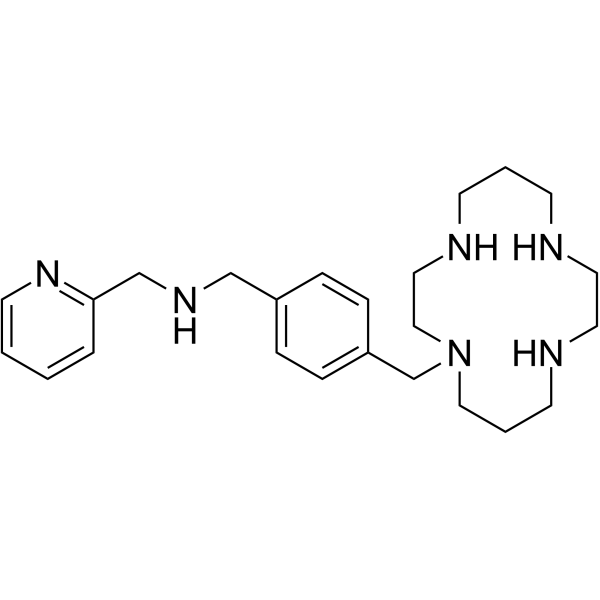
AMD 3465CXCR4 Antagonist -
HY-16711
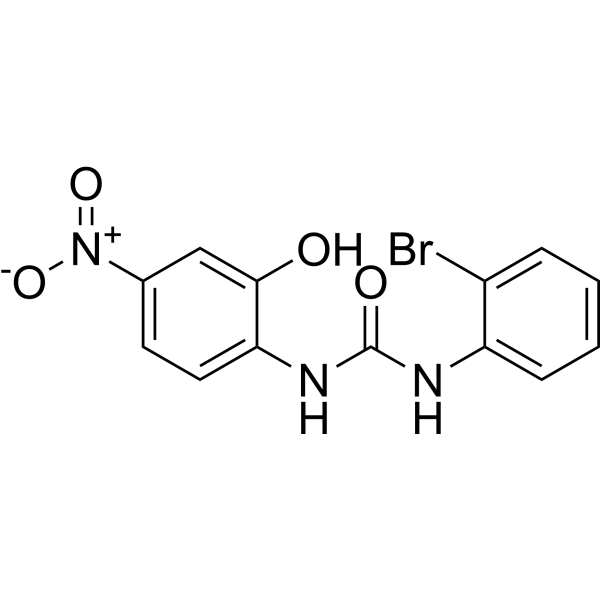
SB225002CXCR2 Antagonist -
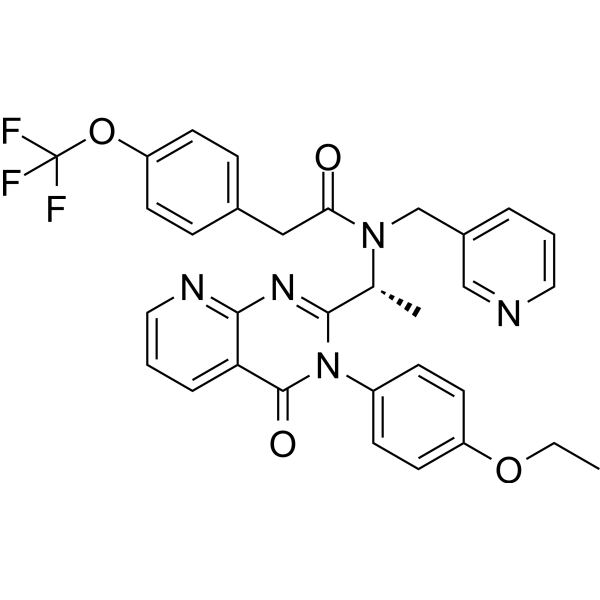
HY-15319
AMG 487CXCR3 Antagonist -
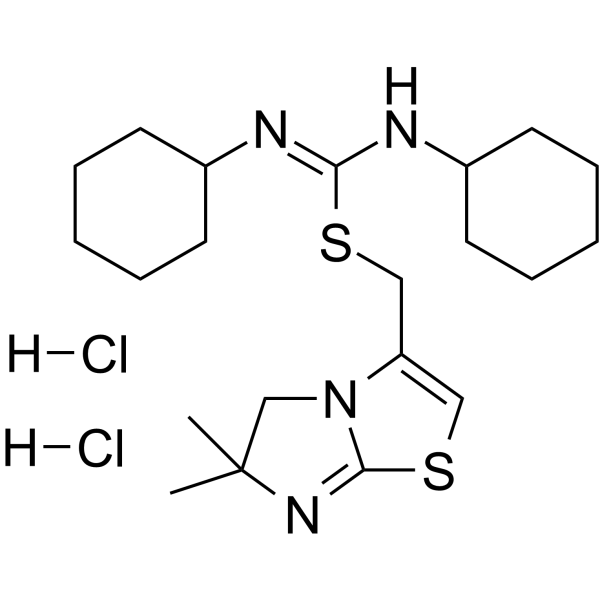
HY-101458A
IT1t dihydrochlorideCXCR4 Antagonist -
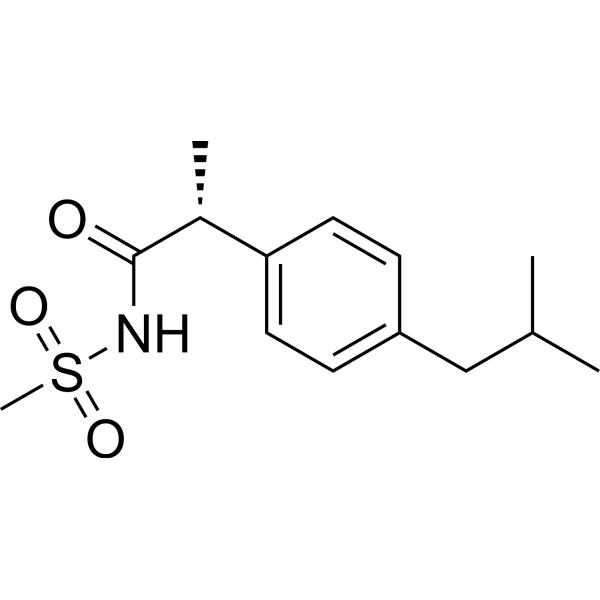
HY-15251
ReparixinCXCR1/2 Inhibitor -
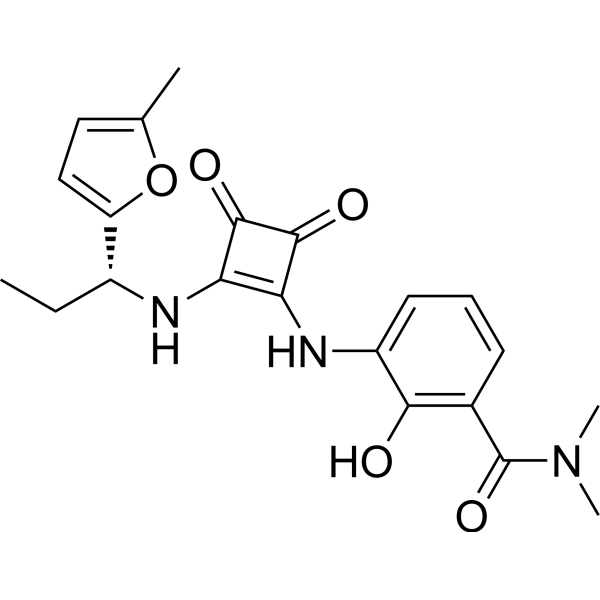
HY-10198
NavarixinCXCR1/2 Antagonist -
HY-19855
AZD-5069CXCR2 Antagonist
Publications Citing Use of MedChemExpress (MCE) IT1t
More

Biological Activity
Description
IC50 & Target
[1]|
CXCL12/CXCR4 2.1 nM (IC50) |
HIV-1 (X4) 14.2 nM (IC50, in MT-4 cells) |
HIV-1 (X4) 19 nM (IC50, in PBMCs) |
Cellular Effect
|
Cell Line

|
Type | Value | Description | References |
|---|---|---|---|---|
| CCRF-CEM | IC50 |
1.1 nM
Compound: 1t
|
Activity at CXCR4 in human CEM cells assessed as inhibition of CXCL12-induced calcium mobilization
Activity at CXCR4 in human CEM cells assessed as inhibition of CXCL12-induced calcium mobilization
|
[PMID: 19053768] |
| CCRF-CEM | IC50 |
8 nM
Compound: 1t
|
Displacement of [125I]CXCL12 from CXCR4 in human CEM cells
Displacement of [125I]CXCL12 from CXCR4 in human CEM cells
|
[PMID: 19053768] |
| CHO-K1 | IC50 |
>20000 nM
Compound: 1t
|
Inhibition of human recombinant ERG in CHOK1 cells
Inhibition of human recombinant ERG in CHOK1 cells
|
[PMID: 19053768] |
| HEK293 | IC50 |
13240 nM
Compound: 1t
|
Displacement of [3H]dofetilide from human recombinant ERG expressed in HEK293 cells
Displacement of [3H]dofetilide from human recombinant ERG expressed in HEK293 cells
|
[PMID: 19053768] |
| HEK293 | IC50 |
0.223 μM
Compound: 1; IT1t
|
Antagonist activity at recombinant human N-terminal MDSKGSSQKGSRLLLLLVVSNLLLCQGVVS-tagged CXCR4 D171A mutant expressed in HEK293 cells assessed as inhibition of SDF1alpha-induced Gi activation preincubated for 30 mins followed by SDF1alpha addition and me
Antagonist activity at recombinant human N-terminal MDSKGSSQKGSRLLLLLVVSNLLLCQGVVS-tagged CXCR4 D171A mutant expressed in HEK293 cells assessed as inhibition of SDF1alpha-induced Gi activation preincubated for 30 mins followed by SDF1alpha addition and me
|
[PMID: 30655949] |
| HEK293 | IC50 |
0.326 μM
Compound: 1; IT1t
|
Antagonist activity at recombinant human N-terminal MDSKGSSQKGSRLLLLLVVSNLLLCQGVVS-tagged CXCR4 expressed in HEK293 cells assessed as inhibition of SDF1alpha-induced Gi activation preincubated for 30 mins followed by SDF1alpha addition and measured after
Antagonist activity at recombinant human N-terminal MDSKGSSQKGSRLLLLLVVSNLLLCQGVVS-tagged CXCR4 expressed in HEK293 cells assessed as inhibition of SDF1alpha-induced Gi activation preincubated for 30 mins followed by SDF1alpha addition and measured after
|
[PMID: 30655949] |
| HEK293 | IC50 |
0.43 μM
Compound: 1; IT1t
|
Antagonist activity at recombinant human N-terminal MDSKGSSQKGSRLLLLLVVSNLLLCQGVVS-tagged CXCR4 D187A mutant expressed in HEK293 cells assessed as inhibition of SDF1alpha-induced Gi activation preincubated for 30 mins followed by SDF1alpha addition and me
Antagonist activity at recombinant human N-terminal MDSKGSSQKGSRLLLLLVVSNLLLCQGVVS-tagged CXCR4 D187A mutant expressed in HEK293 cells assessed as inhibition of SDF1alpha-induced Gi activation preincubated for 30 mins followed by SDF1alpha addition and me
|
[PMID: 30655949] |
| HEK293 | IC50 |
0.967 μM
Compound: 1; IT1t
|
Antagonist activity at recombinant human N-terminal MDSKGSSQKGSRLLLLLVVSNLLLCQGVVS-tagged CXCR4 E288A mutant expressed in HEK293 cells assessed as inhibition of SDF1alpha-induced Gi activation preincubated for 30 mins followed by SDF1alpha addition and me
Antagonist activity at recombinant human N-terminal MDSKGSSQKGSRLLLLLVVSNLLLCQGVVS-tagged CXCR4 E288A mutant expressed in HEK293 cells assessed as inhibition of SDF1alpha-induced Gi activation preincubated for 30 mins followed by SDF1alpha addition and me
|
[PMID: 30655949] |
| HEK293 | IC50 |
18.9 μM
Compound: 1; IT1t
|
Antagonist activity at recombinant human N-terminal MDSKGSSQKGSRLLLLLVVSNLLLCQGVVS-tagged CXCR4 D97A mutant expressed in HEK293 cells assessed as inhibition of SDF1alpha-induced Gi activation preincubated for 30 mins followed by SDF1alpha addition and mea
Antagonist activity at recombinant human N-terminal MDSKGSSQKGSRLLLLLVVSNLLLCQGVVS-tagged CXCR4 D97A mutant expressed in HEK293 cells assessed as inhibition of SDF1alpha-induced Gi activation preincubated for 30 mins followed by SDF1alpha addition and mea
|
[PMID: 30655949] |
| HEK293 | IC50 |
6.37 μM
Compound: 1; IT1t
|
Antagonist activity at recombinant human N-terminal MDSKGSSQKGSRLLLLLVVSNLLLCQGVVS-tagged CXCR4 W94A mutant expressed in HEK293 cells assessed as inhibition of SDF1alpha-induced Gi activation preincubated for 30 mins followed by SDF1alpha addition and mea
Antagonist activity at recombinant human N-terminal MDSKGSSQKGSRLLLLLVVSNLLLCQGVVS-tagged CXCR4 W94A mutant expressed in HEK293 cells assessed as inhibition of SDF1alpha-induced Gi activation preincubated for 30 mins followed by SDF1alpha addition and mea
|
[PMID: 30655949] |
| HEK293 | IC50 |
7.19 μM
Compound: 1; IT1t
|
Antagonist activity at recombinant human N-terminal MDSKGSSQKGSRLLLLLVVSNLLLCQGVVS-tagged CXCR4 Y116A mutant expressed in HEK293 cells assessed as inhibition of SDF1alpha-induced Gi activation preincubated for 30 mins followed by SDF1alpha addition and me
Antagonist activity at recombinant human N-terminal MDSKGSSQKGSRLLLLLVVSNLLLCQGVVS-tagged CXCR4 Y116A mutant expressed in HEK293 cells assessed as inhibition of SDF1alpha-induced Gi activation preincubated for 30 mins followed by SDF1alpha addition and me
|
[PMID: 30655949] |
In Vitro
The CXCR4 is involved in chemotaxis and serves as a coreceptor for T-tropic HIV-1 viral entry and in cancer metastasis. IT1t is a small, drug-like, isothiourea derivative. IT1t shows very potent and dose-dependent inhibition of the CXCL12/CXCR4 interaction with an IC50 of 2.1 nM. This calcium flux is also inhibited by IT1t with an IC50 of 23.1[1]. Strong electron density is observed for IT1t in the binding cavity of both subunits of the CXCR4 homodimer. In dimers of CXCR4 bound to IT1t, the monomers interact only at the extracellular side of helices V and VI, leaving at least a 4 gap between the intracellular regions, which is presumably filled by lipids. The IT1t compound and CVX15 peptide have both been characterized as competitive inhibitors of CXCL12, and many of the receptor-ligand contacts in the co-crystal structures presented are important for CXCL12 binding, including the acidic Asp187, Glu2887.39 and Asp972.63. The binding site of IT1t may point to the major anchor region for this domain[2].
MedChemExpress (MCE) has not independently confirmed the accuracy of these methods. They are for reference only.
In Vivo
MedChemExpress (MCE) has not independently confirmed the accuracy of these methods. They are for reference only.


Chemical Information
-
CAS No. 864677-55-4
-
Molecular Weight 406.65
-
Formula C21H34N4S2
-
SMILES
CC1(C)CN2C(CS/C(NC3CCCCC3)=N\C4CCCCC4)=CSC2=N1
-
Shipping
Room temperature in continental US; may vary elsewhere.
-
Storage
Please store the product under the recommended conditions in the Certificate of Analysis.


Publications (6)
-
Journal Impact Factor
-
Most Recent
-
Nat Commun
2021 Jul 22;12(1):4457. PMID: 34294701 -
Int J Mol Sci
Jurkat T-Cell Antigen-Independent Elimination of PMA-Activated Neuroblastoma Cells Is Triggered by CCL2/CCR2, Depends Upon Lipid Raft LFA1/ICAM1 Immune Synapses, Is Mediated by m-TRAIL and Is Augmented by the TrkAIII Oncoprotein. [Abstract]2026 Feb 18;27(4):1970. PMID: 41752106 -
Clin Exp Pharmacol Physiol
Overexpression of HSP27 accelerates stress-induced gastric ulcer healing via the CXCL12/CXCR4 axis. [Abstract]2024 May;51(5):e13857. PMID: 38566371 -
Curr Eye Res
Kisspeptin Suppresses the Growth of Primary Pterygial Cells via Inhibiting Chemokine (C-X-C Motif) Ligands in Microenvironment. [Abstract]2025 Sep;50(9):894-902. PMID: 40555256 -
-
Biomed Pharmacother
Par3 promotes breast cancer invasion and migration through pull tension and protein nanoparticle-induced osmotic pressure. [Abstract]2022 Nov:155:113739. PMID: 36179489


Purity & Documentation
References
[1]. Van Hout A, et al. Comparison of cell-based assays for the identification and evaluation of competitive CXCR4 inhibitors. PLoS One. 2017 Apr 14;12(4):e0176057. [Content Brief]
[2]. Wu B, et al. Structures of the CXCR4 chemokine GPCR with small-molecule and cyclic peptide antagonists. Science. 2010 Nov 19;330(6007):1066-71. [Content Brief]
[3]. Tulotta C, et al. Inhibition of signaling between human CXCR4 and zebrafish ligands by the small molecule IT1timpairs the formation of triple-negative breast cancer early metastases in a zebrafish xenograft model. Dis Model Mech. 2016 Feb;9(2):141-53. [Content Brief]

Calculators
Concentration (start) × Volume (start) = Concentration (final) × Volume (final)


IT1t Related Classifications
HY-101458 Related Classifications
 Powered by Bioz