



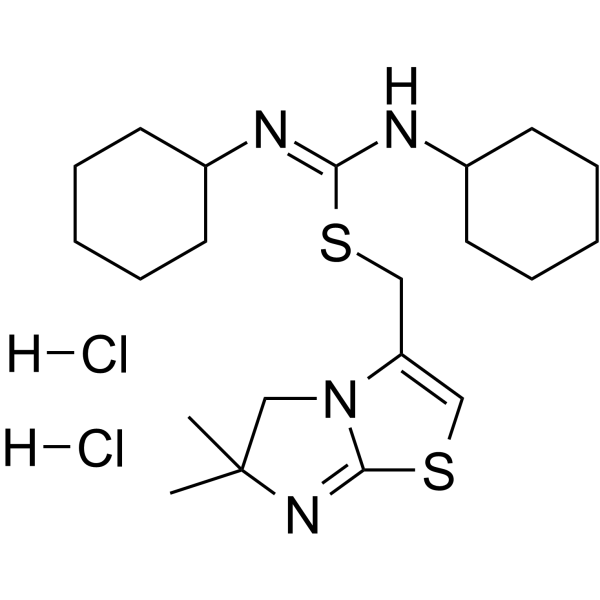
IT1t dihydrochloride
Based on 6 publication(s) in Google Scholar
IT1t dihydrochloride is a potent CXCR4 antagonist; inhibits CXCL12/CXCR4 interaction with an IC50 of 2.1 nM.
For research use only. We do not sell to patients.
- Purity : 99.75%
- CAS No.: 1092776-63-0
- Formula: C21H36Cl2N4S2
- Molecular Weight:479.57
-
Storage:
4°C, sealed storage, away from moisture
* In solvent : -80°C, 6 months; -20°C, 1 month (sealed storage, away from moisture)

To place orders, for customer services and technical support, please contact: MedChemExpress USA
Tel: 609-228-6898 E-mail: [email protected] [email protected]


-
 Biological Activity
-
Chemical Information
-
Solvent & Solubility
- Protocols
- Purity & Documentation
- References
-
 Help & FAQs


-
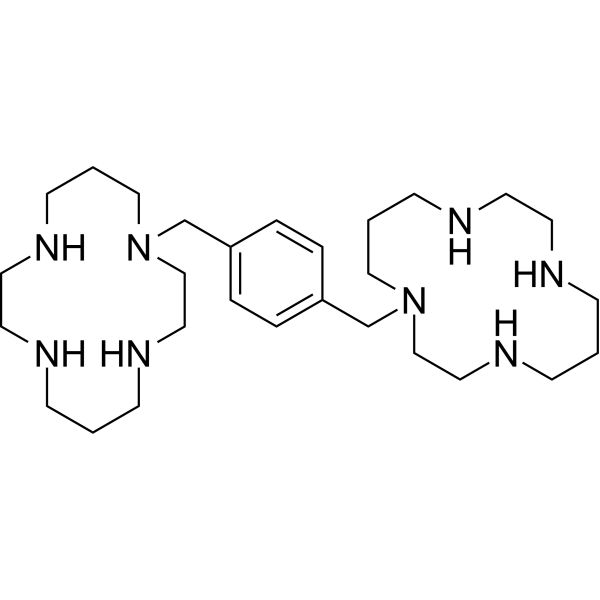
HY-10046
PlerixaforCXCR4 Antagonist -
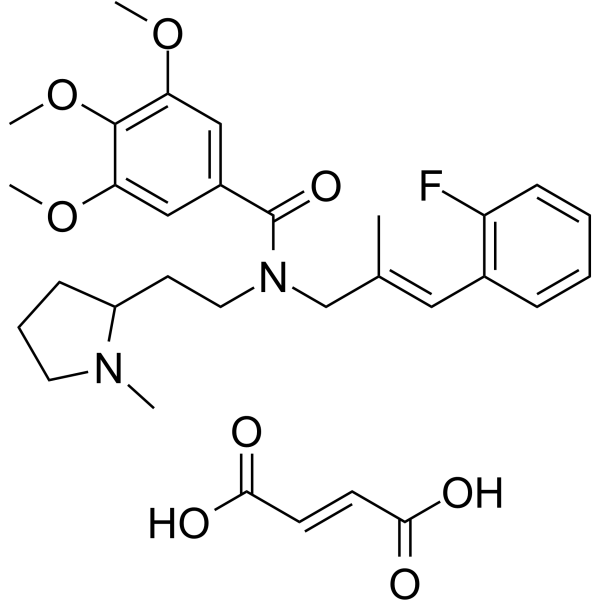
HY-110318
VUF11207 fumarateCXCR7 Agonist -
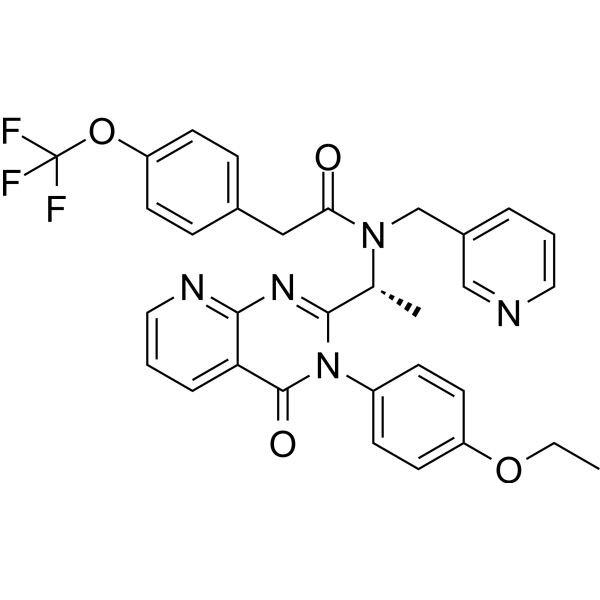
HY-15319
AMG 487CXCR3 Antagonist -
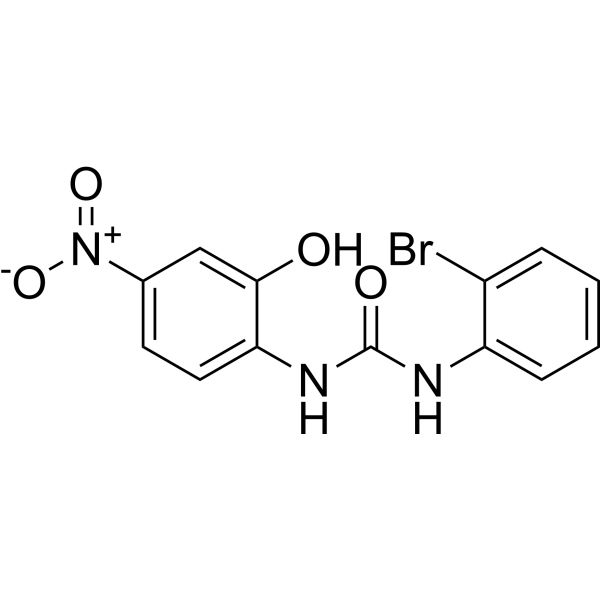
HY-16711
SB225002CXCR2 Antagonist -
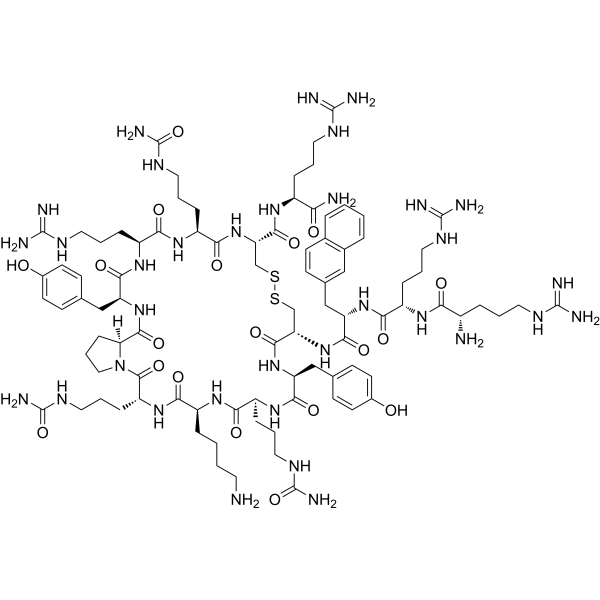
HY-P1102
TC14012CXCR4 Antagonist -
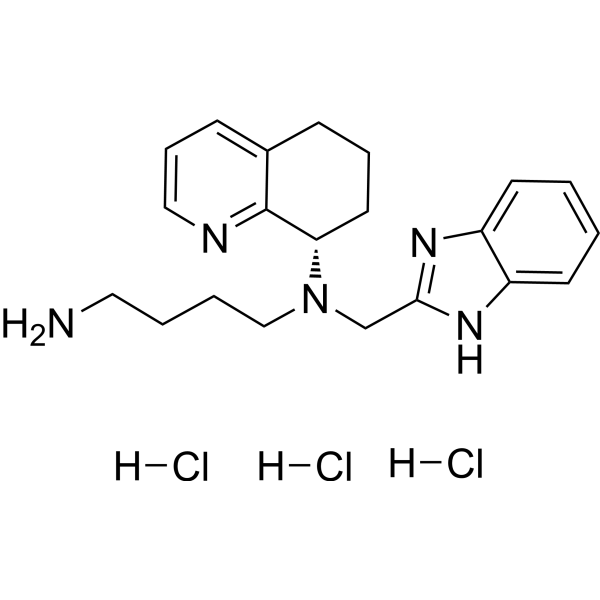
HY-50101A
Mavorixafor trihydrochlorideCXCR4 Antagonist -
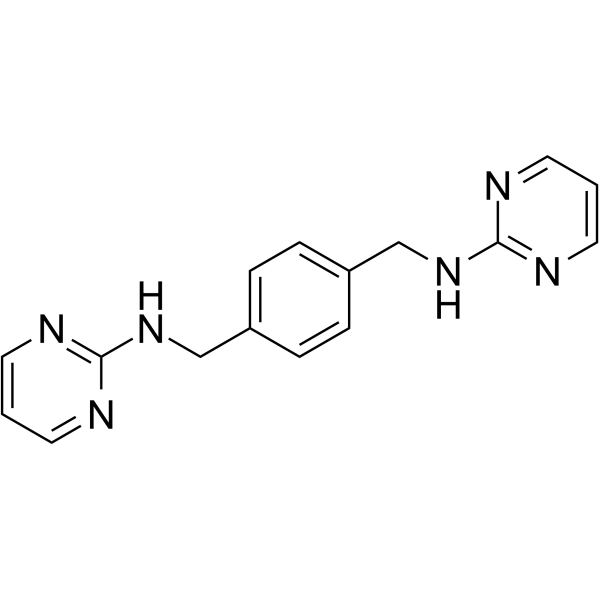
HY-13696
MSX-122CXCR4 Antagonist -
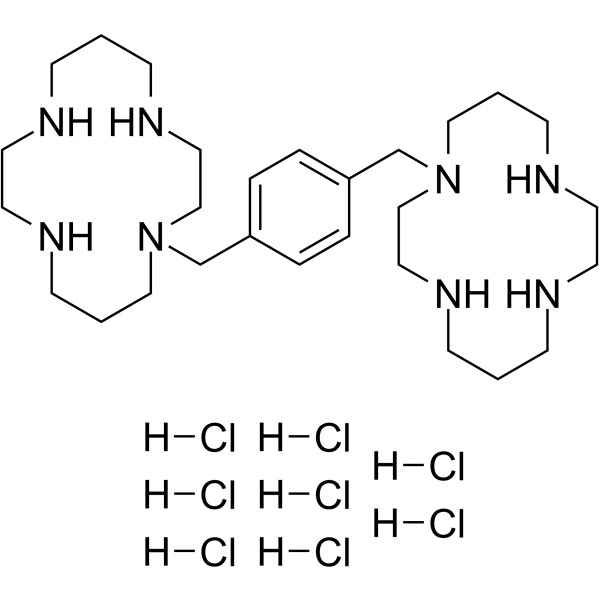
HY-50912
Plerixafor octahydrochlorideCXCR4 Antagonist -
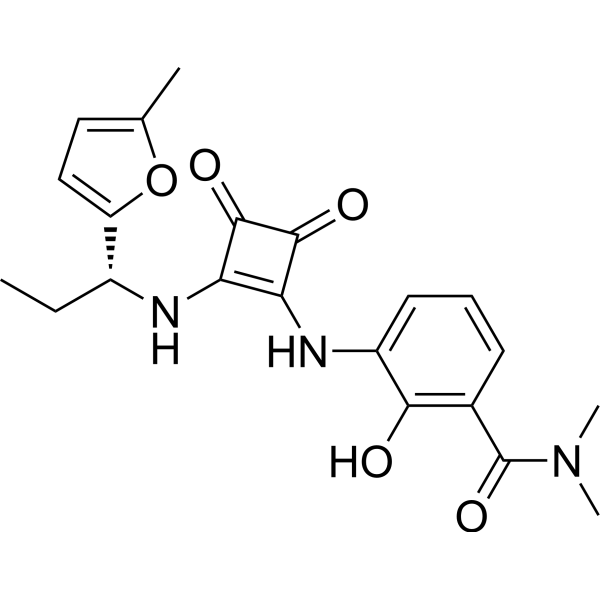
HY-10198
NavarixinCXCR1/2 Antagonist -
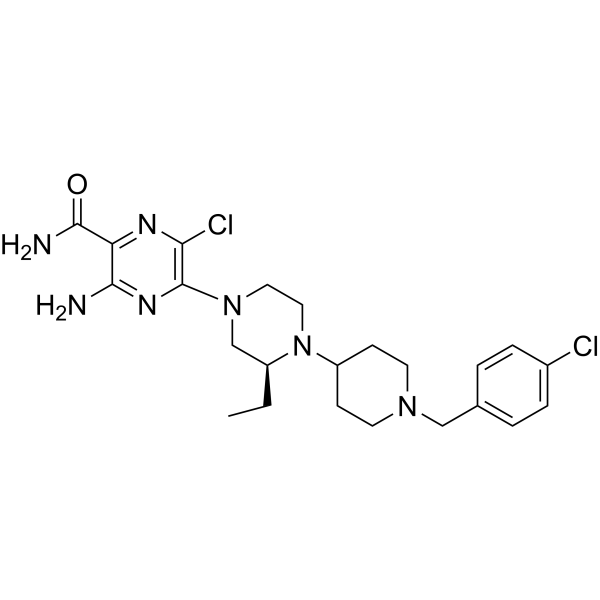
HY-10017
SCH 546738CXCR3 Antagonist -
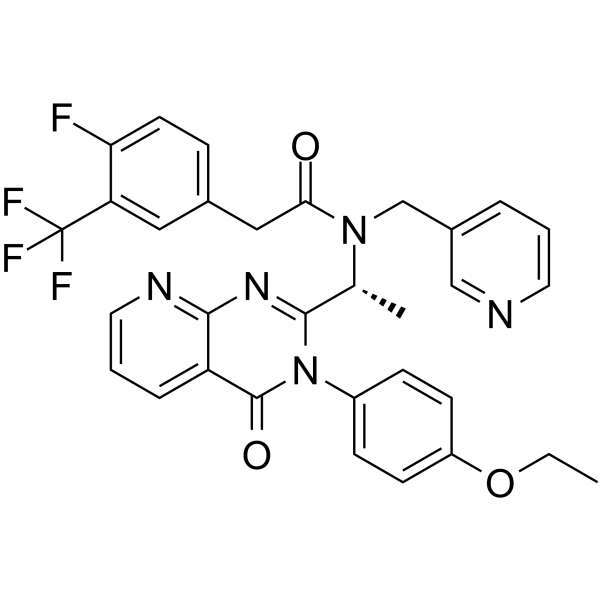
HY-15320
NBI-74330CXCR Antagonist -

HY-50101C
Mavorixafor hydrochlorideCXCR4 Antagonist
Publications Citing Use of MedChemExpress (MCE) IT1t dihydrochloride
More

Biological Activity
Description
IC50 & Target
[1]|
CXCL12/CXCR4 2.1 nM (IC50) |
HIV-1 (X4) 14.2 nM (IC50, in MT-4 cells) |
HIV-1 (X4) 19 nM (IC50, in PBMCs) |
In Vitro
The CXCR4 is involved in chemotaxis and serves as a coreceptor for T-tropic HIV-1 viral entry and in cancer metastasis. IT1t is a small, drug-like, isothiourea derivative. IT1t shows very potent and dose-dependent inhibition of the CXCL12/CXCR4 interaction with an IC50 of 2.1 nM. This calcium flux is also inhibited by IT1t with an IC50 of 23.1[1]. Strong electron density is observed for IT1t in the binding cavity of both subunits of the CXCR4 homodimer. In dimers of CXCR4 bound to IT1t, the monomers interact only at the extracellular side of helices V and VI, leaving at least a 4 gap between the intracellular regions, which is presumably filled by lipids. The IT1t compound and CVX15 peptide have both been characterized as competitive inhibitors of CXCL12, and many of the receptor-ligand contacts in the co-crystal structures presented are important for CXCL12 binding, including the acidic Asp187, Glu2887.39 and Asp972.63. The binding site of IT1t may point to the major anchor region for this domain[2].
MedChemExpress (MCE) has not independently confirmed the accuracy of these methods. They are for reference only. Further protocols information, click here.
In Vivo
MedChemExpress (MCE) has not independently confirmed the accuracy of these methods. They are for reference only.


Chemical Information
-
CAS No. 1092776-63-0
-
Appearance Solid
-
Molecular Weight 479.57
-
Formula C21H36Cl2N4S2
-
Color White to off-white
-
SMILES
CC1(C)CN2C(CS/C(NC3CCCCC3)=N\C4CCCCC4)=CSC2=N1.[H]Cl.[H]Cl
-
Shipping
Room temperature in continental US; may vary elsewhere.
-
Storage
4°C, sealed storage, away from moisture
* In solvent : -80°C, 6 months; -20°C, 1 month (sealed storage, away from moisture)


Publications (6)
-
Journal Impact Factor
-
Most Recent
-
Nat Commun
2021 Jul 22;12(1):4457. PMID: 34294701 -
Int J Mol Sci
Jurkat T-Cell Antigen-Independent Elimination of PMA-Activated Neuroblastoma Cells Is Triggered by CCL2/CCR2, Depends Upon Lipid Raft LFA1/ICAM1 Immune Synapses, Is Mediated by m-TRAIL and Is Augmented by the TrkAIII Oncoprotein. [Abstract]2026 Feb 18;27(4):1970. PMID: 41752106 -
Clin Exp Pharmacol Physiol
Overexpression of HSP27 accelerates stress-induced gastric ulcer healing via the CXCL12/CXCR4 axis. [Abstract]2024 May;51(5):e13857. PMID: 38566371 -
Curr Eye Res
Kisspeptin Suppresses the Growth of Primary Pterygial Cells via Inhibiting Chemokine (C-X-C Motif) Ligands in Microenvironment. [Abstract]2025 Sep;50(9):894-902. PMID: 40555256 -
-
Biomed Pharmacother
Par3 promotes breast cancer invasion and migration through pull tension and protein nanoparticle-induced osmotic pressure. [Abstract]2022 Nov:155:113739. PMID: 36179489


Solvent & Solubility
In Vitro:
H2O : 50 mg/mL (104.26 mM; Need ultrasonic)
DMSO : ≥ 30 mg/mL (62.56 mM; Hygroscopic DMSO has a significant impact on the solubility of product, please use newly opened DMSO)
* "≥" means soluble, but saturation unknown.
Please refer to the solubility information to select the appropriate solvent. Once prepared, please aliquot and store the solution to prevent product inactivation from repeated freeze-thaw cycles.
Storage method and period of stock solution: -80°C, 6 months; -20°C, 1 month (sealed storage, away from moisture). When stored at -80°C, please use it within 6 months. When stored at -20°C, please use it within 1 month.
* Note: If you choose water as the stock solution, please dilute it to the working solution, then filter and sterilize it with a 0.22 μm filter before use.
Please refer to the solubility information to select the appropriate solvent. Once prepared, please aliquot and store the solution to prevent product inactivation from repeated freeze-thaw cycles.
Storage method and period of stock solution: -80°C, 6 months; -20°C, 1 month (sealed storage, away from moisture). When stored at -80°C, please use it within 6 months. When stored at -20°C, please use it within 1 month.
* Note: If you choose water as the stock solution, please dilute it to the working solution, then filter and sterilize it with a 0.22 μm filter before use.
Concentration (start) × Volume (start) = Concentration (final) × Volume (final)
In Vivo:
Select the appropriate dissolution method based on your experimental animal and administration route.
- For the following dissolution methods, please ensure to first prepare a clear stock solution using an In Vitro approach and then sequentially add co-solvents:
- To ensure reliable experimental results, the clarified stock solution can be appropriately stored based on storage conditions. As for the working solution for In Vivo experiments, it is recommended to prepare freshly and use it on the same day.
- The percentages shown for the solvents indicate their volumetric ratio in the final prepared solution. If precipitation or phase separation occurs during preparation, heat and/or sonication can be used to aid dissolution.
Add each solvent one by one: 10% DMSO 40% PEG300 5% Tween-80 45% Saline
Solubility: ≥ 1.67 mg/mL (3.48 mM); Clear solution
This protocol yields a clear solution of ≥ 1.67 mg/mL (saturation unknown).
Taking 1 mL working solution as an example, add 100 μL DMSO stock solution (16.7 mg/mL) to 400 μL PEG300, and mix evenly; then add 50 μL Tween-80 and mix evenly; then add 450 μL Saline to adjust the volume to 1 mL.
Preparation of Saline: Dissolve 0.9 g sodium chloride in ddH₂O and dilute to 100 mL to obtain a clear Saline solution.
Add each solvent one by one: 10% DMSO 90% (20% SBE-β-CD in Saline)
Solubility: ≥ 1.67 mg/mL (3.48 mM); Clear solution
This protocol yields a clear solution of ≥ 1.67 mg/mL (saturation unknown).
Taking 1 mL working solution as an example, add 100 μL DMSO stock solution (16.7 mg/mL) to 900 μL 20% SBE-β-CD in Saline, and mix evenly.
Preparation of 20% SBE-β-CD in Saline (4°C, storage for one week): 2 g SBE-β-CD powder is dissolved in 10 mL Saline, completely dissolve until clear.
For the following dissolution methods, please prepare the working solution directly:
It is recommended to prepare fresh solutions and use them promptly within a short period of time.
The percentages shown for the solvents indicate their volumetric ratio in the final prepared solution. If precipitation or phase separation occurs during preparation, heat and/or sonication can be used to aid dissolution.
Add each solvent one by one: PBS
Solubility: 100 mg/mL (208.52 mM); Clear solution; Need ultrasonic
In Vivo Dissolution Calculator
Please enter the basic information of animal experiments:
-
-
-
-
Recommended: Prepare an additional quantity of animals to account for potential losses during experiments.
Working solution concentration: 0.22 mg/mL
This product has good water solubility, please refer to the measured solubility data in water/PBS/Saline for details.

Protocols
-
Cell Cytotoxicity Assay
Cytotoxicity assays are usually based on the assessment of cell membrane damage, which can also be indirectly detected by measuring cell viability. Detection methods include MTT assay, CKK-8 assay, LDH assay and ATP assay, etc.


Purity & Documentation
-
Data Sheet (280 KB)
-
SDS (252 KB)
- English - EN (252 KB)
- Français - FR (252 KB)
- Deutsch - DE (252 KB)
- Norwegian - NO (252 KB)
- Español - ES (252 KB)
- Swedish - SV (252 KB)
- Italian - IT (252 KB)
- Korean - KR (252 KB)
- Portuguese - PT (252 KB)
-
Handling Instructions (2659 KB)
References
[1]. Van Hout A, et al. Comparison of cell-based assays for the identification and evaluation of competitive CXCR4 inhibitors. PLoS One. 2017 Apr 14;12(4):e0176057. [Content Brief]
[2]. Wu B, et al. Structures of the CXCR4 chemokine GPCR with small-molecule and cyclic peptide antagonists. Science. 2010 Nov 19;330(6007):1066-71. [Content Brief]
[3]. Tulotta C, et al. Inhibition of signaling between human CXCR4 and zebrafish ligands by the small molecule IT1timpairs the formation of triple-negative breast cancer early metastases in a zebrafish xenograft model. Dis Model Mech. 2016 Feb;9(2):141-53. [Content Brief]


Complete Stock Solution Preparation Table
Please refer to the solubility information to select the appropriate solvent. Once prepared, please aliquot and store the solution to prevent product inactivation from repeated freeze-thaw cycles.
Storage method and period of stock solution: -80°C, 6 months; -20°C, 1 month (sealed storage, away from moisture). When stored at -80°C, please use it within 6 months. When stored at -20°C, please use it within 1 month.
| Optional Solvent | Concentration Solvent Mass | 1 mg | 5 mg | 10 mg | 25 mg |
|---|---|---|---|---|---|
| DMSO / H2O | 1 mM | 2.0852 mL | 10.4260 mL | 20.8520 mL | 52.1300 mL |
| 5 mM | 0.4170 mL | 2.0852 mL | 4.1704 mL | 10.4260 mL | |
| 10 mM | 0.2085 mL | 1.0426 mL | 2.0852 mL | 5.2130 mL | |
| 15 mM | 0.1390 mL | 0.6951 mL | 1.3901 mL | 3.4753 mL | |
| 20 mM | 0.1043 mL | 0.5213 mL | 1.0426 mL | 2.6065 mL | |
| 25 mM | 0.0834 mL | 0.4170 mL | 0.8341 mL | 2.0852 mL | |
| 30 mM | 0.0695 mL | 0.3475 mL | 0.6951 mL | 1.7377 mL | |
| 40 mM | 0.0521 mL | 0.2607 mL | 0.5213 mL | 1.3033 mL | |
| 50 mM | 0.0417 mL | 0.2085 mL | 0.4170 mL | 1.0426 mL | |
| 60 mM | 0.0348 mL | 0.1738 mL | 0.3475 mL | 0.8688 mL | |
| H2O | 80 mM | 0.0261 mL | 0.1303 mL | 0.2607 mL | 0.6516 mL |
| 100 mM | 0.0209 mL | 0.1043 mL | 0.2085 mL | 0.5213 mL |
* Note: If you choose water as the stock solution, please dilute it to the working solution, then filter and sterilize it with a 0.22 μm filter before use.


IT1t dihydrochloride Related Classifications
HY-101458A Related Classifications
 Powered by Bioz