



EGFR
Epidermal growth factor receptor; ErbB-1; HER1
The EGFR family of receptor tyrosine kinases (RTK) comprises four distinct receptors: the EGFR (also known as ErbB-1/HER1), ErbB-2 (neu, HER2), ErbB-3 (HER3) and ErbB-4 (HER4). All EGFR family members are characterized by a modular structure consisting of an extracellular ligand-binding domain, a single hydrophobic transmembrane region, and the intracellular part harbouring the highly conserved tyrosine kinase domain. The ErbB family of receptor tyrosine kinases (RTKs) couples binding of extracellular growth factor ligands to intracellular signaling pathways regulating diverse biologic responses, including proliferation, differentiation, cell motility, and survival. Ten growth factors and their ErbB specificities are: EGF, amphiregulin (AR), and TGF bind ErbB-1; betacellulin, and epiregulin bind both ErbB-1 and ErbB-4; the neuregulins (also called heregulins and Neu differentiation factors) NRG-1 and NRG-2 bind ErbB-3 and ErbB-4; and NRG-3 and NRG-4 bind ErbB-4. No known ligand binds ErbB-2. The three best characterized signaling pathways induced through ErbBs are Ras-mitogen-activated protein kinase (Ras-MAPK), phosphatidylinositol 3 kinase-protein kinase B (PI3K-PKB/Akt), and phospholipase C-protein kinase C (PLC-PKC) pathways.
EGFR Isoform Specific Products
All Product Categories
-
EGFR Inhibitors
(1035)
View all products
-
EGFR Agonists
(4)
View all products
-
EGFR Antagonists
(5)
View all products
-
EGFR Activators
(8)
View all products
-
EGFR Modulators
(7)
View all products
-
EGFR Chemicals
(3)
View all products
-
EGFR Inducers
(4)
View all products
-
EGFR Degraders
(45)
View all products
-
EGFR Controls
(6)
View all products
-
EGFR Substrate
(1)
View all products
-
EGFR Ligands
(19)
View all products
-
ErbB2/HER2 Proteins
(39)
View all products
-
ErbB3/HER3 Proteins
(15)
View all products
-
EGFR Proteins
(46)
View all products
-
ErbB4/HER4 Proteins
(10)
View all products
-
EGFR Related Products (1259)
Related Products (1259)

-
Recombinant Proteins (110)
-
Antibodies (19)
-
EGFR Isoform Comparison
-
HER2-IN-5
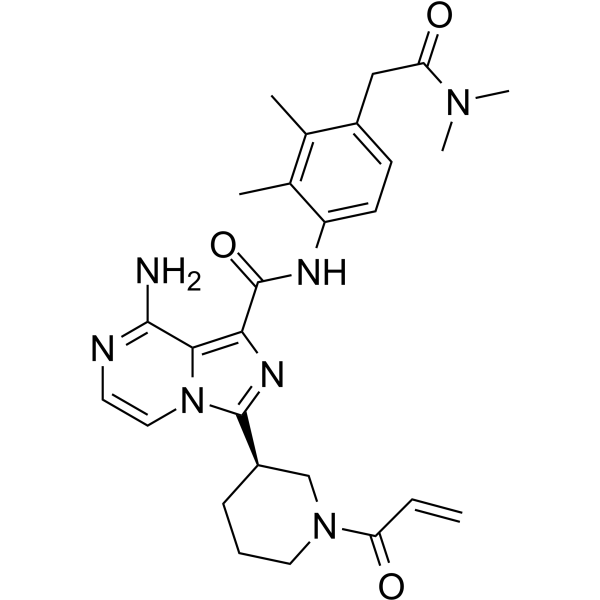 0 ImagesCat. No.: HY-143733CAS No.: 2691891-36-6HER2-IN-5 is a potent and orally active HER-2 inhibitor, example 10, extracted from patent WO2021164697.
-
Trastuzumab deruxtecan (DAR6)
 0 ImagesCat. No.: HY-138298DCAS No.: 1826843-81-5Synonyms: T-DXd (DAR6); DS-8201 (DAR6); DS-8201a (DAR6)Trastuzumab deruxtecan (DAR6) (T-DXd (DAR6); DS-8201 (DAR6); DS-8201a (DAR6)) is a low-drug-load derivative control preparation of Trastuzumab deruxtecan (HY-138298A) with a drug-to-antibody ratio (DAR) of 6. Trastuzumab deruxtecan (T-DXd; DS-8201a; DS-8201) is an anti-human epidermal growth factor receptor 2 (HER2) antibody-drug conjugate (ADC). Trastuzumab deruxtecan is composed of a humanized anti-HER2 antibody, an enzymatically cleavable peptide-linker, a topoisomerase I inhibitor (a toxin component of Dxd), and the drug-linker conjugate for ADC is Deruxtecan (HY-13631E). Trastuzumab deruxtecan can be used for the research of HER2-positive breast cancer and gastric cancer.
-
IBI-334 (FUT8-KO)
 0 ImagesCat. No.: HY-P991092AIBI-334 (FUT8-KO) is a bispecific B7-H3 and EGFR antibody that has knocked out the fucosyltransferase 8 gene (FUT8). IBI-334 (FUT8-KO) has an EGFR arm for signal blocking and is coupled with a fine-tuned B7-H3 arm with the best affinity and binding domain. IBI-334 (FUT8-KO), compared to IBI-334 (HY-P991092), has enhanced antibody-mediated cytotoxicity (ADCC) effect. IBI-334 (FUT8-KO) has wide applications in many EGFR-driven solid tumors.

-
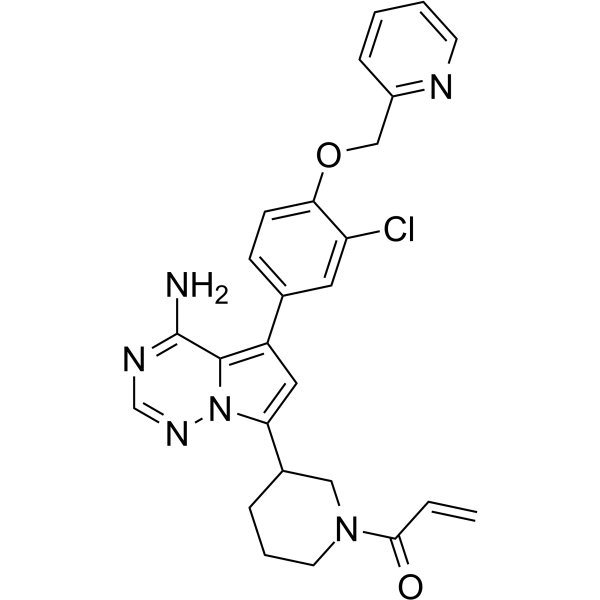
EGFR T790M/FAK-IN-1
 0 ImagesCat. No.: HY-183123CAS No.: 2143104-16-7
-
SKLB188
 0 ImagesCat. No.: HY-120412CAS No.: 1350545-09-3SKLB188 is an orally active and potent epidermal growth factor receptor (EGFR) inhibitor (IC50=5 nM). SKLB188 suppresses MEK/Erk and Akt/mTOR signaling pathways to inhibit head and neck squamous cell carcinoma (HNSCC) proliferation and induce caspase-dependent apoptosis. SKLB188 is promising for research of EGFR-overexpressing solid tumors.
-
iAfaPhos1
 0 ImagesCat. No.: HY-176938AiAfaPhos1 is a FKBP12F36V epimer ligand. iAfaPhos1 leads to reduced dephosphorylation of EGFR at pY1068 and pY845 sites. iAfaPhos1 has anticancer activity against non-small cell lung cancer.
-
Butein (Standard)
 0 ImagesButein (Standard) is the analytical standard of Butein. This product is intended for research and analytical applications. Butein is a cAMP-specific PDE inhibitor with an IC50 of 10.4 μM for PDE4. Butein is a specific protein tyrosine kinase inhibitor with IC50s of 16 and 65 μM for EGFR and p60c-src in HepG2 cells. Butein sensitizes HeLa cells to Cisplatin through AKT and ERK/p38 MAPK pathways by targeting FoxO3a. Butein is a SIRT1 activator (STAC).
-
AZ7550 Mesylate (Standard)
 0 ImagesSynonyms: AZ7550 trimesylate salt (Standard)AZ7550 Mesylate (Standard) is the analytical standard of AZ7550 Mesylate. This product is intended for research and analytical applications. AZ7550 Mesylate is an active metabolite of AZD9291 and inhibits the activity of IGF1R with an IC50 of 1.6 μM.
-
Lapatinib-d4-1
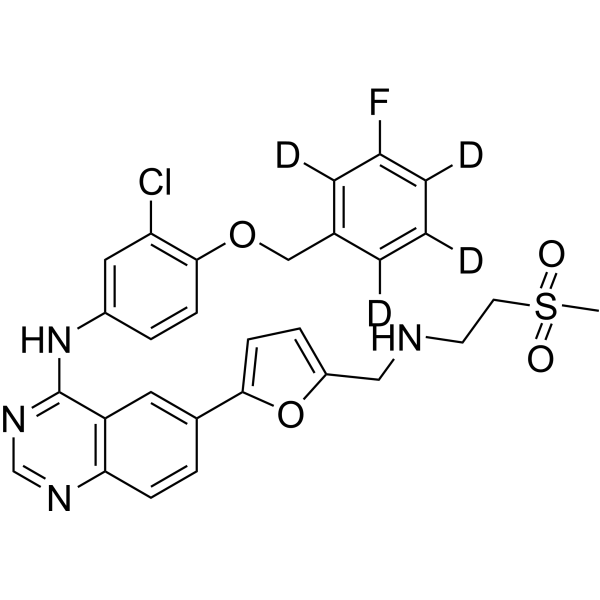 0 ImagesCat. No.: HY-50898S3CAS No.: 1184264-15-0Synonyms: GW572016-d4-1; GW2016-d4-1
-
EGFR/VEGFR2-IN-7
 0 ImagesCat. No.: HY-179031EGFR/VEGFR2-IN-7 (Compound 3e) is a dual-target EGFR/VEGFR2 inhibitor, with IC50 values of 142 (EGFR) and 71 nM (VEGFR2). EGFR/VEGFR2-IN-7 exhibits broad-spectrum and potent anti-proliferative activity, especially being sensitive to breast cancer. EGFR/VEGFR2-IN-7 induces cell cycle arrest and apoptosis, inhibits cell migration and invasion. EGFR/VEGFR2-IN-7 can be used for research on breast cancer.
-
EphB4-IN-1
 0 ImagesCat. No.: HY-185227CAS No.: 1394837-94-5EphB4-IN-1 is a selective EphB4 tyrosine kinase inhibitor with IC50 values of 0.16-0.30 μM. EphB4-IN-1 binds to the ATP binding site of EphB4 in a DFG-in conformation, forming four stable intermolecular hydrogen bonds. EphB4-IN-1 also inhibits Src, Abl1, Lck, and EGFR kinases. EphB4-IN-1 inhibits EphB4 autophosphorylation. EphB4-IN-1 can be used for the research of cancer, such as non small cell lung cancer.
-
EGFR-IN-59
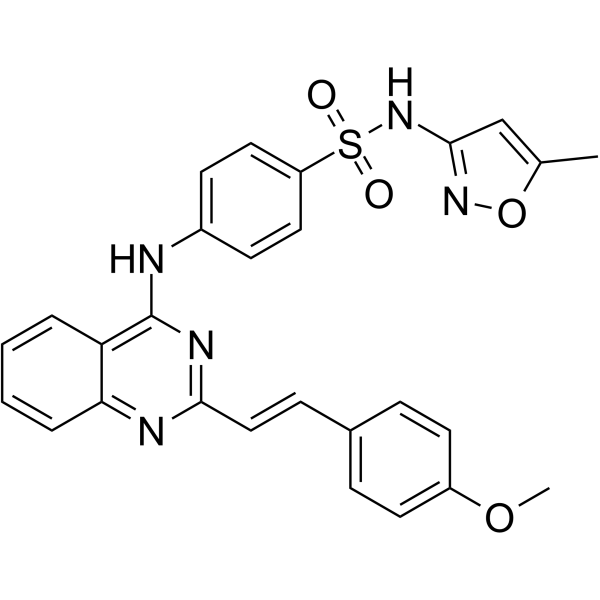 0 ImagesCat. No.: HY-147802CAS No.: 2529891-44-7EGFR-IN-59 (Compound 8c) is a EGFR inhibitor (IC50=190 nM) and apoptosis inducer. EGFR-IN-59 exhibits cytotoxicity against non-small lung cancer cell lines (A549) and normal lung fibroblasts (WI38) with IC50s of 8.62 and 52.6 µM, respectively. EGFR-IN-59 can be used for the research of various cancers such as non-small cell lung cancer (NSCLC), head and neck cancer, breast cancer and colorectal cancer.
-
EGFR-IN-25
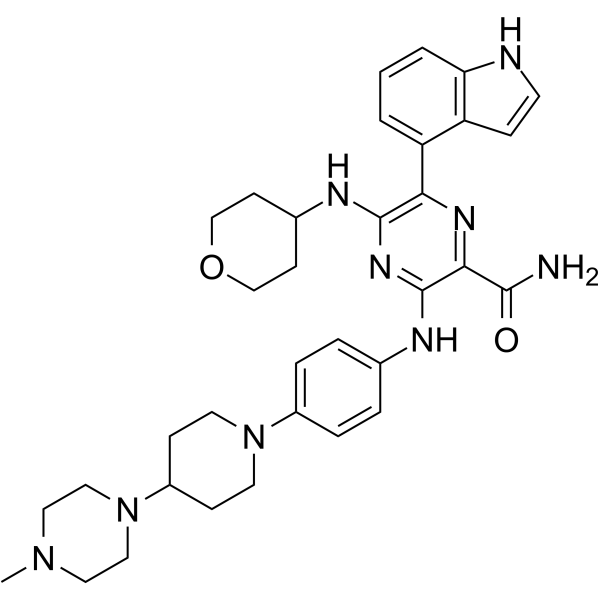 0 ImagesCat. No.: HY-142517CAS No.: 2749562-63-6
-
EGFR/HER2-IN-18
 0 ImagesCat. No.: HY-174414EGFR/HER2-IN-18 is a stable EGFR/HER2 dual inhibitor with IC50 values of 0.09 (EGFR) and 0.08 μM (HER2) respectively. EGFR/HER2-IN-18 exhibits broad-spectrum anti-cancer activity. EGFR/HER2-IN-18 induces MCF-7 cells apoptosis and inhibits the cell cycle. EGFR/HER2-IN-18 can be used for the study of breast cancer.
-
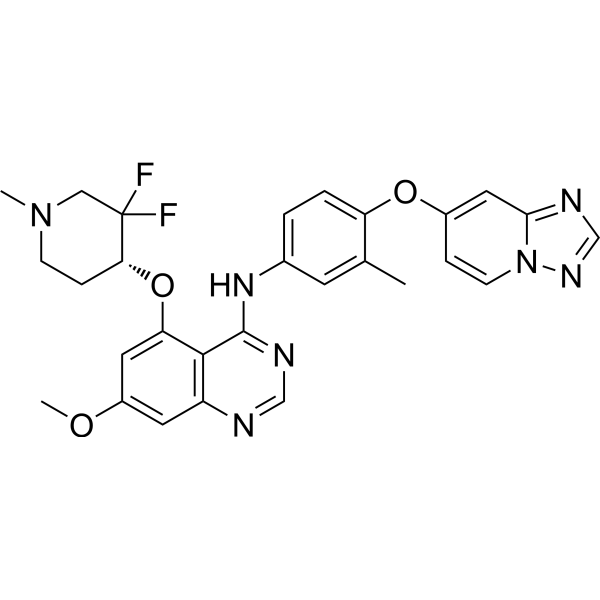
Rezivertinib hydrochloride
 0 ImagesCat. No.: HY-109189ACAS No.: 2170255-78-2Synonyms: BPI-7711 hydrochlorideRezivertinib (BPI-7711) hydrochloride is an orally active, highly selective and irreversible third-generation EGFR tyrosine kinase inhibitor (TKI). Rezivertinib hydrochloride exhibits high potency against the common activation EGFR and the resistance T790M mutations. Rezivertinib hydrochloride has excellent central nervous system (CNS) penetration and has antitumor activity, such as non-small cell lung cancer (NSCLC).
-
EGFR d746-750/C797S Recombinant Human Active Protein Kinase
 0 ImagesCat. No.: HY-E70698EGFR is a driver of tumorigenesis. EGFR is mainly found in an auto-inhibited, dimerization-incompetent, state at the plasma membrane (PM). Ligand binding promotes receptor dimerization, which determines a series of structural rearrangements that are conveyed to the cytoplasmic domain allowing the formation of asymmetric dimers between the two juxtaposed catalytic domains. EGFR has multiple mutants. EGFR d746-750/C797S Recombinant Human Active Protein Kinase is a recombinant EGFR d746-750/C797S protein that can be used to study EGFR d746-750/C797S-related functions.
-
Anticancer agent 276
 0 ImagesCat. No.: HY-175171Anticancer agent 276 (Compound 5) is a multi-target anticancer agent. Anticancer agent 276 has a potent anticancer activity against human tumor cells with IC50s of 6.90 and 4.48 μM for HEPG2 and MCF7 cells, respectively. Anticancer agent 276 shows strong and stable interactions across multiple targets, including Topoisomerase II, VEGFR2, c-Met, EGFR and ERα.




