



EGFR
Epidermal growth factor receptor; ErbB-1; HER1
The EGFR family of receptor tyrosine kinases (RTK) comprises four distinct receptors: the EGFR (also known as ErbB-1/HER1), ErbB-2 (neu, HER2), ErbB-3 (HER3) and ErbB-4 (HER4). All EGFR family members are characterized by a modular structure consisting of an extracellular ligand-binding domain, a single hydrophobic transmembrane region, and the intracellular part harbouring the highly conserved tyrosine kinase domain. The ErbB family of receptor tyrosine kinases (RTKs) couples binding of extracellular growth factor ligands to intracellular signaling pathways regulating diverse biologic responses, including proliferation, differentiation, cell motility, and survival. Ten growth factors and their ErbB specificities are: EGF, amphiregulin (AR), and TGF bind ErbB-1; betacellulin, and epiregulin bind both ErbB-1 and ErbB-4; the neuregulins (also called heregulins and Neu differentiation factors) NRG-1 and NRG-2 bind ErbB-3 and ErbB-4; and NRG-3 and NRG-4 bind ErbB-4. No known ligand binds ErbB-2. The three best characterized signaling pathways induced through ErbBs are Ras-mitogen-activated protein kinase (Ras-MAPK), phosphatidylinositol 3 kinase-protein kinase B (PI3K-PKB/Akt), and phospholipase C-protein kinase C (PLC-PKC) pathways.
EGFR Isoform Specific Products
All Product Categories
-
EGFR Inhibitors
(1045)
View all products
-
EGFR Agonists
(4)
View all products
-
EGFR Antagonists
(5)
View all products
-
EGFR Activators
(9)
View all products
-
EGFR Modulators
(7)
View all products
-
EGFR Chemicals
(3)
View all products
-
EGFR Inducers
(4)
View all products
-
EGFR Degraders
(53)
View all products
-
EGFR Controls
(6)
View all products
-
EGFR Substrate
(1)
View all products
-
EGFR Ligands
(19)
View all products
-
ErbB2/HER2 Proteins
(40)
View all products
-
ErbB3/HER3 Proteins
(15)
View all products
-
EGFR Proteins
(47)
View all products
-
ErbB4/HER4 Proteins
(10)
View all products
-
EGFR Related Products (1277)
Related Products (1277)

-
Recombinant Proteins (112)
-
Antibodies (19)
-
EGFR Isoform Comparison
-
Genistein-d4
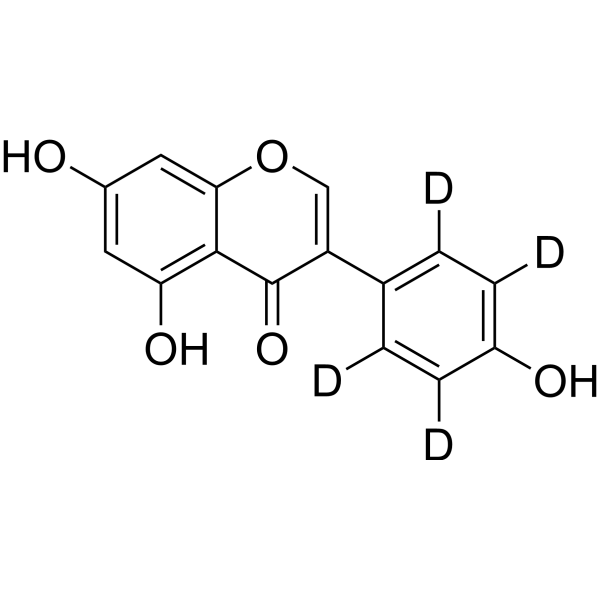 0 ImagesSynonyms: NPI 031L-d4
-
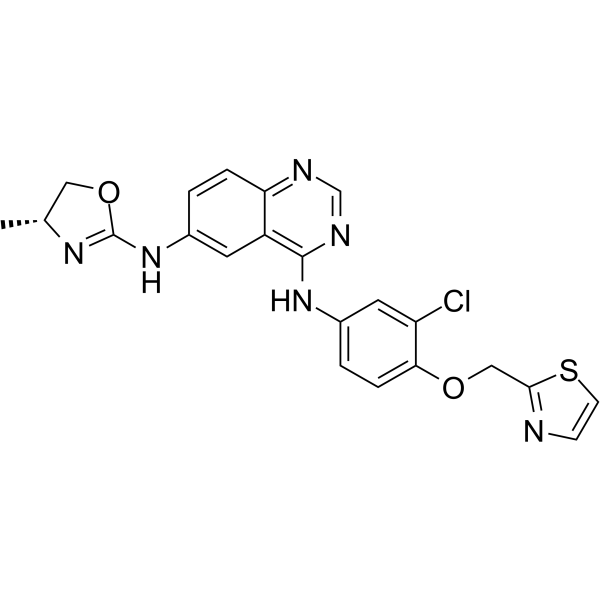
Tucatinib hemiethanolate
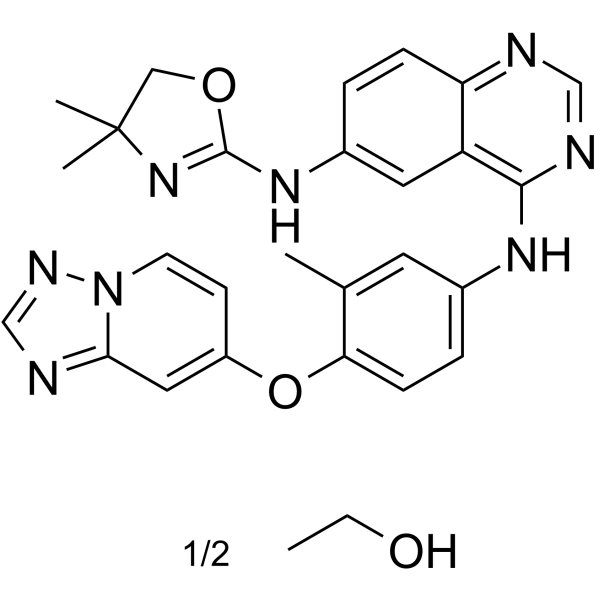 0 ImagesSynonyms: Irbinitinib hemiethanolate; ARRY-380 hemiethanolate; ONT-380 hemiethanolateTucatinib (Irbinitinib) hemiethanolate is a potent, orally active and selective HER2 inhibitor with an IC50 of 8 nM.
-
HyT36
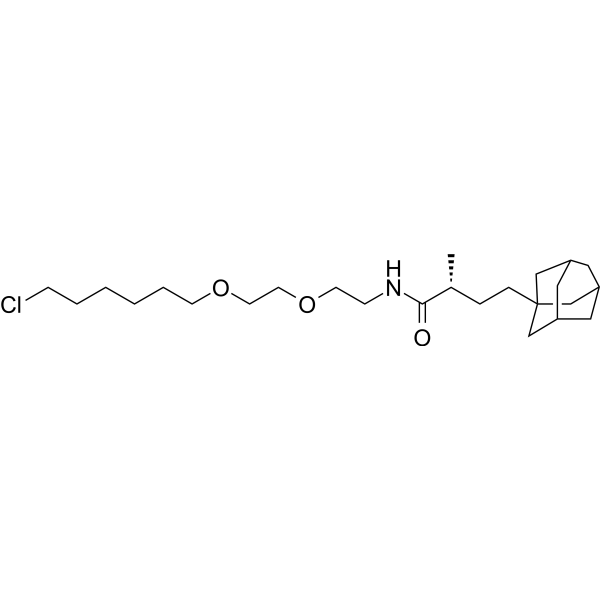 0 ImagesCat. No.: HY-141676CAS No.: 1323151-45-6HyT36 is a low molecular weight hydrophobic tag that promotes the degradation of fusion protein and pseudokinase Her3.
-
Clitorin
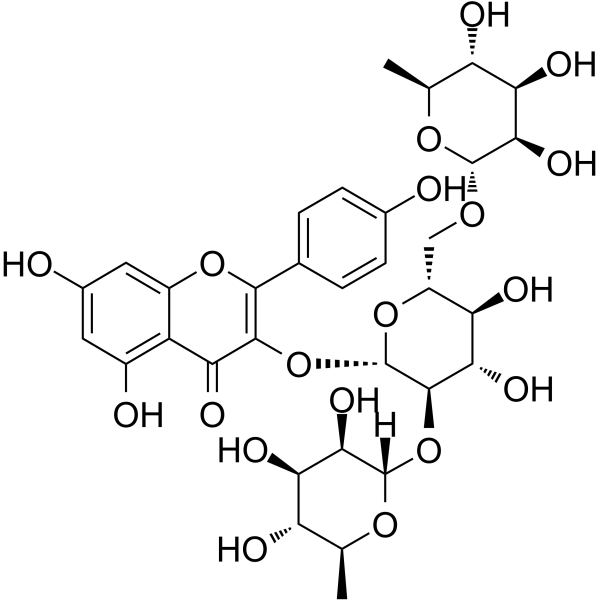 0 ImagesClitorin is an orally active flavonoid compound that can be isolated from Carica papaya. Clitorin is an inhibitor of EGFR (IC50: 89.58 nM) and aromatase (IC50: 77.41 nM). Clitorin has antioxidant and anti-tumor activities. In the DPPH and ABTS radical scavenging assays, Clitorin has IC50 values of 91.96 ppm and 250.45 ppm, respectively. In addition, Clitorin can regulate lipogenesis and fatty acid oxidation and can be used in the research of non-alcoholic fatty liver disease.
-
Anbenitamab
 0 ImagesSynonyms: KN-026Anbenitamab (KN-026) is a bispecific antibody simultaneously targeting extracellular domains II and IV of human HER2. Anbenitamab blocks both ligand-dependent and ligand-independent HER2 signaling pathways. Anbenitamab mediates antibody-dependent cellular cytotoxicity (ADCC) via FcγIIIa binding. Ambrinitumab can be used in research for lung cancer, HER2-positive metastatic breast cancer (MBC), gastric cancer, and gastroesophageal junction cancer.
-
Tubeimoside II
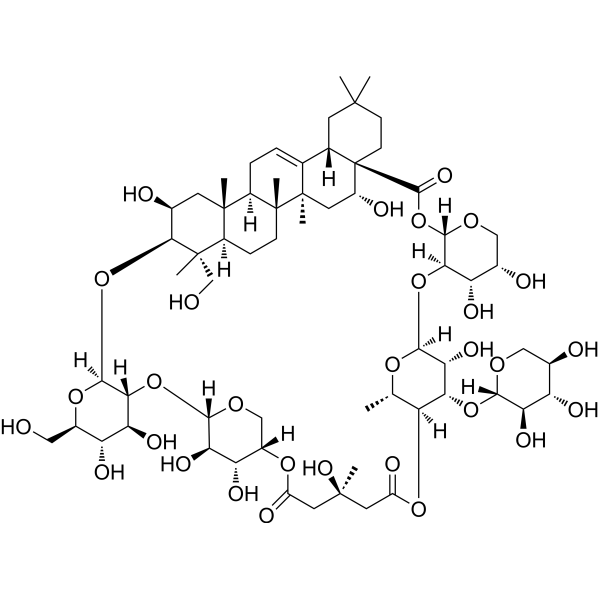 0 ImagesSynonyms: Tubeimoside-BTubeimoside II is an orally active triterpenoid saponin and antiviral agent that binds to PACT/PRKRA with Kd values of 5.37 μM and 133.1 μM, respectively. Tubeimoside II inhibits oxidase-dependent EGFR activation and reduces TGF-β1-induced oxidative stress. Tubeimoside II activates the RIG-I signaling pathway and increases IFN-β secretion. Tubeimoside II suppresses TPA-induced ear edema, mouse sarcoma 180 growth, and TPA-induced skin tumor formation. Tubeimoside II exerts broad-spectrum antiviral activity against SARS-CoV-2, HCoV-OC43, and IAV-H1N1/FM1. Tubeimoside II can be used in research related to retinoblastoma, respiratory viral infections, skin tumors, and sarcoma 180.
-
Falnidamol
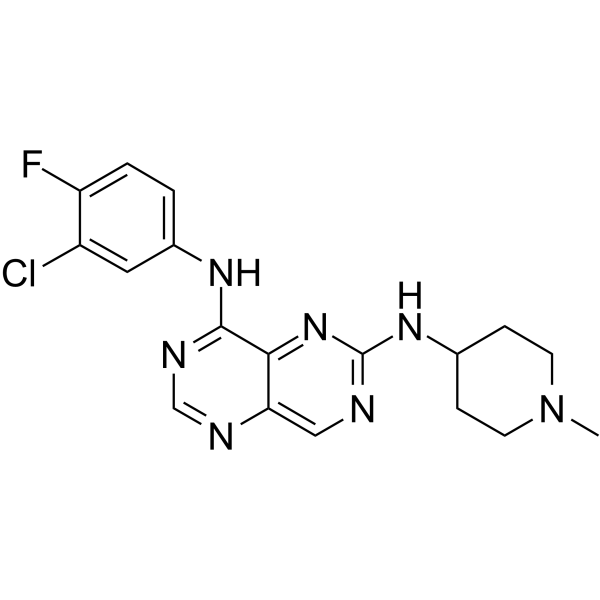 0 ImagesSynonyms: BIBX 1382Falnidamol (BIBX 1382) is an orally active, selective EGFR tyrosine kinase inhibitor with an IC50 of 3 nM. Falnidamol displays > 1000-fold lower potency against ErbB2 (IC50=3.4 μM) and a range of other related tyrosine kinases (IC50>10 μM). Falnidamol is a pyrimido-pyrimidine compound and has anti-cancer activity.

-
Canertinib dihydrochloride
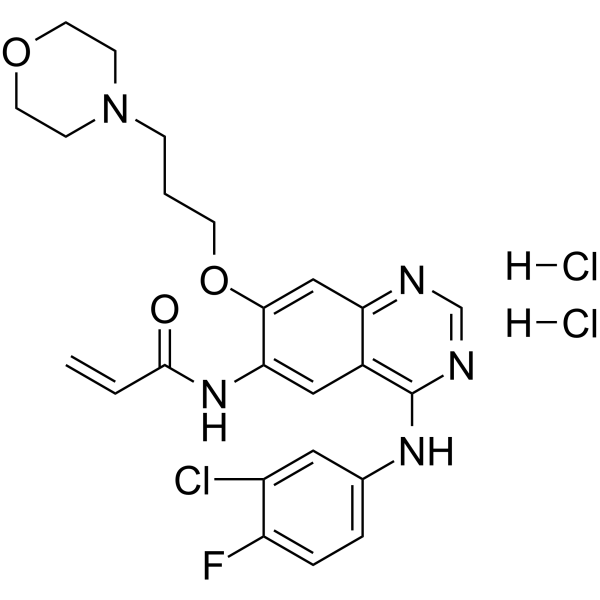 0 ImagesSynonyms: CI-1033 dihydrochloride; PD-183805 dihydrochloride
-
STX-721
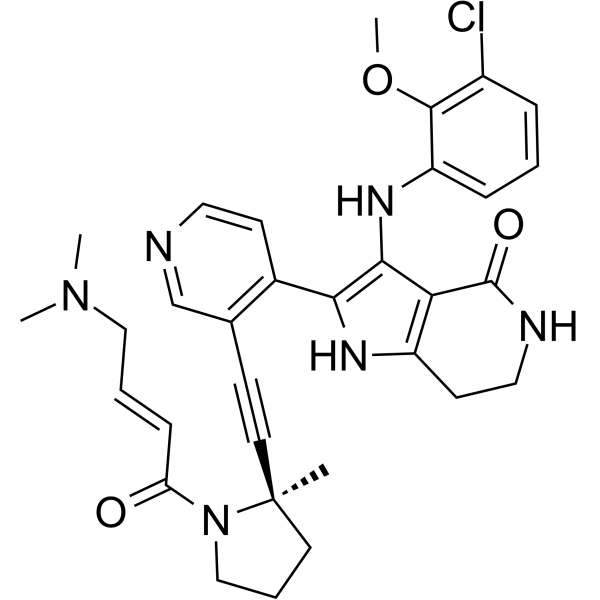 0 ImagesSTX-721 is an orally active, irreversible, covalent EGFR exon 20 insertion (ex20ins) inhibitor that selectively targets ex20ins-mutant dynamic protein states. STX-721 potently inhibits the kinase activity of EGFR ex20ins mutants (NPG, ASV, SVD). STX-721 inhibits phosphorylation of EGFR (pEGFR Y1068) and downstream ERK (pERK Thr202/Tyr204), and suppresses proliferation of ex20ins-mutant Ba/F3 cells and human NSCLC cell lines (NCI-H2073 ASV KI, CUTO-14 ASV). STX-721 induces tumor regression in EGFR ex20ins-mutant PDX/CDX models. STX-721 can be used for the study of non-small cell lung cancer (NSCLC) harboring EGFR or HER2 ex20ins mutations.
-
TAK-285
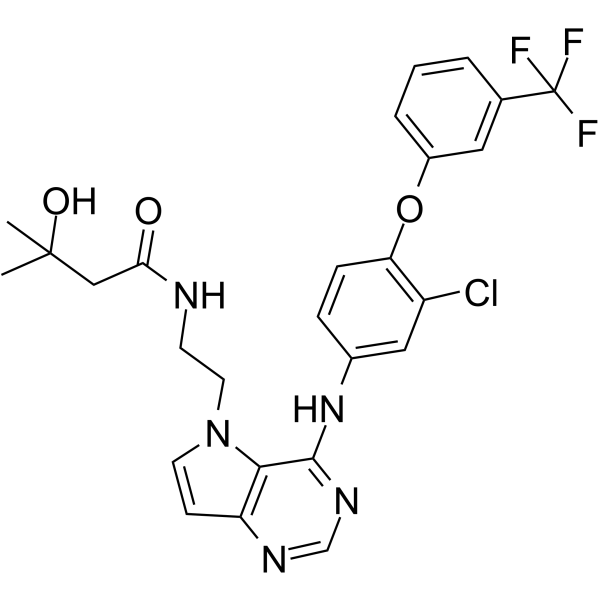 0 ImagesTAK-285 is a potent, selective, ATP-competitive and orally active HER2 and EGFR(HER1) inhibitor with IC50 of 17 nM and 23 nM, respectively. TAK-285 is >10-fold selectivity for HER1/2 than HER4, and less potent to MEK1/5, c-Met, Aurora B, Lck, CSK etc. TAK-285 has effective antitumor activity. TAK-285 can cross the blood-brain barrier (BBB).
-
Tyrphostin AG 879
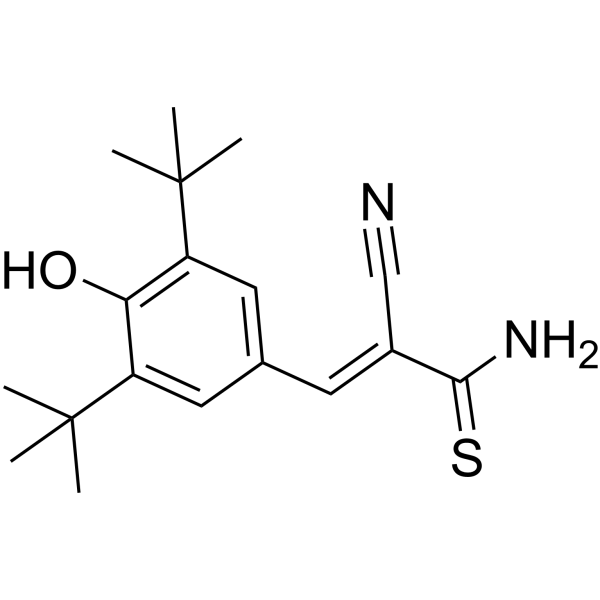 0 ImagesSynonyms: AG 879Tyrphostin AG 879 (AG 879) is a tyrosine kinase inhibitor that inhibits TrKA phosphorylation (IC50 of 10 μM), but not TrKB and TrKC. Tyrphostin AG 879 is also a selective ErbB2 tyrosine kinase inhibitor with an IC50 of 1 μM, and has at least 500-fold higher selectivity to ErbB2 than EGFR. Tyrphostin AG 879 has anticancer activity.
-
Depatuxizumab MMAE
 0 ImagesCat. No.: HY-156712Purity: 99.73%Depatuxizumab MMAE is an antibody-drug conjugate (ADC) comprising an anti EGFR monoclonal antibody (Depatuxizumab) (HY-P99849) and the cytotoxic agent Monomethyl auristatin E (MMAE) (HY-15162). Depatuxizumab MMAE can be used for the study of EGFR-expressing advanced solid tumors.

-
Broussoflavonol F
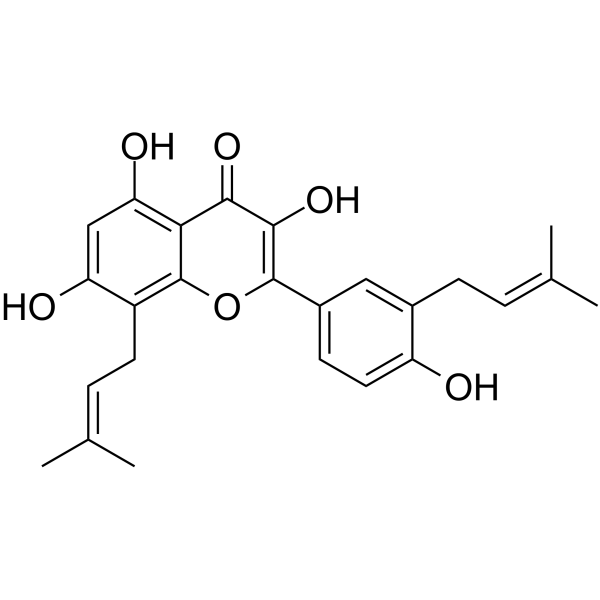 0 ImagesCat. No.: HY-N9330CAS No.: 162558-94-3Broussoflavonol F is a potent dual inhibitor of the HER2-RAS-MEK-ERK signaling pathway and mushroom tyrosinase with an IC50 value of 82.3 μM. Broussoflavonol F downregulates the expression of RAS, HER2, phosphorylated BRAF, phosphorylated MEK and phosphorylated Erk proteins. Broussoflavonol F induces cell cycle arrest and apoptosis, and exhibits cytotoxicity in colon cancer cells. Broussoflavonol F inhibits endothelial proliferation, migration and tube formation, suppresses subintestinal vascular development, and reduces the mRNA levels of angiogenesis-associated genes.Broussoflavonol F can be used for colon cancer research.
-
AFM24
 0 ImagesCat. No.: HY-P990314AFM24 is a bispecific antibody with a TandAb structure expressed in CHO, targeting EGFR&Fc-gamma-RIIIA. AFM24 contains a huIgG1-SCFV heavy chain and a λ light chain, with a predicted molecular weight (MW) of 196.34 kDa. The isotype control for AFM24 can refer to Human IgG1 kappa, Isotype Control (HY-P99001).




