



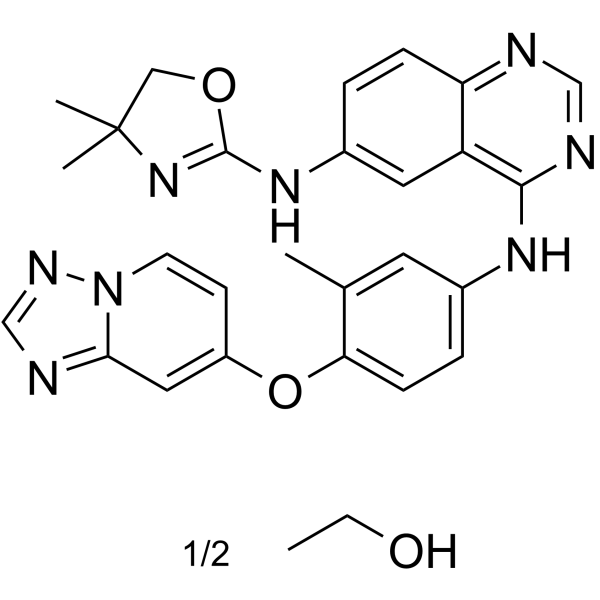
Tucatinib hemiethanolate
Based on 24 publication(s) in Google Scholar
Tucatinib (Irbinitinib) hemiethanolate is a potent, orally active and selective HER2 inhibitor with an IC50 of 8 nM.
For research use only. We do not sell to patients.
- Purity : 98.82%
- CAS No.: 1429755-56-5
- Formula: C26H24N8O2.1/2C2H6O
- Molecular Weight:503.57
-
Storage:Powder -20°C, 3 years , 4°C, 2 years ; In solvent -80°C, 6 months , -20°C, 1 month

To place orders, for customer services and technical support, please contact: MedChemExpress USA
Tel: 609-228-6898 E-mail: [email protected] [email protected]


-
 Biological Activity
-
Chemical Information
-
Solvent & Solubility
- Purity & Documentation
- References
-
 Help & FAQs


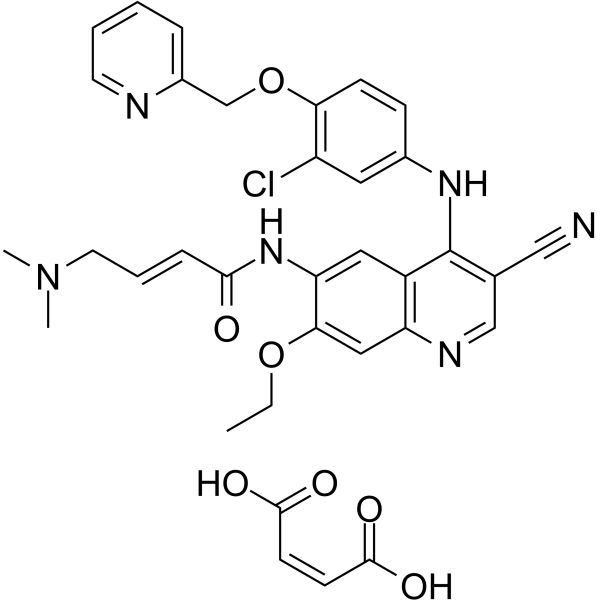
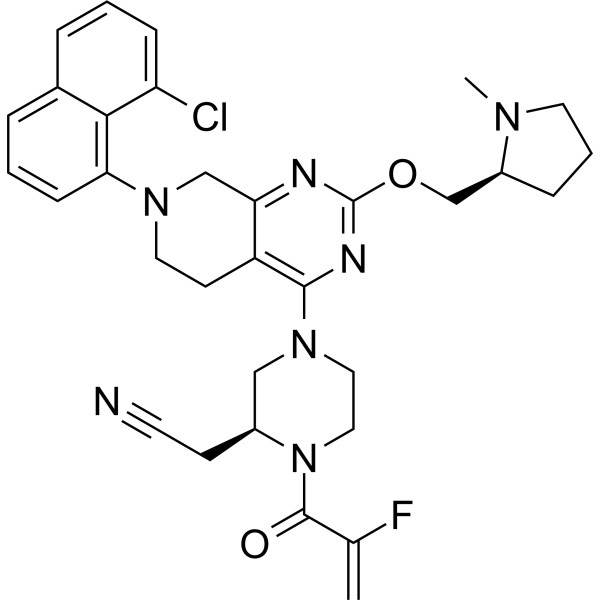
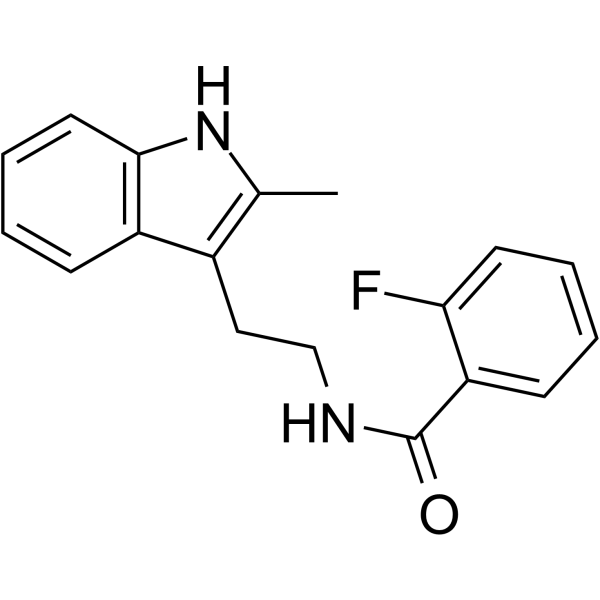
Publications Citing Use of MedChemExpress (MCE) Tucatinib hemiethanolate
More- Cancer Discov. 2022 Apr 1;12(4):1022-1045. [Abstract]
- Nat Cancer. 2026 Jan;7(1):116-130. [Abstract]
- Cell Host Microbe. 2024 Aug 14;32(8):1365-1379.e10. [Abstract]
- Nat Commun. 2025 Aug 23;16(1):7870. [Abstract]
- Sci Transl Med. 2018 Jul 18;10(450):eaaq1093. [Abstract]
- Clin Cancer Res. 2024 Jun 3;30(11):2558-2570. [Abstract]
- Cell Death Discov. 2023 Nov 2;9(1):406. [Abstract]
- Acta Pharmacol Sin. 2022 Oct;43(10):2678-2686. [Abstract]
- EMBO Mol Med. 2025 Feb;17(2):336-364. [Abstract]
- Mol Cancer Ther. 2026 Jul 28:10.1158/1535-7163.MCT-26-0063.
- Sci Rep. 2026 Apr 20;16(1):12890. [Abstract]
- Mol Oncol. 2025 Jul;19(7):2056-2073. [Abstract]
- Drug Metab Dispos. 2025 May;53(5):100061. [Abstract]
- Breast Cancer (Dove Med Press). 2023 Nov 6:15:785-799. [Abstract]
- Dis Model Mech. 2023 Apr 1;16(4):dmm049692. [Abstract]
- Cancer Chemother Pharmacol. 2021 Oct;88(4):633-642. [Abstract]
- Biomed Chromatogr. 2026 Aug;40(8):e70527. [Abstract]
- Biomed Pharmacother. 2026 Sep:202:119803.
- bioRxiv. 2026 Sep 10:2026.09.07.749891.
- University of Barcelona. 2026.
- University of Barcelona. 2026.
- bioRxiv. 2026 Jun 19.
- bioRxiv. 2026 May 22:2026.05.20.726507. [Abstract]
- Complutense University of Madrid. 2025.
 Customer Validation & Images

-
Bio/Physico-chemical Assay
-
Cell Proliferation/Viability Assay
-
Cell Proliferation/Viability Assay
-
Bio/Physico-chemical Assay
-
Bio/Physico-chemical Assay
All EGFR Isoforms
More

Biological Activity
Description
IC50 & Target
IC50: 8 nM (HER2)[1]
In Vitro
Tucatinib hemiethanolate has nanomolar activity against purified HER2 enzyme and is approximately 500-fold selective for HER2 versus EGFR in cell-based assays. Tucatinib selectively inhibits the receptor tyrosine kinase HER2 relative to EGFR[1].
Tucatinib blocks proliferation and the phosphorylation of HER2 and its downstream effector, Akt in HER2 overexpressing cell lines. In the EGFR overexpressing cell lines, it weakly inhibits phosphorylation and proliferation, demonstrating that Tucatinib may have potential to block HER2 signaling without causing the toxicities of EGFR inhibition[1].
MedChemExpress (MCE) has not independently confirmed the accuracy of these methods. They are for reference only.
In Vivo
Tucatinib and its active metabolite causes a significant reduction in brain pErbB2 (80%)[2].
Tucatinib (ARRY-380) hemiethanolate demonstrates significant dose-related tumor growth inhibition (TGI; 50% at 50 mg/kg/d and 96% at 100 mg/kg/d) with numerous partial regressions (>50% reduction from baseline size) at the higher dose level in 9/12 animals. Tucatinib (50 mg/kg/d) in combination with trastuzumab shows a 98% TGI with complete regressions in 9/12 animals and two partial regressions[3].
MedChemExpress (MCE) has not independently confirmed the accuracy of these methods. They are for reference only.
-
Animal Model:Female nude mice[3].
-
Dosage:200 mg/kg/d.
-
Administration:PO, daily.
-
Result:Exhibited anti-tumor activity and benefited survival.


Chemical Information
-
CAS No. 1429755-56-5
-
Appearance Solid
-
Molecular Weight 503.57
-
Formula C26H24N8O2.1/2C2H6O
-
Color White to off-white
-
SMILES
CC1=CC(NC2=C3C=C(NC4=NC(C)(C)CO4)C=CC3=NC=N2)=CC=C1OC5=CC6=NC=NN6C=C5.CCO
-
Synonyms
Irbinitinib hemiethanolate; ARRY-380 hemiethanolate; ONT-380 hemiethanolate
-
Shipping
Room temperature in continental US; may vary elsewhere.
-
Storage
Powder -20°C 3 years 4°C 2 years In solvent -80°C 6 months -20°C 1 month


Publications (24)
-
Journal Impact Factor
-
Most Recent
-
Cancer Discov
2022 Apr 1;12(4):1022-1045. PMID: 34911733
Tucatinib hemiethanolate purchased from MedChemExpress. Usage Cited in: Cancer Discov. 2022 Apr 1;12(4):1022-1045. [Abstract]
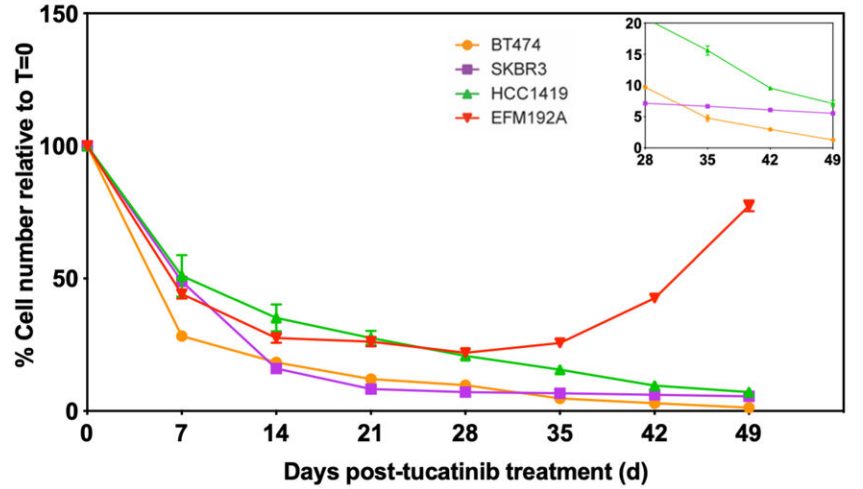
HER2+ breast cancer cell lines were treated with 1.2 μM Tucatinib (0-49 days), counted at the indicated times, and the percentage of the initial cell number was determined.
Tucatinib hemiethanolate purchased from MedChemExpress. Usage Cited in: Cancer Discov. 2022 Apr 1;12(4):1022-1045. [Abstract]
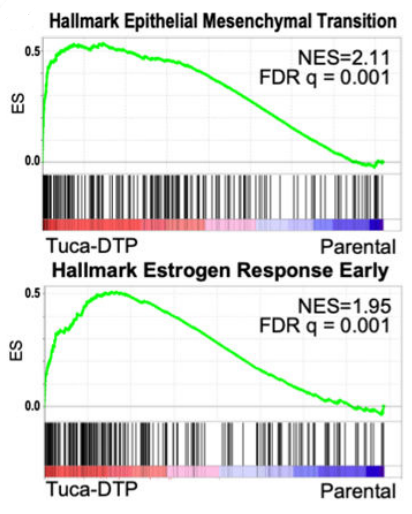
GSEA shows enrichment of “Hallmark Epithelial Mesenchymal Transition” genes in mesenchymal-like DTPs (top) and “Hallmark Estrogen Responses Early” in luminal-like DTPs (bottom) evoked by Tucatinib.
Tucatinib hemiethanolate purchased from MedChemExpress. Usage Cited in: Cancer Discov. 2022 Apr 1;12(4):1022-1045. [Abstract]
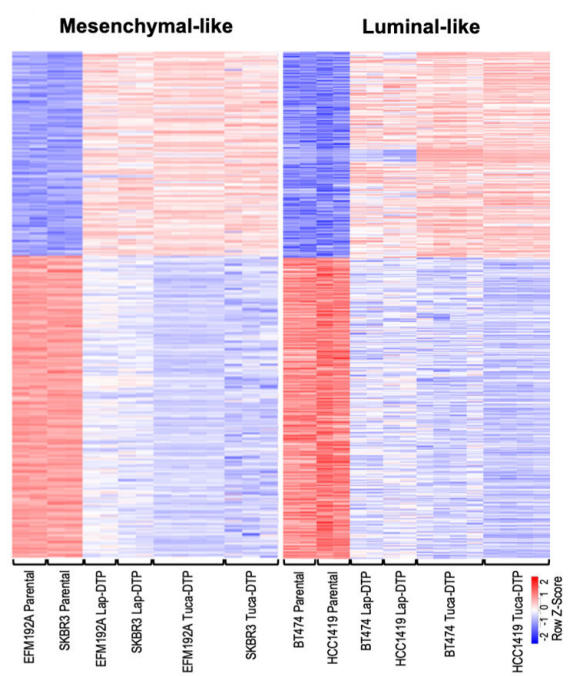
Heatmaps show supervised clustering of Parental, Lapatinib-DTPs and Tucatinib-DTPs with mesenchymal-DTP DEGs (left) or luminal DTP DEGs (right). Scale represents the z-score.
-
Nat Cancer
The MEK-RAF molecular glue IK-595 has potent antitumor activity across RAS/MAPK pathway-altered cancers. [Abstract]2026 Jan;7(1):116-130. PMID: 41482524 -
Cell Host Microbe
Peptostreptococcus stomatis promotes colonic tumorigenesis and receptor tyrosine kinase inhibitor resistance by activating ERBB2-MAPK. [Abstract]2024 Aug 14;32(8):1365-1379.e10. PMID: 39059397 -
Nat Commun
Molecular landscape, subtypes, and therapeutic vulnerabilities of central nervous system solitary fibrous tumors. [Abstract]2025 Aug 23;16(1):7870. PMID: 40849425
Tucatinib hemiethanolate purchased from MedChemExpress. Usage Cited in: Nat Commun. 2025 Aug 23;16(1):7870. [Abstract]
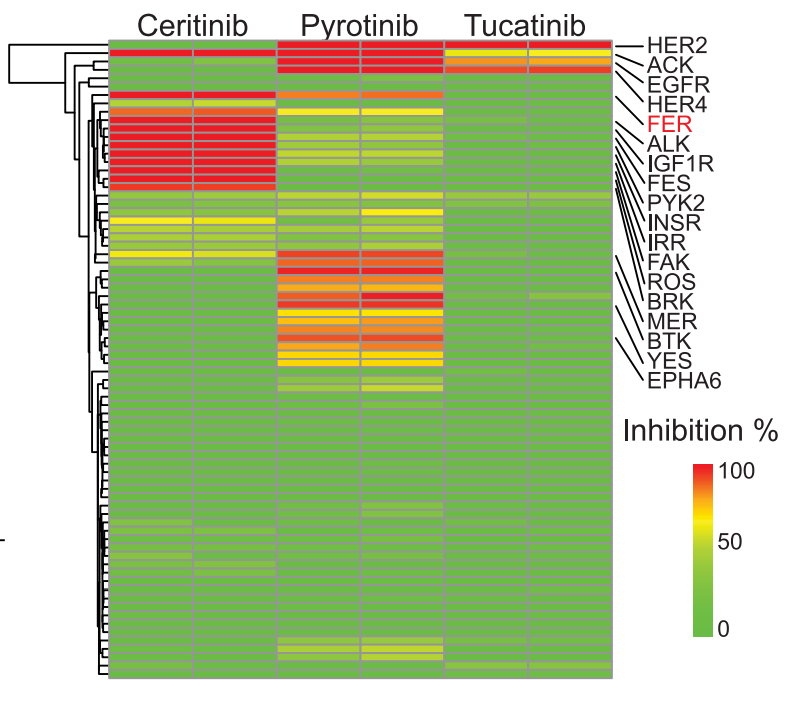
Heatmap of the inhibitory effect of Ceritinib, Pyrotinib and Tucatinib on 76 tyrosine kinases at a concentration of 1 μM.
Tucatinib hemiethanolate purchased from MedChemExpress. Usage Cited in: Nat Commun. 2025 Aug 23;16(1):7870. [Abstract]
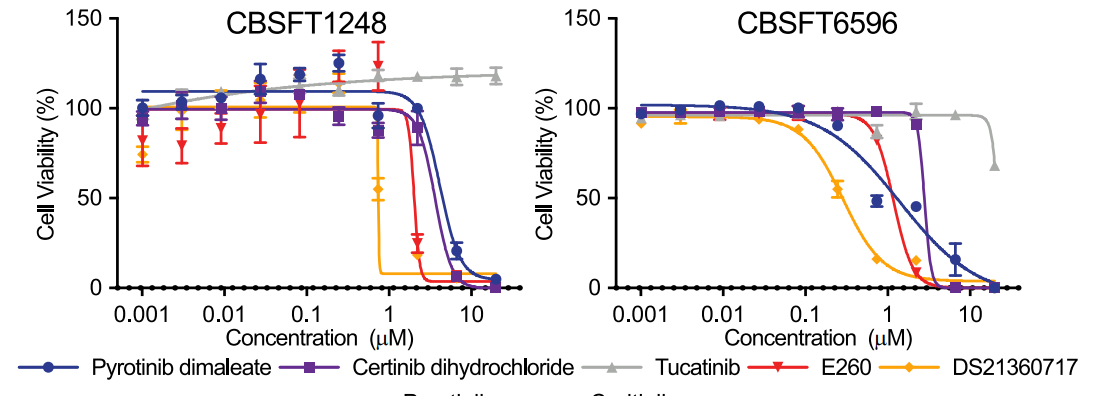
Dose–response curves of primary SFT cells treated with ceritinib, pyrotinib, tucatinib (0-10 μM, 72 h), E260, and DS21360717 (biological replicates n = 3).
-
Sci Transl Med
PP2A inhibition is a druggable MEK inhibitor resistance mechanism in KRAS-mutant lung cancer cells. [Abstract]2018 Jul 18;10(450):eaaq1093. PMID: 30021885 -
Clin Cancer Res
IRX4204 Induces Senescence and Cell Death in HER2-positive Breast Cancer and Synergizes with Anti-HER2 Therapy. [Abstract]2024 Jun 3;30(11):2558-2570. PMID: 38578278 -
Cell Death Discov
Targeting the up-regulated CNOT3 reverses therapeutic resistance and metastatic progression of EGFR-mutant non-small cell lung cancer. [Abstract]2023 Nov 2;9(1):406. PMID: 37919290 -
Acta Pharmacol Sin
CHMFL-26 is a highly potent irreversible HER2 inhibitor for use in the treatment of HER2-positive and HER2-mutant cancers. [Abstract]2022 Oct;43(10):2678-2686. PMID: 35228653 -
EMBO Mol Med
2025 Feb;17(2):336-364. PMID: 39748059 -
-
Sci Rep
A degrader of HER2 and EGFR abolishes p95HER2 and shows robust antitumor efficacy in HER2-positive breast cancer. [Abstract]2026 Apr 20;16(1):12890. PMID: 42009845 -
Mol Oncol
Cellular liquid biopsy provides unique chances for disease monitoring, preclinical model generation and therapy adjustment in rare salivary gland cancer patients. [Abstract]2025 Jul;19(7):2056-2073. PMID: 39367702 -
Drug Metab Dispos
Impact of variation in CYP3A and CYP2C8 on tucatinib metabolic clearance in human liver microsomes. [Abstract]2025 May;53(5):100061. PMID: 40233610 -
Breast Cancer (Dove Med Press)
Therapeutic Advantage of Targeting PRMT5 in Combination with Chemotherapies or EGFR/HER2 Inhibitors in Triple-Negative Breast Cancers. [Abstract]2023 Nov 6:15:785-799. PMID: 37954171 -
Dis Model Mech
Fibroblast-derived EGF ligand Neuregulin-1 induces fetal-like reprogramming of the intestinal epithelium without supporting tumorigenic growth. [Abstract]2023 Apr 1;16(4):dmm049692. PMID: 36912192 -
Cancer Chemother Pharmacol
UCP-2 inhibitor enhanced the efficacy of trastuzumab against HER2 positive breast cancer cells. [Abstract]2021 Oct;88(4):633-642. PMID: 34146128 -
Biomed Chromatogr
Quantitation of Tucatinib, a Novel Tyrosine Kinase Inhibitor in Dried Blood Spot (DBS) With LC-ESI-MS/MS: Application to a Pharmacokinetic Study in Mice. [Abstract]2026 Aug;40(8):e70527. PMID: 42328931 -
-
-
-
-
-
bioRxiv
2026 May 22:2026.05.20.726507. PMID: 42239232 -


Solvent & Solubility
In Vitro:
DMSO : 125 mg/mL (248.23 mM; Need ultrasonic; Hygroscopic DMSO has a significant impact on the solubility of product, please use newly opened DMSO)
H2O : < 0.1 mg/mL (insoluble)
Please refer to the solubility information to select the appropriate solvent. Once prepared, please aliquot and store the solution to prevent product inactivation from repeated freeze-thaw cycles.
Storage method and period of stock solution: -80°C, 6 months; -20°C, 1 month. When stored at -80°C, please use it within 6 months. When stored at -20°C, please use it within 1 month.
Please refer to the solubility information to select the appropriate solvent. Once prepared, please aliquot and store the solution to prevent product inactivation from repeated freeze-thaw cycles.
Storage method and period of stock solution: -80°C, 6 months; -20°C, 1 month. When stored at -80°C, please use it within 6 months. When stored at -20°C, please use it within 1 month.
Concentration (start) × Volume (start) = Concentration (final) × Volume (final)
In Vivo:
Select the appropriate dissolution method based on your experimental animal and administration route.
- For the following dissolution methods, please ensure to first prepare a clear stock solution using an In Vitro approach and then sequentially add co-solvents:
- To ensure reliable experimental results, the clarified stock solution can be appropriately stored based on storage conditions. As for the working solution for In Vivo experiments, it is recommended to prepare freshly and use it on the same day.
- The percentages shown for the solvents indicate their volumetric ratio in the final prepared solution. If precipitation or phase separation occurs during preparation, heat and/or sonication can be used to aid dissolution.
Add each solvent one by one: 10% DMSO 40% PEG300 5% Tween-80 45% Saline
Solubility: 2.08 mg/mL (4.13 mM); Clear solution; Need ultrasonic
This protocol yields a clear solution of 2.08 mg/mL.
Taking 1 mL working solution as an example, add 100 μL DMSO stock solution (20.8 mg/mL) to 400 μL PEG300, and mix evenly; then add 50 μL Tween-80 and mix evenly; then add 450 μL Saline to adjust the volume to 1 mL.
Preparation of Saline: Dissolve 0.9 g sodium chloride in ddH₂O and dilute to 100 mL to obtain a clear Saline solution.
Add each solvent one by one: 10% DMSO 90% (20% SBE-β-CD in Saline)
Solubility: 2.08 mg/mL (4.13 mM); Clear solution; Need ultrasonic
This protocol yields a clear solution of 2.08 mg/mL.
Taking 1 mL working solution as an example, add 100 μL DMSO stock solution (20.8 mg/mL) to 900 μL 20% SBE-β-CD in Saline, and mix evenly.
Preparation of 20% SBE-β-CD in Saline (4°C, storage for one week): 2 g SBE-β-CD powder is dissolved in 10 mL Saline, completely dissolve until clear.
In Vivo Dissolution Calculator
Please enter the basic information of animal experiments:
-
-
-
-
Recommended: Prepare an additional quantity of animals to account for potential losses during experiments.
Please enter your animal formula composition:
-
%DMSO +
Recommended: Keep the proportion of DMSO in working solution below 2% if your animal is weak.
-
%+
-
+%Tween-80 + +
-
%Saline +
The co-solvents required include: DMSO, . All of co-solvents are available by MedChemExpress (MCE). , Tween 80. All of co-solvents are available by MedChemExpress (MCE).
Working solution concentration: 0.22 mg/mL
Method for preparing stock solution: mg drug dissolved in μL DMSO. Stock solution concentration: mg/mL.
1. Take μL DMSO stock solution;
2. Add μL .
μL , mix evenly;
3. Then add μL Tween 80, mix evenly;
4. Then add μL
Please ensure that the stock solution in the first step is dissolved to a clear state, and add co-solvents in sequence. You can use ultrasonic heating (ultrasonic cleaner, recommended frequency 20-40 kHz), vortexing, etc. to assist dissolution.


Purity & Documentation
-
Data Sheet (285 KB)
-
SDS (419 KB)
- English - EN (419 KB)
- Français - FR (419 KB)
- Deutsch - DE (419 KB)
- Norwegian - NO (419 KB)
- Español - ES (419 KB)
- Swedish - SV (419 KB)
- Italian - IT (419 KB)
- Korean - KR (419 KB)
- Portuguese - PT (419 KB)
-
Handling Instructions (2659 KB)
References


Complete Stock Solution Preparation Table
Please refer to the solubility information to select the appropriate solvent. Once prepared, please aliquot and store the solution to prevent product inactivation from repeated freeze-thaw cycles.
Storage method and period of stock solution: -80°C, 6 months; -20°C, 1 month. When stored at -80°C, please use it within 6 months. When stored at -20°C, please use it within 1 month.
| Optional Solvent | Concentration Solvent Mass | 1 mg | 5 mg | 10 mg | 25 mg |
|---|---|---|---|---|---|
| DMSO | 1 mM | 1.9858 mL | 9.9291 mL | 19.8582 mL | 49.6455 mL |
| 5 mM | 0.3972 mL | 1.9858 mL | 3.9716 mL | 9.9291 mL | |
| 10 mM | 0.1986 mL | 0.9929 mL | 1.9858 mL | 4.9646 mL | |
| 15 mM | 0.1324 mL | 0.6619 mL | 1.3239 mL | 3.3097 mL | |
| 20 mM | 0.0993 mL | 0.4965 mL | 0.9929 mL | 2.4823 mL | |
| 25 mM | 0.0794 mL | 0.3972 mL | 0.7943 mL | 1.9858 mL | |
| 30 mM | 0.0662 mL | 0.3310 mL | 0.6619 mL | 1.6549 mL | |
| 40 mM | 0.0496 mL | 0.2482 mL | 0.4965 mL | 1.2411 mL | |
| 50 mM | 0.0397 mL | 0.1986 mL | 0.3972 mL | 0.9929 mL | |
| 60 mM | 0.0331 mL | 0.1655 mL | 0.3310 mL | 0.8274 mL | |
| 80 mM | 0.0248 mL | 0.1241 mL | 0.2482 mL | 0.6206 mL | |
| 100 mM | 0.0199 mL | 0.0993 mL | 0.1986 mL | 0.4965 mL |


Tucatinib hemiethanolate Related Classifications
HY-16069A Related Classifications
 Powered by Bioz