



JAK
Janus kinase
Janus kinase (JAK) is a family of intracellular, nonreceptor tyrosine kinases that transduce cytokine-mediated signals via the JAK-STAT pathway. Since members of the type I and type II cytokine receptor families possess no catalytic kinase activity, they rely on the JAK family of tyrosine kinases to phosphorylate and activate downstream proteins involved in their signal transduction pathways. The receptors exist as paired polypeptides, thus exhibiting two intracellular signal-transducing domains. JAKs associate with a proline-rich region in each intracellular domain, which is adjacent to the cell membrane and called a box1/box2 region. After the receptor associates with its respective cytokine/ligand, it goes through a conformational change, bringing the two JAKs close enough to phosphorylate each other. The JAK autophosphorylation induces a conformational change within itself, enabling it to transduce the intracellular signal by further phosphorylating and activating transcription factors called STATs. The activated STATs dissociate from the receptor and form dimers before translocating to the cell nucleus, where they regulate transcription of selected genes.
JAK Isoform Specific Products
All Product Categories
-
JAK Inhibitors
(553)
View all products
-
JAK Agonists
(2)
View all products
-
JAK Antagonists
(4)
View all products
-
JAK Activators
(26)
View all products
-
JAK Modulators
(8)
View all products
-
JAK Degraders
(14)
View all products
-
JAK Control
(1)
View all products
-
JAK Substrate
(1)
View all products
-
JAK Ligands
(5)
View all products
-
Janus Kinase 1 (JAK1) Proteins
(4)
View all products
-
JAK Related Products (648)
Related Products (648)

-
Recombinant Proteins (4)
-
Antibodies (7)
-
JAK Isoform Comparison
-
Tyk2-IN-18
 0 ImagesCat. No.: HY-158692CAS No.: 3024860-29-2Tyk2-IN-18 (compound 86) is a potent tyrosine kinase 2 (Tyk2) inhibitor. Tyk2-IN-18 inhibits JAK2-JH2, with an IC50 of <10 nM.
-
SYK/JAK-IN-1
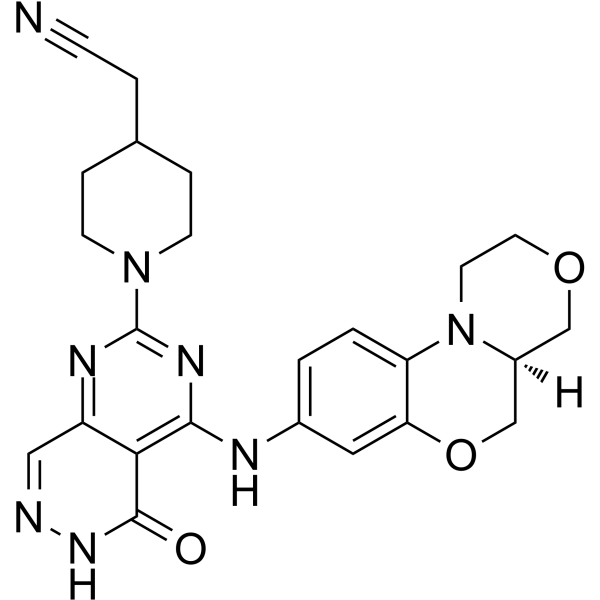 0 ImagesCat. No.: HY-145029CAS No.: 2737326-28-0
-
Cucurbitacin I (Standard)
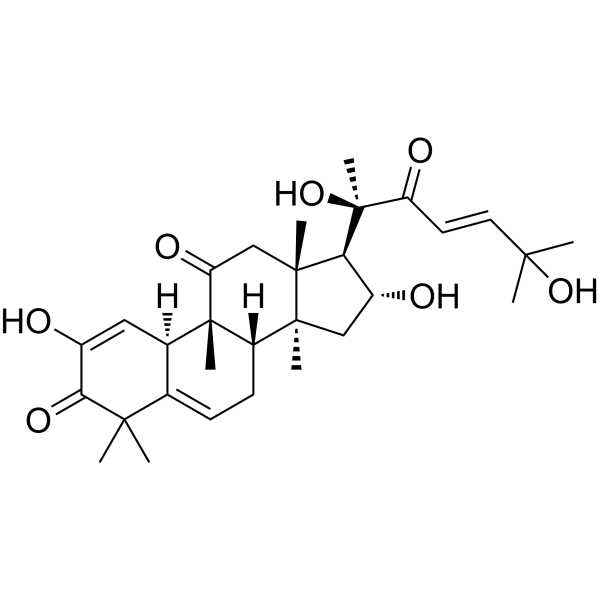 0 ImagesSynonyms: Elatericin B (Standard); JSI-124 (Standard); NSC-521777 (Standard)Cucurbitacin I (Standard) is the analytical standard of Cucurbitacin I. This product is intended for research and analytical applications. Cucurbitacin I is a natural selective inhibitor of JAK2/STAT3, with potent anti-cancer activity.
-
MMT3-72
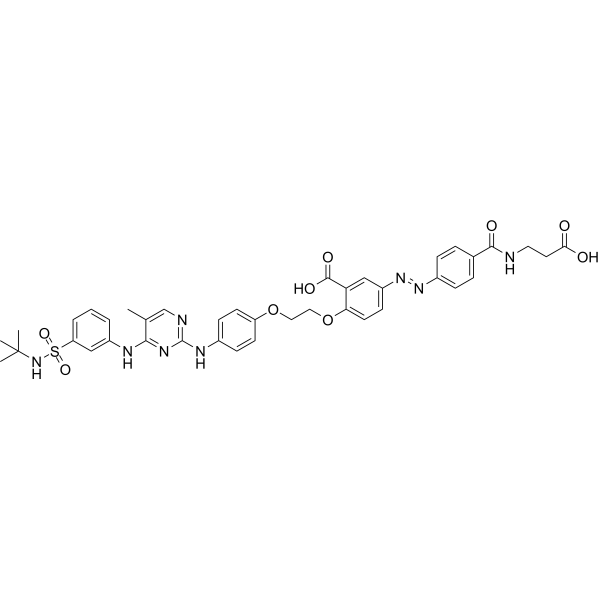 0 ImagesCat. No.: HY-162030CAS No.: 2996158-39-3
-
LS-104
 0 ImagesCat. No.: HY-118084CAS No.: 368836-72-0Synonyms: Tyrene CR-4LS-104 (Tyrene CR-4) is a non-ATP-competitive kinase inhibitor against JAK2, Bcr-Abl and FLT3. LS-104 potently induces apoptosis in JAK2V617F-positive cells and inhibits JAK2 autophosphorylation and downstream signal transduction. LS-104 also inhibits proliferation and induces potent cytotoxic effects in FLT3 expressing leukemic cells. LS-104 is a hydroxystyryl-acrylonitrile compound, which is promising for research of myeloproliferative disorders and refractory/relapsed hematologic malignancies.

-
PRN-371
 0 ImagesCat. No.: HY-124657CAS No.: 1610974-55-4PRN-371 is a potent and selective JAK3 inhibitor. PRN371 effectively suppresses natural killer/T-cell lymphoma cell proliferation and induces apoptosis through abrogation of the JAK3-STAT signaling. PRN-371 exhibits antitumor activity and can be used for the research of cancer, such as hematological malignancies.
-
Jolkinolide B (Standard)
 0 ImagesCat. No.: HY-N0732RCAS No.: 37905-08-1Jolkinolide B (Standard) is the analytical standard of Jolkinolide B (HY-N0732). This product is intended for research and analytical applications. Jolkinolide B is a bioactive diterpene isolated from the roots of Euphorbia fischeriana Steud with oral activity. Jolkinolide B downregulates XIAP, cIAP1, cIAP2, and phosphorylated Akt, upregulates Smac, activates caspase-3 and caspase-9, and inhibits NF-κB, TGFβ/smad3 and JAK/STAT3 pathways. Jolkinolide B exerts comprehensive biological effects including inducing cancer cell apoptosis, suppressing inflammatory responses, improving lung function, alleviating hepatic steatosis and eliminating intracellular Mycobacterium tuberculosis. Jolkinolide B can be used for the research of leukemia, histiocytic lymphoma, asthma, metabolic dysfunction-associated steatotic liver disease and tuberculosis.
-
JAK2-IN-14
 0 ImagesCat. No.: HY-175684CAS No.: 3087335-24-5JAK2-IN-14 is an orally active JAK2 inhibitor with an IC50 of 2 nM. JAK2-IN-14 demonstrates 89.5-, 80.5-, and 51-fold selectivity over JAK1, JAK3, and TYK2, respectively. JAK2-IN-14 inhibits STAT5 signaling pathway. JAK2-IN-14 causes tumor cell cycle arrest and apoptosis. JAK2-IN-14 can used for the study of myeloproliferative neoplasms (MPNs).
-
oJak-989
 0 ImagesCat. No.: HY-W635076CAS No.: 1315485-91-6
-
LAS194046
 0 ImagesCat. No.: HY-150101CAS No.: 1798578-61-6LAS194046 is a selective pan-JAK inhibitor, with an IC50 of 5.46 nM against JAK1, 0.4 nM against JAK2, and 2.07 nM against JAK3. LAS194046 reduces the levels of IL-8 and MMP-9. LAS194046 enhances the activation of glucocorticoid response elements by Fluticasone propionate. LAS194046 inhibits T2-type allergic pulmonary inflammation, allergen-induced airway inflammation, and late-phase asthmatic responses in rats. LAS194046 can be used in research related to non-T2 severe asthma, chronic obstructive pulmonary disease, and asthma.
-
JAK3(JH1) Recombinant Human Active Protein Kinase
 0 ImagesCat. No.: HY-E70836JAK3(JH1) is a kinase domain of JAK3. JAK3 is predominantly expressed in haematopoietic cell lineages such as lymphoid cells and mediates receptor-mediated cytokine signalling. JAK3(JH1) Recombinant Human Active Protein Kinase is a recombinant JAK3(JH1) protein that can be used to study JAK3(JH1)-related functions.
-
JAK1-IN-17
 0 ImagesCat. No.: HY-16641CAS No.: 1315490-71-1JAK1-IN-17 (Compound 31) is a highly selective inhibitor of JAK1 with a Ki of 1.9 nM. JAK1-IN-17 exhibits a low whole blood shift, which allows maintaining good whole blood potency. JAK1-IN-17 is also a nitrile-containing analogue with consistent, yet weak reversible inhibition of CYP3A4 using a midazolam probe (IC50 = 7.9 μM). JAK1-IN-17 can be studied in cancer research.
-
JAK3-IN-12
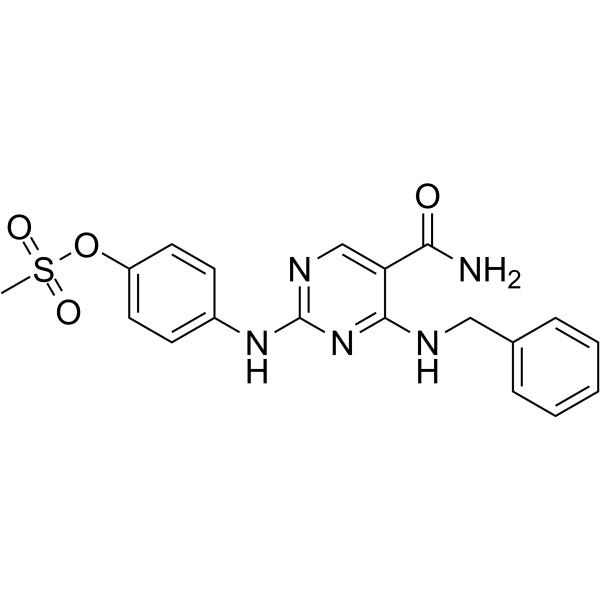 0 ImagesCat. No.: HY-147975CAS No.: 1430095-86-5JAK3-IN-12 (compound 5k) is a highly potent JAK3 inhibitor with IC50 values of 9.5 nM, 18 nM and 42 nM for JAK3, JAK1 and JAK2, respectively. JAK3-IN-12 can be used for researching rheumatoid arthritis.
-
Jak1 RIMTAC-1
 0 ImagesCat. No.: HY-187502Jak1 RIMTAC-1 is a JAK1 RIMTAC degrader (a PROTAC-like agent) with a DC50 of 322.8 nM. Jak1 RIMTAC-1 forms a ternary complex with JAK1 and RIPK1, thereby recruiting the VHL E3 ligase complex to ubiquitinate JAK1 via the ubiquitin-proteasome system and mediate its subsequent proteasomal degradation. Jak1 RIMTAC-1 does not alter JAK1 mRNA levels (pink: Jak1 ligand-1 (HY-187503); blue: RIPK1-ligand-4 (HY-187391); black: Linker (HY-B0704)).
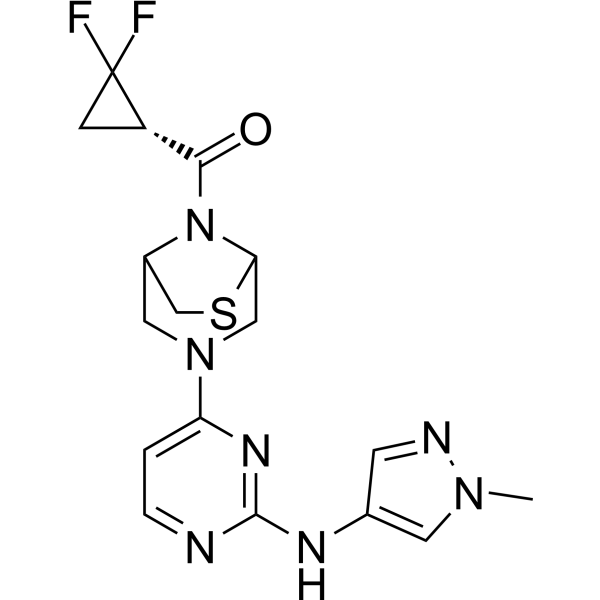
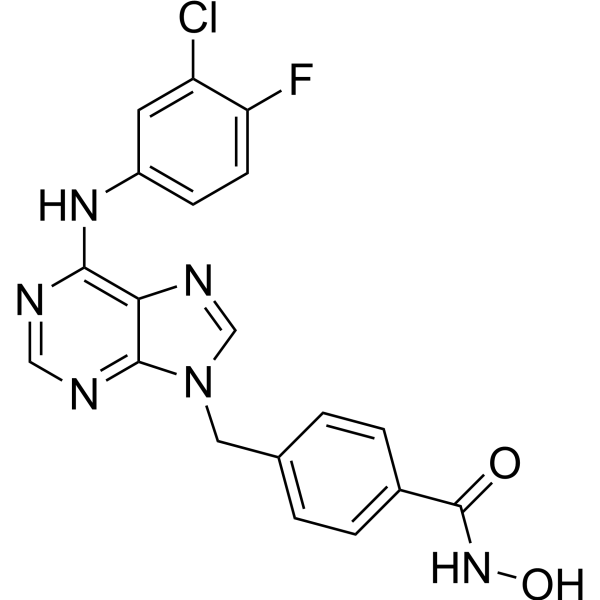
-
JAK1-IN-19
 0 ImagesCat. No.: HY-178282CAS No.: 2169271-17-2
-
Deucravacitinib-13C,d3
 0 ImagesCat. No.: HY-166594SDeucravacitinib-13C,d3 is the 13C- and deuterium labeled Deucravacitinib. Deucravacitinib (BMS-986165) is a highly selective, orally bioavailable allosteric TYK2 inhibitor for the treatment of autoimmune diseases, which selectively binds to TYK2 pseudokinase (JH2) domain (IC50=1.0 nM) and blocks receptor-mediated Tyk2 activation by stabilizing the regulatory JH2 domain. Deucravacitinib inhibits IL-12/23 and type I IFN pathways. Deucravacitinib, the FDA's world first de novo deuterium, is available for study in moderate to severe plaque psoriasis.




