



Microtubule/Tubulin
Microtubules are a component of the cytoskeleton, found throughout the cytoplasm. These tubular polymers of tubulin can grow as long as 50 micrometres, with an average length of 25 µm, and are highly dynamic. The outer diameter of a microtubule is about 24 nm while the inner diameter is about 12 nm. Microtubules are found in eukaryotic cells and are formed by the polymerization of a dimer of two globular proteins, alpha and beta tubulin. Tubulin is one of several members of a small family of globular proteins. The tubulin superfamily includes five distinct families, the alpha-, beta-, gamma-, delta-, and epsilon-tubulins and a sixth family which is present only in kinetoplastid protozoa. The most common members of the tubulin family are α-tubulin and β-tubulin, the proteins that make up microtubules. Microtubules are very important in a number of cellular processes. They are involved in maintaining the structure of the cell.
All Product Categories
-
Microtubule/Tubulin Inhibitors
(805)
View all products
-
Microtubule/Tubulin Agonists
(2)
View all products
-
Microtubule/Tubulin Activators
(18)
View all products
-
Microtubule/Tubulin Modulators
(19)
View all products
-
Microtubule/Tubulin Inducers
(5)
View all products
-
Microtubule/Tubulin Degraders
(3)
View all products
-
Microtubule/Tubulin Controls
(19)
View all products
-
Microtubule/Tubulin Ligands
(5)
View all products
-
Microtubule/Tubulin Related Products (988)
Related Products (988)

-
Antibodies (69)
-
Tau-aggregation-IN-1
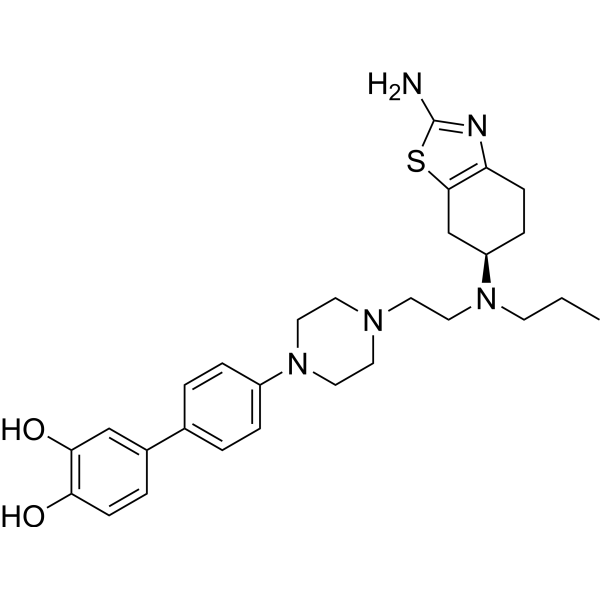 0 ImagesCat. No.: HY-146135CAS No.: 1619269-19-0Tau-aggregation-IN-1 (Compound D-519) is a tau441 protein aggregation inhibitor with an IC50 of 21 µM. Tau-aggregation-IN-1 is also a dopamine D2 and D3 receptor agonist.
-
DAT-230
 0 ImagesCat. No.: HY-117473CAS No.: 1504583-00-9DAT-230 is a microtubule inhibitor. DAT-230 induces cell apoptosis and results in microtubule de-polymerization and G2/M phase arrest. DAT-230 inhibits cell growth in vitro and in vivo.
-
KIF18A-IN-4
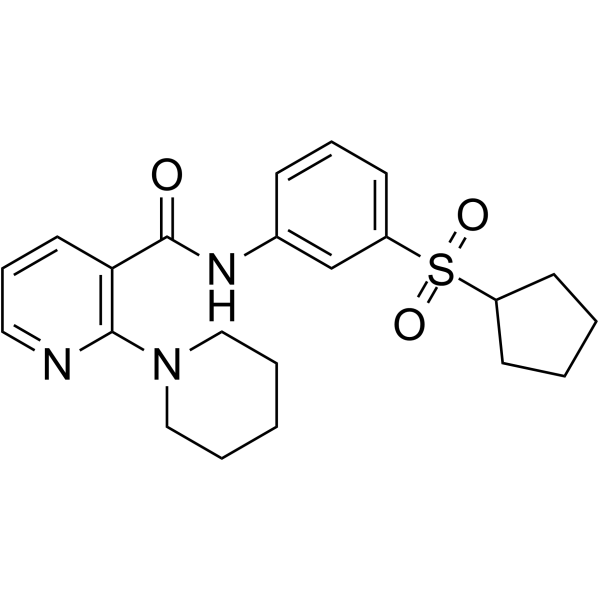 0 ImagesCat. No.: HY-145827CAS No.: 1197522-21-6KIF18A-IN-4 is a moderately potent ATP and microtubule (MT) noncompetitive KIF18A inhibitor (IC50=6.16 μM). KIF18A-IN-4 has selectivity against a large panel of mitotic kinesins and kinases, and does not show any direct effects on tubulin assembly. KIF18A-IN-4 exhibits anti-tumor activity.
-
Tubulin-IN-51
 0 ImagesCat. No.: HY-177021CAS No.: 849550-36-3Tubulin-IN-51 is an orally available, potent tubulin inhibitor (IC50 = 31 nM). Tubulin-IN-51 promotes tubulin polymerization in vitro and does not compete with Paclitaxel (HY-B0015) for binding. Tubulin-IN-51 inhibits the binding of Vinblastine (HY-13780) to tubulin. Tubulin-IN-51 downregulates the proportion of cells in the G1 phase and induces apoptosis. Tubulin-IN-51 inhibits tumor growth in multiple nude mouse xenograft models.
-
Tubulin polymerization-IN-29
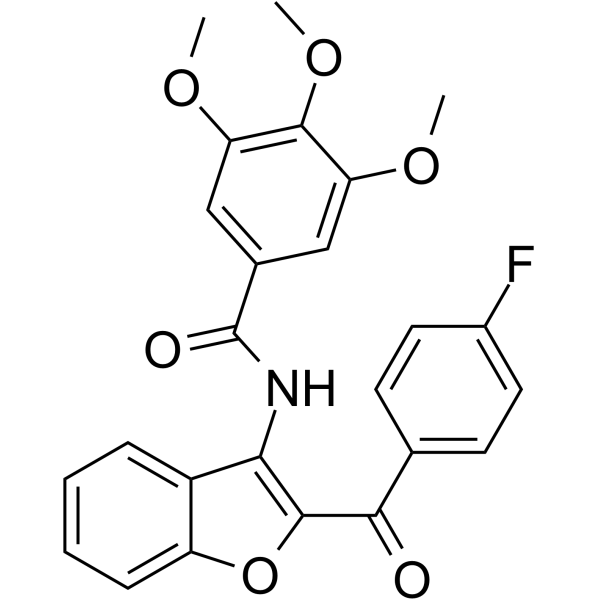 0 ImagesCat. No.: HY-147896CAS No.: 630058-59-2Tubulin polymerization-IN-29 (compound 6g) is a potent tubulin polymerization inhibitor. Tubulin polymerization-IN-29 exhibits potent antiproliferative activity. Tubulin polymerization-IN-29 can induce HeLa cells arrest in G2/M phase.
-
Tubulin polymerization-IN-35
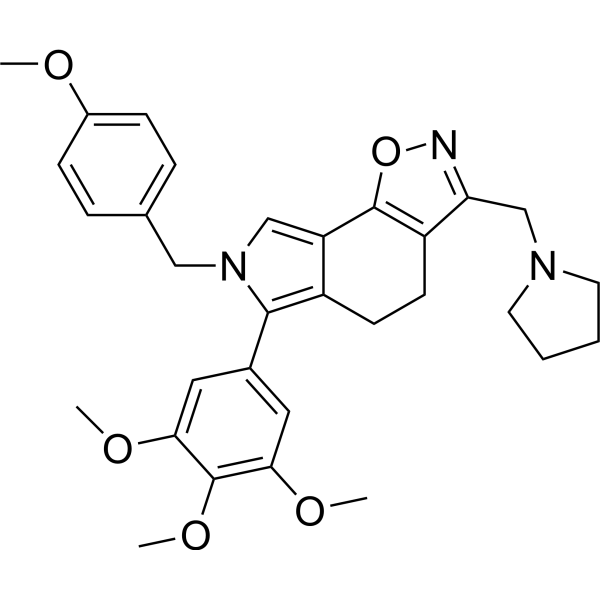 0 ImagesCat. No.: HY-151396CAS No.: 3051788-88-3Tubulin polymerization-IN-35 is an inhibitor of [1,2]oxazoloisoindoles tubulin polymerization, demonstrates high selectivity against marginal zone lymphoma VL51 cell line.
-
Syk/HDAC6-IN-1
 0 ImagesCat. No.: HY-184415Syk/HDAC6-IN-1 is a dual SYK/HDAC6 selective inhibitor with IC50 values of 0.19 nM (SYK) and 0.66 nM (HDAC6). Syk/HDAC6-IN-1 downregulates p-SYK to block downstream AKT/FOXO1 signaling, elevates acetylated histone H3 and α-tubulin via HDAC suppression, represses SREBF1 -mediated lipid biosynthetic pathways, triggers G0/G1 cell cycle arrest and robust mitochondrial-dependent caspase-3-mediated apoptosis in leukemia cells. Syk/HDAC6-IN-1 can be used for the research of FLT3-mutant acute myeloid leukemia.
-
Tubulin polymerization-IN-52
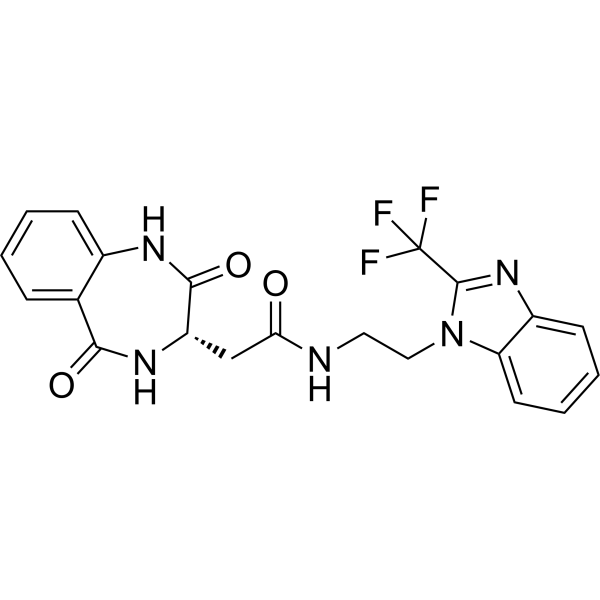 0 ImagesCat. No.: HY-156271CAS No.: 2108615-05-8Tubulin polymerization-IN-52 (compound SC23) is a potent tubulin polymerization inhibitor, with an IC50 of 2.9 μM.

-
Tubulysin E
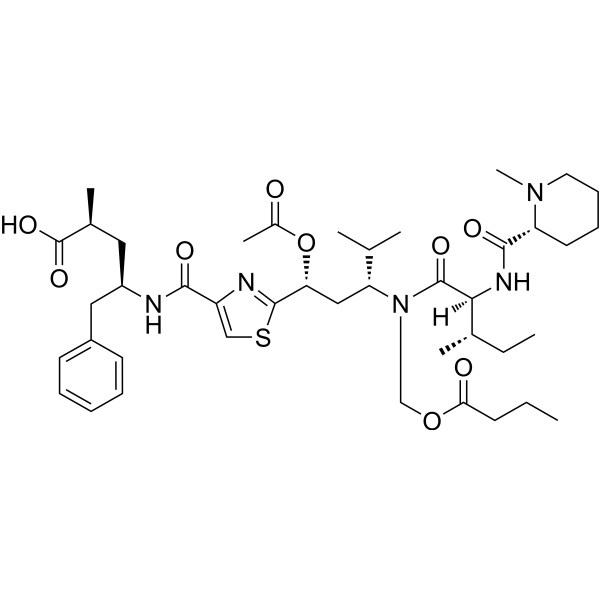 0 ImagesCat. No.: HY-N2346CAS No.: 309935-58-8Tubulysin E is a highly cytotoxic anti-microtubule toxin (anti-microtubule toxins) that is synthesized as an ADC cytotoxin (ADC Cytotoxin). Tubulysin E can be isolated from the myxobacteria Archangium geophyra and Angiococcus disciformis. Tubulysin E displays extremely potent cytotoxic activity in mammalian cells, including multidrug-resistant cell lines, with IC50 values in the low nanomolar range. Tubulysin E inhibits microtubule/Tubulin polymerization and leads to cell cycle arrest and apoptosis.
-
Tubulin degrader 1
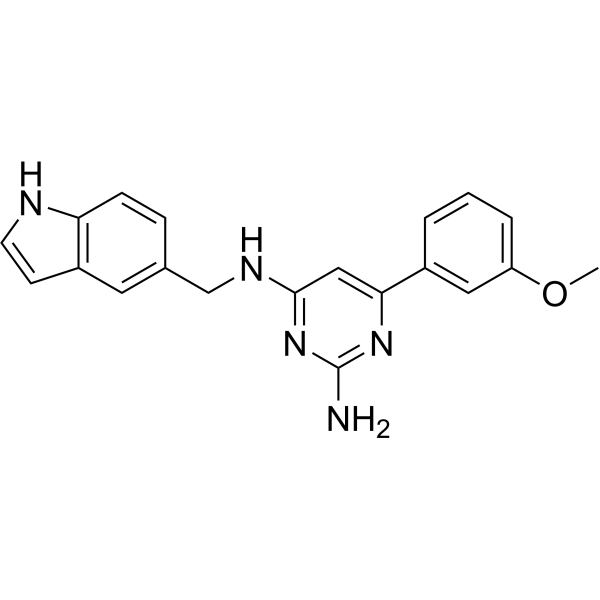 0 ImagesCat. No.: HY-161324Tubulin degrader 1, a derivative of BML284 (HY-19987), is an orally active Tubulin degrader with anti-tumor cell proliferation activity. Tubulin degrader 1 binds to the colchicine-binding site of β-tubulin, inhibits tubulin polymerization and promotes tubulin degradation. Tubulin degrader 1 inhibits microtubule polymerization, induces G2/M cell cycle arrest and apoptosis. Tubulin degrader 1 suppresses tumor growth in ovarian cancer xenograft models, induces anti-proliferative activity against tumor cells and overcomes multidrug resistance. Tubulin degrader 1 can be used in research related to various cancers including ovarian cancer.
-
Trimethylcolchicinic acid
 0 ImagesTrimethylcolchicinic acid (Desacetylcolchiceine; N-Deacetylcolchiceine) is a colchicine analogue. Trimethylcolchicinic acid promotes the production of chondroitin sulfate in L cells and inhibits the production of dermatan sulfate. Trimethylcolchicinic acid reduces liver fibrosis and cholestasis induced by long-term biliary obstruction in rats. Trimethylcolchicinic acid has potential for use in research on diseases such as liver fibrosis, gout, and cancer.
-
EGFR/VEGFR2-IN-11
 0 ImagesCat. No.: HY-181766EGFR/VEGFR2-IN-11 is an EGFR/VEGFR2 inhibitor with IC50 values of 0.62 μM (human EGFR), 2.26 μM (human VEGFR-2), 17.38 μM (human COX-2), and 19.31 μM (human tubulin). EGFR/VEGFR2-IN-11 inhibits COX-2 activity and tubulin polymerization. EGFR/VEGFR2-IN-11 induces cell cycle arrest and apoptosis. EGFR/VEGFR2-IN-11 exerts selective and antiproliferative activity against human cancer cells. EGFR/VEGFR2-IN-11 can be used for the research of colon carcinoma, breast carcinoma, leukemia, lymphoma, glioblastoma.
-
Antiproliferative agent-66
 0 ImagesCat. No.: HY-170834Antiproliferative agent-66 (Compound B3) is an antiproliferative agent that induces apoptosis and cell cycle arrest with IC50 values in the range of 2.03-3.6 µM against SH-SY5Y neuroblastoma, HT-29 colorectal adenocarcinoma, and fibroblast cells. Antiproliferative agent-66 is also a tubulin polymerization inhibitor with an IC50 of 0.79 µM.
-
Mal-Val-Lys-PAB-MMAE
 0 ImagesCat. No.: HY-177307CAS No.: 2435608-81-2Mal-Val-Lys-PAB-MMAE is a drug-linker conjugate for ADC. Mal-Val-Lys-PAB-MMAE consists of a Tubulin inhibitor (MMAE) (HY-15162) and a linker (Mal-Val-Lys-PAB). Mal-Val-Lys-PAB-MMAE can be used for synthesis of ADCs.
-
Tubulin polymerization-IN-72
 0 ImagesCat. No.: HY-170563Tubulin polymerization-IN-72 (Compound 4a4) is an anticancer agent that acts as a tubulin polymerization inhibitor. It inhibits tubulin polymerization by binding to the colchicine site, leading to cancer cell arrest in the G2/M phase and inducing their apoptosis (Apoptosis). Tubulin polymerization-IN-72 has an IC50 of 0.4-2.7 nM against cancer cells.
-
FT108
 0 ImagesCat. No.: HY-182720CAS No.: 2379645-28-8FT108 is a selective HDAC6 inhibitor with an IC50 of 0.026 μM. FT108 exhibits only modest in vitro activity against HDAC3 and HDAC8 with IC50 values of 6.68 and 4.07 μM. FT108 increases acetylation of tubulin and has little to no effect on acetylated histone H3 levels. FT108 lacks activity against myeloproliferative neoplasm cell lines, and does not suppress JAK2 phosphorylation or its downstream targets pSTAT3 and pSTAT5.
-
Tubulin-IN-54
 0 ImagesCat. No.: HY-175555Tubulin-IN-54 is a tubulin inhibitor. Tubulin-IN-54 exhibits anti-proliferative activity against various cancer cells. Tubulin-IN-54 inhibits tubulin polymerization, disrupts microtubule networks, induces G2/M cell cycle arrest, and promotes cancer cell apoptosis. Tubulin-IN-54 demonstrates significant anti-tumor efficacy in mice bearing PC-3/TxR xenografts. Tubulin-IN-54 can be used for the study of taxane-resistant cancers (prostate cancer, melanoma).
-
Tubulin polymerization-IN-49
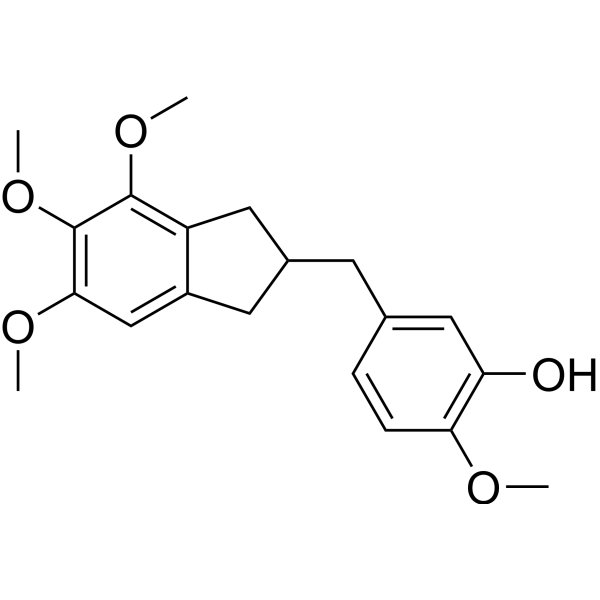 0 ImagesCat. No.: HY-156737Tubulin polymerization-IN-49 (compound 12d) is a potent tubulin polymerization inhibitor. Tubulin polymerization-IN-49 bound to colchicine site on tubulin and inhibited tubulin polymerization. Tubulin polymerization-IN-49 induces cell cycle arrest at G2/M phase and apoptosis. Tubulin polymerization-IN-49 has anticancer active and prevents tumor generation, inhibits tumor proliferation and angiogenesis.
-
Denibulin hydrochloride
 0 ImagesCat. No.: HY-14919ACAS No.: 779356-64-8Synonyms: MN-029Denibulin (MN-029) hydrochloride is an anti-angiogenic agent with anticancer activity. It can cause rapid closure of blood vessels in solid tumors and lead to dose-dependent killing of tumor cells, effectively enhancing the antitumor effects of radiation and cisplatin chemotherapy.




