



Microtubule/Tubulin
Microtubules are a component of the cytoskeleton, found throughout the cytoplasm. These tubular polymers of tubulin can grow as long as 50 micrometres, with an average length of 25 µm, and are highly dynamic. The outer diameter of a microtubule is about 24 nm while the inner diameter is about 12 nm. Microtubules are found in eukaryotic cells and are formed by the polymerization of a dimer of two globular proteins, alpha and beta tubulin. Tubulin is one of several members of a small family of globular proteins. The tubulin superfamily includes five distinct families, the alpha-, beta-, gamma-, delta-, and epsilon-tubulins and a sixth family which is present only in kinetoplastid protozoa. The most common members of the tubulin family are α-tubulin and β-tubulin, the proteins that make up microtubules. Microtubules are very important in a number of cellular processes. They are involved in maintaining the structure of the cell.
All Product Categories
-
Microtubule/Tubulin Inhibitors
(812)
View all products
-
Microtubule/Tubulin Agonists
(2)
View all products
-
Microtubule/Tubulin Antagonist
(1)
View all products
-
Microtubule/Tubulin Activators
(21)
View all products
-
Microtubule/Tubulin Modulators
(20)
View all products
-
Microtubule/Tubulin Inducers
(5)
View all products
-
Microtubule/Tubulin Degraders
(3)
View all products
-
Microtubule/Tubulin Controls
(19)
View all products
-
Microtubule/Tubulin Ligands
(5)
View all products
-
Microtubule/Tubulin Related Products (1003)
Related Products (1003)

-
Antibodies (69)
-
SP-6-27
 0 ImagesCat. No.: HY-136893CAS No.: 1384170-58-4SP-6-27 is a tubulin depolymerizing agent that binds to the colchicine site of β-tubulin. SP-6-27 induces G2/M cell cycle arrest in ovarian cancer cells. SP-6-27 enhances intrinsic apoptosis in ovarian cancer cells through upregulation of Bax, Apaf-1, caspase-6, caspase-9, and caspase-3. SP-6-27 reduces ovarian cancer cell migration. SP-6-27 inhibits capillary tube formation by human umbilical vein endothelial cells. SP-6-27 shows minimum cytotoxicity to normal ovarian epithelia. SP-6-27 shows enhanced cytotoxicity in chemo-sensitive/resistant ovarian cancer cells when combined with Cisplatin (HY-17394). SP-6-27 can be used for the research of ovarian cancer.
-
Tubulin inhibitor 17
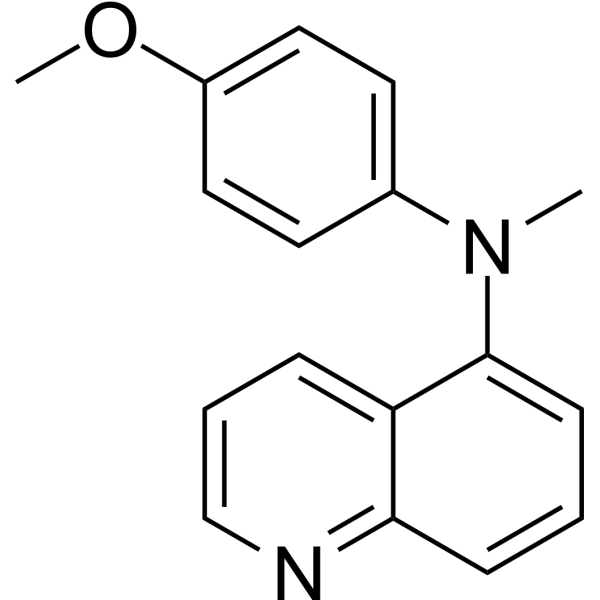 0 ImagesCat. No.: HY-144748CAS No.: 2839151-13-0Tubulin inhibitor 17 (Compound 3b) is a tubulin polymerization inhibitor with an IC50 of 12.38 µM. Tubulin inhibitor 17 has anticancer activities and induces cell apoptosis.
-
Epothilone E
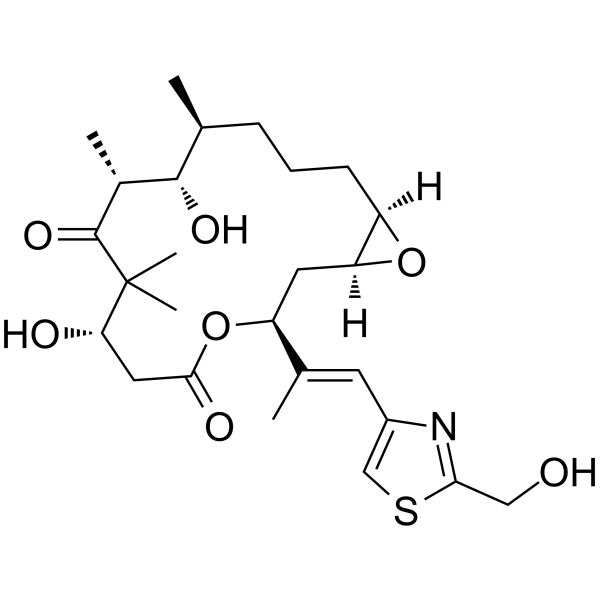 0 ImagesCat. No.: HY-147317CAS No.: 201049-37-8Epothilone E is a related compound of epothilone, which inhibits microtubule protein function and blocks cell division, and has anti-tumor activity.
-
4SC-207
 0 ImagesCat. No.: HY-111251CAS No.: 871015-11-14SC-207 is a potent, orally active microtubule inhibitor. 4SC-207 inhibits microtubule growth to inhibit tumor cell proliferation in vitro and in vivo, and promotes a mitotic delay/arrest, followed by apoptosis or aberrant divisions. 4SC-207 inhibits tumor growth in taxane resistant xenograft mouse models. 4SC-207 can be used for cancer research, such as colon adenocarcinoma and other malignancies.
-
Tubulin polymerization-IN-18
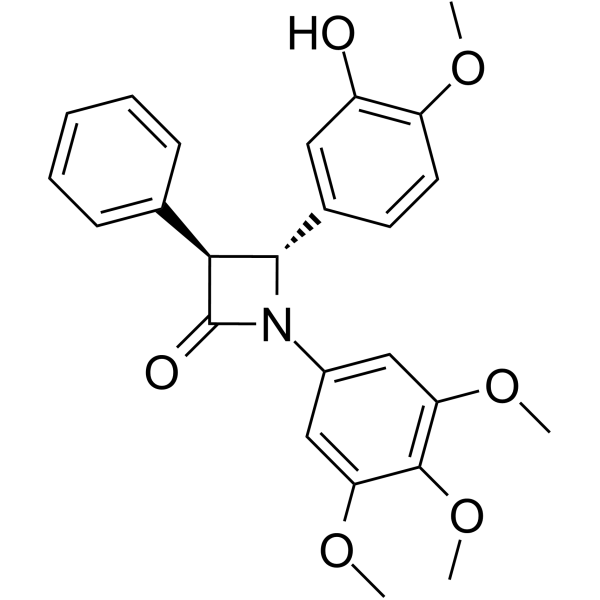 0 ImagesCat. No.: HY-146376CAS No.: 1258011-23-2Tubulin polymerization-IN-18 (compound 8) is a potent inhibitor of tubulin polymerization. Tubulin polymerization-IN-18 has the potential for the research of breast cancers and chemoresistant colon cancers.
-
Eg5-IN-3
 0 ImagesCat. No.: HY-162518Eg5-IN-3 (5) is an Eg5 inhibitor that targets the novel allosteric pocket (α4/α6/L11). Eg5-IN-3 (5) causes tubulin assembly distortion with irregular morphology, resulting in a typical mitotic arrest similar to Monastrol (HY-101071A).
-
Triclabendazole-13C,d3
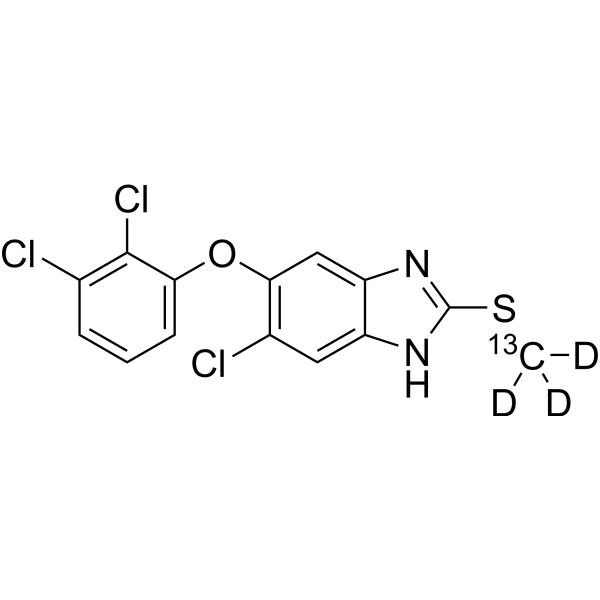 0 ImagesCat. No.: HY-B0621S1CAS No.: 2938916-53-9Synonyms: CGA89317-13C,d3Triclabendazole-13C,d3 is the 13C- and deuterium labeled Triclabendazole.
-
Tubulin polymerization-IN-2
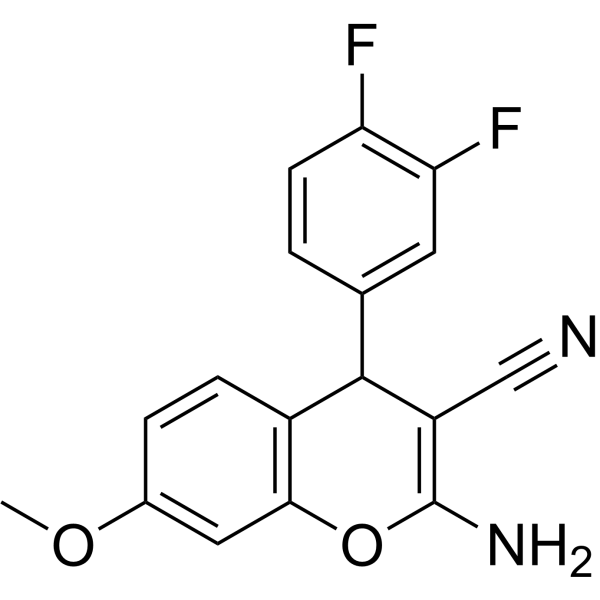 0 ImagesCat. No.: HY-143247CAS No.: 2873399-22-3Tubulin polymerization-IN-2 is a potent anticancer agent targeting to β-tubulin with an IC50 value of 0.92 μM. Tubulin polymerization-IN-2 shows promising activity against various leukemia, non-small lung, renal, prostate, and breast cancer cell lines.
-
Epothilone B-d3 (synthetic)
 0 ImagesCat. No.: HY-W754654Epothilone B-d3 (synthetic) is the deuterium labeled Epothilone B (HY-17029). Epothilone B is a microtubule stabilizer with a Ki of 0.71μM. It acts by binding to the αβ-tubulin heterodimer subunit which causes decreasing of αβ-tubulin dissociation.
-
Tubulin polymerization-IN-85
 0 ImagesCat. No.: HY-180190Tubulin polymerization-IN-85 (Compound C21) is a tubulin polymerization inhibitor (IC50 = 1.59 μM) targeting the colchicine binding site. Tubulin polymerization-IN-85 can cause cancer cells G2/M phase arrest and induce apoptosis. Tubulin polymerization-IN-85 downregulates the expression of Bcl-2, Bcl-xl, Mcl-1, Cyclin B1, cdc25, cdc2 protein and upregulates P53, P21, Bad and Bax levels. Tubulin polymerization-IN-85 can be used for the research of cancer, such as cervical cancer.
-
Tubulin/HDAC-IN-1
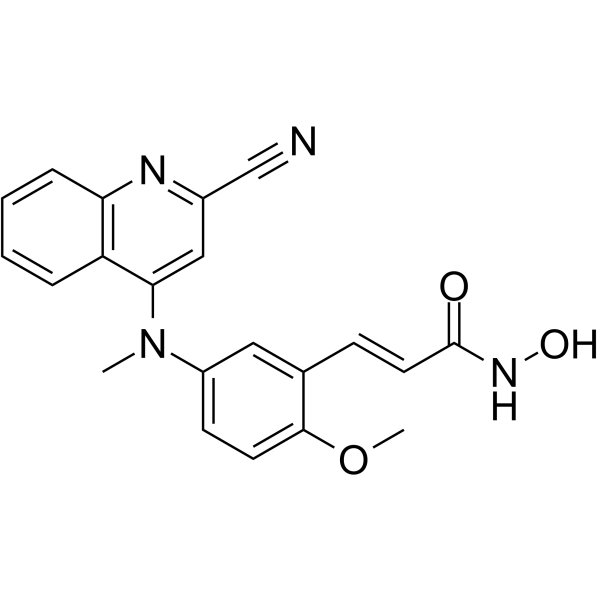 0 ImagesCat. No.: HY-150772CAS No.: 2413587-26-3Tubulin/HDAC-IN-1 is a dual tubulin and HDAC-IN-1 inhibitor through CH/π interaction with tubulin and hydrogen bond interaction with HDAC8. Tubulin/HDAC-IN-1 inhibits tubulin polymerization and selectively inhibits HDAC8 (IC50: 150 nM). Tubulin/HDAC-IN-1 has cytotoxicity against various human cancer cells, also arrests cell cycle in the G2/M phase and induces cell apoptosis. Tubulin/HDAC-IN-1 can be used in the research of hematologic and solid tumors such as neuroblastoma, leukemia.
-
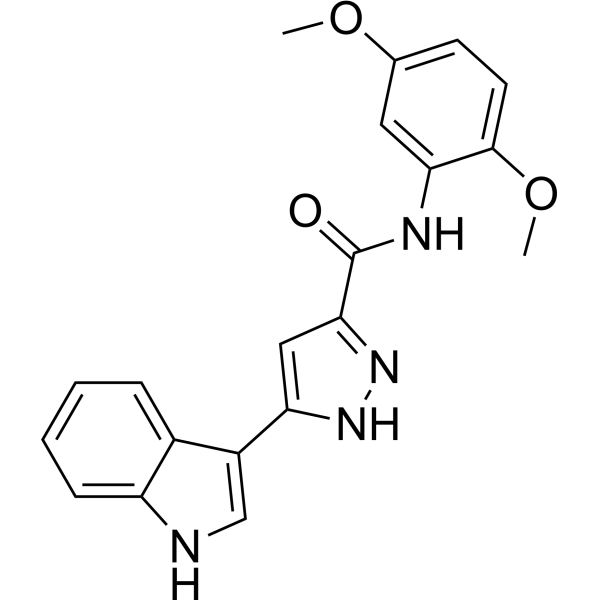
Anti-SLC34A2 (Lifastuzumab)-SMCC-DM1
 0 ImagesCat. No.: HY-171735Anti-SLC34A2 (Lifastuzumab)-SMCC-DM1 is an antibody-drug conjugate (ADC) consisting of the humanized anti-SLC34A2 (sodium-dependent phosphate transporter 2) antibody Lifastuzumab (HY-P99970) conjugated to the linker SMCC (HY-42360) and the the cytotoxic microtubule inhibitor DM1 (HY-19792). The ADC toxic molecule and linker part are SMCC-DM1 (HY-101070). Anti-SLC34A2 (Lifastuzumab)-SMCC-DM1 can be used in the research of cancer.
-
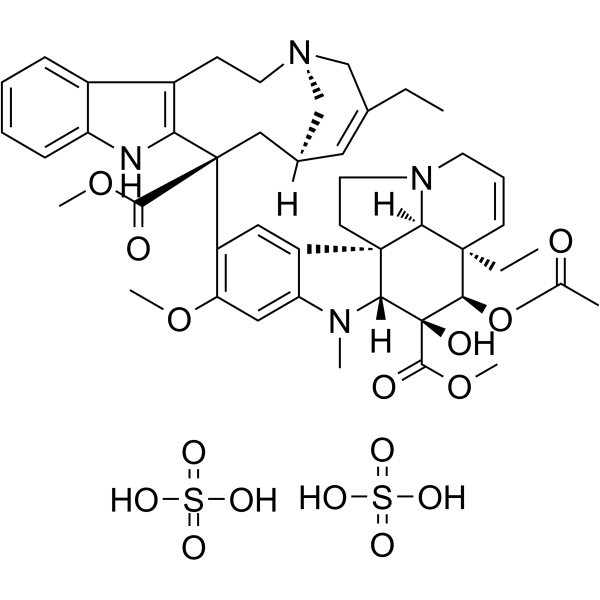
Tubulin polymerization-IN-28
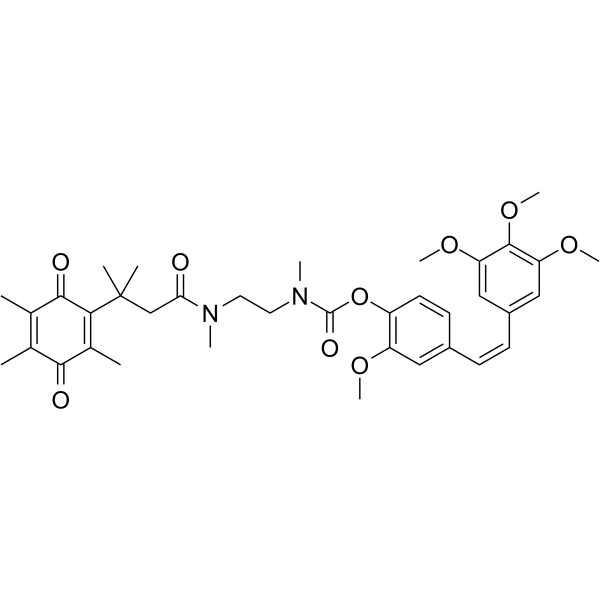 0 ImagesCat. No.: HY-149021CAS No.: 2481404-89-9Tubulin polymerization-IN-28 (compound-4) is a microtubule protein polymerization inhibitor with highly selective anticancer activity. Tubulin polymerization-IN-28 can be activated by NQO1 and effectively release combretastatin A-4 to kill tumor cells. Tubulin polymerization-IN-28 can induce cell apoptosis and be used in anti-cancer research.
-
Tubulin polymerization-IN-68
 0 ImagesCat. No.: HY-163983CAS No.: 2924156-96-5Tubulin polymerization-IN-68 (compound 32) is a tubulin inhibitor that can inhibit tubulin polymerization and destroy the cellular microtubule network. Tubulin polymerization-IN-68 can upregulate the expression of PARP-1 and caspase-3 and induce cell apoptosis, and has anticancer activity. Tubulin polymerization-IN-68 can effectively inhibit HepG2 (IC50=93 nM) and significantly inhibit the growth of HepG2 xenograft tumors in nude mice by oral administration.
-
N-(NHS-PEG4)-N-(PEG4-Val-Cit-PAB-MMAF)-N-(PEG4-Val-Cit-PAB-Exatecan)
 0 ImagesCat. No.: HY-177688N-(NHS-PEG4)-N-(PEG4-Val-Cit-PAB-MMAF)-N-(PEG4-Val-Cit-PAB-Exatecan) is a drug-linker conjugate for ADC (Drug-Linker Conjugate for ADC), consisting of a tubulin polymerization inhibitor MMAE (HY-15162) and a DNA topoisomerase I inhibitor Exatecan (HY-13631), and an ADC linker composition. N-(NHS-PEG4)-N-(PEG4-Val-Cit-PAB-MMAF)-N-(PEG4-Val-Cit-PAB-Exatecan) can be used for synthesis of ADCs and for cancer research.
-
Tubulin polymerization-IN-60
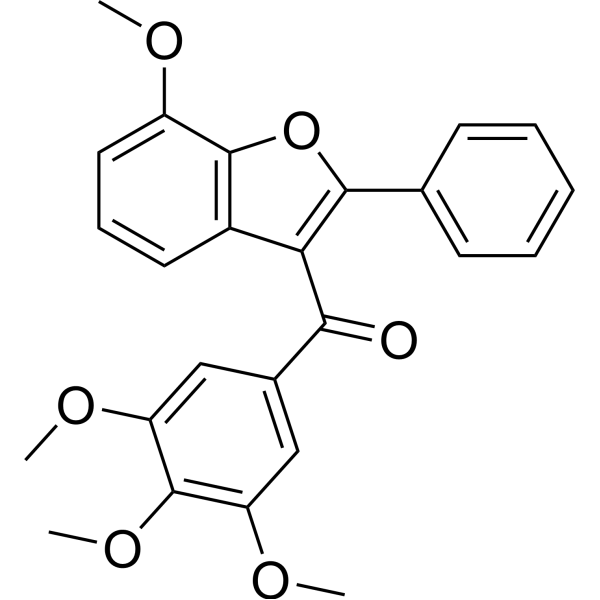 0 ImagesCat. No.: HY-163356CAS No.: 2361303-91-3Tubulin polymerization-IN-60 (BF3) is a tubulin polymerization inhibitor with anticancer activity. Tubulin polymerization-IN-60 (BF3) belongs to the colchicine binding site inhibitors (CBSIs) and disturbs cell cycle progression leading to G2/M arrest and apoptosis.
-
Tubulin polymerization-IN-9
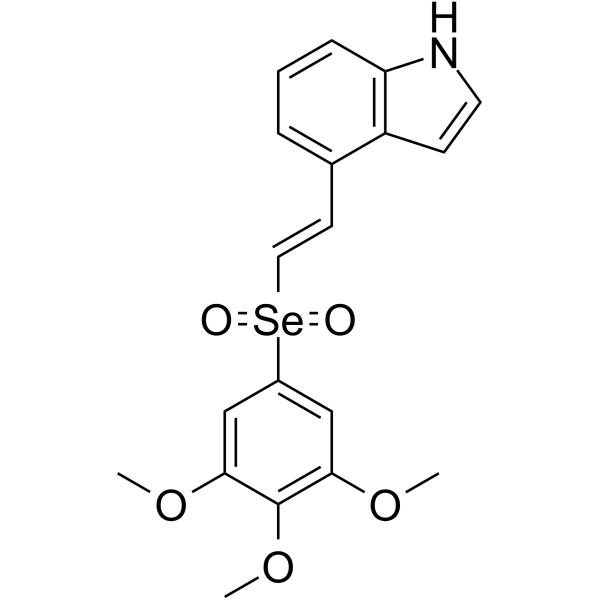 0 ImagesCat. No.: HY-146718CAS No.: 2485020-93-5Tubulin polymerization-IN-9 is a potent tubulin inhibitor with IC50 of 1.82 μM. Tubulin polymerization-IN-9 causes cell cycle arrest at G2/M phase, and induces cell apoptosis and depolarized mitochondria of K562 cells. Tubulin polymerization-IN-9 has potent anti-vascular and antitumor activities.
-
Tubulin-IN-68
 0 ImagesCat. No.: HY-183762Tubulin-IN-68 is a tubulin inhibitor with an IC50 of 19.3 μM. Tubulin-IN-68 exhibits antiproliferative activity against human cancer cells. Tubulin-IN-68 induces G2/M phase cell cycle arrest. Tubulin-IN-68 induces apoptosis. Tubulin-IN-68 can be used in the research of colorectal cancer, hepatocellular carcinoma, breast cancer, and T-cell leukemia.




