1. Signaling Pathways
  2. NF-κB
  3. NF-κB

NF-κB

Nuclear factor-κB; Nuclear factor-kappaB

NF-κB (Nuclear factor kappa-light-chain-enhancer of activated B cells) is a protein complex that controls transcription of DNA. NF-κB is found in almost all animal cell types and is involved in cellular responses to stimuli such as stress, cytokines, free radicals, ultraviolet irradiation, oxidized LDL, and bacterial or viral antigens. NF-κB plays a key role in regulating the immune response to infection. Incorrect regulation of NF-κB has been linked to cancer, inflammatory, and autoimmune diseases, septic shock, viral infection, and improper immune development. NF-κB has also been implicated in processes of synaptic plasticity and memory. There are five proteins in the mammalian NF-κB family: NF-κB1, NF-κB2, RelA, RelB, c-Rel.

Cat. No. Product Name Effect Purity Chemical Structure
  • HY-P11242
    Cm-CATH2
    Inhibitor
    Cm-CATH2 is an antimicrobial peptide discovered from Chelonia mydas. Cm-CATH2 has a potent, broad-spectrum and rapid bactericidal ability by rapidly destroying the integrity of bacterial cell membranes. It shows strong activity against Gram-positive bacteria (such as VREF, Staphylococcus aureus), Gram-negative bacteria (such as Escherichia coli, Klebsiella pneumoniae), and fungi (such as Candida albicans) with MICs ranges from 1.17 to 18.75 μg/mL. Cm-CATH2 is also effective against various aquatic pathogenic bacteria. Cm-CATH2 not only inhibits biofilm formation but can also remove the formed biofilms. Cm-CATH2 has immunomodulatory functions and chemotactic effects on immune cells, and can inhibit the production of pro-inflammatory cytokines by macrophages stimulated by LPS (HY-D1056). Cm-CATH2 prevents the activation of NF-κB by inhibiting the degradation of IκBα, and also inhibits the phosphorylation of MAPK signaling pathways (p38, JNK, ERK). Cm-CATH2 demonstrates strong anti-infective ability in mouse peritonitis models and pneumonia models.
    Cm-CATH2
  • HY-181809
    BLT1-IN-1
    Inhibitor
    BLT1-IN-1 is an orally active and selective BLT1 inhibitor with an IC50 of 8.7 nM and a Kd of 121 nM. BLT1-IN-1 exerts protective effects against acute lung injury and sepsis in in vivo models. BLT1-IN-1 can be used in research related to acute lung injury and sepsis.
    BLT1-IN-1
  • HY-183796
    GFAP/NF-κB/APOE/NLRP3-IN-1
    Inhibitor
    GFAP/NF-κB/APOE/NLRP3-IN-1 is an orally active, blood-brain barrier-permeable multi-target inhibitor with an IC50 of 3.50 nM against Acetylcholinesterase. GFAP/NF-κB/APOE/NLRP3-IN-1 inhibits BACE-1 with an IC50 of 14.61 nM. GFAP/NF-κB/APOE/NLRP3-IN-1 inhibits 1-42 aggregation with an IC50 of 8.63 μM. GFAP/NF-κB/APOE/NLRP3-IN-1 reduces the levels of GFAP, NLRP3 inflammasome, NF-κB and APOE. GFAP/NF-κB/APOE/NLRP3-IN-1 is applicable for the research of Alzheimer's disease and neuroblastoma.
    GFAP/NF-κB/APOE/NLRP3-IN-1
  • HY-179646
    CIAC101
    Inhibitor
    CIAC101 is a potent and brain-penetrant TLR4 antagonist with an IC50 of 17.0 nM in NO assay. CIAC101 blocks Lipopolysaccharides (HY-D1056) (LPS)-induced NF-κB activation and reduces the expression of pro-inflammatory mediators (iNOS, IL-1β, TNF-α, and IL-6). CIAC101 robust antineuroinflammatory activity with efficacy against drug-evoked neurobehavioral adaptations. CIAC101 can be used for the research of addiction and neurological disease.
    CIAC101
  • HY-N10312
    Yadanzigan
    Inhibitor
    Yadanzigan (YDZG) is an anti-inflammatory agent and a NLRP3 inhibitor. Yadanzigan specifically inhibits NLRP3 activation via inhibiting NF-κB pathway and Reactive Oxygen Species production. Yadanzigan also moderates LPS (HY-D1056)-induced acute lung injury (ALI) in mice.
    Yadanzigan
  • HY-W550315
    Dimethyl diacetyl cystinate
    Inhibitor
    Dimethyl diacetyl cystinate (DACDM) is a potent NF-κB inhibitor. Dimethyl diacetyl cystinate shifts the intracellular redox balance toward the oxidized state by increasing intracellular oxidized glutathione (GSSG) content, competitively blocking the binding of activated NF-κB to DNA, thereby inhibiting the production of inflammatory factors such as IL-1κ. Dimethyl diacetyl cystinate is promising for research of UVB-induced skin inflammation and related oxidative stress diseases.
    Dimethyl diacetyl cystinate
  • HY-145439
    Colistin adjuvant-1
    Inhibitor
    Colistin adjuvant-1 is a colistin adjuvant, shows increased colistin potentiation activity against Gram-negative bacteria. Colistin adjuvant-1 inhibits NF-κB with an IC50 of 0.209 μM.
    Colistin adjuvant-1
  • HY-12292G
    IM-12 (GMP)
    Inhibitor
    IM-12 GMP is IM-12 (HY-12292) produced by using GMP guidelines. GMP small molecules works appropriately as an auxiliary reagent for cell therapy manufacture. IM-12 is an orally active anti-inflammatory agent that targets and inhibits the NF-κB and STAT3 signaling pathways. IM-12 activates the Wnt signaling pathway and promotes the nuclear translocation of β-catenin by inhibiting GSK3β, while also blocking the tyrosine kinase activity of p210BCR/ABL. IM-12 reduces the levels of IL-6, IL-17, NO, prostaglandin E2, iNOS and COX-2, and induces ER stress, Ca2+ release, autophagy and apoptosis. IM-12 is heat-sensitive and does not induce autophagy in IM-resistant p210BCR/ABLT315I mutant cells. IM-12 is also a component of the 5iLA medium used for naive pluripotent stem cell research. IM-12 has been applied in studies related to carrageenan (HY-125474)-induced hind paw edema, TNBS-induced colitis, and acute and chronic myeloid leukemia.
    IM-12 (GMP)
  • HY-N11777
    (−)-N-Hydroxyapiosporamide
    Inhibitor
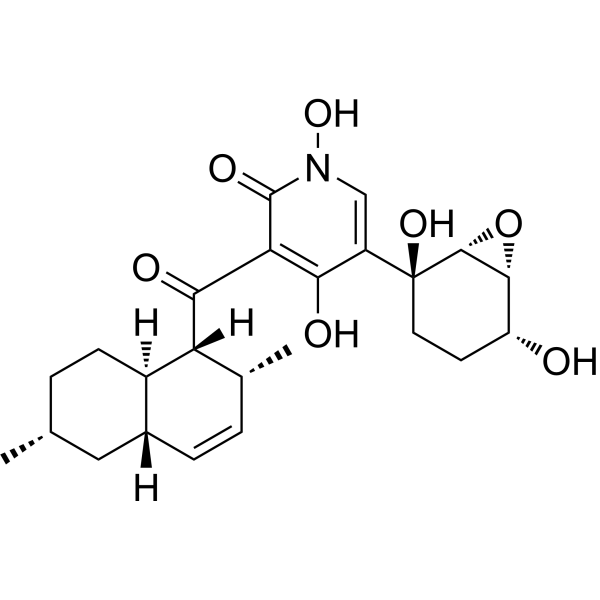
    (−)-N-Hydroxyapiosporamide (NHAP), an alkaloid, is an NF-κB inhibitor with potent antitumor activity in vitro and in vivo. (−)-N-Hydroxyapiosporamide can be used for the research of colorectal cancer (CRC).
    (−)-N-Hydroxyapiosporamide
  • HY-N0492AR
    α-Lipoic Acid sodium (Standard)
    Inhibitor
    α-Lipoic Acid (sodium) (Standard) is the analytical standard of α-Lipoic Acid (sodium). This product is intended for research and analytical applications. α-Lipoic Acid (Thioctic acid) sodium is an antioxidant, which is an essential cofactor of mitochondrial enzyme complexes. α-Lipoic Acid sodium inhibits NF-κB-dependent HIV-1 LTR activation. α-Lipoic Acid sodium induces endoplasmic reticulum (ER) stress-mediated apoptosis in hepatoma cells. α-Lipoic Acid sodium can be used with CPUL1 (HY-151802) to construct the self-assembled nanoaggregate CPUL1-LA NA, which has improved antitumor efficacy than CPUL1.
    α-Lipoic Acid sodium (Standard)
  • HY-RS11828
    Rela Rat Pre-designed siRNA Set A
    Inhibitor

    Rela Rat Pre-designed siRNA Set A contains three designed siRNAs for Rela gene (Rat), as well as a negative control, a positive control, and a FAM-labeled negative control.

    Rela Rat Pre-designed siRNA Set A
  • HY-178166
    ETI41
    Inhibitor
    ETI41 is an orally active, selective TLR inhibitor that targets the nucleoside-binding Site I on TLR7 (IC50 = 0.63 μM) and TLR9 (IC50 = 0.16 μM), sparing surface TLRs (including TLR1/TLR2, TLR2/TLR6, TLR4 and TLR5). ETI41 potently inhibits endosomal TLR-mediated pro-inflammatory signaling with nanomolar activity in cellular, biophysical and in vivo assays. ETI41 suppresses the expression of inflammation-associated genes and effectively ameliorates symptoms in mouse models of psoriasis, and systemic lupus erythematosus (SLE). ETI41 can be used for autoimmune and inflammatory diseases research.
    ETI41
  • HY-182707
    JWX-A0108
    Inhibitor
    JWX-A0108 is a selective human α7 nAChR positive allosteric modulator with an EC50 of 4.35 μM. JWX-A0108 potentiates α7 nAChR currents only in the presence of acetylcholine, with no direct activating effect or alteration of desensitization. JWX-A0108 enhances hippocampal GABAergic synaptic transmission by increasing spontaneous inhibitory postsynaptic currents. JWX-A0108 reduces the brain expression levels of IL-1β, TNF-α, and IL-6 by blocking the NF-κB signaling pathway, and reduces microglial activation by downregulating Iba1. JWX-A0108 effectively improves cognitive deficits, neuroinflammation, and hippocampal neuronal damage in mouse models of schizophrenia and Alzheimer's disease. JWX-A0108 can be used for research related to schizophrenia and Alzheimer's disease.
    JWX-A0108
  • HY-N17383
    Ligusticum cycloprolactam
    Inhibitor
    Ligusticum cycloprolactam is a potent, orally active, and CNS-penetrant TLR4/NF-κB inhibitor, exhibiting anti-inflammatory and neuroprotective activity. Ligusticum cycloprolactam reduces FPR1 expression, inhibits NLRP3 inflammasome, TLR4/NF-κB, hepatic MAPK and TGF-β signaling, and selectively activates hepatic FXR. Ligusticum cycloprolactam attenuates pro-inflammatory mediator production, enhances anti-inflammatory cytokine secretion, regulates renal uric acid transporters, and preserves intestinal microbiota composition. Ligusticum cycloprolactam can be used for the research of ischemic stroke, hyperuricemic nephropathy, neuroinflammation, and metabolic dysfunction-associated fatty liver disease.
    Ligusticum cycloprolactam
  • HY-180580
    SMU-C409
    Inhibitor
    SMU-C409 is a TLR1/2 agonist with an EC50 of 65 nM in HEK-Blue hTLR2 Cells. SMU-C409 activates the TLR1/2MyD88NF-κB pathway, inducing TNF-α/IL-1β secretion and robust immune cell activation for antitumor immunomodulation. SMU-C409 shows low toxicity in virto. SMU-C409 can be used for cancer immunotherapy research.
    SMU-C409
  • HY-182006
    TNF-α-IN-28
    Inhibitor
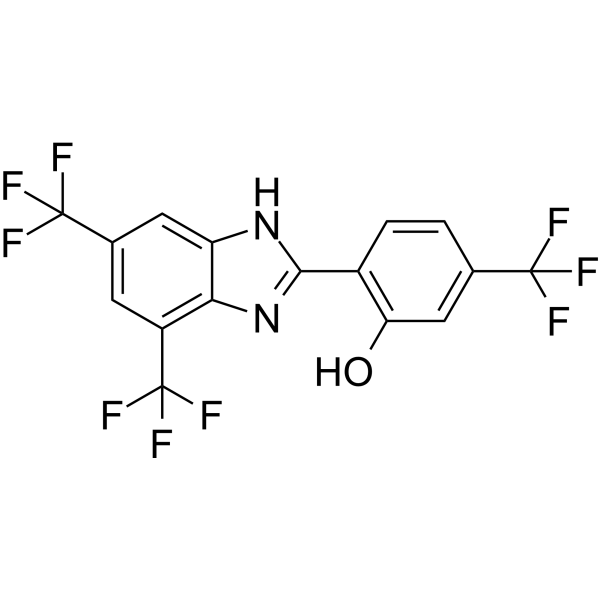
    TNF-α-IN-28 (compound 4ea) is a TNF-α and NF-κB inhibitor with anti-inflammatory activity. TNF-α-IN-28 inhibits TNF-α and NF-κB expression. TNF-α-IN-28 interacts with TNF-α dimer.
    TNF-α-IN-28
  • HY-W971442
    Moniliphenone
    Inhibitor
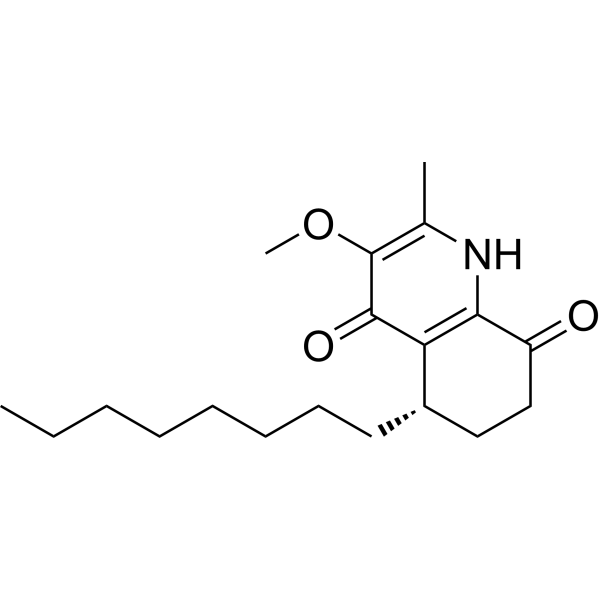
    Moniliphenone (Compounds 5) is a secondary metabolite. Moniliphenone can be isolated from the endophytic fungus Penicillium chrysogenum. Moniliphenone has an anti-inflammatory activity and significantly inhibits TNF-α-stimulated NF-κB activation.
    Moniliphenone
  • HY-119731
    Antidesmone
    Inhibitor
    Antidesmone is a isoquinoline alkaloid that can be isolated from Antidesma membranaceum. Antidesmone can prevent acute lung injury in vivo via inhibiting MAPK and NF-κb activities.
    Antidesmone
  • HY-10227G
    Bortezomib (GMP)
    Inhibitor
    Bortezomib (GMP) (PS-341 (GMP)) is Bortezomib (HY-10227) produced by using GMP guidelines. GMP small molecules works appropriately as an auxiliary reagent for cell therapy manufacture. Bortezomib (PS-341) is a reversible and selective proteasome inhibitor, and potently inhibits 20S proteasome (Ki=0.6 nM) by targeting a threonine residue. Bortezomib disrupts the cell cycle, induces apoptosis, and inhibits NF-κB. Bortezomib is the first proteasome inhibitor anticancer agent. Bortezomib can be used for the study of multiple myeloma (MM). Bortezomib effectively inhibits TREM2 expression in tumor-associated macrophages (TAMs).
    Bortezomib (GMP)
  • HY-N2350R
    Cynaropicrin (Standard)
    Inhibitor
    Cynaropicrin (Standard) is the analytical standard of Cynaropicrin. This product is intended for research and analytical applications. Cynaropicrin is a sesquiterpene lactone which can inhibit tumor necrosis factor (TNF-α) release with IC50s of 8.24 and 3.18 μM for murine and human macrophage cells, respectively. Cynaropicrin also inhibits the increase of cartilage degradation factor (MMP13) and suppresses NF-κB signaling.
    Cynaropicrin (Standard)
Cat. No. Product Name / Synonyms Application Reactivity

NF-κB transcription factors are critical regulators of immunity, stress responses, apoptosis and differentiation. In mammals, there are five members of the transcription factor NF-κB family: RELA (p65), RELB and c-REL, and the precursor proteins NF-κB1 (p105) and NF-κB2 (p100), which are processed into p50 and p52, respectively. NF-κB transcription factors bind as dimers to κB sites in promoters and enhancers of a variety of genes and induce or repress transcription. NF-κB activation occurs via two major signaling pathways: the canonical and the non-canonical NF-κB signaling pathways[1]


The canonical NF-κB pathway is triggered by signals from a large variety of immune receptors, such as TNFR, TLR, and IL-1R, which activate TAK1. TAK1 then activates IκB kinase (IKK) complex, composed of catalytic (IKKα and IKKβ) and regulatory (NEMO) subunits, via phosphorylation of IKKβ. Upon stimulation, the IKK complex, largely through IKKβ, phosphorylates members of the inhibitor of κB (IκB) family, such as IκBα and the IκB-like molecule p105, which sequester NF-κB members in the cytoplasm. IκBα associates with dimers of p50 and members of the REL family (RELA or c-REL), whereas p105 associates with p50 or REL (RELA or c-REL). Upon phosphorylation by IKK, IκBα and p105 are degradated in the proteasome, resulting in the nuclear translocation of canonical NF-κB family members, which bind to specific DNA elements, in the form of various dimeric complexes, including RELA-p50, c-REL-p50, and p50-p50. Atypical, IKK-independent pathways of NF-κB induction also provide mechanisms to integrate parallel signaling pathways to increase NF-κB activity, such as hypoxia, UV and genotoxic stress.


The non-canonical NF-κB pathway is induced by certain TNF superfamily members, such as CD40L, BAFF and lymphotoxin-β (LT-β), which stimulates the recruitment of TRAF2, TRAF3, cIAP1/2 to the receptor complex. Activated cIAP mediates K48 ubiquitylation and proteasomal degradation of TRAF3, resulting in stabilization and accumulation of the NFκB-inducing kinase (NIK). NIK phosphorylates and activates IKKα, which in turn phosphorylates p100, triggering p100 processing, and leading to the generation of p52 and the nuclear translocation of p52 and RELB[2][3].


Reference:

[1]. Oeckinghaus A, et al. The NF-kappaB family of transcription factors and its regulation.Cold Spring Harb Perspect Biol. 2009 Oct;1(4):a000034. 
[2]. Taniguchi K, et al. NF-κB, inflammation, immunity and cancer: coming of age. Nat Rev Immunol. 2018 May;18(5):309-324.
[3]. Perkins ND,et al. Integrating cell-signalling pathways with NF-kappaB and IKK function. Nat Rev Mol Cell Biol. 2007 Jan;8(1):49-62.

Your Search Returned No Results.

Sorry. There is currently no product that acts on isoform together.

Please try each isoform separately.