



Phosphatase
Phosphatases are enzyme that remove a phosphate group from a protein. Protein tyrosine phosphatases (PTPs) comprise a diverse family of transmembrane and cytoplasmic enzymes. PTPs play an important role in regulating the proliferative activity of cells and the integrity of cell-cell and cell-matrix contacts. Protein tyrosine phosphatase 1B (PTP1B) is a non-receptor PTP frequently associated with the endoplasmic reticulum and vesicles subjacent to the plasma membrane. PTP1B as a key negative regulator of leptin receptor pathways has been an attractive therapeutic target for the treatment of type 2 diabetes mellitus and obesity. Four major serine/threonine-specific protein phosphatase catalytic subunits are present in the cytoplasm of animal cells. Three of these enzymes, PP1, PP2A, and PP2B, are members of the same gene family, while PP2C appears to be distinct.The alkaline phosphatases comprise a heterogeneous group of enzymes that are widely distributed in mammalian cells. Acid phosphatase enzymes catalyze the hydrolysis of phosphate monoesters following the general equation.
All Product Categories
-
Phosphatase Inhibitors
(513)
View all products
-
Phosphatase Agonists
(4)
View all products
-
Phosphatase Antagonists
(4)
View all products
-
Phosphatase Activators
(78)
View all products
-
Phosphatase Modulators
(7)
View all products
-
Phosphatase Chemical
(1)
View all products
-
Phosphatase Inducers
(2)
View all products
-
Phosphatase Degraders
(7)
View all products
-
Phosphatase Controls
(3)
View all products
-
Phosphatase Substrates
(7)
View all products
-
Phosphatase Ligands
(11)
View all products
-
Phosphatase Proteins
(66)
View all products
-
Phosphatase Related Products (730)
Related Products (730)

-
Recombinant Proteins (66)
-
Antibodies (40)
-
Related Compound Screening Libraries (1)
-
SHP2/CDK4-IN-1
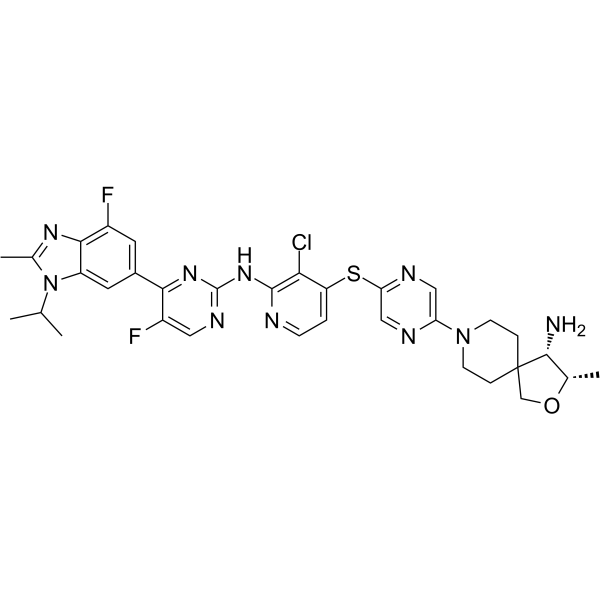 0 ImagesCat. No.: HY-150609CAS No.: 2924036-87-1SHP2/CDK4-IN-1 (compound 10) is an orally active and potent SHP2 and CDK4 dual inhibitor, with IC50 values of 4.3 and 18.2 nM, respectively. SHP2/CDK4-IN-1 effectively induces G0/G1 arrest to prevent the proliferation of TNBC cell lines. SHP2/CDK4-IN-1 shows significant antitumor efficacy in the EMT6 syngeneic mouse model. SHP2/CDK4-IN-1 can be used for triple-negative breast cancer (TNBC) research.
-
Anticancer agent 143
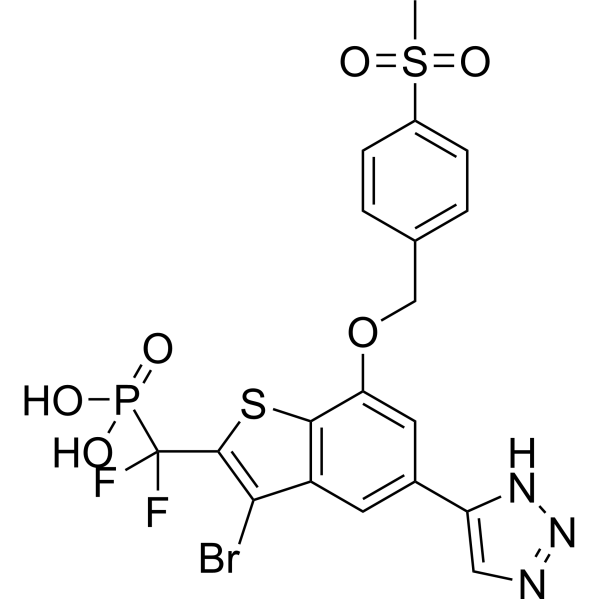 0 ImagesCat. No.: HY-156607CAS No.: 2948339-38-4Anticancer agent 143 (compound 369) is a dual PTPN2/PTP1B inhibitor with IC50 values <2.5 nM. Anticancer agent 143 can be used in cancer research.
-
PFKL-IN-1
 0 ImagesCat. No.: HY-187532PFKL-IN-1 is an orally active PFKL inhibitor, with a human-derived IC50 value of 52.63 nM and a Kd of 0.24 μM. PFKL-IN-1 directly binds to PFKL and inhibits its enzymatic activity. PFKL-IN-1 inhibits glycolysis, induces apoptosis and suppresses cell proliferation in breast cancer cells. PFKL-IN-1 exhibits antitumor efficacy in mouse models and enhances the therapeutic effect of anti-PD-L1 agents. PFKL-IN-1 can be used in breast cancer-related research.
-
Efzimfotase alfa
 0 ImagesCat. No.: HY-P991210CAS No.: 2746354-58-3Synonyms: ALXN-1850Efzimfotase alfa (ALXN-1850) is enzyme replacement therapy agent targeting the deficiency of tissue-nonspecific alkaline phosphatase (TNSALP). Efzimfotase alfa functions by hydrolyzing the substrates of TNSALP, reducing the concentrations of substrates such as inorganic pyrophosphate (PPi) and pyridoxal 5′-phosphate (PLP). Efzimfotase alfa is promising for research of hypophosphatasia (HPP).
-
DDO-3733
 0 ImagesCat. No.: HY-169013CAS No.: 2923531-63-7DDO-3733 is a TRP-independent Protein Phosphatase 5 (PP5) allosteric activator that promotes dephosphorylation of downstream substrates.
-
TP1L
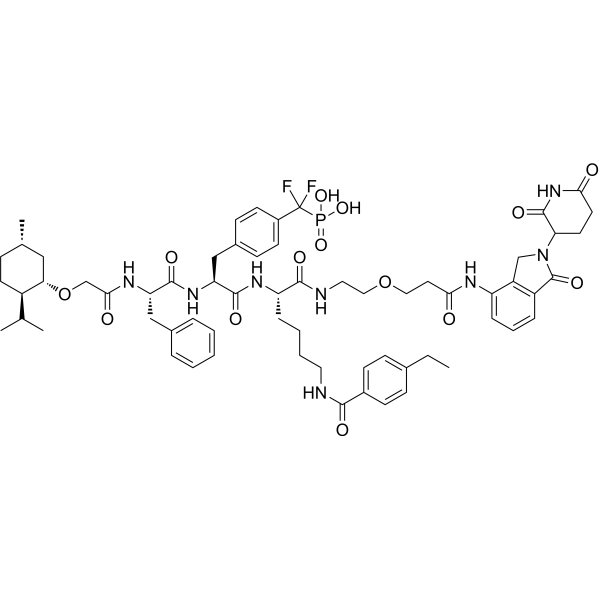 0 ImagesCat. No.: HY-160151TP1L is a potent and selective T-cell protein tyrosine phosphatase (TC-PTP) PROTAC degrader, with a DC50 value of 35.8 nM. TP1L elevates the phosphorylation level of TC-PTP substrates including pSTAT1 and pJAK1. TP1L selectively enhances IFN-γ signaling and increases MHC-I expression. TP1L activates TCR signaling through increases phosphorylation of LCK. TP1L enhances CAR-T cell mediated tumor killing efficacy through activation of the CAR-T cells. TP1L can be used for the study of cancer. (Pink: TC-PTP ligand: (HY-138964), Blue: E3 ligase CRBN Ligand (HY-A0003), Black: Linker: (HY-140002)).
-
K103
 0 ImagesCat. No.: HY-117087CAS No.: 1071544-43-8K103 is an inhibitor discovered from the screen that is an analog of the serotonin antagonist benzazocine. K103 exhibited inhibition of SHIP homologues, labelling it a pan-SHIP1/2 inhibitor, but the molecule had no effect on another 5' inositol phosphatase, OCRL. In line with the "two PIPs hypothesis", the molecule exhibited significant anti-tumour effects against a variety of cell lines, particularly breast cancer cells. Additional studies with K103 revealed that inhibition of SHIP1/2 in multiple myeloma cells resulted in G2/M cell cycle arrest followed by extensive apoptosis via activation of the caspase cascade. K103 fits the commonly used small molecule agent property profile, but while this work was being conducted, it was discovered that K103 caused psychoactive effects in mice, which limited the utility of the molecule in vivo. Therefore, certain synthetic studies were conducted on this tryptamine to identify the features that needed to be present in the molecule to maintain pan-SHIP1/2 inhibition in order to design an inhibitor with favourable pharmacodynamic properties and an improved side effect profile.
-
CH-123
 0 ImagesCat. No.: HY-182616CAS No.: 64405-40-9CH-123 is an orally active lipid-lowering agent. CH-123 inhibits the elevated activities of β-glucuronidase, β-galactosidase, N-acetyl-β-glucosaminidase and acid phosphatase in aortic smooth muscle cells and hepatocytes. CH-123 reduces serum total lipid and cholesterol levels, as well as intracellular cholesterol content in aortic smooth muscle cells. CH-123 significantly inhibits lysosomal enzyme activity. CH-123 can be used in the research of atherosclerosis.
-
ALP-IN-1
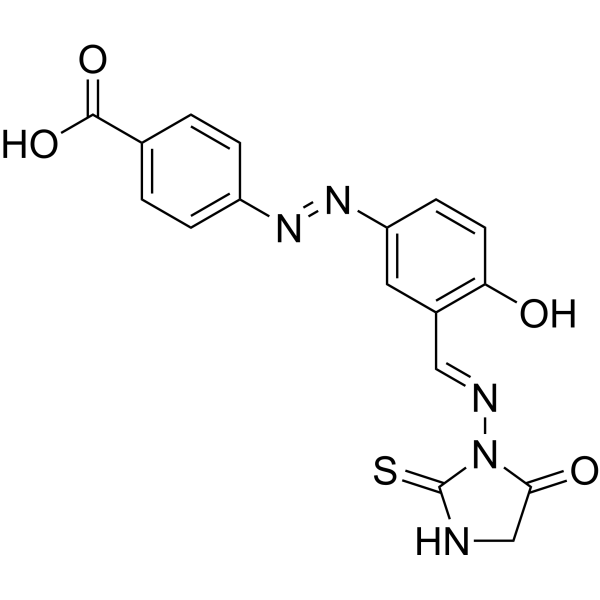 0 ImagesCat. No.: HY-163408ALP-IN-1 (Compound 7e) is an alkaline phosphatase (ALP) inhibitor (IC50 = 0.308 µM).
-
Anti-PTPRC/CD45 Antibody
 0 ImagesCat. No.: HY-P990495Anti-PTPRC/CD45 Antibody is a CHO-expressed human antibody that targets PTPRC/CD45. Anti-PTPRC/CD45 Antibody has a huIgG1 heavy chain and huκ light chain, with a predicted molecular weight (MW) of 150 kDa. The isotype control for Anti-PTPRC/CD45 Antibody can be referenced as Human IgG1 kappa, Isotype Control (HY-P99001).
-
Cyclosporin A-Derivative 3
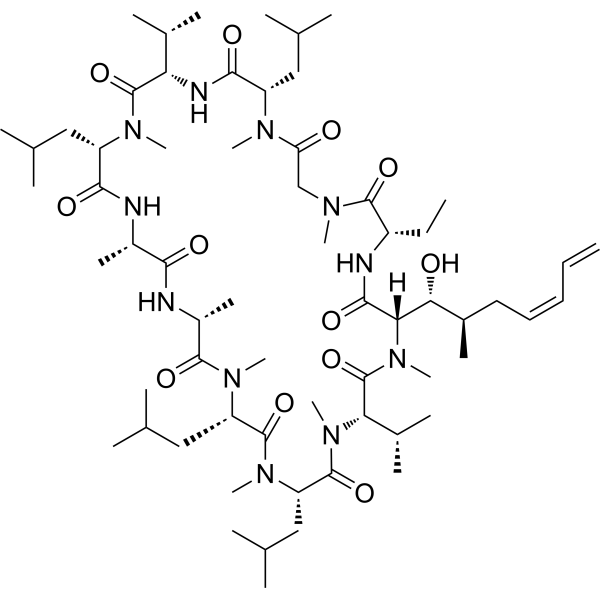 0 ImagesCat. No.: HY-P3338CAS No.: 121584-34-7

-
(E,E)-RAMB4
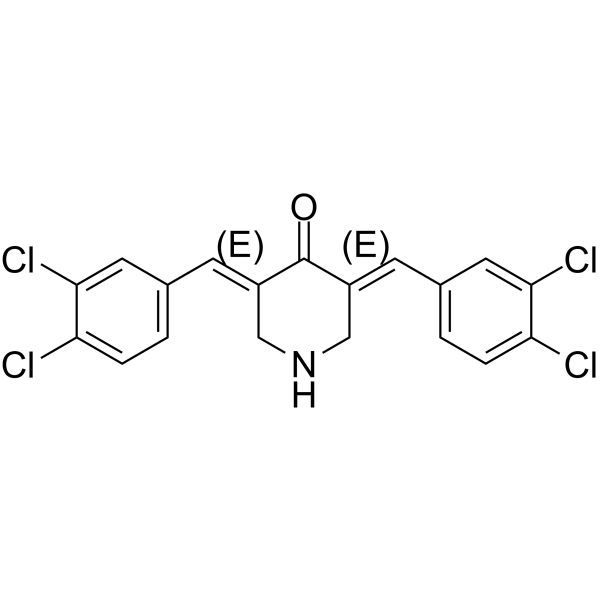 0 ImagesCat. No.: HY-128978CAS No.: 919091-61-5(E,E)-RAMB4 is a potent and selective potent protein tyrosine phosphatase-1B (PTP1B) inhibitor extracted from patent CN103626692A, example 1.
-
α,δ-NAG
 0 ImagesCat. No.: HY-178978CAS No.: 3051899-13-6α,δ-NAG is an orally active glutaminase-resistant less-hydrolyzable L-Glutamine derivative. α,δ-NAG is a G protein-coupled receptor (GPCR) allosteric modulator. α,δ-NAG suppresses neutrophilic airway inflammation by activating the GPCR/ERK/MKP-1 pathway. α,δ-NAG can be used for the researches of inflammation and immunology, such as asthma.
-
AS1938909
 0 ImagesCat. No.: HY-18284CAS No.: 1243155-40-9AS1938909 is a compound that inhibits SHIP2 activity. It can selectively inhibit SHIP2, increase Akt phosphorylation, and regulate glucose metabolism. Its effect is related to upregulating GLUT1 gene expression.
-
Anti-ASGR1 Antibody
 0 ImagesCat. No.: HY-P991872
-
NAT6-297775
 0 ImagesCat. No.: HY-180326CAS No.: 1348433-02-2NAT6-297775 (Compound 29) is a protein tyrosine phosphatase (PTP) inhibitor targeting non-receptor PTP SHP-2 with an IC50 of 2.5 μM. NAT6-297775 can inhibit the RAS/MAP kinase signaling pathway. NAT6-297775 can be used for the research of cancer, such as leukemia.
-
PTP1B-IN-16
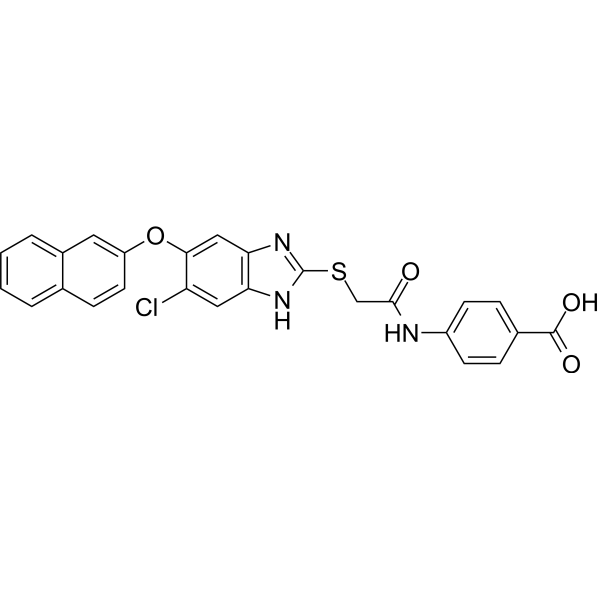 0 ImagesCat. No.: HY-144713CAS No.: 2848581-86-0PTP1B-IN-16 (Compound 46), a potential selective benzimidazole derivative, acts as a protein tyrosine phosphatase 1B (PTP1B) inhibitor with a Ki of 12.6 μM. PTP1B-IN-16 can be used for the research of type 2 diabetes.
-
PTPN2-IN-3
 0 ImagesCat. No.: HY-181255CAS No.: 3112461-52-3PTPN2-IN-3 (example 52) is a PTPN2 inhibitor that can be used in tumor research.
-
Shrimp Alkaline Phosphatase
 0 ImagesCat. No.: HY-E70382Shrimp Alkaline Phosphatase (SAP), a nucleotide phosphatase, can catalyze the removal of 5′ phosphates from nucleic acid templates. Shrimp Alkaline Phosphatase is readily inactivated in the absence of chelators and is widely used phosphatases in molecular cloning.




