



Phosphatase Degrader
-
PROTAC PTPN2 degrader-1
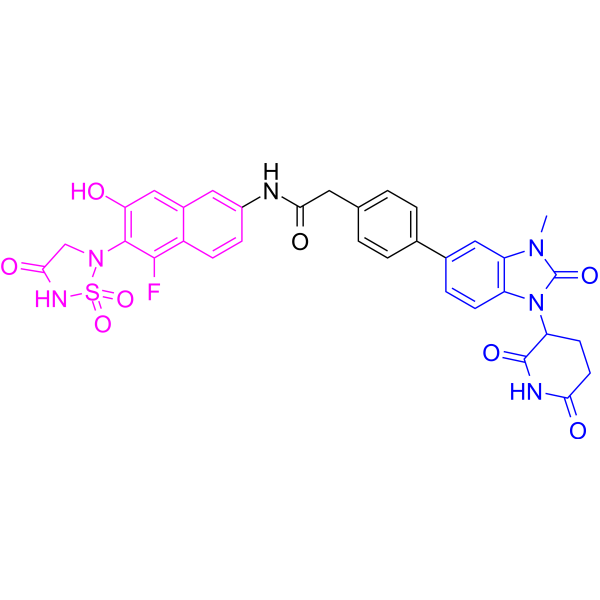 0 ImagesCat. No.: HY-148691CAS No.: 2655638-07-4
PROTAC PTPN2 degrader-1 is a PROTAC degrader targeting non-receptor protein tyrosine phosphatase 2 (PTPN2), with a DC50 of 18 nM in 293T cells. It exhibits an IC50 of 22 nM against PTPN2. Through highly selective degradation and inhibition of PTPN2 phosphatase, PROTAC PTPN2 degrader-1 relieves the negative regulation of the IFNγ pathway, upregulates interferon signaling, activates effector T cells, and enhances anti-tumor immunity. PROTAC PTPN2 degrader-1 can be used in melanoma-related research.

-
PROTAC Cdc25 degrader-1
 0 ImagesCat. No.: HY-181011
PROTAC Cdc25 degrader-1 (Compound D3) is an efficient Cdc25 PROTAC degrader. Its DC50 values for Cdc25A, Cdc25B, and Cdc25C are 0.97, 2.02, and 4.67 μM respectively. PROTAC Cdc25 degrader-1 induces cell cycle arrest and apoptosis in cancer cells and inhibits cell migration ability. PROTAC Cdc25 degrader-1 significantly increases the ROS level. PROTAC Cdc25 degrader-1 can be used for the study of colorectal adenocarcinoma.
-
TP1L
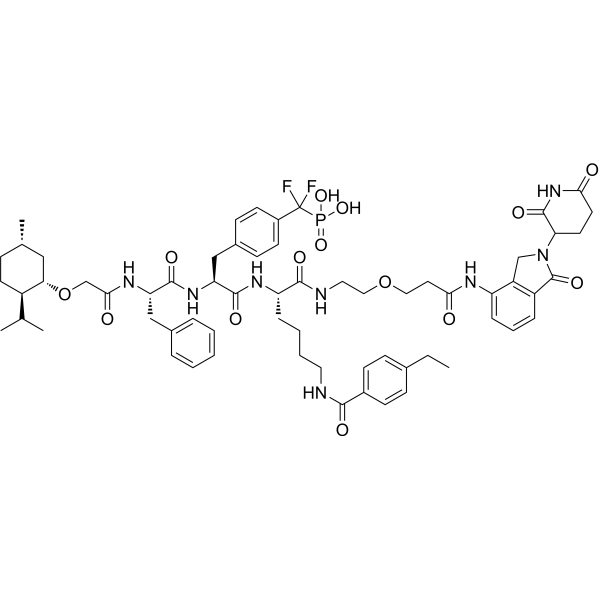 0 ImagesCat. No.: HY-160151
TP1L is a potent and selective T-cell protein tyrosine phosphatase (TC-PTP) PROTAC degrader, with a DC50 value of 35.8 nM. TP1L elevates the phosphorylation level of TC-PTP substrates including pSTAT1 and pJAK1. TP1L selectively enhances IFN-γ signaling and increases MHC-I expression. TP1L activates TCR signaling through increases phosphorylation of LCK. TP1L enhances CAR-T cell mediated tumor killing efficacy through activation of the CAR-T cells. TP1L can be used for the study of cancer. (Pink: TC-PTP ligand: (HY-138964), Blue: E3 ligase CRBN Ligand (HY-A0003), Black: Linker: (HY-140002)).

-
PD-305
 0 ImagesCat. No.: HY-183937A
PD-305 is a selective PTPN2 PROTAC degrader, with DC50 values of 0.25 nM and 5.11 nM against PTPN2 and PTPN1, respectively. PD-305 enhances IFN-γ-induced STAT1 phosphorylation, inhibits the proliferation of IFN-γ-stimulated colorectal cancer cells, promotes CD8+ T cell activation, enhances the tumor-killing activity of T cells, and suppresses tumor growth in mouse models. PD-305 can be used for the research of colorectal cancer.
-
EC21
 0 ImagesCat. No.: HY-184678
EC21 is a PROTAC degrader that binds to CDK6, thereby targeting EYA2 for degradation. EC21 enhances the interaction between CDK6 and EYA2, thereby driving ubiquitin-proteasome-dependent degradation of EYA2. EC21 reduces EYA2 protein levels in tumor tissues without obvious toxicity. EC21 disrupts the DNA damage repair pathway and inhibits cancer cell proliferation. EC21 can be used in breast cancer-related research.



