



Antibiotic
Antibiotics are a class of secondary metabolites produced from microorganisms, animals or plants. Some of them exhibit anti-bacterial, anti-fungal, anthelmintic, anti-tumor or immunosuppressive activities with a wealth of structural classes such as β-lactams, macrolide and polyether. As major sources of antibiotics, streptomycetes, penicillium and marine organisms produce a wide variety of commercially important polyketide compounds including the well-known macrolide, polyene and polyether antibiotics with wide range of activities. Antibiotics such as penicillin, cephalosporin, streptomycin, and tetracycline can be used in the treatment of human and veterinary diseases. However, antibiotic resistance is also a growing threat to global public health.
Antibiotic Isoform Specific Products
-
Antibiotic
(2782)
View all products
-
Aminoglycoside
(46)
View all products
-
Glycopeptide
(19)
View all products
-
Lipopeptide
(7)
View all products
-
Macrolide
(76)
View all products
-
Oxazolidinone
(16)
View all products
-
Quinolone
(101)
View all products
-
Tetracycline
(42)
View all products
-
β-lactam
(199)
View all products
All Product Categories
-
Antibiotic Related Products (3548)
Related Products (3548)

-
Related Compound Screening Libraries (1)
-
Antibiotic Isoform Comparison
-
Cefonicid monosodium
 0 ImagesCat. No.: HY-B1300BCAS No.: 71420-79-6Cefonicid monosodium is a long-acting cephalosporin antibiotic. Cefonicid monosodium also acts as a noncompetitive class I β-lactamase inhibitor with a Ki value of 0.8 μM. Cefonicid monosodium exhibits broad-spectrum antimicrobial activity and is effective against a variety of Gram-positive and Gram-negative bacteria. Cefonicid monosodium can be used for research on infections.
-
3-O-Demethylmonensin B
 0 ImagesCat. No.: HY-N14712CAS No.: 109345-56-43-O-Demethylmonensin B is a polyether antibiotic found in Streptomyces cinnamonensis LO-63.

-
Endophenazine C
 0 ImagesCat. No.: HY-N14846CAS No.: 479415-43-5Endophenazine C is a phenazine antibiotic.
-
Pluracidomycin B
 0 ImagesCat. No.: HY-N14693CAS No.: 82138-65-6Pluracidomycin B is a carbapenem antibiotic. Pluracidomycin B has anti-Gram-positive bacteria and Gram-negative bacteria activity, and has the effect of inhibiting β-lactamase.
-
Erythromycin A enol ether (Standard)
 0 ImagesCat. No.: HY-122207RCAS No.: 33396-29-1Erythromycin A enol ether (Standard) is the analytical standard of Erythromycin A enol ether. This product is intended for research and analytical applications. Erythromycin A enol ether is an acidic degradation product of Erythromycin A (macrolide antibiotic) and has no antibacterial effect.
-
Gentamicin X2
 0 ImagesCat. No.: HY-N14514CAS No.: 36889-17-5Gentamicin X2 is a minor aminoglycoside antibiotic component in the gentamicin complex.
-
Benzyl isothiocyanate (Standard)
 0 ImagesBenzyl isothiocyanate (Standard) is the analytical standard of Benzyl isothiocyanate. This product is intended for research and analytical applications. Benzyl isothiocyanate is an orally available isothiocyanate with bactericidal, anticancer, antiangiogenic and anthelmintic activities. Benzyl isothiocyanate exerts anticancer functions by regulating multiple signaling pathways, including apoptosis, cell proliferation, cell cycle arrest, metastasis, angiogenesis, and autophagy. In addition, Benzyl isothiocyanate can enhance muscle insulin sensitivity to improve obesity-induced hyperglycemia[1][2][3][4][5][6][7][8][9].
-
Demethylolivomycin A
 0 ImagesCat. No.: HY-N14720CAS No.: 86917-61-5Demethylolivomycin A is an antitumor antibiotic. Demethylolivomycin A has anti-Gram-positive bacteria and anti-leukemia P388 activity.
-
Carbonic anhydrase inhibitor 28
 0 ImagesCat. No.: HY-159960Carbonic anhydrase inhibitor 28 (Compound 11) is a Pseudomonas aeruginosa carbonic anhydrase inhibitor. Carbonic anhydrase inhibitor 28 exhibits antimicrobial activity, with a MIC of 0.5 μg/mL and a MBC of 1 μg/mL against P. aeruginosa. Carbonic anhydrase inhibitor 28 can be used in anti-infection research.
-
(R)-Alalevonadifloxacin mesylate
 0 ImagesCat. No.: HY-17626CCAS No.: 2892364-59-7Synonyms: (R)-WCK-2349(R)-Alalevonadifloxacin mesylate is an isomer of Alalevonadifloxacin mesylate (HY-17626B). Alalevonadifloxacin mesylate is a oraly active anti-methicillin-resistant Staphylococcus aureus (MRSA) antibiotic.
-
Salinomycin (Standard)
 0 ImagesCat. No.: HY-15597RCAS No.: 53003-10-4Synonyms: Procoxacin (Standard)Salinomycin (Standard) is the analytical standard of Salinomycin. This product is intended for research and analytical applications. Salinomycin (Procoxacin), a polyether potassium ionophore antibiotic, selectively inhibits the growth of gram-positive bacteria. Salinomycin is a potent inhibitor of Wnt/β-catenin signaling, blocks Wnt-induced LRP6 phosphorylation. Salinomycin shows selective activity against human cancer stem cells[1][2][3].
-
7-Hydroxytropolone
 0 ImagesCat. No.: HY-W983893CAS No.: 34777-04-3Synonyms: 3-Hydroxytropolone7-Hydroxytropolone (3-Hydroxytropolone) is an antibiotic with anti-Gram-positive bacteria, negative bacteria, yeast and fungi activity, and has the effect of inhibiting 2''-O-Adenylyltransferase.
-
Ceforanide (lysine)
 0 ImagesCat. No.: HY-129804CAS No.: 63767-79-3Ceforanide lysine is a second generation cephalosporin administered intravenously or intramuscularly. Ceforanide lysine has a spectrum of in vitro antibacterial activity.
-
10-Decarbomethoxyaclacinomycin A
 0 ImagesCat. No.: HY-N14782CAS No.: 76264-91-010-Decarbomethoxyaclacinomycin A is an anthracycline antibiotic can be produced by Streptomyces galilaeus MA144-Mlt mutant strain KE303. 10-Decarbomethoxyaclacinomycin A has antibacterial activities.
-
RPR 102341
 0 ImagesCat. No.: HY-117566CAS No.: 149105-53-3RPR 102341 is structurally similar to the fluoroquinolone class of antibiotics.
-
Sannamycin L
 0 ImagesCat. No.: HY-N14338CAS No.: 83946-32-1Sannamycin L is an aminoglycoside antibiotic. Sannamycin L has weak antibacterial activity against Gram-positive bacteria and Gram-negative bacteria.
-
Chloroquine dihydrochloride (Standard)
 0 ImagesChloroquine (dihydrochloride) (Standard) is the analytical standard of Chloroquine (dihydrochloride). This product is intended for research and analytical applications. Chloroquine dihydrochloride is an antimalarial and anti-inflammatory agent widely used to treat malaria and rheumatoid arthritis. Chloroquine dihydrochloride is an autophagy and toll-like receptors (TLRs) inhibitor. Chloroquine dihydrochloride is highly effective in the control of SARS-CoV-2 (COVID-19) infection in vitro (EC50=1.13 μM)[1][2][3][4].
-
2-Hydroxy-5-iminoazacyclopent-3-ene
 0 ImagesCat. No.: HY-N14786CAS No.: 71765-74-72-Hydroxy-5-iminoazacyclopent-3-ene is a pyrroline antibiotic. 2-Hydroxy-5-iminoazacyclopent-3-ene has weak anti-Gram-positive and negative bacteria activity.
-
Cefotaxime-d3 sodium
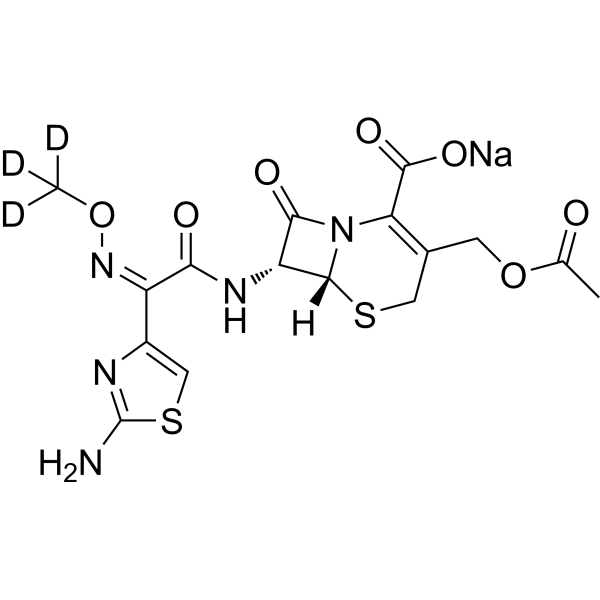 0 ImagesCat. No.: HY-A0088SSynonyms: Cefotaxim-d3 sodium; HR-756-d3 sodiumCefotaxime-d3 (sodium) is the deuterium labeled Cefotaxime (sodium salt). Cefotaxime sodium salt, a β-lactamase stable cephalosporin and a third-generation cephalosporin antibiotic, possesses broad-spectrum antibiotic activity against numerous Gram-positive and Gram-negative bacteria.



