



Drug Derivative
Drug derivative
Drug derivatives are derived from parent compounds. They replace or add atoms and groups through chemical reactions to optimize the various properties of the parent compound and reduce side effects. The application of drug derivatives provides a diverse compound library for drug research and development and accelerates the discovery of new drugs. For example, urea derivatives Glibenclamide can prolong the blood sugar-lowering effect of anti-diabetic drugs.
References:
- [1]. Vardanyan RS, et al. Fentanyl-related compounds and derivatives: current status and future prospects for pharmaceutical applications. Future Med Chem. 2014 Mar;6(4):385-412.x
- [2]. Ghosh AK, et al. Urea Derivatives in Modern Drug Discovery and Medicinal Chemistry. J Med Chem. 2020 Mar 26;63(6):2751-2788.x
All Product Categories
-
Drug Derivative Inhibitors
(12)
View all products
-
Drug Derivative Agonist
(1)
View all products
-
Drug Derivative Activator
(1)
View all products
-
Drug Derivative Chemical
(1)
View all products
-
Drug Derivative Inducer
(1)
View all products
-
Drug Derivative Controls
(38)
View all products
-
Drug Derivative Substrate
(1)
View all products
-
Drug Derivative Related Products (3999)
Related Products (3999)

-
Zinquin ethyl ester
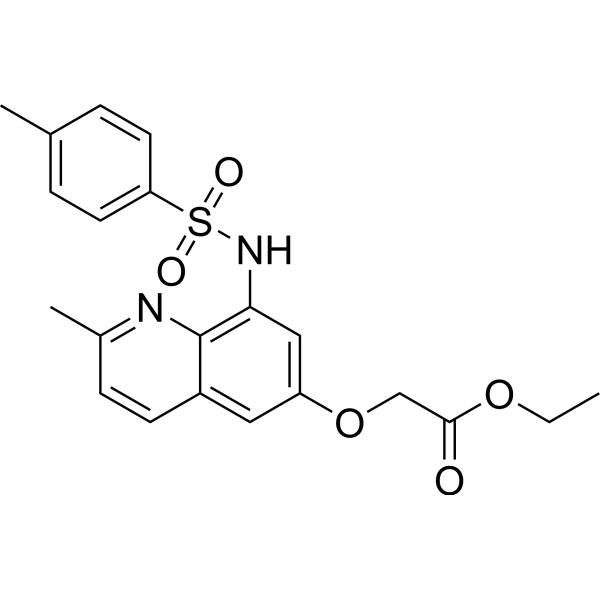 0 ImagesZinquin ethyl ester is a cell-permeable and lipophilic fluorescent derivative of Zinquin (HY-D0982). Zinquin ethyl ester reacts with protein-bound Zn2+ in cells and forms fluorescent ternary adducts. Zinquin ethyl ester undergoes hydrolysis by intracellular esterases impeding its efflux across the plasma membrane (Ex/Em = 370/470 nm).
-
(1S,9R)-Exatecan mesylate
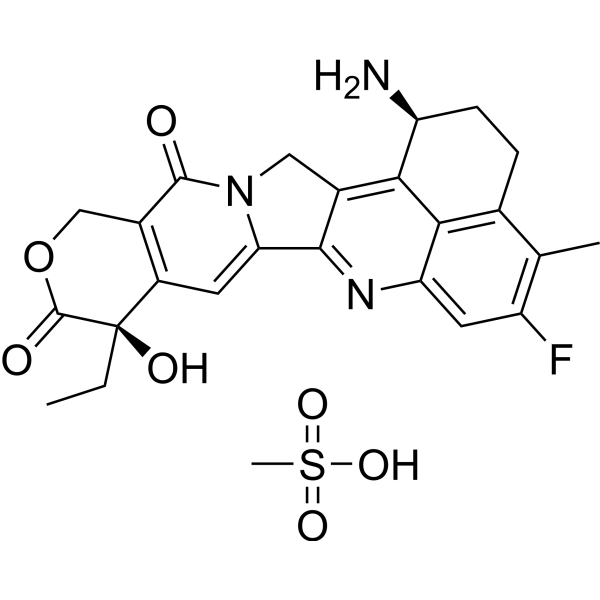 0 ImagesSynonyms: (1S,9R)-DX8951f(1S,9R)-Exatecan mesylate ((1S,9R)-DX8951f) is a non-prodrug camptothecin derivative and a topoisomerase I inhibitor (IC50=0.975 μg/mL in mice and 0.82 μg/mL in humans). (1S,9R)-Exatecan mesylate blocks enzyme activity and induces apoptosis by stabilizing the enzyme-DNA cleavable complex. (1S,9R)-Exatecan mesylate not only effectively inhibits the proliferation of various malignant tumor cells and tumor growth, but also circumvents P-glycoprotein-mediated multidrug resistance. (1S,9R)-Exatecan mesylate is widely used in preclinical studies of various cancers such as pancreatic cancer, lung cancer, breast cancer, and leukemia.
The chiral isomer of (1S,9R)-Exatecan mesylate is (1R,9R)-Exatecan mesylate (HY-13631J).
-
Dihydromunduletone
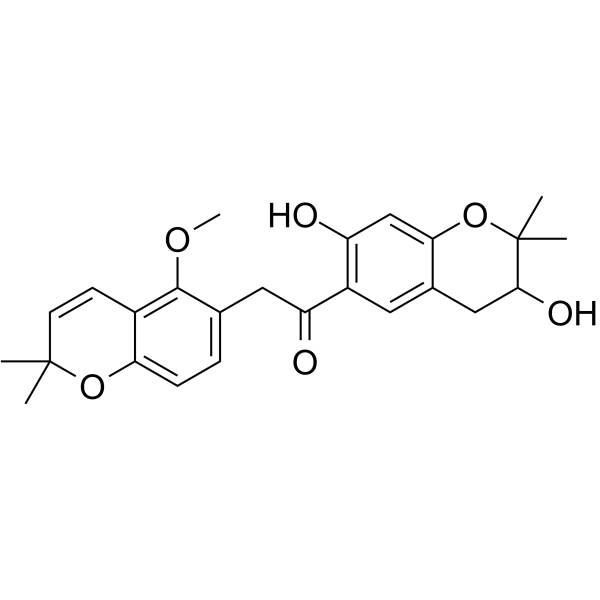 0 ImagesDihydromunduletone (DHM) is a rotenoid derivative and a selective, potent adhesion G protein-coupled receptor (aGPCR) (GPR56 and GPR114/ADGRG5) antagonist with an IC 50 of 20.9 μM for GPR56, but not inhibit GPR110 or class A GPCRs.
-
5-A-RU-PABC-Val-Cit-Fmoc
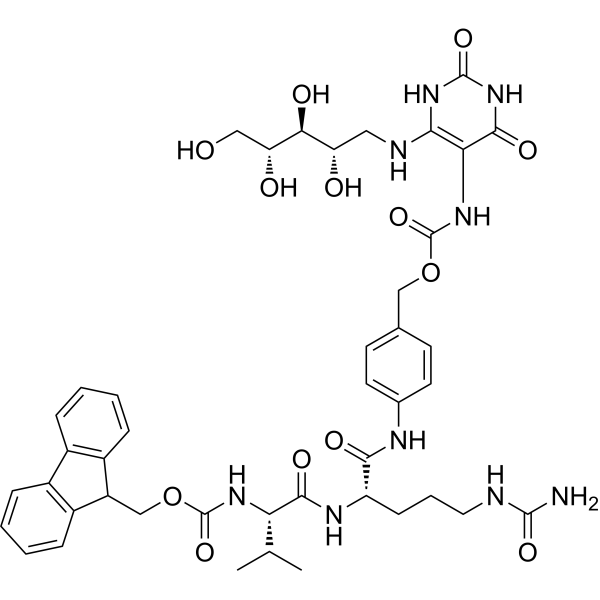 0 Images5-A-RU-PABC-Val-Cit-Fmoc is the proagent of 5-A-RU. 5-A-RU, a precursor of bacterial Riboflavin, is a mucosal-associated invariant T (MAIT) cells activator. 5-A-RU forms potent MAIT-activating antigens via non-enzymatic reactions with small molecules, such as glyoxal and methylglyoxal, which are derived from other metabolic pathways.
-
α,α-Trehalose 6-phosphate potassium
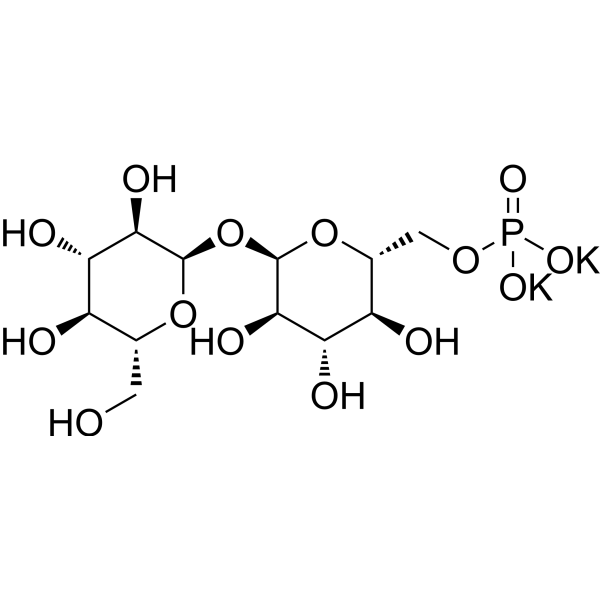 0 ImagesSynonyms: Tre6P potassiumα,α-Trehalose 6-phosphate (Tre6P) potassium is a glucose analogue with potent anti-hyperglcaemic activity. α,α-Trehalose 6-phosphate potassium is rapidly converted to the end product, α,α′-trehalose, through the action of α,α-Trehalose 6-phosphate phosphatase (T6PP).

-
1-Oleoyl-2-acetyl-sn-glycerol
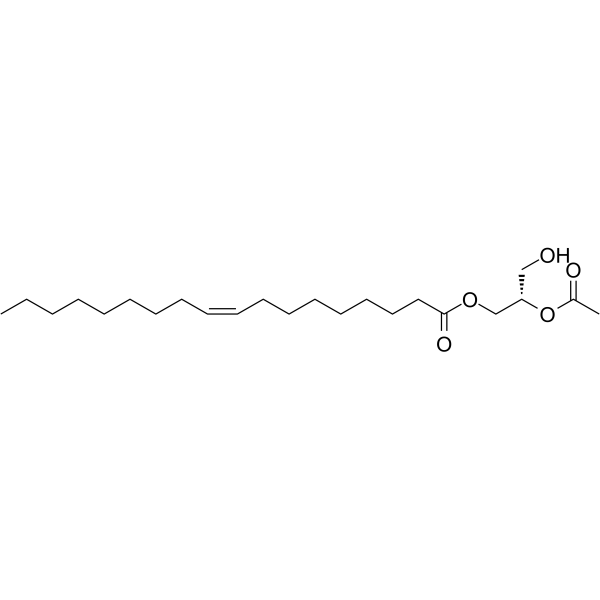 0 Images1-Oleoyl-2-acetyl-sn-glycerol is a cell-permeable analog of diacylglycerol (DAG) and can activate Protein kinase C (PKC). 1-Oleoyl-2-acetyl-sn-glycerol can activate the TRPC channels-mediated specific Ca2+ influx. 1-Oleoyl-2-acetyl-sn-glycerol can stimulate superoxide-generation from human neutrophils. 1-Oleoyl-2-acetyl-sn-glycerol stimulates the formation of phosphatidylinositol 4-phosphate in intact human platelets. 1-Oleoyl-2-acetyl-sn-glycerol can stimulate ascites tumor cell proliferation.
-
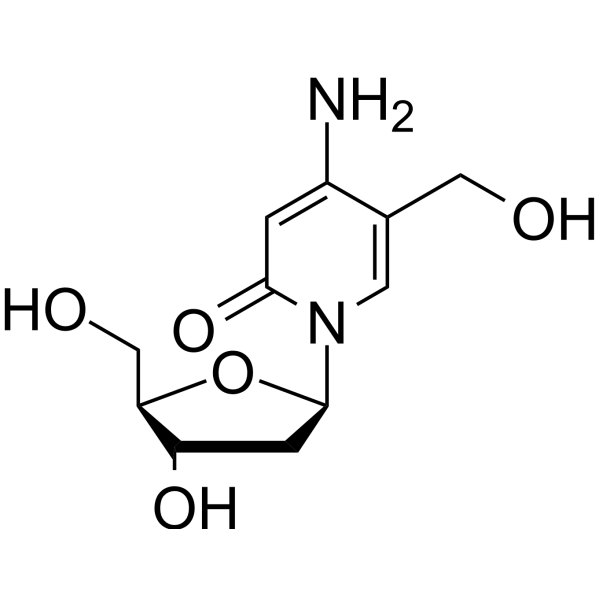
Uridine triacetate
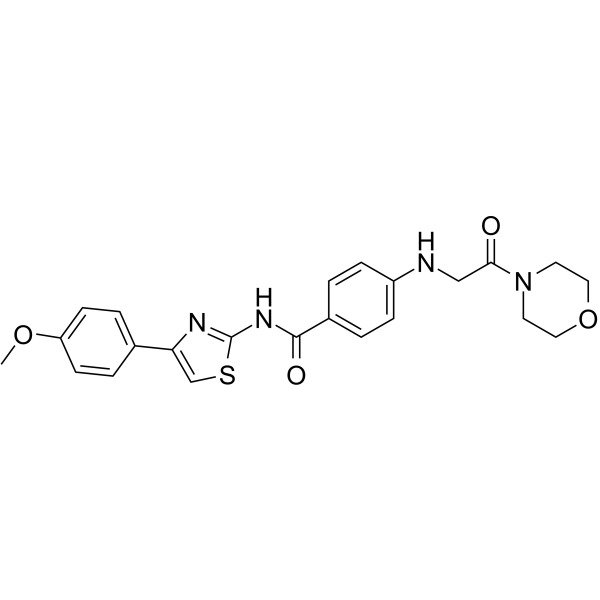
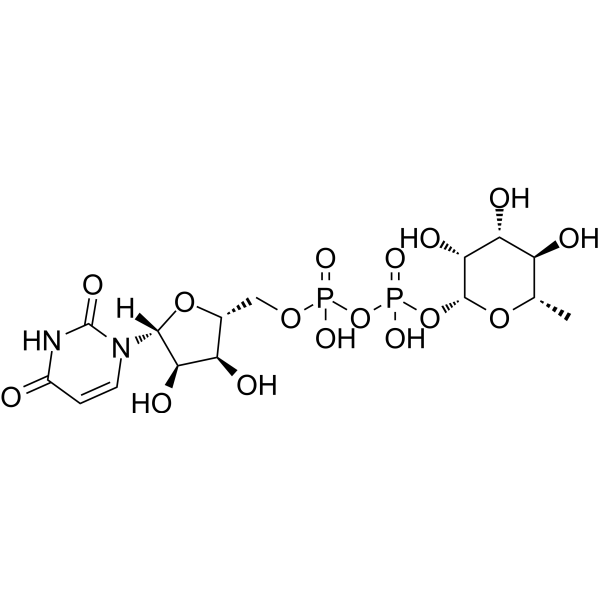
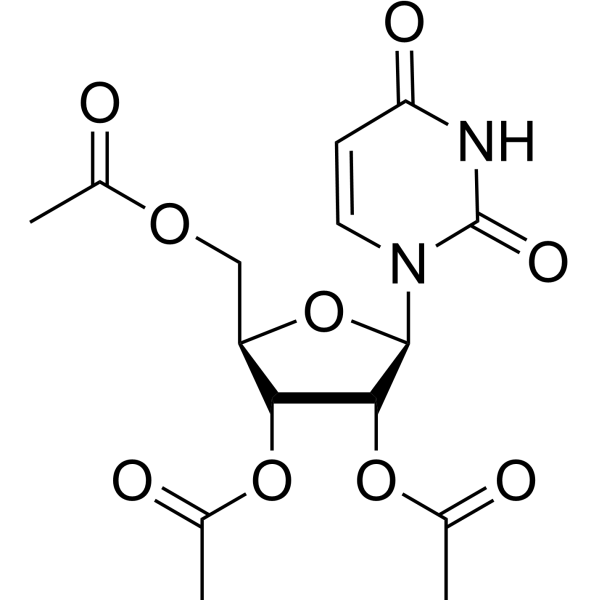 0 ImagesUridine triacetate (Tri-O-acetyl uridine) is an orally active proagent of Uridine (HY-B1449). Uridine triacetate is quickly absorbed in the gut, and is rapidly deacetylated in the circulation to yield free uridine. Uridine triacetate is used for the research of 5-fluorouracil (5-FU) and capecitabine toxicity, or early-onset cardiac or central nervous system (CNS).
-
Neotame
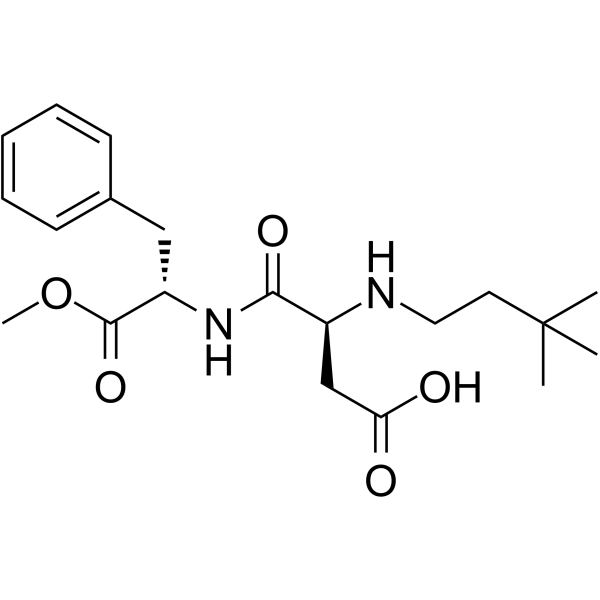 0 ImagesNeotame is a derivative of Aspartame (HY-B0361) and is a flavor enhancer and low-caloric, non-nutritive, high-intensity artificial sweetener that is 7000-13,000 times sweeter than sugar. Neotame causes intestinal epithelial cell death at high concentrations. Neotame induces Apoptosis of Caco-2 cells.
-
N-Benzylaniline
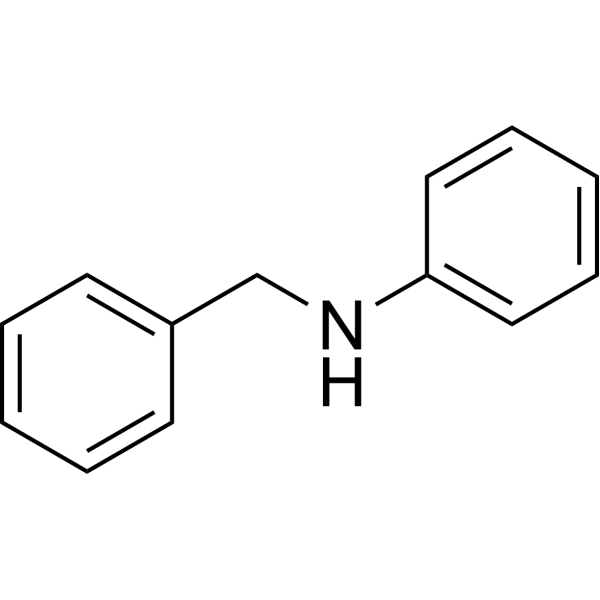 0 ImagesSynonyms: N-Phenylbenzylamine; BenzylanilineN-Benzylaniline (N-Phenylbenzylamine) is an N-alkylated derivative of aniline.

-
Guaiacylglycerol-beta-guaiacyl ether
 0 ImagesGuaiacylglycerol-beta-guaiacyl ether is a phenolic β-O-4 type lignin model compound that mimics the most common β-O-4 aryl ether linkages in plant lignin. Guaiacylglycerol-beta-guaiacyl ether can be degraded by Bacillus amyloliquefaciens CotA. Guaiacylglycerol-beta-guaiacyl ether is a commonly used model compound for studying the β-O-4 inter-unit linkage, the most abundant substructure in lignin, and can be applied to investigate the reaction pathway of vanillin preparation via alkaline nitrobenzene oxidation.
-
D-Mannosamine hydrochloride
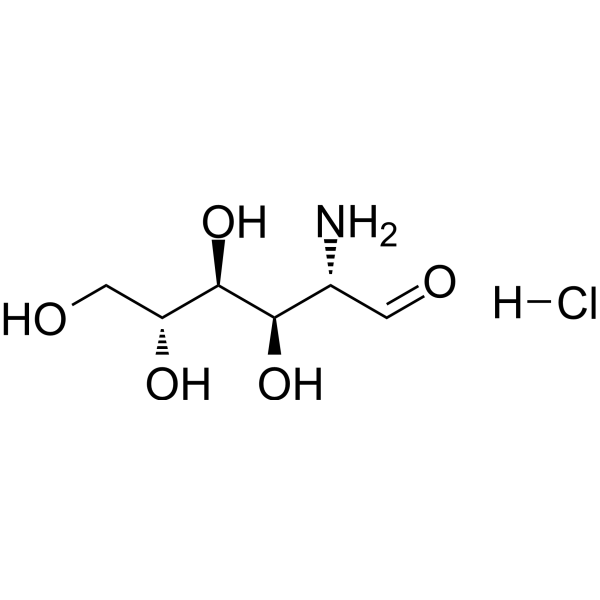 0 ImagesSynonyms: (2S,3R,4S,5R)-2-Amino-3,4,5,6-tetrahydroxyhexanal hydrochlorideD-Mannosamine ((2S,3R,4S,5R)-2-Amino-3,4,5,6-tetrahydroxyhexanal) hydrochloride is a six-carbon amino sugar and an amino derivative of D-mannose. D-Mannosamine hydrochloride can block mannose receptors.
-
Zotarolimus
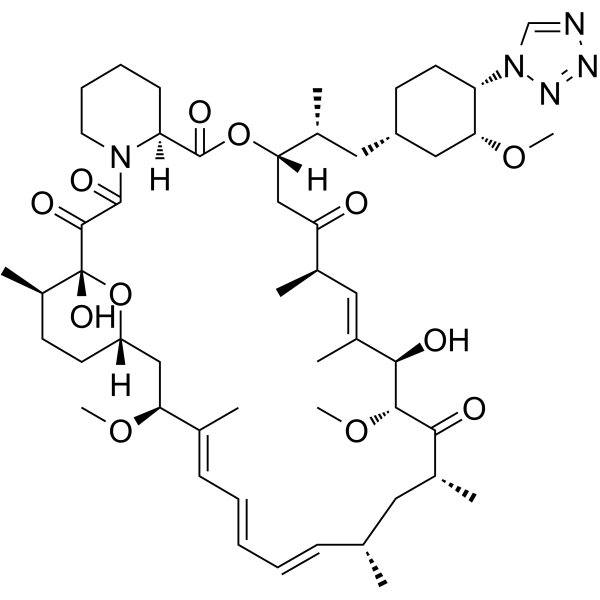 0 ImagesSynonyms: ABT-578; A 179578
-
3-O-Methyldopa
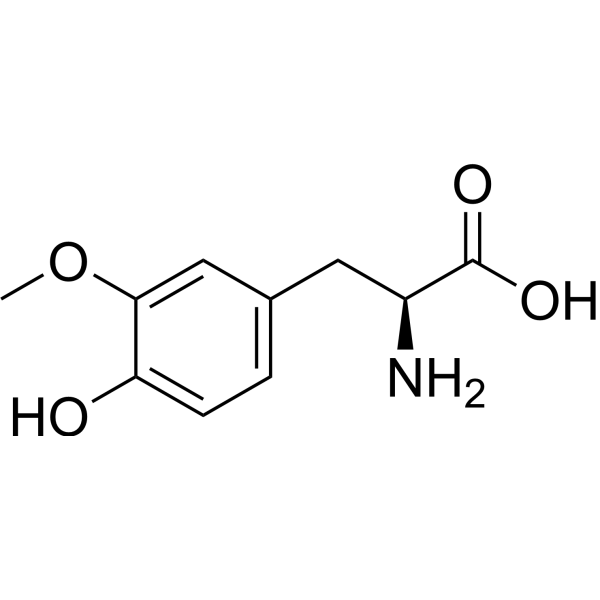 0 ImagesSynonyms: 3-Methoxy-L-tyrosine; 3-O-Methyl-L-DOPA3-O-Methyldopa (3-Methoxy-L-tyrosine) is a metabolite of L-DOPA (HY-N0304) that can cross the blood-brain barrier (BBB). 3-O-Methyldopa inhibits the astrocyte-mediated protective effect of L-DOPA (HY-N0304) on dopaminergic neurons. In addition, 3-O-Methyldopa has certain antidepressant and neuroprotective activities. 3-O-Methyldopa can be used in the research of nervous system diseases such as depression and Parkinson's disease.
-
1,2-Dioleoyl-sn-glycerol
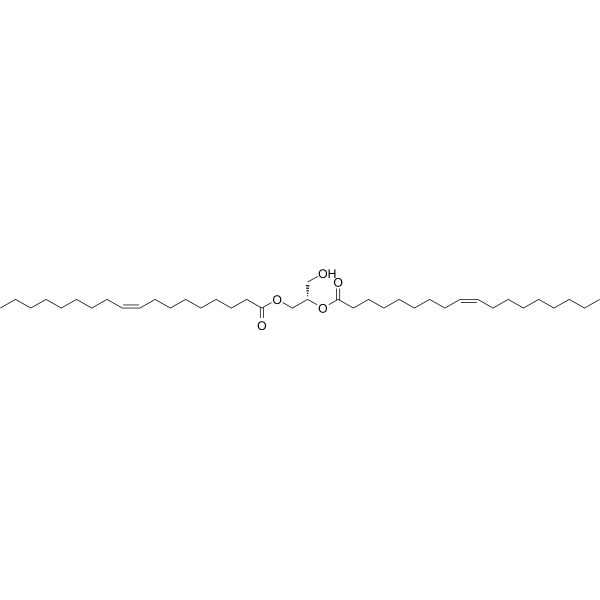 0 ImagesSynonyms: sn-1,2-Dioleoylglycerol; 18:1/18:1-DG1,2-Dioleoyl-sn-glycerol (sn-1,2-Dioleoylglycerol; 18:1/18:1-DG) is a glycerolipid located on the plasma membrane. 1,2-Dioleoyl-sn-glycerol consists of two fatty acid chains covalently linked to a single glycerol molecule by means of an ester bond. 1,2-Dioleoyl-sn-glycerol is an analog of the protein kinase C-activating second messenger DAG. 1,2-Dioleoyl-sn-glycerol has been used as a source of diacylglycerol in the diacylglycerol O-acyltransferase 1 (DGAT1) assay. 1,2-Dioleoyl-sn-glycerol can induce acrosome reaction in human sperm .



