



iGluR
Ionotropic glutamate receptors
iGluR (ionotropic glutamate receptor) is a ligand-gated ion channel that is activated by the neurotransmitter glutamate. iGluR are integral membrane proteins compose of four large subunits that form a central ion channel pore. Sequence similarity among all known glutamate receptor subunits, including the AMPA, kainate, NMDA, and δ receptors.
AMPA receptors are the main charge carriers during basal transmission, permitting influx of sodium ions to depolarise the postsynaptic membrane. NMDA receptors are blocked by magnesium ions and therefore only permit ion flux following prior depolarisation. This enables them to act as coincidence detectors for synaptic plasticity. Calcium influx through NMDA receptors leads to persistent modifications in the strength of synaptic transmission.
iGluR Isoform Specific Products
All Product Categories
-
iGluR Inhibitors
(132)
View all products
-
iGluR Agonists
(128)
View all products
-
iGluR Antagonists
(347)
View all products
-
iGluR Activators
(35)
View all products
-
iGluR Modulators
(93)
View all products
-
iGluR MDM2 Inhibitor
(1)
View all products
-
iGluR Controls
(5)
View all products
-
iGluR Ligands
(3)
View all products
-
iGluR Related Products (827)
Related Products (827)

-
Antibodies (11)
-
iGluR Isoform Comparison
-
Lanicemine
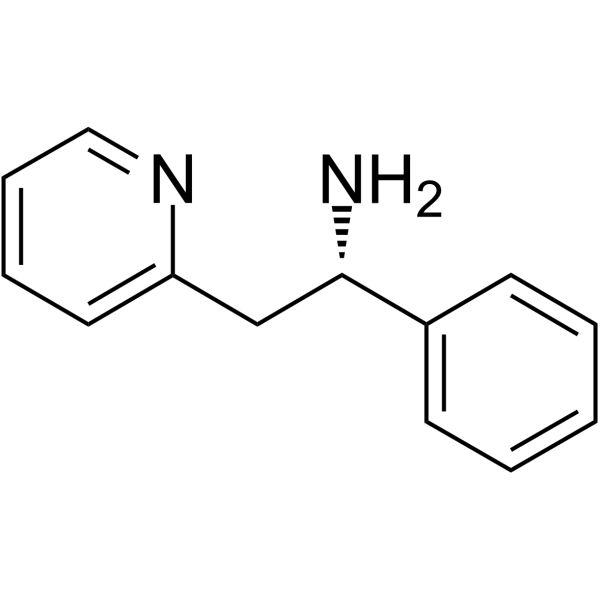 0 ImagesCat. No.: HY-108235CAS No.: 153322-05-5Synonyms: AZD6765Lanicemine (AZD6765) is a low-trapping NMDA channel blocker (Ki of 0.56-2.1 μM for NMDA receptor; IC50s of 4-7 μM and 6.4 μM in CHO and Xenopus oocyte cells, respectively). Antidepressant effects.
-
TAT-EE3
 0 ImagesTAT-EE3 is a neuroprotective peptide which can uncouple TRPM2-NMDARs interaction. TAT-EE3 inhibits TRPM2-induced enhancement of NMDAR surface expression and current amplitude.TAT-EE3 protects neurons against ischemic injury in vitro and in vivo. TAT-EE3can be used for the study of ischemic stroke.
-
CGP 37849
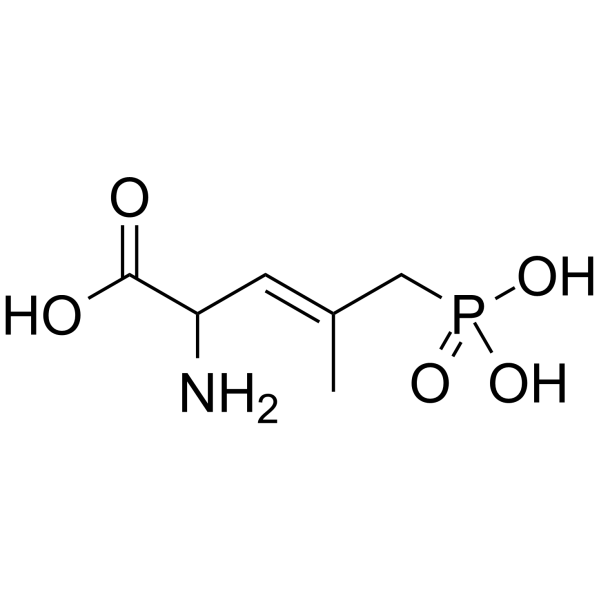 0 ImagesCGP 37849 is a potent, competitive and orally active N-methyl-D-aspartate (NMDA) receptor antagonist. CGP 37849 is an anticonvulsant in rodents and has antidepressant and anxiolytic-like effects.
-
D15
 0 ImagesSynonyms: Dynamin II (828–842)D15, a peptide with 15 aa segment of dynamin, is an AMPAR endocytosis inhibitor. D15 blocks the interaction of dynamin with amphiphysin 1 and 2. D15 significantly increases AMPAR excitatory postsynaptic potential (EPSC) amplitude of medium spiny neurons (MSNs) in Sapap3 KO mice. D15 can be used for neuropsychiatric disorder research.
-
SDZ 220-040
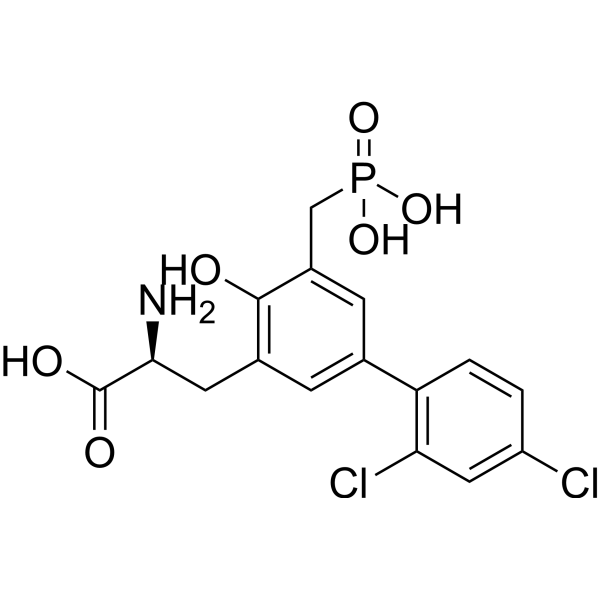 0 ImagesSDZ 220-040 is a competitive the mammalian NMDA receptor antagonist with a pKi of 8.5. SDZ 220-040 can be used in the study of neurological diseases.
-
YY-23
 0 ImagesYY-23 is a selective inhibitor of NMDAR (containing GluN2C or GluN2D). YY-23 inhibits GABAergic neurotransmission and enhances excitatory transmission by inhibiting NMDARs containing GluN2D on GABAergic interneurons in the prefrontal cortex. YY-23 has antidepressant activity and can be used for the research of neurological diseases.
-
Glycine-13C2,15N,d2
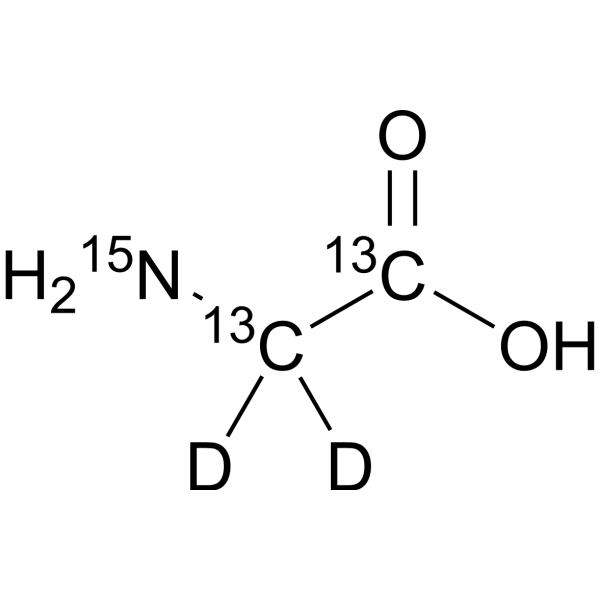 0 ImagesGlycine-13C2,15N,d2 is the deuterium, 13C and 15N labeled Glycine. Glycine is an inhibitory neurotransmitter in the CNS and also acts as a co-agonist along with glutamate, facilitating an excitatory potential at the glutaminergic N-methyl-D-aspartic acid (NMDA) receptors.
-
Caramboxin
 0 ImagesCaramboxin is a phenylalanine-like α-amino acid neurotoxin found in star fruit (Averrhoa carambola) with glutamatergic ionotropic action. Caramboxin activates NMDA, AMPA, and kainate receptors while inhibiting GABA binding to synaptic membranes, shifting the CNS toward an excitatory state and exerting neurotoxic effects linked to star fruit ingestion. Caramboxin can be used for research on neurotoxicity and as a reference standard for toxicological studies.
-
Bis(7)-tacrine dihydrochloride
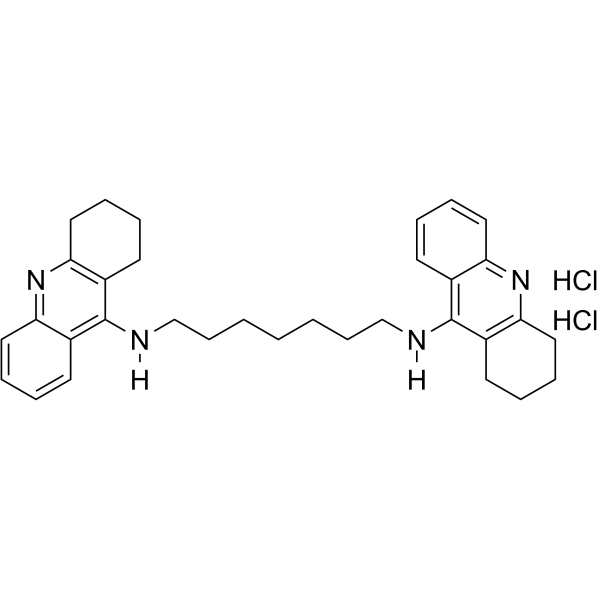 0 ImagesBis(7)-tacrine dihydrochloride is a dimeric AChE inhibitor derived from tacrine. Bis(7)-tacrine dihydrochloride prevents glutamate-induced neuronal apoptosis by blocking NMDA receptors. Bis(7)-tacrine dihydrochloride is a potent GABAAreceptor antagonist. Bis(7)-tacrine dihydrochloride has the potential for the research of Alzheimer's disease .
-
Procyclidine hydrochloride (Standard)
 0 ImagesSynonyms: Tricyclamol hydrochloride (Standard); (±)-Procyclidine hydrochloride (Standard)Procyclidine (hydrochloride) (Standard) is the analytical standard of Procyclidine (hydrochloride). This product is intended for research and analytical applications. Procyclidine (Tricyclamol, (±)-Procyclidine) hydrochloride , an anticholinergic agent, is a muscarinic receptor antagonist that also has the properties of an N-methyl-D-aspartate (NMDA) antagonist. Procyclidine hydrochloride can be used in studies of Parkinson's disease and related psychiatric disorders such as Soman-induced epilepsy.
-
pep2-SVKI
 0 Imagespep2-SVKI is a selective peptide inhibitor. pep2-SVKI inhibits the binding of AMPA-type glutamate receptor (GluA2) (C-terminal PDZ site) to glutamate receptor interacting protein (GRIP), AMPA receptor binding protein (ABP), and C-kinase interacting protein (PICK1). pep2-SVKI increases the amplitude of AMPA receptor-mediated currents and blocks long-term depression (LTD). pep2-SVKI can be used to study neurological diseases.
-
AMPA receptor modulator-3
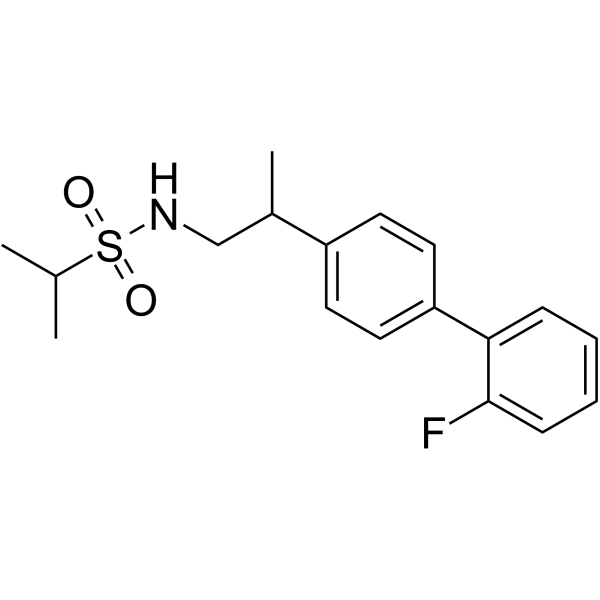 0 ImagesAMPA receptor modulator-3 is an allosteric AMPA receptor modulator (EC50: 4.4 μM). AMPA receptor modulator-3 can be used in the research of mammalian nervous system, such as learning and memory.

-
(RS)-(Tetrazol-5-yl)glycine
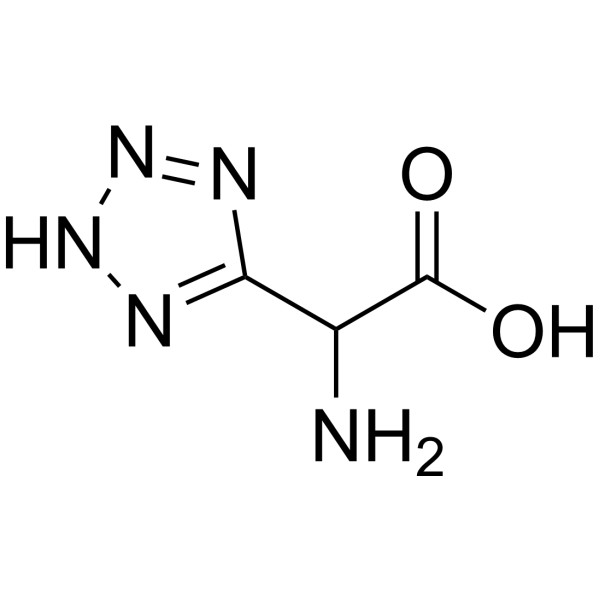 0 ImagesCat. No.: HY-100839CAS No.: 138199-51-6Synonyms: D,L-(tetrazol-5-yl)glycine; LY 285265(RS)-(Tetrazol-5-yl)glycine (D,L-(tetrazol-5-yl)glycine) is a highly potent and selective N-methyl-D-aspartate (NMDA) receptor agonist. (RS)-(Tetrazol-5-yl)glycine has EC50s of 99 nM, 1.7 μM for GluN1/GluN2D and GluN1/GluN2A, respectively. (RS)-(Tetrazol-5-yl)glycine induces seizure responses and Fos in mice.
-
Quinolinic acid-13C3,15N
 0 ImagesCat. No.: HY-W654331CAS No.: 2377475-84-6Synonyms: 2,3-Pyridinedicarboxylic Acid-13C3,15NQuinolinic acid-13C3, 15N (2,3-Pyridinedicarboxylic Acid-13C3, 15N) is the 13C- and 15N-labeled Quinolinic acid (HY-100807). Quinolinic acid is an endogenous N-methyl-D-aspartate (NMDA) receptor agonist synthesized from L-tryptophan via the kynurenine pathway and thereby has the potential of mediating N-methyl-D-aspartate neuronal damage and dysfunction.
-
FP802
 0 ImagesCat. No.: HY-W611371CAS No.: 61694-81-3FP802 is an orally active potent TwinF interface inhibitor that disrupts and detoxifies the NMDAR/TRPM4 death complex. FP802 exerts powerful neuroprotective effects in the 5xFAD mouse model of Alzheimer’s disease (AD) by preventing cognitive decline, preserving neuronal structural integrity, reducing amyloid-β plaque formation, and mitigating mitochondrial pathology. FP802 stops loss of motor neurons, reduces serum neurofilament light chain (NfL) levels, improves motor performance, and extends life in a mouse model of amyotrophic lateral sclerosis (ALS). FP802 can be used for AD and ALS research.
-
Topiramate D12
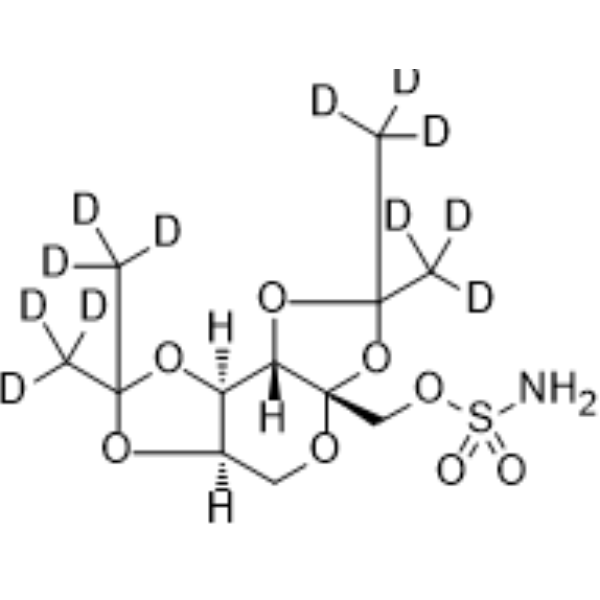 0 ImagesCat. No.: HY-110234CAS No.: 1279037-95-4Synonyms: McN 4853 D12 ; RWJ 17021 D12Topiramate D12 (McN 4853 D12) is a deuterium labeled Topiramate. Topiramate is a broad-spectrum antiepileptic agent. Topiramate is a GluR5 receptor antagonist. Topiramate produces its antiepileptic effects through enhancement of GABAergic activity, inhibition of kainate/AMPA receptors, inhibition of voltage-sensitive sodium and calcium channels, increases in potassium conductance, and inhibition of carbonic anhydrase.
-
Tat-NR2Baa
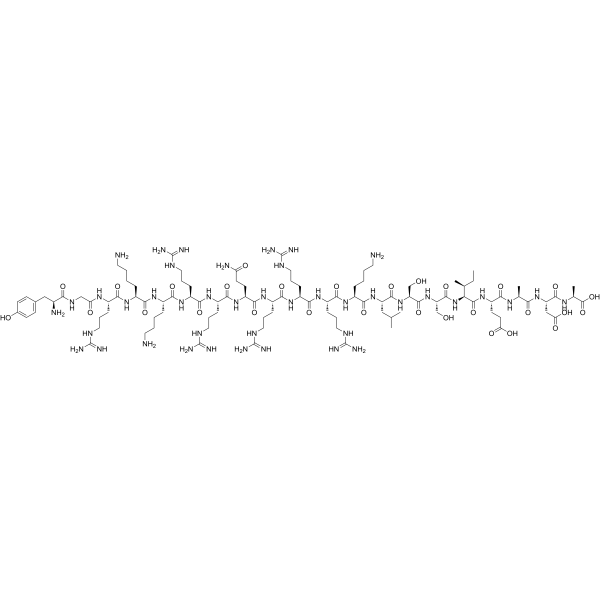 0 ImagesCat. No.: HY-P2307CAS No.: 847829-41-8Tat-NR2BAA is the control peptide of Tat-NR2B9c (HY-P0117), inactive. The sequence of Tat-NR2BAA is similar to Tat-NR2B9c, but it has a double-point mutation in the COOH terminal tSXV motif, making it incapable of binding PSD-95. Tat-NR2B9c is a membrane-permeant peptide and disrupts PSD-95/NMDAR binding, correlate with uncoupling NR2B- and/or NR2A-type NMDARs from PSD-95.
-
Sepimostat trifluoroacetate
 0 ImagesCat. No.: HY-136299BPurity: 99.86%Synonyms: FUT-187 trifluoroacetateSepimostat (FUT-187) trifluoroacetate exhibits neuroprotective activity via NR2B N-methyl-D-aspartate receptor antagonism at the Ifenprodil-binding site of the NR2B subunit. Sepimostat trifluoroacetate inhibits the Ifenprodil binding with a Ki value of 27.7 μM.




