



iGluR
Ionotropic glutamate receptors
iGluR (ionotropic glutamate receptor) is a ligand-gated ion channel that is activated by the neurotransmitter glutamate. iGluR are integral membrane proteins compose of four large subunits that form a central ion channel pore. Sequence similarity among all known glutamate receptor subunits, including the AMPA, kainate, NMDA, and δ receptors.
AMPA receptors are the main charge carriers during basal transmission, permitting influx of sodium ions to depolarise the postsynaptic membrane. NMDA receptors are blocked by magnesium ions and therefore only permit ion flux following prior depolarisation. This enables them to act as coincidence detectors for synaptic plasticity. Calcium influx through NMDA receptors leads to persistent modifications in the strength of synaptic transmission.
iGluR Isoform Specific Products
All Product Categories
-
iGluR Inhibitors
(130)
View all products
-
iGluR Agonists
(131)
View all products
-
iGluR Antagonists
(347)
View all products
-
iGluR Activators
(35)
View all products
-
iGluR Modulators
(93)
View all products
-
iGluR MDM2 Inhibitor
(1)
View all products
-
iGluR Controls
(5)
View all products
-
iGluR Ligands
(3)
View all products
-
iGluR Related Products (828)
Related Products (828)

-
Antibodies (11)
-
iGluR Isoform Comparison
-
TDPAM01
 0 ImagesCat. No.: HY-165474CAS No.: 2231103-08-3TDPAM01 is a positive allosteric modulator of AMPA receptor GluA2. TDPAM01 can specifically bind to the ligand-binding domain (LBD) of GluA2 and shows an IC50 of 13.4 nM for the GluA2 flop subtype. TDPAM01 can stabilize the activated conformation of GluA2 receptors, delay the receptor deactivation or desensitization process, maintaining the rapid excitatory synaptic transmission in the central nervous system.
-
PICK1 PDZ-IN-1
 0 ImagesCat. No.: HY-180197PICK1 PDZ-IN-1 (Compound 6b) is a selective and brain-penetrant protein interacting with C kinase 1 (PICK1) PDZ domain inhibitor with a Ki of 27.73 μM. PICK1 PDZ-IN-1 can competitively inhibit the interaction between PICK1 and the GluA2 subunit of AMPA receptors. PICK1 PDZ-IN-1 can increase the survival rate of HT22 cells and primary cortical neuron cells induced by glutamate and inhibit ROS production. PICK1 PDZ-IN-1 exhibits neuroprotective effect and reduces the area of cerebral infarction. PICK1 PDZ-IN-1 can be used for the research of ischemic stroke.
-
CGP-78608
 0 ImagesCat. No.: HY-107701ACAS No.: 206648-13-7CGP 78608 is a highly potent and selective antagonist at the glycine-binding site of the NMDA receptor, with an IC50 of 6 nM. CGP 78608 acts as a potentiator of GluN1/GluN3A-mediated glycine currents, with an estimated EC50 in the low nM range (26.3 nM). CGP 78608 has anticonvulsant activities.
-
Conantokin G TFA
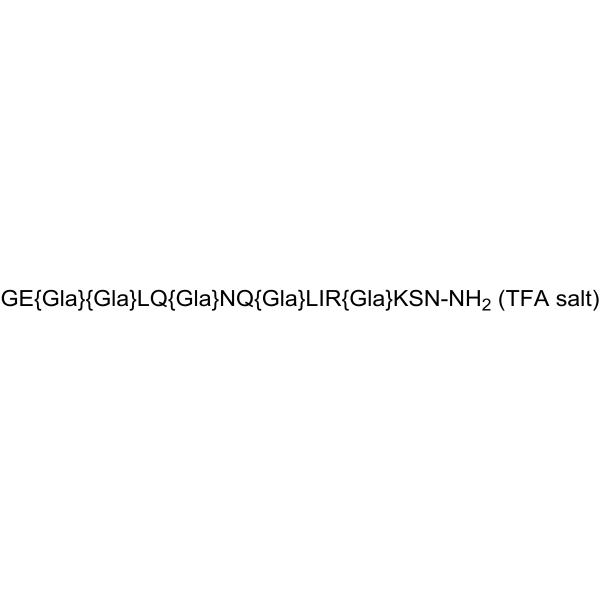 0 ImagesCat. No.: HY-P1293AConantokin G TFA, a 17-amino-acid peptide, is a potent, selective and competitive antagonist of N-methyl-D-aspartate (NMDA) receptors. Conantokin G TFA inhibits NMDA-evoked currents in murine cortical neurons with an IC50 of 480 nM. Conantokin G TFA has neuroprotective properties.
-
(Rac)-PEAQX
 0 ImagesCat. No.: HY-12294BCAS No.: 2514919-70-9Synonyms: (Rac)-NVP-AAM077(Rac)-PEAQX is a NMDA receptor agonist. (Rac)-PEAQX can promote the activation of caspase-3 and induce cell apoptosis in cortical striatal slice cultures .
-
L-Glutamic acid-13C5 hydrate salt
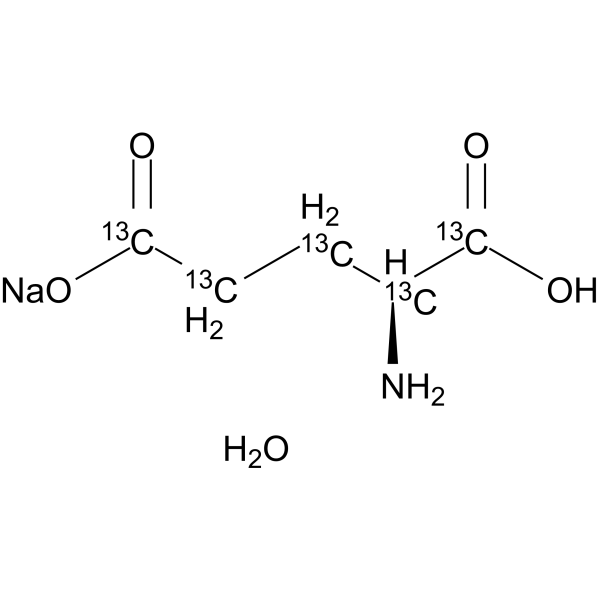 0 ImagesCat. No.: HY-W016145SCAS No.: 202114-62-3L-Glutamic acid-13C5 hydrate salt is the 13C labeled L-Glutamic acid hydrate salt. L-Glutamic acid monosodium hydrate is an excitatory amino acid neurotransmitter that acts as an agonist for all subtypes of glutamate receptors (metabolic rhodophylline, NMDA, and AMPA). L-Glutamic acid monosodium hydrate has an agonist effect on the release of DA from dopaminergic nerve endings. L-Glutamic acid monosodium hydrate can be used in the study of neurological diseases. L-Glutamic acid monosodium hydrate acts at ionotropic and?metabotropic glutamate receptors.
-
L-Phenylalanine-13C-1
 0 ImagesCat. No.: HY-N0215S16CAS No.: 136056-01-4Synonyms: (S)-2-Amino-3-phenylpropionic acid-13C-1L-Phenylalanine-13C-1 ((S)-2-Amino-3-phenylpropionic acid-13C-1) is the 13C-labeled L-Phenylalanine (HY-N0215). L-Phenylalanine ((S)-2-Amino-3-phenylpropionic acid) is an essential amino acid isolated from Escherichia coli. L-Phenylalanine is a α2δ subunit of voltage-dependent Ca2+ channels antagonist with a Ki of 980 nM. L-phenylalanine is a competitive antagonist for the glycine- and glutamate-binding sites of N-methyl-D-aspartate receptors (NMDARs) (Kb of 573 μM ) and non-NMDARs, respectively. L-Phenylalanine is widely used in the production of food flavors and pharmaceuticals.
-
UBP512
 0 ImagesCat. No.: HY-120074CAS No.: 1333112-78-9UBP512 is an NMDA receptor modulator with the activity to regulate NMDA receptor activity. UBP512 is a GluN2A-selective enhancer and GluN2C and GluN2D inhibitor, belonging to a new generation of NMDA receptor modulators, which may have potential effects on the study and inhibition of related neurological diseases.
-
Flupirtine hydrochloride
 0 ImagesCat. No.: HY-W709349CAS No.: 33400-45-2Synonyms: D 9998 hydrochlorideFlupirtine (D 9998) hydrochloride is an orally active, blood-brain barrier-crossing non-opioid analgesic and neuroprotective agent. Flupirtine hydrochloride is a neuronal potassium channel opener (Kv7 activator), a NMDA receptor antagonist and a GABA receptor activator. Flupirtine hydrochloride stabilizes blood-brain-barrier integrity, reduces oxidative stress and brain leukocyte infiltration, enhances angioneurogenesis, suppresses calcium influx, stabilizes neuronal resting membrane potential, and counteracts focal cerebral ischemia. Flupirtine hydrochloride exhibits analgesic, muscle relaxant properties, protects neurons from excitotoxic, ischemic, or cytokine-mediated death. Flupirtine hydrochloride functions as a non-opioid analgesic without antipyretic or antiphlogistic properties, shows no relevant affinity to opiate receptor. Flupirtine hydrochloride can be used for the research of focal cerebral ischemia, pain, Alzheimer’s disease, or multiple sclerosis.
-
SGE-201
 0 ImagesCat. No.: HY-15786CAS No.: 35882-85-0SGE-201 is an allosteric modulator of N-methyl-D-aspartate receptors (NMDARs), demonstrating significant neuroprotective effects by enhancing NMDAR-mediated responses while differing in action among various blockers in neuronal networks.
-
Kaitocephalin
 0 ImagesCat. No.: HY-119781CAS No.: 198710-92-8Synonyms: PF1191Kaitocephalin (PF1191) is an ionotropic glutamate receptor (NMDAR) antagonist with Ki values of 7.8, 590, and 14000 nM for NMDAR, AMPAR, and KAR, respectively. Kaitocephalin protects neurons by inhibiting excitotoxicity, exhibiting neuroprotective effects. Kaitocephalin can be used in research on neurological diseases such as Alzheimer's disease.
-
Leptin (116-130)
 0 ImagesCat. No.: HY-P3340CAS No.: 189224-35-9Leptin (116-130) is a bioactive leptin fragment. Leptin (116-130) promotes AMPA receptor trafficking to synapses and facilitate activity-dependent hippocampal synaptic plasticity. Leptin (116-130) prevents hippocampal synaptic disruption and neuronal cell death in models of amyloid toxicity. Leptin (116-130) has the potential for the research of Alzheimer's disease (AD).
-
Piracetam-d6
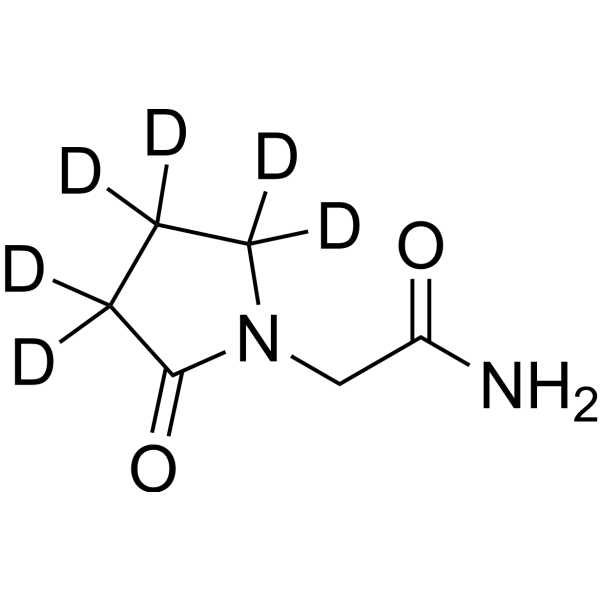 0 ImagesCat. No.: HY-B0585S1CAS No.: 2907016-93-5Synonyms: UCB-6215-d6Piracetam-d6 is deuterium labeled Piracetam. Piracetam (UCB-6215) is a cyclic derivative of the neurotransmitter gamma-aminobutyric acid (GABA), used in treatment of a wide range of cognitive disorders.
-
LY-300168
 0 ImagesCat. No.: HY-136844CAS No.: 143692-18-6Synonyms: GYKI 53655LY 300168 (GYKI 53655) is a non-competitive, blood-brain-barrier permeable AMPA receptor antagonist. LY 300168 attenuates hippocampal injury. LY 300168 blocks the sound-induced clonic and tonic convulsions.
-
Pep4c
 0 ImagesCat. No.: HY-P1057CAS No.: 243843-43-8Pep4c is an inactive control peptide for Pep2m (HY-P1058). Pep4c lacks functional activity to disrupt Protein Interacting with C Kinase 1 (PICK1)-AMPA receptor (GluA2) or N-ethylmaleimide-sensitive factor (NSF)-GluA2 interactions. Pep4c is used as a negative control in experiments to validate the specificity of Pep2m's effects on AMPA receptor trafficking and synaptic plasticity[1][2][3][4][5][6].
-
Lu AF90103
 0 ImagesCat. No.: HY-169951CAS No.: 2577196-14-4Lu AF90103 (Compound 42e) is a methyl ester prodrug of compound 42d capable of penetrating the blood-brain barrier. Compound 42d acts as a partial agonist of the GluN1/GluN2B complex, exhibiting 24% efficacy, and has an EC50 value of 78 nM. Lu AF90103 plays an important role in neuropsychiatric diseases research.
-
5-Iodowillardiine
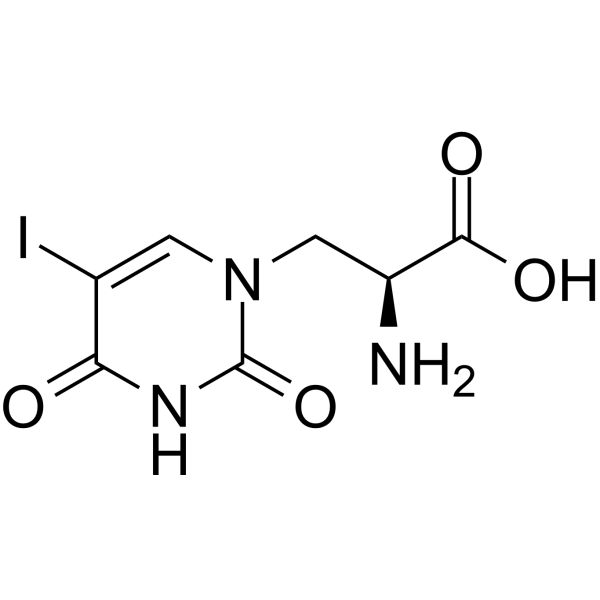 0 ImagesCat. No.: HY-100837CAS No.: 140187-25-35-Iodowillardiine is a potent and selective kainate receptor agonist. 5-Iodowillardiine is selective for kainate receptors composed of hGluR5 subunits.
-
c10c-G1V3
 0 ImagesCat. No.: HY-P11892c10c-G1V3 is a BRAG2 binder with a Kd value of 7.37 μM. c10c-G1V3 binds to BRAG2, thereby disrupting its interaction with GluA2 and blocking GluA2 endocytosis and AMPAR subunit switching. c10c-G1V3 reduces glutamate-induced intracellular reactive oxygen species (ROS) accumulation and cell apoptosis (apoptosis). c10c-G1V3 decreases infarct volume in the transient middle cerebral artery occlusion model. c10c-G1V3 can be used in studies related to ischemic stroke.
-
CEB-1604
 0 ImagesCat. No.: HY-105353CAS No.: 287173-08-4CEB-1604 is an NMDA receptor antagonist. CEB-1604 inhibits NMDA-induced currents in oocytes transfected with NMDA receptor isoforms (NR1/NR2A, NR1/NR2B, NR1/NR2C, NR1/NR2D) with IC50 values ranging from 5 to 12 μM. CEB-1604 abolishes NMDA-dependent epileptiform discharges in rat cortical wedge preparations and reduces the depolarizing effects of NMDA. CEB-1604 can be used in the research field of neurological damage diseases.
-
L-Aspartic acid-1,4-13C2,15N
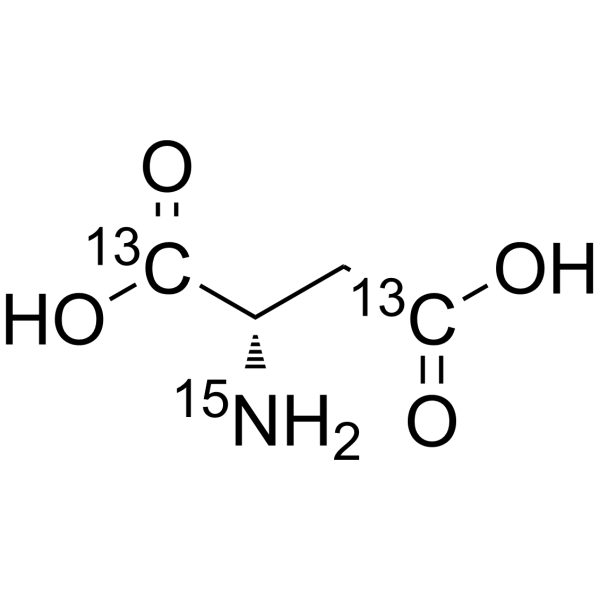 0 ImagesCat. No.: HY-N0666S7CAS No.: 2483830-03-9L-Aspartic acid-1,4-13C2,15N is the 15N, 13C-labeled L-Aspartic acid (HY-N0666). L-Aspartic acid is a NMDA receptor agonist and acidic amino acid. L-Aspartic acid has no independent analgesic activity. L-Aspartic acid can antagonize the analgesic effects of D-Aspartic acid and Morphine. L-Aspartic acid regulates polymorph transformation, crystal growth/aggregation and nucleation processes of calcium carbonate, and can serve as a biomineralization template. L-Aspartic acid promotes burst firing of central neurons. L-Aspartic acid can be used in studies related to cerebral ischemia and epilepsy.




