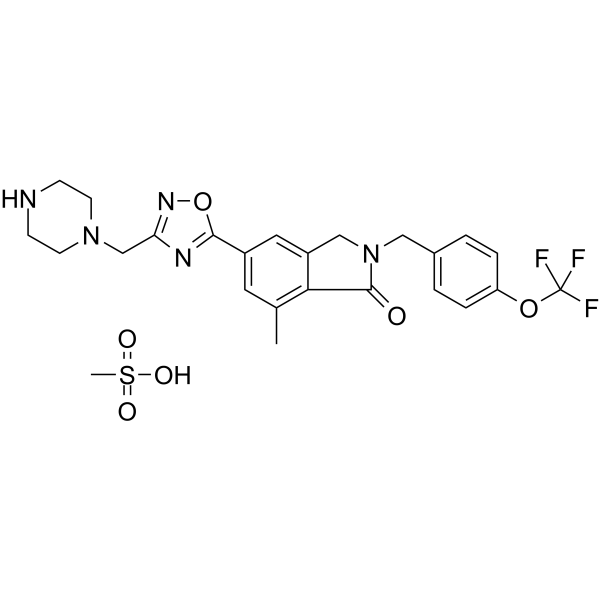
mGluR2
Metabotropic glutamate receptor 2 (mGluR2) functions as a presynaptic inhibitory receptor regulating glutamatergic neurotransmission through Galpha inhibitory subunits[1]. Mechanistically, mGluR2 modulates synaptic plasticity at hippocampal mossy fiber-CA3 synapses, mediating transient suppression of transmission, long-term depression (LTD), and inhibition of long-term potentiation (LTP)[1]. Compared with its closely related isoform mGluR3, mGluR2 exhibits distinct presynaptic localization and does not directly promote neural progenitor proliferation via ERK1/2 or JNK2 signaling[2]. In disease models, mGluR2 contributes to fear extinction in the lateral amygdala through long-term weakening of presynaptic release probability[3], while peripheral mGluR2 activation reduces prostaglandin E2-induced nociceptive sensitization[4]. In COVID-19 patients, anti-mGluR2 autoantibodies have been identified, indicating immune system cross-reactivity and potential neurological implications[5]. Pharmacologically, mGluR2-selective agonists, such as LY395756, modulate NMDA receptor expression and function, whereas positive allosteric modulators like (+)-TFMPIP selectively attenuate stress-induced phasic glutamate release without affecting tonic levels[6][7]. These findings highlight mGluR2 as a target for studies of synaptic plasticity, neuropsychiatric disorders, inflammatory pain, and allosteric modulation in experimental models.
Verweise:
- [1]. Nicholls RE, et al. mGluR2 acts through inhibitory Galpha subunits to regulate transmission and long-term plasticity at hippocampal mossy fiber-CA3 synapses. Proc Natl Acad Sci U S A. 2006 Apr 18;103(16):6380-5. [Content Brief]
- [2]. Wu Z, et al. Identifying Neurological Autoantibodies in COVID-19: mGluR2 as a Marker of Immune Dysregulation During the Omicron Outbreak in China. J Med Virol. 2025 May;97(5):e70381. [Content Brief]
- [3]. Guo J, et al. mGluR3 promotes proliferation of human embryonic cortical neural progenitor cells by activating ERK1/2 and JNK2 signaling pathway in vitro. Cell Mol Biol (Noisy-le-grand). 2014;60(2):42-49.
- [4]. Yang D, et al. Peripheral group II metabotropic glutamate receptors (mGluR2/3) regulate prostaglandin E2-mediated sensitization of capsaicin responses and thermal nociception. J Neurosci. 2002 Aug 1;22(15):6388-93. [Content Brief]
- [5]. Li ML, et al. LY395756, an mGluR2 agonist and mGluR3 antagonist, enhances NMDA receptor expression and function in the normal adult rat prefrontal cortex, but fails to improve working memory and reverse MK801-induced working memory impairment. Exp Neurol. 2015 Nov;273:190-201. [Content Brief]
- [6]. Hascup ER, et al. An allosteric modulator of metabotropic glutamate receptors (mGluR₂), (+)-TFMPIP, inhibits restraint stress-induced phasic glutamate release in rat prefrontal cortex. J Neurochem. 2012 Aug;122(3):619-27. [Content Brief]
- [7]. Kim J, et al. mGluR2/3 in the Lateral Amygdala is Required for Fear Extinction: Cortical Input Synapses onto the Lateral Amygdala as a Target Site of the mGluR2/3 Action. Neuropsychopharmacology. 2015 Dec;40(13):2916-28. [Content Brief]
-
mGluR2 Verwandte Produkte (61)
Verwandte Produkte (61)

-
Xanthurenic acid
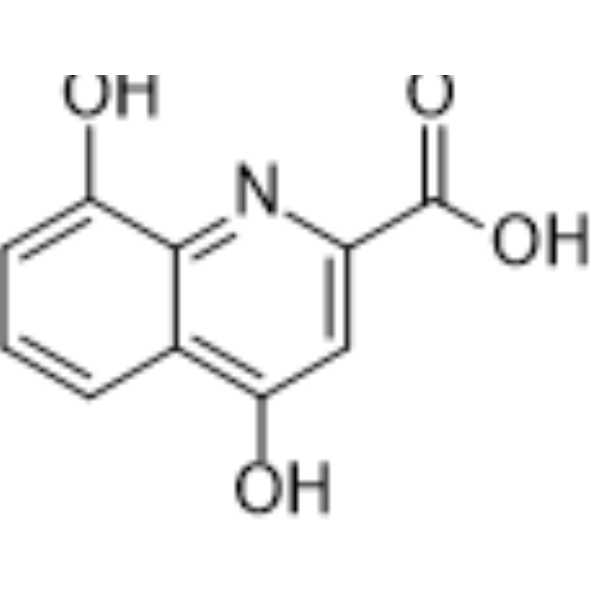 0 ImagesXanthurenic acid is a putative endogenous Group II metabotropic glutamate receptor agonist, on sensory transmission in the thalamus.
-
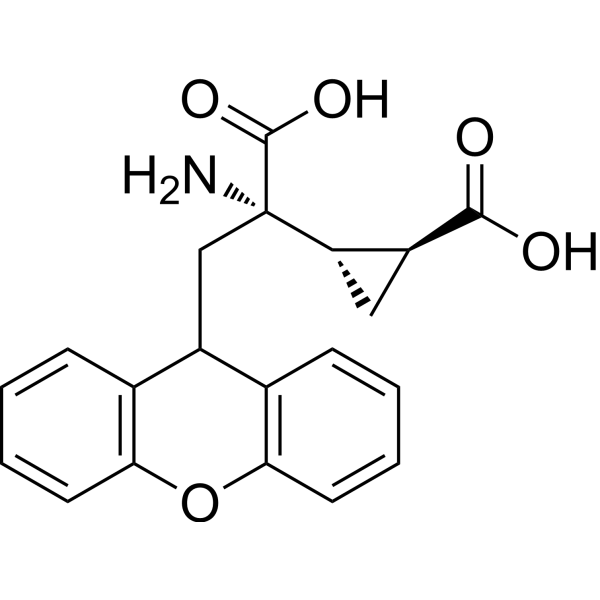
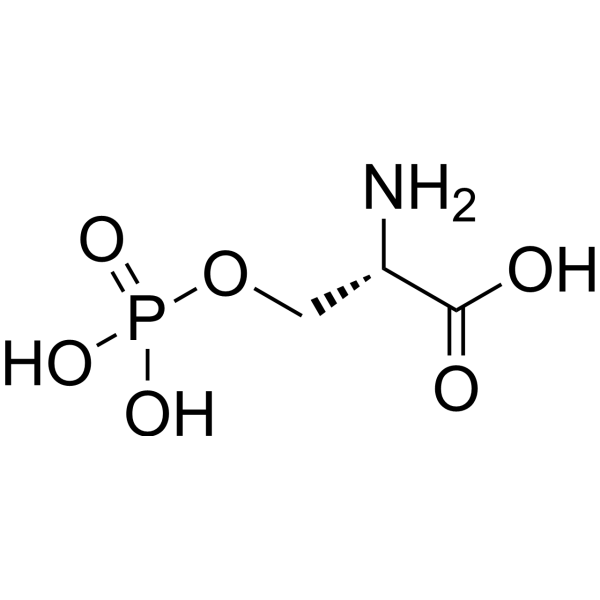
LY379268
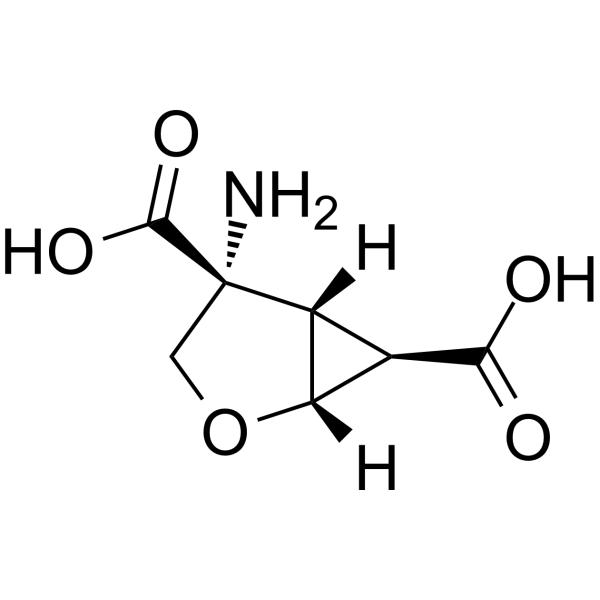 0 ImagesLY379268 is a potent, selective and brain-penetrant mGlu2/3R agonist with EC50 values of 2.69 nM (mGlu2) and 4.48 nM (mGlu3). LY379268 has no activity on human mGlu 1a, 4a, 5a or 7a receptors. LY379268 has antioxidant and neuroprotective effects.
-
Eglumegad
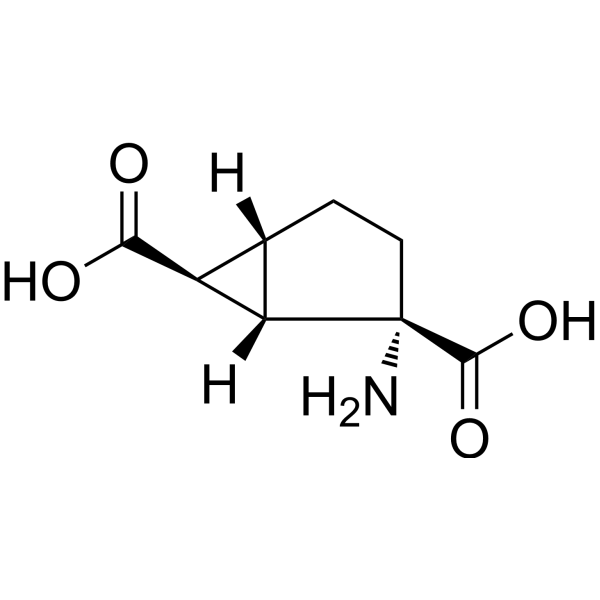 0 ImagesSynonyms: LY354740; EglumetadEglumegad (LY354740) is a highly potent and selective group II (mGlu2/3) receptor agonist with IC50s of 5 nM and 24 nM on transfected human mGlu2 and mGlu3 receptors, respectively.
-
Fasoracetam
 0 ImagesSynonyms: NS 105Fasoracetam (NS105) is an orally active metabotropic glutamate receptor (mGluR) activator. Fasoracetam bidirectionally regulates adenylyl cyclase activity and cAMP levels by activating group I-III mGluRs, upregulating GABAB receptors, and enhancing cholinergic neurotransmission. Fasoracetam can be used in research on attention deficit hyperactivity disorder (ADHD), depression, dementia, Alzheimer's disease, and forebrain ischemia.
-
AZD-8418
 0 ImagesArt. -Nr.: HY-187088CAS. Nr.: 1198309-73-7AZD-8418 is an orally active positive allosteric modulator of metabotropic glutamate receptor 2 (mGluR2), with an EC50 of 0.86 μM for rat mGlu2 receptors. AZD-8418 reduces the in vitro binding level of [3H]AZ12559322 in prefrontal cortex brain tissues of non-human primates. AZD8418 enhances the inhibitory effect of the mGlu2/3 agonist DCG-IV (HY-101335) on field excitatory postsynaptic potentials (fEPSP) in rat hippocampal brain slices. AZD-8418 reduces nicotine self-administration behavior in rats, and blocks cue-induced reinstatement of nicotine-seeking and food-seeking behaviors. The attenuating effect on nicotine self-administration behavior develops rapid tolerance, while inhibition of food self-administration behavior requires chronic administration. AZD-8418 can be used in research related to nicotine dependence and neuropsychiatric disorders.
-
Talaglumetad
 0 ImagesArt. -Nr.: HY-131286CAS. Nr.: 441765-98-6Synonyms: LY-544344Talaglumetad (LY-544344) is an orally active prodrug of Eglumegad (HY-18941) and a metabotropic glutamate receptor 2/3 (mGluR2/3) agonist. Talaglumetad undergoes transmembrane transport via the intestinal peptide transporter hPepT1, and is enzymatically hydrolyzed to produce L-alanine and the parent drug Eglumegad after entering the body. Talaglumetad can be used in research related to metabotropic glutamate receptor 2-associated neurological systems.
-
LY2794193
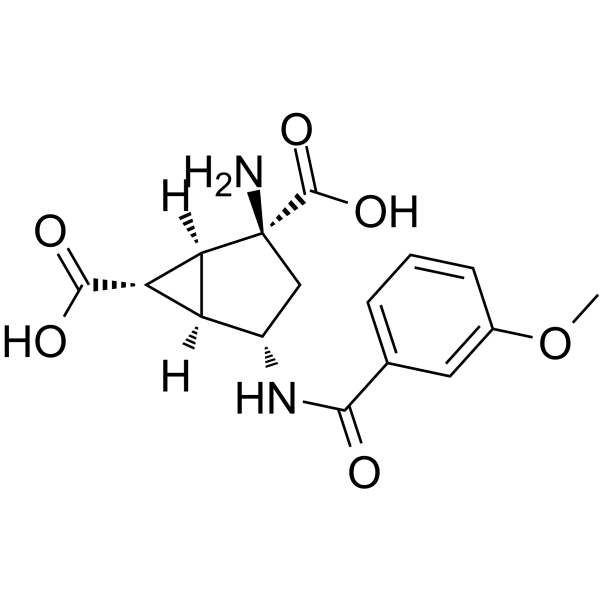 0 ImagesLY2794193 is a highly potent and selective mGlu3 receptor agonist (hmGlu3 Ki=0.927 nM,EC50=0.47 nM; hmGlu2 Ki=412 nM,EC50=47.5 nM).
-
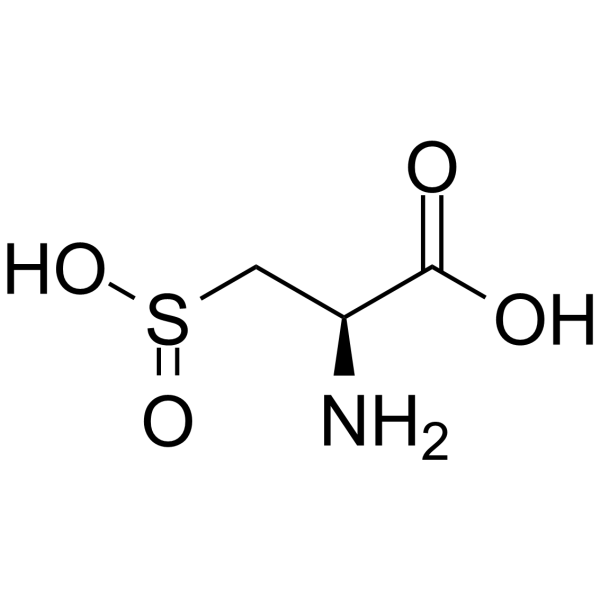
Quisqualic acid
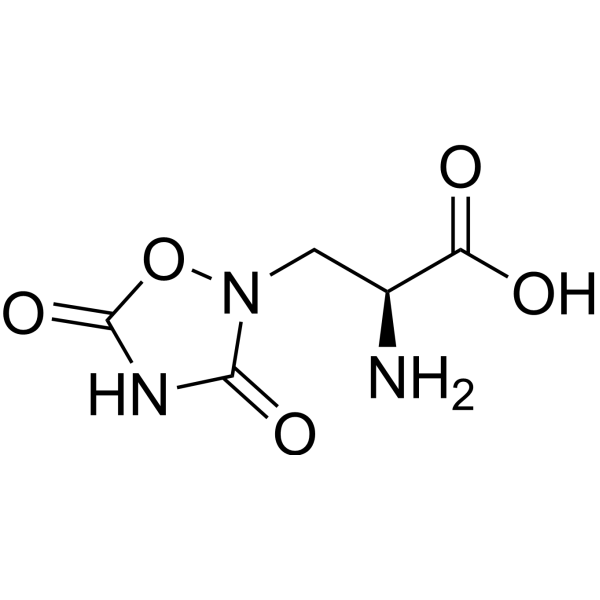 0 ImagesSynonyms: L-Quisqualic acid
-
JNJ-40411813
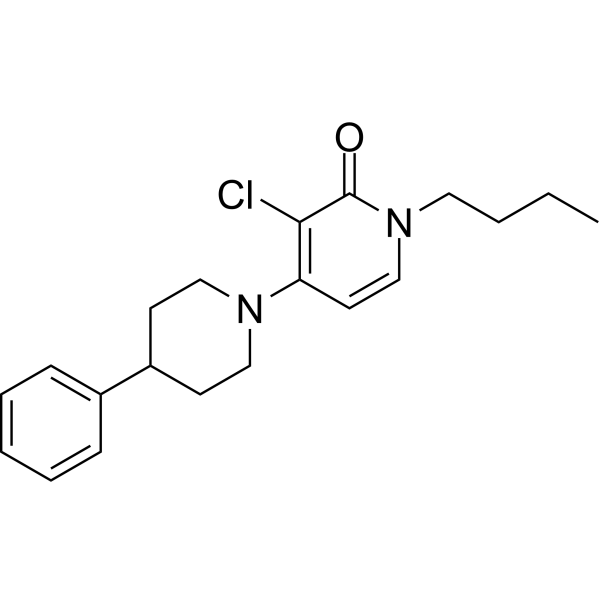 0 ImagesSynonyms: ADX-71149JNJ-40411813 (ADX-71149) is a novel positive allosteric modulator of the metabotropic Glutamate 2 receptor (mGlu2R) with EC50 of 147 nM. JNJ-40411813 has orally bioactivity and penetrate the blood-brain barriers. JNJ-40411813 has the potential property of anti-depression.
-
VU6001966
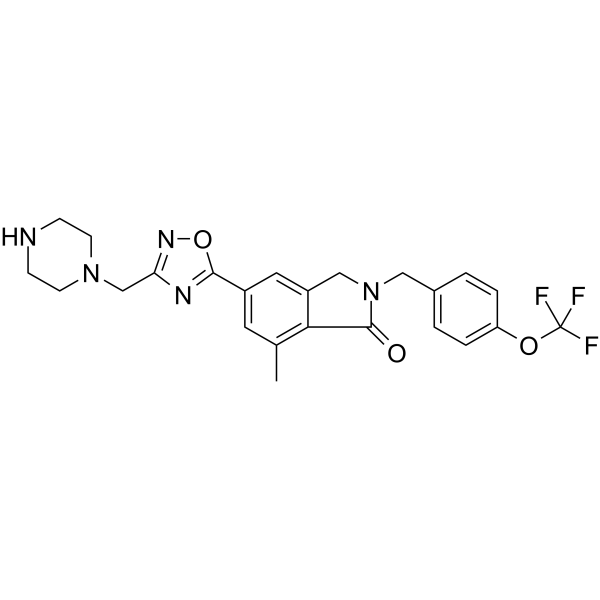
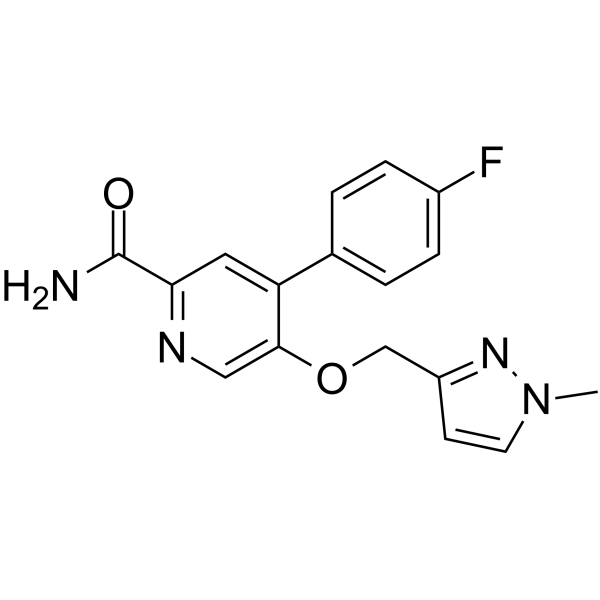 0 ImagesVU6001966 is a brain-penetrant and selective mGlu2 receptor inhibitor. VU6001966 blocks mGlu2 receptor activity, counteracts LY379268 (HY-103558)-mediated blood-brain barrier protection and inflammatory cytokine dampening in microglia under inflammatory conditions. VU6001966 enhances antidepressant effects when combined with Scopolamine (HY-N0296). VU6001966 can be used for the research of major depressive disorder.
-
LY404039
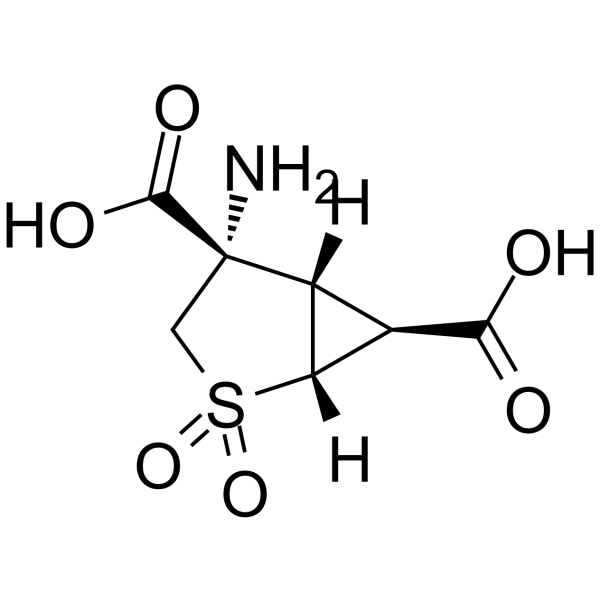 0 ImagesLY404039 is a potent, selective and orally active mGluR2 and mGluR3 agonist with Kis of 149 nM and 92 nM for recombinant human mGluR2 and mGluR3, respectively. LY404039 shows >100-fold selectivity for mGluR2/3 over other receptors/transproters. LY404039 has antipsychotic and anxiolytic effects.
-
DCG-IV
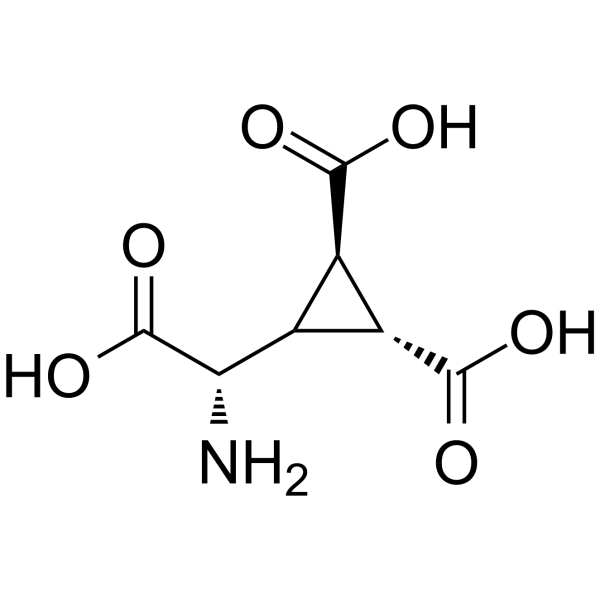 0 ImagesDCG-IV is a potent agonist of group II mGluRs with EC50s of 0.35 and 0.09 μM for mGlu2R and mGlu3R, reapectively. DCG-IV is also a competitive antagonist at group I (IC50: mGlu1R/5R=389/630 μM) and III receptors (IC50: mGlu4R/6R/7R/8R= 22.5/39.6/40.1/32 μM). DCG-IV has anticonvulsive and neuroprotective effects.
-
JNJ-46281222
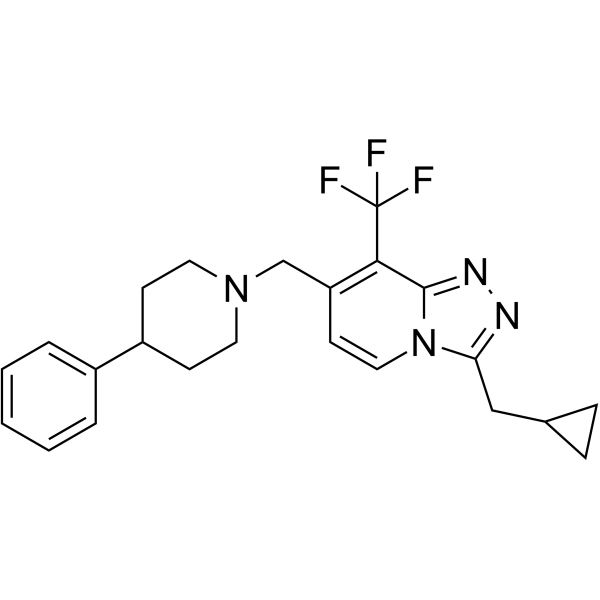 0 ImagesJNJ-46281222 is an metabotropic glutamate (mGlu) 2-selective, highly potent PAM (positive allosteric modulator) with nanomolar affinity (Kd = 1.7 nM) and a high modulatory potency (pEC50 = 7.71).
-
Pomaglumetad methionil hydrochloride
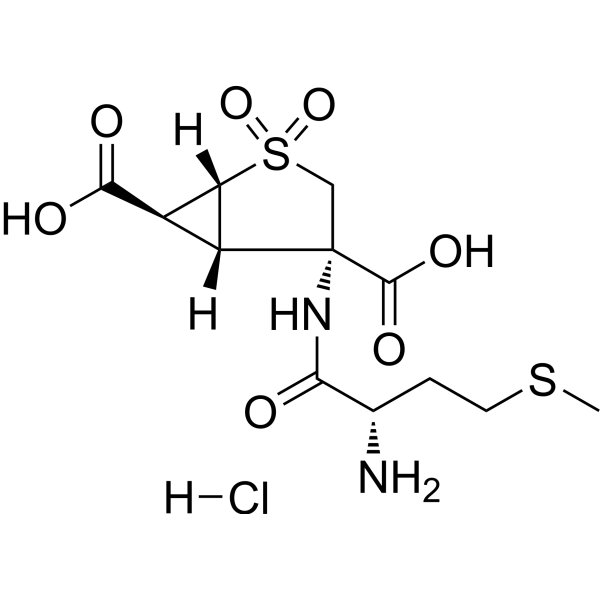 0 ImagesSynonyms: LY2140023 hydrochloridePomaglumetad methionil hydrochloride (LY2140023 hydrochloride) is an orally active, methionine prodrug of the selective mGlu2/3 receptor agonist LY404039. Pomaglumetad methionil hydrochloride has the potential for schizophrenia research.