



Quisqualic acid

Based on 1 Customer Validation
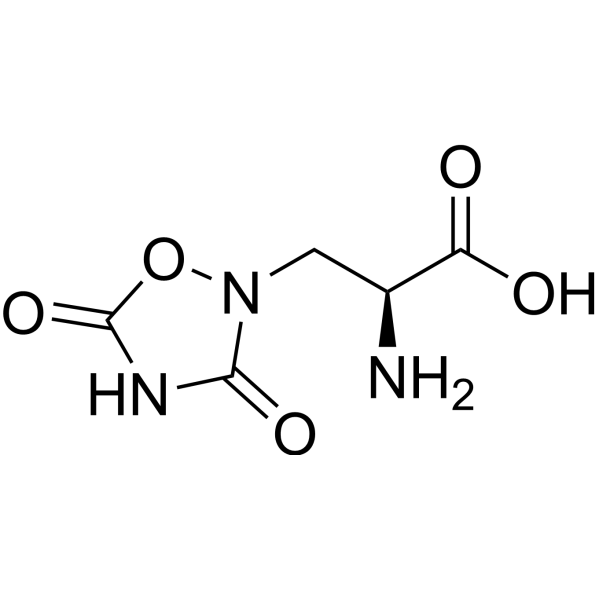
Quisqualic acid (L-Quisqualic acid), a natural analog of glutamate, is a potent and pan two subsets (iGluR and mGluR) of excitatory amino acid (EAA) agonist with an EC50 of 45 nM and a Ki of 10 nM for mGluR1R. Quisqualic acid is isolated from the fruits of Quisqualis indica.
For research use only. We do not sell to patients.
- Purity : 98.0%
- CAS No.: 52809-07-1
- Formula: C5H7N3O5
- Molecular Weight:189.13
-
Storage:Powder -20°C, 3 years , 4°C, 2 years ; In solvent -80°C, 6 months , -20°C, 1 month

To place orders, for customer services and technical support, please contact: MedChemExpress USA
Tel: 609-228-6898 E-mail: [email protected] [email protected]


-
 Biological Activity
-
Chemical Information
-
Solvent & Solubility
- Purity & Documentation
- References
-
 Help & FAQs


-
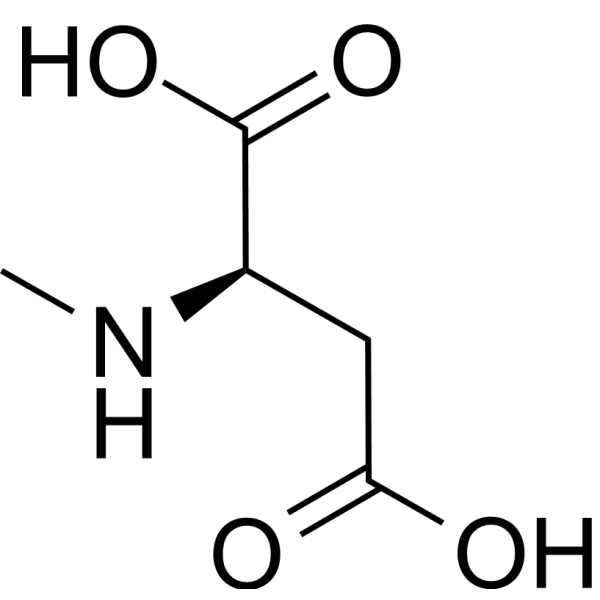
HY-17551
NMDAEndogenous Metabolite -
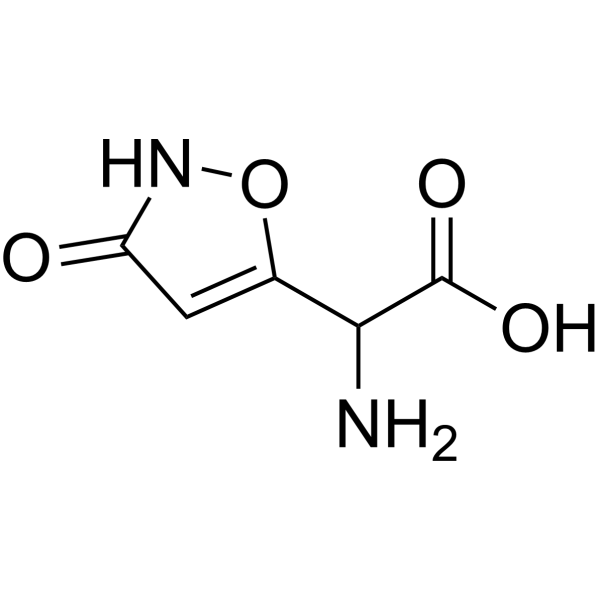
HY-N2311
Ibotenic acidiGluR Agonist -
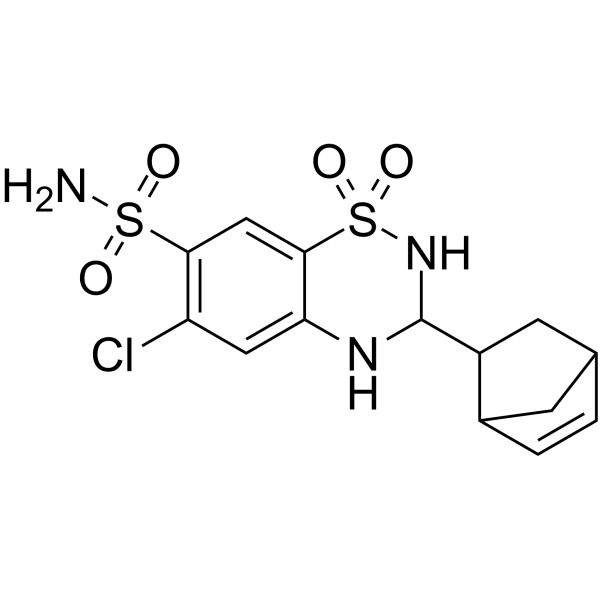
HY-101165
CyclothiazideAMPA Receptors PAM -
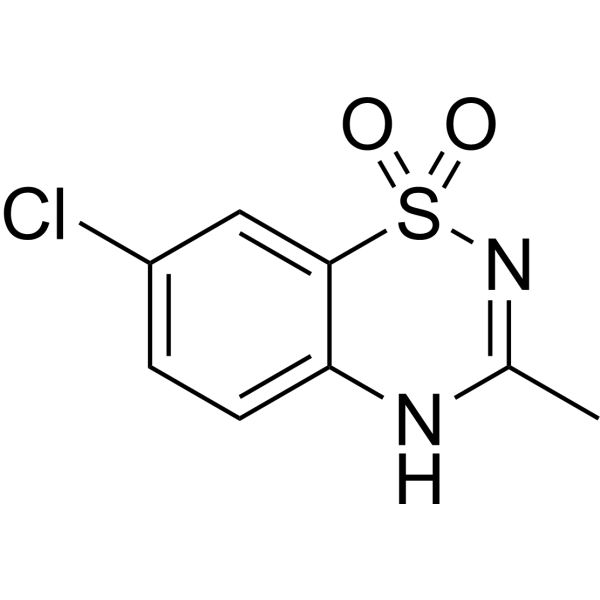
HY-B1140
DiazoxideAutophagy Inducer -
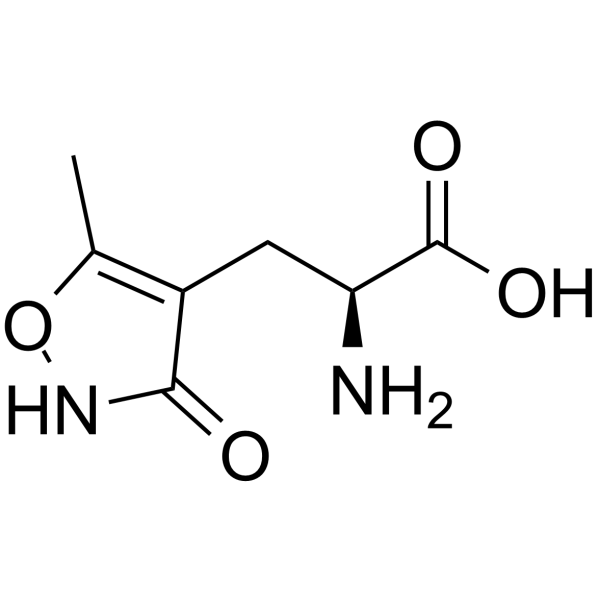
HY-100815A
(S)-AMPAAMPA Receptor Agonist -
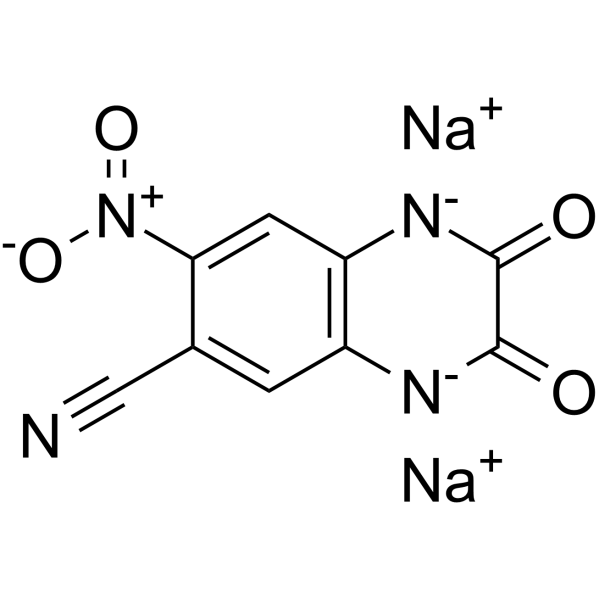
HY-15066A
CNQX disodiumiGluR Antagonist -
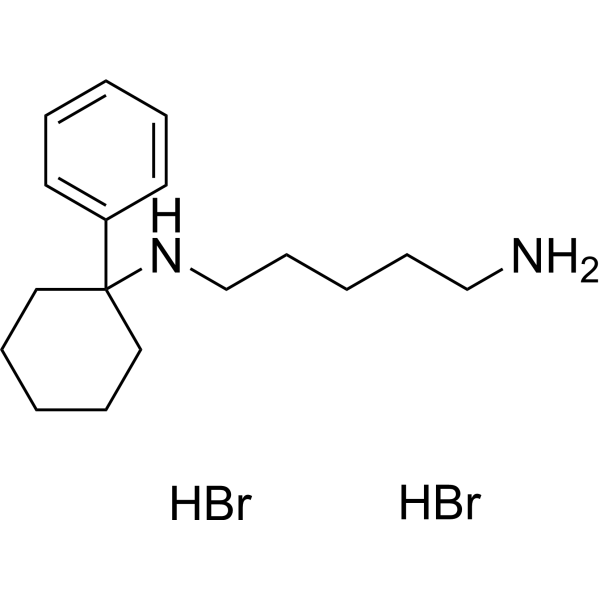
HY-103232
IEM-1925 bromideGlutamate Receptor Antagonist -
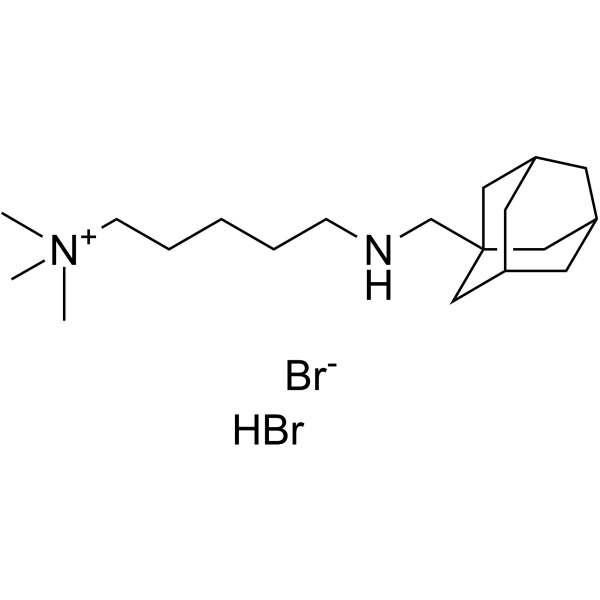
HY-103230
IEM-1460 -

HY-B1140R
Diazoxide (Standard)Autophagy Inducer -
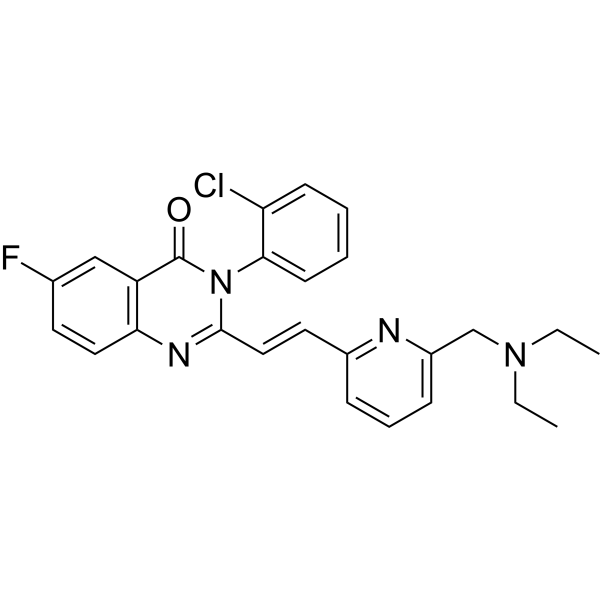
HY-18663
CP-465022AMPA Receptor Antagonist -
HY-101528
IDRA 21AMPA Modulator -
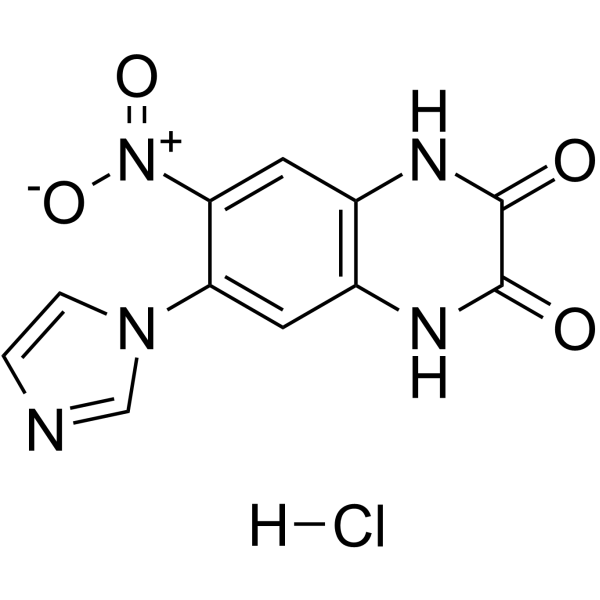
HY-15071
YM90KAMPA Receptor Antagonist
All iGluR Isoforms
More

Biological Activity
Description
IC50 & Target
[1]|
mGluR1R 45 nM (EC50) |
mGluR1R 10 nM (Ki) |
mGluR2R 108 μM (IC50) |
mGluR2R 113 μM (Ki) |
mGluR4R 593 μM (IC50) |
mGluR4R 112 μM (Ki) |
Cellular Effect
|
Cell Line

|
Type | Value | Description | References |
|---|---|---|---|---|
| CHO | EC50 |
0.63 μM
Compound: 158
|
Agonist activity at mGlu5 receptor (unknown origin) expressed in CHO cells assessed as increase in Gq-mediated PI hydrolysis after 45 mins by yttrium scintillation proximity assay
Agonist activity at mGlu5 receptor (unknown origin) expressed in CHO cells assessed as increase in Gq-mediated PI hydrolysis after 45 mins by yttrium scintillation proximity assay
|
[PMID: 29939744] |
| Pyramidal neuron | IC50 |
>10 mM
Compound: 1
|
Inhibition of the sensitization of CA1 pyramidal neurons to depolarization by L-AP6 by the compound at a concentration of 16 uM before 4 minutes
Inhibition of the sensitization of CA1 pyramidal neurons to depolarization by L-AP6 by the compound at a concentration of 16 uM before 4 minutes
|
[PMID: 10229632] |
| Pyramidal neuron | IC50 |
>10 μM
Compound: quisqualic acid
|
sensitization of CA1 pyramidal neurons to depolarizations by L-AP6 before exposure to quisqualic acid
sensitization of CA1 pyramidal neurons to depolarizations by L-AP6 before exposure to quisqualic acid
|
[PMID: 7966155] |
| Pyramidal neuron | IC50 |
0.04 mM
Compound: 1
|
Inhibition of the sensitization of CA1 pyramidal neurons to depolarization by L-AP6 by the compound at a concentration of 16 uM after 4 minutes
Inhibition of the sensitization of CA1 pyramidal neurons to depolarization by L-AP6 by the compound at a concentration of 16 uM after 4 minutes
|
[PMID: 10229632] |
| Pyramidal neuron | IC50 |
0.04 μM
Compound: quisqualic acid
|
sensitization of CA1 pyramidal neurons to depolarizations by L-AP6 after exposure to quisqualic acid
sensitization of CA1 pyramidal neurons to depolarizations by L-AP6 after exposure to quisqualic acid
|
[PMID: 7966155] |
| Pyramidal neuron | IC50 |
1.9 mM
Compound: 1
|
Inhibition of the sensitization of CA1 pyramidal neurons to depolarization by L-AP6 after reversal with L-alpha-AA by the compound at a concentration of 16 uM after 4 minutes
Inhibition of the sensitization of CA1 pyramidal neurons to depolarization by L-AP6 after reversal with L-alpha-AA by the compound at a concentration of 16 uM after 4 minutes
|
[PMID: 10229632] |
| Pyramidal neuron | IC50 |
1.9 μM
Compound: quisqualic acid
|
sensitization of CA1 pyramidal neurons to depolarizations by L-AP6 after reversal with L-alpha-AA
sensitization of CA1 pyramidal neurons to depolarizations by L-AP6 after reversal with L-alpha-AA
|
[PMID: 7966155] |
| Pyramidal neuron | IC50 |
26 μM
Compound: quisqualic acid
|
ability to directly depolarize CA1 pyramidal neurons of rat hyppocampal slices after reversal with L-alpha-AA
ability to directly depolarize CA1 pyramidal neurons of rat hyppocampal slices after reversal with L-alpha-AA
|
[PMID: 7966155] |
| Pyramidal neuron | IC50 |
4 μM
Compound: quisqualic acid
|
ability to directly depolarize CA1 pyramidal neurons of rat hyppocampal slices after exposure to quisqualic acid
ability to directly depolarize CA1 pyramidal neurons of rat hyppocampal slices after exposure to quisqualic acid
|
[PMID: 7966155] |
| Pyramidal neuron | IC50 |
7 μM
Compound: quisqualic acid
|
ability to directly depolarize CA1 pyramidal neurons of rat hyppocampal slices before exposure to quisqualic acid
ability to directly depolarize CA1 pyramidal neurons of rat hyppocampal slices before exposure to quisqualic acid
|
[PMID: 7966155] |
In Vitro
Quisqualic acid is an agonist of AMPA and metabotropic glutamate receptors. Quisqualic acid activates mGluR2R (EC50=108 μM; Ki=113 μM) and mGluR4R (EC50=593 μM; Ki=112 μM)[1].
MedChemExpress (MCE) has not independently confirmed the accuracy of these methods. They are for reference only.


Chemical Information
-
CAS No. 52809-07-1
-
Appearance Solid
-
Molecular Weight 189.13
-
Formula C5H7N3O5
-
Color White to off-white
-
SMILES
O=C(O)[C@@H](N)CN(C(N1)=O)OC1=O
-
Synonyms
L-Quisqualic acid
-
Structure Classification
-
Initial Source
-
Shipping
Room temperature in continental US; may vary elsewhere.
-
Storage
Powder -20°C 3 years 4°C 2 years In solvent -80°C 6 months -20°C 1 month


Solvent & Solubility
In Vitro:
DMSO : 12.5 mg/mL (66.09 mM; ultrasonic and warming and heat to 60°C; Hygroscopic DMSO has a significant impact on the solubility of product, please use newly opened DMSO)
H2O : 8.33 mg/mL (44.04 mM; ultrasonic and warming and heat to 60°C)
Please refer to the solubility information to select the appropriate solvent. Once prepared, please aliquot and store the solution to prevent product inactivation from repeated freeze-thaw cycles.
Storage method and period of stock solution: -80°C, 6 months; -20°C, 1 month. When stored at -80°C, please use it within 6 months. When stored at -20°C, please use it within 1 month.
* Note: If you choose water as the stock solution, please dilute it to the working solution, then filter and sterilize it with a 0.22 μm filter before use.
Please refer to the solubility information to select the appropriate solvent. Once prepared, please aliquot and store the solution to prevent product inactivation from repeated freeze-thaw cycles.
Storage method and period of stock solution: -80°C, 6 months; -20°C, 1 month. When stored at -80°C, please use it within 6 months. When stored at -20°C, please use it within 1 month.
* Note: If you choose water as the stock solution, please dilute it to the working solution, then filter and sterilize it with a 0.22 μm filter before use.
Concentration (start) × Volume (start) = Concentration (final) × Volume (final)
In Vivo:
Select the appropriate dissolution method based on your experimental animal and administration route.
- For the following dissolution methods, please ensure to first prepare a clear stock solution using an In Vitro approach and then sequentially add co-solvents:
- To ensure reliable experimental results, the clarified stock solution can be appropriately stored based on storage conditions. As for the working solution for In Vivo experiments, it is recommended to prepare freshly and use it on the same day.
- The percentages shown for the solvents indicate their volumetric ratio in the final prepared solution. If precipitation or phase separation occurs during preparation, heat and/or sonication can be used to aid dissolution.
Add each solvent one by one: 10% DMSO 40% PEG300 5% Tween-80 45% Saline
Solubility: ≥ 1.25 mg/mL (6.61 mM); Clear solution
This protocol yields a clear solution of ≥ 1.25 mg/mL (saturation unknown).
Taking 1 mL working solution as an example, add 100 μL DMSO stock solution (12.5 mg/mL) to 400 μL PEG300, and mix evenly; then add 50 μL Tween-80 and mix evenly; then add 450 μL Saline to adjust the volume to 1 mL.
Preparation of Saline: Dissolve 0.9 g sodium chloride in ddH₂O and dilute to 100 mL to obtain a clear Saline solution.
Add each solvent one by one: 10% DMSO 90% (20% SBE-β-CD in Saline)
Solubility: ≥ 1.25 mg/mL (6.61 mM); Clear solution
This protocol yields a clear solution of ≥ 1.25 mg/mL (saturation unknown).
Taking 1 mL working solution as an example, add 100 μL DMSO stock solution (12.5 mg/mL) to 900 μL 20% SBE-β-CD in Saline, and mix evenly.
Preparation of 20% SBE-β-CD in Saline (4°C, storage for one week): 2 g SBE-β-CD powder is dissolved in 10 mL Saline, completely dissolve until clear.
For the following dissolution methods, please prepare the working solution directly:
It is recommended to prepare fresh solutions and use them promptly within a short period of time.
The percentages shown for the solvents indicate their volumetric ratio in the final prepared solution. If precipitation or phase separation occurs during preparation, heat and/or sonication can be used to aid dissolution.
Add each solvent one by one: PBS
Solubility: 25 mg/mL (132.18 mM); Clear solution; Need ultrasonic and warming and heat to 60°C
In Vivo Dissolution Calculator
Please enter the basic information of animal experiments:
-
-
-
-
Recommended: Prepare an additional quantity of animals to account for potential losses during experiments.
Please enter your animal formula composition:
-
%DMSO +
Recommended: Keep the proportion of DMSO in working solution below 2% if your animal is weak.
-
%+
-
+%Tween-80 + +
-
%Saline +
The co-solvents required include: DMSO, . All of co-solvents are available by MedChemExpress (MCE). , Tween 80. All of co-solvents are available by MedChemExpress (MCE).
Working solution concentration: 0.22 mg/mL
Method for preparing stock solution: mg drug dissolved in μL DMSO. Stock solution concentration: mg/mL.
1. Take μL DMSO stock solution;
2. Add μL .
μL , mix evenly;
3. Then add μL Tween 80, mix evenly;
4. Then add μL
Please ensure that the stock solution in the first step is dissolved to a clear state, and add co-solvents in sequence. You can use ultrasonic heating (ultrasonic cleaner, recommended frequency 20-40 kHz), vortexing, etc. to assist dissolution.


Purity & Documentation
-
Data Sheet (275 KB)
-
SDS (393 KB)
- English - EN (393 KB)
- Français - FR (393 KB)
- Deutsch - DE (393 KB)
- Norwegian - NO (393 KB)
- Español - ES (393 KB)
- Swedish - SV (393 KB)
- Italian - IT (393 KB)
- Korean - KR (393 KB)
- Portuguese - PT (393 KB)
-
Handling Instructions (2659 KB)
References
[1]. Hugues-Olivier Bertrand, et al. Common and Selective Molecular Determinants Involved in Metabotopic Glutamate Receptor Agonist Activity. J Med Chem. 2002 Jul 18;45(15):3171-83. [Content Brief]
[2]. H Bräuner-Osborne, et al. Ligands for Glutamate Receptors: Design and Therapeutic Prospects. J Med Chem. 2000 Jul 13;43(14):2609-45. [Content Brief]


Complete Stock Solution Preparation Table
Please refer to the solubility information to select the appropriate solvent. Once prepared, please aliquot and store the solution to prevent product inactivation from repeated freeze-thaw cycles.
Storage method and period of stock solution: -80°C, 6 months; -20°C, 1 month. When stored at -80°C, please use it within 6 months. When stored at -20°C, please use it within 1 month.
| Optional Solvent | Concentration Solvent Mass | 1 mg | 5 mg | 10 mg | 25 mg |
|---|---|---|---|---|---|
| H2O / DMSO | 1 mM | 5.2874 mL | 26.4368 mL | 52.8737 mL | 132.1842 mL |
| 5 mM | 1.0575 mL | 5.2874 mL | 10.5747 mL | 26.4368 mL | |
| 10 mM | 0.5287 mL | 2.6437 mL | 5.2874 mL | 13.2184 mL | |
| 15 mM | 0.3525 mL | 1.7625 mL | 3.5249 mL | 8.8123 mL | |
| 20 mM | 0.2644 mL | 1.3218 mL | 2.6437 mL | 6.6092 mL | |
| 25 mM | 0.2115 mL | 1.0575 mL | 2.1149 mL | 5.2874 mL | |
| 30 mM | 0.1762 mL | 0.8812 mL | 1.7625 mL | 4.4061 mL | |
| 40 mM | 0.1322 mL | 0.6609 mL | 1.3218 mL | 3.3046 mL | |
| DMSO | 50 mM | 0.1057 mL | 0.5287 mL | 1.0575 mL | 2.6437 mL |
| 60 mM | 0.0881 mL | 0.4406 mL | 0.8812 mL | 2.2031 mL |
* Note: If you choose water as the stock solution, please dilute it to the working solution, then filter and sterilize it with a 0.22 μm filter before use.


Quisqualic acid Related Classifications
HY-12597 Related Classifications
 Powered by Bioz