



mGluR8
Metabotropic glutamate receptor 8 (mGluR8) functions primarily as a presynaptic autoreceptor, modulating glutamatergic and GABAergic neurotransmission[1][2][3]. Mechanistically, mGluR8 activation reduces cytosolic Ca2+ influx in rod photoreceptors via a pertussis toxin-sensitive G protein, likely through the βγ subunit, thereby regulating neurotransmitter release[1]. In the mammalian retina, mGluR8a localizes both pre- and postsynaptically across the outer and inner plexiform layers, contributing to synaptic processing in scotopic and photopic pathways[4]. Compared with related group III isoforms such as mGluR4, mGluR8 exhibits distinct synaptic distribution and behavioral effects, influencing anxiety measures and sensorimotor performance in knockout models[5][2]. In disease models, mGluR8 modulates neuropathic pain by restraining TNF-α and IL-1β expression in the red nucleus, indicating its potential for targeted analgesic interventions[6]. Pharmacologically, mGluR8-specific agonists like (S)-3,4-DCPG and positive allosteric modulators such as AZ12216052 reduce anxiety-like behaviors and can differentially affect chemotherapeutic responses in human neuroblastoma cells depending on cell differentiation status[7][3]. These modulators demonstrate isoform-specific activity and are valuable tools for dissecting mGluR8 functions in both neuronal development and disease-relevant experimental paradigms[7][3].
References:
- [1]. Koulen P, et al. Pre- and postsynaptic sites of action of mGluR8a in the mammalian retina. Invest Ophthalmol Vis Sci. 2002;43(6):1933-1940.
- [2]. Davis MJ, et al. Related functions of mGlu4 and mGlu8. Pharmacol Biochem Behav. 2013 Oct;111:11-6. [Content Brief]
- [3]. Jantas D, et al. Allosteric and Orthosteric Activators of mGluR8 Differentially Affect the Chemotherapeutic-Induced Human Neuroblastoma SH-SY5Y Cell Damage: The Impact of Cell Differentiation State. Basic Clin Pharmacol Toxicol. 2018 Oct;123(4):443-451. [Content Brief]
- [4]. Koulen P, et al. Interaction between mGluR8 and calcium channels in photoreceptors is sensitive to pertussis toxin and occurs via G protein betagamma subunit signaling. Invest Ophthalmol Vis Sci. 2005;46(1):287-291. [Content Brief]
- [5]. Duvoisin RM, et al. Opposing roles of mGluR8 in measures of anxiety involving non-social and social challenges. Behav Brain Res. 2011 Aug 1;221(1):50-4. [Content Brief]
- [6]. Xu YL, et al. Red nucleus mGluR4 and mGluR8 inhibit nociception and the development of neuropathic pain by restraining the expressions of TNF-α and IL-1β. Neuropharmacology. 2025 Jun 15;271:110387. [Content Brief]
- [7]. Duvoisin RM, et al. Acute pharmacological modulation of mGluR8 reduces measures of anxiety. Behav Brain Res. 2010;212(2):168-173.
-
mGluR8 Related Products (15)
Related Products (15)

- 1
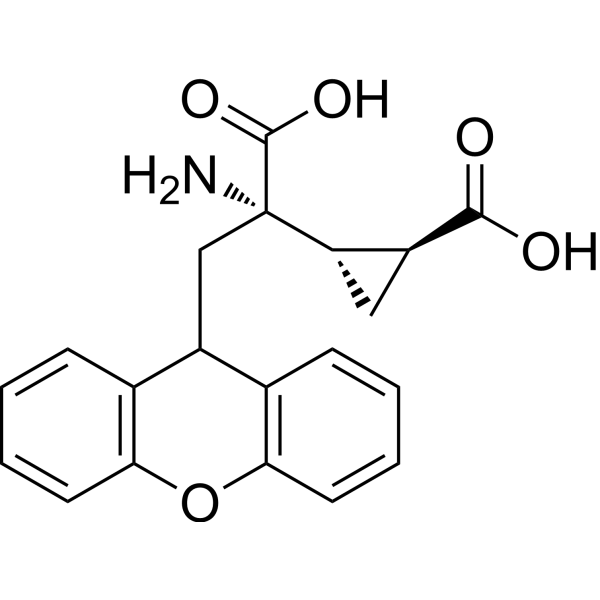
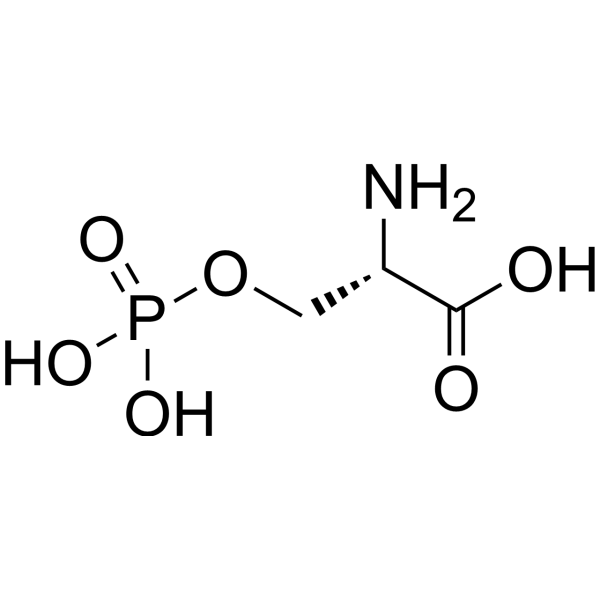
-
L-AP4
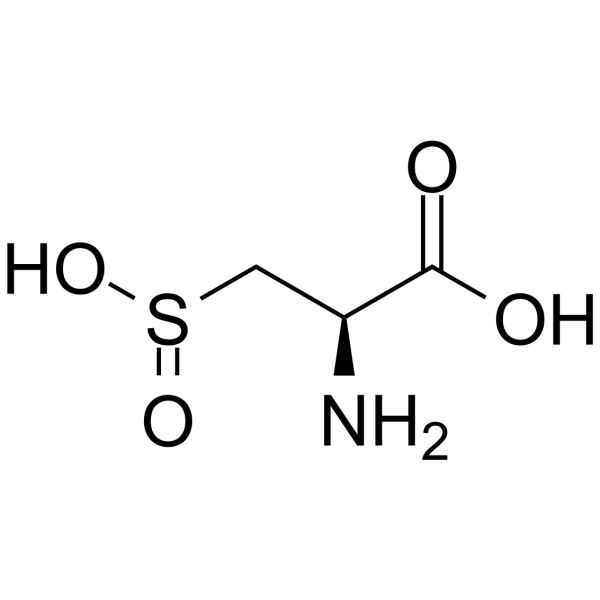
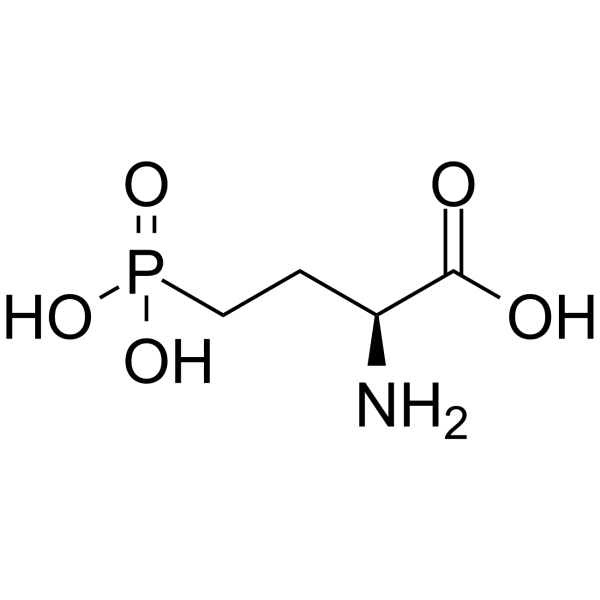 0 ImagesSynonyms: L-APBL-AP4 (L-APB) is a potent and specific agonist for the group III mGluRs, with EC50s of 0.13, 0.29, 1.0, 249 μM for mGlu4, mGlu8, mGlu6 and mGlu7 receptors, respectively.
-
VU0422288
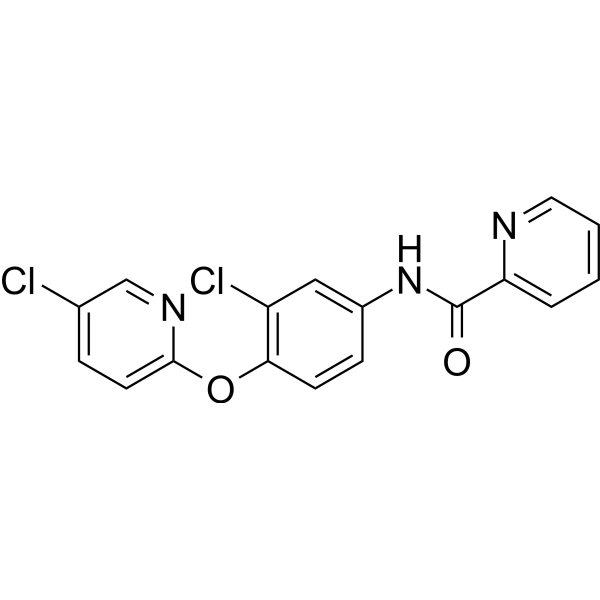 0 ImagesSynonyms: ML396VU0422288 (ML396) is a positive allosteric modulator of group III mGluRs. VU0422288 inhibits mGluRs with EC50s of 125 nM, 146 nM, and 108 nM for mGluR4, mGluR7, and mGluR8, respectively in calcium mobilization assays. VU0422288 reverses deficits in contextual fear memory, social recognition, and apneas in Rett syndrome (RTT) model mice.
-
(S)-3,4-DCPG
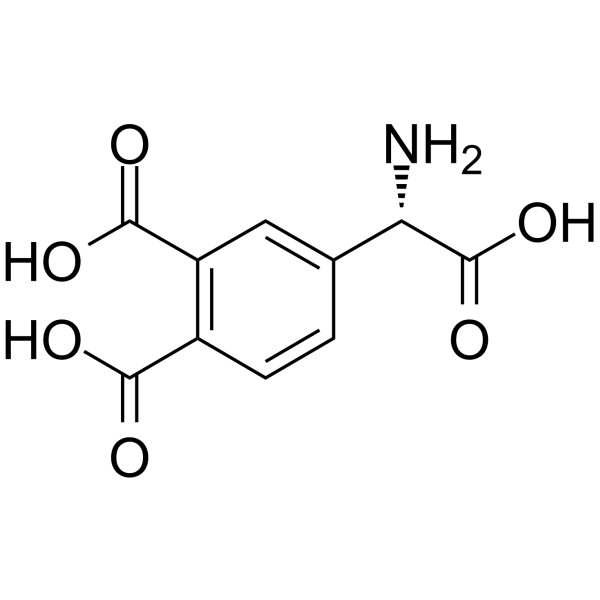 0 ImagesSynonyms: (S)-3,4-Dicarboxyphenylglycine(S)-3,4-DCPG ((S)-3,4-Dicarboxyphenylglycine) is a potent and selective mGlu8a receptor agonist with an EC50 of 31 nM for human mGlu8a. (S)-3,4-DCPG inhibits Forskolin (HY-15371)-stimulated cAMP formation by activating mGlu8, and modulates presynaptic glutamatergic transmission and synaptic plasticity. (S)-3,4-DCPG can be used in research on inflammatory pain, neuropathic pain, autism spectrum disorder, and glutamatergic synaptic plasticity.
-
VU6081679
 0 ImagesCat. No.: HY-187535VU6081679 is an orally active positive allosteric modulator of mGlu8 with blood-brain barrier permeability. VU6081679 binds to the extracellular allosteric pocket at the TM6/TM7 junction of mGlu8, and anchors via hydrophobic interactions and water-mediated polar contacts, thereby stabilizing the active state of the receptor and exerting positive allosteric regulatory effects. VU6081679 can be used for research on Parkinson's disease.
-
VU6005649
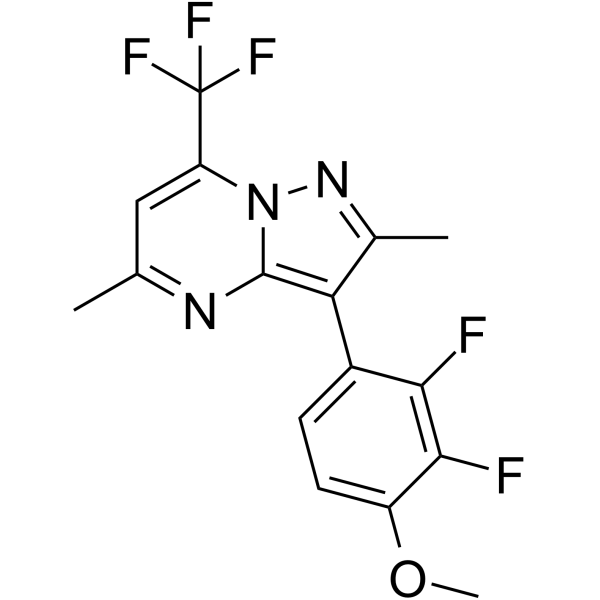 0 ImagesVU6005649 is a blood-brain-barrier penetrant mGlu7/8 receptor agonist with EC50s of 0.65 μM and 2.6 μM for mGlu7 receptor and mGlu8 receptor, respectively.
-
DCG-IV
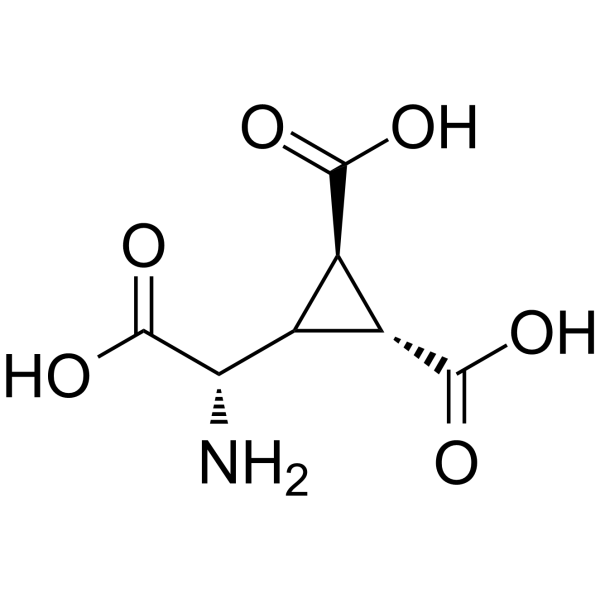 0 ImagesDCG-IV is a potent agonist of group II mGluRs with EC50s of 0.35 and 0.09 μM for mGlu2R and mGlu3R, reapectively. DCG-IV is also a competitive antagonist at group I (IC50: mGlu1R/5R=389/630 μM) and III receptors (IC50: mGlu4R/6R/7R/8R= 22.5/39.6/40.1/32 μM). DCG-IV has anticonvulsive and neuroprotective effects.
-
LSP4-2022
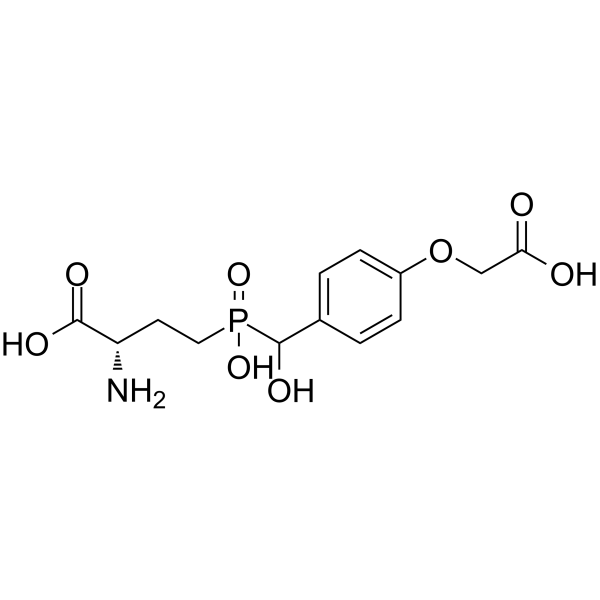 0 ImagesLSP4-2022 is a potent and brain-penetrant mGlu4-selective orthosteric agonist, with an EC50 of 0.11 μM. LSP4-2022 inhibits neurotransmission in cerebellar slices from wild-type but not mGlu4 receptor-knockout mice. LSP4-2022 shows pro-depressant activity.
-
L-AP4 monohydrate
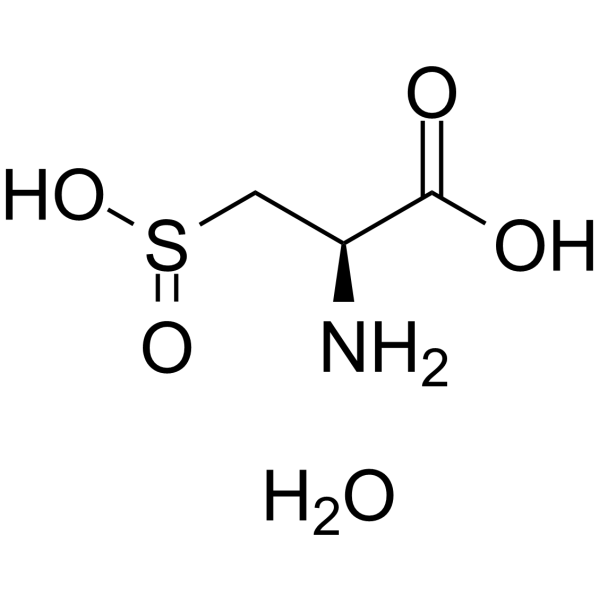
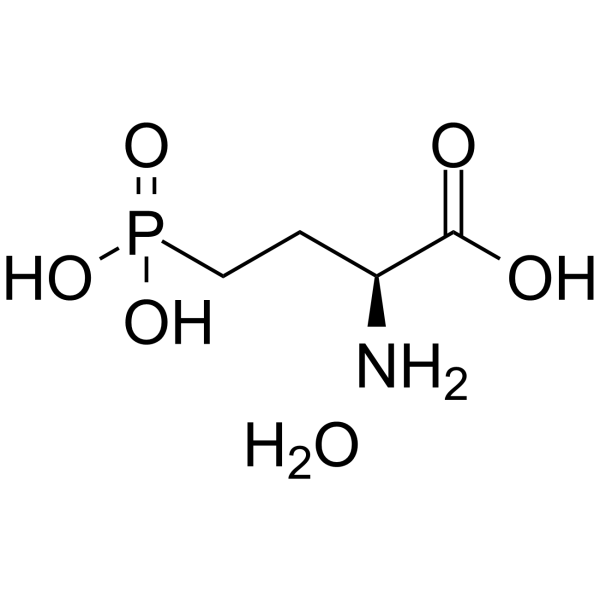 0 ImagesSynonyms: L-APB monohydrateL-AP4 (L-APB) monohydrate is a potent and specific agonist for the group III mGluRs, with EC50s of 0.13, 0.29, 1.0, 249 μM for mGlu4, mGlu8, mGlu6 and mGlu7 receptors, respectively.
-
LBG30300
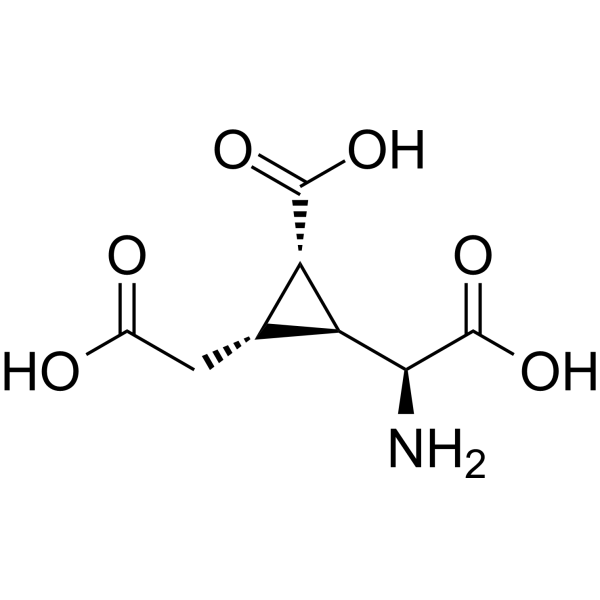 0 ImagesCat. No.: HY-162117CAS No.: 3086973-64-7LBG30300 is a subtype-selective mGlu2 receptor agonist EC50 0.6 nM. LBG30300 is blood-brain barrier permeable.
- 1



