



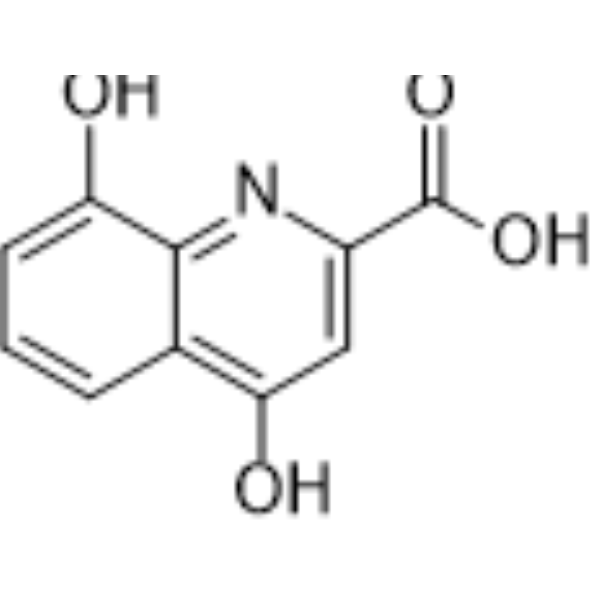
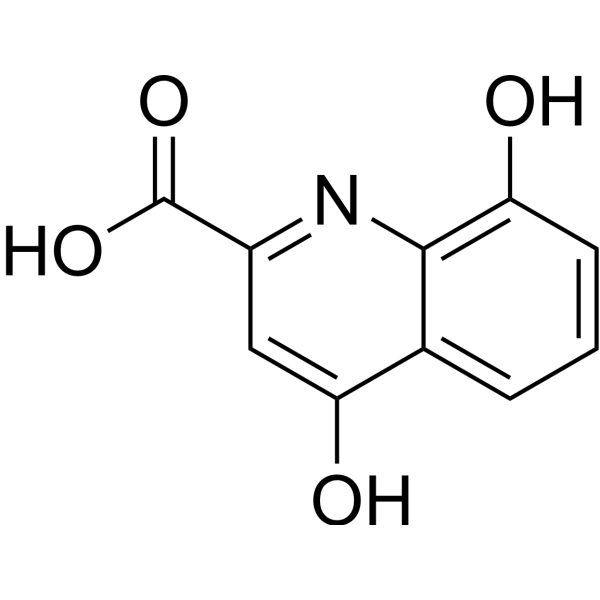
Xanthurenic acid
Based on 2 publication(s) in Google Scholar
Xanthurenic acid is a putative endogenous Group II metabotropic glutamate receptor agonist, on sensory transmission in the thalamus.
For research use only. We do not sell to patients.
- Purity : 99.53%
- CAS No.: 59-00-7
- Formula: C10H7NO4
- Molecular Weight:205.17
-
Storage:Powder -20°C, 3 years , 4°C, 2 years ; In solvent -80°C, 6 months , -20°C, 1 month

To place orders, for customer services and technical support, please contact: MedChemExpress USA
Tel: 609-228-6898 E-mail: [email protected] [email protected]


-
 Biological Activity
-
Chemical Information
-
Solvent & Solubility
- Purity & Documentation
- References
-
 Help & FAQs


-
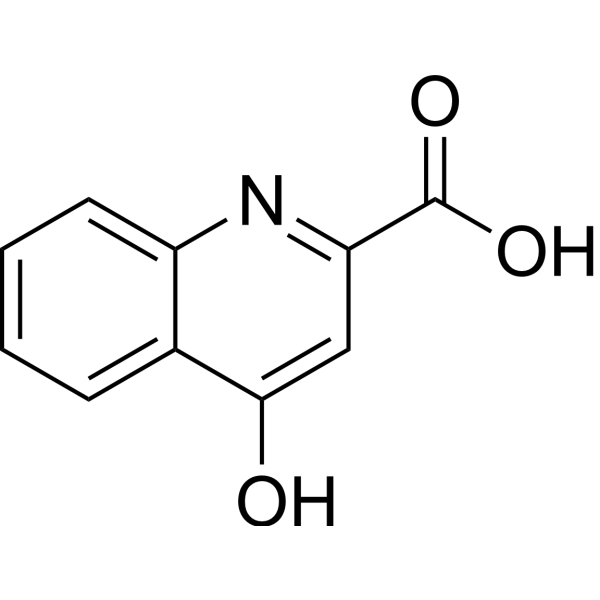
HY-100806
Kynurenic acidiGluR/α7 nAChR Antagonist -
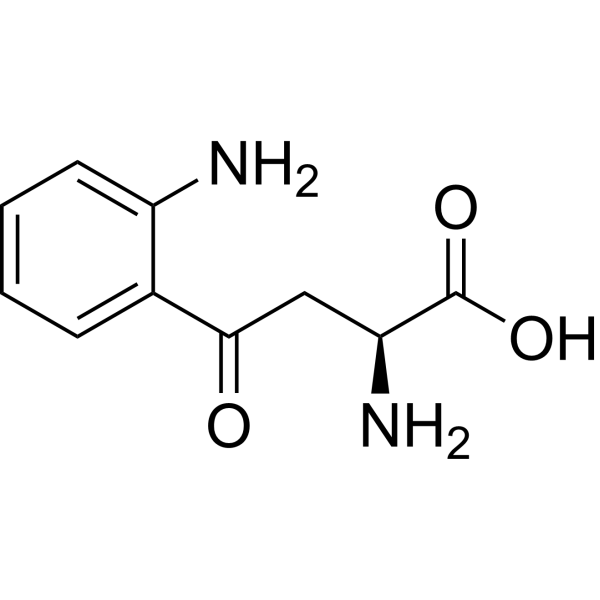
HY-104026
L-KynurenineAryl Hydrocarbon Receptor Agonist -
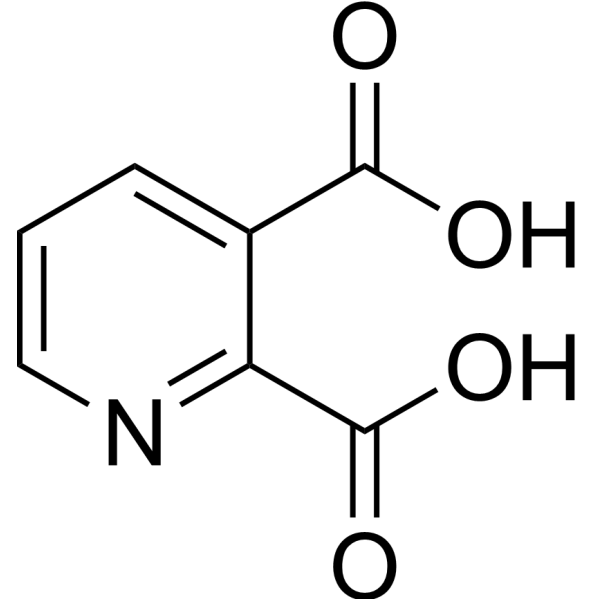
HY-100807
Quinolinic acidNMDA Receptor Agonist -
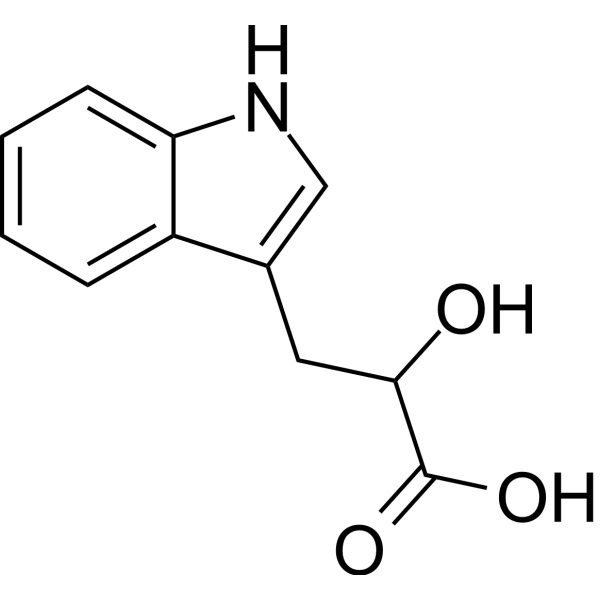
HY-113099
Indolelactic acidTryptophan Catabolite -
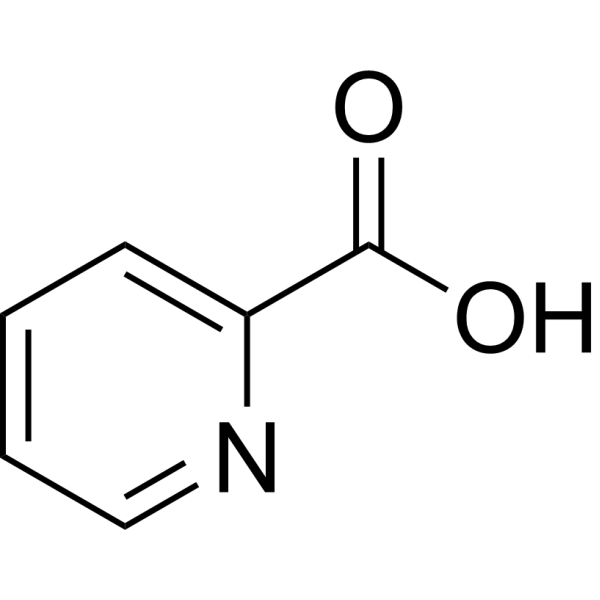
HY-I0660
Picolinic acidEndogenous Metabolite -
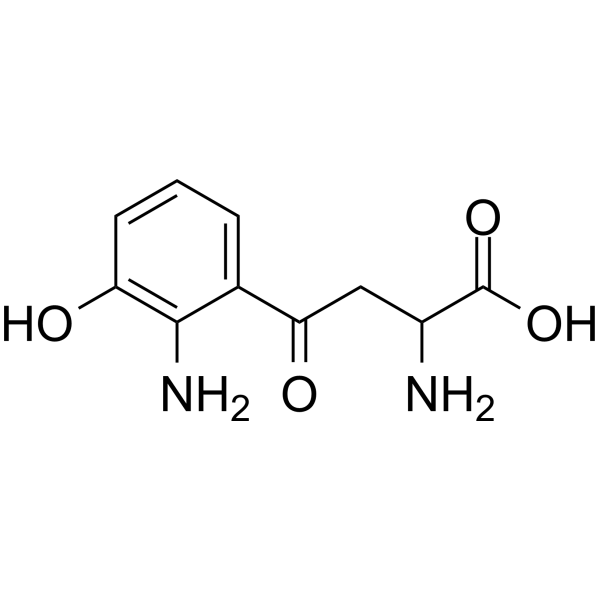
HY-113294
3-HydroxykynurenineEndogenous Neurotoxin -
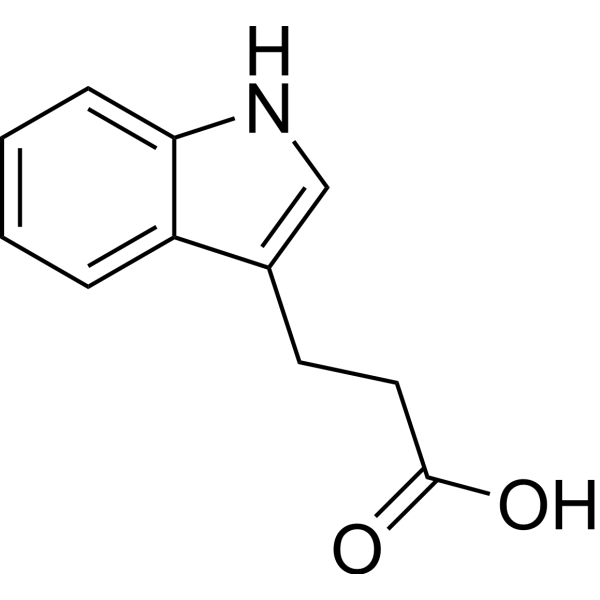
HY-W015229
3-Indolepropionic acid -
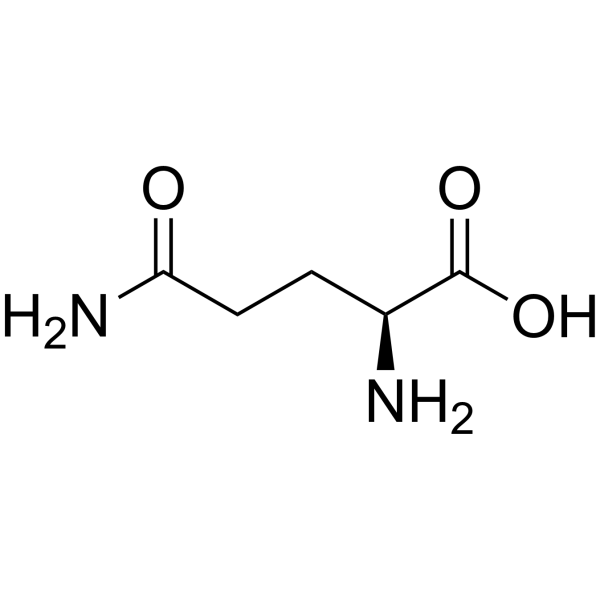
HY-N0390
L-GlutamineEndogenous Metabolite -
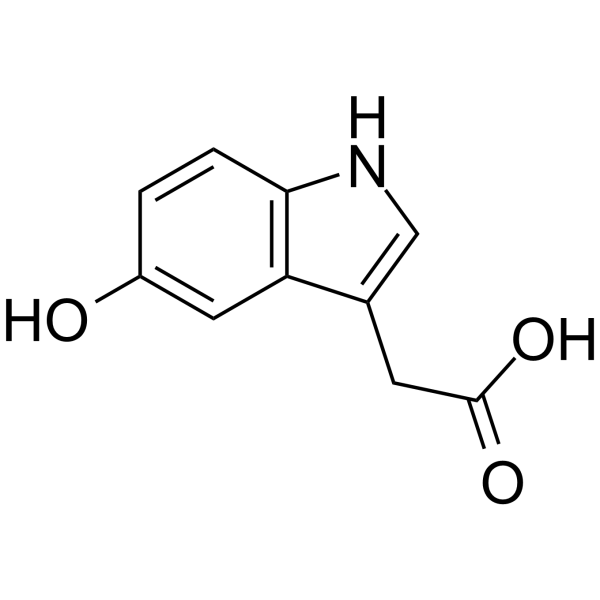
HY-W008253
5-Hydroxyindole-3-acetic acid -
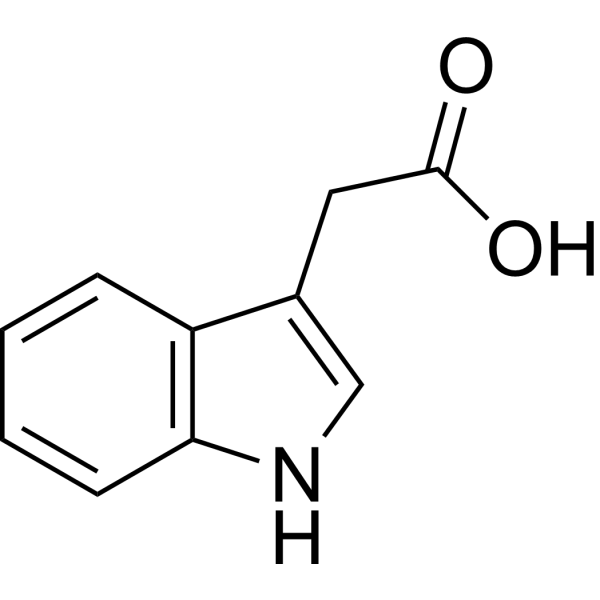
HY-18569
3-Indoleacetic acidPlant Growth Regulator -
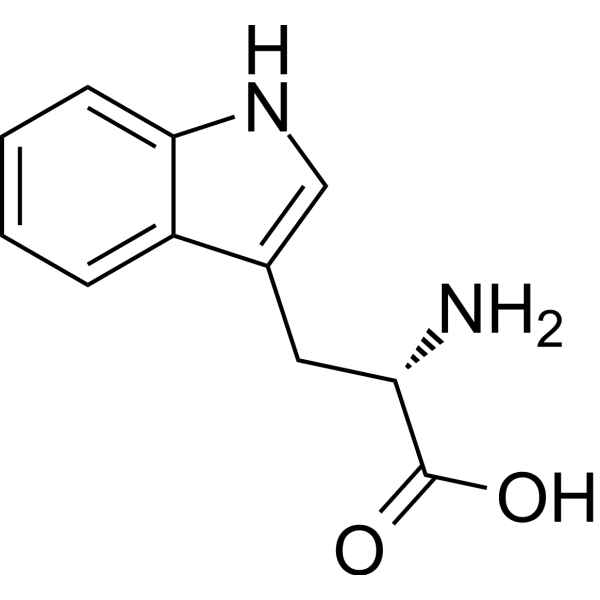
HY-N0623
L-TryptophanEssential Amino Acid -
HY-W014666R
Xanthurenic acid (Standard)
Publications Citing Use of MedChemExpress (MCE) Xanthurenic acid
More Customer Validation & Images

-
Histological Imaging/Staining
All Endogenous Metabolite Isoforms
More

Biological Activity
Description
IC50 & Target
[1]|
Human Endogenous Metabolite |
mGluR2 |
mGluR3 |
In Vivo
MedChemExpress (MCE) has not independently confirmed the accuracy of these methods. They are for reference only.


Chemical Information
-
CAS No. 59-00-7
-
Appearance Solid
-
Molecular Weight 205.17
-
Formula C10H7NO4
-
Color Light yellow to brown
-
SMILES
O=C(C1=NC2=C(O)C=CC=C2C(O)=C1)O
-
Structure Classification
-
Shipping
Room temperature in continental US; may vary elsewhere.
-
Storage
Powder -20°C 3 years 4°C 2 years In solvent -80°C 6 months -20°C 1 month


Publications (2)
-
Journal Impact Factor
-
Most Recent
-
J Nutr
Maternal Tryptophan Supplementation Enhances Sow Reproductive Performance by Influencing Hormones, Tryptophan Metabolism, and Gut Microbiome. [Abstract]2025 May 5:S0022-3166(25)00277-9. PMID: 40334786 -
Pathog Dis
2022 Nov 12;80(1):ftac043. PMID: 36316012
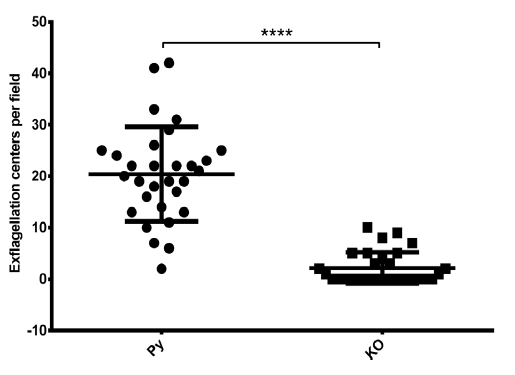
Xanthurenic acid purchased from MedChemExpress. Usage Cited in: Pathog Dis. 2022 Nov 12;80(1):ftac043. [Abstract]
Xanthurenic acid (XA) (50 μM; pH 7.4)-stimulated exflagellation centre (EC) counts were obtained from the parental parasites (Py) and the Py05543 deletion (Pyp25α¯, KO) parasites.


Solvent & Solubility
In Vitro:
1 M NaOH : 33.33 mg/mL (162.45 mM; Need ultrasonic)
DMSO : 5 mg/mL (24.37 mM; ultrasonic and warming and heat to 60°C; Hygroscopic DMSO has a significant impact on the solubility of product, please use newly opened DMSO)
Please refer to the solubility information to select the appropriate solvent. Once prepared, please aliquot and store the solution to prevent product inactivation from repeated freeze-thaw cycles.
Storage method and period of stock solution: -80°C, 6 months; -20°C, 1 month. When stored at -80°C, please use it within 6 months. When stored at -20°C, please use it within 1 month.
Please refer to the solubility information to select the appropriate solvent. Once prepared, please aliquot and store the solution to prevent product inactivation from repeated freeze-thaw cycles.
Storage method and period of stock solution: -80°C, 6 months; -20°C, 1 month. When stored at -80°C, please use it within 6 months. When stored at -20°C, please use it within 1 month.
Concentration (start) × Volume (start) = Concentration (final) × Volume (final)
In Vivo:
For the following dissolution methods, please prepare the working solution directly:
It is recommended to prepare fresh solutions and use them promptly within a short period of time.
The percentages shown for the solvents indicate their volumetric ratio in the final prepared solution. If precipitation or phase separation occurs during preparation, heat and/or sonication can be used to aid dissolution.
Add each solvent one by one: 50% PEG300 50% Saline
Solubility: 20 mg/mL (97.48 mM); Suspended solution; Need ultrasonic


Purity & Documentation
-
Data Sheet (277 KB)
-
SDS (396 KB)
- English - EN (396 KB)
- Français - FR (396 KB)
- Deutsch - DE (396 KB)
- Norwegian - NO (396 KB)
- Español - ES (396 KB)
- Swedish - SV (396 KB)
- Italian - IT (396 KB)
- Korean - KR (396 KB)
- Portuguese - PT (396 KB)
-
Handling Instructions (2659 KB)
References


Complete Stock Solution Preparation Table
Please refer to the solubility information to select the appropriate solvent. Once prepared, please aliquot and store the solution to prevent product inactivation from repeated freeze-thaw cycles.
Storage method and period of stock solution: -80°C, 6 months; -20°C, 1 month. When stored at -80°C, please use it within 6 months. When stored at -20°C, please use it within 1 month.
| Optional Solvent | Concentration Solvent Mass | 1 mg | 5 mg | 10 mg | 25 mg |
|---|---|---|---|---|---|
| DMSO / 1 M NaOH | 1 mM | 4.8740 mL | 24.3700 mL | 48.7401 mL | 121.8502 mL |
| 5 mM | 0.9748 mL | 4.8740 mL | 9.7480 mL | 24.3700 mL | |
| 10 mM | 0.4874 mL | 2.4370 mL | 4.8740 mL | 12.1850 mL | |
| 15 mM | 0.3249 mL | 1.6247 mL | 3.2493 mL | 8.1233 mL | |
| 20 mM | 0.2437 mL | 1.2185 mL | 2.4370 mL | 6.0925 mL | |
| 1 M NaOH | 25 mM | 0.1950 mL | 0.9748 mL | 1.9496 mL | 4.8740 mL |
| 30 mM | 0.1625 mL | 0.8123 mL | 1.6247 mL | 4.0617 mL | |
| 40 mM | 0.1219 mL | 0.6093 mL | 1.2185 mL | 3.0463 mL | |
| 50 mM | 0.0975 mL | 0.4874 mL | 0.9748 mL | 2.4370 mL | |
| 60 mM | 0.0812 mL | 0.4062 mL | 0.8123 mL | 2.0308 mL | |
| 80 mM | 0.0609 mL | 0.3046 mL | 0.6093 mL | 1.5231 mL | |
| 100 mM | 0.0487 mL | 0.2437 mL | 0.4874 mL | 1.2185 mL |


Xanthurenic acid Related Classifications
HY-W014666 Related Classifications
 Powered by Bioz