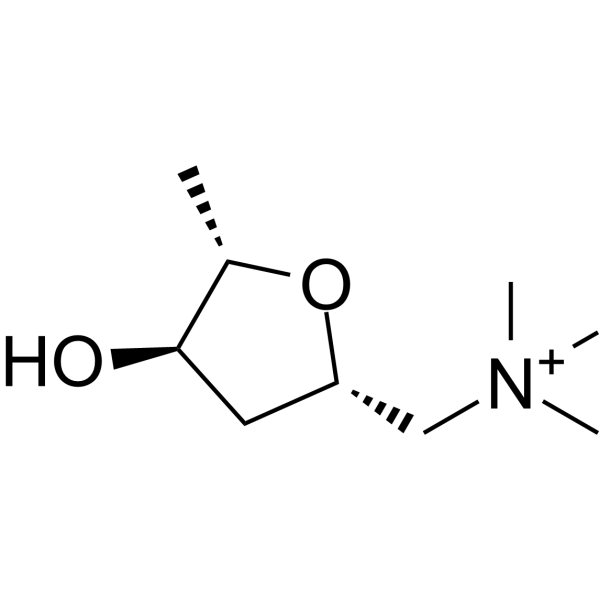
mAChR
Muscarinic acetylcholine receptor
mAChRs (muscarinic acetylcholine receptors) are acetylcholine receptors that form G protein-receptor complexes in the cell membranes of certainneurons and other cells. They play several roles, including acting as the main end-receptor stimulated by acetylcholine released from postganglionic fibersin the parasympathetic nervous system. mAChRs are named as such because they are more sensitive to muscarine than to nicotine. Their counterparts are nicotinic acetylcholine receptors (nAChRs), receptor ion channels that are also important in the autonomic nervous system. Many drugs and other substances (for example pilocarpineand scopolamine) manipulate these two distinct receptors by acting as selective agonists or antagonists. Acetylcholine (ACh) is a neurotransmitter found extensively in the brain and the autonomic ganglia.
mAChR Isoform Specific Products
All Product Categories
-
mAChR Inhibitors
(114)
View all products
-
mAChR Agonists
(146)
View all products
-
mAChR Antagonists
(320)
View all products
-
mAChR Activators
(20)
View all products
-
mAChR Modulators
(48)
View all products
-
mAChR Inducer
(1)
View all products
-
mAChR Controls
(9)
View all products
-
mAChR Ligands
(8)
View all products
-
mAChR Related Products (719)
Related Products (719)

-
Antibodies (2)
-
mAChR Isoform Comparison
-
Rapacuronium bromide
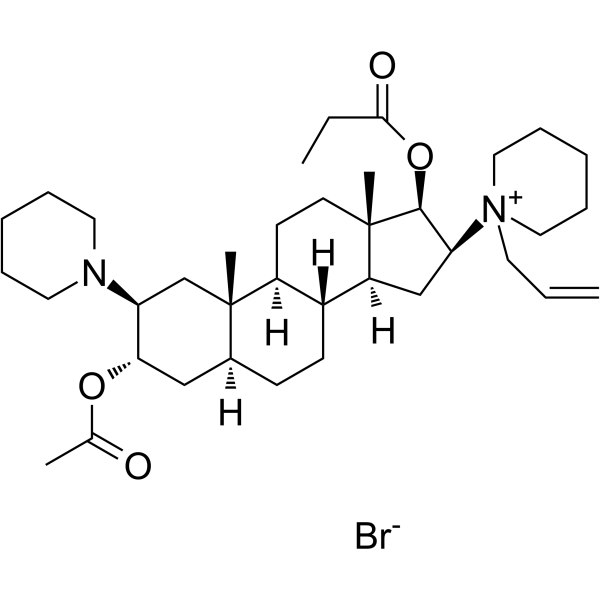 0 ImagesSynonyms: Org 9487Rapacuronium bromide (Org 9487), a non-depolarizing neuromuscular blocker, is an allosteric modulator of muscarinic acetylcholine receptor (mAChR).
-
Nebracetam hydrochloride
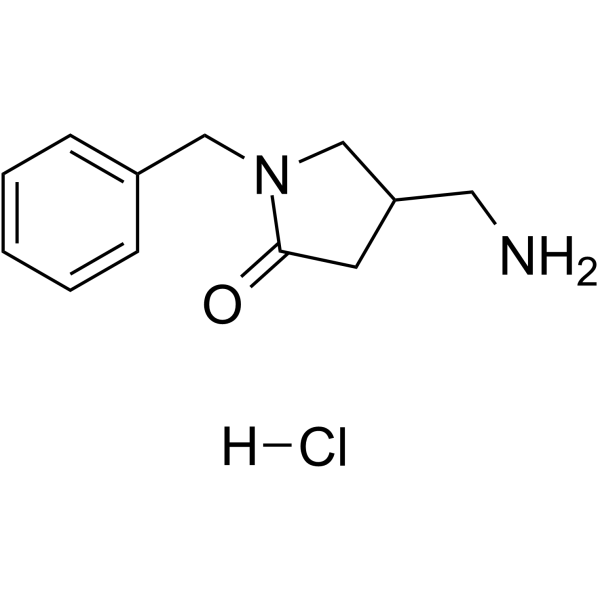 0 ImagesSynonyms: WEB 1881 FU hydrochlorideNebracetam (WEB 1881 FU) hydrochloride is an orally active M1 muscarinic receptor agonist. Nebracetam hydrochloride can induce an increase in intracellular Ca2+ concentration, with an EC50 value of 1.59 mM. Nebracetam hydrochloride exhibits neuroprotective activity and the ability to improve cognitive impairment. Nebracetam hydrochloride can be used in the research of neurological diseases such as Alzheimer's disease.
-
AC-42 hydrochloride
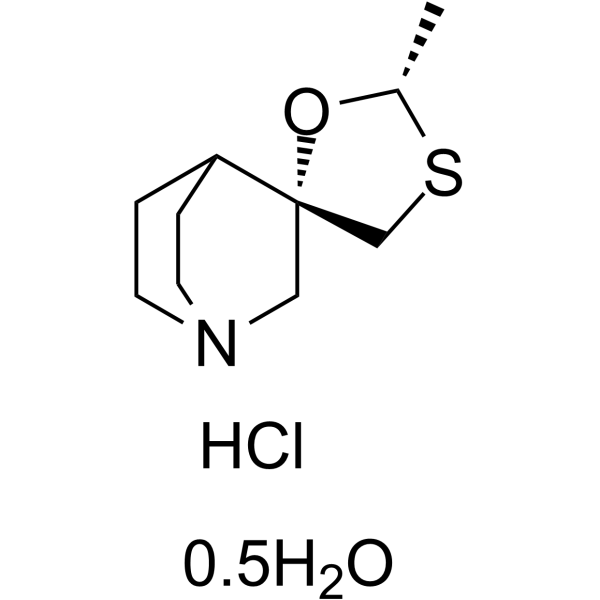
 0 ImagesAC-42 hydrochloride is the hydrochloride salt form of AC-42 (HY-118806). AC-42 hydrochloride is an allosteric agonist for muscarinic M1 receptor with EC50s of 805 nM and 220 nM for human wild-type and Y381A mutated M1 receptors, respectively. AC-42 hydrochloride stimulates the inositol phosphate (IP)-accumulation and calcium mobilization in CHO cells.
-
Direclidine citrate
 0 ImagesSynonyms: NBI-1117568 citrate; HTL-0016878 citrateDireclidine (NBI-1117568, HTL-0016878) citrate is a selective orthosteric agonist targeting the muscarinic acetylcholine M4 receptor, exhibiting very low affinity for M1, M2, M3, and M5 receptors. Direclidine citrate binds to the orthosteric site of the M4 receptor in a non-covalent, competitive manner. Direclidine citrate specifically activates the M4 receptor, inhibiting the release of acetylcholine from striatal cholinergic interneurons, thereby regulating the balance of the dopaminergic system and reducing psychiatric symptoms associated with excessive dopamine release. Direclidine citrate can improve symptoms associated with neuropsychiatric disorders and is used in research on schizophrenia and other neuropsychiatric disorders.
-
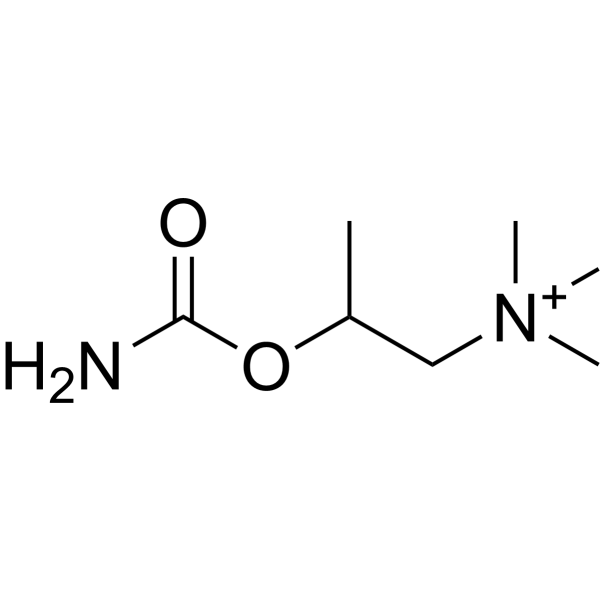
Bethanechol chloride (Standard)
 0 ImagesSynonyms: Carbamyl-β-methylcholine chloride (Standard)Bethanechol (chloride) (Standard) is the analytical standard of Bethanechol (chloride). This product is intended for research and analytical applications. Bethanechol chloride (Carbamyl-β-methylcholine chloride), a parasympathomimetic agent, is a mAChR agonist that exerts its effects via directly stimulating the mAChR (M1, M2, M3, M4, and M5) of the parasympathetic nervous system.
-
Arecoline hydrochloride
 0 ImagesArecoline hydrochloride, a naturally brain-penetrant and orally active occurring psychoactive alkaloid, is a partial agonist of nicotinic and muscarinic acetylcholine receptor. Arecoline hydrochloride exhibits stimulation, alertness, anxiolysis and anti-parasitic effects. Arecoline hydrochloride also can induce oxidative stress.
-
VU6005806
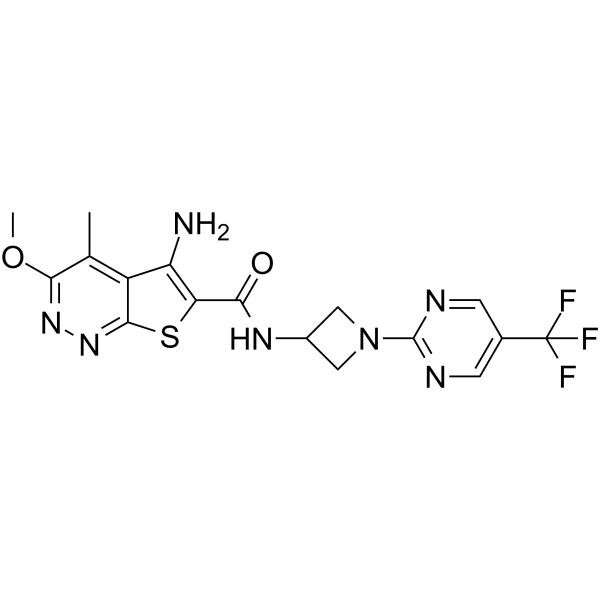 0 ImagesCat. No.: HY-128584CAS No.: 2180914-37-6Synonyms: AZN-00016130VU6005806 (AZN-00016130) is a potent muscarnic acethylcholine receptor subtype 4 (M4) positive allosteric modulator (PAM), with EC50s of 94 nM, 28 nM, 87 nM and 68 nM for human, rat, dog and cyno M4, respectively. Used in the research of neuropsychiatric disorders.
-
Milameline hydrochloride
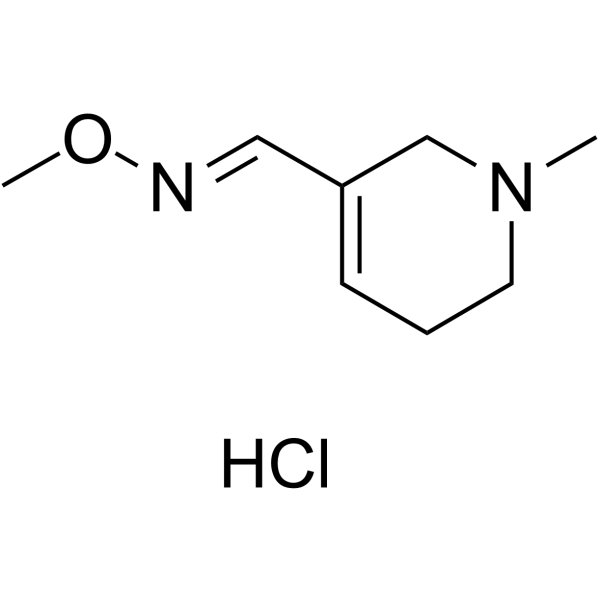 0 ImagesCat. No.: HY-107650CAS No.: 139886-04-7Synonyms: CI 979 hydrochloride; RU 35926 hydrochlorideMilameline (CI 979; RU35926) hydrochloride is a nonselective, partical and orally active muscarinic receptor agonist that improves cognition. Milameline hydrochloride has equal affinity for different subtypes of human muscarinic receptors with IC50 of 1.3 µM for M1-, 1.1 µM for M2-, 1.5 µM for M3-, and 1.9 µM for M4-muscarinic receptors. Milameline hydrochloride has a higher affinity for sites [3H]CMD (IC50 = 20 nM), than [3H]QNB, (IC50 = 3059 nM). Milameline hydrochloride produces both central and peripheral cholinergic effects and reverses the cognitive deficits induced by Scopolamine (HY-N0296). Milameline hydrochloride can be used for the study of Alzheimer’s Disease.
-
Succinylcholine iodide
 0 ImagesSuccinylcholine iodide (Suxamethonium iodide) is a depolarizing neuromuscular blocker with rapid onset and short duration of action. Succinylcholine iodide also acts as an agonist of the Acetylcholine receptor. Succinylcholine iodide is used for emergency airway management.
-
M1/M4 muscarinic agonist 3
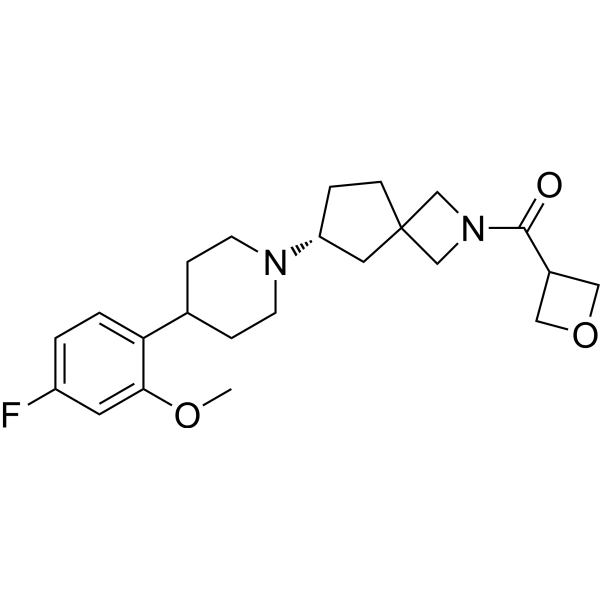 0 ImagesCat. No.: HY-149732CAS No.: 2640109-30-2M1/M4 muscarinic agonist 3 (compound 44) is a muscarinic mAChR M1/M4 agonist with EC50s of 31 nM and 9.3 nM, respectively.
-
HTL-9936
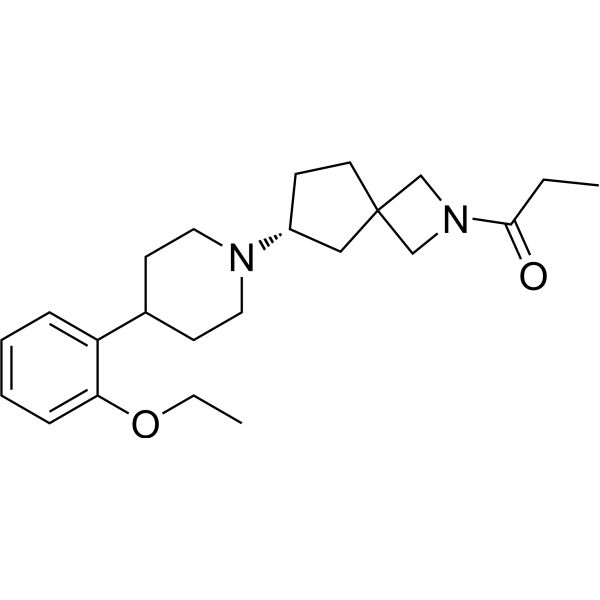
 0 ImagesCat. No.: HY-148961CAS No.: 1438242-59-1HTL-9936 is an orally active partial agonist of muscarinic M1 receptor. HTL-9936 has an EC50 of 32 nM for human M1 receptor and an EC50 of 224 nM for human M4 receptor. HTL-9936 activates Gq/11 coupling, promotes inositol phosphate accumulation, ERK1/2 phosphorylation, β-arrestin recruitment and receptor internalization. HTL-9936 can be used in the research of Alzheimer's disease and schizophrenia.
-
(Rac)-Sabcomeline
 0 ImagesCat. No.: HY-167947CAS No.: 149156-36-5Synonyms: (Rac)-SB-202026; (Rac)-Memric(Rac)-Sabcomeline ((Rac)-SB-202026) serves as an M1/M4 muscarinic agonist, making it a valuable tool in the exploration of neurological disorders, including schizophrenia.
-
N-Desmethylclozapine-d8
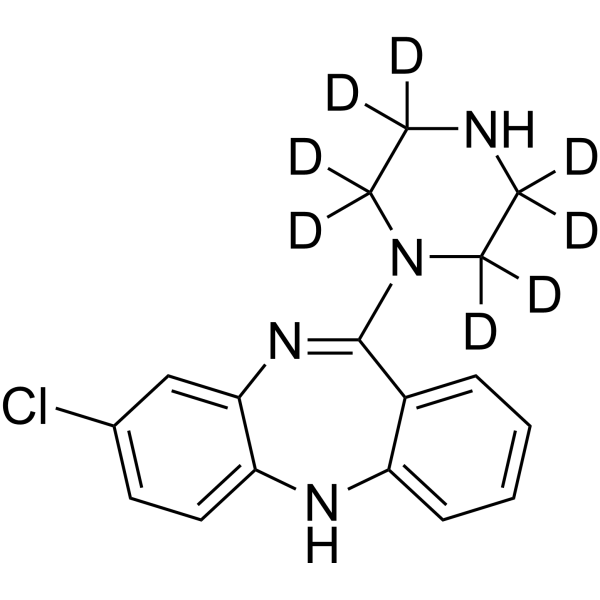 0 ImagesSynonyms: Norclozapine-d8; Desmethylclozapine-d8; Normethylclozapine-d8N-Desmethylclozapine-d8 is the deuterium labeled N-Desmethylclozapine. N-Desmethylclozapine is a major active metabolite of the atypical antipsychotic agent Clozapine. N-Desmethylclozapine is a potent, allosteric and partial M1 receptors agonist (EC50=115 nM) and is able to potentiate hippocampal N-methyl-d-aspartate (NMDA) receptor currents through M1 receptor activation. N-Desmethylclozapine is also a δ-opioid agonist.
-
Lu AE51090
 0 ImagesLu AE51090 is selective muscarinic M1 receptor agonist with blood-brain barrier penetration. Lu AE51090 activates human M1 receptor with EC50 of 61 nM, while showing no significant agonism at M2-M5 receptors. Lu AE51090 exerts procognitive effects in mice. Lu AE51090 can be used for the study of Alzheimer’s disease (AD) and cognitive impairment associated with schizophrenia (CIAS).
-
Pilocarpine-d3 hydrochloride
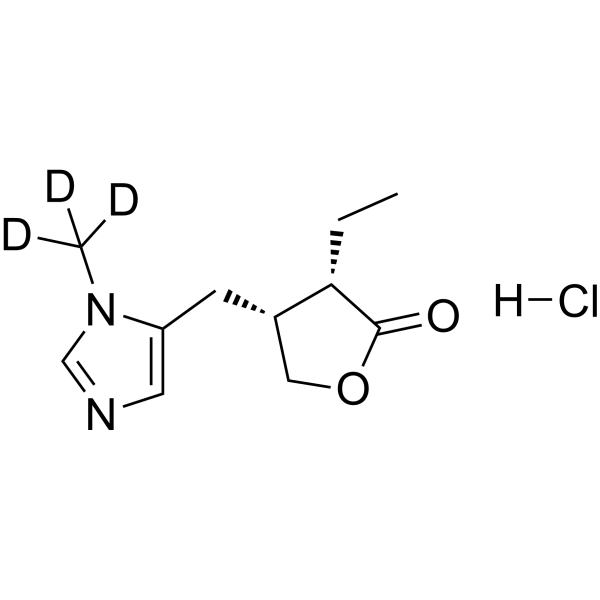 0 ImagesCat. No.: HY-B0726SCAS No.: 1217838-88-4Pilocarpine-d3 (hydrochloride) is deuterium labeled Pilocarpine (Hydrochloride). Pilocarpine Hydrochloride is a potent M3-type muscarinic acetylcholine receptor (M3 muscarinic receptor) agonist.
-
Arecaidine-propargyl ester tosylate
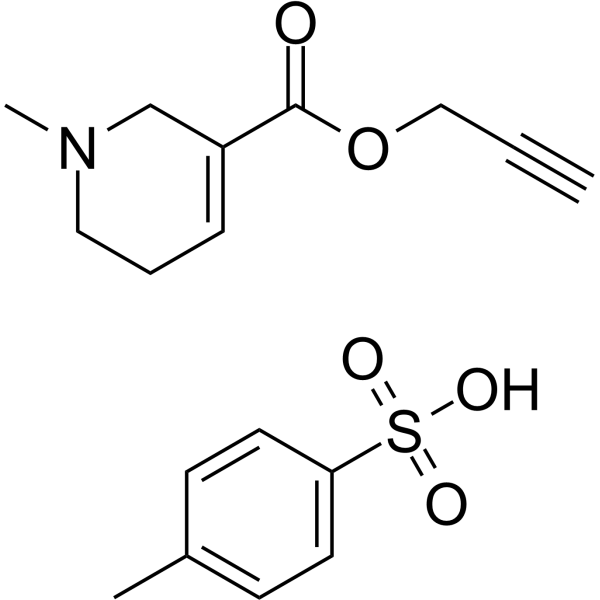 0 ImagesCat. No.: HY-100916CAS No.: 147202-94-6Arecaidine-propargyl ester tosylate is a potent muscarinic receptor (mAChR) agonist.